×

Costa Rica🇨🇷 | regionsOrosi ValleyCoffee slopes, colonial adobe, thermal pools, Tapantí waterfalls | things to do and best time to go

Explore Nicoya PeninsulaExplore Cahuita

Backpacking in Orosi Valley
👌 Worth visitingregion ranked #3
By Johan Kruseman 🇳🇱 | Updated October 22, 2026

Orosi Valley is famous for its loop of coffee-planted hills, a whitewashed colonial church and hot springs steaming beside the river gorge. What matters just as much, and gets overlooked, is that you can do all of it without a rental car. It sits in Costa Rica’s Cartago province, southeast of San José. Local buses circle the valley on a loop road, and they thin out by late afternoon, so an experienced traveler checks the last departure before wandering off. Roadside sodas also shut early because farm days start before dawn, so eat lunch by noon. At one soda I paid US$2.50 for coffee strained through a cloth sleeve, smelling of toasted brown sugar, and US$4 for gallo pinto with a fried egg, salty and soft. A first day could mean church and museum in the morning, a hot spring soak in the afternoon and an early dinner by the plaza.

Discover everything you want to know in the 📖 Costa Rica Travel Guide.


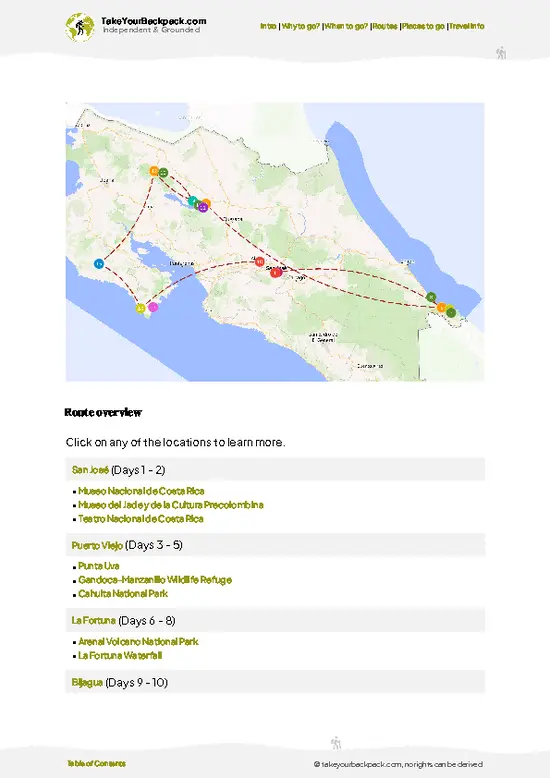
example page 0 from our offline Travel Guide for Costa Rica
example page 1 from our offline Travel Guide for Costa Rica
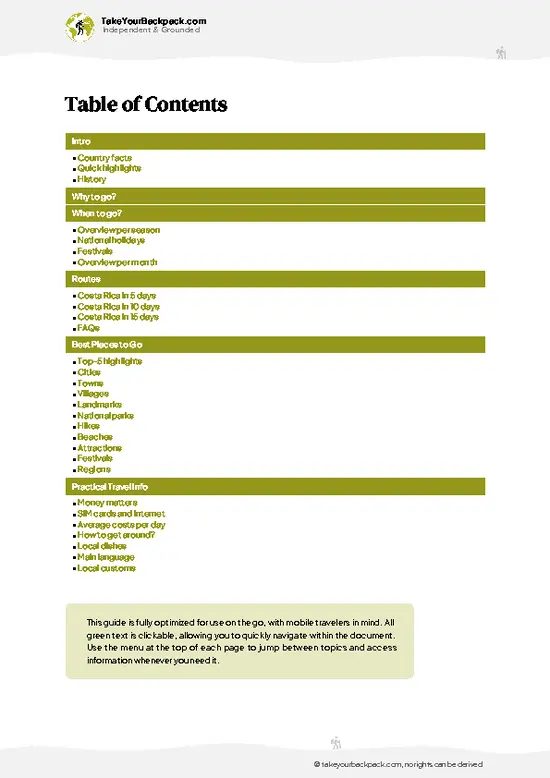
example page 2 from our offline Travel Guide for Costa Rica
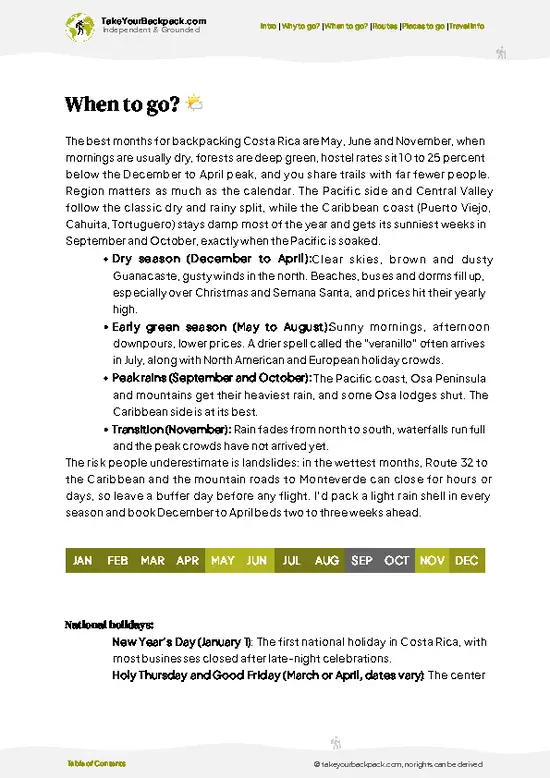
example page 3 from our offline Travel Guide for Costa Rica
example page 4 from our offline Travel Guide for Costa Rica
example page 5 from our offline Travel Guide for Costa Rica
example page 6 from our offline Travel Guide for Costa Rica
example page 7 from our offline Travel Guide for Costa Rica
Loading the map 🌍
CLICK TO FILTER
cities
towns
villages
landmarks
national parks
hikes
beaches
attractions
festivals
regions
SHOW COUNTRY’S BESTSHOW ALL

✨ Why go?
Ranked #3 region in Costa Rica
What sets this place apart

Orosi Valley lets you swap constant packing and moving for one bed and a loop of short rides. The valley is compact, with a single road circling the river, so a day of colonial ruins, a lake and a coffee farm needs no more than a local bus and a pair of walking shoes. That suits slow travel, because you can stay put in the village of Orosi for several nights and still see something new each morning.
The second reason is the mix. In one valley you get Tapantí-Macizo de la Muerte National Park, with its cloud forest, hummingbirds and fast, cold rivers, plus Ujarrás’s 17th-century ruins and hot pools to rest tired legs. Few places in Costa Rica pair this much nature and history so close together, and the crowds stay thin compared with the Pacific coast or Arenal. Evenings are quiet, with church … read more 👉
Orosi Valley lets you swap constant packing and moving for one bed and a loop of short rides. The valley is compact, with a single road circling the river, so a day of colonial ruins, a lake and a coffee farm needs no more than a local bus and a pair of walking shoes. That suits slow travel, because you can stay put in the village of Orosi for several nights and still see something new each morning.
The second reason is the mix. In one valley you get Tapantí-Macizo de la Muerte National Park, with its cloud forest, hummingbirds and fast, cold rivers, plus Ujarrás’s 17th-century ruins and hot pools to rest tired legs. Few places in Costa Rica pair this much nature and history so close together, and the crowds stay thin compared with the Pacific coast or Arenal. Evenings are quiet, with church bells, wood smoke and the occasional rooster, so you sleep well and wake up early for the trails.

💡 HighlightsMust-see experiences and standout moments

  1. Iglesia de San José de Orosi: Built in 1743 and still used for Mass, this is one of the oldest churches in Costa Rica. Thick adobe walls, a red tile roof and a carved wooden altar give it a cool, dim interior that smells of old wood.
  2. Museo Franciscano (Convento de Orosi): Next to the church, this small museum has colonial religious art, old tools and a quiet cloister garden. It takes under an hour and gives context to the whole valley.
  3. Tapantí-Macizo de la Muerte National Park: Cloud forest with a high number of bird species and constant waterfalls. Short loop trails along the river are easy, and the entry fee is modest.
  4. Mirador de Orosi: A roadside lookout over the valley floor, the church roof, the river bends and the patchwork of coffee. Come in the morning, before mist drifts in.
  5. Balneario
… read more 👉
  1. Iglesia de San José de Orosi: Built in 1743 and still used for Mass, this is one of the oldest churches in Costa Rica. Thick adobe walls, a red tile roof and a carved wooden altar give it a cool, dim interior that smells of old wood.
  2. Museo Franciscano (Convento de Orosi): Next to the church, this small museum has colonial religious art, old tools and a quiet cloister garden. It takes under an hour and gives context to the whole valley.
  3. Tapantí-Macizo de la Muerte National Park: Cloud forest with a high number of bird species and constant waterfalls. Short loop trails along the river are easy, and the entry fee is modest.
  4. Mirador de Orosi: A roadside lookout over the valley floor, the church roof, the river bends and the patchwork of coffee. Come in the morning, before mist drifts in.
  5. Balneario Termal Orosi: Public thermal pools fed by natural springs, popular with Costa Rican families on weekends. Go on a weekday for space and a quiet soak.
  6. Ruinas de Ujarrás: The roofless stone remains of a church from the late 1600s, set in a green park with a shrine to the Virgin of Ujarrás. It is a place locals love and tourists often skip, and entry is free.
  7. Lago de Cachí: A reservoir created by the Cachí dam, with green hills dropping to still water. The lakeside road gives views of fishermen and herons, and it feels far from the tour routes.
  8. Lankester Botanical Garden: Run by the University of Costa Rica, it holds one of the largest orchid collections in the Americas. Bloom peaks are best between roughly February and April.
  9. Trout farms along the road to Tapantí: Small family restaurants serve fresh rainbow trout grilled with garlic, often with a pond beside your table. Locals drive up for Sunday lunch.
  10. Coffee farm walks around Orosi: Smaller family fincas let you walk between the bushes, see the drying patios and taste a cup that was roasted nearby. It is slow, fragrant and entirely local.
At Orosi Valley, start with the church and the museum, since they sit side by side in the village center and give you the story of the valley before you head into the hills.
Spotted a mistake or missing something? Contact us.

Things to do around Orosi Valley

Ratings based on Tripadvisor reviews. When you book through this link, you support our work at no extra cost to you.

⌛️ 5 daysA smart one-week plan

Day 1: Orosi: Start with the Church of San José de Orosi, the oldest church in Costa Rica still used for worship, dating to the 1700s. Its thick adobe walls, cane-and-timber ceiling and cool, dim interior set the tone for the whole valley. The valley has one main loop road linking its small towns, and local buses along it are infrequent, so you do best by basing in Orosi town and moving in short hops. Walk to the hot springs in the afternoon and let the day stay small.
Day 2: Mirador de Orosi: Head up by taxi or rented bike early, before cloud fills the valley floor. From the lookout you can read the geography at once: the Reventazón reservoir, coffee terraces, and the road you will follow. Then continue to the Lankester Botanical Gardens, where the orchid collection is the draw. Doing this … read more 👉
Day 1: Orosi: Start with the Church of San José de Orosi, the oldest church in Costa Rica still used for worship, dating to the 1700s. Its thick adobe walls, cane-and-timber ceiling and cool, dim interior set the tone for the whole valley. The valley has one main loop road linking its small towns, and local buses along it are infrequent, so you do best by basing in Orosi town and moving in short hops. Walk to the hot springs in the afternoon and let the day stay small.
Day 2: Mirador de Orosi: Head up by taxi or rented bike early, before cloud fills the valley floor. From the lookout you can read the geography at once: the Reventazón reservoir, coffee terraces, and the road you will follow. Then continue to the Lankester Botanical Gardens, where the orchid collection is the draw. Doing this high ground first makes sense because the bus schedule thins out later in the day.
Day 3: Cachí: Take the loop road toward Cachí, where the dam and lake sit under steep green slopes. Stop at the roadside cafés and the art museum near the water, then loop back. The loop is short on the map but slow in practice, so pairing two or three stops per day keeps you off the road after dark, when lighting is poor.
Day 4: Detour to Tapantí: Tapantí National Park lies just above the valley and adds more than any other single stop. Rain falls here most of the year, so the forest is dense, the rivers loud, and the hummingbirds easy to spot. Go early on a morning taxi or shuttle arranged the day before, since no regular bus covers the final stretch. Trails to waterfalls and river pools are short and well marked.
Day 5: Ujarrás: Finish at the ruins of the old Ujarrás church, roofless stone walls beside the reservoir, then pass through Paraíso for onward buses toward Cartago. Ending here gives you a quiet, grassy place to sit, and it puts you on the transport line out of the valley.

If I had to keep one day, it would be Day 4 at Tapantí. The cloud forest, the cold river water and the sound of the rain on leaves make it the day that justifies the trip.

🌤️ When to go?Best time to visit Orosi Valley

  • Dry Season (December to April): Clear mornings and cool nights, with daytime temperatures of 22 to 27°C (72 to 81°F) in the valley and a chilly 15 to 18°C (59 to 64°F) at higher viewpoints. Roads and the Lankester gardens are at their easiest, and Cartago-bound weekend traffic picks up around Christmas and Easter.
  • Green Season (May to November): Mornings often start sunny, then clouds roll in and rain falls from early afternoon. Expect 18 to 25°C (64 to 77°F), lush coffee slopes and quieter hot springs. Lodging is the cheapest of the year, often 15 to 30 percent lower.
  • Peak Rain (September to November): Heaviest downpours, and some unpaved side roads turn slick. Hiking toward Tapantí is still possible but plan for wet boots.
  • Coffee Harvest (November to February): Pickers work the hillsides and
… read more 👉
  • Dry Season (December to April): Clear mornings and cool nights, with daytime temperatures of 22 to 27°C (72 to 81°F) in the valley and a chilly 15 to 18°C (59 to 64°F) at higher viewpoints. Roads and the Lankester gardens are at their easiest, and Cartago-bound weekend traffic picks up around Christmas and Easter.
  • Green Season (May to November): Mornings often start sunny, then clouds roll in and rain falls from early afternoon. Expect 18 to 25°C (64 to 77°F), lush coffee slopes and quieter hot springs. Lodging is the cheapest of the year, often 15 to 30 percent lower.
  • Peak Rain (September to November): Heaviest downpours, and some unpaved side roads turn slick. Hiking toward Tapantí is still possible but plan for wet boots.
  • Coffee Harvest (November to February): Pickers work the hillsides and farm tours show the whole process. Daylight stays steady at about 11 to 12 hours year-round.
Start walks by 8 a.m. in any season, since cloud usually fills the valley by midday.


source: climatestotravel.comJANJanuary: excellent for travelingFEBFebruary: excellent for travelingMARMarch: excellent for travelingAPRApril: highly recommended for travelingMAYMay: good for travelingJUNJune: good for travelingJULJuly: good for travelingAUGAugust: good for travelingSEPSeptember: fair for travelingOCTOctober: fair for travelingNOVNovember: highly recommended for travelingDECDecember: excellent for traveling
when-to-go

✈️ The backpacker research shortcutCosta Rica Travel Guide

An offline-friendly backpacking guide with optimized travel routes, ranked highlights, transport advice, and the best areas to stay.
example page 0 from our offline Travel Guide for Costa Rica
example page 1 from our offline Travel Guide for Costa Rica
example page 2 from our offline Travel Guide for Costa Rica
example page 3 from our offline Travel Guide for Costa Rica
example page 4 from our offline Travel Guide for Costa Rica
example page 5 from our offline Travel Guide for Costa Rica
example page 6 from our offline Travel Guide for Costa Rica
example page 7 from our offline Travel Guide for Costa Rica
The digital guide (287 pages) contains:
✅ 90 highlights, ranked by travel appeal
✅ Optimized 5, 10 & 15-day travel routes
✅ Cities, national parks, landmarks, beaches
✅ How to get around
✅ Offline-friendly for travel without Wi-Fi
👉 Click to see all 30+ guide features

📅 Plan smarter in minutes, not weeks
✅ Month by month travel advice
✅ Festivals & national holidays
✅ Budget expectations

🗺️ Go to the right places, skip the overrated ones
✅ Honest pros & cons of destinations
✅ Top hikes, parks & viewpoints
✅ Lesser-known places most travelers miss
✅ Clear “worth it vs skip it” guidance

🛏️ Travel smoothly without rookie mistakes
✅ Best areas to stay
✅ Transport systems explained simply
✅ Common scams & safety advice
✅ SIM cards, money & practical tips

🌍 Understand the country, not just visit it
✅ Culture & traditions
✅ 52 Essential phrases & customs
✅ Festivals worth planning around
✅ Traveler-friendly historical context
✅ Insights that make places more meaningful

📱 Built for real travel conditions
✅ Fully downloadable PDF
✅ Works completely offline
✅ Optimized for phone use
✅ Useful in remote areas & buses
✅ Everything in one place
Stop searching, start planning
Get instant access to your full guide. 30‑day money-back guarantee.
+ Add another guide for just

By proceeding you agree to our terms.
Sent to your inbox immediately after payment • 100% Secure Checkout
Best Backpacking Travel Advisor 2025 tourism awardBest Backpacking
Travel Advisor
2025
What others say about Take Your Backpack Guides:
⭐⭐⭐⭐⭐
Fantastic, amazing amount of information!
⭐⭐⭐⭐⭐
My goodness this is amazing, it's what I've been looking for hats off too you!
⭐⭐⭐⭐⭐
I think this is absolutely BRILLIANT
⭐⭐⭐⭐
Very complete and informative. It's still missing places, but I gotta to commend you
⭐⭐⭐⭐⭐
This is truly amazing, thank you, can't wait to explore it with my kids!
⭐⭐⭐⭐⭐
Awesome resource, thank you!
⭐⭐⭐⭐⭐
This is amazing! Can't wait to explore the ones I haven't seen
⭐⭐⭐⭐
I love this! Well done, great idea.
⭐⭐⭐⭐⭐
Thanks for taking the time to make this gem!
⭐⭐⭐⭐⭐
This might be the best website I've ever seen.
⭐⭐⭐⭐⭐
Congratulations, and thank you so much for your work; it's incredibly valuable.
⭐⭐⭐⭐
In all seriousness I think you did a great job pointing out the important spots
⭐⭐⭐⭐⭐
10/10 very good
⭐⭐⭐⭐⭐
As someone who's only just starting to visit regularly this is awesome, thank you.
⭐⭐⭐⭐
Thank you very much! I'm going to visit my dad, it's going to be very useful!
⭐⭐⭐⭐⭐
This is really cool! We'll be travelling for the first time and this definitely come in handy.
⭐⭐⭐⭐⭐
You are now our minister of culture, congratulations 👨‍💼
⭐⭐⭐⭐⭐
Just wanted to tell you that this is a pearl! Going to follow your recommendations.
⭐⭐⭐⭐⭐
This is so cool. I'll definitely be using the resource for my travels soon.
⭐⭐⭐⭐⭐
This is very impressive! Good work.
⭐⭐⭐⭐⭐
This is an amazing and informative site. Very well done!

🛏️ Where to stay?Choosing the right base

Orosi town is the best base for backpackers, with a walkable center, a handful of budget guesthouses and hostel-style places, and the most social atmosphere in the valley. Dorm beds run about US$12 to 20 and simple private rooms US$30 to 55. Evenings revolve around small sodas, a few cafés and the plaza beside the colonial church, so it is easy to meet other travelers over dinner or on the way to the nearby hot springs. It is also safe to walk at night in the center, though use a flashlight on unlit side roads.

Cachí, on the far side of the valley by the reservoir, suits people who want quiet, … read more 👉
Orosi town is the best base for backpackers, with a walkable center, a handful of budget guesthouses and hostel-style places, and the most social atmosphere in the valley. Dorm beds run about US$12 to 20 and simple private rooms US$30 to 55. Evenings revolve around small sodas, a few cafés and the plaza beside the colonial church, so it is easy to meet other travelers over dinner or on the way to the nearby hot springs. It is also safe to walk at night in the center, though use a flashlight on unlit side roads.

Cachí, on the far side of the valley by the reservoir, suits people who want quiet, lake views and kayaking more than nightlife. Rooms are scarcer but cheaper, and most travelers come with a plan rather than for company.

Paraíso works if you prefer a local feel and easy bus links to Cartago, with fewer foreign visitors and lower prices. Cartago itself is a practical overnight stop only when you have an early onward bus, since the valley has better atmosphere for sleeping.

🚌 Getting aroundTransportation options and practical tips

From the Cartago bus terminal, local buses to Orosi town leave from a stop a few blocks away and run roughly every 30 minutes, taking about 35 to 45 minutes for US$1 to 2. Orosi Valley is small enough that most backpackers rely on this public bus loop, and it is dependable from about 5 a.m. until early evening. Expect diesel fumes, open windows and a steady smell of roasting coffee drifting in as you pass the farms.
  • Local bus: The Cartago to Orosi route continues past Paraíso and the Ujarrás ruins turnoff on some runs. Fares are US$1 to 2, and you pay the driver in colones. Buses thin out on Sundays, so check the last return in town rather than guessing.
  • Bus to Tapantí: Public service toward Tapantí National Park is limited, usually a few departures a day from Orosi. Most experienced travelers
… read more 👉
From the Cartago bus terminal, local buses to Orosi town leave from a stop a few blocks away and run roughly every 30 minutes, taking about 35 to 45 minutes for US$1 to 2. Orosi Valley is small enough that most backpackers rely on this public bus loop, and it is dependable from about 5 a.m. until early evening. Expect diesel fumes, open windows and a steady smell of roasting coffee drifting in as you pass the farms.
  • Local bus: The Cartago to Orosi route continues past Paraíso and the Ujarrás ruins turnoff on some runs. Fares are US$1 to 2, and you pay the driver in colones. Buses thin out on Sundays, so check the last return in town rather than guessing.
  • Bus to Tapantí: Public service toward Tapantí National Park is limited, usually a few departures a day from Orosi. Most experienced travelers ask at their lodging about the morning run, then arrange a ride back, since afternoon rain and fog make waiting at the gate cold and miserable.
  • Taxi: Red taxis wait near Orosi’s church and cost US$15 to 25 to reach Tapantí (about 25 minutes), or US$25 to 40 round trip with waiting. Split with other travelers and agree on a price first, because meters are rarely used for long rural runs.
  • Cycling: The road circling the valley is paved and winding, about 30 km, with coffee slopes and river views. Hire a bike in Orosi for US$10 to 20 a day. Start early, because climbs are steep and afternoon traffic and rain make the curves less pleasant.
  • Walking: Orosi town and its colonial church, the thermal pools and nearby lookouts are all walkable. Sidewalks are patchy, so keep to the edge and expect the sound of motorbikes and roosters.
Buses from San José to Cartago run about every 10 minutes for US$1 to 2 (about 1 hour), so base yourself in Orosi and treat it as a loop rather than rushing between the two in one day.

🍲 FoodEating & Drinking in Orosi Valley

Start with a casado, the lunch plate of rice, beans, plantain, salad and a protein, served in family-run sodas for US$5 to 8. Mornings call for gallo pinto with scrambled eggs and sour cream, plus strong café brewed from beans grown on the surrounding slopes. Order it black or with warm milk and you will smell the toasted bean before you taste it.

The valley is also known for trout from the cold rivers near Tapantí, served fried whole with lime and patacones for about US$10 to 15. Fresh fruit stands along the road sell cut mango, pineapple and sugar cane juice for US$1 to 3.

For casual eating, look to small sodas, bakeries selling warm pastries and cafés by the plaza, where you can sit with a cup and watch the afternoon fog slide down the hills. Weekend farmers’ stalls often have tamales, … read more 👉
Start with a casado, the lunch plate of rice, beans, plantain, salad and a protein, served in family-run sodas for US$5 to 8. Mornings call for gallo pinto with scrambled eggs and sour cream, plus strong café brewed from beans grown on the surrounding slopes. Order it black or with warm milk and you will smell the toasted bean before you taste it.

The valley is also known for trout from the cold rivers near Tapantí, served fried whole with lime and patacones for about US$10 to 15. Fresh fruit stands along the road sell cut mango, pineapple and sugar cane juice for US$1 to 3.

For casual eating, look to small sodas, bakeries selling warm pastries and cafés by the plaza, where you can sit with a cup and watch the afternoon fog slide down the hills. Weekend farmers’ stalls often have tamales, fresh cheese and honey.

A few customs help. Tipping is usually already included as a 10 percent service charge. Ask for the bill, since it will not arrive unprompted. Many places close by 8 p.m., so eat early.

FAQFrequently asked questions about Orosi Valley

Two days is enough for Orosi Valley if you stick to the main sights, and three or four suit hikers and cyclists. A first day can cover Orosi town, the colonial church, the hot springs and a coffee farm, while a second covers Tapantí National Park and the Ujarrás ruins.
The simplest way around Orosi Valley is the local bus from Cartago, which takes 35 to 45 minutes and costs roughly US$1 to 2, running about every 30 minutes. Within the valley, taxis cost US$15 to 25 to Tapantí, and bikes rent for US$10 to 20 a day for the roughly 30 km loop. Walking works well in Orosi town itself.
Orosi Valley is known for its coffee farms, its cool green mountains and the colonial church in Orosi, one of the oldest still in use in Costa Rica. Visitors also come for the hot springs, the Ujarrás ruins, Cachí reservoir and Tapantí National Park, which gets heavy rainfall and has many hummingbirds and waterfalls. The valley sits roughly 1 hour from San José.
⚠️ Things can change over time, so always validate details locally before you go.

Other Costa Rican regions near Orosi Valley

Explore more nearby:

  • Bajos del Toro—Crater waterfall, turquoise pools, cloud forest, trout farms, dairy lanes| 70 km away
  • Nicoya Peninsula—Surf breaks, dirt roads, turtle beaches, dry forest caves| 183 km away

💡 Not sure where to go next?
Create a personalized itinerary for Costa Rica including Orosi Valley and the places that fit your trip.

Generate my itinerary

👉 Discover all regions

Or checkout all Costa Rica has to offer (think cities, towns, villages, national parks, hikes, beaches, festivals)
Country photo of Costa Rica

We 💚 feedbackFinal thoughts on visiting Orosi Valley

Orosi Valley is at its best in the early morning, when mist lifts off the coffee slopes and church bells carry across the roofs. I would plan every outing for the first half of the day and leave afternoons for hot springs, because clouds and rain often close in. Bring a light rain jacket.

✈️ When did I visit Costa Rica?
Costa Rica I visited during my half year trip through South and Central America back in 2003

✍️ Help improve this page!
The information on this page is based on my own backpacking experience in Costa Rica, supplemented with up-to-date research and feedback from other travelers. Travel details can change, so if you notice anything outdated or incomplete, feel free to let me know.


🙋‍♂️ Give feedback

👋 Meet the founderWho’s Behind Take Your Backpack?

Johan, backpacker and founder of TakeYourBackpackHi, I’m Johan (Netherlands 🇳🇱), the creator of TakeYourBackpack. Over the past 3 decades, I’ve backpacked through 90+ countries across six continents, gaining extensive experience with independent travel, long-term trips, and overland routes.

This site is built on a combination of firsthand travel experience and carefully curated insights from other backpackers. Many guides are based on places I’ve personally visited, while others bring together tips, observations, and practical advice shared by trusted travelers I’ve met along the way.

The goal is to provide realistic, experience-driven guidance — not generic itineraries — so you can explore destinations with better context, clearer expectations, and more confidence.