×

Costa Rica🇨🇷 | national parksCorcovado National ParkSirena station, Osa old-growth, empty Pacific beaches, night walks | things to do and best time to go

Explore Cocos Island National ParkExplore Gandoca-Manzanillo Wildlife Refuge

Backpacking in Corcovado
🏆 Top picknational park ranked #3
By Johan Kruseman 🇳🇱 | Updated October 22, 2026

The real decision at Corcovado National Park is whether to hike in with a licensed guide on a multi-day trek or settle for a single guided day, and the answer turns on your budget and your tolerance for river crossings and mud. Independent entry is not allowed, so book the permit and guide before you arrive, since walk-up slots in busy months vanish and plans collapse at the ranger desk. The park sits on the Osa Peninsula in southwest Costa Rica, reached by a bumpy road or a short flight, and delays from rain or tides are normal, so pad your schedule by a day. Trails are steep, humid and thick with life: tapirs, scarlet macaws, four monkey species. Crowds stay thin. At Sirena station before dawn, I heard howler monkeys roar like wind through a tunnel, and the whole forest seemed to hum back. Fit, patient, wildlife-hungry hikers will love it. Anyone wanting easy, dry, flexible days will not.

Discover everything you want to know in the 📖 Costa Rica Travel Guide.


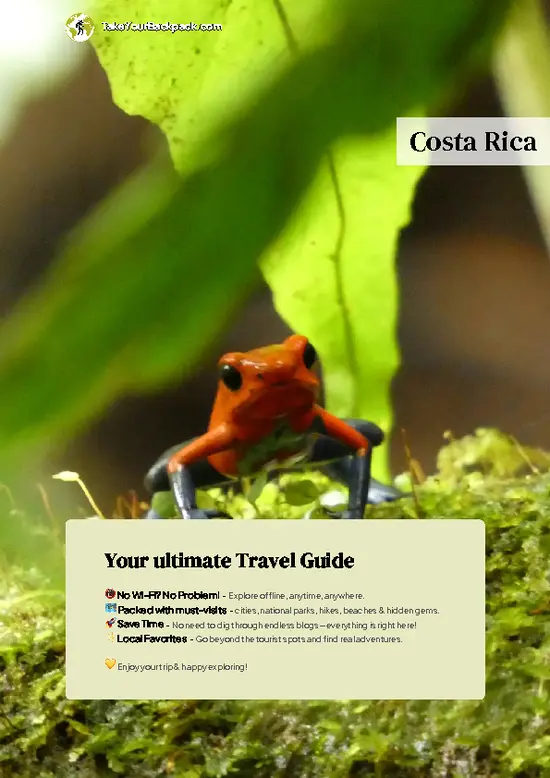
example page 0 from our offline Travel Guide for Costa Rica
example page 1 from our offline Travel Guide for Costa Rica
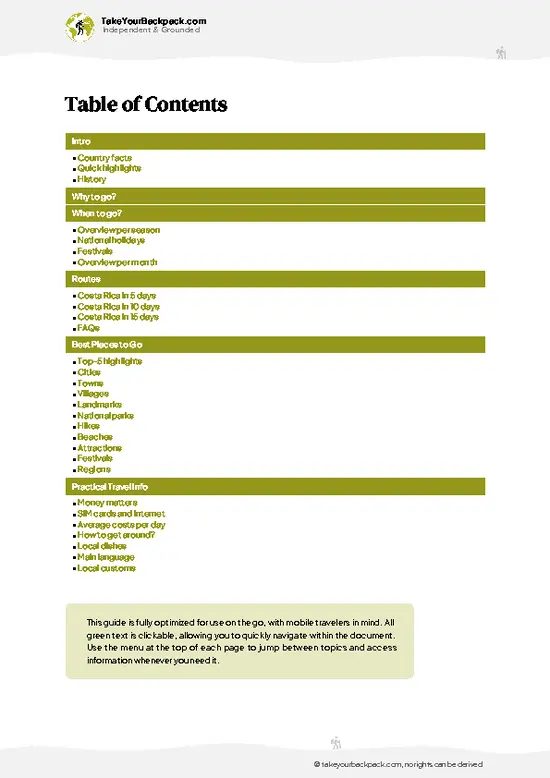
example page 2 from our offline Travel Guide for Costa Rica
example page 3 from our offline Travel Guide for Costa Rica
example page 4 from our offline Travel Guide for Costa Rica
example page 5 from our offline Travel Guide for Costa Rica
example page 6 from our offline Travel Guide for Costa Rica
example page 7 from our offline Travel Guide for Costa Rica
Loading the map 🌍
CLICK TO FILTER
cities
towns
villages
landmarks
national parks
hikes
beaches
attractions
festivals
regions
SHOW COUNTRY’S BESTSHOW ALL

✨ Why go?
Ranked #3 national park in Costa Rica
Reasons people choose to explore here

Corcovado National Park draws backpackers who want raw rainforest without a resort layer between them and the trees. Trails here are walked, not driven, and the payoff is wildlife density that few places in Central America can match: tapirs and white-lipped peccaries cross muddy paths, and scarlet macaws shriek overhead in almond trees along the coast. The park holds a huge share of the country's species on a patch of land that is small on a map, so a single morning can feel like a field-guide checklist.
Self-guided travel is not permitted, which changes the logic. You pick your own pace by choosing between a day visit and a multi-day route linking Sirena, La Leona and San Pedrillo ranger stations, and you can keep costs down by sleeping in simple lodging outside the park or camping at stations. … read more 👉
Corcovado National Park draws backpackers who want raw rainforest without a resort layer between them and the trees. Trails here are walked, not driven, and the payoff is wildlife density that few places in Central America can match: tapirs and white-lipped peccaries cross muddy paths, and scarlet macaws shriek overhead in almond trees along the coast. The park holds a huge share of the country's species on a patch of land that is small on a map, so a single morning can feel like a field-guide checklist.
Self-guided travel is not permitted, which changes the logic. You pick your own pace by choosing between a day visit and a multi-day route linking Sirena, La Leona and San Pedrillo ranger stations, and you can keep costs down by sleeping in simple lodging outside the park or camping at stations. Guides do the spotting for you, which is a real advantage when a camouflaged snake sits inches from the trail. If you like planning your own route, the multi-day traverse is the most independent option available, and it is the one I would aim for.

💡 HighlightsWhat this place is best known for

  1. Sirena Ranger Station: The park's wildlife hub, with a jungle airstrip, simple bunks and some of the best odds of spotting tapirs, coatis and even a puma at dawn or after dark on guided walks.
  2. La Leona Station and Beach: The southern entrance, where a long beach leads into forest and scarlet macaws feed in the almond trees. Tides matter for the crossing here.
  3. San Pedrillo Station: The northwestern entry, with a waterfall swimming hole and a shorter route into the forest, good for those wanting a gentler taste.
  4. Los Patos Sector: A quieter, inland entrance reached on foot from the village of Los Patos, passing through secondary and primary forest with a good chance of seeing spider monkeys.
  5. Corcovado Lagoon: A freshwater lagoon in the interior where caimans live, migratory birds gather and bull
… read more 👉
  1. Sirena Ranger Station: The park's wildlife hub, with a jungle airstrip, simple bunks and some of the best odds of spotting tapirs, coatis and even a puma at dawn or after dark on guided walks.
  2. La Leona Station and Beach: The southern entrance, where a long beach leads into forest and scarlet macaws feed in the almond trees. Tides matter for the crossing here.
  3. San Pedrillo Station: The northwestern entry, with a waterfall swimming hole and a shorter route into the forest, good for those wanting a gentler taste.
  4. Los Patos Sector: A quieter, inland entrance reached on foot from the village of Los Patos, passing through secondary and primary forest with a good chance of seeing spider monkeys.
  5. Corcovado Lagoon: A freshwater lagoon in the interior where caimans live, migratory birds gather and bull sharks have been recorded in nearby rivers. It is remote, so it takes real commitment.
  6. Sirena River: A broad, tidal waterway where crocodiles bask on the banks and bull sharks move upriver. Guides explain the risks and show you where to watch from.
  7. Night walks near the ranger stations: After dark the forest turns noisy with frogs, glowing fungi, sleeping birds and big-eyed insects, and a guide's flashlight picks them out.
  8. Coastal trail between La Leona and Sirena: A hot, exposed stretch of sand, rocks and river mouths where you pass wading birds, monkeys and sometimes tapir tracks.
Corcovado National Park rewards a first visit best through Sirena Ranger Station, because the wildlife density there makes a night and a morning enough to feel the place.
Spotted a mistake or missing something? Contact us.

Things to do around Corcovado National Park

Ratings based on Tripadvisor reviews. When you book through this link, you support our work at no extra cost to you.

🌤️ When to go?Weather, crowds, and seasonal trade-offs

  • Dry Season (December to April): Trails firm up and river crossings drop, so this is the easiest window for the multi-day Sirena route. Days run about 24-33°C (75-91°F) at the coast, with humid jungle nights near 22°C (72°F). Daylight lasts roughly 11.5 hours. Ranger station beds and bunks fill weeks ahead, and lodge rates peak around Christmas and Easter.
  • Green Season (May to November): Mornings are often clear, then rain builds after noon and can last all night. Temperatures stay similar, 23-32°C (73-90°F), but the Sierpe and Sirena rivers can swell enough to halt boats and crossings. Crowds thin and lodges commonly drop rates by 20 to 40 percent.
  • Wettest Months (September to November): Rainfall peaks and the park has closed trails or stations in the past. Some lodges shut for weeks, and boat
… read more 👉
  • Dry Season (December to April): Trails firm up and river crossings drop, so this is the easiest window for the multi-day Sirena route. Days run about 24-33°C (75-91°F) at the coast, with humid jungle nights near 22°C (72°F). Daylight lasts roughly 11.5 hours. Ranger station beds and bunks fill weeks ahead, and lodge rates peak around Christmas and Easter.
  • Green Season (May to November): Mornings are often clear, then rain builds after noon and can last all night. Temperatures stay similar, 23-32°C (73-90°F), but the Sierpe and Sirena rivers can swell enough to halt boats and crossings. Crowds thin and lodges commonly drop rates by 20 to 40 percent.
  • Wettest Months (September to November): Rainfall peaks and the park has closed trails or stations in the past. Some lodges shut for weeks, and boat transfers get canceled.
Book park permits and Sirena beds first, then flights and lodging, and aim for January or late April for good trails with fewer people.


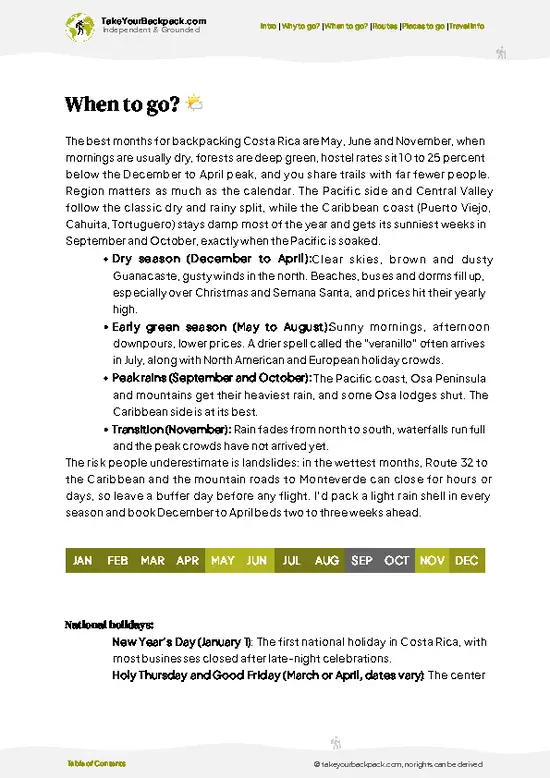
source: climatestotravel.comJANJanuary: excellent for travelingFEBFebruary: excellent for travelingMARMarch: excellent for travelingAPRApril: highly recommended for travelingMAYMay: fair for travelingJUNJune: fair for travelingJULJuly: fair for travelingAUGAugust: fair for travelingSEPSeptember: fair for travelingOCTOctober: fair for travelingNOVNovember: highly recommended for travelingDECDecember: excellent for traveling
when-to-go

✈️ The backpacker research shortcutCosta Rica Travel Guide

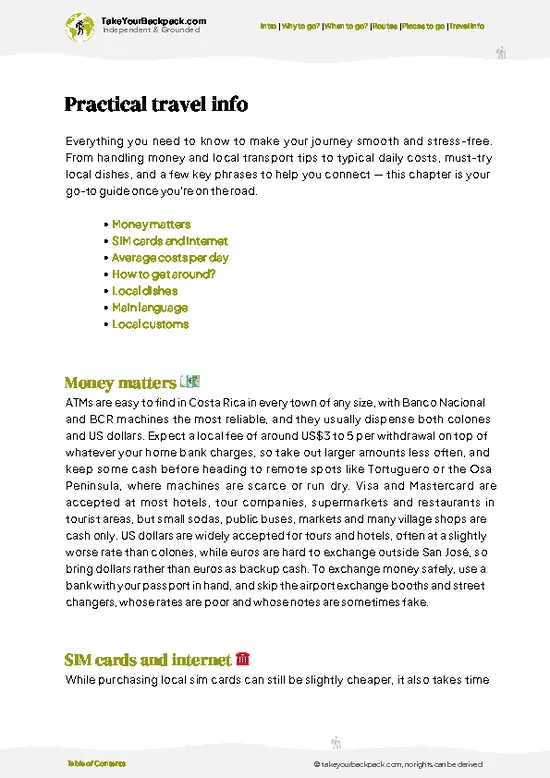
An offline-friendly backpacking guide with optimized travel routes, ranked highlights, transport advice, and the best areas to stay.
example page 0 from our offline Travel Guide for Costa Rica
example page 1 from our offline Travel Guide for Costa Rica
example page 2 from our offline Travel Guide for Costa Rica
example page 3 from our offline Travel Guide for Costa Rica
example page 4 from our offline Travel Guide for Costa Rica
example page 5 from our offline Travel Guide for Costa Rica
example page 6 from our offline Travel Guide for Costa Rica
example page 7 from our offline Travel Guide for Costa Rica
The digital guide (287 pages) contains:
✅ 90 highlights, ranked by travel appeal
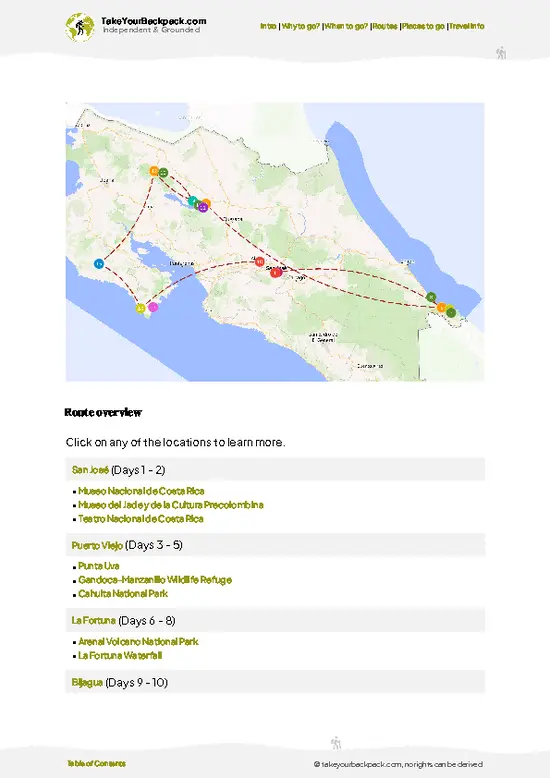
✅ Optimized 5, 10 & 15-day travel routes
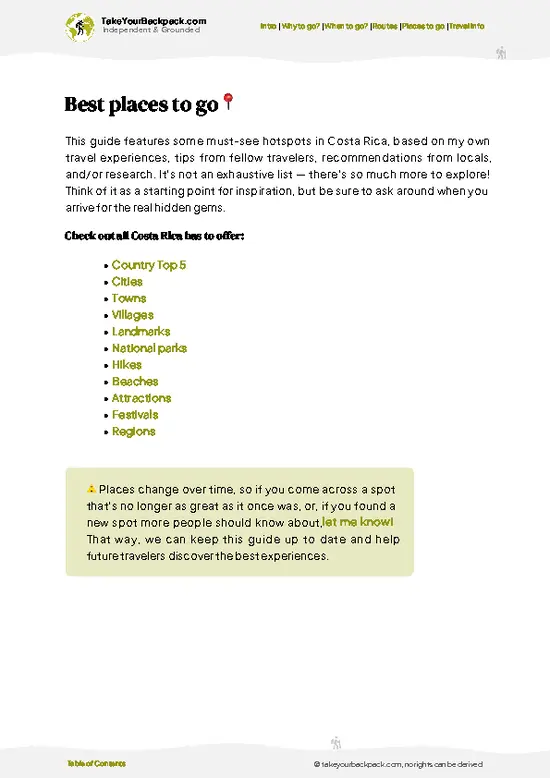
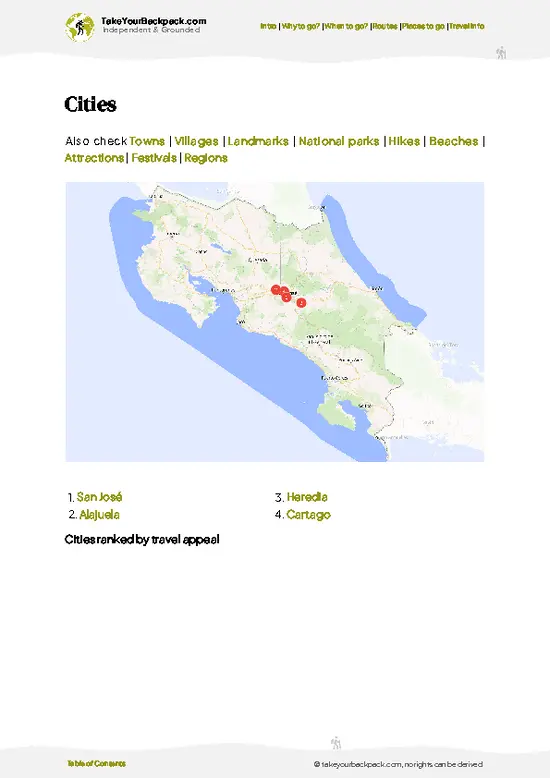
✅ Cities, national parks, landmarks, beaches
✅ How to get around
✅ Offline-friendly for travel without Wi-Fi
👉 Click to see all 30+ guide features

📅 Plan smarter in minutes, not weeks
✅ Month by month travel advice
✅ Festivals & national holidays
✅ Budget expectations

🗺️ Go to the right places, skip the overrated ones
✅ Honest pros & cons of destinations
✅ Top hikes, parks & viewpoints
✅ Lesser-known places most travelers miss
✅ Clear “worth it vs skip it” guidance

🛏️ Travel smoothly without rookie mistakes
✅ Best areas to stay
✅ Transport systems explained simply
✅ Common scams & safety advice
✅ SIM cards, money & practical tips

🌍 Understand the country, not just visit it
✅ Culture & traditions
✅ 52 Essential phrases & customs
✅ Festivals worth planning around
✅ Traveler-friendly historical context
✅ Insights that make places more meaningful

📱 Built for real travel conditions
✅ Fully downloadable PDF
✅ Works completely offline
✅ Optimized for phone use
✅ Useful in remote areas & buses
✅ Everything in one place
Stop searching, start planning
Get instant access to your full guide. 30‑day money-back guarantee.
+ Add another guide for just

By proceeding you agree to our terms.
Sent to your inbox immediately after payment • 100% Secure Checkout
Best Backpacking Travel Advisor 2025 tourism awardBest Backpacking
Travel Advisor
2025
What others say about Take Your Backpack Guides:
⭐⭐⭐⭐⭐
Fantastic, amazing amount of information!
⭐⭐⭐⭐⭐
My goodness this is amazing, it's what I've been looking for hats off too you!
⭐⭐⭐⭐⭐
I think this is absolutely BRILLIANT
⭐⭐⭐⭐
Very complete and informative. It's still missing places, but I gotta to commend you
⭐⭐⭐⭐⭐
This is truly amazing, thank you, can't wait to explore it with my kids!
⭐⭐⭐⭐⭐
Awesome resource, thank you!
⭐⭐⭐⭐⭐
This is amazing! Can't wait to explore the ones I haven't seen
⭐⭐⭐⭐
I love this! Well done, great idea.
⭐⭐⭐⭐⭐
Thanks for taking the time to make this gem!
⭐⭐⭐⭐⭐
This might be the best website I've ever seen.
⭐⭐⭐⭐⭐
Congratulations, and thank you so much for your work; it's incredibly valuable.
⭐⭐⭐⭐
In all seriousness I think you did a great job pointing out the important spots
⭐⭐⭐⭐⭐
10/10 very good
⭐⭐⭐⭐⭐
As someone who's only just starting to visit regularly this is awesome, thank you.
⭐⭐⭐⭐
Thank you very much! I'm going to visit my dad, it's going to be very useful!
⭐⭐⭐⭐⭐
This is really cool! We'll be travelling for the first time and this definitely come in handy.
⭐⭐⭐⭐⭐
You are now our minister of culture, congratulations 👨‍💼
⭐⭐⭐⭐⭐
Just wanted to tell you that this is a pearl! Going to follow your recommendations.
⭐⭐⭐⭐⭐
This is so cool. I'll definitely be using the resource for my travels soon.
⭐⭐⭐⭐⭐
This is very impressive! Good work.
⭐⭐⭐⭐⭐
This is an amazing and informative site. Very well done!

🛏️ Where to stay?Best areas and accommodation options

Sleep inside the park at Sirena Station if you want to be in the jungle at dawn, otherwise most backpackers stay in Drake Bay or Puerto Jiménez. Sirena offers dorm-style bunks with mosquito nets, and it requires advance reservations plus meals booked through the park, at roughly US$35 to 40 a night for a bunk and US$20 to 30 per meal. Camping at Sirena and La Leona costs about US$5 to 10 a night. San Pedrillo and Los Patos stations have limited camping as well.
Drake Bay, on the northwest side, has hostels and simple cabinas from about US$15 to 40 a night, plus eco-lodges that cost far more. Boats … read more 👉
Sleep inside the park at Sirena Station if you want to be in the jungle at dawn, otherwise most backpackers stay in Drake Bay or Puerto Jiménez. Sirena offers dorm-style bunks with mosquito nets, and it requires advance reservations plus meals booked through the park, at roughly US$35 to 40 a night for a bunk and US$20 to 30 per meal. Camping at Sirena and La Leona costs about US$5 to 10 a night. San Pedrillo and Los Patos stations have limited camping as well.
Drake Bay, on the northwest side, has hostels and simple cabinas from about US$15 to 40 a night, plus eco-lodges that cost far more. Boats run from here to San Pedrillo station, and it is the easiest base for day trips. Puerto Jiménez, on the east side of the Osa Peninsula, has the widest budget choice, with dorms at US$12 to 20 and private rooms from US$30 to 50. Colectivo trucks run from here to the La Leona and Carate entrances. Carate has a few basic lodges and camping near the La Leona trailhead. Sierpe is a quiet river town that works for a night before the boat to Drake Bay.

👛 Costs (as of 22 October 2026)Money, prices, and spending tips

Corcovado National Park costs roughly US$90 to 170 a day for a backpacker, mostly because a guide is required. The figure below uses high-season lodging and a shared guide.
CategoryBudget RangeLocal Reality
Park entranceUS$15 to 20 a dayPaid per day per station, with permits booked online ahead of time in US dollars or by card.
GuideUS$35 to 50Compulsory, and shared among a group, which cuts the per-person price. Day tours bundle it in.
AccommodationUS$15 to 40 (US$12 off-season)Hostel dorms and cabinas in Drake Bay or Puerto Jiménez. Sirena bunks cost more, with camping the cheapest.
Local transportUS$10 to 30Boat from Sierpe to Drake Bay costs about US$20 to 30 one way. Colectivo trucks in the Osa cost a few dollars.
Food and suppliesUS$15 to 30Sodas serve rice and beans plates for US$6 to 10.
… read more 👉
Corcovado National Park costs roughly US$90 to 170 a day for a backpacker, mostly because a guide is required. The figure below uses high-season lodging and a shared guide.
CategoryBudget RangeLocal Reality
Park entranceUS$15 to 20 a dayPaid per day per station, with permits booked online ahead of time in US dollars or by card.
GuideUS$35 to 50Compulsory, and shared among a group, which cuts the per-person price. Day tours bundle it in.
AccommodationUS$15 to 40 (US$12 off-season)Hostel dorms and cabinas in Drake Bay or Puerto Jiménez. Sirena bunks cost more, with camping the cheapest.
Local transportUS$10 to 30Boat from Sierpe to Drake Bay costs about US$20 to 30 one way. Colectivo trucks in the Osa cost a few dollars.
Food and suppliesUS$15 to 30Sodas serve rice and beans plates for US$6 to 10. Station meals cost US$20 to 30 each, and stocking up in town is cheaper.
Total Daily BudgetUS$90 to 170About US$130 for a typical high-season day with a shared guide and a dorm bed.


source: costarica.com
⚠️ Prices can change and everyone travels differently, so take this as a rough guide. Hope it helps you plan your adventure!

🥾 TrailsScenic routes and wildlife spotting in Corcovado

Corcovado National Park offers a handful of well-defined routes, all requiring a licensed guide, and most of them are long, humid and muddy. Expect heat, creek crossings, tidal timing and steady insect life; wildlife encounters are frequent and often close.
  • La Leona to Sirena: About 16 km, usually 5 to 7 hours, hard. Beach sand, rocky points and river mouths, with tides deciding when you can pass. Macaws, coatis and monkeys are common.
  • Sirena to San Pedrillo: About 19 km, 6 to 8 hours, hard. Forest trail with muddy sections and several river crossings, passing a waterfall near the end.
  • Los Patos
… read more 👉
Corcovado National Park offers a handful of well-defined routes, all requiring a licensed guide, and most of them are long, humid and muddy. Expect heat, creek crossings, tidal timing and steady insect life; wildlife encounters are frequent and often close.
  • La Leona to Sirena: About 16 km, usually 5 to 7 hours, hard. Beach sand, rocky points and river mouths, with tides deciding when you can pass. Macaws, coatis and monkeys are common.
  • Sirena to San Pedrillo: About 19 km, 6 to 8 hours, hard. Forest trail with muddy sections and several river crossings, passing a waterfall near the end.
  • Los Patos to Sirena: About 20 km, 7 to 9 hours, hard. Inland route through lowland forest, often chosen by those wanting fewer crowds and more chances to see spider monkeys and peccaries.
  • Sirena Station loop trails: Short walks of 1 to 5 km, easy to moderate. These run along the river and into the forest, and night walks here are a highlight.
  • Day walks from La Leona or San Pedrillo: Around 3 to 4 hours out and back, moderate. Good for travelers without time for the full traverse.
Most visitors arrive through Puerto Jiménez or Drake Bay, using boats, shuttles or short flights, and public transport only reaches the gateway towns. Crowds are low compared with other Costa Rican parks because daily numbers are capped. A daily entry fee applies, paid with your permit, and permits must be booked in advance through the official system. Bring dry socks, insect repellent and plenty of water, since refill points are few.
⚠️ Hiking info can sometimes be outdated or inaccurate. Before you hit the trail, check the latest conditions with locals. If you do spot anything that's off, I'd love to hear from you, so I can update it for fellow travelers.

🛡️ SafetySafety Tips and Common Scams in Corcovado

Corcovado is straightforward with the right preparation, and most problems come from heat, rivers and underestimating distance. Humidity is intense, so start walking at dawn, carry at least 3 liters of water per person plus purification tablets, and rest through the hottest hours. Beach sections on the La Leona to Sirena route depend on tides, so check the tide table and cross rivers like the Río Madrigal at low tide. Bull sharks can be present in some river mouths, so cross only where rangers advise.
Footwear matters. Rubber boots or quick-drying shoes handle the mud, and a dry set of clothes for the evening makes nights comfortable. Guides are mandatory and enforced, which also helps with navigation. Wildlife is part of the draw. Tapirs, peccaries and snakes appear, so keep 10 meters of distance, … read more 👉
Corcovado is straightforward with the right preparation, and most problems come from heat, rivers and underestimating distance. Humidity is intense, so start walking at dawn, carry at least 3 liters of water per person plus purification tablets, and rest through the hottest hours. Beach sections on the La Leona to Sirena route depend on tides, so check the tide table and cross rivers like the Río Madrigal at low tide. Bull sharks can be present in some river mouths, so cross only where rangers advise.
Footwear matters. Rubber boots or quick-drying shoes handle the mud, and a dry set of clothes for the evening makes nights comfortable. Guides are mandatory and enforced, which also helps with navigation. Wildlife is part of the draw. Tapirs, peccaries and snakes appear, so keep 10 meters of distance, never feed animals, and watch where you place hands and feet. Store food sealed, since raccoons and coatis raid bags.

FAQFrequently asked questions about Corcovado

Plan on 3 to 4 days for Corcovado National Park if you want the classic La Leona to Sirena to San Pedrillo traverse, which covers roughly 40 to 45 kilometers. A single guided day trip from Drake Bay to San Pedrillo works if you only have one day, but it shows a small slice of the park. Two nights at Sirena Station give the best odds for tapirs, monkeys and night walks.
Yes, Corcovado National Park works well without a car, because access is by boat or on foot anyway. From San José you can take a bus or short flight to Puerto Jiménez, or bus to Sierpe and boat to Drake Bay (about 1 to 1.5 hours, US$20 to 30). Shared colectivo trucks run from Puerto Jiménez to Carate, then you walk to La Leona station, about 3.5 km and under an hour on the beach.
Yes, Corcovado National Park requires a permit booked ahead through the official SINAC reservation system, and entry costs about US$15 to 20 per person per day. A licensed guide is mandatory and costs roughly US$35 to 50 per person when shared. Permits are tied to specific stations and dates, and Sirena Station beds and meals must be reserved too, so book weeks ahead in the dry season.
⚠️ Things can change over time, so always validate details locally before you go.

Other Costa Rican national parks near Corcovado

Explore more nearby:


💡 Not sure where to go next?
Create a personalized itinerary for Costa Rica including Corcovado and the places that fit your trip.

Generate my itinerary

👉 Discover all national parks

Or checkout all Costa Rica has to offer (think cities, towns, villages, national parks, hikes, beaches, festivals)
Country photo of Costa Rica

We 💚 feedbackKey takeaways before you go

Corcovado National Park is at its best in the early morning, when the forest is loud, the air is cooler and animals still cross trails before the heat pushes them into shade. The drier months of the year make river crossings easier and tides more predictable, so I would plan around them and book the permit early.

✈️ When did I visit Costa Rica?
Costa Rica I visited during my half year trip through South and Central America back in 2003

✍️ Help improve this page!
The information on this page is based on my own backpacking experience in Costa Rica, supplemented with up-to-date research and feedback from other travelers. Travel details can change, so if you notice anything outdated or incomplete, feel free to let me know.


🙋‍♂️ Give feedback

👋 Meet the founderWho’s Behind Take Your Backpack?

Johan, backpacker and founder of TakeYourBackpackHi, I’m Johan (Netherlands 🇳🇱), the creator of TakeYourBackpack. Over the past 3 decades, I’ve backpacked through 90+ countries across six continents, gaining extensive experience with independent travel, long-term trips, and overland routes.

This site is built on a combination of firsthand travel experience and carefully curated insights from other backpackers. Many guides are based on places I’ve personally visited, while others bring together tips, observations, and practical advice shared by trusted travelers I’ve met along the way.

The goal is to provide realistic, experience-driven guidance — not generic itineraries — so you can explore destinations with better context, clearer expectations, and more confidence.