×

Costa Rica🇨🇷 | national parksChirripó National ParkCosta Rica's highest peak, páramo, Crestones granite, mountain refuges | things to do and best time to go

Explore Cahuita National ParkExplore Cocos Island National Park

Backpacking in Chirripó
🌟 Highlightnational park ranked #7
By Johan Kruseman 🇳🇱 | Updated October 22, 2026

Chirripó National Park is a hike to a summit, not a drive-up viewpoint, and the 14.5 kilometer climb from the trailhead needs a permit booked well ahead. The park lies in the southern mountains of Costa Rica, inland from San Isidro de El General. I arrived at the gate with no reservation and a pack full of canned food, and the ranger sent me away. Booking early and buying light, dried food saves a wasted day and a sore back. Expect oak forest dripping with moss, the clank of mule hooves, wood smoke at the hut, and páramo grass that crunches underfoot. Crowds stay small because permits are capped. Unlike nearby Corcovado, which is steamy lowland jungle, Chirripó is a cold, high, open mountain trek.

Discover everything you want to know in the 📖 Costa Rica Travel Guide.


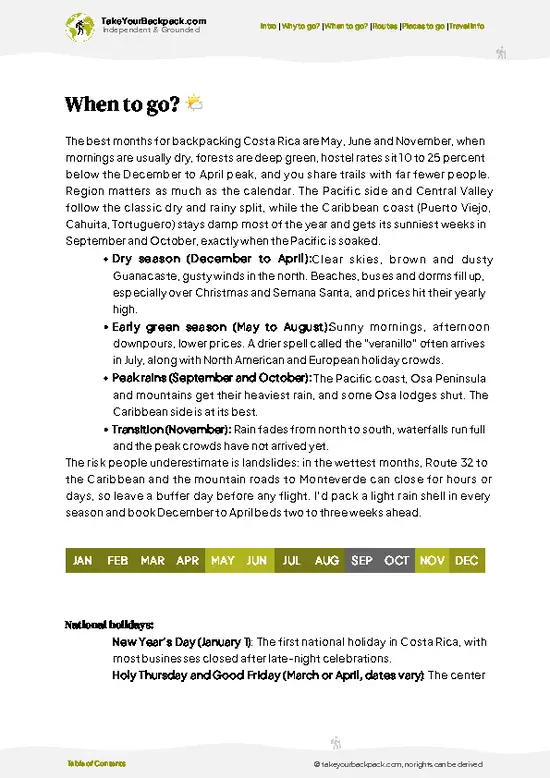
example page 0 from our offline Travel Guide for Costa Rica
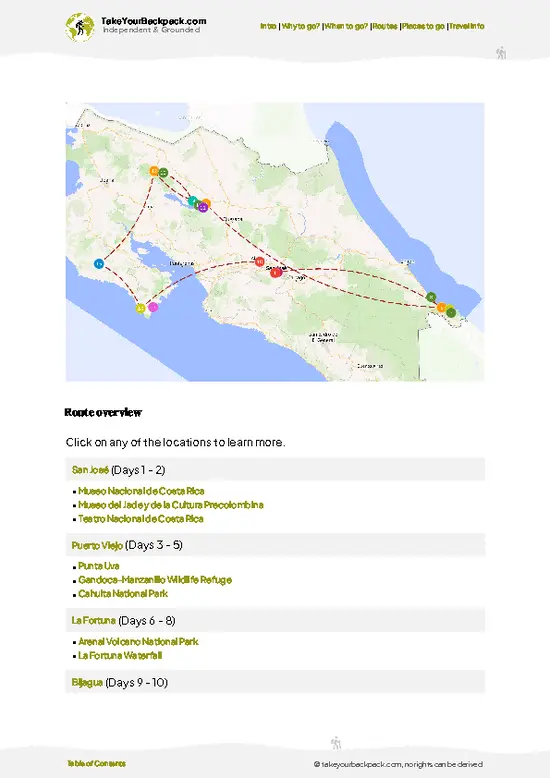
example page 1 from our offline Travel Guide for Costa Rica
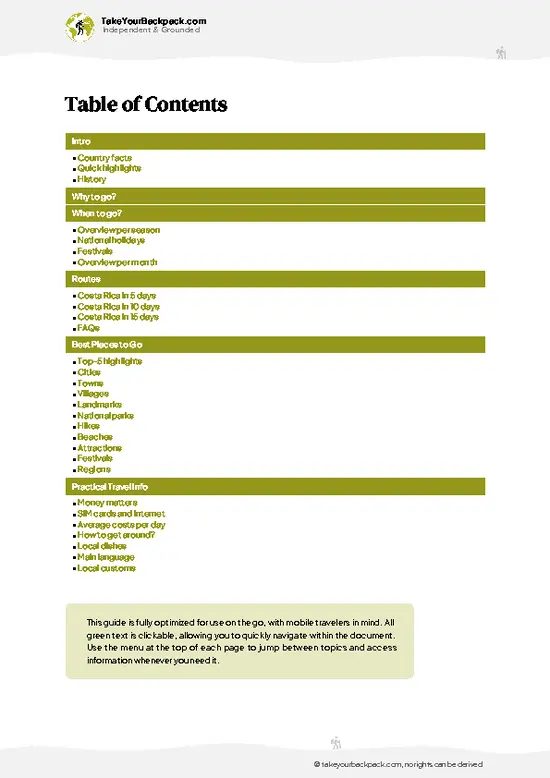
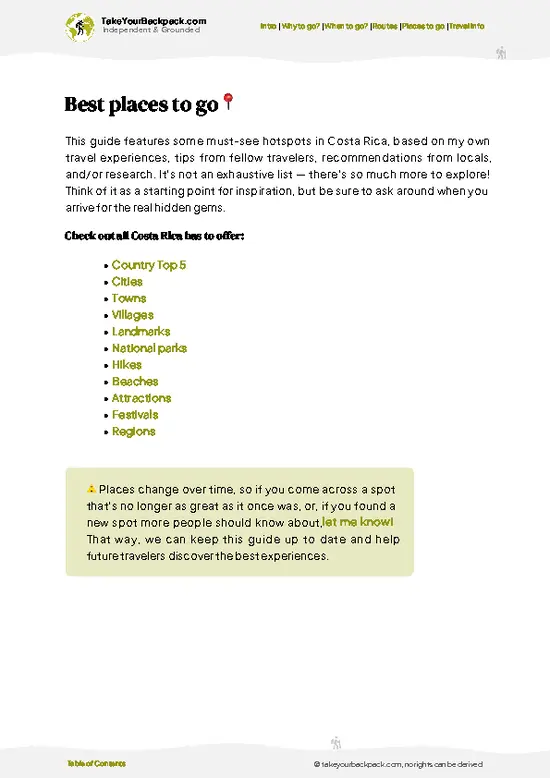
example page 2 from our offline Travel Guide for Costa Rica
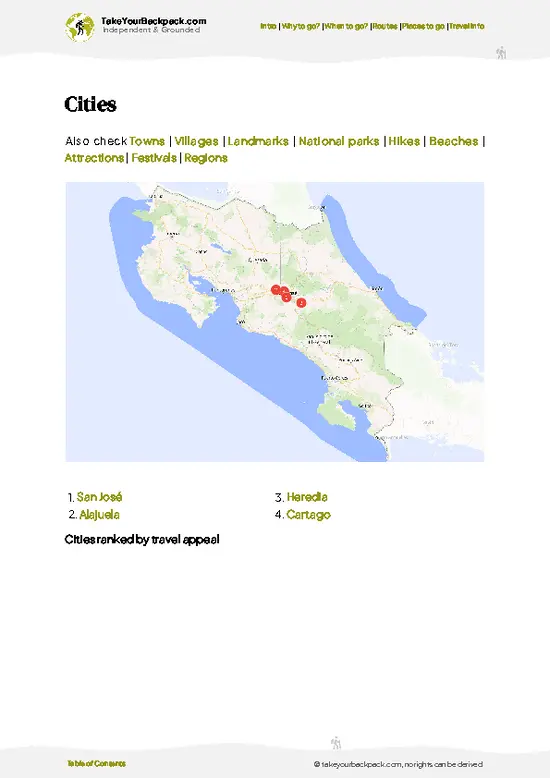
example page 3 from our offline Travel Guide for Costa Rica
example page 4 from our offline Travel Guide for Costa Rica
example page 5 from our offline Travel Guide for Costa Rica
example page 6 from our offline Travel Guide for Costa Rica
example page 7 from our offline Travel Guide for Costa Rica
Loading the map 🌍
CLICK TO FILTER
cities
towns
villages
landmarks
national parks
hikes
beaches
attractions
festivals
regions
SHOW COUNTRY’S BESTSHOW ALL

✨ Why go?
Ranked #7 national park in Costa Rica
The unique appeal for travelers

Chirripó National Park suits people who like to plan their own climb, because the permit system gives you a fixed bed at the summit hut and no guide is required. You carry your own gear, set your own pace and choose your own sunrise stop. The pull is the country’s highest point, Cerro Chirripó at 3,820 meters, where on clear mornings you can see both the Pacific and the Caribbean. The other draw is variety packed into one ascent: cloud forest, bamboo thickets, then open páramo with glacial lakes. The Crestones rock towers give a second day of exploring without extra climbing. Porters are available for heavy bags, so a first-time trekker can manage it. If you prefer a hotel each night and a bus tour, this is the wrong park.

💡 HighlightsThe experiences that define the visit

  1. Cerro Chirripó summit: The highest peak in Costa Rica, reached on the final push before dawn. On clear mornings both coasts are visible.
  2. Crestones: Orange-tinged rock towers above the páramo, a favorite for sunrise photos and a moderate scramble from the hut.
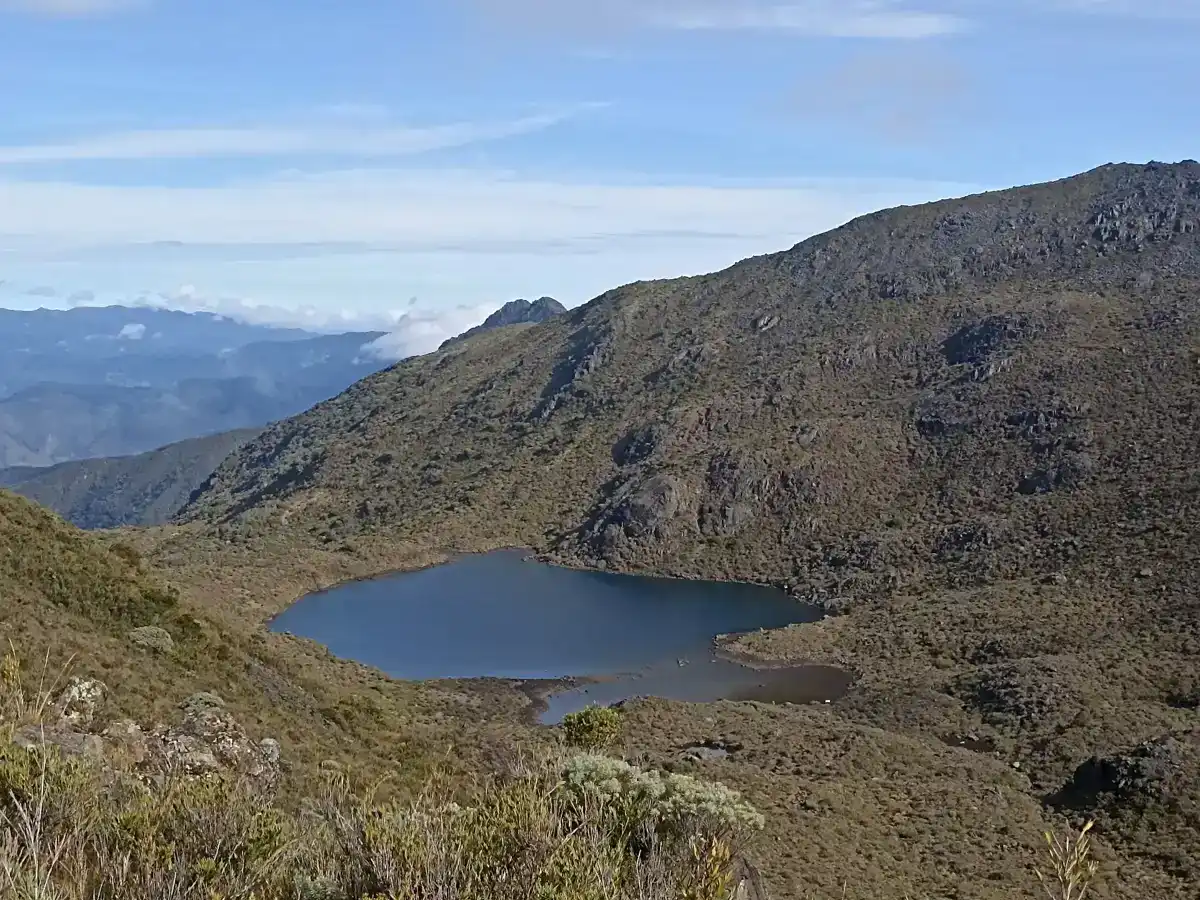
  3. Valle de los Conejos: A wide glacial valley of grass and dwarf bamboo, where you may spot rabbits and hawks.
  4. Sabana de los Leones: A flat stretch of high grassland on the climb, good for a breather and views down the ridge.
  5. Lago Chirripó and nearby lakes: Small glacial lakes reached by side trails, mirror-still in the early hours.
  6. Cloud forest on the lower trail: Oaks draped in moss and bromeliads, with a chance of seeing quetzals and hearing woodpeckers.
  7. Base Crestones hut sunrise: Mornings here are crisp, with frost on the grass and clouds pooling in the valleys below.
Spotted a mistake or missing something? Contact us.
🌤️ When to go?Best time to explore Chirripó

  • Dry Season (December to April): Clearest skies for the summit views of both oceans, with less cloud than other months. Valley days reach 24 to 28°C (75 to 82°F), the hut at 3,400 m (11,150 ft) drops to around 2 to 6°C (36 to 43°F) and often below freezing before dawn. Permits sell out weeks ahead, especially January to March.
  • Green Season (May to November): Afternoon rain is routine, trails turn muddy, and September and October are the wettest, with views often lost. Permits are easy to get and lodging is calmer.
  • Shoulder Months (late November, early May): Drier mornings, thinner crowds and easier bookings.
  • Daylight: Roughly 12 hours all year, so start hiking before dawn.
Book your permit as soon as dates open, about 3 months out for peak weeks.

source: climatestotravel.comJANJanuary: excellent for travelingFEBFebruary: excellent for travelingMARMarch: excellent for travelingAPRApril: highly recommended for travelingMAYMay: fair for travelingJUNJune: fair for travelingJULJuly: fair for travelingAUGAugust: fair for travelingSEPSeptember: fair for travelingOCTOctober: fair for travelingNOVNovember: fair for travelingDECDecember: highly recommended for traveling

✈️ The backpacker research shortcutCosta Rica Travel Guide

An offline-friendly backpacking guide with optimized travel routes, ranked highlights, transport advice, and the best areas to stay.
example page 0 from our offline Travel Guide for Costa Rica
example page 1 from our offline Travel Guide for Costa Rica
example page 2 from our offline Travel Guide for Costa Rica
example page 3 from our offline Travel Guide for Costa Rica
example page 4 from our offline Travel Guide for Costa Rica
example page 5 from our offline Travel Guide for Costa Rica
example page 6 from our offline Travel Guide for Costa Rica
example page 7 from our offline Travel Guide for Costa Rica
The digital guide (287 pages) contains:
✅ 92 highlights, ranked by travel appeal
✅ Optimized 5, 10 & 15-day travel routes
✅ Cities, national parks, landmarks, beaches
✅ How to get around
✅ Offline-friendly for travel without Wi-Fi
👉 Click to see all 30+ guide features

📅 Plan smarter in minutes, not weeks
✅ Month by month travel advice
✅ Festivals & national holidays
✅ Budget expectations

🗺️ Go to the right places, skip the overrated ones
✅ Honest pros & cons of destinations
✅ Top hikes, parks & viewpoints
✅ Lesser-known places most travelers miss
✅ Clear “worth it vs skip it” guidance

🛏️ Travel smoothly without rookie mistakes
✅ Best areas to stay
✅ Transport systems explained simply
✅ Common scams & safety advice
✅ SIM cards, money & practical tips

🌍 Understand the country, not just visit it
✅ Culture & traditions
✅ 52 Essential phrases & customs
✅ Festivals worth planning around
✅ Traveler-friendly historical context
✅ Insights that make places more meaningful

📱 Built for real travel conditions
✅ Fully downloadable PDF
✅ Works completely offline
✅ Optimized for phone use
✅ Useful in remote areas & buses
✅ Everything in one place
Stop searching, start planning
Get instant access to your full guide. 30‑day money-back guarantee.
+ Add another guide for just

By proceeding you agree to our terms.
Sent to your inbox immediately after payment • 100% Secure Checkout
Best Backpacking Travel Advisor 2025 tourism awardBest Backpacking
Travel Advisor
2025
What others say about Take Your Backpack Guides:
⭐⭐⭐⭐⭐
Fantastic, amazing amount of information!
⭐⭐⭐⭐⭐
My goodness this is amazing, it's what I've been looking for hats off too you!
⭐⭐⭐⭐⭐
I think this is absolutely BRILLIANT
⭐⭐⭐⭐
Very complete and informative. It's still missing places, but I gotta to commend you
⭐⭐⭐⭐⭐
This is truly amazing, thank you, can't wait to explore it with my kids!
⭐⭐⭐⭐⭐
Awesome resource, thank you!
⭐⭐⭐⭐⭐
This is amazing! Can't wait to explore the ones I haven't seen
⭐⭐⭐⭐
I love this! Well done, great idea.
⭐⭐⭐⭐⭐
Thanks for taking the time to make this gem!
⭐⭐⭐⭐⭐
This might be the best website I've ever seen.
⭐⭐⭐⭐⭐
Congratulations, and thank you so much for your work; it's incredibly valuable.
⭐⭐⭐⭐
In all seriousness I think you did a great job pointing out the important spots
⭐⭐⭐⭐⭐
10/10 very good
⭐⭐⭐⭐⭐
As someone who's only just starting to visit regularly this is awesome, thank you.
⭐⭐⭐⭐
Thank you very much! I'm going to visit my dad, it's going to be very useful!
⭐⭐⭐⭐⭐
This is really cool! We'll be travelling for the first time and this definitely come in handy.
⭐⭐⭐⭐⭐
You are now our minister of culture, congratulations 👨‍💼
⭐⭐⭐⭐⭐
Just wanted to tell you that this is a pearl! Going to follow your recommendations.
⭐⭐⭐⭐⭐
This is so cool. I'll definitely be using the resource for my travels soon.
⭐⭐⭐⭐⭐
This is very impressive! Good work.
⭐⭐⭐⭐⭐
This is an amazing and informative site. Very well done!

🛏️ Where to stay?How to pick the right area

The only bed on the mountain is the Crestones Base Camp lodge (Base Crestones), a dorm hut at 3,400 m (11,150 ft) that you must reserve through the park, and your permit covers a set number of nights there. Bunks come with blankets, and meals can be added at booking. Camping is not allowed on the main trail, so plan around the lodge.

For the nights before and after, base yourself in San Gerardo de Rivas, the trailhead village at about 1,400 m (4,600 ft). Small hostels, family-run cabinas and mountain lodges sit along the road up to the park gate, so you can start walking at 3 or 4 a.m. without … read more 👉
The only bed on the mountain is the Crestones Base Camp lodge (Base Crestones), a dorm hut at 3,400 m (11,150 ft) that you must reserve through the park, and your permit covers a set number of nights there. Bunks come with blankets, and meals can be added at booking. Camping is not allowed on the main trail, so plan around the lodge.

For the nights before and after, base yourself in San Gerardo de Rivas, the trailhead village at about 1,400 m (4,600 ft). Small hostels, family-run cabinas and mountain lodges sit along the road up to the park gate, so you can start walking at 3 or 4 a.m. without a transfer. A few have hot showers and kitchens, and some will store your extra luggage while you hike.

For more choice, stay in San Isidro de El General, the main town about 1 hour by road below. It has hotels, supermarkets, ATMs and the bus connections to San José and the coast. Buy supplies there, since San Gerardo has only small shops.

👛 Costs (as of 22 October 2026)Travel costs and budget guide for Chirripó

Chirripó National Park costs roughly US$103 to 180 per person per day, mostly because of the required lodge booking and the park fee. The figures below assume a typical two-night climb.
CategoryBudget RangeLocal Reality
Park entranceUS$18 to 20Charged per day for foreign visitors, with a permit required for the climb.
Lodging at base campUS$35 to 50Dorm bunk at Crestones Base Camp, reserved in advance; fees are higher in high season.
Meals at the lodgeUS$25 to 35Set meal packages booked with your stay; self-catering is allowed with a stove.
Lodging in San GerardoUS$12 to 40Hostel beds or cabins before and after the hike.
Local transportUS$3 to 20Bus from San Isidro to San Gerardo costs a few dollars, or a shared taxi costs more.
Food and suppliesUS$10 to 20Sodas serve filling meals in the village,
… read more 👉
Chirripó National Park costs roughly US$103 to 180 per person per day, mostly because of the required lodge booking and the park fee. The figures below assume a typical two-night climb.
CategoryBudget RangeLocal Reality
Park entranceUS$18 to 20Charged per day for foreign visitors, with a permit required for the climb.
Lodging at base campUS$35 to 50Dorm bunk at Crestones Base Camp, reserved in advance; fees are higher in high season.
Meals at the lodgeUS$25 to 35Set meal packages booked with your stay; self-catering is allowed with a stove.
Lodging in San GerardoUS$12 to 40Hostel beds or cabins before and after the hike.
Local transportUS$3 to 20Bus from San Isidro to San Gerardo costs a few dollars, or a shared taxi costs more.
Food and suppliesUS$10 to 20Sodas serve filling meals in the village, and groceries are cheaper in San Isidro.
Porter or guide (optional)US$0 to 15Porters charge by weight per trip, spread across days here.
Total Daily BudgetUS$103 to 180Roughly US$140 for a mid-range climb in high season.


source: costarica.com
⚠️ Prices can change and everyone travels differently, so take this as a rough guide. Hope it helps you plan your adventure!

🥾 TrailsBest hikes in Chirripó national park

Chirripó National Park has one main route to the top, starting at the San Gerardo de Rivas trailhead, and most people walk it over two days with a night at the base hut.
  • Sendero Principal (San Gerardo to Base Crestones): About 14.5 kilometers one way, usually 6 to 10 hours. Difficulty is hard, with a steady climb of roughly 2,000 meters through cloud forest, bamboo and open páramo.
  • Summit and Crestones side hikes: From the hut, the Crestones lookout is about 2 kilometers one way and the summit roughly 5 kilometers, each taking 1 to 3 hours. Terrain is rocky and open and moderate in difficulty.
  • Laguna
… read more 👉
Chirripó National Park has one main route to the top, starting at the San Gerardo de Rivas trailhead, and most people walk it over two days with a night at the base hut.
  • Sendero Principal (San Gerardo to Base Crestones): About 14.5 kilometers one way, usually 6 to 10 hours. Difficulty is hard, with a steady climb of roughly 2,000 meters through cloud forest, bamboo and open páramo.
  • Summit and Crestones side hikes: From the hut, the Crestones lookout is about 2 kilometers one way and the summit roughly 5 kilometers, each taking 1 to 3 hours. Terrain is rocky and open and moderate in difficulty.
  • Laguna and valley loops: Short, mostly gentle walks across the páramo to glacial lakes and the Valle de los Conejos, 1 to 3 hours each.
Wildlife includes hummingbirds, quetzals in the lower forest, and coyotes and rabbits in the high grassland. Temperatures drop to near freezing at the summit hut, so pack warm layers. The trailhead is a short taxi or bus ride from San Isidro de El General, and the permit, paid in advance, covers entry. Numbers are capped each day, so the trail rarely feels crowded.
⚠️ Hiking info can sometimes be outdated or inaccurate. Before you hit the trail, check the latest conditions with locals. If you do spot anything that's off, I'd love to hear from you, so I can update it for fellow travelers.

🛡️ SafetyStaying Safe: What Travelers Should Know

Chirripó is a well-run, straightforward climb, but it is long: about 14.5 km (9 mi) each way with roughly 2,000 m (6,500 ft) of gain. Most trouble comes from pace and cold. Start before dawn, walk slowly, and break the day at the rest stops so you reach the lodge by early afternoon, before the cloud and rain roll in. Altitude headaches are common near the top, so drink plenty and sleep high only if you feel fine. Nights are near freezing, and wind and rain are frequent, so pack a warm layer, a waterproof shell, gloves and a headlamp. Footing is rocky, wet and sometimes slick, so trekking poles help your knees on the descent. Wildlife is minimal on the trail, though pumas and tapirs live in the lower forest and rarely show themselves. Carry out all trash and stay on the marked path in the páramo.

FAQCommon questions from travelers

Plan on 3 days and 2 nights for Chirripó National Park, which leaves time for the summit without rushing. Day one is the 14.5 km (9 mi) climb to the base camp lodge, day two is a pre-dawn hike to the 3,820 m (12,533 ft) summit and back, and day three is the descent to San Gerardo de Rivas. Add a night in San Gerardo before and after if you want to start rested.
Yes, Chirripó National Park is easy to reach without a car. Buses run from San José to San Isidro de El General in about 3 to 4 hours, and a local bus or shared taxi then covers the roughly 1 hour up to San Gerardo de Rivas for a few dollars. The trailhead is a short walk from the village, and the whole climb is on foot.
Yes, Chirripó National Park requires both a park fee and a reserved permit, and foreigners pay about US$18 to 20 per day, plus lodge costs. Permits are tied to your lodging at Crestones Base Camp and must be booked in advance, with high season from January to March filling weeks ahead. Very fit hikers can book a day permit and climb in one day, but most people reserve 1 or 2 nights.
⚠️ Things can change over time, so always validate details locally before you go.

Other Costa Rican national parks near Chirripó

Explore more nearby:


💡 Not sure where to go next?
Create a personalized itinerary for Costa Rica including Chirripó and the places that fit your trip.

Generate my itinerary

👉 Discover all national parks

Or checkout all Costa Rica has to offer (think cities, towns, villages, national parks, hikes, beaches, festivals)
Country photo of Costa Rica

We 💚 feedbackKey takeaways before you go

Chirripó National Park pairs well with the beaches near Dominical or the coffee farms of the Los Santos region, both an easy detour from San Isidro. I would climb first while your legs are fresh, then reward yourself with warm sand. Pack a warm layer and carry light food.

✈️ When did I visit Costa Rica?
Costa Rica I visited during my half year trip through South and Central America back in 2003

✍️ Help improve this page!
The information on this page is based on my own backpacking experience in Costa Rica, supplemented with up-to-date research and feedback from other travelers. Travel details can change, so if you notice anything outdated or incomplete, feel free to let me know.


🙋‍♂️ Give feedback

👋 Meet the founderWho’s Behind Take Your Backpack?

Johan, backpacker and founder of TakeYourBackpackHi, I’m Johan (Netherlands 🇳🇱), the creator of TakeYourBackpack. Over the past 3 decades, I’ve backpacked through 90+ countries across six continents, gaining extensive experience with independent travel, long-term trips, and overland routes.

This site is built on a combination of firsthand travel experience and carefully curated insights from other backpackers. Many guides are based on places I’ve personally visited, while others bring together tips, observations, and practical advice shared by trusted travelers I’ve met along the way.

The goal is to provide realistic, experience-driven guidance — not generic itineraries — so you can explore destinations with better context, clearer expectations, and more confidence.