×

Costa Rica🇨🇷 | regionsNicoya PeninsulaSurf breaks, dirt roads, turtle beaches, dry forest caves | things to do and best time to go

Explore Bajos del ToroExplore Orosi Valley

Backpacking in Nicoya Peninsula
🏆 Top pickregion ranked #1
By Johan Kruseman 🇳🇱 | Updated October 20, 2026

Surf towns and long Pacific beaches are the reason most people come to Nicoya Peninsula, but the roads between them matter just as much. Dirt tracks, river crossings and a thin bus network shape every plan, so experienced travelers pick one or two bases and walk or hitch short hops instead of chasing a beach a day. The peninsula sits in the northwest of Costa Rica, across the Gulf of Nicoya from Puntarenas. Santa Teresa and Nosara draw the crowds and the prices, while Samara and Montezuma stay easier on a budget. I came off the dusty road into Santa Teresa and the first thing that hit me was the grind of tires on dry gravel, then salt and woodsmoke, then a roadside stand frying plantains while surfboards rattled past on a pickup. Cloud-colored dust coated everything, including the howler monkeys’ favorite almond tree, where one was already roaring at dusk.

Discover everything you want to know in the 📖 Costa Rica Travel Guide.


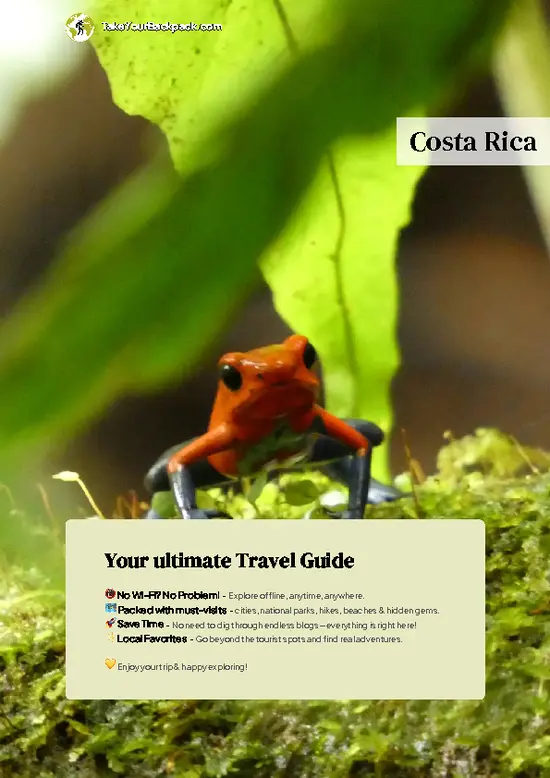
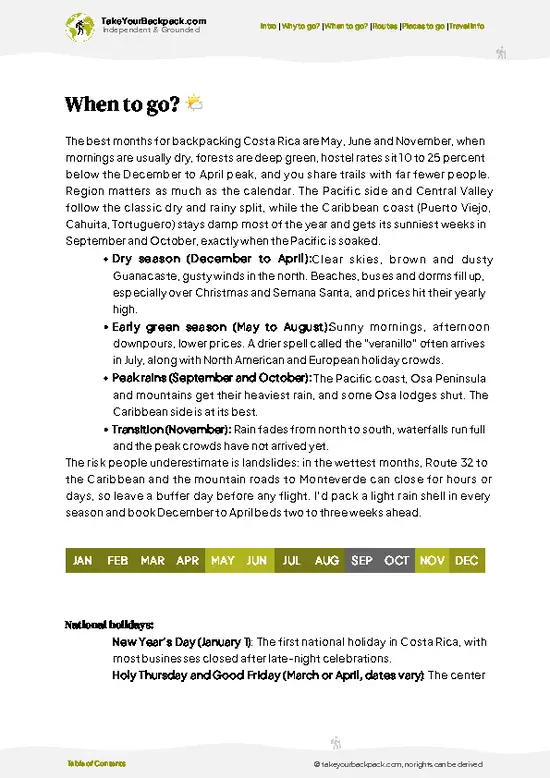
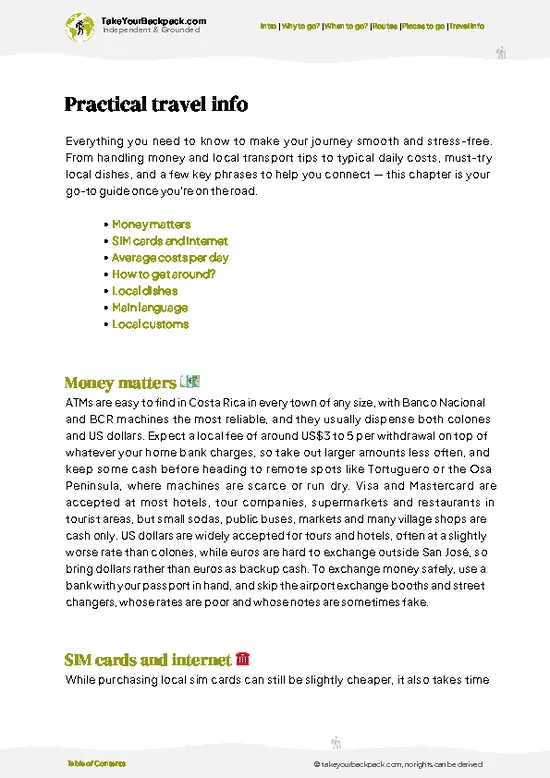
example page 0 from our offline Travel Guide for Costa Rica
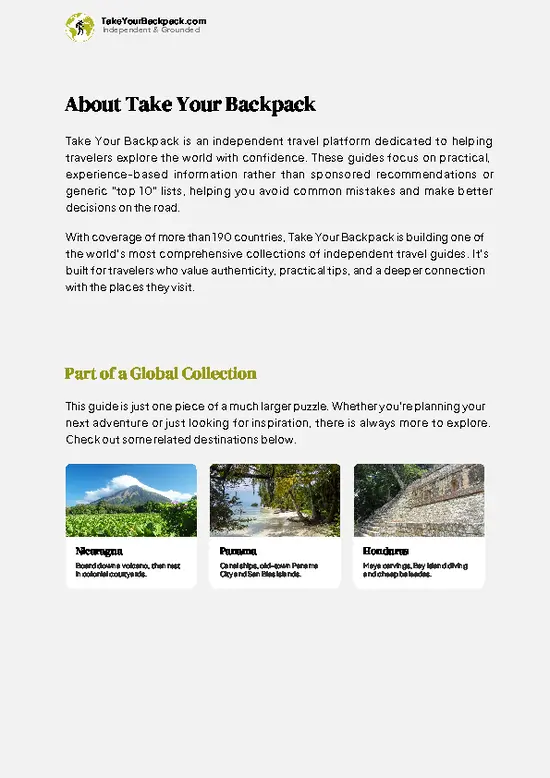
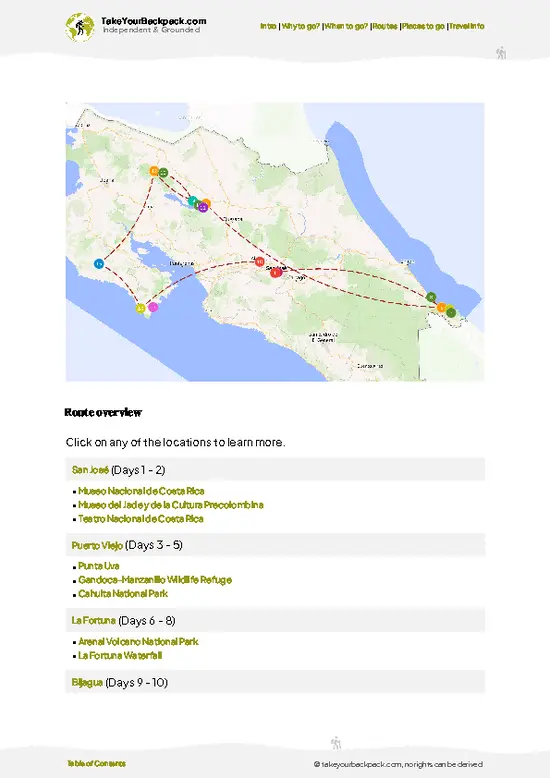
example page 1 from our offline Travel Guide for Costa Rica
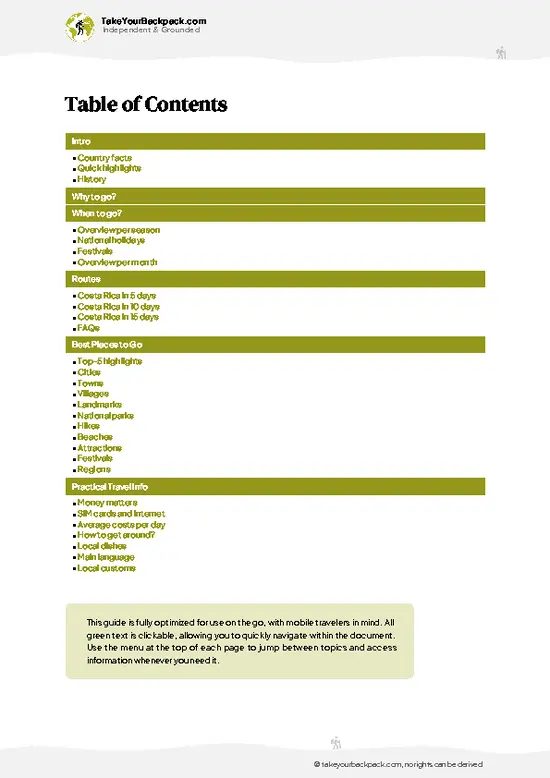
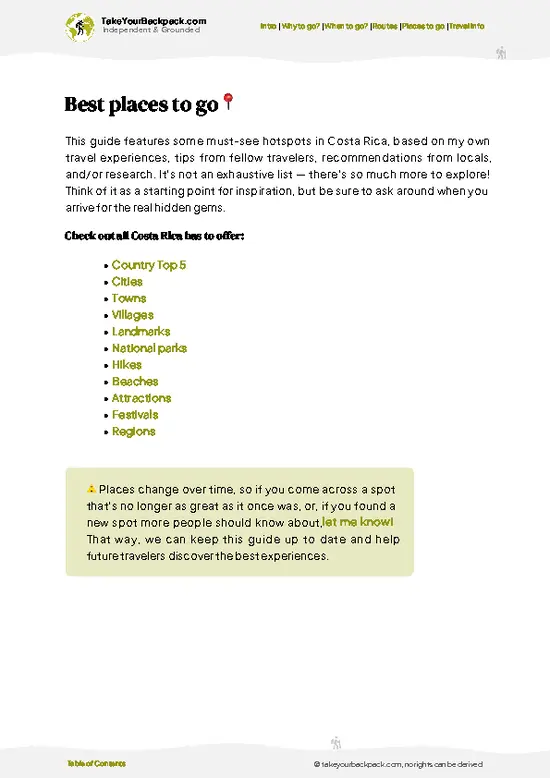
example page 2 from our offline Travel Guide for Costa Rica
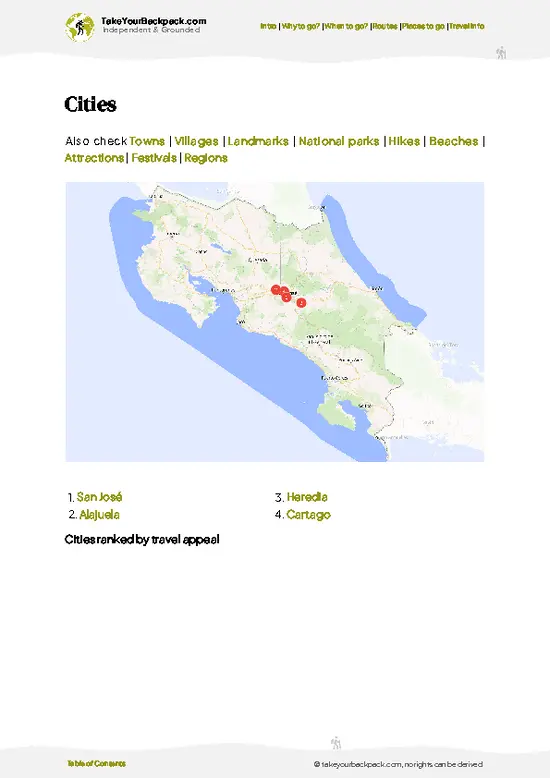
example page 3 from our offline Travel Guide for Costa Rica
example page 4 from our offline Travel Guide for Costa Rica
example page 5 from our offline Travel Guide for Costa Rica
example page 6 from our offline Travel Guide for Costa Rica
example page 7 from our offline Travel Guide for Costa Rica
Loading the map 🌍
CLICK TO FILTER
cities
towns
villages
landmarks
national parks
hikes
beaches
attractions
festivals
regions
SHOW COUNTRY’S BESTSHOW ALL

✨ Why go?
Ranked #1 region in Costa Rica
Reasons people choose to visit here

Nicoya Peninsula lets you swap landscapes without repacking your life. Within a few days you can surf a beach break at Santa Teresa, hike to the waterfalls near Montezuma, and drift into the cattle-country quiet of the interior. Distances look small on a map, so you can settle into one coast for a week and still reach a second beach by shared shuttle or a bumpy local bus.

The second reason is the pace. Roads here are often unpaved, so slow travel is the default, and that suits anyone who likes a stretch of rest between adventures. Mornings go to the water, afternoons to a hammock, and evenings to a soda where a plate of casado fills you up cheaply.

Culture sits alongside the coast. The old town of Nicoya keeps its colonial church and cowboy traditions, while the Nicoya Blue Zone reputation … read more 👉
Nicoya Peninsula lets you swap landscapes without repacking your life. Within a few days you can surf a beach break at Santa Teresa, hike to the waterfalls near Montezuma, and drift into the cattle-country quiet of the interior. Distances look small on a map, so you can settle into one coast for a week and still reach a second beach by shared shuttle or a bumpy local bus.

The second reason is the pace. Roads here are often unpaved, so slow travel is the default, and that suits anyone who likes a stretch of rest between adventures. Mornings go to the water, afternoons to a hammock, and evenings to a soda where a plate of casado fills you up cheaply.

Culture sits alongside the coast. The old town of Nicoya keeps its colonial church and cowboy traditions, while the Nicoya Blue Zone reputation for long, active lives shows in the daily rhythm: early starts, beans and rice, and an afternoon visit with neighbors. You get beaches and a living local culture in the same trip.

💡 HighlightsWhat this place is best known for

  1. Santa Teresa and Playa Hermosa: the peninsula’s best-known surf strip, with consistent beach breaks, sunset sessions and a dusty main road lined with yoga shacks and taco stands.
  2. Montezuma Waterfalls: a short, muddy hike from town to a series of cool pools and a rope swing. Go early before tour groups arrive; locals request that you skip jumping from the top.
  3. Cabo Blanco Absolute Nature Reserve: Costa Rica’s first protected reserve, with a forest trail down to a quiet, empty beach. Entry is around US$14, and it is closed two days a week.
  4. Playa Samara: a calm, reef-sheltered bay good for first-time surfers and kayakers, with a relaxed town right behind the sand.
  5. Isla Chora: a small islet reached by wading or kayaking at low tide from Samara, with tide pools and a short walk around its edge.
  6. Ostional
… read more 👉
  1. Santa Teresa and Playa Hermosa: the peninsula’s best-known surf strip, with consistent beach breaks, sunset sessions and a dusty main road lined with yoga shacks and taco stands.
  2. Montezuma Waterfalls: a short, muddy hike from town to a series of cool pools and a rope swing. Go early before tour groups arrive; locals request that you skip jumping from the top.
  3. Cabo Blanco Absolute Nature Reserve: Costa Rica’s first protected reserve, with a forest trail down to a quiet, empty beach. Entry is around US$14, and it is closed two days a week.
  4. Playa Samara: a calm, reef-sheltered bay good for first-time surfers and kayakers, with a relaxed town right behind the sand.
  5. Isla Chora: a small islet reached by wading or kayaking at low tide from Samara, with tide pools and a short walk around its edge.
  6. Ostional National Wildlife Refuge: a black-sand beach where thousands of olive ridley turtles nest in mass arrivals. Visits are guided and limited, so book a local guide.
  7. Barra Honda National Park: limestone caves reached by a ladder descent with a guide, plus a dry forest trail above ground that most beach-bound visitors skip.
  8. Curú National Wildlife Refuge: a small private reserve near Paquera with white-faced capuchins, deer and a quiet beach, far from the surf crowds.
  9. Nicoya Church (Iglesia de San Blas): one of the oldest colonial churches in the country, with a simple adobe-style nave in the town center of Nicoya, plain but worth a quick stop.
  10. Playa Carrillo: a curved, palm-lined beach south of Samara where locals picnic on weekends, much emptier than the main surf towns.
Start with Cabo Blanco or the Montezuma Waterfalls, since both are best in the cool early hours and set your pace for the rest of the peninsula.
Spotted a mistake or missing something? Contact us.

Things to do near Nicoya Peninsula

Ratings based on Tripadvisor reviews. When you book through this link, you support our work at no extra cost to you.

⌛️ 5 daysHow to make the most of Nicoya Peninsula

Day 1: Cabo Blanco and Montezuma: Cabo Blanco is the stop not to skip, so reach the southern tip early and walk the forest trail to the empty beach before the heat builds. The ferry from Puntarenas lands at Paquera, and the road south to Montezuma is the peninsula’s first lesson: transport runs on shuttles and timed buses, not on your schedule. Spend the first night in Montezuma, then hike to the waterfalls the next morning while the pools are still quiet.

Day 2: Montezuma Waterfalls: Use the morning for the falls and an easy afternoon on the beach. Keeping the day light leaves room for the long coastal transfer that follows.

Day 3: Santa Teresa: Take a shared shuttle north along the bumpy coast to Santa Teresa. The road is slow, so treat this as a travel day with a surf session at sunset. … read more 👉
Day 1: Cabo Blanco and Montezuma: Cabo Blanco is the stop not to skip, so reach the southern tip early and walk the forest trail to the empty beach before the heat builds. The ferry from Puntarenas lands at Paquera, and the road south to Montezuma is the peninsula’s first lesson: transport runs on shuttles and timed buses, not on your schedule. Spend the first night in Montezuma, then hike to the waterfalls the next morning while the pools are still quiet.

Day 2: Montezuma Waterfalls: Use the morning for the falls and an easy afternoon on the beach. Keeping the day light leaves room for the long coastal transfer that follows.

Day 3: Santa Teresa: Take a shared shuttle north along the bumpy coast to Santa Teresa. The road is slow, so treat this as a travel day with a surf session at sunset. Staying two nights here saves you from another dusty ride.

Day 4: Samara: Head up the coast to Samara, where the bay is gentle and the town is easy on a budget. For a detour, kayak or wade at low tide to Isla Chora, which adds tide pools and calm water without extra transfers.

Day 5: Ostional: Finish with Ostional, where the black-sand beach turns into a turtle nursery during nesting arrivals. Go with a local guide and leave the day open, since timing depends on the tides. If you have to justify the whole trip with one day, make it this one: watching olive ridleys crawl ashore at dusk is the memory the surf towns cannot match.

🌤️ When to go?Best time to visit Nicoya Peninsula

Late December to April is the driest stretch on the Nicoya Peninsula, with almost no rain and long beach days.
  • Dry Season (December to April): Days run 30 to 35°C (86 to 95°F), nights 22 to 25°C (72 to 77°F), and the Pacific side turns brown and dusty. Surf is steady, sunsets are clear, and daylight lasts about 11.5 hours. Beds and shuttles cost the most, and Christmas, New Year and Semana Santa fill hostels weeks ahead.
  • Green Season (May to November): Mornings are usually bright, then clouds stack up and rain falls most afternoons, heaviest in September and October. Highs sit at 28 to 32°C (82 to 90°F). Forest turns bright green, waves grow bigger, and dorm beds and tours can drop 20 to 40 percent. Some small restaurants and guesthouses close in October.
  • Veranillo (late June to July): A short
… read more 👉
Late December to April is the driest stretch on the Nicoya Peninsula, with almost no rain and long beach days.
  • Dry Season (December to April): Days run 30 to 35°C (86 to 95°F), nights 22 to 25°C (72 to 77°F), and the Pacific side turns brown and dusty. Surf is steady, sunsets are clear, and daylight lasts about 11.5 hours. Beds and shuttles cost the most, and Christmas, New Year and Semana Santa fill hostels weeks ahead.
  • Green Season (May to November): Mornings are usually bright, then clouds stack up and rain falls most afternoons, heaviest in September and October. Highs sit at 28 to 32°C (82 to 90°F). Forest turns bright green, waves grow bigger, and dorm beds and tours can drop 20 to 40 percent. Some small restaurants and guesthouses close in October.
  • Veranillo (late June to July): A short mid-year dry spell brings sun, fewer crowds and still-green hills. It suits surfers and hikers who dislike dust.
  • Wildlife Events: Turtle nesting at Ostional peaks from July to November, with the biggest arribadas around the last quarter moon.
Book January stays early, but wait until mid-May to find the best deals.


source: climatestotravel.comJANJanuary: excellent for travelingFEBFebruary: excellent for travelingMARMarch: excellent for travelingAPRApril: highly recommended for travelingMAYMay: highly recommended for travelingJUNJune: good for travelingJULJuly: highly recommended for travelingAUGAugust: good for travelingSEPSeptember: fair for travelingOCTOctober: fair for travelingNOVNovember: good for travelingDECDecember: excellent for traveling
when-to-go

✈️ The backpacker research shortcutCosta Rica Travel Guide

An offline-friendly backpacking guide with optimized travel routes, ranked highlights, transport advice, and the best areas to stay.
example page 0 from our offline Travel Guide for Costa Rica
example page 1 from our offline Travel Guide for Costa Rica
example page 2 from our offline Travel Guide for Costa Rica
example page 3 from our offline Travel Guide for Costa Rica
example page 4 from our offline Travel Guide for Costa Rica
example page 5 from our offline Travel Guide for Costa Rica
example page 6 from our offline Travel Guide for Costa Rica
example page 7 from our offline Travel Guide for Costa Rica
The digital guide (287 pages) contains:
✅ 92 highlights, ranked by travel appeal
✅ Optimized 5, 10 & 15-day travel routes
✅ Cities, national parks, landmarks, beaches
✅ How to get around
✅ Offline-friendly for travel without Wi-Fi
👉 Click to see all 30+ guide features

📅 Plan smarter in minutes, not weeks
✅ Month by month travel advice
✅ Festivals & national holidays
✅ Budget expectations

🗺️ Go to the right places, skip the overrated ones
✅ Honest pros & cons of destinations
✅ Top hikes, parks & viewpoints
✅ Lesser-known places most travelers miss
✅ Clear “worth it vs skip it” guidance

🛏️ Travel smoothly without rookie mistakes
✅ Best areas to stay
✅ Transport systems explained simply
✅ Common scams & safety advice
✅ SIM cards, money & practical tips

🌍 Understand the country, not just visit it
✅ Culture & traditions
✅ 52 Essential phrases & customs
✅ Festivals worth planning around
✅ Traveler-friendly historical context
✅ Insights that make places more meaningful

📱 Built for real travel conditions
✅ Fully downloadable PDF
✅ Works completely offline
✅ Optimized for phone use
✅ Useful in remote areas & buses
✅ Everything in one place
Stop searching, start planning
Get instant access to your full guide. 30‑day money-back guarantee.
+ Add another guide for just

By proceeding you agree to our terms.
Sent to your inbox immediately after payment • 100% Secure Checkout
Best Backpacking Travel Advisor 2025 tourism awardBest Backpacking
Travel Advisor
2025
What others say about Take Your Backpack Guides:
⭐⭐⭐⭐⭐
Fantastic, amazing amount of information!
⭐⭐⭐⭐⭐
My goodness this is amazing, it's what I've been looking for hats off too you!
⭐⭐⭐⭐⭐
I think this is absolutely BRILLIANT
⭐⭐⭐⭐
Very complete and informative. It's still missing places, but I gotta to commend you
⭐⭐⭐⭐⭐
This is truly amazing, thank you, can't wait to explore it with my kids!
⭐⭐⭐⭐⭐
Awesome resource, thank you!
⭐⭐⭐⭐⭐
This is amazing! Can't wait to explore the ones I haven't seen
⭐⭐⭐⭐
I love this! Well done, great idea.
⭐⭐⭐⭐⭐
Thanks for taking the time to make this gem!
⭐⭐⭐⭐⭐
This might be the best website I've ever seen.
⭐⭐⭐⭐⭐
Congratulations, and thank you so much for your work; it's incredibly valuable.
⭐⭐⭐⭐
In all seriousness I think you did a great job pointing out the important spots
⭐⭐⭐⭐⭐
10/10 very good
⭐⭐⭐⭐⭐
As someone who's only just starting to visit regularly this is awesome, thank you.
⭐⭐⭐⭐
Thank you very much! I'm going to visit my dad, it's going to be very useful!
⭐⭐⭐⭐⭐
This is really cool! We'll be travelling for the first time and this definitely come in handy.
⭐⭐⭐⭐⭐
You are now our minister of culture, congratulations 👨‍💼
⭐⭐⭐⭐⭐
Just wanted to tell you that this is a pearl! Going to follow your recommendations.
⭐⭐⭐⭐⭐
This is so cool. I'll definitely be using the resource for my travels soon.
⭐⭐⭐⭐⭐
This is very impressive! Good work.
⭐⭐⭐⭐⭐
This is an amazing and informative site. Very well done!

🛏️ Where to stay?Choosing the right base

Santa Teresa and Malpaís, at the southern tip, are the best bases on the Nicoya Peninsula for social backpackers who want surf, yoga and a crowd that actually talks to each other. Dirt roads, dust and a long strip of beach bars define the scene, and hostels cluster along the main road so you can walk or hop on a rented scooter to reach the breaks. Dorm beds run roughly US$15 to 30.

Samara, on the Pacific side, is calmer and easier for first-timers. A flat, safe beach town with a protected bay, a reef that tames the waves, and a cluster of cheap eateries within a few blocks. Beginners learn to … read more 👉
Santa Teresa and Malpaís, at the southern tip, are the best bases on the Nicoya Peninsula for social backpackers who want surf, yoga and a crowd that actually talks to each other. Dirt roads, dust and a long strip of beach bars define the scene, and hostels cluster along the main road so you can walk or hop on a rented scooter to reach the breaks. Dorm beds run roughly US$15 to 30.

Samara, on the Pacific side, is calmer and easier for first-timers. A flat, safe beach town with a protected bay, a reef that tames the waves, and a cluster of cheap eateries within a few blocks. Beginners learn to surf here without getting hammered, and dorms cost about US$14 to 25. You can wander back to your bed at night without much worry.

Tamarindo is the loudest option, with the biggest backpacker nightlife in the northwest and a strong surf-school scene. Prices run higher, around US$18 to 32 for a dorm, and the center feels more developed than the others. Playa Grande, just across the estuary, is quieter and better for turtle nesting season.

Nosara suits yoga-minded travelers who like early mornings, jungle edges and a slower pace, though beds cost more and the layout is spread out. Montezuma, on the southeast coast, is the hippie corner: waterfalls, a small town center, and a close-knit mix of solo travelers. It is walkable, social and tends to fill fast in high season, so book ahead from December to April.

In all of these, choose a spot within walking distance of the beach and the main street. Street lighting is patchy after dark, so stick to well-used routes.

🚌 Getting aroundTransportation options and practical tips

Trying to cross the Nicoya Peninsula by a straight line on the map is the mistake that costs the most time. Roads fan out from a few hubs, and the gravel tracks between beach towns can take two hours to cover 40 kilometers (25 miles), so a neighboring beach is often a long way around. Experienced travelers plan around the paved spine, then add short hops, and accept that the last stretch is dust, ruts and heat.
  • Shuttle vans: Door-to-door vans link Tamarindo, Santa Teresa, Montezuma, Nosara and Liberia airport for US$45 to 70 per seat. They exist because public buses skip the rough coastal roads, and they save a day of transfers. Book a day ahead in the dry season, when the vans fill up.
  • Public buses: Buses run from Liberia and Nicoya town to Tamarindo, Sámara and Playa Naranjo at US$2 to 8,
… read more 👉
Trying to cross the Nicoya Peninsula by a straight line on the map is the mistake that costs the most time. Roads fan out from a few hubs, and the gravel tracks between beach towns can take two hours to cover 40 kilometers (25 miles), so a neighboring beach is often a long way around. Experienced travelers plan around the paved spine, then add short hops, and accept that the last stretch is dust, ruts and heat.
  • Shuttle vans: Door-to-door vans link Tamarindo, Santa Teresa, Montezuma, Nosara and Liberia airport for US$45 to 70 per seat. They exist because public buses skip the rough coastal roads, and they save a day of transfers. Book a day ahead in the dry season, when the vans fill up.
  • Public buses: Buses run from Liberia and Nicoya town to Tamarindo, Sámara and Playa Naranjo at US$2 to 8, in rattling, windows-down comfort with the smell of diesel and fruit. They are slow and stop often because they serve villages first. Travel in the morning, since afternoon services thin out.
  • Ferry: The Playa Naranjo to Puntarenas crossing takes about 1 hour for US$5 to 6 per walk-on passenger, and the Paquera to Puntarenas route takes about 1.5 hours. It is the sensible way to reach the Central Valley or Monteverde, since the alternative is a long drive north. Arrive early, because the sun beats down on the open deck by 10 am.
  • ATV or scooter rental: Rentals cost US$30 to 60 a day in Santa Teresa, Sámara and Tamarindo, and the roads are loose dirt that kicks up red powder. Locals use them because distances between beaches are short but the roads are poor. Wear closed shoes, carry water, and avoid crossing rivers in the green season.
  • Taxi: Taxis from Tamarindo to nearby beaches cost US$15 to 40 and are worth it when you split the fare. Agree on the price before you leave.
Keep your pack light and group beach towns by coast, so you spend one transfer day moving between them instead of three.

🍲 FoodLocal Cuisine & Drinks

Start the day with gallo pinto, rice and black beans fried with onion, cilantro and Lizano sauce, served with eggs, fried plantain and a spoonful of natilla (sour cream). Nicoya has its own traditions, rooted in Chorotega cooking: tamales de maíz, rosquillas (crumbly corn rings) and tortillas palmeadas, patted by hand and charred on a wood fire. Coastal towns serve whole fried pargo (red snapper) and ceviche sharp with lime, usually at US$8 to 15 with rice and salad.
For drinks, order agua de pipa, a green coconut hacked open by a vendor, and refrescos naturales of watermelon, tamarind or lime blended with ice. Locals also drink chicha, a fermented corn drink, and Costa Rican coffee is smooth and bright. Imperial and Pilsen are the standard cold lagers.
Eat where the locals do, at a soda, a … read more 👉
Start the day with gallo pinto, rice and black beans fried with onion, cilantro and Lizano sauce, served with eggs, fried plantain and a spoonful of natilla (sour cream). Nicoya has its own traditions, rooted in Chorotega cooking: tamales de maíz, rosquillas (crumbly corn rings) and tortillas palmeadas, patted by hand and charred on a wood fire. Coastal towns serve whole fried pargo (red snapper) and ceviche sharp with lime, usually at US$8 to 15 with rice and salad.
For drinks, order agua de pipa, a green coconut hacked open by a vendor, and refrescos naturales of watermelon, tamarind or lime blended with ice. Locals also drink chicha, a fermented corn drink, and Costa Rican coffee is smooth and bright. Imperial and Pilsen are the standard cold lagers.
Eat where the locals do, at a soda, a family-run lunch counter where a casado (rice, beans, salad, plantain and a choice of chicken, fish or beef) costs US$6 to 9. Small bakeries and roadside stands sell fresh rosquillas, while beach towns have fish tacos and smoothie bars at US$4 to 8.
Tips are normally included, as a 10 percent service charge plus 13 percent tax appear on restaurant bills. Meals are unhurried, and you often need to ask for the check. Tap water is generally safe in towns, but check in remote areas.

FAQFrequently asked questions about Nicoya Peninsula

Five to seven days covers the Nicoya Peninsula if you pick two beach bases, since transfers between them can take half a day. Santa Teresa and Tamarindo are the usual pair, around 3 to 4 hours apart by shuttle. Surfers and yoga students often stay two weeks, while a quick trip fits into three days from Liberia.
On the Nicoya Peninsula you can rely on shuttle vans, buses, the Playa Naranjo ferry and local taxis. Shuttles cost US$45 to 70 and link Liberia airport to Tamarindo, Nosara, Sámara and Santa Teresa, while buses cost US$2 to 8 but are slower. The ferry to Puntarenas takes about 1 hour for US$5 to 6, and ATV or scooter rentals cost US$30 to 60 a day for short beach hops.
The Nicoya Peninsula is known for Pacific surf beaches such as Tamarindo, Santa Teresa and Playa Guiones, plus yoga retreats and sea turtle nesting at Ostional and Playa Grande. It is also one of the world’s Blue Zones, where residents live unusually long, and the Nicoya diet of beans, corn and tropical fruit is part of the story. Dry-season sunshine from December to April brings the most travelers, with dorm beds from about US$12.
⚠️ Things can change over time, so always validate details locally before you go.

Other Costa Rican regions near Nicoya Peninsula

Explore more nearby:

  • Bajos del Toro—Cascada del Toro, cloud forest reserves, hummingbird feeders, trout ponds| 132 km away
  • Orosi Valley—Coffee slopes, colonial adobe, thermal pools, Tapantí waterfalls| 183 km away

💡 Not sure where to go next?
Create a personalized itinerary for Costa Rica including Nicoya Peninsula and the places that fit your trip.

Generate my itinerary

👉 Discover all regions

Or checkout all Costa Rica has to offer (think cities, towns, villages, national parks, hikes, beaches, festivals)
Country photo of Costa Rica

We 💚 feedbackKey takeaways before you go

Nicoya Peninsula suits travelers who like slow days, salty skin and rough roads, and who are happy to sacrifice a packed checklist for good surf and sunsets. It is less ideal if you hate dust or tight schedules. I would pick two bases, book shuttles a day ahead, and leave one afternoon empty.

✈️ When did I visit Costa Rica?
Costa Rica I visited during my half year trip through South and Central America back in 2003

✍️ Help improve this page!
The information on this page is based on my own backpacking experience in Costa Rica, supplemented with up-to-date research and feedback from other travelers. Travel details can change, so if you notice anything outdated or incomplete, feel free to let me know.


🙋‍♂️ Give feedback

👋 Meet the founderWho’s Behind Take Your Backpack?

Johan, backpacker and founder of TakeYourBackpackHi, I’m Johan (Netherlands 🇳🇱), the creator of TakeYourBackpack. Over the past 3 decades, I’ve backpacked through 90+ countries across six continents, gaining extensive experience with independent travel, long-term trips, and overland routes.

This site is built on a combination of firsthand travel experience and carefully curated insights from other backpackers. Many guides are based on places I’ve personally visited, while others bring together tips, observations, and practical advice shared by trusted travelers I’ve met along the way.

The goal is to provide realistic, experience-driven guidance — not generic itineraries — so you can explore destinations with better context, clearer expectations, and more confidence.