
×

Costa Rica🇨🇷 | regionsBajos del ToroCrater waterfall, turquoise pools, cloud forest, trout farms, dairy lanes | things to do and best time to go

Explore Braulio Carrillo National ParkExplore Nicoya Peninsula

Backpacking in Bajos del Toro
🌟 Highlightregion ranked #2
By Johan Kruseman 🇳🇱 | Updated October 22, 2026

Bajos del Toro was once a muddy logging and dairy outpost at the end of a rough road, a place people passed through on the way to somewhere else. Today it draws travelers for waterfalls, hummingbird gardens and cloud forest, yet it still feels like a farming village with a few lodges rather than a resort. It sits in the north of Costa Rica, on the Caribbean-facing slope below Poás Volcano, a winding drive from Alajuela. The upside is quiet trails, rushing rivers and the smell of wet moss. The downside is thin transport, patchy phone signal and fog that can erase a viewpoint. On my first morning I bought a bag of hot empanadas at a roadside soda, then walked the gravel lane toward the river with the pastry steaming in my pocket. Past the last farm gate, the Río Toro suddenly roared below a footbridge.

Discover everything you want to know in the 📖 Costa Rica Travel Guide.


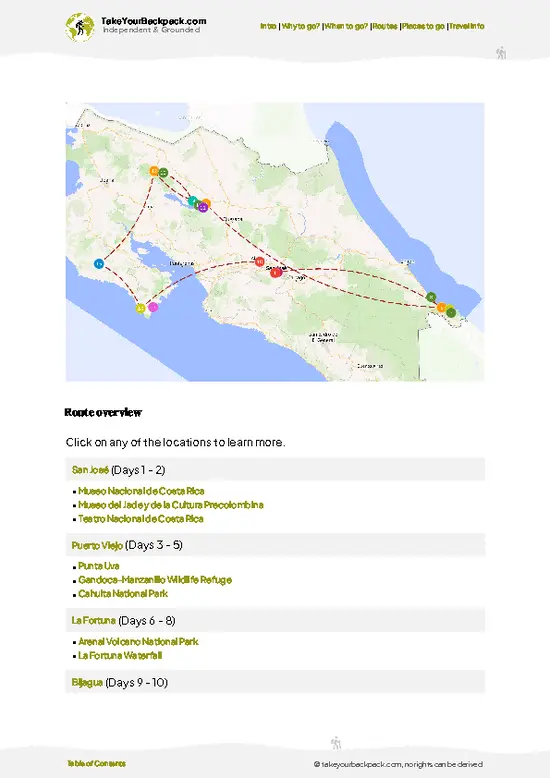
example page 0 from our offline Travel Guide for Costa Rica
example page 1 from our offline Travel Guide for Costa Rica
example page 2 from our offline Travel Guide for Costa Rica
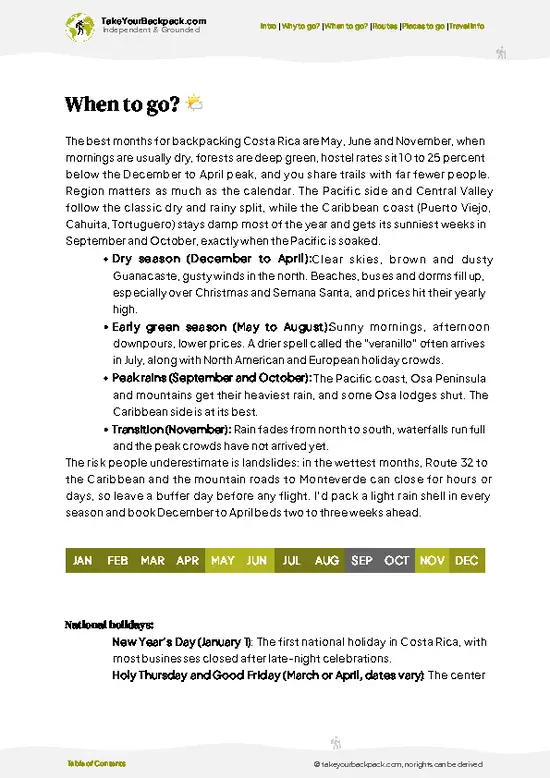
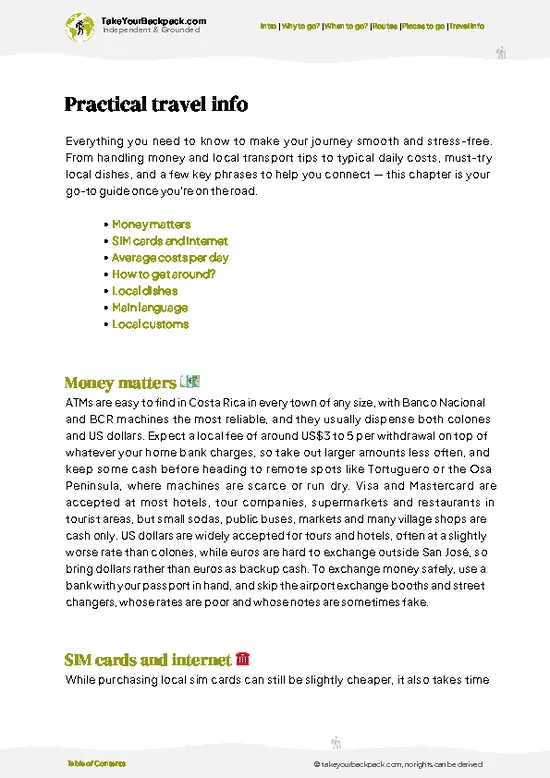
example page 3 from our offline Travel Guide for Costa Rica
example page 4 from our offline Travel Guide for Costa Rica
example page 5 from our offline Travel Guide for Costa Rica
example page 6 from our offline Travel Guide for Costa Rica
example page 7 from our offline Travel Guide for Costa Rica
Loading the map 🌍
CLICK TO FILTER
cities
towns
villages
landmarks
national parks
hikes
beaches
attractions
festivals
regions
SHOW COUNTRY’S BESTSHOW ALL

✨ Why go?
Ranked #2 region in Costa Rica
Why visitors keep coming back

Bajos del Toro gives you waterfalls, cloud forest and farmland within walking distance of each other, so you can stay put instead of repacking every night. The village sits near the Catarata del Toro, a 90-meter plunge into an extinct volcanic crater, and the Blue Falls, where volcanic minerals turn the water an intense blue, which means two very different days of hiking from one bed. The slow pace suits backpackers who like to wander on foot. Lanes between dairy farms and trout ponds are quiet enough for easy walks, and locals at the small sodas will point you to swimming holes without a fee. Birders get a real return here too: the cloud forest of the Bosque de Paz corridor holds quetzals, toucanets and dozens of hummingbird species. Add the nearby Juan Castro Blanco National Park for muddy, … read more 👉
Bajos del Toro gives you waterfalls, cloud forest and farmland within walking distance of each other, so you can stay put instead of repacking every night. The village sits near the Catarata del Toro, a 90-meter plunge into an extinct volcanic crater, and the Blue Falls, where volcanic minerals turn the water an intense blue, which means two very different days of hiking from one bed. The slow pace suits backpackers who like to wander on foot. Lanes between dairy farms and trout ponds are quiet enough for easy walks, and locals at the small sodas will point you to swimming holes without a fee. Birders get a real return here too: the cloud forest of the Bosque de Paz corridor holds quetzals, toucanets and dozens of hummingbird species. Add the nearby Juan Castro Blanco National Park for muddy, unpolished hiking, and you have a region that rewards two or three unhurried days without a car.

💡 HighlightsDon't-miss highlights and experiences

  1. Catarata del Toro: The signature sight, a waterfall of roughly 90 meters that drops into an extinct volcanic crater ringed by jungle. A steep trail and staircase lead to the pool at the bottom, and the private reserve (entry about US$15 to 20) also has a hummingbird garden near the entrance. Wear shoes with grip, because the stairs stay wet.
  2. Blue Falls of Costa Rica (Río Celeste-style color without the crowds): The turquoise cascades and pools get their color from volcanic minerals. Private trails wind down through forest to several falls and swimming spots, and the walk back up is a proper leg workout.
  3. Pozas La Presa: A hanging bridge crosses over the forest canopy here, and short trails lead to small natural pools. It suits anyone who wants a gentler outing than the big waterfall hikes.
  4. Poás
… read more 👉
  1. Catarata del Toro: The signature sight, a waterfall of roughly 90 meters that drops into an extinct volcanic crater ringed by jungle. A steep trail and staircase lead to the pool at the bottom, and the private reserve (entry about US$15 to 20) also has a hummingbird garden near the entrance. Wear shoes with grip, because the stairs stay wet.
  2. Blue Falls of Costa Rica (Río Celeste-style color without the crowds): The turquoise cascades and pools get their color from volcanic minerals. Private trails wind down through forest to several falls and swimming spots, and the walk back up is a proper leg workout.
  3. Pozas La Presa: A hanging bridge crosses over the forest canopy here, and short trails lead to small natural pools. It suits anyone who wants a gentler outing than the big waterfall hikes.
  4. Poás Volcano rim road views: The mountain road above Bajos del Toro climbs through cloud forest and dairy pastures, with sudden gaps showing the valley below. You can walk stretches of it, and the cool, damp air feels nothing like the lowlands.
  5. Cloud forest walks along the Río Toro valley: Dirt lanes and trails run past moss-covered trunks, ferns and bromeliads. Birders come for quetzals and toucanets in the quieter patches, and you often have the path to yourself.
  6. Local trout farms: Small family operations in the cold mountain streams let you catch your own rainbow trout and have it cooked on the spot. It is a simple, local lunch that costs little and tastes of the river.
  7. Strawberry and dairy farms around the village: The cool altitude suits berries and cattle, and a few farms sell fresh fruit, cheese and milk-based sweets straight from the source. Locals know these stops better than most visitors do.
  8. Village soccer field and church square: The center of Bajos del Toro is a handful of streets with a modest church, a field where kids and adults play in the evening, and small sodas serving casados. It is the easiest place to hear how the community actually lives.
  9. Mountain-stream swimming spots: Along the back roads, locals pull over at pools below small cascades. The water is cold enough to shock you awake, and they are free, unsigned and best found by asking at your lodging.
  10. Night walks and frog spotting at local lodges: Several lodges guide short after-dark walks where red-eyed tree frogs, glass frogs and sleeping birds show up in a flashlight beam. The tours are small and inexpensive, and they reveal a different forest than the daytime one.
Bajos del Toro rewards a first visit most through Catarata del Toro, since the crater setting, the hummingbird garden and the descent to the pool pack the area’s whole character into one morning.
Spotted a mistake or missing something? Contact us.

Things to do around Bajos del Toro

Ratings based on Tripadvisor reviews. When you book through this link, you support our work at no extra cost to you.

⌛️ 5 days5-day itinerary for Bajos del Toro

Day 1: Catarata del Toro: Start early at the waterfall, before fog and tour vans fill the stairs, because the crater light is best and the descent is easiest on fresh legs. Buses and shared rides into the valley are infrequent, so staying in the village and walking between sights sets the pace. Afternoon is for a trout lunch and a slow stroll through the farm lanes.
Day 2: Blue Falls: Spend the second day on a muddy, unhurried hike to the Blue Falls and their mineral-colored water. Keep the route flexible, since a few outbound rides a day mean you plan around the road rather than against it.
Day 3: Bosque de Paz: Book a guided walk through this cloud forest reserve. Hummingbird feeders, bird calls and drifting mist give a calm contrast to the waterfall days. Return to the village for cheese … read more 👉
Day 1: Catarata del Toro: Start early at the waterfall, before fog and tour vans fill the stairs, because the crater light is best and the descent is easiest on fresh legs. Buses and shared rides into the valley are infrequent, so staying in the village and walking between sights sets the pace. Afternoon is for a trout lunch and a slow stroll through the farm lanes.
Day 2: Blue Falls: Spend the second day on a muddy, unhurried hike to the Blue Falls and their mineral-colored water. Keep the route flexible, since a few outbound rides a day mean you plan around the road rather than against it.
Day 3: Bosque de Paz: Book a guided walk through this cloud forest reserve. Hummingbird feeders, bird calls and drifting mist give a calm contrast to the waterfall days. Return to the village for cheese and a quiet evening.
Day 4: Juan Castro Blanco National Park: This is the detour. Hire a local driver or guide for a muddy, untouched volcanic forest walk that adds depth without moving your base, since you return to the same bed.
Day 5: Hummingbird feeders and departure: Finish with coffee among hummingbird feeders, then catch an onward ride before afternoon cloud rolls in and slows the road. If one day justifies the whole trip, I would pick Day 1, because standing at the foot of that 90-meter fall as spray hits your face is the moment this valley is built around.

🌤️ When to go?When to go for the best experience

  • Dry Season (January to April): Bajos del Toro sits high on the flank of Poás volcano, so even the driest months run cool, with daytime highs near 20 to 24°C (68 to 75°F) and nights dropping to 12 to 15°C (54 to 59°F). Trails to the Catarata del Toro are firmest now and views of the canyon are clearest. Expect the highest lodging rates and full weekends with Costa Rican families.
  • Green Season (May to November): Rain arrives most afternoons, and mornings are your window for hiking. Mist hangs in the cloud forest, waterfalls run heavy and mud coats the gravel roads. Lodging is cheaper and trails are quiet. September and October are the wettest, and the road in can get slick.
  • Early December: Rains ease, hillsides are still green and holiday crowds have not yet arrived. Daylight stays close to 11
… read more 👉
  • Dry Season (January to April): Bajos del Toro sits high on the flank of Poás volcano, so even the driest months run cool, with daytime highs near 20 to 24°C (68 to 75°F) and nights dropping to 12 to 15°C (54 to 59°F). Trails to the Catarata del Toro are firmest now and views of the canyon are clearest. Expect the highest lodging rates and full weekends with Costa Rican families.
  • Green Season (May to November): Rain arrives most afternoons, and mornings are your window for hiking. Mist hangs in the cloud forest, waterfalls run heavy and mud coats the gravel roads. Lodging is cheaper and trails are quiet. September and October are the wettest, and the road in can get slick.
  • Early December: Rains ease, hillsides are still green and holiday crowds have not yet arrived. Daylight stays close to 11 to 12 hours year-round, so start early.
Pack a real rain shell for any month, since mornings can be wet in any season.


source: climatestotravel.comJANJanuary: excellent for travelingFEBFebruary: excellent for travelingMARMarch: excellent for travelingAPRApril: highly recommended for travelingMAYMay: good for travelingJUNJune: fair for travelingJULJuly: fair for travelingAUGAugust: fair for travelingSEPSeptember: fair for travelingOCTOctober: fair for travelingNOVNovember: highly recommended for travelingDECDecember: excellent for traveling
costa-rica-region-bajos-del-toro
© Google | Mainorp Dbennett

✈️ The backpacker research shortcutCosta Rica Travel Guide

An offline-friendly backpacking guide with optimized travel routes, ranked highlights, transport advice, and the best areas to stay.
example page 0 from our offline Travel Guide for Costa Rica
example page 1 from our offline Travel Guide for Costa Rica
example page 2 from our offline Travel Guide for Costa Rica
example page 3 from our offline Travel Guide for Costa Rica
example page 4 from our offline Travel Guide for Costa Rica
example page 5 from our offline Travel Guide for Costa Rica
example page 6 from our offline Travel Guide for Costa Rica
example page 7 from our offline Travel Guide for Costa Rica
The digital guide (287 pages) contains:
✅ 92 highlights, ranked by travel appeal
✅ Optimized 5, 10 & 15-day travel routes
✅ Cities, national parks, landmarks, beaches
✅ How to get around
✅ Offline-friendly for travel without Wi-Fi
👉 Click to see all 30+ guide features

📅 Plan smarter in minutes, not weeks
✅ Month by month travel advice
✅ Festivals & national holidays
✅ Budget expectations

🗺️ Go to the right places, skip the overrated ones
✅ Honest pros & cons of destinations
✅ Top hikes, parks & viewpoints
✅ Lesser-known places most travelers miss
✅ Clear “worth it vs skip it” guidance

🛏️ Travel smoothly without rookie mistakes
✅ Best areas to stay
✅ Transport systems explained simply
✅ Common scams & safety advice
✅ SIM cards, money & practical tips

🌍 Understand the country, not just visit it
✅ Culture & traditions
✅ 52 Essential phrases & customs
✅ Festivals worth planning around
✅ Traveler-friendly historical context
✅ Insights that make places more meaningful

📱 Built for real travel conditions
✅ Fully downloadable PDF
✅ Works completely offline
✅ Optimized for phone use
✅ Useful in remote areas & buses
✅ Everything in one place
Stop searching, start planning
Get instant access to your full guide. 30‑day money-back guarantee.
+ Add another guide for just

By proceeding you agree to our terms.
Sent to your inbox immediately after payment • 100% Secure Checkout
Best Backpacking Travel Advisor 2025 tourism awardBest Backpacking
Travel Advisor
2025
What others say about Take Your Backpack Guides:
⭐⭐⭐⭐⭐
Fantastic, amazing amount of information!
⭐⭐⭐⭐⭐
My goodness this is amazing, it's what I've been looking for hats off too you!
⭐⭐⭐⭐⭐
I think this is absolutely BRILLIANT
⭐⭐⭐⭐
Very complete and informative. It's still missing places, but I gotta to commend you
⭐⭐⭐⭐⭐
This is truly amazing, thank you, can't wait to explore it with my kids!
⭐⭐⭐⭐⭐
Awesome resource, thank you!
⭐⭐⭐⭐⭐
This is amazing! Can't wait to explore the ones I haven't seen
⭐⭐⭐⭐
I love this! Well done, great idea.
⭐⭐⭐⭐⭐
Thanks for taking the time to make this gem!
⭐⭐⭐⭐⭐
This might be the best website I've ever seen.
⭐⭐⭐⭐⭐
Congratulations, and thank you so much for your work; it's incredibly valuable.
⭐⭐⭐⭐
In all seriousness I think you did a great job pointing out the important spots
⭐⭐⭐⭐⭐
10/10 very good
⭐⭐⭐⭐⭐
As someone who's only just starting to visit regularly this is awesome, thank you.
⭐⭐⭐⭐
Thank you very much! I'm going to visit my dad, it's going to be very useful!
⭐⭐⭐⭐⭐
This is really cool! We'll be travelling for the first time and this definitely come in handy.
⭐⭐⭐⭐⭐
You are now our minister of culture, congratulations 👨‍💼
⭐⭐⭐⭐⭐
Just wanted to tell you that this is a pearl! Going to follow your recommendations.
⭐⭐⭐⭐⭐
This is so cool. I'll definitely be using the resource for my travels soon.
⭐⭐⭐⭐⭐
This is very impressive! Good work.
⭐⭐⭐⭐⭐
This is an amazing and informative site. Very well done!

🛏️ Where to stay?Where staying makes the most sense

Bajos del Toro village itself is the best place to stay, because it is the only real settlement in the area and everything of interest lies within a short ride or walk. Dorm beds are scarce here, so most budget travelers pay US$20 to 45 for a simple private room, a cabin or a farm stay, and the cost drops in the green season. It is quiet and very safe, with dogs on the roads, dairy trucks at dawn and woodsmoke in the evening. Do not expect a party scene. Conversation happens over breakfast tables, at small sodas and around shared fires, mostly with Costa Rican families and birders.

Staying near … read more 👉
Bajos del Toro village itself is the best place to stay, because it is the only real settlement in the area and everything of interest lies within a short ride or walk. Dorm beds are scarce here, so most budget travelers pay US$20 to 45 for a simple private room, a cabin or a farm stay, and the cost drops in the green season. It is quiet and very safe, with dogs on the roads, dairy trucks at dawn and woodsmoke in the evening. Do not expect a party scene. Conversation happens over breakfast tables, at small sodas and around shared fires, mostly with Costa Rican families and birders.

Staying near the Catarata del Toro road puts you closest to the waterfall and canyon trails, so you can be on the path before the tour vans show up. Rooms there are cooler and damper, with fog at night, so bring a warm layer.

If you want more social energy, base yourself in Sarchí or Zarcero, both on the main route in. Zarcero has a topiary-filled church plaza and a handful of simple guesthouses. Sarchí is useful for transport links, and from either you can make an early push to Bajos del Toro. Many backpackers also pair it with a night in San Ramón, which has more hostels and a lively market.

🚌 Getting aroundTransportation options and practical tips

Trying to reach Bajos del Toro by public bus on a same-day schedule is the mistake that burns the most time, because services are few and a missed connection leaves you waiting in Sarchí or Zarcero with nothing until the next day. Plan the trip around the one or two daily buses and you save yourself a cold, damp wait on a roadside bench. Once you arrive, the village is small, and the sights spread along one winding road that smells of wet earth and cut grass.
  • Local bus from Sarchí or Zarcero: Very limited departures, typically one to a few a day, and the fare is only a few dollars (US$2 to 4). The ride takes 1.5 to 2 hours on switchbacks past coffee plots, dairy farms and fern-draped banks. You get a seat with a window and a front-row view of the plateau falling away into fog.
  • Shared taxi or
… read more 👉
Trying to reach Bajos del Toro by public bus on a same-day schedule is the mistake that burns the most time, because services are few and a missed connection leaves you waiting in Sarchí or Zarcero with nothing until the next day. Plan the trip around the one or two daily buses and you save yourself a cold, damp wait on a roadside bench. Once you arrive, the village is small, and the sights spread along one winding road that smells of wet earth and cut grass.
  • Local bus from Sarchí or Zarcero: Very limited departures, typically one to a few a day, and the fare is only a few dollars (US$2 to 4). The ride takes 1.5 to 2 hours on switchbacks past coffee plots, dairy farms and fern-draped banks. You get a seat with a window and a front-row view of the plateau falling away into fog.
  • Shared taxi or private transfer: A driver from Sarchí, Zarcero or San Ramón runs roughly US$40 to 70 one way, which is far less painful split between three or four people. Doors rattle on the gravel stretches, and you arrive at your trailhead in an hour or so, not half a day.
  • Rental car or 4x4: Costs US$40 to 80 a day, and a high-clearance vehicle is worth it, since the final stretch to the waterfall is steep, rough and often wet. You can stop at roadside fruit stands and turn off for a viewpoint when the clouds split.
  • Walking: The center, the waterfall road and nearby trails are walkable if you are fit. Expect cold air, loud birds and the hush of rain on leaves, plus a long uphill on the way back.
  • Local taxi or hitching a ride: Short hops between lodges and the falls cost about US$5 to 15. Locals often pick up hikers, and you get a chat in Spanish and a lift out of the drizzle.
Check the bus times the day before in Sarchí or Zarcero and carry small bills in colones, because drivers rarely have change.

🍲 FoodLocal Cuisine & Drinks

Bajos del Toro eats like a highland dairy and farming village, and that means trout first. Farms along the river raise trucha, usually fried whole with crisp skin, a squeeze of lime, rice and a plate of salad, for roughly US$10 to 15. The cold air also makes you crave sopa negra, a dense black bean soup with a poached egg, and the comfort of casado, the standard plate of rice, beans, plantain, salad and a protein, usually US$6 to 9.

For drinks, local coffee comes strong and sweet, poured through a cloth chorreador, and hot agua dulce made from cane sugar warms your hands after a wet hike. Fresh cheese and yogurt from nearby dairies show up at breakfast. Seasonal berries, blackberries especially, appear in juices and jams.

Eating happens in small sodas, family-run restaurants with plastic … read more 👉
Bajos del Toro eats like a highland dairy and farming village, and that means trout first. Farms along the river raise trucha, usually fried whole with crisp skin, a squeeze of lime, rice and a plate of salad, for roughly US$10 to 15. The cold air also makes you crave sopa negra, a dense black bean soup with a poached egg, and the comfort of casado, the standard plate of rice, beans, plantain, salad and a protein, usually US$6 to 9.

For drinks, local coffee comes strong and sweet, poured through a cloth chorreador, and hot agua dulce made from cane sugar warms your hands after a wet hike. Fresh cheese and yogurt from nearby dairies show up at breakfast. Seasonal berries, blackberries especially, appear in juices and jams.

Eating happens in small sodas, family-run restaurants with plastic chairs and a few tables, plus lodge dining rooms where the kitchen closes early, often by 8 pm. Order at the counter or sit and wait to be served. Tipping is not expected, since a 10 percent service charge is usually on the bill. Cash in colones is common, and card machines are not guaranteed.

Stock up on snacks in the village shop before a hike, as nothing waits at the trailhead. Expect plain flavors, hot comfort and a lot of woodsmoke.

FAQTraveler FAQ

Two days is enough for Bajos del Toro if you want the main sights. Spend one morning at the Catarata del Toro, a waterfall that drops about 90 m (300 ft) into a volcanic crater, and walk forest trails or a viewpoint in the afternoon. Add a third day for birding, a trout farm lunch or a trip toward Poás volcano. Entry to the waterfall area runs about US$12 to 15.
Without a car, take a bus from Sarchí or Zarcero to Bajos del Toro, a ride of roughly 1.5 to 2 hours that costs about US$2 to 4 but runs only a few times a day. A shared or private taxi from Sarchí, Zarcero or San Ramón costs about US$40 to 70 one way and is easier for groups. Once in Bajos del Toro, you can walk between the village and lodges, or hop a local taxi for US$5 to 15 to the waterfall road.
Bajos del Toro is known for the Catarata del Toro, a waterfall of about 90 m (300 ft) that plunges into a blue-green canyon. The area also offers cloud forest hikes, good birdwatching and trout farms serving fresh fried fish. Hummingbirds, mist and cool temperatures make it a favorite escape from the heat of the Central Valley, and it stays quiet outside of weekends.
⚠️ Things can change over time, so always validate details locally before you go.

Other Costa Rican regions near Bajos del Toro

Explore more nearby:

  • Orosi Valley—Coffee slopes, colonial adobe, thermal pools, Tapantí waterfalls| 70 km away
  • Nicoya Peninsula—Surf breaks, dirt roads, turtle beaches, dry forest caves| 132 km away

💡 Not sure where to go next?
Create a personalized itinerary for Costa Rica including Bajos del Toro and the places that fit your trip.

Generate my itinerary

👉 Discover all regions

Or checkout all Costa Rica has to offer (think cities, towns, villages, national parks, hikes, beaches, festivals)
Country photo of Costa Rica

We 💚 feedbackWhat to keep in mind

Give Bajos del Toro two full nights, three if you want the cloud forest reserve and a muddy river hike without rushing. One night only gets you the waterfall and a rushed exit. I would bring a real rain shell and book the reserve ahead, since the village has few services once you arrive.

✈️ When did I visit Costa Rica?
Costa Rica I visited during my half year trip through South and Central America back in 2003

✍️ Help improve this page!
The information on this page is based on my own backpacking experience in Costa Rica, supplemented with up-to-date research and feedback from other travelers. Travel details can change, so if you notice anything outdated or incomplete, feel free to let me know.


🙋‍♂️ Give feedback

👋 Meet the founderWho’s Behind Take Your Backpack?

Johan, backpacker and founder of TakeYourBackpackHi, I’m Johan (Netherlands 🇳🇱), the creator of TakeYourBackpack. Over the past 3 decades, I’ve backpacked through 90+ countries across six continents, gaining extensive experience with independent travel, long-term trips, and overland routes.

This site is built on a combination of firsthand travel experience and carefully curated insights from other backpackers. Many guides are based on places I’ve personally visited, while others bring together tips, observations, and practical advice shared by trusted travelers I’ve met along the way.

The goal is to provide realistic, experience-driven guidance — not generic itineraries — so you can explore destinations with better context, clearer expectations, and more confidence.