v2.webp)
- Río Grande de Orosi: The main river tumbles over boulders beside the road and trails, and its roar follows you through most of the park.
- Catarata Tapantí: A waterfall reached by a short walk, with a viewing area where mist cools your face.
- Sendero Oropéndola: Easy path through cloud forest with hanging bridges over side streams and good chances of seeing birds.
- Sendero La Pava: A short trail named for the black guan, with a lookout over the river valley.
- Mirador Río Claro: A viewpoint over a spot where the river pools between rocks.
- Hummingbird feeders: Near the visitor area, violet sabrewings and green hermits come close enough to hear their wings.
- Quetzal spotting: Early in the year, guides and birders look for the resplendent quetzal in the higher forest.
- Río Grande de Orosi: The main river tumbles over boulders beside the road and trails, and its roar follows you through most of the park.
- Catarata Tapantí: A waterfall reached by a short walk, with a viewing area where mist cools your face.
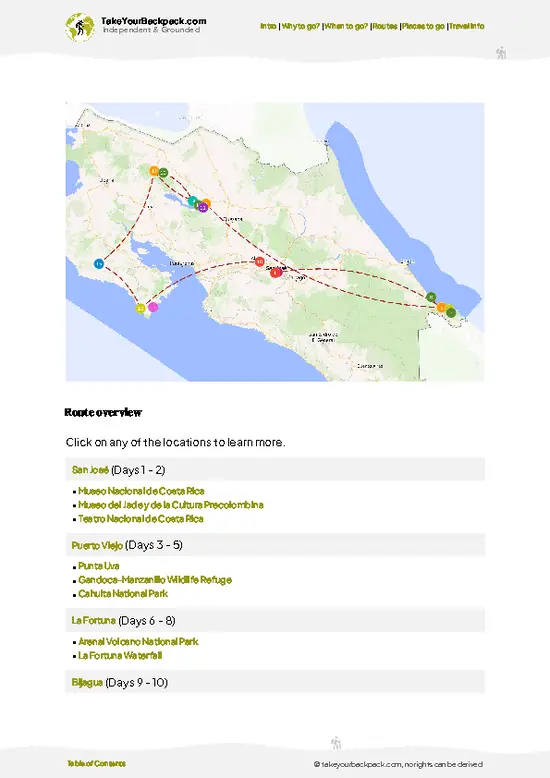
- Sendero Oropéndola: Easy path through cloud forest with hanging bridges over side streams and good chances of seeing birds.
- Sendero La Pava: A short trail named for the black guan, with a lookout over the river valley.
- Mirador Río Claro: A viewpoint over a spot where the river pools between rocks.
- Hummingbird feeders: Near the visitor area, violet sabrewings and green hermits come close enough to hear their wings.
- Quetzal spotting: Early in the year, guides and birders look for the resplendent quetzal in the higher forest.
Spotted a mistake or missing something? Contact us.

Tubing in Rio Celeste

Costa Rica The Chela Cooking Experience

Surf Lesson + Beach day in Jaco Beach!

Morning Fishing Half Day Charter

Surfing Classes Manuel Antonio

White Water Rafting Half Day Naranjo River (Apr. 15th-Jan. 10th)

2-Hour Surf Lesson in Montezuma

Private Transfer La Fortuna To Int. Airport Liberia From 1 to 6 passengers

Specialized Group Surf Lesson in Playa Hermosa


 Best Backpacking
.jpg) Hi, I’m Johan (Netherlands 🇳🇱), the creator of TakeYourBackpack. Over the past 3 decades, I’ve backpacked through 90+ countries across six continents, gaining extensive experience with independent travel, long-term trips, and overland routes.
Hi, I’m Johan (Netherlands 🇳🇱), the creator of TakeYourBackpack. Over the past 3 decades, I’ve backpacked through 90+ countries across six continents, gaining extensive experience with independent travel, long-term trips, and overland routes.