×

Côte d’Ivoire🇨🇮 | townsKoun-Faocashew orchards, border trade, rural markets | things to do and best time to go

Explore BiankoumaExplore Grand-Lahou

Backpacking in Koun-Fao
👀 For curious travelerstown ranked #22
By Johan Kruseman 🇳🇱 | Updated June 4, 2026

The first real fork in the road at Koun-Fao: do you push on toward the bigger cities, or slow down and let the rural rhythm sink in? Koun-Fao sits in eastern Côte d’Ivoire, close to the Ghanaian border, where the air smells of red earth and cocoa. For backpackers, it’s a quiet, practical stop—less a destination than a pause between Abengourou’s markets and the wilds of Comoé National Park. The town itself is modest: a few lively markets, simple maquis for grilled fish, and evenings that settle early. You’ll need bush taxis to get here, and walking is the main way around. Don’t expect hostels or a backpacker scene—just friendly locals and a slow, social pace. Costs are low, safety is typical for rural West Africa, and compared to Abengourou, Koun-Fao is sleepier, more genuine, and refreshingly unhurried.

Discover everything you want to know in the 📖 Côte d’Ivoire Travel Guide.
Loading the map 🌍
CLICK TO FILTER
cities
towns
landmarks
national parks
hikes
beaches
attractions
festivals
regions
SHOW COUNTRY’S BESTSHOW ALL

✨ Why go?
Ranked #22 town in Côte d’Ivoire
What sets this place apart

Koun-Fao is a gateway for backpackers seeking authenticity in Côte d’Ivoire. It’s perfectly positioned for hikes in the nearby mountains and offers access to tranquil beaches. The walkable streets are lined with small-scale guesthouses and hostels, where you can easily strike up conversations over local dishes like attiéké. Travelers often linger here for a few days, soaking in the friendly atmosphere that encourages connections among solo adventurers and small groups alike. It’s not a party town, but rather a place to recharge and immerse yourself in the local culture before heading to your next destination.
Want to include Koun-Fao in your Côte d’Ivoire route?
Create a personalized Côte d’Ivoire itinerary that includes Koun-Fao and the places that fit your trip — based on your travel style, budget, and available time. Get your route in seconds.

Generate my trip

💡 HighlightsEssential experiences to have while visiting Koun-Fao

  • Marché central de Koun-Fao — The town’s heartbeat: early-morning stalls piled with yams, spices, smoked fish and fresh produce, plus a riot of fabrics and small street food stands. Best for people-watching and picking up cheap snacks or a practical souvenir.
  • Sous-préfecture (place administrative) — The administrative square and its older government building give a short, concrete slice of local civic life; useful to see how the town organizes itself and often where market traffic, announcements and local meetings happen.
  • Grande Mosquée de Koun-Fao — The main mosque is not a tourist shrine but a living place of worship; visiting at quieter times lets you observe local Islamic practice, courtyard life and community rhythms (remember to be respectful and ask before photographing).
  • Église
read more 👉
  • Marché central de Koun-Fao — The town’s heartbeat: early-morning stalls piled with yams, spices, smoked fish and fresh produce, plus a riot of fabrics and small street food stands. Best for people-watching and picking up cheap snacks or a practical souvenir.
  • Sous-préfecture (place administrative) — The administrative square and its older government building give a short, concrete slice of local civic life; useful to see how the town organizes itself and often where market traffic, announcements and local meetings happen.
  • Grande Mosquée de Koun-Fao — The main mosque is not a tourist shrine but a living place of worship; visiting at quieter times lets you observe local Islamic practice, courtyard life and community rhythms (remember to be respectful and ask before photographing).
  • Église paroissiale — The town’s Catholic church anchors many community events and Sunday gatherings; catching a service is an easy way to meet locals and hear congregational singing and local choirs.
  • Palais du chef traditionnel — The residence and meeting place of the local chief: a small, essential window into chieftaincy, customary law and ceremonial objects. Visits usually require asking permission but are richly rewarding when allowed.
  • Ateliers d’artisans locaux — Small workshops where potters, weavers or dyers work on traditional cloth and household items; hands-on, informal demonstrations are common and you can buy items directly without middlemen.
  • Quartier des forgerons — The blacksmiths’ quarter is noisy, honest and authentically local: watch tool-making, hoe-repairs and metalworking techniques that haven’t changed much in decades.
  • Arbre sacré / vieux baobab du village — A meeting point and traditional landmark where stories are told, elders meet and small rituals sometimes take place. It’s a calm, photogenic spot that anchors local memory.
  • Gué et pont communal (rive locale) — The shallow river crossing just outside the main street is where laundry, fishing and riverside life happens. Good for late-afternoon walks and watching villagers go about daily chores.
  • Salle polyvalente / centre culturel — The community hall hosts dances, funerary ceremonies, local court hearings and occasional performances. If a festival or show is on, it’s the best place to see live music and dance up close.
A few solid day-trip options just outside Koun-Fao are Bondoukou (famous for its old quarter, silver-work and mosques), nearby Tanda (regional markets and traditional hill villages), and the small surrounding Gontougo villages where you can visit craft workshops and seasonal markets.
Spotted a mistake or missing something? Contact us.
🏘️ NeighborhoodsUnderstanding the local layout

Koun-Fao is a vibrant hub that balances local culture with backpacker-friendly amenities. Here’s how to navigate its neighborhoods:

Centre Ville: This is the heartbeat of Koun-Fao. Bustling markets and street vendors fill the air with the scent of grilled plantains. It’s walkable and affordable, making it ideal for short stays. Nightlife is lively but not overwhelming.

Quartier des Artisans: Known for its crafts and workshops, this area offers a quieter vibe. Perfect for those looking to soak in local culture without the chaos. Prices are reasonable, and it’s a short stroll to the main attractions.

Zone de Loisirs: If you’re after nightlife, this is your spot. Bars and music venues keep the energy high. It’s less walkable, so consider local transport. Great for longer stays if you enjoy socializing.

⌛️ 1 dayHow to make the most of one day

Koun-Fao, a vibrant town in Côte d’Ivoire, pulses with the rhythm of daily life, where the scent of grilled plantains wafts through the air and the laughter of children echoes in the streets. Start your morning at the bustling local market, where vendors display colorful fabrics and fresh produce. Engage with the locals; their warmth is infectious, and you’ll leave with a few tasty snacks for later.

As the sun climbs higher, head to the nearby Parc National de la Comoé. The lush greenery and the sounds of chirping birds create a serene backdrop for a leisurely hike. This isn’t on every tourist’s radar, but the tranquility here is a refreshing escape.

In the afternoon, wander through the lively neighborhoods, stopping by the local artisans’ workshops. Watch as they craft intricate wood carvings, … read more 👉
Koun-Fao, a vibrant town in Côte d’Ivoire, pulses with the rhythm of daily life, where the scent of grilled plantains wafts through the air and the laughter of children echoes in the streets. Start your morning at the bustling local market, where vendors display colorful fabrics and fresh produce. Engage with the locals; their warmth is infectious, and you’ll leave with a few tasty snacks for later.

As the sun climbs higher, head to the nearby Parc National de la Comoé. The lush greenery and the sounds of chirping birds create a serene backdrop for a leisurely hike. This isn’t on every tourist’s radar, but the tranquility here is a refreshing escape.

In the afternoon, wander through the lively neighborhoods, stopping by the local artisans’ workshops. Watch as they craft intricate wood carvings, a perfect souvenir that tells a story.

As evening falls, find a spot at a local eatery. Savor a plate of attiéké with grilled fish while the sun sets, painting the sky in hues of orange and pink. This day in Koun-Fao isn’t just about sights; it’s about immersing yourself in the heartbeat of the town.
Turn your Koun-Fao visit into an Côte d’Ivoire adventure
Build a complete Côte d’Ivoire route with Koun-Fao, hidden gems, must-see destinations, and realistic travel times included.

Generate my trip

🌤️ When to go?Best time to visit Koun-Fao


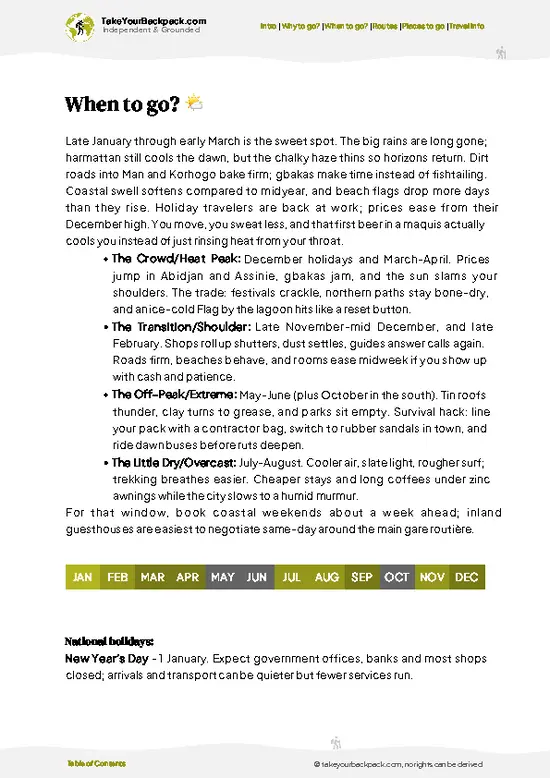
  • Weather: The dry season from November to March offers clear skies and less humidity, making trails easier and the air feel fresher, unlike the heavy rains that turn paths to mud and dampen spirits.

  • Temperature: Expect daytime highs around 28-32°C (82-90°F) in dry months, which is warm but manageable with shade and breaks; the rainy season cools slightly but feels stickier due to humidity.

  • Daylight Hours: Roughly 11 to 12 hours of daylight year-round, but the dry season’s consistent sun means you can plan longer hikes without surprise afternoon showers cutting your day short.

  • Crowds: Tourist presence peaks during the dry season, especially December and January, so expect more fellow travelers but also better services and open accommodations.

  • Seasonal Activities: Dry months align
read more 👉

  • Weather: The dry season from November to March offers clear skies and less humidity, making trails easier and the air feel fresher, unlike the heavy rains that turn paths to mud and dampen spirits.

  • Temperature: Expect daytime highs around 28-32°C (82-90°F) in dry months, which is warm but manageable with shade and breaks; the rainy season cools slightly but feels stickier due to humidity.

  • Daylight Hours: Roughly 11 to 12 hours of daylight year-round, but the dry season’s consistent sun means you can plan longer hikes without surprise afternoon showers cutting your day short.

  • Crowds: Tourist presence peaks during the dry season, especially December and January, so expect more fellow travelers but also better services and open accommodations.

  • Seasonal Activities: Dry months align with local festivals and market days, adding cultural layers to your trek, while the wet season limits outdoor events but brings lush, vibrant landscapes.

  • Price Fluctuations: Accommodation and transport costs rise in the dry season due to demand; visiting just before or after this peak can save money without sacrificing weather quality.


Pro-tip: Aim for late November or early March to catch the sweet spot—good weather, fewer crowds, and better prices—so you get the full Koun-Fao experience without the hassle.


source: climatestotravel.comJANJanuary: highly recommended for travelingFEBFebruary: highly recommended for travelingMARMarch: highly recommended for travelingAPRApril: fair for travelingMAYMay: fair for travelingJUNJune: fair for travelingJULJuly: fair for travelingAUGAugust: fair for travelingSEPSeptember: fair for travelingOCTOctober: fair for travelingNOVNovember: highly recommended for travelingDECDecember: excellent for traveling
when-to-go

✈️ The backpacker research shortcutCôte d’Ivoire Travel Guide

An offline-friendly backpacking guide with optimized travel routes, ranked highlights, transport advice, and the best areas to stay.
The digital guide (337 pages) contains:
85 highlights, ranked by travel appeal
Optimized 5, 10 & 15-day travel routes
Cities, national parks, landmarks, beaches
How to get around
Offline-friendly for travel without Wi-Fi
👉 Click to see all 30+ guide features

📅 Plan smarter in minutes, not weeks
Month by month travel advice
Festivals & national holidays
Budget expectations

🗺️ Go to the right places, skip the overrated ones
Honest pros & cons of destinations
Top hikes, parks & viewpoints
Lesser-known places most travelers miss
Clear “worth it vs skip it” guidance

🛏️ Travel smoothly without rookie mistakes
Best areas to stay
Transport systems explained simply
Common scams & safety advice
SIM cards, money & practical tips

🌍 Understand the country, not just visit it
Culture & traditions
52 Essential phrases & customs
Festivals worth planning around
Traveler-friendly historical context
Insights that make places more meaningful

📱 Built for real travel conditions
Fully downloadable PDF
Works completely offline
Optimized for phone use
Useful in remote areas & buses
Everything in one place
Save weeks of stressful planning
Get instant access to your full guide. 30‑day money-back guarantee.


By proceeding you agree to our terms.
Sent to your inbox immediately after payment • 100% Secure Checkout
Best Backpacking Travel Advisor 2025 tourism awardBest Backpacking
Travel Advisor
2025
What others say about Take Your Backpack Guides:
⭐⭐⭐⭐⭐
Fantastic, amazing amount of information!
⭐⭐⭐⭐⭐
My goodness this is amazing, it's what I've been looking for hats off too you!
⭐⭐⭐⭐⭐
I think this is absolutely BRILLIANT
⭐⭐⭐⭐
Very complete and informative. It's still missing places, but I gotta to commend you
⭐⭐⭐⭐⭐
This is truly amazing, thank you, can't wait to explore it with my kids!
⭐⭐⭐⭐⭐
Awesome resource, thank you!
⭐⭐⭐⭐⭐
This is amazing! Can't wait to explore the ones I haven't seen
⭐⭐⭐⭐
I love this! Well done, great idea.
⭐⭐⭐⭐⭐
Thanks for taking the time to make this gem!
⭐⭐⭐⭐⭐
This might be the best website I've ever seen.
⭐⭐⭐⭐⭐
Congratulations, and thank you so much for your work; it's incredibly valuable.
⭐⭐⭐⭐
In all seriousness I think you did a great job pointing out the important spots
⭐⭐⭐⭐⭐
10/10 very good
⭐⭐⭐⭐⭐
As someone who's only just starting to visit regularly this is awesome, thank you.
⭐⭐⭐⭐
Thank you very much! I'm going to visit my dad, it's going to be very useful!
⭐⭐⭐⭐⭐
This is really cool! We'll be travelling for the first time and this definitely come in handy.
⭐⭐⭐⭐⭐
You are now our minister of culture, congratulations 👨‍💼
⭐⭐⭐⭐⭐
Just wanted to tell you that this is a pearl! Going to follow your recommendations.
⭐⭐⭐⭐⭐
This is so cool. I'll definitely be using the resource for my travels soon.
⭐⭐⭐⭐⭐
This is very impressive! Good work.
⭐⭐⭐⭐⭐
This is an amazing and informative site. Very well done!

🛏️ Where to stay?Best areas and accommodation options

In Koun-Fao, the best spot for backpackers is the central district around the main market and town square. This area hums with daily life—the scent of grilled street food mingles with fresh earth after rain, and the chatter of vendors creates a lively backdrop. It’s where you’ll find the few budget guesthouses and informal hostels that attract solo travelers looking to connect. Safety here feels tangible; locals know each other, and the streets stay active well into the evening, cutting down on sketchy corners. Compared to quieter residential zones, this hub offers easy access to transport and … read more 👉
In Koun-Fao, the best spot for backpackers is the central district around the main market and town square. This area hums with daily life—the scent of grilled street food mingles with fresh earth after rain, and the chatter of vendors creates a lively backdrop. It’s where you’ll find the few budget guesthouses and informal hostels that attract solo travelers looking to connect. Safety here feels tangible; locals know each other, and the streets stay active well into the evening, cutting down on sketchy corners. Compared to quieter residential zones, this hub offers easy access to transport and social scenes, turning your stay into a genuine immersion rather than a sterile layover.

🚌 Getting aroundGetting around like a local

Koun-Fao moves at its own rhythm—neither frantic nor slow, but a steady pulse that matches the dusty heat and the chatter spilling from open-air markets. The sun casts long shadows by late afternoon, and the scent of grilled street food mingles with the earthiness of the surrounding savannah. Here, time feels flexible, shaped more by the flow of daily life than by strict timetables. You’ll find that patience and a keen eye for local cues unlock the best ways to get around without burning your budget or your spirit.


  • Walking: The heart of Koun-Fao is compact enough to explore on foot. Streets are uneven but manageable, and walking lets you soak in the vibrant street scenes and unexpected smells. No cost, and you control the pace—perfect for spontaneous detours.

  • Shared Taxis: These minibuses
read more 👉
Koun-Fao moves at its own rhythm—neither frantic nor slow, but a steady pulse that matches the dusty heat and the chatter spilling from open-air markets. The sun casts long shadows by late afternoon, and the scent of grilled street food mingles with the earthiness of the surrounding savannah. Here, time feels flexible, shaped more by the flow of daily life than by strict timetables. You’ll find that patience and a keen eye for local cues unlock the best ways to get around without burning your budget or your spirit.


  • Walking: The heart of Koun-Fao is compact enough to explore on foot. Streets are uneven but manageable, and walking lets you soak in the vibrant street scenes and unexpected smells. No cost, and you control the pace—perfect for spontaneous detours.

  • Shared Taxis: These minibuses run from dawn until dusk, usually filling up before they leave. Expect to pay a few hundred CFA francs. They’re cramped but fast, darting through traffic with local drivers who know every shortcut.

  • Motorcycle Taxis (Zémidjans): Available 24/7, these are your go-to for quick hops or late-night returns. Bargain hard; fares vary but are generally affordable. The wind and dust hit you full force, so hold tight and enjoy the raw, kinetic energy of the city.

  • Bicycle Rentals: For a bit more freedom and speed than walking, renting a bike is a solid choice. Rentals are cheap, and the flat terrain makes pedaling easy. Just watch for potholes and the occasional wandering livestock.

👛 Costs (as of 18 February 2026)How expensive it really is

Backpacking in Koun-Fao, Côte d’Ivoire, offers a raw, authentic experience where your money stretches but requires a bit of local savvy to navigate smoothly.
  • Dorm Accommodation: Options here are limited and basic. Expect to pay around €5 to €10 per night for a simple guesthouse dorm bed. These places often have minimal amenities, so bring your own essentials like a mosquito net and toiletries to avoid last-minute purchases.
  • Meals: Street food and small local eateries dominate the scene. A filling meal of local staples—think attiéké with grilled fish or chicken—runs about €1.50 to €3. Fresh fruit and snacks are even cheaper. If you want something more Western or at a tourist-oriented spot, prices can double, but sticking to local joints keeps your budget tight and your taste buds rewarded.
read more 👉
Backpacking in Koun-Fao, Côte d’Ivoire, offers a raw, authentic experience where your money stretches but requires a bit of local savvy to navigate smoothly.
  • Dorm Accommodation: Options here are limited and basic. Expect to pay around €5 to €10 per night for a simple guesthouse dorm bed. These places often have minimal amenities, so bring your own essentials like a mosquito net and toiletries to avoid last-minute purchases.
  • Meals: Street food and small local eateries dominate the scene. A filling meal of local staples—think attiéké with grilled fish or chicken—runs about €1.50 to €3. Fresh fruit and snacks are even cheaper. If you want something more Western or at a tourist-oriented spot, prices can double, but sticking to local joints keeps your budget tight and your taste buds rewarded.
  • Local Transport: Transport is mostly informal. Shared taxis or bush taxis are the norm, costing roughly €0.50 to €1 for short trips within town. For longer rides to nearby villages, budget up to €3. Walking is often the best way to soak in the atmosphere and save cash, but be ready for uneven roads and the tropical heat.
  • Basic Activities/Entry Fees: Koun-Fao isn’t a hotspot for pricey tourist attractions. Entry fees to local cultural sites or small museums hover around €1 to €2. Guided tours are rare and usually arranged locally, so expect to negotiate prices directly, often around €5 to €10 for a half-day experience.
  • Miscellaneous Expenses: This covers essentials like water, snacks, phone credit, and occasional tips. Bottled water costs about €0.50 per liter, and a local SIM card with data can be found for around €3 to €5. Budget an extra €1 to €2 daily for these small but necessary extras.

All told, a realistic daily budget for backpacking in Koun-Fao ranges from about €10 to €20. This keeps you comfortably covered without cutting corners on safety or basic comfort, letting you focus on the textures of daily life here—the scent of grilled street food, the chatter in local markets, and the slow rhythm of a town off the beaten path.


source: cotedivoiretourisme.ci
⚠️ Prices can change and everyone travels differently, so take this as a rough guide. Hope it helps you plan your adventure!

🚌 Day tripsExploring the surroundings

Koun-Fao is a fantastic launchpad for exploring the rich tapestry of Côte d’Ivoire. Each day trip offers a unique slice of culture, nature, and adventure.

Biodiversity at Comoé National Park
Just a couple of hours from Koun-Fao, Comoé National Park is a biodiversity hotspot. The air is thick with the scent of damp earth and wildflowers as you trek through lush forests. Expect to see elephants, monkeys, and a variety of birds. The entrance fee is around $10, and you can easily share a taxi with fellow travelers to keep costs down. Aim for the dry season, from November to March, for the best wildlife sightings. A common mistake? Underestimating the park’s size; plan for a full day to soak it all in.
👉 Explore Comoé National Park

Cultural Immersion in Tanda
A short ride to Tanda reveals … read more 👉
Koun-Fao is a fantastic launchpad for exploring the rich tapestry of Côte d’Ivoire. Each day trip offers a unique slice of culture, nature, and adventure.

Biodiversity at Comoé National Park
Just a couple of hours from Koun-Fao, Comoé National Park is a biodiversity hotspot. The air is thick with the scent of damp earth and wildflowers as you trek through lush forests. Expect to see elephants, monkeys, and a variety of birds. The entrance fee is around $10, and you can easily share a taxi with fellow travelers to keep costs down. Aim for the dry season, from November to March, for the best wildlife sightings. A common mistake? Underestimating the park’s size; plan for a full day to soak it all in.
👉 Explore Comoé National Park

Cultural Immersion in Tanda
A short ride to Tanda reveals a vibrant local market that bursts with colors and sounds. The aroma of street food wafts through the air, tempting you to try grilled plantains and spicy sauces. Spend a few hours mingling with locals and sampling their culinary delights. Budget around $5 for transport and snacks. Weekends are best for the market, but be prepared for crowds. Many first-timers miss the chance to engage with vendors; don’t be shy—ask questions!
👉 Explore Tanda

Waterfalls at La Comoé
Just an hour away, La Comoé offers stunning waterfalls that cascade into crystal-clear pools. The sound of rushing water is invigorating, and the surrounding greenery feels like a natural spa. Bring a picnic and spend the day swimming and relaxing. The trip costs about $10 for transport, and the best time to visit is during the rainy season when the falls are at their most powerful. A rookie mistake? Forgetting your swimsuit—trust me, you’ll want to dive in!
Want to know what more Côte d’Ivoire offers?
The Côte d’Ivoire Travel Guide describes 85 highlights, from cities to national parks, from beaches to hikes

Get the Travel Guide -

🛡️ SafetyStaying Safe: What Travelers Should Know

Koun-Fao is generally safe, but staying aware is key. Stick to well-lit areas at night; the streets can feel quiet, and a little caution goes a long way. Solo travelers should blend in—avoid flashy gear that screams “tourist.”

Watch for common scams like overly friendly locals offering unsolicited help; a polite decline usually suffices. Street vendors can be persistent, but a firm “no, thank you” will keep the atmosphere light. Carry yourself confidently, and you’ll navigate the town with ease.

Other Ivorian towns near Koun-Fao

Explore more nearby:

  • Bocanda—Yacouba communities, rural crossroads, local festivals| 145 km away
  • Tiébissou—Baoulé villages, yam markets, crossroads town| 221 km away
  • Adiaké—lagoon islands, boat trips, seafood markets| 244 km away

💡 Not sure where to go next?
Create a personalized itinerary for Côte d’Ivoire including Koun-Fao and the places that fit your trip.

Generate my itinerary

👉 Discover all towns

Or checkout all Côte d’Ivoire has to offer (think cities, towns, villages, national parks, hikes, beaches, festivals)
Country photo of Côte d’Ivoire

We 💚 feedbackSumming up the experience

Koun-Fao pulses with an earthy rhythm, where the air is thick with the scent of palm oil and spices. Don’t miss the local market; it’s a sensory feast. Just watch your belongings—pickpockets lurk in the vibrant chaos. Embrace the hustle; it’s part of the charm.

✍️ Help improve this page!
The information on this page is based on in-depth research, insights shared by experienced travelers, and feedback from the local travel community in Côte d’Ivoire. While every effort is made to keep the information accurate and current, conditions can change — so if you spot anything incorrect or outdated, please get in touch.


🙋‍♂️ Give feedback

👋 Meet the founderWho’s Behind Take Your Backpack?

Johan, backpacker and founder of TakeYourBackpackHi, I’m Johan (Netherlands 🇳🇱), the creator of TakeYourBackpack. Over the past decade, I’ve backpacked through 80+ countries across six continents, gaining extensive experience with independent travel, long-term trips, and overland routes.

This site is built on a combination of firsthand travel experience and carefully curated insights from other backpackers. Many guides are based on places I’ve personally visited, while others bring together tips, observations, and practical advice shared by trusted travelers I’ve met along the way.

The goal is to provide realistic, experience-driven guidance — not generic itineraries — so you can explore destinations with better context, clearer expectations, and more confidence.

Get full country guide •
Instant download • 85 highlights • Full Offline guide