v2.webp)
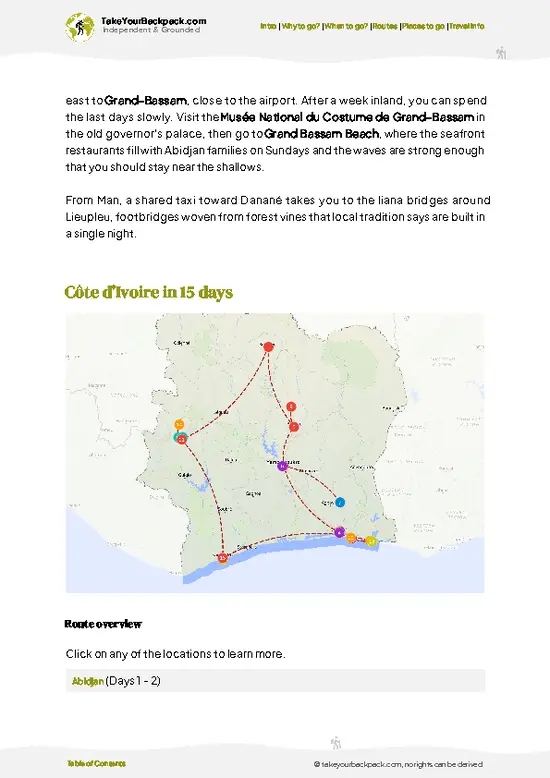
- Biankouma Central Market: The town’s real center of gravity, with piles of cassava, peppers, kola nuts, palm oil and secondhand clothing. Go in the morning, when stalls are fullest and the light is soft. Entry is free, a bowl of food costs about €1 to 2, and an hour is plenty.
- Roadside maquis eateries: Open-air tables where grilled chicken, fish and attiéké are served with cold drinks as the day cools. Late afternoon to evening is best, and a meal runs about €2 to 4. Allow 1 to 2 hours, and linger, since that is when conversations happen.
- Walk to the surrounding hill viewpoints: Footpaths and tracks leave the edge of town into farmland and forest patches, with long views over the green ridges of the Dan highlands. Early morning is coolest and clearest. It is free, takes 2 to 3 hours, and a local
- Biankouma Central Market: The town’s real center of gravity, with piles of cassava, peppers, kola nuts, palm oil and secondhand clothing. Go in the morning, when stalls are fullest and the light is soft. Entry is free, a bowl of food costs about €1 to 2, and an hour is plenty.
- Roadside maquis eateries: Open-air tables where grilled chicken, fish and attiéké are served with cold drinks as the day cools. Late afternoon to evening is best, and a meal runs about €2 to 4. Allow 1 to 2 hours, and linger, since that is when conversations happen.
- Walk to the surrounding hill viewpoints: Footpaths and tracks leave the edge of town into farmland and forest patches, with long views over the green ridges of the Dan highlands. Early morning is coolest and clearest. It is free, takes 2 to 3 hours, and a local guide from your guesthouse for about €5 to 8 makes the route easier to follow.
- Village visits with Dan mask traditions: Neighboring villages keep masked ceremonies and stilt dancing, usually tied to funerals, festivals or community events. Ask locally about what is happening, and bring a small gift or contribution of about €3 to 5 if invited. Plan a half day, since timing depends on the event.
Spotted a mistake or missing something? Contact us.

 Best Backpacking
.jpg) Hi, I’m Johan (Netherlands 🇳🇱), the creator of TakeYourBackpack. Over the past 3 decades, I’ve backpacked through 90+ countries across six continents, gaining extensive experience with independent travel, long-term trips, and overland routes.
Hi, I’m Johan (Netherlands 🇳🇱), the creator of TakeYourBackpack. Over the past 3 decades, I’ve backpacked through 90+ countries across six continents, gaining extensive experience with independent travel, long-term trips, and overland routes.