×

Cuba🇨🇺 | attractionsMuseo de la RevoluciónGranma yacht, bullet-marked facade, Salón de los Espejos, tank yard | things to do and best time to go

Explore Las TerrazasExplore Fábrica de Arte Cubano

Backpacking in Museo de la Revolución
🏆 Top pickattraction ranked #2
By Johan Kruseman 🇳🇱 | Updated October 20, 2026

The Granma yacht sits in a glass pavilion behind the museum, guarded by a fence, and the bullet holes in the building’s facade face the street on Calle Refugio. Those holes, left from the 1957 attack on the presidential palace, are the plainest proof of what this place is. The Museo de la Revolución occupies the old Presidential Palace in Old Havana, Cuba’s capital. Expect tour groups in the morning and a ticket price that feels steep for Cuba, though still modest by global standards. Most labels are in Spanish, and some rooms are thin on content. Skip the gift shop. The marble staircase, the Salón de los Espejos and the tank collection outside are the reasons to come. I still hear the echo of my own footsteps on the palace’s cold marble floors, sharp enough to turn heads two rooms away. Unlike the Museo Nacional de Bellas Artes nearby, this one is as much about the building as the collection.

Discover everything you want to know in the 📖 Cuba Travel Guide.


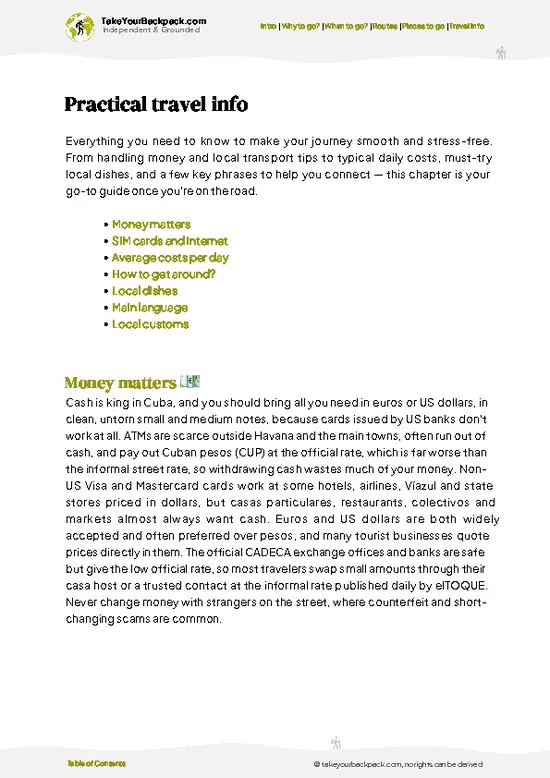
example page 0 from our offline Travel Guide for Cuba
example page 1 from our offline Travel Guide for Cuba
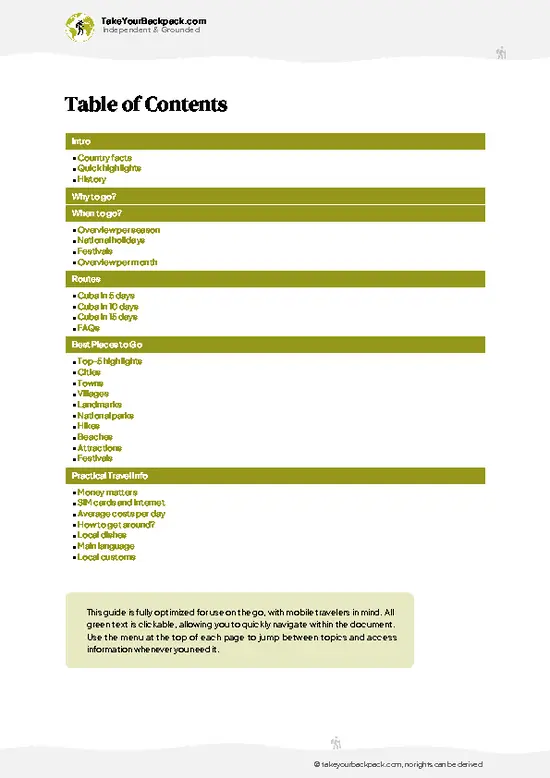
example page 2 from our offline Travel Guide for Cuba
example page 3 from our offline Travel Guide for Cuba
example page 4 from our offline Travel Guide for Cuba
example page 5 from our offline Travel Guide for Cuba
example page 6 from our offline Travel Guide for Cuba
example page 7 from our offline Travel Guide for Cuba
Loading the map 🌍
CLICK TO FILTER
cities
towns
villages
landmarks
national parks
hikes
beaches
attractions
festivals
SHOW COUNTRY’S BESTSHOW ALL

✨ Why go?
Ranked #2 attraction in Cuba
Reasons people choose to visit here

Museo de la Revolución is the clearest way to understand how Cubans tell their own story, and that matters before you hit Santiago, Trinidad or the Sierra Maestra. The narrative is openly one-sided, which is exactly the point. You see the official version in photographs, uniforms, weapons and slogans, then walk Old Havana with sharper questions.
The building is the second draw. This was a presidential palace with Tiffany-designed interiors, and the Salón de los Espejos was modeled on Versailles. Few Cuban museums put you inside the architecture they discuss, and the pairing of gilded rooms with revolutionary displays says more than any caption.
Then there is the outdoor pavilion. The Granma yacht that carried 82 fighters from Mexico in 1956 sits behind glass, and it is smaller than you expect. … read more 👉
Museo de la Revolución is the clearest way to understand how Cubans tell their own story, and that matters before you hit Santiago, Trinidad or the Sierra Maestra. The narrative is openly one-sided, which is exactly the point. You see the official version in photographs, uniforms, weapons and slogans, then walk Old Havana with sharper questions.
The building is the second draw. This was a presidential palace with Tiffany-designed interiors, and the Salón de los Espejos was modeled on Versailles. Few Cuban museums put you inside the architecture they discuss, and the pairing of gilded rooms with revolutionary displays says more than any caption.
Then there is the outdoor pavilion. The Granma yacht that carried 82 fighters from Mexico in 1956 sits behind glass, and it is smaller than you expect. Standing beside it makes the voyage feel absurd and real at once. Give it two hours, ideally early, and pair it with the nearby Capitolio and Paseo del Prado.

💡 HighlightsTop highlights of Museo de la Revolución

  1. Granma Memorial pavilion: The yacht that brought Fidel Castro, Che Guevara and 80 others from Mexico in 1956 is displayed in a glass enclosure. It is cramped and much smaller than the legend suggests.
  2. Salón de los Espejos: The mirrored hall of the former palace copies the one at Versailles. Its gilded surfaces and chandeliers show how the old government wanted to be seen.
  3. Bullet holes on the facade: Marks from the 1957 student attack on the palace remain visible on the exterior. A quick look from Calle Refugio gives instant context.
  4. Tiffany dome and lobby: The marble entrance and Tiffany-designed ceiling work show the palace’s original opulence before the museum filled it.
  5. Sierra Maestra rooms: Photos, maps, weapons and personal items trace the guerrilla campaign. This is the heart of the official
… read more 👉
  1. Granma Memorial pavilion: The yacht that brought Fidel Castro, Che Guevara and 80 others from Mexico in 1956 is displayed in a glass enclosure. It is cramped and much smaller than the legend suggests.
  2. Salón de los Espejos: The mirrored hall of the former palace copies the one at Versailles. Its gilded surfaces and chandeliers show how the old government wanted to be seen.
  3. Bullet holes on the facade: Marks from the 1957 student attack on the palace remain visible on the exterior. A quick look from Calle Refugio gives instant context.
  4. Tiffany dome and lobby: The marble entrance and Tiffany-designed ceiling work show the palace’s original opulence before the museum filled it.
  5. Sierra Maestra rooms: Photos, maps, weapons and personal items trace the guerrilla campaign. This is the heart of the official narrative.
  6. Che Guevara and Camilo Cienfuegos displays: Uniforms and portraits of the two commanders appear in dedicated cases and are popular photo stops.
  7. Tank and vehicle yard: Outside, the tank said to be used at the Bay of Pigs and a Soviet-made vehicle sit on display. Free to see when you walk around the grounds.
  8. Anti-Batista and Bay of Pigs exhibits: Rooms on the 1950s struggle and the 1961 invasion offer a sense of how events are framed locally.
For a first visit, start with the Granma pavilion, since it anchors every other room.
Spotted a mistake or missing something? Contact us.

🌤️ When to go?Best time to visit Museo de la Revolución

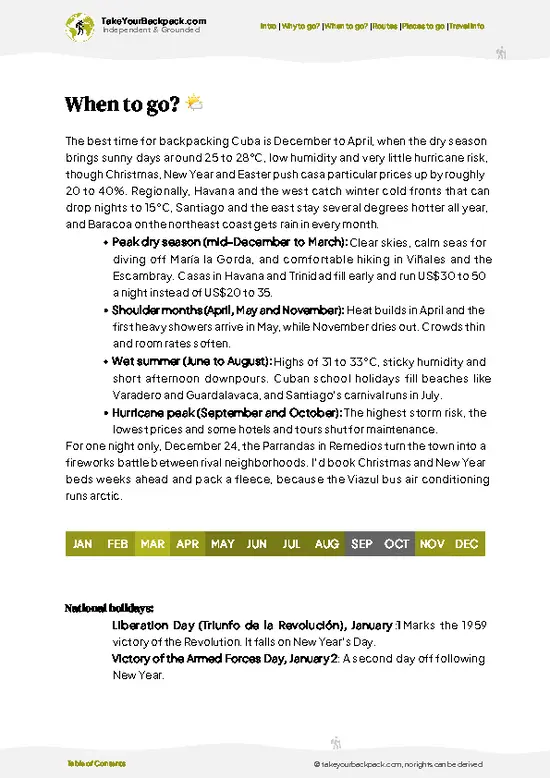
  • Dry Season (November to April): Havana’s driest, most comfortable stretch, with highs of 26 to 29°C (79 to 84°F) and cooler nights around 18 to 21°C (64 to 70°F). Galleries inside the old Presidential Palace stay pleasant, and you’ll have about 11 to 12 hours of daylight. Peak crowds and the highest bed prices arrive from December to February.
  • Hot, Wet Season (May to October): Highs reach 31 to 33°C (88 to 91°F) with heavy humidity and afternoon downpours. Rooms and flights get cheaper, and tour groups thin out, but the palace halls can feel close by midday. Daylight stretches to roughly 13 hours.
  • Hurricane Window (August to October): Storms are most likely in September and October. Cancellations and power cuts are possible, and bus or flight schedules can shift.
  • Time of Day: Mornings are cooler
… read more 👉
  • Dry Season (November to April): Havana’s driest, most comfortable stretch, with highs of 26 to 29°C (79 to 84°F) and cooler nights around 18 to 21°C (64 to 70°F). Galleries inside the old Presidential Palace stay pleasant, and you’ll have about 11 to 12 hours of daylight. Peak crowds and the highest bed prices arrive from December to February.
  • Hot, Wet Season (May to October): Highs reach 31 to 33°C (88 to 91°F) with heavy humidity and afternoon downpours. Rooms and flights get cheaper, and tour groups thin out, but the palace halls can feel close by midday. Daylight stretches to roughly 13 hours.
  • Hurricane Window (August to October): Storms are most likely in September and October. Cancellations and power cuts are possible, and bus or flight schedules can shift.
  • Time of Day: Mornings are cooler and quieter, and the museum is usually calmest right after opening.
Aim for March or early April, or November, for good weather without the holiday price spike.


source: climatestotravel.comJANJanuary: good for travelingFEBFebruary: good for travelingMARMarch: good for travelingAPRApril: highly recommended for travelingMAYMay: fair for travelingJUNJune: fair for travelingJULJuly: fair for travelingAUGAugust: fair for travelingSEPSeptember: fair for travelingOCTOctober: fair for travelingNOVNovember: highly recommended for travelingDECDecember: good for traveling
cuba-attraction-museo-de-la-revolucion
© Google |

✈️ The backpacker research shortcutCuba Travel Guide

An offline-friendly backpacking guide with optimized travel routes, ranked highlights, transport advice, and the best areas to stay.
example page 0 from our offline Travel Guide for Cuba
example page 1 from our offline Travel Guide for Cuba
example page 2 from our offline Travel Guide for Cuba
example page 3 from our offline Travel Guide for Cuba
example page 4 from our offline Travel Guide for Cuba
example page 5 from our offline Travel Guide for Cuba
example page 6 from our offline Travel Guide for Cuba
example page 7 from our offline Travel Guide for Cuba
The digital guide (327 pages) contains:
✅ 113 highlights, ranked by travel appeal
✅ Optimized 5, 10 & 15-day travel routes
✅ Cities, national parks, landmarks, beaches
✅ How to get around
✅ Offline-friendly for travel without Wi-Fi
👉 Click to see all 30+ guide features

📅 Plan smarter in minutes, not weeks
✅ Month by month travel advice
✅ Festivals & national holidays
✅ Budget expectations

🗺️ Go to the right places, skip the overrated ones
✅ Honest pros & cons of destinations
✅ Top hikes, parks & viewpoints
✅ Lesser-known places most travelers miss
✅ Clear “worth it vs skip it” guidance

🛏️ Travel smoothly without rookie mistakes
✅ Best areas to stay
✅ Transport systems explained simply
✅ Common scams & safety advice
✅ SIM cards, money & practical tips

🌍 Understand the country, not just visit it
✅ Culture & traditions
✅ 52 Essential phrases & customs
✅ Festivals worth planning around
✅ Traveler-friendly historical context
✅ Insights that make places more meaningful

📱 Built for real travel conditions
✅ Fully downloadable PDF
✅ Works completely offline
✅ Optimized for phone use
✅ Useful in remote areas & buses
✅ Everything in one place
Stop searching, start planning
Get instant access to your full guide. 30‑day money-back guarantee.
+ Add another guide for just

By proceeding you agree to our terms.
Sent to your inbox immediately after payment • 100% Secure Checkout
Best Backpacking Travel Advisor 2025 tourism awardBest Backpacking
Travel Advisor
2025
What others say about Take Your Backpack Guides:
⭐⭐⭐⭐⭐
Fantastic, amazing amount of information!
⭐⭐⭐⭐⭐
My goodness this is amazing, it's what I've been looking for hats off too you!
⭐⭐⭐⭐⭐
I think this is absolutely BRILLIANT
⭐⭐⭐⭐
Very complete and informative. It's still missing places, but I gotta to commend you
⭐⭐⭐⭐⭐
This is truly amazing, thank you, can't wait to explore it with my kids!
⭐⭐⭐⭐⭐
Awesome resource, thank you!
⭐⭐⭐⭐⭐
This is amazing! Can't wait to explore the ones I haven't seen
⭐⭐⭐⭐
I love this! Well done, great idea.
⭐⭐⭐⭐⭐
Thanks for taking the time to make this gem!
⭐⭐⭐⭐⭐
This might be the best website I've ever seen.
⭐⭐⭐⭐⭐
Congratulations, and thank you so much for your work; it's incredibly valuable.
⭐⭐⭐⭐
In all seriousness I think you did a great job pointing out the important spots
⭐⭐⭐⭐⭐
10/10 very good
⭐⭐⭐⭐⭐
As someone who's only just starting to visit regularly this is awesome, thank you.
⭐⭐⭐⭐
Thank you very much! I'm going to visit my dad, it's going to be very useful!
⭐⭐⭐⭐⭐
This is really cool! We'll be travelling for the first time and this definitely come in handy.
⭐⭐⭐⭐⭐
You are now our minister of culture, congratulations 👨‍💼
⭐⭐⭐⭐⭐
Just wanted to tell you that this is a pearl! Going to follow your recommendations.
⭐⭐⭐⭐⭐
This is so cool. I'll definitely be using the resource for my travels soon.
⭐⭐⭐⭐⭐
This is very impressive! Good work.
⭐⭐⭐⭐⭐
This is an amazing and informative site. Very well done!

🛏️ Where to stay?Choosing the right base

Old Havana (La Habana Vieja) is the best base, because Museo de la Revolución sits on its western edge and you can walk there in 10 to 20 minutes from most of the area. Casas particulares (licensed private rooms) dominate here, and their hosts are the real social hub for budget travelers. You get breakfast on a rooftop, tips from locals, and other backpackers at the next table. The streets around Plaza Vieja and Calle Obispo are lively into the evening, with music from open doorways, though some side blocks are noisy and can feel rough after dark, so choose a host on a well-lit street.

Centro … read more 👉
Old Havana (La Habana Vieja) is the best base, because Museo de la Revolución sits on its western edge and you can walk there in 10 to 20 minutes from most of the area. Casas particulares (licensed private rooms) dominate here, and their hosts are the real social hub for budget travelers. You get breakfast on a rooftop, tips from locals, and other backpackers at the next table. The streets around Plaza Vieja and Calle Obispo are lively into the evening, with music from open doorways, though some side blocks are noisy and can feel rough after dark, so choose a host on a well-lit street.

Centro Habana, just west across Paseo del Prado, is the cheaper alternative. It is more residential and more gritty, with crumbling facades and neighborhood life that tourists rarely see. Rooms cost less and the walk to the museum is about 10 minutes, but street hustlers are more persistent, so stay alert at night.

Vedado is a calmer, leafier option with larger casas and a student crowd around La Rampa. It is a short taxi ride from the museum, and it suits you if you prefer quiet nights over the Old Havana buzz. Book ahead from December to February.

👛 Costs (as of 20 October 2026)Typical daily expenses

Museo de la Revolución costs most backpackers about US$40 to 75 a day in Havana, with the entry ticket as a small part of that. Foreigners pay in Cuban pesos or by card where accepted, and cash is still the safest bet.
CategoryBudget RangeLocal Reality
Entrance ticketUS$6 to 8Foreigner price, sometimes with an extra camera fee of a few dollars. Allow 1.5 to 2 hours inside.
Guide (optional)US$3 to 6Staff guides offer tours in English, with tips expected.
Accommodation (high season)US$20 to 35A room in a casa particular in Old Havana, with breakfast often an extra US$4 to 6.
FoodUS$8 to 15Paladares (private restaurants) cost more than state cafeterias but serve better meals.
Local transportUS$0 to 5The museum is walkable from Old Havana. Taxis from Vedado run US$4 to 8.
Drinks and extrasUS$3 to 6Coffee,
… read more 👉
Museo de la Revolución costs most backpackers about US$40 to 75 a day in Havana, with the entry ticket as a small part of that. Foreigners pay in Cuban pesos or by card where accepted, and cash is still the safest bet.
CategoryBudget RangeLocal Reality
Entrance ticketUS$6 to 8Foreigner price, sometimes with an extra camera fee of a few dollars. Allow 1.5 to 2 hours inside.
Guide (optional)US$3 to 6Staff guides offer tours in English, with tips expected.
Accommodation (high season)US$20 to 35A room in a casa particular in Old Havana, with breakfast often an extra US$4 to 6.
FoodUS$8 to 15Paladares (private restaurants) cost more than state cafeterias but serve better meals.
Local transportUS$0 to 5The museum is walkable from Old Havana. Taxis from Vedado run US$4 to 8.
Drinks and extrasUS$3 to 6Coffee, a cocktail or a bottle of water near Parque Central.
Total Daily BudgetUS$40 to 75Per person, per day, in high season.
⚠️ Prices can change and everyone travels differently, so take this as a rough guide. Hope it helps you plan your adventure!

FAQFrequently asked questions about Museo de la Revolución

Plan on 1.5 to 2 hours for Museo de la Revolución, which fills the rooms of the old Presidential Palace on Calle Refugio. Add 20 to 30 minutes for the Granma yacht display in the glass pavilion behind the building and the tanks and aircraft in the yard. Pair it with the nearby Capitolio and Paseo del Prado for a full morning or afternoon.
Museo de la Revolución is worth the roughly US$6 to 8 entrance fee if you want context for Cuban history from the 1950s onward. The palace itself has marble stairways, a mirrored Salón de los Espejos and Tiffany-designed decoration, and the Granma yacht and Soviet-era vehicles outside are the highlights. Some labels are in Spanish only, so a guide at US$3 to 6 adds a lot.
From Old Havana, Museo de la Revolución is a 10 to 20 minute walk along Calle Refugio or Avenida de las Misiones, near Paseo del Prado. From Vedado, a taxi takes 15 to 20 minutes and costs about US$4 to 8. From José Martí airport, expect a 30 to 40 minute taxi ride for roughly US$25 to 30.
⚠️ Things can change over time, so always validate details locally before you go.

Other Cuban attractions near Museo de la Revolución

Explore more nearby:


💡 Not sure where to go next?
Create a personalized itinerary for Cuba including Museo de la Revolución and the places that fit your trip.

Generate my itinerary

👉 Discover all attractions

Or checkout all Cuba has to offer (think cities, towns, villages, national parks, hikes, beaches, festivals)
Country photo of Cuba

We 💚 feedbackKey takeaways before you go

Museo de la Revolución is easy to rush, but the bullet-scarred stairway inside, left as evidence of the 1957 attack, tells more than many cases of uniforms. I would spend ten minutes there before heading to the yacht. Bring a Spanish phrasebook or a translation app, and go early, before tour groups fill the marble halls.

✈️ When did I visit Cuba?
As part of my 1.5 year travel around the world trip, I visited Cuba for 6 weeks in February, March 2016, being extremely lucky that that coincided with the free concert of The Rolling Stones.

✍️ Help improve this page!
The information on this page is based on my own backpacking experience in Cuba, supplemented with up-to-date research and feedback from other travelers. Travel details can change, so if you notice anything outdated or incomplete, feel free to let me know.


🙋‍♂️ Give feedback

👋 Meet the founderWho’s Behind Take Your Backpack?

Johan, backpacker and founder of TakeYourBackpackHi, I’m Johan (Netherlands 🇳🇱), the creator of TakeYourBackpack. Over the past 3 decades, I’ve backpacked through 90+ countries across six continents, gaining extensive experience with independent travel, long-term trips, and overland routes.

This site is built on a combination of firsthand travel experience and carefully curated insights from other backpackers. Many guides are based on places I’ve personally visited, while others bring together tips, observations, and practical advice shared by trusted travelers I’ve met along the way.

The goal is to provide realistic, experience-driven guidance — not generic itineraries — so you can explore destinations with better context, clearer expectations, and more confidence.