×

Cuba🇨🇺 | attractionsMuseo Nacional de Bellas ArtesCuban paintings, international collections, sculpture halls, modernist galleries | things to do and best time to go

Explore Gran Teatro de La Habana Alicia AlonsoExplore Cabaret Tropicana

Backpacking in Museo Nacional de Bellas Artes
🌟 Highlightattraction ranked #6
By Johan Kruseman 🇳🇱 | Updated September 4, 2026

Here’s what nobody tells you until you’re sweating in Havana’s midday sun: Museo Nacional de Bellas Artes is air-conditioned, and after a morning dodging classic-car exhaust and salsa hawkers, that’s not just a perk—it’s a revelation. You’ll find it right in central Havana, split between two buildings: one for Cuban art, one for international. Here’s the straight talk: this isn’t the Cuba of rum clichés and beach brochures. The museum is a time capsule of Cuban identity, packed with revolutionary murals, surrealist fever dreams, and portraits that stare right back at you. It’s not cheap by local standards, but you’re paying for a front-row seat to Cuba’s soul, not just a ticket. Yes, you’ll dodge a few tour groups, but the crowds are nothing compared to Old Havana’s bottlenecks. If you’re after adrenaline, this isn’t it. But if you want to understand Cuba beyond the mojito, this is where the real magic happens—quiet, intense, and stubbornly authentic.

Discover everything you want to know in the 📖 Cuba Travel Guide.


Get your Cuba guide
121 ranked highlights, routes & tips, works offline (450 pages)
Loading the map 🌍
CLICK TO FILTER
cities
towns
villages
landmarks
national parks
hikes
beaches
attractions
festivals
regions
SHOW COUNTRY’S BESTSHOW ALL

✨ Why go?
Ranked #6 attraction in Cuba
What sets this place apart

The Museo Nacional de Bellas Artes in Cuba isn’t just another stop on the tourist checklist—it’s a heavyweight cultural milestone that demands your time. Sure, Havana’s streets are packed, and the entrance fee isn’t exactly pocket change for a backpacker. But here’s the kicker: this museum is the beating heart of Cuban art history, showcasing everything from colonial-era masterpieces to revolutionary modernism. You won’t find this kind of depth anywhere else on the island.

Walking through its halls, you’re not just looking at paintings; you’re tracing the country’s complex identity, its struggles, and its triumphs. The collection is a raw, unfiltered narrative of Cuba’s soul, far from the polished, Instagram-ready spots. It’s a place where the effort to navigate crowds and pay the price … read more 👉
The Museo Nacional de Bellas Artes in Cuba isn’t just another stop on the tourist checklist—it’s a heavyweight cultural milestone that demands your time. Sure, Havana’s streets are packed, and the entrance fee isn’t exactly pocket change for a backpacker. But here’s the kicker: this museum is the beating heart of Cuban art history, showcasing everything from colonial-era masterpieces to revolutionary modernism. You won’t find this kind of depth anywhere else on the island.

Walking through its halls, you’re not just looking at paintings; you’re tracing the country’s complex identity, its struggles, and its triumphs. The collection is a raw, unfiltered narrative of Cuba’s soul, far from the polished, Instagram-ready spots. It’s a place where the effort to navigate crowds and pay the price is rewarded with a genuine connection to Cuban culture that no beach or salsa club can match.

For backpackers threading through Cuba, this museum is a crucial waypoint. It’s where you pause, reflect, and understand the layers beneath the surface. If you want to grasp Cuba beyond the clichés, this is your real deal.
Want to include Museo Nacional de Bellas Artes in your Cuba route?
Create a personalized Cuba itinerary that includes Museo Nacional de Bellas Artes and the places that fit your trip — based on your travel style, budget, and available time. Get your route in seconds.

Generate my trip

💡 HighlightsDon't-miss highlights and experiences

The Cuban Modern Art Collection
Forget the tired colonial nostalgia—this is where Cuban art throws off the shackles and gets loud. The modern wing is a punch in the senses: Wilfredo Lam’s surrealist fever dreams, Amelia Peláez’s riotous colors, and the raw, unfiltered energy of post-revolutionary artists. It’s not just a parade of pretty canvases. You’ll see the tension, the hope, the sarcasm, and the rebellion that define Cuba’s 20th century. This is the room where the country’s soul is on display, not just its history.


The Colonial Art Collection
Yes, there are portraits of powdered wigs and Spanish aristocrats, but don’t roll your eyes yet. The colonial section is a crash course in how Cuba’s identity was shaped by outsiders—and how local artists started to push back. Look for the sly … read more 👉
The Cuban Modern Art Collection
Forget the tired colonial nostalgia—this is where Cuban art throws off the shackles and gets loud. The modern wing is a punch in the senses: Wilfredo Lam’s surrealist fever dreams, Amelia Peláez’s riotous colors, and the raw, unfiltered energy of post-revolutionary artists. It’s not just a parade of pretty canvases. You’ll see the tension, the hope, the sarcasm, and the rebellion that define Cuba’s 20th century. This is the room where the country’s soul is on display, not just its history.


The Colonial Art Collection
Yes, there are portraits of powdered wigs and Spanish aristocrats, but don’t roll your eyes yet. The colonial section is a crash course in how Cuba’s identity was shaped by outsiders—and how local artists started to push back. Look for the sly subversions in religious art and the subtle hints of Afro-Cuban influence sneaking into the margins. It’s a lesson in reading between the brushstrokes.


The Building Itself
This isn’t some sterile white box. The Museo Nacional de Bellas Artes sprawls across two separate buildings: the Palacio de Bellas Artes (Cuban art) and the Palacio del Centro Asturiano (international art). The Cuban wing is a 1950s modernist beast—think marble, light, and a sense of faded grandeur that’s pure Havana. The international wing is all Old World opulence, with grand staircases and stained glass. The contrast is a show in itself. If you’re a sucker for architecture, you’ll spend as much time gawking at the ceilings as the canvases.


The Temporary Exhibitions
Here’s where the museum shakes off any dust. The rotating exhibitions are unpredictable: sometimes a deep dive into a forgotten Cuban master, sometimes a wild contemporary installation that makes you question what art even is. If you want to see what’s bubbling up in Cuba’s creative underground, this is your window. It’s also the best way to dodge the tour groups—locals actually come for these shows.


The Wilfredo Lam Room
Personal favorite, hands down. Lam is Cuba’s answer to Picasso, but with more teeth. His work is a collision of Afro-Cuban mythology, European modernism, and political commentary. Standing in front of his paintings, you feel the weight of history and the thrill of rebellion. It’s not just art—it’s a manifesto.


The Sculpture Courtyard
Step outside for a breather and you’ll find a courtyard scattered with sculptures that range from the classical to the bizarre. It’s a rare quiet spot in Havana, and the interplay of sunlight, shadow, and stone is a reminder that art isn’t just something you hang on a wall. Bring a sketchbook or just sit and people-watch; this is where the museum breathes.
Spotted a mistake or missing something? Contact us.

🌤️ When to go?Weather, crowds, and seasonal trade-offs


  • Weather: Cuba’s tropical climate means hot, humid summers from May to October, with temperatures often hitting 30-33°C (86-91°F). The Museo Nacional de Bellas Artes is indoors, so the heat outside is less of a factor, but the rainy season peaks in September and October, which can make wandering the city less pleasant.

  • Temperature: The coolest months are December through February, with highs around 24-26°C (75-79°F). This is the most comfortable time for exploring Havana’s streets before or after your museum visit.

  • Daylight Hours: Daylight is fairly consistent year-round, roughly 11-13 hours daily. Longer daylight in spring and summer lets you combine museum time with more outdoor exploration.

  • Crowds: The museum sees its heaviest foot traffic during the peak tourist season from December
read more 👉

  • Weather: Cuba’s tropical climate means hot, humid summers from May to October, with temperatures often hitting 30-33°C (86-91°F). The Museo Nacional de Bellas Artes is indoors, so the heat outside is less of a factor, but the rainy season peaks in September and October, which can make wandering the city less pleasant.

  • Temperature: The coolest months are December through February, with highs around 24-26°C (75-79°F). This is the most comfortable time for exploring Havana’s streets before or after your museum visit.

  • Daylight Hours: Daylight is fairly consistent year-round, roughly 11-13 hours daily. Longer daylight in spring and summer lets you combine museum time with more outdoor exploration.

  • Crowds: The museum sees its heaviest foot traffic during the peak tourist season from December to March. Expect lines and less breathing room around popular exhibits. Off-season months like April and November offer a quieter, more intimate experience.

  • Seasonal Activities: Cultural events and temporary exhibits often align with Cuba’s high season, especially around Havana’s Festival de la Cultura in January. If you want to catch these, plan accordingly but brace for crowds.

  • Price Fluctuations: Entry fees remain stable year-round, but accommodation and flights spike during peak months (December to March). Visiting in shoulder seasons like April or November can save you serious cash without sacrificing the museum experience.


Pro-tip: Hit the Museo Nacional de Bellas Artes in late November or early April—cooler weather, fewer tourists, and a chance to soak in Havana’s vibe without the tourist crush or the summer sweat.


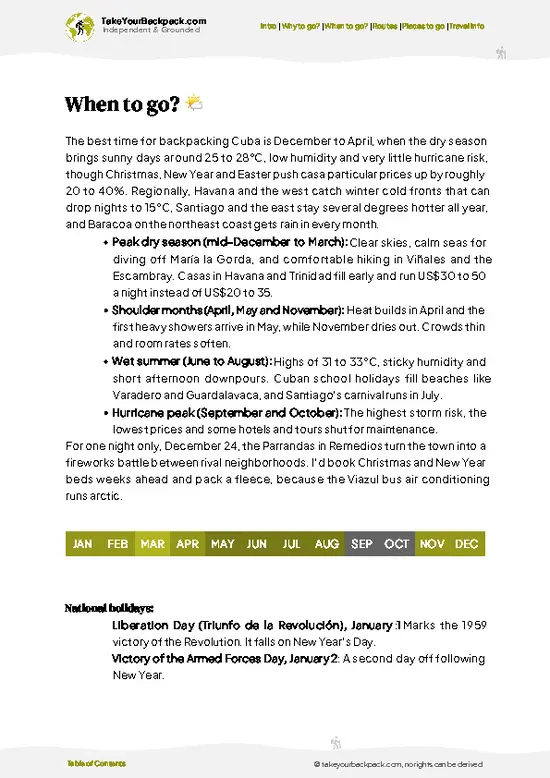
source: climatestotravel.comJANJanuary: good for travelingFEBFebruary: good for travelingMARMarch: good for travelingAPRApril: highly recommended for travelingMAYMay: fair for travelingJUNJune: fair for travelingJULJuly: fair for travelingAUGAugust: fair for travelingSEPSeptember: below average for travelingOCTOctober: below average for travelingNOVNovember: highly recommended for travelingDECDecember: good for traveling
cuba-attraction-museo-nacional-de-bellas-artes
© Google |

✈️ The backpacker research shortcutCuba Travel Guide

An offline-friendly backpacking guide with optimized travel routes, ranked highlights, transport advice, and the best areas to stay.
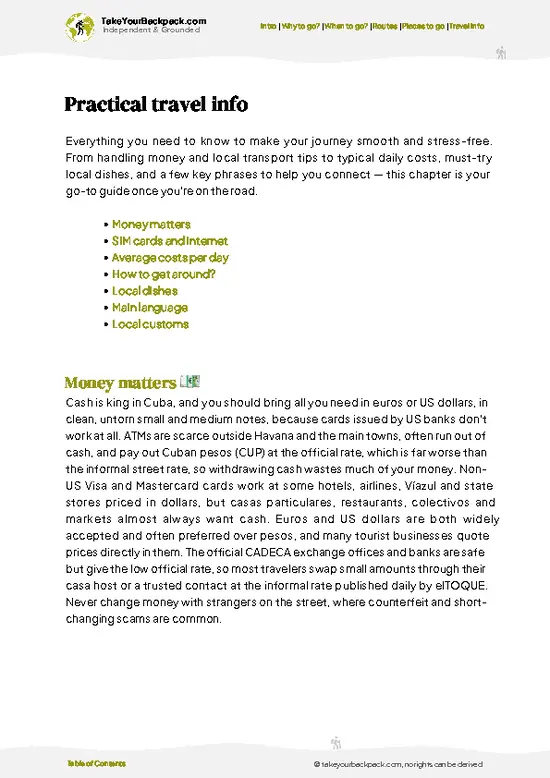
example page 0 from our offline Travel Guide for Cuba
example page 1 from our offline Travel Guide for Cuba
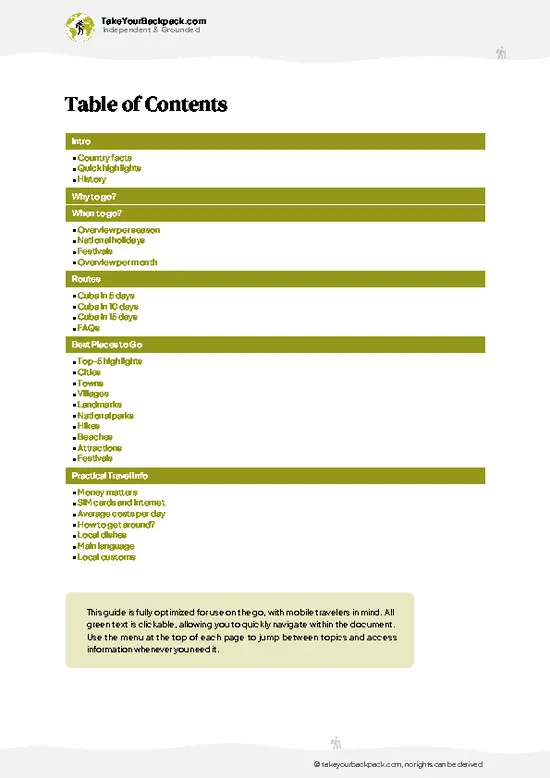
example page 2 from our offline Travel Guide for Cuba
example page 3 from our offline Travel Guide for Cuba
example page 4 from our offline Travel Guide for Cuba
example page 5 from our offline Travel Guide for Cuba
example page 6 from our offline Travel Guide for Cuba
example page 7 from our offline Travel Guide for Cuba
The digital guide (450 pages) contains:
121 highlights, ranked by travel appeal
Optimized 5, 10 & 15-day travel routes
Cities, national parks, landmarks, beaches
How to get around
Offline-friendly for travel without Wi-Fi
👉 Click to see all 30+ guide features

📅 Plan smarter in minutes, not weeks
Month by month travel advice
Festivals & national holidays
Budget expectations

🗺️ Go to the right places, skip the overrated ones
Honest pros & cons of destinations
Top hikes, parks & viewpoints
Lesser-known places most travelers miss
Clear “worth it vs skip it” guidance

🛏️ Travel smoothly without rookie mistakes
Best areas to stay
Transport systems explained simply
Common scams & safety advice
SIM cards, money & practical tips

🌍 Understand the country, not just visit it
Culture & traditions
52 Essential phrases & customs
Festivals worth planning around
Traveler-friendly historical context
Insights that make places more meaningful

📱 Built for real travel conditions
Fully downloadable PDF
Works completely offline
Optimized for phone use
Useful in remote areas & buses
Everything in one place
Save weeks of stressful planning
Get instant access to your full guide. 30‑day money-back guarantee.
+ Add another guide for just €6.50

By proceeding you agree to our terms.
Sent to your inbox immediately after payment • 100% Secure Checkout
Best Backpacking Travel Advisor 2025 tourism awardBest Backpacking
Travel Advisor
2025
What others say about Take Your Backpack Guides:
⭐⭐⭐⭐⭐
Fantastic, amazing amount of information!
⭐⭐⭐⭐⭐
My goodness this is amazing, it's what I've been looking for hats off too you!
⭐⭐⭐⭐⭐
I think this is absolutely BRILLIANT
⭐⭐⭐⭐
Very complete and informative. It's still missing places, but I gotta to commend you
⭐⭐⭐⭐⭐
This is truly amazing, thank you, can't wait to explore it with my kids!
⭐⭐⭐⭐⭐
Awesome resource, thank you!
⭐⭐⭐⭐⭐
This is amazing! Can't wait to explore the ones I haven't seen
⭐⭐⭐⭐
I love this! Well done, great idea.
⭐⭐⭐⭐⭐
Thanks for taking the time to make this gem!
⭐⭐⭐⭐⭐
This might be the best website I've ever seen.
⭐⭐⭐⭐⭐
Congratulations, and thank you so much for your work; it's incredibly valuable.
⭐⭐⭐⭐
In all seriousness I think you did a great job pointing out the important spots
⭐⭐⭐⭐⭐
10/10 very good
⭐⭐⭐⭐⭐
As someone who's only just starting to visit regularly this is awesome, thank you.
⭐⭐⭐⭐
Thank you very much! I'm going to visit my dad, it's going to be very useful!
⭐⭐⭐⭐⭐
This is really cool! We'll be travelling for the first time and this definitely come in handy.
⭐⭐⭐⭐⭐
You are now our minister of culture, congratulations 👨‍💼
⭐⭐⭐⭐⭐
Just wanted to tell you that this is a pearl! Going to follow your recommendations.
⭐⭐⭐⭐⭐
This is so cool. I'll definitely be using the resource for my travels soon.
⭐⭐⭐⭐⭐
This is very impressive! Good work.
⭐⭐⭐⭐⭐
This is an amazing and informative site. Very well done!

🛏️ Where to stay?Choosing the right base

If you’re aiming to crash near the Museo Nacional de Bellas Artes in Havana, forget the glossy travel brochures that make it look like a quiet stroll through an empty museum district. This area is smack in the middle of Centro Habana and Habana Vieja, two neighborhoods that pulse with life—and yes, crowds. But here’s the kicker: those crowds aren’t just tourists; they’re locals, street vendors, artists, and musicians, all jostling for space in a place that’s raw, real, and unapologetically vibrant.

For backpackers, the best spots to stay are in the fringes of Habana Vieja and the northern edges … read more 👉
If you’re aiming to crash near the Museo Nacional de Bellas Artes in Havana, forget the glossy travel brochures that make it look like a quiet stroll through an empty museum district. This area is smack in the middle of Centro Habana and Habana Vieja, two neighborhoods that pulse with life—and yes, crowds. But here’s the kicker: those crowds aren’t just tourists; they’re locals, street vendors, artists, and musicians, all jostling for space in a place that’s raw, real, and unapologetically vibrant.

For backpackers, the best spots to stay are in the fringes of Habana Vieja and the northern edges of Centro Habana. These areas are safe enough if you keep your wits about you, and they’re social hubs where you’ll bump into fellow travelers and locals alike. The streets here are lined with casas particulares—Cuban home stays that offer a chance to dive into everyday life rather than sanitized hotel experiences. You’ll find communal courtyards where conversations flow as freely as the Cuban coffee, and the vibe is more “welcome to my home” than “guest room.”

Yes, it’s not the cheapest corner of Havana, but the value is in the experience. You’re not just sleeping near the museum; you’re living the city’s heartbeat, with street art, salsa beats, and late-night domino games just steps away. That’s the real magic—messy, loud, and utterly unforgettable.

👛 Costs (as of 4 September 2026)Travel costs and budget guide for Museo Nacional de Bellas Artes

As of the most recent estimates, the entrance fee for foreign visitors to the Museo Nacional de Bellas Artes in Cuba is approximately 125 Cuban Pesos (CUP), which is equivalent to €5 to €10. Children under 14 years old are admitted free of charge. Additional costs may include photography fees, typically ranging from 1 to 5 CUP, depending on the museum's policy. It's advisable to check the museum's official website for the most current information on ticket prices and any additional fees.
⚠️ Prices can change and everyone travels differently, so take this as a rough guide. Hope it helps you plan your adventure!

FAQTraveler FAQ

Plan for about 2 to 3 hours to visit Museo Nacional de Bellas Artes to fully appreciate both the Cuban and international art collections. The museum is divided into two main buildings, so allocate time to explore both. This duration allows for a relaxed pace without rushing through exhibits.
Yes, Museo Nacional de Bellas Artes is worth the entrance fee, which is typically around 5 CUC (Cuban Convertible Peso). The museum offers a rich collection of Cuban art from colonial times to contemporary works, plus international pieces, providing good cultural value for the price. It is one of Havana's top cultural attractions, making it a worthwhile visit for art enthusiasts.
You can get to Museo Nacional de Bellas Artes by taxi or local bus; it is located in central Havana on Calle Trocadero. From Old Havana, a taxi ride takes about 10 minutes and costs around 5 CUC. Several buses also stop nearby, but taxis are more convenient for backpackers with limited time.
⚠️ Things can change over time, so always validate details locally before you go.

Other Cuban attractions near Museo Nacional de Bellas Artes

Explore more nearby:


💡 Not sure where to go next?
Create a personalized itinerary for Cuba including Museo Nacional de Bellas Artes and the places that fit your trip.

Generate my itinerary

👉 Discover all attractions

Or checkout all Cuba has to offer (think cities, towns, villages, national parks, hikes, beaches, festivals)
Country photo of Cuba

We 💚 feedbackKey takeaways before you go

The Museo Nacional de Bellas Artes isn’t your typical tourist stop swamped with selfie sticks—it’s a deep dive into Cuba’s artistic soul, showcasing everything from colonial masterpieces to cutting-edge contemporary work. But heads up: the air conditioning can be spotty, and the crowds swell on weekends, which can dull the vibe. Still, if you want to see Cuban culture beyond the clichés, this museum delivers a raw, unfiltered look that’s worth the sweat and the wait.

✈️ When did I visit Cuba?
As part of my 1.5 year travel around the world trip, I visited Cuba for 6 weeks in February, March 2016, being extremely lucky that that coincided with the free concert of The Rolling Stones.

✍️ Help improve this page!
The information on this page is based on my own backpacking experience in Cuba, supplemented with up-to-date research and feedback from other travelers. Travel details can change, so if you notice anything outdated or incomplete, feel free to let me know.


🙋‍♂️ Give feedback

👋 Meet the founderWho’s Behind Take Your Backpack?

Johan, backpacker and founder of TakeYourBackpackHi, I’m Johan (Netherlands 🇳🇱), the creator of TakeYourBackpack. Over the past decade, I’ve backpacked through 80+ countries across six continents, gaining extensive experience with independent travel, long-term trips, and overland routes.

This site is built on a combination of firsthand travel experience and carefully curated insights from other backpackers. Many guides are based on places I’ve personally visited, while others bring together tips, observations, and practical advice shared by trusted travelers I’ve met along the way.

The goal is to provide realistic, experience-driven guidance — not generic itineraries — so you can explore destinations with better context, clearer expectations, and more confidence.

Get full Cuba guide •
Instant download • 121 highlights • Full Offline guide