
×

Cuba🇨🇺 | townsSagua la GrandeIron bridges, Wifredo Lam, faded mansions, Sagua River | things to do and best time to go

Explore CaibariénExplore Jatibonico

Backpacking in Sagua la Grande
🌟 Highlighttown ranked #8
By Johan Kruseman 🇳🇱 | Updated October 22, 2026

Sagua la Grande suits slow travelers who like walking a real Cuban town with no tour buses, and photographers who want faded architecture. Anyone hunting beaches, nightlife or a checklist of famous sights will find it thin. The town sits in the north of Cuba, in Villa Clara province, on the Sagua la Grande River. Arriving, I would head straight for the river and the old iron bridge to get your bearings, because the center is compact and the water explains the town’s nickname. Tourist infrastructure is minimal, so expect few hostels and few other backpackers. Casas particulares are the norm because the state hotels are few, so book a room through your host and ask them about meals. Spend a first day on the river, the church square and the Wifredo Lam gallery, then eat at a paladar or a family-run spot.

Discover everything you want to know in the 📖 Cuba Travel Guide.


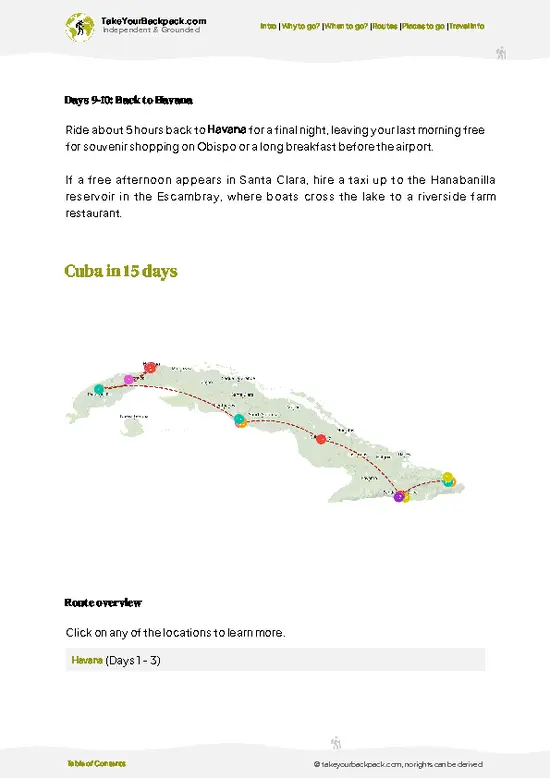
example page 0 from our offline Travel Guide for Cuba
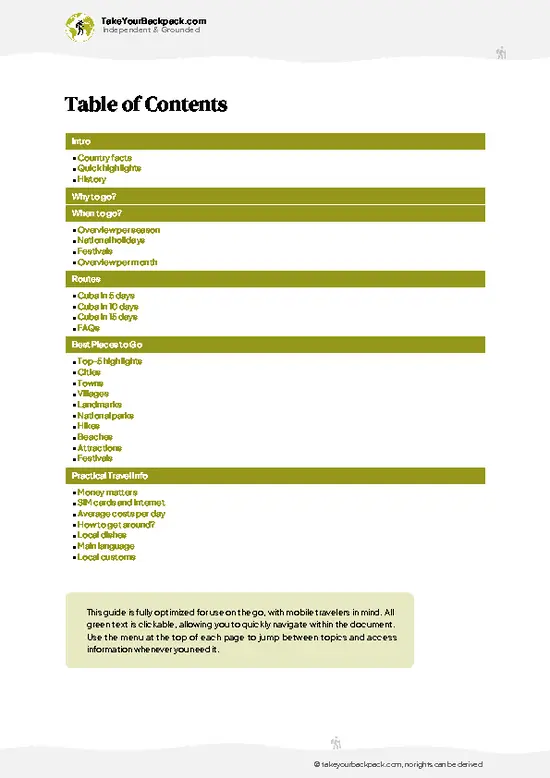
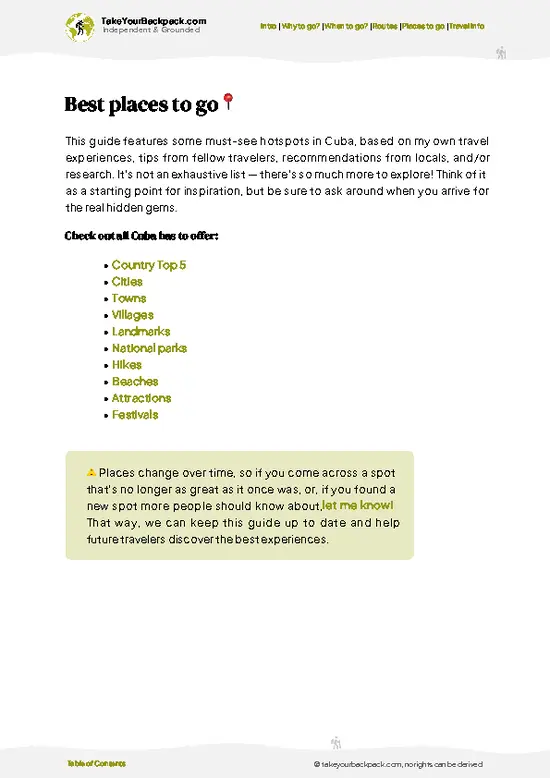
example page 1 from our offline Travel Guide for Cuba
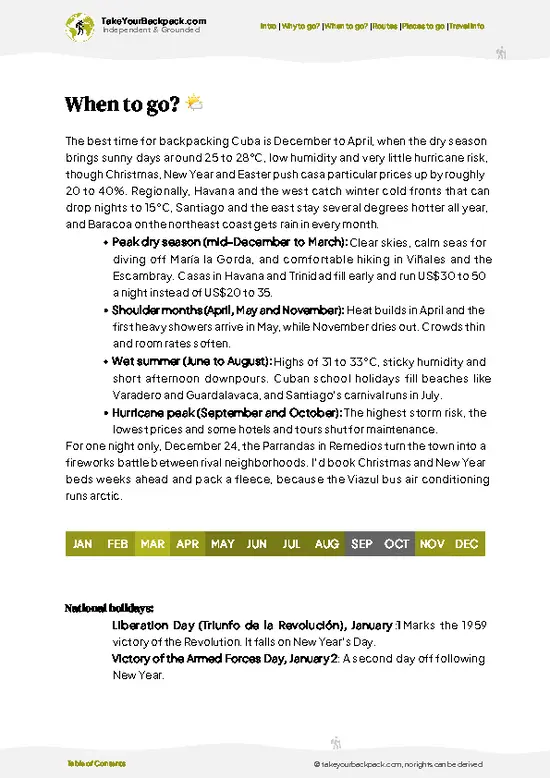
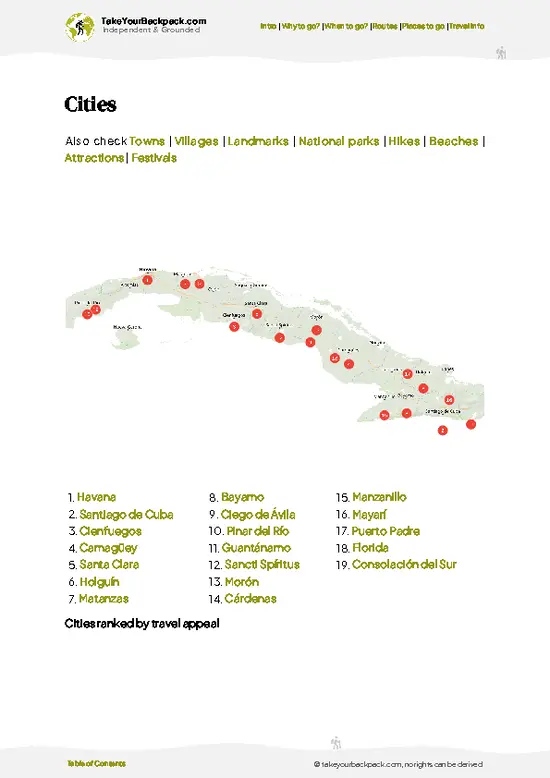
example page 2 from our offline Travel Guide for Cuba
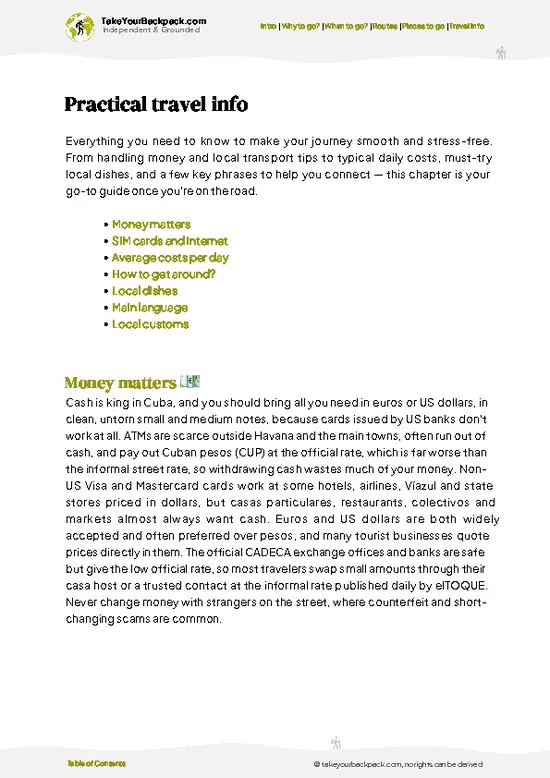
example page 3 from our offline Travel Guide for Cuba
example page 4 from our offline Travel Guide for Cuba
example page 5 from our offline Travel Guide for Cuba
example page 6 from our offline Travel Guide for Cuba
example page 7 from our offline Travel Guide for Cuba
Loading the map 🌍
CLICK TO FILTER
cities
towns
villages
landmarks
national parks
hikes
beaches
attractions
festivals
SHOW COUNTRY’S BESTSHOW ALL

✨ Why go?
Ranked #8 town in Cuba
What sets this place apart

Sagua la Grande earns a stop because it shows a working Cuban town without a tourist layer on top. The center is flat and small, so you cover it on foot, and the riverfront, the Iglesia Parroquial Mayor and the old railway terminal give you enough to fill a long afternoon. Most travelers pass through in a few hours or stay one night. If you like to linger, a second day lets you talk with locals, visit the Wifredo Lam gallery for the hometown painter and watch the river life slow down toward evening. It suits solo travelers, photographers and people who travel to see ordinary places, not to party. Nightlife is modest, a few bars and music at local venues, and you will rarely meet other backpackers, so expect conversations with your hosts instead. If you need hostels, tours and social buzz, … read more 👉
Sagua la Grande earns a stop because it shows a working Cuban town without a tourist layer on top. The center is flat and small, so you cover it on foot, and the riverfront, the Iglesia Parroquial Mayor and the old railway terminal give you enough to fill a long afternoon. Most travelers pass through in a few hours or stay one night. If you like to linger, a second day lets you talk with locals, visit the Wifredo Lam gallery for the hometown painter and watch the river life slow down toward evening. It suits solo travelers, photographers and people who travel to see ordinary places, not to party. Nightlife is modest, a few bars and music at local venues, and you will rarely meet other backpackers, so expect conversations with your hosts instead. If you need hostels, tours and social buzz, choose a bigger city nearby and treat Sagua as a day visit.

💡 HighlightsPlaces and moments you shouldn't skip

  1. Iglesia Parroquial Mayor: The 1860 parish church anchors the main square with its tall neoclassical front and a calm interior. Go in the morning when the doors are usually open. Entry is free or by small donation, about 20 minutes.
  2. Wifredo Lam gallery: A small gallery honoring the town’s best-known painter, born here. Expect reproductions, local art and context on his career. Visit on a weekday morning. Entry is a few dollars at most (about US$1 to 2), 30 to 45 minutes.
  3. Palacio Arenas: A grand early twentieth-century mansion whose facade shows the wealth sugar and trade once brought. Mostly an exterior visit, best in soft afternoon light. Free, 15 minutes.
  4. Casino Español: The former Spanish social club has an ornate building that shows the town’s colonial-era community. Photograph the facade,
… read more 👉
  1. Iglesia Parroquial Mayor: The 1860 parish church anchors the main square with its tall neoclassical front and a calm interior. Go in the morning when the doors are usually open. Entry is free or by small donation, about 20 minutes.
  2. Wifredo Lam gallery: A small gallery honoring the town’s best-known painter, born here. Expect reproductions, local art and context on his career. Visit on a weekday morning. Entry is a few dollars at most (about US$1 to 2), 30 to 45 minutes.
  3. Palacio Arenas: A grand early twentieth-century mansion whose facade shows the wealth sugar and trade once brought. Mostly an exterior visit, best in soft afternoon light. Free, 15 minutes.
  4. Casino Español: The former Spanish social club has an ornate building that shows the town’s colonial-era community. Photograph the facade, and step in if open. Free from outside, 15 to 20 minutes.
  5. Sagua River and railway terminal: Walk the embankment and the bridges of the river that gave the town its nickname, La Villa del Undoso, then look at the old railway terminal. Late afternoon is best, when locals gather. Free, 1 to 2 hours.
For day trips, the coastal fishing village of Isabela de Sagua and the town of Corralillo are the nearest outings, and Santa Clara is a longer excursion for Che Guevara sites. Everything on this list is free or cheap, and none needs a ticket or advance booking.
Spotted a mistake or missing something? Contact us.

🏘️ NeighborhoodsNeighborhood guide to Sagua la Grande

Sagua la Grande is small and flat, so the areas below blend into each other and every one can be crossed on foot in 15 to 20 minutes. The river Sagua splits the town, which is why the sights cluster on one side and the quieter streets on the other.
  • Centro Histórico: The Iglesia Parroquial Mayor (1860) anchors the main square, and the Palacio Arenas and Casino Español stand within walking distance. This is where to spend your time. Go in the morning, when the squares are shaded and the churchyard is calm. Evenings are low-key, with music drifting from the Casino area and little else open.
  • Riverfront and bridges: The river earned the town its nickname, La Villa del Undoso. The embankment is best for a slow walk at dusk when locals gather. Skip it at midday, since there is almost no shade.
  • Railway
… read more 👉
Sagua la Grande is small and flat, so the areas below blend into each other and every one can be crossed on foot in 15 to 20 minutes. The river Sagua splits the town, which is why the sights cluster on one side and the quieter streets on the other.
  • Centro Histórico: The Iglesia Parroquial Mayor (1860) anchors the main square, and the Palacio Arenas and Casino Español stand within walking distance. This is where to spend your time. Go in the morning, when the squares are shaded and the churchyard is calm. Evenings are low-key, with music drifting from the Casino area and little else open.
  • Riverfront and bridges: The river earned the town its nickname, La Villa del Undoso. The embankment is best for a slow walk at dusk when locals gather. Skip it at midday, since there is almost no shade.
  • Railway terminal area: The old station is a worthwhile photo stop for its architecture, and only a short detour. Streets around it are residential and have few places to eat, so eat before you go.
  • Wifredo Lam gallery quarter: A small, quick visit that suits art fans. Allow 30 minutes. Cafés here are scarce, so ask locals about paladares (private home restaurants) for pizza and pork plates.
  • Outer residential barrios: Not worth the time for sightseeing. Walk through only to reach a casa particular or a viewpoint over the river.

⌛️ 1 daySeeing the highlights in 24 hours

8:00 AM: Parque Cristóbal Colón
Start at the main square, because the town wakes early and the shade is still generous. Grab a coffee from a window nearby, then look at the Iglesia Parroquial Mayor (1860) from the park, where locals gather before the heat builds. From here everything on the list is a short walk.

9:30 AM: Palacio Arenas and Casino Español
Walk the central streets to these two grand buildings. Their facades show how sugar and trade money shaped Sagua in the 1800s and early 1900s. Take photos from the street, then peek into the lobbies if the doors are open.

11:00 AM: Wifredo Lam gallery
The gallery honors the painter born in Sagua, and it is small enough for a calm half hour. Go before midday so you see it with natural light and few other people. Entry is usually a few dollars … read more 👉
8:00 AM: Parque Cristóbal Colón
Start at the main square, because the town wakes early and the shade is still generous. Grab a coffee from a window nearby, then look at the Iglesia Parroquial Mayor (1860) from the park, where locals gather before the heat builds. From here everything on the list is a short walk.

9:30 AM: Palacio Arenas and Casino Español
Walk the central streets to these two grand buildings. Their facades show how sugar and trade money shaped Sagua in the 1800s and early 1900s. Take photos from the street, then peek into the lobbies if the doors are open.

11:00 AM: Wifredo Lam gallery
The gallery honors the painter born in Sagua, and it is small enough for a calm half hour. Go before midday so you see it with natural light and few other people. Entry is usually a few dollars or less.

12:30 PM: Lunch at a paladar
Find a family-run place close to the center and order the grilled pork or fish with rice and beans. Expect a plate for roughly US$5 to 8. Take your time while the sun is at its highest.

2:30 PM: Railway terminal
Walk to the old station, where the iron and brick structure recalls the days when sugar trains ran through the valley. Few travelers bother to come here, yet it gives the town’s working past a physical shape. Chat with anyone sitting around and ask about the trains.

4:30 PM: The Sagua river and its bridges
Follow the riverbank to see why Sagua is called La Villa del Undoso. Cross a bridge slowly and watch fishermen and kids at the water. The light softens and the air cools.

7:00 PM: Back at the park
Return to the square for dinner and the evening promenade. Music drifts from a few doorways, and this is the easiest time to meet locals.

🌤️ When to go?Choosing the right time of year

November to April is the easiest window for Sagua la Grande, with dry, sunny days.
  • Dry Season (Nov to Apr): Highs of 26 to 29°C (79 to 84°F), cooler nights near 16 to 20°C (61 to 68°F), and about 11 hours of daylight in winter. Crowds stay thin, though casa prices edge up slightly.
  • Wet Season (May to Oct): Hot and sticky at 31 to 34°C (88 to 93°F), with afternoon downpours that flood some streets. Rooms are easiest to get and cheapest, and daylight stretches to about 13 hours.
  • Hurricane Risk (Aug to Oct): Storms can disrupt roads and power for days, so keep plans flexible.
  • Local Events: Summer carnival season brings music and crowded streets.
Book your first night ahead and leave the rest open, since plans change with transport.

source: climatestotravel.comJANJanuary: good for travelingFEBFebruary: good for travelingMARMarch: good for travelingAPRApril: highly recommended for travelingMAYMay: fair for travelingJUNJune: fair for travelingJULJuly: fair for travelingAUGAugust: fair for travelingSEPSeptember: below average for travelingOCTOctober: highly recommended for travelingNOVNovember: highly recommended for travelingDECDecember: good for traveling
when-to-go

✈️ The backpacker research shortcutCuba Travel Guide

An offline-friendly backpacking guide with optimized travel routes, ranked highlights, transport advice, and the best areas to stay.
example page 0 from our offline Travel Guide for Cuba
example page 1 from our offline Travel Guide for Cuba
example page 2 from our offline Travel Guide for Cuba
example page 3 from our offline Travel Guide for Cuba
example page 4 from our offline Travel Guide for Cuba
example page 5 from our offline Travel Guide for Cuba
example page 6 from our offline Travel Guide for Cuba
example page 7 from our offline Travel Guide for Cuba
The digital guide (327 pages) contains:
✅ 113 highlights, ranked by travel appeal
✅ Optimized 5, 10 & 15-day travel routes
✅ Cities, national parks, landmarks, beaches
✅ How to get around
✅ Offline-friendly for travel without Wi-Fi
👉 Click to see all 30+ guide features

📅 Plan smarter in minutes, not weeks
✅ Month by month travel advice
✅ Festivals & national holidays
✅ Budget expectations

🗺️ Go to the right places, skip the overrated ones
✅ Honest pros & cons of destinations
✅ Top hikes, parks & viewpoints
✅ Lesser-known places most travelers miss
✅ Clear “worth it vs skip it” guidance

🛏️ Travel smoothly without rookie mistakes
✅ Best areas to stay
✅ Transport systems explained simply
✅ Common scams & safety advice
✅ SIM cards, money & practical tips

🌍 Understand the country, not just visit it
✅ Culture & traditions
✅ 52 Essential phrases & customs
✅ Festivals worth planning around
✅ Traveler-friendly historical context
✅ Insights that make places more meaningful

📱 Built for real travel conditions
✅ Fully downloadable PDF
✅ Works completely offline
✅ Optimized for phone use
✅ Useful in remote areas & buses
✅ Everything in one place
Stop searching, start planning
Get instant access to your full guide. 30‑day money-back guarantee.
+ Add another guide for just

By proceeding you agree to our terms.
Sent to your inbox immediately after payment • 100% Secure Checkout
Best Backpacking Travel Advisor 2025 tourism awardBest Backpacking
Travel Advisor
2025
What others say about Take Your Backpack Guides:
⭐⭐⭐⭐⭐
Fantastic, amazing amount of information!
⭐⭐⭐⭐⭐
My goodness this is amazing, it's what I've been looking for hats off too you!
⭐⭐⭐⭐⭐
I think this is absolutely BRILLIANT
⭐⭐⭐⭐
Very complete and informative. It's still missing places, but I gotta to commend you
⭐⭐⭐⭐⭐
This is truly amazing, thank you, can't wait to explore it with my kids!
⭐⭐⭐⭐⭐
Awesome resource, thank you!
⭐⭐⭐⭐⭐
This is amazing! Can't wait to explore the ones I haven't seen
⭐⭐⭐⭐
I love this! Well done, great idea.
⭐⭐⭐⭐⭐
Thanks for taking the time to make this gem!
⭐⭐⭐⭐⭐
This might be the best website I've ever seen.
⭐⭐⭐⭐⭐
Congratulations, and thank you so much for your work; it's incredibly valuable.
⭐⭐⭐⭐
In all seriousness I think you did a great job pointing out the important spots
⭐⭐⭐⭐⭐
10/10 very good
⭐⭐⭐⭐⭐
As someone who's only just starting to visit regularly this is awesome, thank you.
⭐⭐⭐⭐
Thank you very much! I'm going to visit my dad, it's going to be very useful!
⭐⭐⭐⭐⭐
This is really cool! We'll be travelling for the first time and this definitely come in handy.
⭐⭐⭐⭐⭐
You are now our minister of culture, congratulations 👨‍💼
⭐⭐⭐⭐⭐
Just wanted to tell you that this is a pearl! Going to follow your recommendations.
⭐⭐⭐⭐⭐
This is so cool. I'll definitely be using the resource for my travels soon.
⭐⭐⭐⭐⭐
This is very impressive! Good work.
⭐⭐⭐⭐⭐
This is an amazing and informative site. Very well done!

🛏️ Where to stay?Choosing the right base

The center around Parque Martí is the best place to sleep in Sagua la Grande, with private rooms (casas particulares) at roughly US$15 to 30 a night. There are no true hostels, so expect a room in a family home, often with breakfast for US$3 to 5 extra. Staying central puts you a few minutes from restaurants, the theater and the spots where shared taxis gather, which saves money on rides.
The streets facing the river are the second choice. They are quieter and breezier at night, and many hosts have terraces. The tradeoff is a slightly longer walk to eateries, but nothing over ten minutes. Both … read more 👉
The center around Parque Martí is the best place to sleep in Sagua la Grande, with private rooms (casas particulares) at roughly US$15 to 30 a night. There are no true hostels, so expect a room in a family home, often with breakfast for US$3 to 5 extra. Staying central puts you a few minutes from restaurants, the theater and the spots where shared taxis gather, which saves money on rides.
The streets facing the river are the second choice. They are quieter and breezier at night, and many hosts have terraces. The tradeoff is a slightly longer walk to eateries, but nothing over ten minutes. Both areas feel calm after dark, and noise mostly comes from music on weekends or roosters at dawn.
Book one night ahead through a host and ask them to arrange onward transport. Hosts also link you to other casas if theirs is full, and that network is more reliable than online listings, which are sparse here.

🚌 Getting aroundHow to get around Sagua la Grande

A ride in a shared horse cart or bicitaxi in Sagua la Grande costs roughly US$0.25 to 1, paid in cash in Cuban pesos, so carry small notes. The center is flat and compact, and you can cross it on foot in 15 minutes. Traffic is light. Public transport is thin and unreliable, so plan around that rather than waiting for it.
  • Walking: Free and the best way to see the center, Malecón and theater. Go early or late, because midday heat is heavy.
  • Bicitaxi: Pedal tricycles run short hops for US$0.50 to 1. Agree the price before you sit, because quotes rise for foreigners who don’t ask.
  • Horse cart (coche): Carts serve fixed local routes for a few cents to US$0.50. They are slow but cheap, and worth one ride for the experience, not for speed.
  • Taxi (private car): Old American cars and Ladas charge US$3 to
… read more 👉
A ride in a shared horse cart or bicitaxi in Sagua la Grande costs roughly US$0.25 to 1, paid in cash in Cuban pesos, so carry small notes. The center is flat and compact, and you can cross it on foot in 15 minutes. Traffic is light. Public transport is thin and unreliable, so plan around that rather than waiting for it.
  • Walking: Free and the best way to see the center, Malecón and theater. Go early or late, because midday heat is heavy.
  • Bicitaxi: Pedal tricycles run short hops for US$0.50 to 1. Agree the price before you sit, because quotes rise for foreigners who don’t ask.
  • Horse cart (coche): Carts serve fixed local routes for a few cents to US$0.50. They are slow but cheap, and worth one ride for the experience, not for speed.
  • Taxi (private car): Old American cars and Ladas charge US$3 to 6 for cross-town or nearby trips. Skip them inside town since nothing is far, and use them for the road to the coast or the Santa Clara area.
  • Intercity transport: Buses and shared taxis head to Santa Clara (about 1 hour by road) and Havana (around 3.5 to 4 hours). Shared taxis cost US$8 to 15 per seat and leave when full, while state buses are cheaper but erratic and often sold out. Ask your casa host to arrange a seat the day before, since they know the drivers.

👛 Costs (as of 22 October 2026)Typical daily expenses

Sagua la Grande costs about US$33 to 78 a day for a backpacker, and the budget here is US$62 counting a mid-range casa.
CategoryBudget RangeLocal Reality
Dorm accommodationUS$15 to 30No hostels. A private room in a casa particular is the standard.
MealsUS$10 to 25Private restaurants charge more than street counters, and breakfast is often extra.
Local transportUS$1 to 5Bicitaxis and carts are cheap, and taxis cost more.
Basic activities/entry feesUS$2 to 8Theater visits and small museums cost little.
Miscellaneous expensesUS$5 to 10Water, snacks and tips.
Total Daily BudgetUS$33 to 78About US$62 when you choose a high-season casa, moderate meals and a taxi or two.
Eat at your casa host’s table for dinner, since home-cooked meals are usually cheaper and bigger than restaurant plates.

source: cubatravel.cu
⚠️ Prices can change and everyone travels differently, so take this as a rough guide. Hope it helps you plan your adventure!

🚌 Day tripsExploring the surroundings

Sagua la Grande suits day trips well if you accept slow, improvised transport, and a shared taxi is usually the best route.
Isabela de Sagua:
This fishing port on the coast sits about 30 to 45 minutes away and has a working waterfront, seafood and a sleepy atmosphere. Expect US$6 to 12 round trip by taxi. Go in dry months, and don’t plan on swimming from town.

Santa Clara:
About an hour by road, this university city holds the Che Guevara Memorial and a lively central square. Budget US$8 to 15 each way in a shared car, plus small entry costs. A first-timer mistake is leaving too late, since the last easy ride back is in the afternoon.
👉 Explore Santa Clara
Remedios:
This colonial town is around 1.5 hours away, known for its church and a plaza lined with arcades. Expect US$20 to 30 round trip … read more 👉
Sagua la Grande suits day trips well if you accept slow, improvised transport, and a shared taxi is usually the best route.
Isabela de Sagua:
This fishing port on the coast sits about 30 to 45 minutes away and has a working waterfront, seafood and a sleepy atmosphere. Expect US$6 to 12 round trip by taxi. Go in dry months, and don’t plan on swimming from town.

Santa Clara:
About an hour by road, this university city holds the Che Guevara Memorial and a lively central square. Budget US$8 to 15 each way in a shared car, plus small entry costs. A first-timer mistake is leaving too late, since the last easy ride back is in the afternoon.
👉 Explore Santa Clara
Remedios:
This colonial town is around 1.5 hours away, known for its church and a plaza lined with arcades. Expect US$20 to 30 round trip if you hire a car for the day. Visit in December if you can, when its Parrandas festival fills the streets.
👉 Explore Remedios
Corralillo:
A quiet town reached in under an hour, it suits travelers wanting a rural stop away from tourists. Costs run US$5 to 10. Go on a clear morning.

🛡️ SafetyScams, Hazards, and Annoyances

Sagua la Grande is calm, and violent crime against travelers is rare. The usual annoyances are touts offering rooms, restaurants or cigars on the street, and unofficial rides priced above the norm. Say no politely and agree on prices before accepting anything. Petty theft happens in busy spots, so keep your phone and cash out of back pockets. Solo travelers, including women, generally manage fine, though you may get persistent attention and comments. After dark, stick to lit central streets, since outer barrios have poor lighting and uneven pavement. Carry some cash in small bills, because card payments are rarely accepted. Power cuts happen, so a headlamp helps.

FAQTraveler FAQ

Sagua la Grande is worth a stop of a day or two if you like architecture and unhurried towns, but it is not a headline destination. You get the Iglesia Parroquial Mayor (1860), the Palacio Arenas, the Casino Español and the Wifredo Lam gallery in a compact center, with almost no tourist crowds. Nightlife is minimal, so plan on quiet evenings.
One full day covers Sagua la Grande, and two days lets you slow down along the river and add a day trip. The main sights take about 3 to 4 hours on foot, with the gallery needing roughly 30 minutes. Stay a second night only if you want to explore the surrounding countryside or time your visit to the evenings.
Sagua la Grande can be done as a day trip from Santa Clara, the nearest larger city, roughly 1.5 to 2 hours away by road. A shared taxi or colectivo costs about US$5 to 10 each way, and departures thin out by late afternoon. That leaves enough time for the central sights, but staying overnight is easier since the last return options are unpredictable.
⚠️ Things can change over time, so always validate details locally before you go.

Other Cuban towns near Sagua la Grande

Explore more nearby:

  • Remedios—Gilded baroque altar, Parrandas museum, wooden balconies, Parque Martí| 64 km away
  • Caibarién—Fish docks, shrimp trawlers, Malecón, old rail yards| 69 km away
  • Colón—Leafy park, sugar-valley market, old theater, cheap casas| 86 km away

💡 Not sure where to go next?
Create a personalized itinerary for Cuba including Sagua la Grande and the places that fit your trip.

Generate my itinerary

👉 Discover all towns

Or checkout all Cuba has to offer (think cities, towns, villages, national parks, hikes, beaches, festivals)
Country photo of Cuba

We 💚 feedbackSumming up the experience

Sagua la Grande deserves one night, two if you like wandering without a checklist. Any longer and you will run out of sights, though not of conversations with locals. I would arrive by midday, walk the center and bridges, and leave the next morning. Bring small bills and patience.

✈️ When did I visit Cuba?
As part of my 1.5 year travel around the world trip, I visited Cuba for 6 weeks in February, March 2016, being extremely lucky that that coincided with the free concert of The Rolling Stones.

✍️ Help improve this page!
The information on this page is based on my own backpacking experience in Cuba, supplemented with up-to-date research and feedback from other travelers. Travel details can change, so if you notice anything outdated or incomplete, feel free to let me know.


🙋‍♂️ Give feedback

👋 Meet the founderWho’s Behind Take Your Backpack?

Johan, backpacker and founder of TakeYourBackpackHi, I’m Johan (Netherlands 🇳🇱), the creator of TakeYourBackpack. Over the past 3 decades, I’ve backpacked through 90+ countries across six continents, gaining extensive experience with independent travel, long-term trips, and overland routes.

This site is built on a combination of firsthand travel experience and carefully curated insights from other backpackers. Many guides are based on places I’ve personally visited, while others bring together tips, observations, and practical advice shared by trusted travelers I’ve met along the way.

The goal is to provide realistic, experience-driven guidance — not generic itineraries — so you can explore destinations with better context, clearer expectations, and more confidence.