×

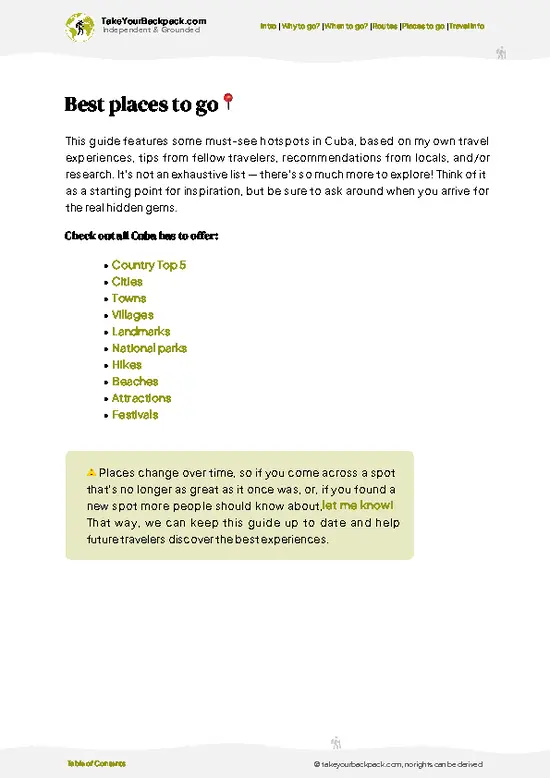
Cuba🇨🇺 | best townsDiscover the 10 Best towns Across Cuba

Cuba’s towns are a vibrant tapestry of culture, history, and local life, each offering a unique flavor that shapes your travel experience. From the colonial charm of Trinidad to the bustling streets of Havana, the right town choice can significantly impact your backpacking adventure. Regional differences dictate everything from vibe to safety, and seasonal nuances can affect budget and ease of travel. For instance, visiting Viñales during the dry season means fewer crowds and better hiking conditions, while Cienfuegos offers a quieter, more laid-back atmosphere. Understanding these dynamics is key to immersing yourself in Cuba’s rich culture and ensuring a rewarding journey.

By Johan Kruseman 🇳🇱 | Updated September 5, 2026
Explore the best villages in Cuba

Why go?What Makes Them Special

Cuba’s towns are a tapestry of local charm and cultural richness that set them apart from other destinations. The pace of life here is a refreshing contrast to the frenetic energy of many tourist hotspots. You’ll find a rhythm that invites you to slow down and engage with the community.

Cuba’s unique history, marked by colonial influences and revolutionary spirit, shapes its towns. The architecture reflects this blend, with colorful facades and crumbling buildings that tell stories of resilience. Culinary experiences are equally compelling, featuring traditional dishes that are often made with locally sourced ingredients, showcasing the island’s agricultural bounty.

However, travel in Cuba comes with trade-offs. The infrastructure can be challenging, with limited public transport options … read more 👉
Cuba’s towns are a tapestry of local charm and cultural richness that set them apart from other destinations. The pace of life here is a refreshing contrast to the frenetic energy of many tourist hotspots. You’ll find a rhythm that invites you to slow down and engage with the community.

Cuba’s unique history, marked by colonial influences and revolutionary spirit, shapes its towns. The architecture reflects this blend, with colorful facades and crumbling buildings that tell stories of resilience. Culinary experiences are equally compelling, featuring traditional dishes that are often made with locally sourced ingredients, showcasing the island’s agricultural bounty.

However, travel in Cuba comes with trade-offs. The infrastructure can be challenging, with limited public transport options and long travel times between towns. This means that while you can cluster visits to maximize your itinerary, you may sacrifice depth of exploration. The more time spent traveling, the less you can immerse yourself in the local culture.

Cuba’s climatic conditions also play a role; the heat can be intense, especially in summer, which may affect your energy levels for exploration. Understanding these factors is crucial for making the most of your journey. Ultimately, the towns of Cuba offer a rich tapestry of experiences that are well worth the effort, but they require thoughtful planning to truly appreciate their essence.
How the List Was Created
The list of best towns in Cuba is created based on charm, local culture, atmosphere, hidden gems, and visitor appeal. If you feel a town is missing in this list, please let us know.

When to go?Best Time to Visit Cuba for towns

Seasonality plays a significant role in the experience of Cuba’s towns. The dry season, from November to April, offers pleasant weather with lower humidity and cooler temperatures. This is when many travelers flock to the country, leading to crowded streets and inflated prices. Expect vibrant local festivals and events during this peak period, but be prepared for the hustle and bustle that comes with it.

Shoulder seasons, particularly late April to June and September to October, present a different vibe. These months can bring rain, especially in the latter half of the year, but they also offer a more authentic glimpse into daily life. Fewer tourists mean more opportunities to engage with locals and experience the true rhythm of the towns. Prices often drop, making it a budget-friendly option, … read more 👉
Seasonality plays a significant role in the experience of Cuba’s towns. The dry season, from November to April, offers pleasant weather with lower humidity and cooler temperatures. This is when many travelers flock to the country, leading to crowded streets and inflated prices. Expect vibrant local festivals and events during this peak period, but be prepared for the hustle and bustle that comes with it.

Shoulder seasons, particularly late April to June and September to October, present a different vibe. These months can bring rain, especially in the latter half of the year, but they also offer a more authentic glimpse into daily life. Fewer tourists mean more opportunities to engage with locals and experience the true rhythm of the towns. Prices often drop, making it a budget-friendly option, but travelers should be ready for the occasional downpour.

Peak periods like Christmas and Easter see a surge in visitors, which can lead to fully booked accommodations and higher costs. While the festive atmosphere is palpable, the trade-off is a less intimate experience.

Understanding these seasonal patterns is crucial for planning a trip that balances weather conditions, crowd levels, and costs, ensuring a more genuine connection to Cuba’s unique charm.

town hoppingHow to Combine towns Into One Trip

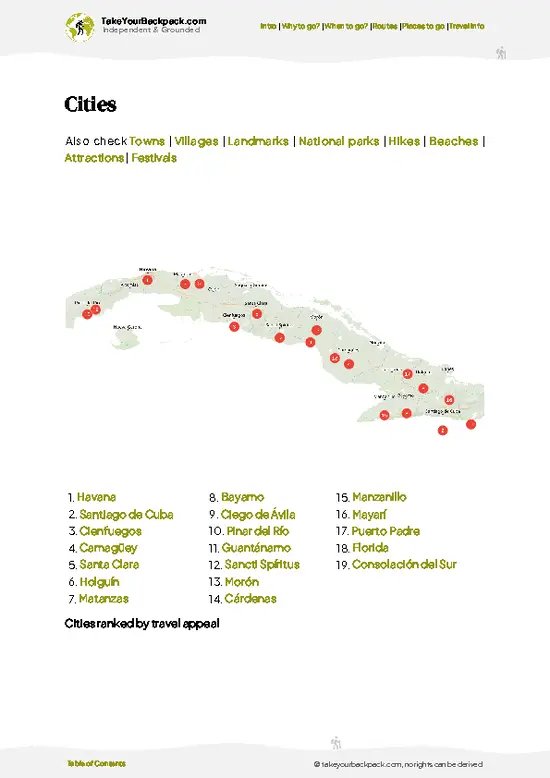
Traveling through Cuba requires a smart approach to maximize the experience without burning out. Start by clustering towns by region. The western part, including Havana and Viñales, offers a vibrant mix of culture and nature. Moving east, towns like Trinidad and Cienfuegos provide a different flavor, rich in colonial history and coastal charm.

Routing logic should prioritize direction. Begin in Havana, then head to Viñales for stunning landscapes. From there, make your way to Trinidad, soaking in the music and history. Cienfuegos can be a quick stop before heading back to Havana or onward to Santiago de Cuba.

Time management is crucial. Aim for two to three days in each town. This allows for exploration without feeling rushed. Common mistakes include trying to cram too many towns into … read more 👉
Traveling through Cuba requires a smart approach to maximize the experience without burning out. Start by clustering towns by region. The western part, including Havana and Viñales, offers a vibrant mix of culture and nature. Moving east, towns like Trinidad and Cienfuegos provide a different flavor, rich in colonial history and coastal charm.

Routing logic should prioritize direction. Begin in Havana, then head to Viñales for stunning landscapes. From there, make your way to Trinidad, soaking in the music and history. Cienfuegos can be a quick stop before heading back to Havana or onward to Santiago de Cuba.

Time management is crucial. Aim for two to three days in each town. This allows for exploration without feeling rushed. Common mistakes include trying to cram too many towns into a short timeframe, leading to travel fatigue.

Consider trade-offs carefully. Speed may mean missing out on local experiences, while a slower pace allows for deeper connections. Budget constraints can affect comfort; consider staying in casas particulares for a more authentic experience.

Flexibility is key. Plans may shift, and that’s okay. Embrace the spontaneity that Cuba offers, and let the journey unfold naturally.

The ListHighly Recommended towns of Cuba

1 Trinidad

cobblestone hills, pastel mansions, museum district

Step into a preserved townscape where every street reveals layers of history, art, and music in a compact, walkable center.

2 Varadero

peninsula beaches, resort strip, turquoise shallows

Swim in clear waters, stroll long stretches of sand, and find every amenity along Cuba’s most developed coastal area.

3 Viñales

karst valleys, farm homestays, red earth trails

Hike among dramatic limestone formations, stay with local families, and explore a landscape shaped by traditional agriculture.

4 Baracoa

rainforest hills, cacao farms, riverside malecón

Hike lush trails, sample local chocolate, and watch the Atlantic crash against a town set between mountains and sea.

5 Remedios

baroque churches, cobbled streets, town square

Experience a town where centuries-old rituals and architecture shape daily life, especially around the lively central plaza.

6 Gibara

sea cliffs, colonial grid, fishing port

Wander quiet lanes where salt air mixes with old stone, and watch daily life unfold along the working waterfront and breezy plazas.

7 Caibarién

sea bridge, shrimp farms, pastel houses

Cross the causeway to a coastal town known for its seafood, faded facades, and easy access to offshore islets and beaches.

cuba-city-caibarien
© Google |

8 Sagua la Grande

riverfront, art nouveau facades, sugar mills

Stroll riverside streets lined with ornate buildings and discover a town where industry and architecture reflect a layered past.

9 Banes

archaeological sites, banana plantations, inland hills

Visit a town surrounded by fertile land and ancient relics, where the landscape tells stories older than the streets themselves.

10 Colón

railway junction, faded mansions, agricultural trade

Pause in a transport hub where trains converge, grand homes show their age, and the rhythm of commerce is tied to the surrounding fields.

11 San Antonio de los Baños

film school, leafy parks, river gorge

Visit a creative enclave where students gather, green spaces offer shade, and a dramatic gorge cuts through the town’s edge.

12 Bejucal

rail terminus, festival roots, suburban sprawl

Arrive in a town known for its lively traditions and rail connections, where the city edge blends into Havana’s outer neighborhoods.

13 San Cristóbal

coffee farms, rural hills, small-town squares

Explore a quiet town surrounded by plantations, where local routines and scenic countryside offer a glimpse of Cuba’s agricultural backbone.

14 San José de las Lajas

university campus, science institutes, suburban sprawl

Observe daily life in a city shaped by research and education, with wide streets and a practical layout serving a growing population.

15 Candelaria

coffee farms, pine forests, quiet valley

Travel through a tranquil valley surrounded by plantations and forest, where the air carries the scent of coffee and pine.

16 Bauta

road junction, local crafts, small plazas

Stop at a busy intersection town where artisans sell their wares and daily life centers on a handful of shaded squares.

17 Güines

market town, river crossing, 19th-century arcades

Explore a commercial hub where the river divides neighborhoods, and covered walkways shelter daily shoppers from sun and rain.

18 Jatibonico

rail crossing, tobacco fields, rural market

Pass through a small agricultural hub where trains and trucks meet, and daily commerce centers on the rhythms of the countryside.

19 Nuevitas

industrial harbor, mangrove coast, cargo docks

Experience a town shaped by shipping and trade, where the rhythms of port activity set the pace along the broad, windblown shoreline.

20 San Luis

agricultural center, railway depot, open plains

Travelers find a practical stop in the heart of farmland, where wide streets and train lines connect distant corners of the province.

21 Alquízar

fruit markets, rural crossroads, low hills

Pause in a town where produce stalls line the streets and the landscape opens to gentle hills and patchwork farmland.

Think you know Cuba?

Prove you’re a true local — uncover 11 lesser-known towns in Cuba that locals tend to keep to themselves.
Loading the map 🌍

Expert viewWhat You Should Know

Regional Clusters
Cuba is a patchwork of towns, each with its own flavor and rhythm. Aim for three to five towns to get a real sense of the country. The western region, with its colonial charm, contrasts sharply with the eastern coast’s vibrant culture. The central part of the island offers a mix of both, but it’s often overlooked. This is where you’ll find the heart of Cuba, away from the tourist traps.

Travel Rhythm
Plan for a leisurely pace. Cuba isn’t about rushing from one spot to another; it’s about soaking in the atmosphere. Expect to spend at least two to three days in each town. This allows you to connect with locals, explore the streets, and enjoy the music that spills from every corner. The infrastructure can be a challenge, with limited public transport options. Buses are often … read more 👉
Regional Clusters
Cuba is a patchwork of towns, each with its own flavor and rhythm. Aim for three to five towns to get a real sense of the country. The western region, with its colonial charm, contrasts sharply with the eastern coast’s vibrant culture. The central part of the island offers a mix of both, but it’s often overlooked. This is where you’ll find the heart of Cuba, away from the tourist traps.

Travel Rhythm
Plan for a leisurely pace. Cuba isn’t about rushing from one spot to another; it’s about soaking in the atmosphere. Expect to spend at least two to three days in each town. This allows you to connect with locals, explore the streets, and enjoy the music that spills from every corner. The infrastructure can be a challenge, with limited public transport options. Buses are often delayed, and taxis can be pricey. Factor in extra time for travel, and don’t be surprised if your plans shift. Flexibility is key.

Local Charm
Cuban towns are alive with character. You’ll find colorful buildings, lively plazas, and a palpable sense of history. Engage with the locals; they’re often eager to share stories and insights. This is where the real magic lies. However, be prepared for the reality of crowds in popular areas. Some towns can feel overrun with tourists, especially during peak seasons. If you want to avoid the throngs, consider visiting during the shoulder seasons.

Logistical Considerations
Budget wisely. While Cuba can be affordable, costs can add up quickly, especially in tourist-heavy areas. Accommodations vary widely, from casas particulares (private homestays) to hotels that can feel more like resorts. Expect to spend more in the cities compared to rural areas. Food is generally cheap, but dining in tourist spots can be a splurge. Street food is a great way to save money and experience local flavors, but be cautious about hygiene.

Safety & Cultural Considerations
Cuba is relatively safe, but common sense goes a long way. Petty crime exists, especially in crowded areas. Keep your belongings secure and be mindful of your surroundings. Respect local customs; Cubans are proud of their culture. Learning a few basic Spanish phrases can go a long way in building rapport.

Trade-offs
The trade-off for experiencing the authentic Cuba is often the discomfort of navigating its infrastructure. Expect occasional power outages, limited Wi-Fi, and a slower pace of life. This can be frustrating, but it’s also part of the charm. Embrace the unpredictability; it’s what makes the journey memorable.

In summary, focus on a handful of towns that resonate with you. Immerse yourself in the local culture, and don’t shy away from the challenges. The rewards are worth it. The real Cuba is waiting, but it requires a willingness to step off the beaten path and engage with its vibrant, messy, and beautiful reality.

✈️ The backpacker research shortcutCuba Travel Guide

An offline-friendly backpacking guide with optimized travel routes, ranked highlights, transport advice, and the best areas to stay.
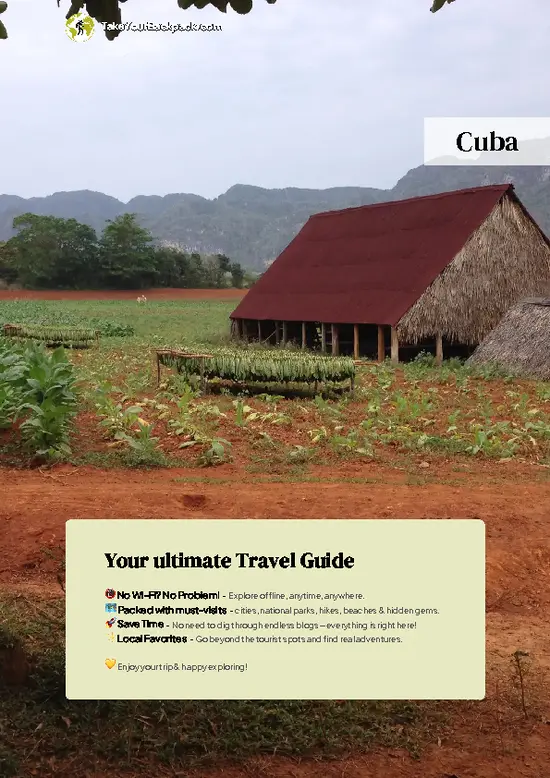
example page 0 from our offline Travel Guide for Cuba
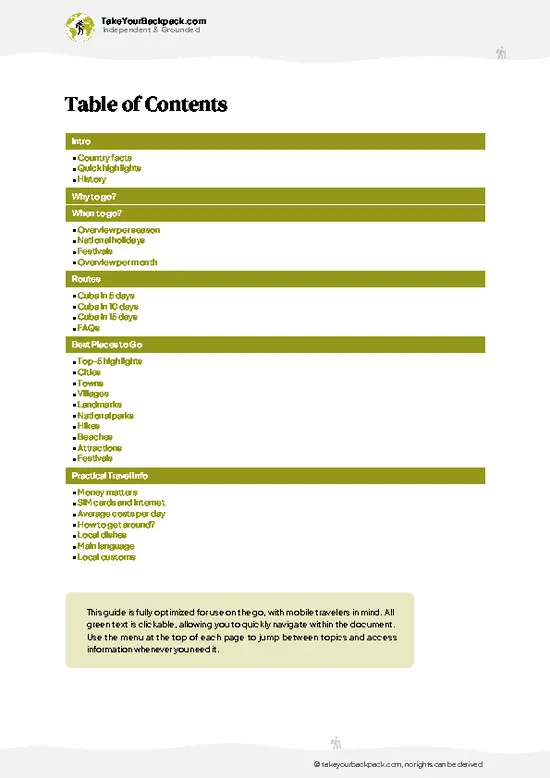
example page 1 from our offline Travel Guide for Cuba
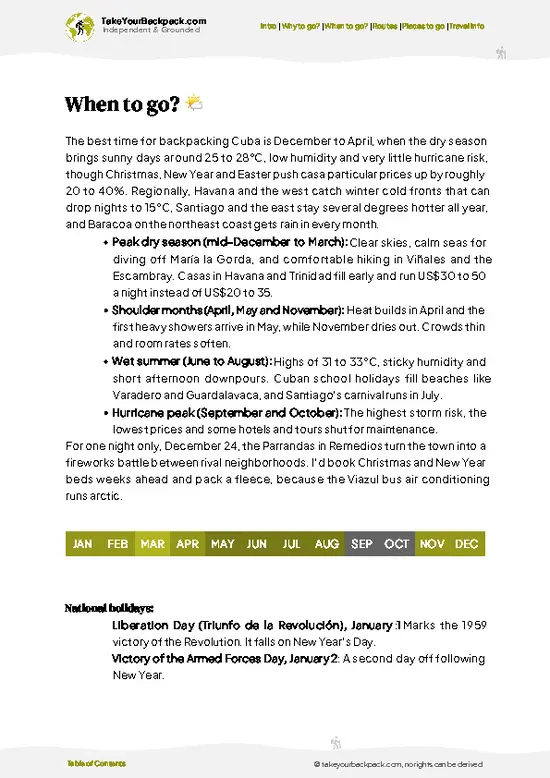
example page 2 from our offline Travel Guide for Cuba
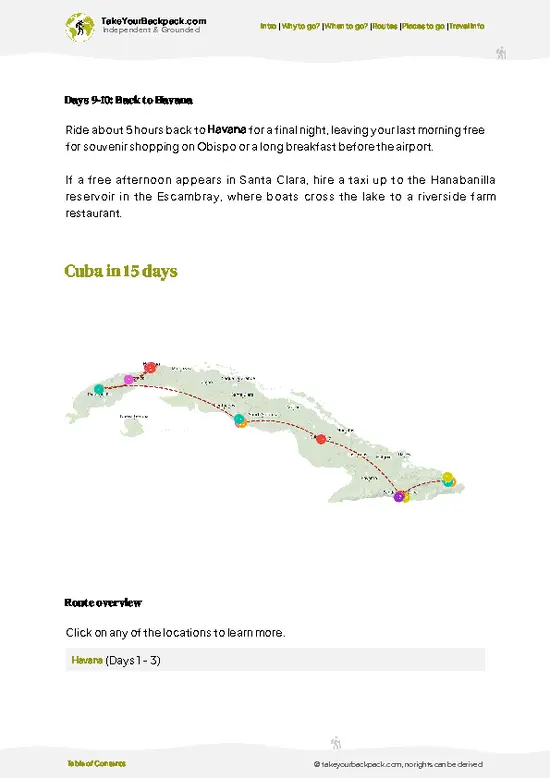
example page 3 from our offline Travel Guide for Cuba
example page 4 from our offline Travel Guide for Cuba
example page 5 from our offline Travel Guide for Cuba
example page 6 from our offline Travel Guide for Cuba
example page 7 from our offline Travel Guide for Cuba
The digital guide (450 pages) contains:
121 highlights, ranked by travel appeal
Optimized 5, 10 & 15-day travel routes
Cities, national parks, landmarks, beaches
How to get around
Offline-friendly for travel without Wi-Fi
👉 Click to see all 30+ guide features

📅 Plan smarter in minutes, not weeks
Month by month travel advice
Festivals & national holidays
Budget expectations

🗺️ Go to the right places, skip the overrated ones
Honest pros & cons of destinations
Top hikes, parks & viewpoints
Lesser-known places most travelers miss
Clear “worth it vs skip it” guidance

🛏️ Travel smoothly without rookie mistakes
Best areas to stay
Transport systems explained simply
Common scams & safety advice
SIM cards, money & practical tips

🌍 Understand the country, not just visit it
Culture & traditions
52 Essential phrases & customs
Festivals worth planning around
Traveler-friendly historical context
Insights that make places more meaningful

📱 Built for real travel conditions
Fully downloadable PDF
Works completely offline
Optimized for phone use
Useful in remote areas & buses
Everything in one place
Save weeks of stressful planning
Get instant access to your full guide. 30‑day money-back guarantee.
+ Add another guide for just US$7.80

By proceeding you agree to our terms.
Sent to your inbox immediately after payment • 100% Secure Checkout
Best Backpacking Travel Advisor 2025 tourism awardBest Backpacking
Travel Advisor
2025
What others say about Take Your Backpack Guides:
⭐⭐⭐⭐⭐
Fantastic, amazing amount of information!
⭐⭐⭐⭐⭐
My goodness this is amazing, it's what I've been looking for hats off too you!
⭐⭐⭐⭐⭐
I think this is absolutely BRILLIANT
⭐⭐⭐⭐
Very complete and informative. It's still missing places, but I gotta to commend you
⭐⭐⭐⭐⭐
This is truly amazing, thank you, can't wait to explore it with my kids!
⭐⭐⭐⭐⭐
Awesome resource, thank you!
⭐⭐⭐⭐⭐
This is amazing! Can't wait to explore the ones I haven't seen
⭐⭐⭐⭐
I love this! Well done, great idea.
⭐⭐⭐⭐⭐
Thanks for taking the time to make this gem!
⭐⭐⭐⭐⭐
This might be the best website I've ever seen.
⭐⭐⭐⭐⭐
Congratulations, and thank you so much for your work; it's incredibly valuable.
⭐⭐⭐⭐
In all seriousness I think you did a great job pointing out the important spots
⭐⭐⭐⭐⭐
10/10 very good
⭐⭐⭐⭐⭐
As someone who's only just starting to visit regularly this is awesome, thank you.
⭐⭐⭐⭐
Thank you very much! I'm going to visit my dad, it's going to be very useful!
⭐⭐⭐⭐⭐
This is really cool! We'll be travelling for the first time and this definitely come in handy.
⭐⭐⭐⭐⭐
You are now our minister of culture, congratulations 👨‍💼
⭐⭐⭐⭐⭐
Just wanted to tell you that this is a pearl! Going to follow your recommendations.
⭐⭐⭐⭐⭐
This is so cool. I'll definitely be using the resource for my travels soon.
⭐⭐⭐⭐⭐
This is very impressive! Good work.
⭐⭐⭐⭐⭐
This is an amazing and informative site. Very well done!

🛏️ Where to stay?Where to Stay: Cuba Edition

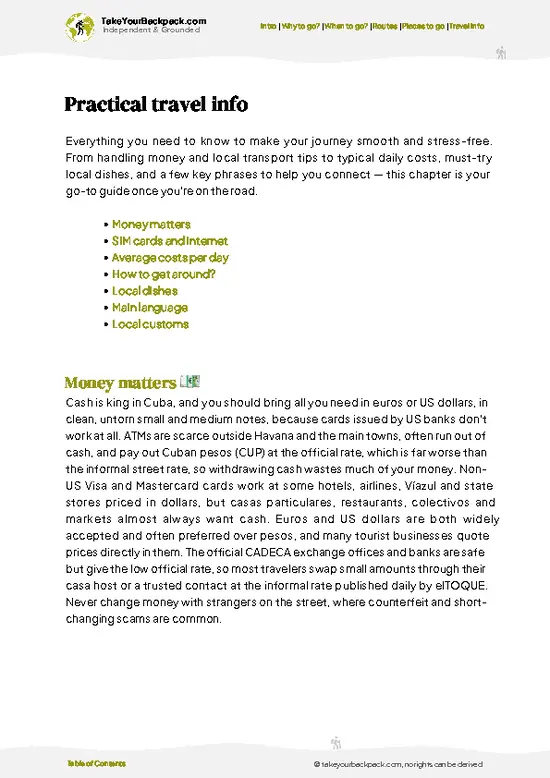
Yes — there are hostels and plenty of budget accommodation in Cuba, from private casas particulares (homestays) to small hostales and guesthouses; expect basic rooms, variable Wi‑Fi and services, and a common preference for cash or tourist cards in many places.
In Havana, Habana Vieja offers the most cheap hostels and casas with instant access to historic sights and nightlife but is noisy and crowded; Centro Habana is cheaper with good transport links but can feel rough and cramped; Vedado is quieter with more modern guesthouses and later nightlife but fewer ultra‑budget beds; Miramar is safer and quiet with limited budget choices and longer transit to central attractions; outside Havana, … read more 👉
Yes — there are hostels and plenty of budget accommodation in Cuba, from private casas particulares (homestays) to small hostales and guesthouses; expect basic rooms, variable Wi‑Fi and services, and a common preference for cash or tourist cards in many places.
In Havana, Habana Vieja offers the most cheap hostels and casas with instant access to historic sights and nightlife but is noisy and crowded; Centro Habana is cheaper with good transport links but can feel rough and cramped; Vedado is quieter with more modern guesthouses and later nightlife but fewer ultra‑budget beds; Miramar is safer and quiet with limited budget choices and longer transit to central attractions; outside Havana, Trinidad and Viñales concentrate cheap stays near key sights with minimal night services, while Santiago de Cuba has a lively scene but fewer tourist beds.

If you enjoy meeting fellow travelers, consider choosing hostels with high ratings for atmosphere. On the other hand, if you prefer having your own space, a hotel might be a better option.

CubaExplore Beyond This Category

👋 Meet the founderWho’s Behind Take Your Backpack?

Johan, backpacker and founder of TakeYourBackpackHi, I’m Johan (Netherlands 🇳🇱), the creator of TakeYourBackpack. Over the past decade, I’ve backpacked through 80+ countries across six continents, gaining extensive experience with independent travel, long-term trips, and overland routes.

This site is built on a combination of firsthand travel experience and carefully curated insights from other backpackers. Many guides are based on places I’ve personally visited, while others bring together tips, observations, and practical advice shared by trusted travelers I’ve met along the way.

The goal is to provide realistic, experience-driven guidance — not generic itineraries — so you can explore destinations with better context, clearer expectations, and more confidence.

Get full Cuba guide •
Instant download • 121 highlights • Full Offline guide