
×

Cuba🇨🇺 | townsJatibonicorail crossing, tobacco fields, rural market | things to do and best time to go

Explore Sagua la GrandeExplore Banes

Backpacking in Jatibonico
👀 For curious travelerstown ranked #18
By Johan Kruseman 🇳🇱 | Updated September 4, 2026

Jatibonico is not for anyone chasing rooftop bars, colonial showpieces, or a ready-made “Cuba highlights” reel. It earns its place on a backpacking route because it shows you the in-between: sugarcane fields, low-key streets, and the slow rhythm of central Cuba. Sitting in Sancti Spíritus province between Ciego de Ávila and Sancti Spíritus town, it works best as a practical stopover or a base for nearby countryside, not as a headline destination. The center is compact and walkable, with a few modest parks, corner bars, and peso snack spots where you smell frying dough and strong coffee more than sunscreen. Transport is the main advantage: highway buses and passing trucks make it easy to hop onward, while local transport is basic but workable if you’re patient. You won’t find hostels or a big backpacker scene, just a couple of casas particulares and quiet evenings, which keeps costs low but also means you’ll mostly be hanging with locals, not other travelers. Compared with Trinidad or Sancti Spíritus city, Jatibonico feels more functional than pretty, more real than romantic, and that’s exactly why it can be worth a night if you like your route to show the seams, not just the postcards.

Discover everything you want to know in the 📖 Cuba Travel Guide.


Get your Cuba guide
121 ranked highlights, routes & tips, works offline (450 pages)
Loading the map 🌍
CLICK TO FILTER
cities
towns
villages
landmarks
national parks
hikes
beaches
attractions
festivals
regions
SHOW COUNTRY’S BESTSHOW ALL

✨ Why go?
Ranked #18 town in Cuba
Why Jatibonico should be on your travel list

Backpackers flock to Jatibonico for its strategic location along the route to Cuba’s stunning natural landscapes. This town serves as a gateway to nearby hikes in the Sierra del Escambray and the tranquil beaches of the south coast. The walkable streets are lined with small-scale hostels and guesthouses, offering a cozy, intimate vibe that encourages connection among travelers. You’ll find local food experiences that are both authentic and affordable, with the scent of fresh bread and spices wafting through the air. Most travelers stay for a couple of days, soaking in the friendly atmosphere and engaging with locals. It’s ideal for slow travelers, solo adventurers, and small groups looking for a mix of culture and nature without the hustle of larger cities. Jatibonico is a perfect pit stop, but it can also be a rewarding place to linger.
Want to include Jatibonico in your Cuba route?
Create a personalized Cuba itinerary that includes Jatibonico and the places that fit your trip — based on your travel style, budget, and available time. Get your route in seconds.

Generate my trip

💡 HighlightsTop highlights of Jatibonico

  1. Parque Central (Parque José Martí) — The town’s social heart: shaded benches, locals playing dominoes, and a good spot to watch daily life unfold while the surrounding colonial-era façades give a clear sense of Jatibonico’s pace and history.
  2. Museo Municipal de Jatibonico — Small but focused local museum with exhibits on the area’s sugarcane past, independence fights, and everyday material culture; a compact place to get context for the town and ask staff for neighborhood stories.
  3. Iglesia Parroquial de Jatibonico — The parish church at the main square; visit for its modest colonial architecture, local religious art, and the churchyard atmosphere where locals gather after mass.
  4. Estación de Ferrocarril de Jatibonico — An old railway station still used for regional trains and a reminder of
read more 👉
  1. Parque Central (Parque José Martí) — The town’s social heart: shaded benches, locals playing dominoes, and a good spot to watch daily life unfold while the surrounding colonial-era façades give a clear sense of Jatibonico’s pace and history.
  2. Museo Municipal de Jatibonico — Small but focused local museum with exhibits on the area’s sugarcane past, independence fights, and everyday material culture; a compact place to get context for the town and ask staff for neighborhood stories.
  3. Iglesia Parroquial de Jatibonico — The parish church at the main square; visit for its modest colonial architecture, local religious art, and the churchyard atmosphere where locals gather after mass.
  4. Estación de Ferrocarril de Jatibonico — An old railway station still used for regional trains and a reminder of how the railroad shaped inland Cuban towns; great for photos and catching a slice of transport life if a train comes through.
  5. Casa de la Cultura — The town’s cultural center where workshops, small performances, and community art shows happen; check the schedule — you can catch local music, poetry nights, or craft displays that aren’t advertised online.
  6. Mercado Municipal / Plaza de Abastos — A lively, local market where you’ll find fresh produce, island snacks, and a chance to practice Spanish bargaining; it’s more about the experience and local flavors than souvenirs.
  7. Cementerio Municipal — An often-overlooked place that tells the town’s story through funerary art, family plots, and memorials to local historical figures; respectful wandering gives unexpected context to the community’s past.
  8. Calle Real (Main Street) — Walkable stretch of shops, cafeterías, and old storefronts: best for people-watching, seeing everyday commerce, and grabbing a cheap café con leche while absorbing the town’s character.
  9. Plaza y Monumentos Locales — Several small monuments and plaques around town commemorate independence fighters and local history; they’re modest but meaningful markers that connect public space to Jatibonico’s identity.
  10. Río Jatibonico riverbank (within town limits) — The stretch of river that runs by town offers a quiet walk, local fishing spots, and informal picnic areas; visiting gives you a feel for the landscape that supported the town’s agriculture and daily life.
Nearby day-trip options include the city of Sancti Spíritus with the historic Puente Yayabo (a personal favorite), the colonial town of Trinidad and the Valle de los Ingenios, and the surrounding rural sugarcane landscapes and rivers — all worthwhile short excursions from Jatibonico.
Spotted a mistake or missing something? Contact us.

🏘️ NeighborhoodsNeighborhood guide to Jatibonico

Jatibonico is a small yet vibrant town in Cuba, offering a unique blend of local culture and practical amenities for backpackers. Here’s how to navigate its neighborhoods:

Centro: This is the heart of Jatibonico. Expect a lively atmosphere with local markets and street vendors. It’s walkable, making it easy to explore on foot. Costs are low, and you’ll find budget-friendly eateries. Perfect for short stays, but if you linger, you’ll soak up the daily rhythms of life here.

La Loma: A quieter area perched on a hill, La Loma offers stunning views and a more relaxed vibe. It’s less touristy, which means fewer distractions and a chance to connect with locals. While it’s a bit farther from the main action, the tranquility makes it ideal for longer stays. Transport options are limited, so be prepared … read more 👉
Jatibonico is a small yet vibrant town in Cuba, offering a unique blend of local culture and practical amenities for backpackers. Here’s how to navigate its neighborhoods:

Centro: This is the heart of Jatibonico. Expect a lively atmosphere with local markets and street vendors. It’s walkable, making it easy to explore on foot. Costs are low, and you’ll find budget-friendly eateries. Perfect for short stays, but if you linger, you’ll soak up the daily rhythms of life here.

La Loma: A quieter area perched on a hill, La Loma offers stunning views and a more relaxed vibe. It’s less touristy, which means fewer distractions and a chance to connect with locals. While it’s a bit farther from the main action, the tranquility makes it ideal for longer stays. Transport options are limited, so be prepared to walk or bike.

El Parque: This neighborhood buzzes with nightlife, especially on weekends. Bars and music spill into the streets, creating a festive atmosphere. It’s a great spot for socializing, but if you prefer peace, consider staying elsewhere. Walkability is decent, and you’ll find transport links to other parts of town. Perfect for those looking to balance fun with exploration.

⌛️ 1 dayWhat you can realistically do in a day

Jatibonico, Cuba, is a slice of authentic life, where the rhythms of daily existence pulse through the streets. It’s not on every tourist’s radar, but that’s exactly what makes it special. The town is a canvas of vibrant murals, bustling markets, and the scent of fresh bread wafting from local bakeries.

Start your morning at the Plaza de Jatibonico, where locals gather for coffee and conversation. Grab a cup of café con leche from a nearby stand, and soak in the morning light as it dances off the colonial architecture. The chatter around you is a symphony of laughter and life, setting the tone for your day.

In the afternoon, wander through the neighborhoods of La Loma and El Centro. Here, you’ll find the Museo de Jatibonico, a small but rich repository of local history. It’s often overlooked, … read more 👉
Jatibonico, Cuba, is a slice of authentic life, where the rhythms of daily existence pulse through the streets. It’s not on every tourist’s radar, but that’s exactly what makes it special. The town is a canvas of vibrant murals, bustling markets, and the scent of fresh bread wafting from local bakeries.

Start your morning at the Plaza de Jatibonico, where locals gather for coffee and conversation. Grab a cup of café con leche from a nearby stand, and soak in the morning light as it dances off the colonial architecture. The chatter around you is a symphony of laughter and life, setting the tone for your day.

In the afternoon, wander through the neighborhoods of La Loma and El Centro. Here, you’ll find the Museo de Jatibonico, a small but rich repository of local history. It’s often overlooked, but the curator’s passion for the town’s stories is infectious. Afterward, head to the local market, where the colors of fresh produce and handmade crafts create a feast for the eyes. Don’t miss the chance to chat with vendors; their warmth is as inviting as the sun.

As evening approaches, find a spot at a local eatery like Restaurante El Rincón. The aroma of ropa vieja fills the air, and the atmosphere is lively with music. Enjoy your meal while watching the sunset paint the sky in hues of orange and pink. This day in Jatibonico, with its simple pleasures and genuine connections, will linger in your memory long after you leave.
Turn your Jatibonico visit into an Cuba adventure
Build a complete Cuba route with Jatibonico, hidden gems, must-see destinations, and realistic travel times included.

Generate my trip

🌤️ When to go?When to go for the best experience


  • Topic: Weather – The dry season from November to April offers clear skies and minimal rain, making dusty trails and open-air markets more enjoyable. Avoid the wet season (May to October) when humidity spikes and afternoon showers can stall your plans.

  • Topic: Temperature – Expect highs around 28-32°C (82-90°F) during the dry months, perfect for daytime exploring without the oppressive heat of summer’s peak. Nights cool to a comfortable 18-22°C (64-72°F), ideal for sleeping under a fan or open window.

  • Topic: Daylight Hours – Daylight stretches roughly from 6:30 AM to 6:30 PM year-round, but the dry season’s clearer skies make those golden hours more vivid for photography and wandering.

  • Topic: Crowds – Jatibonico stays low-key year-round, but the dry season attracts more Cuban weekend
read more 👉

  • Topic: Weather – The dry season from November to April offers clear skies and minimal rain, making dusty trails and open-air markets more enjoyable. Avoid the wet season (May to October) when humidity spikes and afternoon showers can stall your plans.

  • Topic: Temperature – Expect highs around 28-32°C (82-90°F) during the dry months, perfect for daytime exploring without the oppressive heat of summer’s peak. Nights cool to a comfortable 18-22°C (64-72°F), ideal for sleeping under a fan or open window.

  • Topic: Daylight Hours – Daylight stretches roughly from 6:30 AM to 6:30 PM year-round, but the dry season’s clearer skies make those golden hours more vivid for photography and wandering.

  • Topic: Crowds – Jatibonico stays low-key year-round, but the dry season attracts more Cuban weekend visitors, adding local buzz without overwhelming the town’s laid-back vibe.

  • Topic: Seasonal Activities – The dry months coincide with local festivals and agricultural fairs, offering a richer cultural experience beyond the usual tourist trail.

  • Topic: Price Fluctuations – Accommodation and transport costs rise slightly in the dry season due to demand but remain far below Havana’s tourist hotspots, making it a smart trade-off for better weather and atmosphere.


Pro-tip: Aim for late November or early December—after the rains but before the holiday rush—to catch Jatibonico at its freshest, with crisp air and lively streets that feel like a well-kept secret.


source: climatestotravel.comJANJanuary: excellent for travelingFEBFebruary: excellent for travelingMARMarch: excellent for travelingAPRApril: highly recommended for travelingMAYMay: fair for travelingJUNJune: fair for travelingJULJuly: fair for travelingAUGAugust: fair for travelingSEPSeptember: fair for travelingOCTOctober: fair for travelingNOVNovember: highly recommended for travelingDECDecember: excellent for traveling
when-to-go

✈️ The backpacker research shortcutCuba Travel Guide

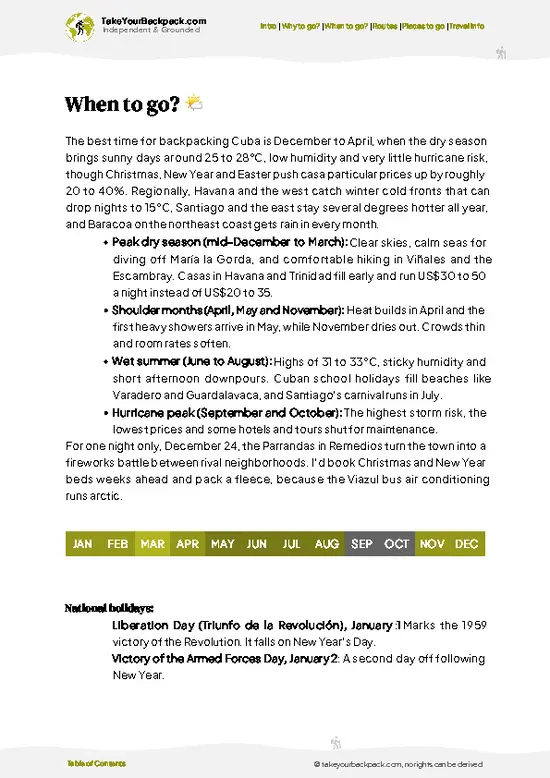
An offline-friendly backpacking guide with optimized travel routes, ranked highlights, transport advice, and the best areas to stay.
example page 0 from our offline Travel Guide for Cuba
example page 1 from our offline Travel Guide for Cuba
example page 2 from our offline Travel Guide for Cuba
example page 3 from our offline Travel Guide for Cuba
example page 4 from our offline Travel Guide for Cuba
example page 5 from our offline Travel Guide for Cuba
example page 6 from our offline Travel Guide for Cuba
example page 7 from our offline Travel Guide for Cuba
The digital guide (450 pages) contains:
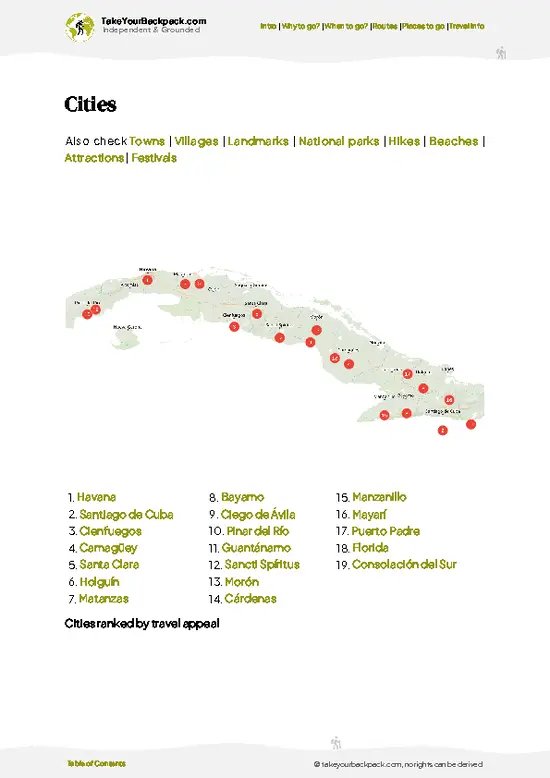
121 highlights, ranked by travel appeal
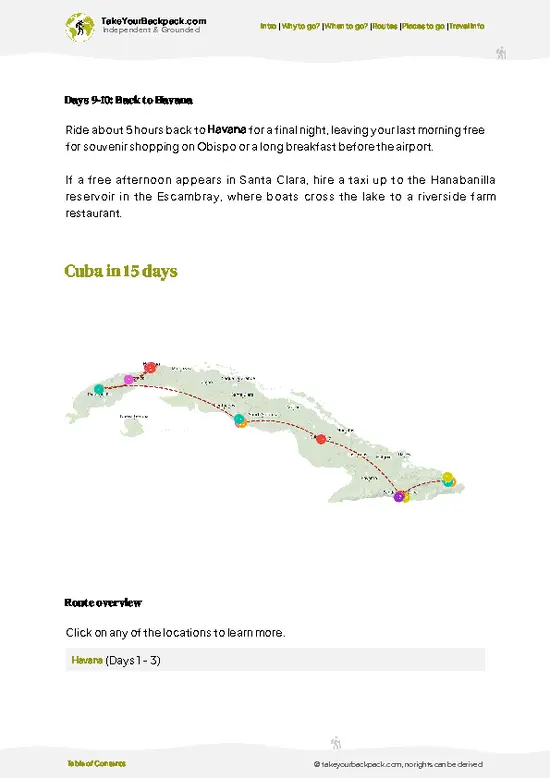
Optimized 5, 10 & 15-day travel routes
Cities, national parks, landmarks, beaches
How to get around
Offline-friendly for travel without Wi-Fi
👉 Click to see all 30+ guide features

📅 Plan smarter in minutes, not weeks
Month by month travel advice
Festivals & national holidays
Budget expectations

🗺️ Go to the right places, skip the overrated ones
Honest pros & cons of destinations
Top hikes, parks & viewpoints
Lesser-known places most travelers miss
Clear “worth it vs skip it” guidance

🛏️ Travel smoothly without rookie mistakes
Best areas to stay
Transport systems explained simply
Common scams & safety advice
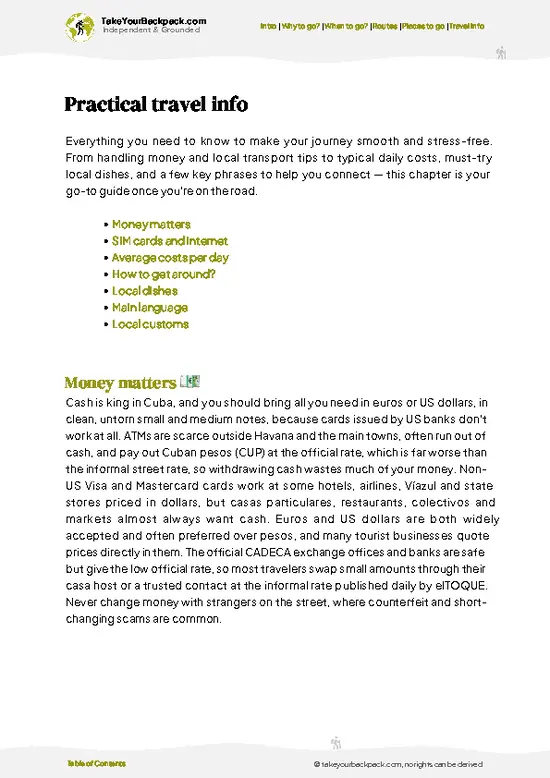
SIM cards, money & practical tips

🌍 Understand the country, not just visit it
Culture & traditions
52 Essential phrases & customs
Festivals worth planning around
Traveler-friendly historical context
Insights that make places more meaningful

📱 Built for real travel conditions
Fully downloadable PDF
Works completely offline
Optimized for phone use
Useful in remote areas & buses
Everything in one place
Save weeks of stressful planning
Get instant access to your full guide. 30‑day money-back guarantee.
+ Add another guide for just US$7.80

By proceeding you agree to our terms.
Sent to your inbox immediately after payment • 100% Secure Checkout
Best Backpacking Travel Advisor 2025 tourism awardBest Backpacking
Travel Advisor
2025
What others say about Take Your Backpack Guides:
⭐⭐⭐⭐⭐
Fantastic, amazing amount of information!
⭐⭐⭐⭐⭐
My goodness this is amazing, it's what I've been looking for hats off too you!
⭐⭐⭐⭐⭐
I think this is absolutely BRILLIANT
⭐⭐⭐⭐
Very complete and informative. It's still missing places, but I gotta to commend you
⭐⭐⭐⭐⭐
This is truly amazing, thank you, can't wait to explore it with my kids!
⭐⭐⭐⭐⭐
Awesome resource, thank you!
⭐⭐⭐⭐⭐
This is amazing! Can't wait to explore the ones I haven't seen
⭐⭐⭐⭐
I love this! Well done, great idea.
⭐⭐⭐⭐⭐
Thanks for taking the time to make this gem!
⭐⭐⭐⭐⭐
This might be the best website I've ever seen.
⭐⭐⭐⭐⭐
Congratulations, and thank you so much for your work; it's incredibly valuable.
⭐⭐⭐⭐
In all seriousness I think you did a great job pointing out the important spots
⭐⭐⭐⭐⭐
10/10 very good
⭐⭐⭐⭐⭐
As someone who's only just starting to visit regularly this is awesome, thank you.
⭐⭐⭐⭐
Thank you very much! I'm going to visit my dad, it's going to be very useful!
⭐⭐⭐⭐⭐
This is really cool! We'll be travelling for the first time and this definitely come in handy.
⭐⭐⭐⭐⭐
You are now our minister of culture, congratulations 👨‍💼
⭐⭐⭐⭐⭐
Just wanted to tell you that this is a pearl! Going to follow your recommendations.
⭐⭐⭐⭐⭐
This is so cool. I'll definitely be using the resource for my travels soon.
⭐⭐⭐⭐⭐
This is very impressive! Good work.
⭐⭐⭐⭐⭐
This is an amazing and informative site. Very well done!

🛏️ Where to stay?Best areas to stay in Cuba

In Jatibonico, the heart of the town near the central plaza is your best bet. This area hums with local life—vendors calling out, the scent of fresh bread mingling with Cuban coffee. It’s safe, well-lit after dark, and naturally social, making it easy to strike up conversations with fellow travelers or locals. Hostels here are modest but functional, offering a communal vibe that’s rare in smaller Cuban towns. Stepping outside, you’re a short walk from lively streets where music spills from open windows. Compared to quieter, more residential neighborhoods, this central zone keeps you plugged into … read more 👉
In Jatibonico, the heart of the town near the central plaza is your best bet. This area hums with local life—vendors calling out, the scent of fresh bread mingling with Cuban coffee. It’s safe, well-lit after dark, and naturally social, making it easy to strike up conversations with fellow travelers or locals. Hostels here are modest but functional, offering a communal vibe that’s rare in smaller Cuban towns. Stepping outside, you’re a short walk from lively streets where music spills from open windows. Compared to quieter, more residential neighborhoods, this central zone keeps you plugged into the town’s pulse without the hassle of long commutes or sketchy corners.

🚌 Getting aroundTransportation options and practical tips

Jatibonico moves at its own rhythm—less a strict timetable, more a pulse you catch by tuning in. The sun casts long shadows on cracked sidewalks by mid-morning, and the scent of frying plantains drifts from corner stalls, signaling the town’s slow but steady wake-up. Here, time isn’t measured by clocks but by the ebb and flow of daily life: market chatter, the occasional rumble of a bus, and the steady shuffle of feet on dusty streets. It’s a place where intuition beats schedules, but knowing the local transit options will save you from wandering too long under the relentless Cuban sun.


  • Walking: The heart of Jatibonico is compact enough to explore on foot, with most sights and markets within a 20-minute stroll. Walking lets you soak in the town’s textures—the cracked paint on colonial
read more 👉
Jatibonico moves at its own rhythm—less a strict timetable, more a pulse you catch by tuning in. The sun casts long shadows on cracked sidewalks by mid-morning, and the scent of frying plantains drifts from corner stalls, signaling the town’s slow but steady wake-up. Here, time isn’t measured by clocks but by the ebb and flow of daily life: market chatter, the occasional rumble of a bus, and the steady shuffle of feet on dusty streets. It’s a place where intuition beats schedules, but knowing the local transit options will save you from wandering too long under the relentless Cuban sun.


  • Walking: The heart of Jatibonico is compact enough to explore on foot, with most sights and markets within a 20-minute stroll. Walking lets you soak in the town’s textures—the cracked paint on colonial buildings, the hum of street vendors—without spending a peso.

  • Local Buses (Guaguas): These run irregularly from early morning until late afternoon, costing less than a dollar. They’re slow, often packed, but the cheapest way to reach nearby villages or the bus station. Expect no fixed schedule; just listen for the engine’s growl.

  • Shared Taxis (Colectivos): Faster and more comfortable than buses, colectivos leave when full, usually mid-morning and late afternoon. Prices hover around a few dollars, making them a smart middle ground for budget travelers who want speed without a private car’s cost.

  • Private Taxis: If you’re short on time or traveling with gear, private taxis offer door-to-door service but at a premium. Negotiate fares upfront—expect to pay significantly more than colectivos, especially for longer trips.

👛 Costs (as of 4 September 2026)How expensive it really is

Backpacking through Jatibonico, Cuba, means stepping into a slower rhythm where every peso counts and the local vibe shapes your spending. Here’s how your daily costs typically break down for an independent traveler aiming to keep it real and manageable.
  • Dorm Accommodation: Jatibonico isn’t a hotspot for hostels like Havana or Trinidad, so dorm-style options are limited. Expect to pay around $8 to $12 USD per night in a casa particular dorm or shared room. These places are basic but clean, often family-run, giving you a chance to connect with locals while saving a few bucks.
  • Meals: Food here is straightforward and hearty. Street food or small local paladares will run you about $3 to $6 USD per meal. A typical plate might include rice, beans, plantains, and some form of protein like chicken
read more 👉
Backpacking through Jatibonico, Cuba, means stepping into a slower rhythm where every peso counts and the local vibe shapes your spending. Here’s how your daily costs typically break down for an independent traveler aiming to keep it real and manageable.
  • Dorm Accommodation: Jatibonico isn’t a hotspot for hostels like Havana or Trinidad, so dorm-style options are limited. Expect to pay around $8 to $12 USD per night in a casa particular dorm or shared room. These places are basic but clean, often family-run, giving you a chance to connect with locals while saving a few bucks.
  • Meals: Food here is straightforward and hearty. Street food or small local paladares will run you about $3 to $6 USD per meal. A typical plate might include rice, beans, plantains, and some form of protein like chicken or pork. If you’re feeling adventurous, fresh fruit from markets is cheap and refreshing, around $1 to $2 USD.
  • Local Transport: Public transport options are sparse and informal. Most travelers rely on shared taxis (colectivos) or local buses. A colectivo ride within or near town usually costs $1 to $2 USD. Walking is often the best way to soak in the atmosphere and save money.
  • Basic Activities/Entry Fees: Jatibonico is more about wandering and absorbing the local life than paying for tourist attractions. Entry fees to any local museums or cultural sites are minimal, typically under $2 USD. The real cost here is time and curiosity, not cash.
  • Miscellaneous Expenses: This covers bottled water, snacks, occasional coffee, or small tips. Budget around $2 to $4 USD daily. Keep in mind that bottled water is essential due to tap water quality, and it’s best to buy it in larger bottles to save.

All told, you’re looking at roughly $16 to $26 USD per day to cover the essentials in Jatibonico. It’s a place where the modest budget matches the unhurried pace, letting you trade flashy comforts for genuine local flavor. The slower pace means you’ll spend more time on foot, soaking in the smells of street cooking and the sound of Cuban Spanish rolling through the air, making every dollar stretch into an experience.


source: cubatravel.cu
⚠️ Prices can change and everyone travels differently, so take this as a rough guide. Hope it helps you plan your adventure!

🚌 Day tripsBest day trips from Jatibonico

Jatibonico is a fantastic base for exploring the heart of Cuba, offering a blend of culture, nature, and adventure just a bus ride away.

Trinidad
A UNESCO World Heritage site, Trinidad is a must-see. The cobblestone streets are alive with music, and the pastel-colored buildings tell stories of a bygone era. It takes about an hour and a half to get there by bus, costing around 5 CUC. Spend your day wandering through the Plaza Mayor, visiting the Museo Romántico, and soaking in the vibrant street performances. The best time to visit is in the cooler months, from November to March. A common mistake is to rush through; take your time to enjoy a local meal at a paladar for a true taste of Cuban hospitality.
👉 Explore Trinidad

Topes de Collantes
For nature lovers, Topes de Collantes is … read more 👉
Jatibonico is a fantastic base for exploring the heart of Cuba, offering a blend of culture, nature, and adventure just a bus ride away.

Trinidad
A UNESCO World Heritage site, Trinidad is a must-see. The cobblestone streets are alive with music, and the pastel-colored buildings tell stories of a bygone era. It takes about an hour and a half to get there by bus, costing around 5 CUC. Spend your day wandering through the Plaza Mayor, visiting the Museo Romántico, and soaking in the vibrant street performances. The best time to visit is in the cooler months, from November to March. A common mistake is to rush through; take your time to enjoy a local meal at a paladar for a true taste of Cuban hospitality.
👉 Explore Trinidad

Topes de Collantes
For nature lovers, Topes de Collantes is a paradise. Just a short bus ride from Trinidad, this national park is home to lush forests and stunning waterfalls. The trip takes about two hours and costs around 10 CUC. Hike to the El Nicho waterfall for a refreshing swim in its turquoise waters. The dry season, from November to April, is ideal for hiking. Many first-timers miss the chance to explore the lesser-known trails; don’t hesitate to veer off the beaten path for a more intimate experience with nature.
👉 Explore Topes de Collantes

Santa Clara
Santa Clara, the site of Che Guevara’s final battle, is rich in revolutionary history. It’s about an hour away by bus, costing around 3 CUC. Visit the Che Guevara Mausoleum and the iconic armored train monument. The atmosphere is electric, especially during the evenings when locals gather in the parks. The best time to visit is during the cooler months, but avoid weekends when it gets crowded. A common mistake is to overlook the local eateries; grab a bite at a nearby café to savor authentic Cuban flavors.
👉 Explore Santa Clara

El Cubano National Park
This park is a hidden treasure for those who crave adventure. Just a short ride from Jatibonico, it takes about 30 minutes and costs around 5 CUC. The park offers hiking trails that lead to breathtaking views and natural pools. The dry season is best for hiking, but be prepared for some muddy paths if you go during the rainy season. First-timers often stick to the main trails; explore the lesser-known routes for a more rewarding experience.
Want to know what more Cuba offers?
The Cuba Travel Guide describes 121 highlights, from cities to national parks, from beaches to hikes

Get the Travel Guide -

🛡️ SafetyStaying Safe: What Travelers Should Know

Jatibonico is generally safe, but a few practical tips can enhance your experience. Stay aware in crowded areas, especially near markets where distractions can lead to pickpocketing. If you’re solo, avoid wandering too far after dark; stick to well-lit streets and familiar paths.

Cuban hospitality is warm, but be cautious with overly friendly locals offering unsolicited help; they might expect a tip. When using taxis, agree on a fare beforehand to avoid surprises.

Carry a small amount of cash, as many places don’t accept cards. Keep your belongings close, and maintain a relaxed demeanor. This approach not only keeps you safe but also invites genuine interactions with the locals.

FAQTraveler FAQ

Jatibonico is primarily a stopover rather than a major tourist destination, known for its quiet, small-town atmosphere and local culture rather than significant attractions. It offers a glimpse of rural Cuban life but lacks extensive tourist infrastructure or landmarks.
One to two days are sufficient to explore Jatibonico, enough time to visit local markets, enjoy the town's relaxed pace, and see nearby natural areas. Longer stays are generally unnecessary unless using it as a base for exploring the surrounding countryside.
Yes, Jatibonico can be visited as a day trip from nearby cities like Sancti Spíritus, which is about 40 kilometers away. The trip takes roughly an hour by car or bus, making it feasible for a short visit to experience local life and markets.
⚠️ Things can change over time, so always validate details locally before you go.

Other Cuban towns near Jatibonico

Explore more nearby:

  • Caibarién—sea bridge, shrimp farms, pastel houses| 70 km away
  • Remedios—baroque churches, cobbled streets, town square| 73 km away
  • Trinidad—cobblestone hills, pastel mansions, museum district| 86 km away

💡 Not sure where to go next?
Create a personalized itinerary for Cuba including Jatibonico and the places that fit your trip.

Generate my itinerary

👉 Discover all towns

Or checkout all Cuba has to offer (think cities, towns, villages, national parks, hikes, beaches, festivals)
Country photo of Cuba

We 💚 feedbackWhat to keep in mind

Jatibonico offers a slice of authentic Cuban life, where the air is thick with the aroma of fresh guava and the laughter of locals fills the streets. But be ready for the heat—this town can feel stifling in summer. Embrace the sweat; it’s part of the experience. The warmth of the people makes every drop worth it.

✈️ When did I visit Cuba?
As part of my 1.5 year travel around the world trip, I visited Cuba for 6 weeks in February, March 2016, being extremely lucky that that coincided with the free concert of The Rolling Stones.

✍️ Help improve this page!
The information on this page is based on my own backpacking experience in Cuba, supplemented with up-to-date research and feedback from other travelers. Travel details can change, so if you notice anything outdated or incomplete, feel free to let me know.


🙋‍♂️ Give feedback

👋 Meet the founderWho’s Behind Take Your Backpack?

Johan, backpacker and founder of TakeYourBackpackHi, I’m Johan (Netherlands 🇳🇱), the creator of TakeYourBackpack. Over the past decade, I’ve backpacked through 80+ countries across six continents, gaining extensive experience with independent travel, long-term trips, and overland routes.

This site is built on a combination of firsthand travel experience and carefully curated insights from other backpackers. Many guides are based on places I’ve personally visited, while others bring together tips, observations, and practical advice shared by trusted travelers I’ve met along the way.

The goal is to provide realistic, experience-driven guidance — not generic itineraries — so you can explore destinations with better context, clearer expectations, and more confidence.

Get full Cuba guide •
Instant download • 121 highlights • Full Offline guide