×

Cuba🇨🇺 | townsVaraderopeninsula beaches, resort strip, turquoise shallows | things to do and best time to go

Explore TrinidadExplore Viñales

Backpacking in Varadero
🏆 Top picktown ranked #2
By Johan Kruseman 🇳🇱 | Updated September 4, 2026

Most people only realize on the way out that Varadero is one of the easiest places in Cuba to catch your breath: ATMs that actually work more often, decent Wi‑Fi pockets in resort cafés, and simple logistics for buses and shared taxis. It sits on the Hicacos Peninsula on Cuba’s north coast, about two hours east of Havana, a long finger of sand poking into the Straits of Florida. As a backpacker destination, Varadero is less “authentic town” and more “beach machine,” with an ordinary, slightly worn Cuban center on one side and all‑inclusive resorts lining the powdery, ridiculously long beach on the other. It works best as a soft landing or exit point, or a beach break between Havana, Matanzas, and central Cuba, not as your cultural deep dive. Transport is easy, streets are walkable, and safety is generally straightforward, but it’s pricier and more touristic than nearby Matanzas, with fewer chances for raw, everyday Cuba.

Discover everything you want to know in the 📖 Cuba Travel Guide.


Get your Cuba guide
121 ranked highlights, routes & tips, works offline (450 pages)
Loading the map 🌍
CLICK TO FILTER
cities
towns
villages
landmarks
national parks
hikes
beaches
attractions
festivals
regions
SHOW COUNTRY’S BESTSHOW ALL

✨ Why go?
Ranked #2 town in Cuba
Reasons people choose to visit here

Backpackers flock to Varadero not just for its beaches, but for its strategic position on the Cuban map. This town serves as a gateway to nearby hikes and cultural sites, making it a practical stop for those wanting to explore more than just sun and sand. The walkable streets invite you to wander, with local eateries serving up authentic Cuban flavors that are both affordable and delicious.

Accommodations here are mostly small-scale hostels and guesthouses, fostering a friendly, communal vibe. You’ll find fellow travelers eager to share stories, making it a great spot for solo travelers or small groups looking to connect. While some backpackers might only stay a night or two, many linger for a few days, soaking in the laid-back atmosphere and the chance to recharge before heading to more … read more 👉
Backpackers flock to Varadero not just for its beaches, but for its strategic position on the Cuban map. This town serves as a gateway to nearby hikes and cultural sites, making it a practical stop for those wanting to explore more than just sun and sand. The walkable streets invite you to wander, with local eateries serving up authentic Cuban flavors that are both affordable and delicious.

Accommodations here are mostly small-scale hostels and guesthouses, fostering a friendly, communal vibe. You’ll find fellow travelers eager to share stories, making it a great spot for solo travelers or small groups looking to connect. While some backpackers might only stay a night or two, many linger for a few days, soaking in the laid-back atmosphere and the chance to recharge before heading to more remote destinations.

Varadero isn’t about wild nightlife; it’s about balance. You can enjoy the beach during the day and retreat to a cozy spot at night. This town suits slow travelers who appreciate a mix of relaxation and exploration, making it a worthwhile stop on your Cuban adventure.
Want to include Varadero in your Cuba route?
Create a personalized Cuba itinerary that includes Varadero and the places that fit your trip — based on your travel style, budget, and available time. Get your route in seconds.

Generate my trip

💡 HighlightsPlaces and moments you shouldn't skip

  • Playa Varadero (Varadero Beach) — The long, powder-white strip that put Varadero on the map: easy to access from almost anywhere in town, calm turquoise water, beach vendors, and plenty of spots to rent a chair or umbrella. Perfect for walking big distances, people-watching, and easy snorkeling off the shore.
  • Parque Josone — A surprisingly lush, shady park with a small lake, paddleboats, cafés and a few local food stalls. Great for a slow afternoon away from the resort crowds, and you’ll find locals practicing dominoes, musicians, and a few inexpensive paladares (private restaurants) tucked inside.
  • Varahicacos Ecological Reserve — The natural backbone of the Hicacos peninsula: short trails through coastal scrub, endemic plants, and dunes. It’s where Varadero’s landscape feels real rather
read more 👉
  • Playa Varadero (Varadero Beach) — The long, powder-white strip that put Varadero on the map: easy to access from almost anywhere in town, calm turquoise water, beach vendors, and plenty of spots to rent a chair or umbrella. Perfect for walking big distances, people-watching, and easy snorkeling off the shore.
  • Parque Josone — A surprisingly lush, shady park with a small lake, paddleboats, cafés and a few local food stalls. Great for a slow afternoon away from the resort crowds, and you’ll find locals practicing dominoes, musicians, and a few inexpensive paladares (private restaurants) tucked inside.
  • Varahicacos Ecological Reserve — The natural backbone of the Hicacos peninsula: short trails through coastal scrub, endemic plants, and dunes. It’s where Varadero’s landscape feels real rather than manicured — bring water, a hat, and a camera for coastal views and birdlife.
  • Cueva de Ambrosio (Ambrosio Cave) — One of the small caves in the Varahicacos Reserve that contains petroglyphs and native cave features. It’s a compact, tangible slice of pre-Columbian history right inside the town’s protected area; guided visits help explain the carvings and geology.
  • Punta Hicacos (the northern tip) — Walk or bike to the very end of the peninsula for a windswept viewpoint, tiny beaches and a marker for the northernmost reaches of Varadero. Few people linger long, so it’s a quiet spot for solitude and sunset photos away from the main beach bustle.
  • Delfinario de Varadero (Dolphinarium) — A proper tourist classic: dolphin shows and paid swim-with-dolphin experiences. It’s commercial, yes, but accessible and memorable — especially if you’re traveling with kids or want a hands-on marine encounter without a big boat trip.
  • Marina Gaviota Varadero — The town’s working marina where day boats and catamarans leave for snorkel trips, fishing charters and coastal cruises. Walk the docks at dusk, compare boat options in person, and book last-minute trips that don’t require a tour operator.
  • Mercado de Artesanías de Varadero (Craft Market) — Small stalls selling hand-rolled cigars, rum, local crafts and inexpensive souvenirs. Not artisanal heaven, but useful if you want authentic-seller interaction, bargain hunting, and to spot Cuban-made goods rather than hotel trinkets.
  • Museo Municipal de Varadero — A compact local museum with displays on the town’s founding, tourism history, and bits of archaeology and natural history. It’s modest but gives context to the peninsula beyond the all-inclusive veneer.
  • Playa Coral (Coral Beach) — A narrow beach with shallow reefs close to shore that make for easy, rewarding snorkeling without a long boat ride. Ideal for a half-day outing if you want to see fish and coral within walking distance from central Varadero.
A few good day-trip options just outside Varadero are the Cuevas de Bellamar and the colonial city center of Matanzas, plus the elegant French-influenced city of Cienfuegos — Bellamar Caves are my personal favorite for a quick, atmospheric escape.
Spotted a mistake or missing something? Contact us.

🏘️ NeighborhoodsWhere things are and how it's laid out

Varadero is a vibrant stretch of paradise, where the turquoise sea meets sandy shores. Each neighborhood offers a unique flavor, catering to different backpacker needs.

Centro Varadero: This is the heart of the action. You’ll find a mix of local eateries and shops, all within walking distance. The vibe is lively, especially at night, with music spilling from bars. Prices are reasonable, making it a solid choice for budget travelers. It’s perfect for short stays, as you can easily explore the beach and local culture without needing transport.

Playa Varadero: If you’re after sun and sand, this is your spot. The beach here is stunning, and the atmosphere is relaxed. Accommodations range from budget hostels to mid-range hotels. While it’s quieter than Centro, you can still find beach bars for … read more 👉
Varadero is a vibrant stretch of paradise, where the turquoise sea meets sandy shores. Each neighborhood offers a unique flavor, catering to different backpacker needs.

Centro Varadero: This is the heart of the action. You’ll find a mix of local eateries and shops, all within walking distance. The vibe is lively, especially at night, with music spilling from bars. Prices are reasonable, making it a solid choice for budget travelers. It’s perfect for short stays, as you can easily explore the beach and local culture without needing transport.

Playa Varadero: If you’re after sun and sand, this is your spot. The beach here is stunning, and the atmosphere is relaxed. Accommodations range from budget hostels to mid-range hotels. While it’s quieter than Centro, you can still find beach bars for a laid-back nightlife. Ideal for longer stays, you can soak in the sun and enjoy the ocean without the hustle.

Varadero Marina: This area is a bit more upscale, with a focus on water sports and excursions. The vibe is sporty and adventurous, attracting those looking to dive or sail. Prices can be higher, but the experience is worth it if you’re into activities. It’s less walkable, so plan for transport. Great for both short and longer stays, especially if you want to explore the sea.

Residential Varadero: This neighborhood offers a glimpse into local life. It’s quieter, with fewer tourists, and you’ll find charming casas and local markets. Prices are lower, making it a budget-friendly option. Walkability is decent, but you might need to rely on taxis for longer distances. Perfect for those wanting an authentic experience, whether for a short visit or an extended stay.

⌛️ 1 day1-day itinerary for Varadero

Varadero, Cuba, is more than just a beach resort; it’s a vibrant slice of Cuban life, where the rhythm of salsa spills into the streets and the scent of fresh seafood wafts from local kitchens. Start your day early, as the sun rises over the turquoise waters, casting a golden hue on the soft sand. Head to the local market, Mercado Municipal, where you can grab a breakfast of fresh fruit and a café con leche. The chatter of locals and the colorful stalls create an atmosphere that feels alive.

After breakfast, take a stroll along the Malecón, the seaside promenade. The salty breeze and the sound of waves crashing against the rocks set the stage for a leisurely morning. If you’re feeling adventurous, rent a bike and explore the quieter neighborhoods like Varadero’s residential areas, where you’ll … read more 👉
Varadero, Cuba, is more than just a beach resort; it’s a vibrant slice of Cuban life, where the rhythm of salsa spills into the streets and the scent of fresh seafood wafts from local kitchens. Start your day early, as the sun rises over the turquoise waters, casting a golden hue on the soft sand. Head to the local market, Mercado Municipal, where you can grab a breakfast of fresh fruit and a café con leche. The chatter of locals and the colorful stalls create an atmosphere that feels alive.

After breakfast, take a stroll along the Malecón, the seaside promenade. The salty breeze and the sound of waves crashing against the rocks set the stage for a leisurely morning. If you’re feeling adventurous, rent a bike and explore the quieter neighborhoods like Varadero’s residential areas, where you’ll find charming pastel houses and friendly locals who might invite you in for a chat.

In the afternoon, make your way to the lesser-known Parque Josone. This lush oasis is often overlooked by tourists, but it’s a perfect spot to unwind. Grab a snack from a nearby vendor and enjoy it by the lake, surrounded by palm trees and the occasional serenade from a local musician. The park’s tranquility offers a refreshing contrast to the bustling beach scene.

As the sun begins to set, head to the beach for a swim. The water is warm and inviting, and the golden hour casts a magical glow. Afterward, treat yourself to dinner at a paladar, like La Casa de Al, where you can savor traditional Cuban dishes made with love. The ambiance is cozy, and the flavors are authentic.

Wrap up your day with a nightcap at a local bar, perhaps Casa de la Música, where you can dance to live music. The energy is infectious, and you’ll find yourself swept up in the joy of the moment. In Varadero, every experience is a step deeper into the heart of Cuba, turning a simple day into a rich tapestry of memories.
Turn your Varadero visit into an Cuba adventure
Build a complete Cuba route with Varadero, hidden gems, must-see destinations, and realistic travel times included.

Generate my trip

🌤️ When to go?Seasonal considerations and timing


  • Topic: Weather and Temperature: Varadero’s dry season from November to April offers warm days around 24-28°C (75-82°F) with low humidity, making hiking and beach time comfortable. The wet season, May to October, brings heavy rains and highs near 30-33°C (86-91°F), which can sap your energy and limit outdoor plans.

  • Topic: Daylight Hours: Between November and April, daylight stretches to about 11-12 hours, giving you more time to explore before dusk. The summer months shorten daylight slightly, and afternoon thunderstorms often cut outdoor activities short.

  • Topic: Crowds: Peak tourist season coincides with the dry months, especially December through February, when North American and European travelers flock to Varadero. This means busier beaches and higher prices but also more lively
read more 👉

  • Topic: Weather and Temperature: Varadero’s dry season from November to April offers warm days around 24-28°C (75-82°F) with low humidity, making hiking and beach time comfortable. The wet season, May to October, brings heavy rains and highs near 30-33°C (86-91°F), which can sap your energy and limit outdoor plans.

  • Topic: Daylight Hours: Between November and April, daylight stretches to about 11-12 hours, giving you more time to explore before dusk. The summer months shorten daylight slightly, and afternoon thunderstorms often cut outdoor activities short.

  • Topic: Crowds: Peak tourist season coincides with the dry months, especially December through February, when North American and European travelers flock to Varadero. This means busier beaches and higher prices but also more lively local events.

  • Topic: Seasonal Activities: The dry season hosts cultural festivals and better conditions for snorkeling and diving, as water clarity improves. The wet season can dampen these experiences but offers lush landscapes and fewer tourists.

  • Topic: Price Fluctuations: Expect accommodation and flight prices to spike during the dry season’s holidays and winter months. Traveling shoulder months like November or April can save money while still enjoying pleasant weather.


Pro-tip: Aim for late November or early April to catch the sweet spot—mild weather, manageable crowds, and better rates—so you get the best of Varadero without the tourist crush or tropical downpours.


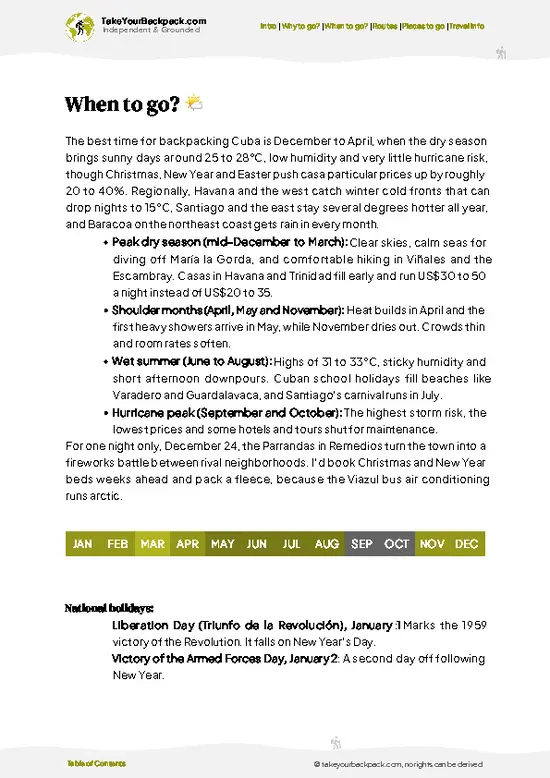
source: climatestotravel.comJANJanuary: highly recommended for travelingFEBFebruary: highly recommended for travelingMARMarch: highly recommended for travelingAPRApril: highly recommended for travelingMAYMay: fair for travelingJUNJune: fair for travelingJULJuly: fair for travelingAUGAugust: fair for travelingSEPSeptember: below average for travelingOCTOctober: fair for travelingNOVNovember: highly recommended for travelingDECDecember: highly recommended for traveling

✈️ The backpacker research shortcutCuba Travel Guide

An offline-friendly backpacking guide with optimized travel routes, ranked highlights, transport advice, and the best areas to stay.
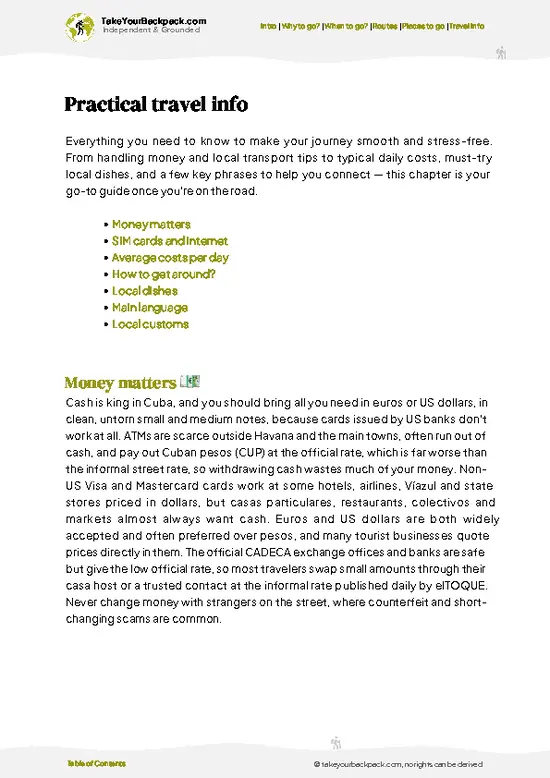
example page 0 from our offline Travel Guide for Cuba
example page 1 from our offline Travel Guide for Cuba
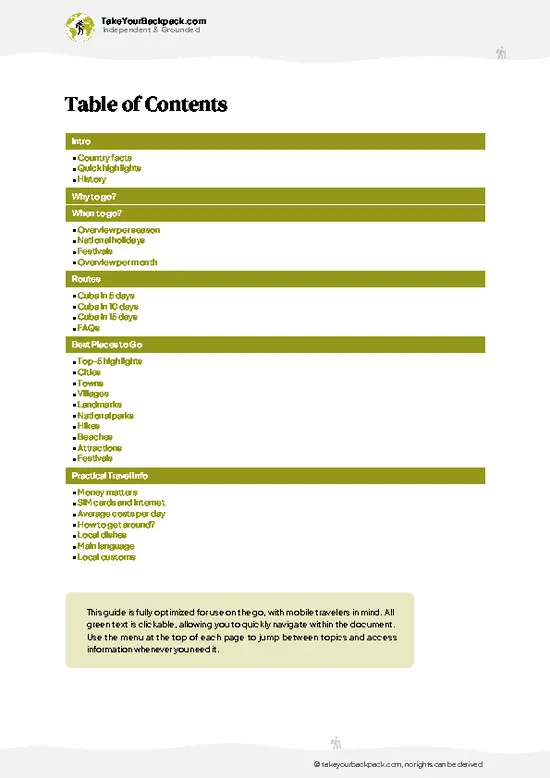
example page 2 from our offline Travel Guide for Cuba
example page 3 from our offline Travel Guide for Cuba
example page 4 from our offline Travel Guide for Cuba
example page 5 from our offline Travel Guide for Cuba
example page 6 from our offline Travel Guide for Cuba
example page 7 from our offline Travel Guide for Cuba
The digital guide (450 pages) contains:
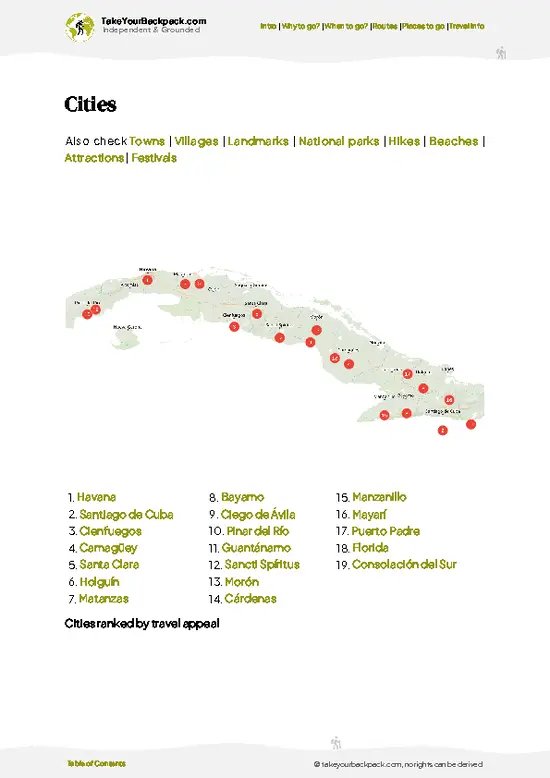
121 highlights, ranked by travel appeal
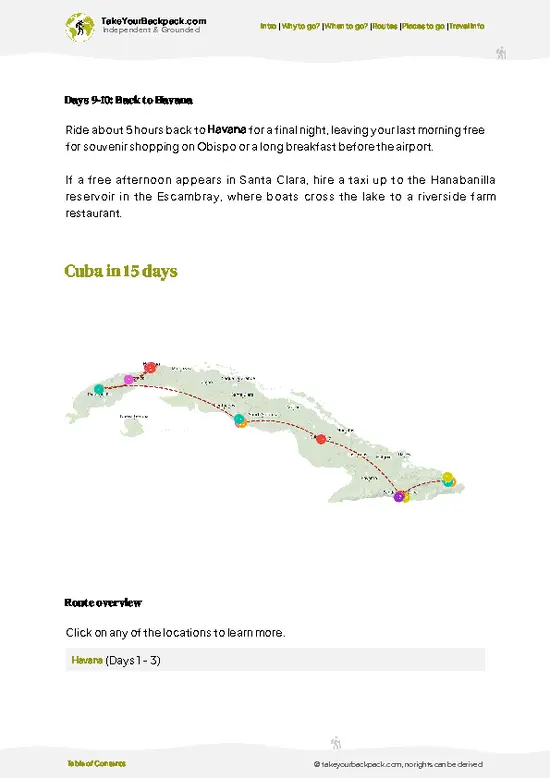
Optimized 5, 10 & 15-day travel routes
Cities, national parks, landmarks, beaches
How to get around
Offline-friendly for travel without Wi-Fi
👉 Click to see all 30+ guide features

📅 Plan smarter in minutes, not weeks
Month by month travel advice
Festivals & national holidays
Budget expectations

🗺️ Go to the right places, skip the overrated ones
Honest pros & cons of destinations
Top hikes, parks & viewpoints
Lesser-known places most travelers miss
Clear “worth it vs skip it” guidance

🛏️ Travel smoothly without rookie mistakes
Best areas to stay
Transport systems explained simply
Common scams & safety advice
SIM cards, money & practical tips

🌍 Understand the country, not just visit it
Culture & traditions
52 Essential phrases & customs
Festivals worth planning around
Traveler-friendly historical context
Insights that make places more meaningful

📱 Built for real travel conditions
Fully downloadable PDF
Works completely offline
Optimized for phone use
Useful in remote areas & buses
Everything in one place
Save weeks of stressful planning
Get instant access to your full guide. 30‑day money-back guarantee.
+ Add another guide for just US$7.80

By proceeding you agree to our terms.
Sent to your inbox immediately after payment • 100% Secure Checkout
Best Backpacking Travel Advisor 2025 tourism awardBest Backpacking
Travel Advisor
2025
What others say about Take Your Backpack Guides:
⭐⭐⭐⭐⭐
Fantastic, amazing amount of information!
⭐⭐⭐⭐⭐
My goodness this is amazing, it's what I've been looking for hats off too you!
⭐⭐⭐⭐⭐
I think this is absolutely BRILLIANT
⭐⭐⭐⭐
Very complete and informative. It's still missing places, but I gotta to commend you
⭐⭐⭐⭐⭐
This is truly amazing, thank you, can't wait to explore it with my kids!
⭐⭐⭐⭐⭐
Awesome resource, thank you!
⭐⭐⭐⭐⭐
This is amazing! Can't wait to explore the ones I haven't seen
⭐⭐⭐⭐
I love this! Well done, great idea.
⭐⭐⭐⭐⭐
Thanks for taking the time to make this gem!
⭐⭐⭐⭐⭐
This might be the best website I've ever seen.
⭐⭐⭐⭐⭐
Congratulations, and thank you so much for your work; it's incredibly valuable.
⭐⭐⭐⭐
In all seriousness I think you did a great job pointing out the important spots
⭐⭐⭐⭐⭐
10/10 very good
⭐⭐⭐⭐⭐
As someone who's only just starting to visit regularly this is awesome, thank you.
⭐⭐⭐⭐
Thank you very much! I'm going to visit my dad, it's going to be very useful!
⭐⭐⭐⭐⭐
This is really cool! We'll be travelling for the first time and this definitely come in handy.
⭐⭐⭐⭐⭐
You are now our minister of culture, congratulations 👨‍💼
⭐⭐⭐⭐⭐
Just wanted to tell you that this is a pearl! Going to follow your recommendations.
⭐⭐⭐⭐⭐
This is so cool. I'll definitely be using the resource for my travels soon.
⭐⭐⭐⭐⭐
This is very impressive! Good work.
⭐⭐⭐⭐⭐
This is an amazing and informative site. Very well done!

🛏️ Where to stay?Choosing the right base

Varadero’s main draw for backpackers is its long stretch of beach, but the real trick is picking a spot that balances easy beach access with a lively, social vibe. The best area to plant yourself is around the central part of the peninsula, near the main boulevard that runs parallel to the shore. This zone hums with energy—locals and travelers mix in small cafés, street vendors, and open-air markets. It’s safe, well-lit at night, and the kind of place where you can strike up a conversation over a cheap coffee or a cold cerveza without feeling like a tourist spotlight.

Hostels here tend to cluster … read more 👉
Varadero’s main draw for backpackers is its long stretch of beach, but the real trick is picking a spot that balances easy beach access with a lively, social vibe. The best area to plant yourself is around the central part of the peninsula, near the main boulevard that runs parallel to the shore. This zone hums with energy—locals and travelers mix in small cafés, street vendors, and open-air markets. It’s safe, well-lit at night, and the kind of place where you can strike up a conversation over a cheap coffee or a cold cerveza without feeling like a tourist spotlight.

Hostels here tend to cluster near the heart of this strip, offering dorm-style rooms and communal spaces that make meeting other backpackers effortless. Unlike the isolated resorts further down the beach, this neighborhood pulses with everyday Cuban life—the scent of grilled street food mingling with salty sea air, the sound of salsa drifting from a corner bar. It’s a place where you can unwind after a day in the sun but also dive into the local rhythm without needing a taxi.

Avoid the outskirts where accommodations are pricier and the vibe is quieter, more resort-focused. For a backpacker, that means missing out on the spontaneous connections and authentic moments that turn a beach trip into a story worth telling.

🚌 Getting aroundMoving around without the hassle

Varadero moves at the pace of the Caribbean sun—steady, warm, and forgiving. It’s not a place where you’ll find rigid timetables or a frantic rush to catch the next bus. Instead, the rhythm here leans on intuition and patience, with locals and travelers alike flowing between beachside resorts, bustling markets, and quiet corners shaded by palm fronds. The scent of salt and sunscreen hangs in the air, mixing with the occasional waft of grilled fish from a nearby paladar. This town’s charm is in its laid-back pulse, but that doesn’t mean you should wander aimlessly. Knowing how to navigate Varadero’s transit options will save you time, money, and frustration—unlocking more moments to soak in that turquoise water without the stress.


  • Walking: Varadero’s main strip and beach areas are surprisingly
read more 👉
Varadero moves at the pace of the Caribbean sun—steady, warm, and forgiving. It’s not a place where you’ll find rigid timetables or a frantic rush to catch the next bus. Instead, the rhythm here leans on intuition and patience, with locals and travelers alike flowing between beachside resorts, bustling markets, and quiet corners shaded by palm fronds. The scent of salt and sunscreen hangs in the air, mixing with the occasional waft of grilled fish from a nearby paladar. This town’s charm is in its laid-back pulse, but that doesn’t mean you should wander aimlessly. Knowing how to navigate Varadero’s transit options will save you time, money, and frustration—unlocking more moments to soak in that turquoise water without the stress.


  • Walking: Varadero’s main strip and beach areas are surprisingly walkable, especially early morning or late afternoon when the sun softens. Walking costs nothing, lets you absorb the local vibe, and reveals small shops and street vendors you’d miss zooming by. Just bring sunscreen and water; the sun is relentless midday.


  • Collectivos (Shared Taxis): These are the go-to for budget travelers wanting speed and local flavor. They run frequently from early morning until dusk, costing just a few Cuban pesos. Expect a bit of a squeeze as they fill up, but the ride is direct and faster than buses. Perfect for hopping between Varadero’s center and nearby neighborhoods or the bus station.


  • Local Buses: The public buses are the cheapest option but run on a loose schedule. They can be slow and crowded, especially during peak hours, but they’re a window into everyday Cuban life. Tickets are a fraction of a peso, and routes cover the town and surrounding areas. If you’re not in a rush and want to stretch your legs, this is your ride.


  • Taxi Services: Metered taxis exist but are rare and more expensive than collectivos. They’re best for late-night trips or when you’re carrying heavy gear. Negotiate the fare upfront if the meter isn’t running. Comfort is higher, but the price jumps accordingly.


  • Bicycle Rentals: For the adventurous, renting a bike is a fantastic way to explore beyond the main drag. Early morning rides offer cooler air and quiet streets. Rentals are affordable, and the flat terrain makes pedaling easy. Just watch for uneven pavement and local traffic patterns.

👛 Costs (as of 4 September 2026)Travel costs and budget guide for Varadero

Backpacking in Varadero, Cuba, offers a mix of laid-back beach vibes and practical costs that reward a bit of planning and local savvy.
  • Dorm Accommodation: Expect to pay around $10 to $20 USD per night for a bed in a casa particular or a budget guesthouse dorm. These places often have a homey feel, with hosts who can share insider tips, but don’t expect the slickness of a hostel in Europe. The charm is in the simplicity and the chance to connect with locals.
  • Meals: Street food and small paladares (private restaurants) will run you about $3 to $7 USD per meal. A typical plate might be rice, beans, and some grilled meat or fish. If you want to splurge on seafood or a nicer sit-down, budget closer to $10 to $15 USD. Markets for fresh fruit and snacks are cheap and perfect for quick bites.
read more 👉
Backpacking in Varadero, Cuba, offers a mix of laid-back beach vibes and practical costs that reward a bit of planning and local savvy.
  • Dorm Accommodation: Expect to pay around $10 to $20 USD per night for a bed in a casa particular or a budget guesthouse dorm. These places often have a homey feel, with hosts who can share insider tips, but don’t expect the slickness of a hostel in Europe. The charm is in the simplicity and the chance to connect with locals.
  • Meals: Street food and small paladares (private restaurants) will run you about $3 to $7 USD per meal. A typical plate might be rice, beans, and some grilled meat or fish. If you want to splurge on seafood or a nicer sit-down, budget closer to $10 to $15 USD. Markets for fresh fruit and snacks are cheap and perfect for quick bites.
  • Local Transport: Varadero’s main transport options are shared taxis (colectivos) and local buses. A colectivo ride within town usually costs around $1 to $2 USD. Buses are cheaper but slower and less reliable, often under $1 USD. Walking is also a solid option given the town’s compact size and beachside layout.
  • Basic Activities/Entry Fees: Most beach access is free, which is a huge plus. If you want to visit local attractions like the Varahicacos Ecological Reserve or museums, expect entry fees around $2 to $5 USD. Snorkeling gear rental or simple water sports can add $5 to $15 USD depending on the activity.
  • Miscellaneous Expenses: Think bottled water, occasional coffee, or a cold drink—budget about $2 to $5 USD daily. Internet access is patchy and usually requires buying prepaid cards, which can cost $1.50 for an hour of Wi-Fi. Small tips or souvenirs might add a few dollars here and there.

All told, you’re looking at roughly $20 to $40 USD per day to cover the essentials without cutting corners. This range lets you enjoy the beach and local flavors without feeling pinched. The key to a smooth trip here is embracing the slower pace and simple pleasures—Varadero’s charm is in its easy rhythm, not flashy frills.


source: cubatravel.cu
⚠️ Prices can change and everyone travels differently, so take this as a rough guide. Hope it helps you plan your adventure!

🚌 Day tripsExploring the surroundings

Varadero is more than just a beach destination; it’s a strategic launchpad for exploring the vibrant heart of Cuba. With its easy access to stunning landscapes and rich culture, you can dive into unforgettable experiences without the hassle of long travel times. Here are some day trips that will elevate your adventure.

Viñales Valley
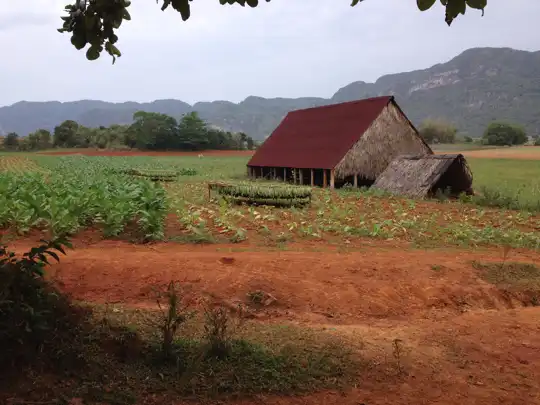
A trip to Viñales Valley is like stepping into a postcard. The lush tobacco fields and dramatic limestone mogotes create a breathtaking backdrop. It takes about two and a half hours to get there by bus, costing around $10. Once you arrive, rent a bike or join a guided tour to explore the valley’s hidden caves and local farms. The best time to visit is during the dry season, from November to April, when the skies are clear and the air is crisp. A common mistake … read more 👉
Varadero is more than just a beach destination; it’s a strategic launchpad for exploring the vibrant heart of Cuba. With its easy access to stunning landscapes and rich culture, you can dive into unforgettable experiences without the hassle of long travel times. Here are some day trips that will elevate your adventure.

Viñales Valley
A trip to Viñales Valley is like stepping into a postcard. The lush tobacco fields and dramatic limestone mogotes create a breathtaking backdrop. It takes about two and a half hours to get there by bus, costing around $10. Once you arrive, rent a bike or join a guided tour to explore the valley’s hidden caves and local farms. The best time to visit is during the dry season, from November to April, when the skies are clear and the air is crisp. A common mistake is underestimating the time needed to truly soak in the scenery; plan to spend the whole day here to appreciate its beauty.
👉 Explore Viñales Valley

Matanzas
Just an hour away, Matanzas offers a taste of local life and history. Known as the ”Athens of Cuba,” this city is rich in culture and architecture. You can wander through the streets, visit the Museo Farmaceutico, and enjoy the vibrant street art. The bus ride costs about $5, and you’ll want to go early to catch the morning light illuminating the colorful buildings. Many first-timers miss out on the local eateries; don’t skip trying a ”fritura de malanga” from a street vendor.
👉 Explore Matanzas

Cueva de Saturno
For a refreshing escape, head to Cueva de Saturno, a natural swimming hole surrounded by lush vegetation. It’s about a 30-minute ride from Varadero, costing around $3. The water is a cool, inviting blue, perfect for a dip after a hot day. Bring a snorkel to explore the underwater life. The best time to visit is in the morning when it’s less crowded. A common oversight is not bringing water shoes; the rocky entrance can be tricky.


Santa Clara
Santa Clara is a bit further, about a two-hour bus ride for around $10, but it’s worth it for history buffs. This city is home to the Che Guevara Mausoleum and the iconic armored train monument. The atmosphere is electric, filled with revolutionary spirit. Aim to go during the week to avoid weekend crowds. Many travelers overlook the local markets; grab a quick bite of ”ropa vieja” from a street stall for an authentic taste.
👉 Explore Santa Clara

Each of these trips offers a unique glimpse into Cuba’s soul, making your stay in Varadero a gateway to unforgettable adventures.
Want to know what more Cuba offers?
The Cuba Travel Guide describes 121 highlights, from cities to national parks, from beaches to hikes

Get the Travel Guide -

🛡️ SafetyScams, Hazards, and Annoyances

Varadero is generally safe, but a few practical tips can enhance your experience. The beach area is well-populated, but as the sun dips, it’s wise to stick to well-lit paths and avoid isolated spots. If you’re solo, consider joining a group for evening outings; it’s not just safer, but also a chance to meet fellow travelers.

Watch for common scams, like overly friendly locals offering to guide you to “authentic” experiences that often lead to overpriced shops. A polite but firm “no, gracias” usually suffices. When haggling at markets, keep your cool; it’s part of the local culture.

Annoyances can crop up, like persistent vendors on the beach. A smile and a wave can go a long way in signaling you’re not interested. Carry small bills for tips and purchases; it simplifies transactions and … read more 👉
Varadero is generally safe, but a few practical tips can enhance your experience. The beach area is well-populated, but as the sun dips, it’s wise to stick to well-lit paths and avoid isolated spots. If you’re solo, consider joining a group for evening outings; it’s not just safer, but also a chance to meet fellow travelers.

Watch for common scams, like overly friendly locals offering to guide you to “authentic” experiences that often lead to overpriced shops. A polite but firm “no, gracias” usually suffices. When haggling at markets, keep your cool; it’s part of the local culture.

Annoyances can crop up, like persistent vendors on the beach. A smile and a wave can go a long way in signaling you’re not interested. Carry small bills for tips and purchases; it simplifies transactions and keeps you from fumbling in your wallet. With these strategies, you’ll navigate Varadero like a pro, soaking in the vibrant atmosphere without unnecessary stress.

FAQTraveler FAQ

Yes, Varadero is worth visiting for its 20 km of white sandy beaches and clear turquoise waters, making it one of Cuba's top beach destinations. It offers a mix of relaxation, water sports, and nightlife, suitable for both short stays and longer vacations.
3 to 4 days are ideal to fully enjoy Varadero, allowing time for beach relaxation, snorkeling or diving, and exploring nearby attractions like the Varahicacos Ecological Reserve. This duration balances leisure and activity without feeling rushed.
Yes, Varadero can be visited as a day trip from Havana, which is about 140 km away, roughly a 2-hour drive each way. However, a day trip limits time on the beach and activities, so overnight stays are recommended for a fuller experience.
⚠️ Things can change over time, so always validate details locally before you go.

Other Cuban towns near Varadero

Explore more nearby:

  • Colón—railway junction, faded mansions, agricultural trade| 58 km away
  • Güines—market town, river crossing, 19th-century arcades| 93 km away
  • San José de las Lajas—university campus, science institutes, suburban sprawl| 101 km away

💡 Not sure where to go next?
Create a personalized itinerary for Cuba including Varadero and the places that fit your trip.

Generate my itinerary

👉 Discover all towns

Or checkout all Cuba has to offer (think cities, towns, villages, national parks, hikes, beaches, festivals)
Country photo of Cuba

We 💚 feedbackIs it worth it?

Varadero’s beaches are a slice of paradise, with powdery white sand and turquoise waters that feel like a warm embrace. But don’t let the allure fool you; it can get crowded, especially during peak season. If you’re after solitude, aim for early mornings or explore nearby coves. Embrace the hustle and bustle, though; it adds character. The vibrant local culture and the scent of fresh seafood sizzling on the grill make every moment worthwhile.

✈️ When did I visit Cuba?
As part of my 1.5 year travel around the world trip, I visited Cuba for 6 weeks in February, March 2016, being extremely lucky that that coincided with the free concert of The Rolling Stones.

✍️ Help improve this page!
The information on this page is based on my own backpacking experience in Cuba, supplemented with up-to-date research and feedback from other travelers. Travel details can change, so if you notice anything outdated or incomplete, feel free to let me know.


🙋‍♂️ Give feedback

👋 Meet the founderWho’s Behind Take Your Backpack?

Johan, backpacker and founder of TakeYourBackpackHi, I’m Johan (Netherlands 🇳🇱), the creator of TakeYourBackpack. Over the past decade, I’ve backpacked through 80+ countries across six continents, gaining extensive experience with independent travel, long-term trips, and overland routes.

This site is built on a combination of firsthand travel experience and carefully curated insights from other backpackers. Many guides are based on places I’ve personally visited, while others bring together tips, observations, and practical advice shared by trusted travelers I’ve met along the way.

The goal is to provide realistic, experience-driven guidance — not generic itineraries — so you can explore destinations with better context, clearer expectations, and more confidence.

Get full Cuba guide •
Instant download • 121 highlights • Full Offline guide