×

Cuba🇨🇺 | citiesMatanzasYumurí bridges, Sauto theater, old pharmacy, Bellamar caves | things to do and best time to go

Explore Santiago de CubaExplore Holguín

Backpacking in Matanzas
🌟 Highlightcity ranked #8
By Johan Kruseman 🇳🇱 | Updated October 22, 2026

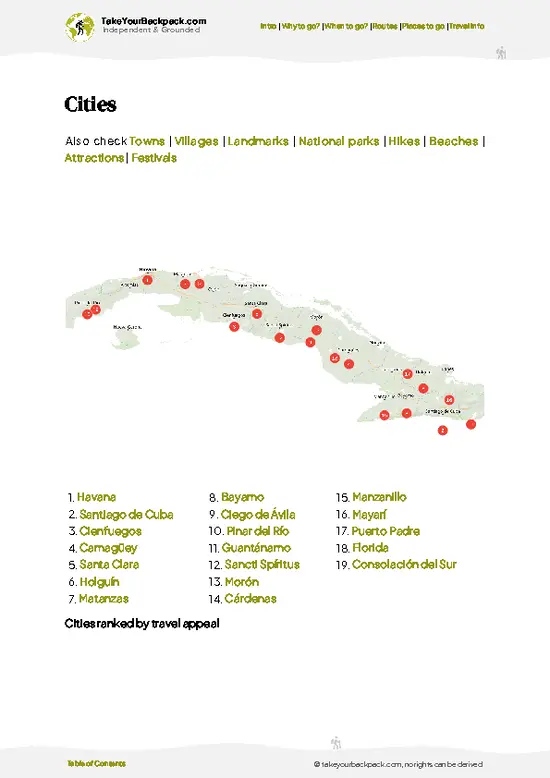
Matanzas was once the sugar and coffee port that Cubans called the Athens of Cuba, home to poets, a famous theater and a rowdy rumba scene. Today it is a quiet, faded city in the north of Cuba, with far fewer tourists than Havana or Varadero. It suits travelers who want real local life and cheap stays. It does not suit anyone after nightlife or polished resorts. Trains and hotels are patchy, so book a casa particular ahead and skip the beach hotels. I paid US$2 for a thick, sweet espresso and a ham sandwich at a window on Calle 85, and the cook refilled my cup without asking. Skip the souvenir stalls and walk the riverbanks instead, where laundry hangs from iron balconies above the Yumurí.

Discover everything you want to know in the 📖 Cuba Travel Guide.


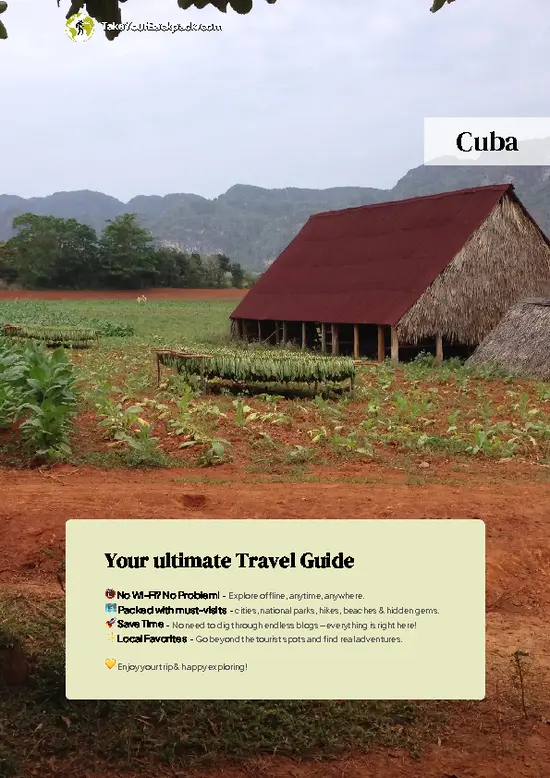
example page 0 from our offline Travel Guide for Cuba
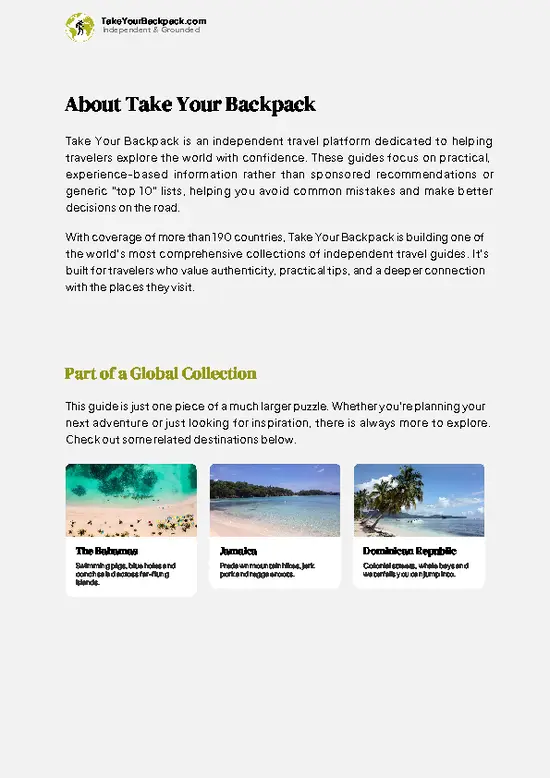
example page 1 from our offline Travel Guide for Cuba
example page 2 from our offline Travel Guide for Cuba
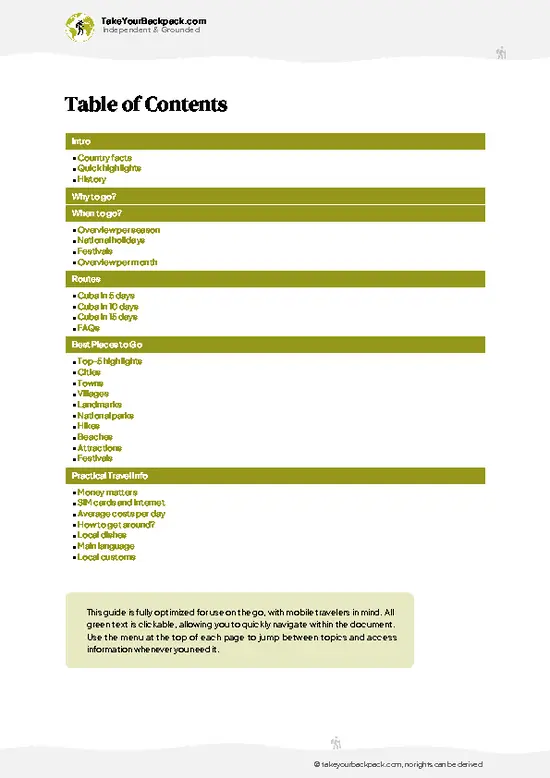
example page 3 from our offline Travel Guide for Cuba
example page 4 from our offline Travel Guide for Cuba
example page 5 from our offline Travel Guide for Cuba
example page 6 from our offline Travel Guide for Cuba
example page 7 from our offline Travel Guide for Cuba
Loading the map 🌍
CLICK TO FILTER
cities
towns
villages
landmarks
national parks
hikes
beaches
attractions
festivals
SHOW COUNTRY’S BESTSHOW ALL

✨ Why go?
Ranked #8 city in Cuba
Reasons people choose to visit here

Matanzas works as a backpacking stop because it sits between two very different Cuban experiences. Matanzas has a compact center you can cover on foot, with a plaza, a pharmacy-museum and a theater all within a few blocks, so you do not need transport once you arrive. The city also has a strong Afro-Cuban musical heritage, with rumba still played in neighborhood courtyards, and that gives evenings more character than a hotel show. Casas particulares here are far cheaper and less crowded than in Havana or Varadero, and hosts cook generous dinners. Matanzas is also a practical base for Varadero and Havana by road or the Hershey Electric Railway. Come for two nights if you like quiet, local streets and live music. Skip it if you need fast internet, a lively bar scene or beaches.

💡 HighlightsTop highlights of Matanzas

  1. Plaza de la Libertad and Parque de la Libertad: The leafy central square with the statue of José Martí, ringed by neoclassical buildings. Come in the early evening when locals gather. Free, about 30 minutes.
  2. Teatro Sauto: An 1863 neoclassical theater with painted ceilings and a marble foyer. Visit in the morning for a guided look, or catch an evening performance. Entry about US$2 to 5, 30 to 45 minutes.
  3. Museo Farmacéutico (Farmacia Triolet): A 19th-century French-style pharmacy with original porcelain jars and wooden shelves. Go before noon. Entry about US$3 to 5, 30 to 45 minutes.
  4. Castillo de San Severino: A 1730s fort near the port that once held enslaved Africans awaiting sale, now a museum on the slave route. Morning is cooler. Entry about US$2 to 4, 1 hour.
  5. Ediciones Vigía: A small workshop
… read more 👉
  1. Plaza de la Libertad and Parque de la Libertad: The leafy central square with the statue of José Martí, ringed by neoclassical buildings. Come in the early evening when locals gather. Free, about 30 minutes.
  2. Teatro Sauto: An 1863 neoclassical theater with painted ceilings and a marble foyer. Visit in the morning for a guided look, or catch an evening performance. Entry about US$2 to 5, 30 to 45 minutes.
  3. Museo Farmacéutico (Farmacia Triolet): A 19th-century French-style pharmacy with original porcelain jars and wooden shelves. Go before noon. Entry about US$3 to 5, 30 to 45 minutes.
  4. Castillo de San Severino: A 1730s fort near the port that once held enslaved Africans awaiting sale, now a museum on the slave route. Morning is cooler. Entry about US$2 to 4, 1 hour.
  5. Ediciones Vigía: A small workshop making handmade paper books and crafts. Visit on a weekday morning. Free to look, buying costs US$3 to 15, 20 to 30 minutes.
  6. Cuevas de Bellamar: Limestone caves on the edge of the city with guided walks past stalactites. Go in the morning. Entry about US$8 to 10, 1 to 1.5 hours.
  7. Ermita de Monserrate: A hilltop chapel with sweeping views over the bay and the Yumurí Valley. Go late afternoon. Free or a small donation, 1 hour with the climb.
  8. Puente Calixto García and the Yumurí riverfront: A stroll across the iron bridges and along the river, past colorful buildings and fishing spots. Best at sunset. Free, about 45 minutes.
Matanzas also makes a good base for the Yumurí Valley, the beaches of Varadero and the Hacienda Gamboa estate nearby. For a first visit, Teatro Sauto gives the clearest sense of the city’s golden age.
Spotted a mistake or missing something? Contact us.

🏘️ NeighborhoodsNeighborhood guide to Matanzas

Matanzas is compact, and the useful parts sit within a few kilometers of each other, split by the San Juan and Yumurí rivers and their bridges.
  • Centro and Parque de la Libertad: The colonial core, with the Teatro Sauto, the Museo Farmacéutico and the Palacio de Junco. Walk it. Everything fits in a morning, so skip any taxi offers here.
  • Pueblo Nuevo: Across the San Juan river, a residential grid of peeling pastel houses and the Plaza de la Vigía area. Cheap peso pizza and cafeterías serve locals, not tourists. Worth an hour for the street life, not for sights.
  • Versalles: The hill district on the east side, home to the Ermita de Monserrate, whose terrace gives the best view over the bay and both rivers. Climb in the late afternoon, when the heat eases, and take a bici-taxi up since the slope is
… read more 👉
Matanzas is compact, and the useful parts sit within a few kilometers of each other, split by the San Juan and Yumurí rivers and their bridges.
  • Centro and Parque de la Libertad: The colonial core, with the Teatro Sauto, the Museo Farmacéutico and the Palacio de Junco. Walk it. Everything fits in a morning, so skip any taxi offers here.
  • Pueblo Nuevo: Across the San Juan river, a residential grid of peeling pastel houses and the Plaza de la Vigía area. Cheap peso pizza and cafeterías serve locals, not tourists. Worth an hour for the street life, not for sights.
  • Versalles: The hill district on the east side, home to the Ermita de Monserrate, whose terrace gives the best view over the bay and both rivers. Climb in the late afternoon, when the heat eases, and take a bici-taxi up since the slope is steep.
  • Playa Judío and the bay shore: Mostly local hangouts and a rocky coast, not a beach destination. Don’t plan a swim day here. Varadero is the better sand.
Nightlife is thin and music-led, so look for live sessions around the center rather than clubs.

⌛️ 1 dayHow to make the most of one day

A slow walking day built around culture and river views, with little rushing.
8:30 AM: Calle 85 breakfast
Start with coffee and a simple sandwich at a local window. Prices are low and you see the city wake up before walking to the square.
9:30 AM: Parque de la Libertad and Teatro Sauto
Cross the square, then tour the theater while it is quiet. The painted ceiling is worth the short wait.
11:00 AM: Museo Farmacéutico
Walk two blocks. The jars and old formulas show how wealthy the city once was.
12:30 PM: Lunch near the river
Eat at a paladar or casa on the riverbank and watch the bridges.
2:00 PM: Ediciones Vigía
This small workshop is off the usual route. Watch artists make paper books by hand, then walk toward the bridge.
3:30 PM: Castillo de San Severino
Take a taxi or a long walk to the fort. The slave … read more 👉
A slow walking day built around culture and river views, with little rushing.
8:30 AM: Calle 85 breakfast
Start with coffee and a simple sandwich at a local window. Prices are low and you see the city wake up before walking to the square.
9:30 AM: Parque de la Libertad and Teatro Sauto
Cross the square, then tour the theater while it is quiet. The painted ceiling is worth the short wait.
11:00 AM: Museo Farmacéutico
Walk two blocks. The jars and old formulas show how wealthy the city once was.
12:30 PM: Lunch near the river
Eat at a paladar or casa on the riverbank and watch the bridges.
2:00 PM: Ediciones Vigía
This small workshop is off the usual route. Watch artists make paper books by hand, then walk toward the bridge.
3:30 PM: Castillo de San Severino
Take a taxi or a long walk to the fort. The slave route exhibit gives context for the rumba culture you will hear later.
5:30 PM: Ermita de Monserrate
Share a taxi up the hill for views over the bay. Stay for the light, then ask your host about a rumba session that evening.

🌤️ When to go?Seasonal considerations and timing

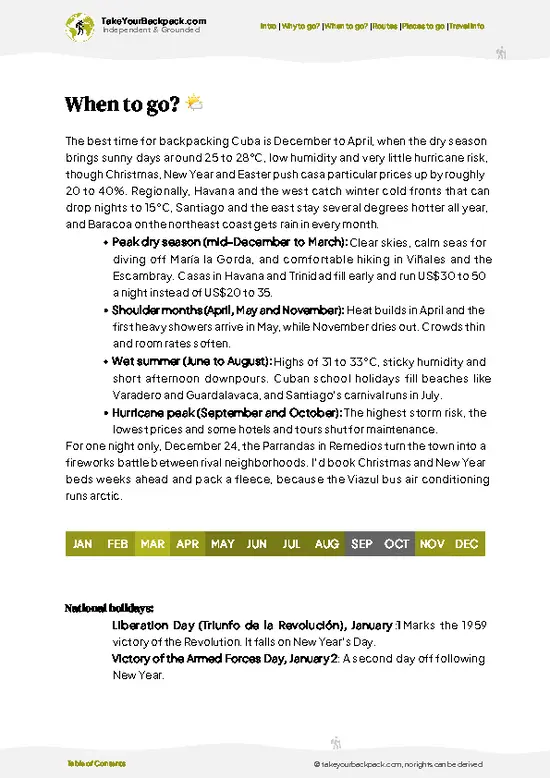
  • Dry Season (November to April): Highs of 25 to 28°C (77 to 82°F), lows near 17 to 20°C (63 to 68°F), low humidity and about 11 hours of daylight. Peak crowds and the highest prices for rooms.
  • Wet Season (May to October): Highs of 31 to 33°C (88 to 91°F), heavy humidity and afternoon downpours. Fewer visitors and softer room prices.
  • Hurricane Window (August to October): The highest storm risk, with flooded streets and canceled transport possible.
  • Carnival and Festivals: Matanzas hosts the Rumba Festival and a poetry-focused culture calendar, which draw local crowds.
Book a room a few weeks ahead for December and January, and aim for February or March for comfortable weather.

source: climatestotravel.comJANJanuary: excellent for travelingFEBFebruary: excellent for travelingMARMarch: excellent for travelingAPRApril: highly recommended for travelingMAYMay: fair for travelingJUNJune: fair for travelingJULJuly: good for travelingAUGAugust: fair for travelingSEPSeptember: fair for travelingOCTOctober: highly recommended for travelingNOVNovember: highly recommended for travelingDECDecember: excellent for traveling
when-to-go

✈️ The backpacker research shortcutCuba Travel Guide

An offline-friendly backpacking guide with optimized travel routes, ranked highlights, transport advice, and the best areas to stay.
example page 0 from our offline Travel Guide for Cuba
example page 1 from our offline Travel Guide for Cuba
example page 2 from our offline Travel Guide for Cuba
example page 3 from our offline Travel Guide for Cuba
example page 4 from our offline Travel Guide for Cuba
example page 5 from our offline Travel Guide for Cuba
example page 6 from our offline Travel Guide for Cuba
example page 7 from our offline Travel Guide for Cuba
The digital guide (327 pages) contains:
✅ 113 highlights, ranked by travel appeal
✅ Optimized 5, 10 & 15-day travel routes
✅ Cities, national parks, landmarks, beaches
✅ How to get around
✅ Offline-friendly for travel without Wi-Fi
👉 Click to see all 30+ guide features

📅 Plan smarter in minutes, not weeks
✅ Month by month travel advice
✅ Festivals & national holidays
✅ Budget expectations

🗺️ Go to the right places, skip the overrated ones
✅ Honest pros & cons of destinations
✅ Top hikes, parks & viewpoints
✅ Lesser-known places most travelers miss
✅ Clear “worth it vs skip it” guidance

🛏️ Travel smoothly without rookie mistakes
✅ Best areas to stay
✅ Transport systems explained simply
✅ Common scams & safety advice
✅ SIM cards, money & practical tips

🌍 Understand the country, not just visit it
✅ Culture & traditions
✅ 52 Essential phrases & customs
✅ Festivals worth planning around
✅ Traveler-friendly historical context
✅ Insights that make places more meaningful

📱 Built for real travel conditions
✅ Fully downloadable PDF
✅ Works completely offline
✅ Optimized for phone use
✅ Useful in remote areas & buses
✅ Everything in one place
Stop searching, start planning
Get instant access to your full guide. 30‑day money-back guarantee.
+ Add another guide for just

By proceeding you agree to our terms.
Sent to your inbox immediately after payment • 100% Secure Checkout
Best Backpacking Travel Advisor 2025 tourism awardBest Backpacking
Travel Advisor
2025
What others say about Take Your Backpack Guides:
⭐⭐⭐⭐⭐
Fantastic, amazing amount of information!
⭐⭐⭐⭐⭐
My goodness this is amazing, it's what I've been looking for hats off too you!
⭐⭐⭐⭐⭐
I think this is absolutely BRILLIANT
⭐⭐⭐⭐
Very complete and informative. It's still missing places, but I gotta to commend you
⭐⭐⭐⭐⭐
This is truly amazing, thank you, can't wait to explore it with my kids!
⭐⭐⭐⭐⭐
Awesome resource, thank you!
⭐⭐⭐⭐⭐
This is amazing! Can't wait to explore the ones I haven't seen
⭐⭐⭐⭐
I love this! Well done, great idea.
⭐⭐⭐⭐⭐
Thanks for taking the time to make this gem!
⭐⭐⭐⭐⭐
This might be the best website I've ever seen.
⭐⭐⭐⭐⭐
Congratulations, and thank you so much for your work; it's incredibly valuable.
⭐⭐⭐⭐
In all seriousness I think you did a great job pointing out the important spots
⭐⭐⭐⭐⭐
10/10 very good
⭐⭐⭐⭐⭐
As someone who's only just starting to visit regularly this is awesome, thank you.
⭐⭐⭐⭐
Thank you very much! I'm going to visit my dad, it's going to be very useful!
⭐⭐⭐⭐⭐
This is really cool! We'll be travelling for the first time and this definitely come in handy.
⭐⭐⭐⭐⭐
You are now our minister of culture, congratulations 👨‍💼
⭐⭐⭐⭐⭐
Just wanted to tell you that this is a pearl! Going to follow your recommendations.
⭐⭐⭐⭐⭐
This is so cool. I'll definitely be using the resource for my travels soon.
⭐⭐⭐⭐⭐
This is very impressive! Good work.
⭐⭐⭐⭐⭐
This is an amazing and informative site. Very well done!

🛏️ Where to stay?Where staying makes the most sense

Centro, around Parque de la Libertad and the streets within a few blocks, is the best area for a budget bed in Matanzas. It is where most casas particulares operate, usually a private room with breakfast for US$15 to 30, and few real hostels exist, so dorm beds are rare. Streets are lit and busy into the evening, you can walk to restaurants, the bus stops and the main sights, and taxis are easy to flag at the park. Noise comes from music and street chatter on the plaza side, so ask for a back room.
Pueblo Nuevo, across the river, is the second option. Rooms are often a bit cheaper, the streets … read more 👉
Centro, around Parque de la Libertad and the streets within a few blocks, is the best area for a budget bed in Matanzas. It is where most casas particulares operate, usually a private room with breakfast for US$15 to 30, and few real hostels exist, so dorm beds are rare. Streets are lit and busy into the evening, you can walk to restaurants, the bus stops and the main sights, and taxis are easy to flag at the park. Noise comes from music and street chatter on the plaza side, so ask for a back room.
Pueblo Nuevo, across the river, is the second option. Rooms are often a bit cheaper, the streets are calmer and the neighborhood is residential and quiet after dark. The walk to the center takes 10 to 15 minutes over a bridge. Choose a casa with a fan or air conditioning in the wet months, and book through a casa host network or by direct message, since listings are limited.

🚌 Getting aroundHow to get from A to B

Matanzas’s colonial center is easy on foot, since the main plazas, bridges and the theater lie within about 15 minutes of each other, but walking stops making sense once you head for the hill, the beaches or the far barrios in the heat.
Public transport is slow and irregular, and fuel shortages make timetables unreliable. Experienced travelers mix walking with shared options and plan extra time.
  • Walking: Free and the fastest way through the center. The bridges are the best way to see the rivers. Wear closed shoes, because the sidewalks are cracked.
  • Bici-taxi: Pedal tricycles cost about US$1 to 3 per ride. Agree the fare first, as foreigners are quoted higher. Good for the Versalles hill, wasteful for flat central hops.
  • Taxi particular (old cars and modern taxis): US$3 to 8 inside town, more for
… read more 👉
Matanzas’s colonial center is easy on foot, since the main plazas, bridges and the theater lie within about 15 minutes of each other, but walking stops making sense once you head for the hill, the beaches or the far barrios in the heat.
Public transport is slow and irregular, and fuel shortages make timetables unreliable. Experienced travelers mix walking with shared options and plan extra time.
  • Walking: Free and the fastest way through the center. The bridges are the best way to see the rivers. Wear closed shoes, because the sidewalks are cracked.
  • Bici-taxi: Pedal tricycles cost about US$1 to 3 per ride. Agree the fare first, as foreigners are quoted higher. Good for the Versalles hill, wasteful for flat central hops.
  • Taxi particular (old cars and modern taxis): US$3 to 8 inside town, more for Playa Judío. Cheaper than hiring a classic tourist car, which charges from US$25 an hour and is not worth it for transport.
  • Local bus: Fares are cents, but buses are crowded, infrequent and hard to read for visitors. Skip them unless you have patience.
  • Train: The train station sits at the edge of town. The Hershey electric train to Havana runs rarely and often late, so don’t build a plan around it. Viazul buses and shared taxis are the sturdier choice for onward trips.

👛 Costs (as of 22 October 2026)What things cost and how to budget

Matanzas costs most backpackers around US$55 to 65 a day, with a daily total of US$60 in high season. Prices are paid in a mix of cash and cards, and casas particulares set the baseline for everything else.
CategoryBudget RangeLocal Reality
Dorm accommodation (high season)US$15 to 25Few true hostels exist, so a private room in a casa particular, split between two people, is the usual choice. Figure here is US$20.
Dorm accommodation (off-season)US$12 to 20Hosts discount rooms from May to October, especially for longer stays.
MealsUS$12 to 22Casa breakfasts cost US$4 to 6 and paladar dinners US$8 to 14. Figure here is US$17.
Local transportUS$2 to 6Shared taxis and bicycle taxis cover short hops. Figure here is US$4.
City transport passNot availableNo pass exists, so pay per ride. Figure here is US$0.
… read more 👉
Matanzas costs most backpackers around US$55 to 65 a day, with a daily total of US$60 in high season. Prices are paid in a mix of cash and cards, and casas particulares set the baseline for everything else.
CategoryBudget RangeLocal Reality
Dorm accommodation (high season)US$15 to 25Few true hostels exist, so a private room in a casa particular, split between two people, is the usual choice. Figure here is US$20.
Dorm accommodation (off-season)US$12 to 20Hosts discount rooms from May to October, especially for longer stays.
MealsUS$12 to 22Casa breakfasts cost US$4 to 6 and paladar dinners US$8 to 14. Figure here is US$17.
Local transportUS$2 to 6Shared taxis and bicycle taxis cover short hops. Figure here is US$4.
City transport passNot availableNo pass exists, so pay per ride. Figure here is US$0.
Basic activities/entry feesUS$5 to 15Museums run US$2 to 5 and the Bellamar Caves about US$10 to 15. Figure here is US$9.
MiscellaneousUS$5 to 12Water, snacks, drinks and tips. Figure here is US$10.
Total Daily BudgetUS$60Per person, per day, in high season.
Casa hosts will often cook a full dinner for less than a restaurant charges, so book it at breakfast and save a few dollars each evening.


source: cubatravel.cu
⚠️ Prices can change and everyone travels differently, so take this as a rough guide. Hope it helps you plan your adventure!

🚌 Day tripsExploring the surroundings

Matanzas works well as a base for day trips, because the beaches, caves and sugar valley around it are all within 1.5 hours by road and nothing needs an overnight stay.
Varadero Beach:
The famous white-sand strip is about 35 km east, and the usual route is a shared taxi (colectivo) for US$5 to 10 per person or a Viazul or local bus for roughly US$5 to 8 one way, taking 45 to 60 minutes. The sea is calm and clear, and November to April is the most comfortable window. First-timers often book an all-inclusive day pass when a public beach access and a cheap beach snack costs far less. Aim to be back before dark, since afternoon transport thins out.
👉 Explore Varadero
Bellamar Caves:
The caves sit on the edge of Matanzas, a short taxi or bicycle-taxi ride of 10 to 15 minutes, and cost around US$10 … read more 👉
Matanzas works well as a base for day trips, because the beaches, caves and sugar valley around it are all within 1.5 hours by road and nothing needs an overnight stay.
Varadero Beach:
The famous white-sand strip is about 35 km east, and the usual route is a shared taxi (colectivo) for US$5 to 10 per person or a Viazul or local bus for roughly US$5 to 8 one way, taking 45 to 60 minutes. The sea is calm and clear, and November to April is the most comfortable window. First-timers often book an all-inclusive day pass when a public beach access and a cheap beach snack costs far less. Aim to be back before dark, since afternoon transport thins out.
👉 Explore Varadero
Bellamar Caves:
The caves sit on the edge of Matanzas, a short taxi or bicycle-taxi ride of 10 to 15 minutes, and cost around US$10 to 15 for the guided walk through calcite formations under the ground. Tours run through the day, which makes it an easy half-day, and the cool air is a relief in July and August. Bring a light layer and shoes with grip, because the steps get damp.

Yumurí Valley:
The valley opens just north of town, with royal palms, tobacco and sugar fields and a river at the bottom. A taxi or tour to the viewpoint and back runs about US$10 to 25 depending on how you split it, and the dry months of December to April give the clearest views. Most people see only the lookout, so ask the driver to continue down toward the river for the rural scenery.

Havana:
The capital is about 100 km west, around 2 to 2.5 hours by Viazul bus or colectivo, with fares of roughly US$8 to 15 each way. Leave early to fit in Old Havana on foot, and book the return seat before you set out, since evening buses can be full.
👉 Explore Havana

🍲 FoodLocal Flavors for Backpackers

Matanzas is known as the City of Bridges and the City of Poets, and its food scene is simple. Drinks are local rum and the house mojito, while a cafetería around Pueblo Nuevo sells fried snacks and peso pizza for pennies. Try ajiaco-style stews and fresh seafood such as fish and lobster in paladares closer to the bay. The region also grows sugar, so guarapo, fresh pressed cane juice, is sold from street stalls on hot days.
Backpackers eat mostly in casas particulares, where a home dinner of rice, beans, pork or fish costs about US$6 to 10, and in small paladares near the central plaza. Markets such as the agro stalls sell fruit, so buy mangoes, guavas and bananas by the pound. Evenings are quiet, with live music in a few courtyards.

🛡️ SafetySafety Tips and Common Scams in Matanzas

Matanzas is calm and low on violent crime, and the usual trouble is petty and polite. The most common annoyances are jineteros offering rooms, restaurants or cigars with a commission built in, plus taxi drivers quoting inflated fares to foreigners. Say no once, firmly, and keep walking. Agree a price before any ride. Pickpocketing exists in crowded spots, so keep your phone and cash in a front pocket. Solo travelers, women included, generally walk the center in the evening without trouble, but side streets and bridges are dimly lit, so stay on the main plazas after dark. Power cuts can turn the whole city dark, so carry a small flashlight. Tap water should be avoided, so drink bottled or purified water.

FAQFrequently asked questions about Matanzas

Two days is enough for Matanzas itself, covering the center, the Ermita de Monserrate and the Bellamar Caves. Add a third day if you want Varadero, which is about 45 minutes away by taxi for US$5 to 10, or the Yumurí valley.
Matanzas is generally comfortable for solo backpackers, with low violent crime and quiet streets. The main problems are touts and inflated taxi fares, so agree prices first. Stay on the central plazas after dark, since side streets and bridges are poorly lit during power cuts.
Matanzas is known as the City of Bridges and the City of Poets, with 17 bridges over its three rivers and a colonial center around Parque de la Libertad. It is also known for the Teatro Sauto, the Bellamar Caves and its rumba music. Varadero beach lies roughly 35 kilometers east.
⚠️ Things can change over time, so always validate details locally before you go.

Other Cuban cities near Matanzas

Explore more nearby:

  • Cárdenas—Columbus statue, bici-taxis, rum heritage, Elián museum| 33 km away
  • Havana—Malecón, Vedado casas, Habana Vieja squares, Fusterlandia mosaics| 86 km away
  • Artemisa—agricultural center, colonial churches, local festivals| 128 km away

💡 Not sure where to go next?
Create a personalized itinerary for Cuba including Matanzas and the places that fit your trip.

Generate my itinerary

👉 Discover all cities

Or checkout all Cuba has to offer (think cities, towns, villages, national parks, hikes, beaches, festivals)
Country photo of Cuba

We 💚 feedbackFinal thoughts on visiting Matanzas

Most first-timers rush through Matanzas and miss the rumba courtyards in the Simpson and Marina neighborhoods, where the music started. The city has few tourist services, and that is the point. I would stay at least two nights, ask your casa host to point you to a Sunday session, and bring small bills.

✈️ When did I visit Cuba?
As part of my 1.5 year travel around the world trip, I visited Cuba for 6 weeks in February, March 2016, being extremely lucky that that coincided with the free concert of The Rolling Stones.

✍️ Help improve this page!
The information on this page is based on my own backpacking experience in Cuba, supplemented with up-to-date research and feedback from other travelers. Travel details can change, so if you notice anything outdated or incomplete, feel free to let me know.


🙋‍♂️ Give feedback

👋 Meet the founderWho’s Behind Take Your Backpack?

Johan, backpacker and founder of TakeYourBackpackHi, I’m Johan (Netherlands 🇳🇱), the creator of TakeYourBackpack. Over the past 3 decades, I’ve backpacked through 90+ countries across six continents, gaining extensive experience with independent travel, long-term trips, and overland routes.

This site is built on a combination of firsthand travel experience and carefully curated insights from other backpackers. Many guides are based on places I’ve personally visited, while others bring together tips, observations, and practical advice shared by trusted travelers I’ve met along the way.

The goal is to provide realistic, experience-driven guidance — not generic itineraries — so you can explore destinations with better context, clearer expectations, and more confidence.