×

Curaçao🇨🇼 | best festivalsExplore the 2 Best festivals in Curaçao

Festivals in Curaçao run on island time, so expect street parades, brass-heavy tumba and food stalls, with little ticketing. Most action clusters in Willemstad, where the Punda and Otrobanda sides sit a short walk apart, so you can skip a rental car. Costs stay low outside carnival, and independent travelers can show up late, still find space, and chat with locals over a cold Amstel Bright.

By Johan Kruseman 🇳🇱 | Updated October 23, 2026
Explore the best regions in Curaçao

Why go?Key Factors That Shape the Experience

Curaçao suits festivals because Dutch, African, Portuguese and Venezuelan influences all share one small island, roughly 61 km long. Papiamentu, the local language, shapes the songs, jokes and food you meet at any gathering. The island sits below the hurricane belt, so dry, breezy weather keeps outdoor events reliable for most of the year. Distances are short, buses and taxis connect the main areas, and events are mostly free to watch. The limits matter too. Public transport thins out in the evening and on Sundays, and a few events end after midnight, so plan your ride home. Accommodation fills fast around the biggest celebrations, so book early. Bring cash in US dollars or Antillean guilders, because small food and drink stalls often skip cards.
Behind the Scenes of Selection
The list of best festivals in Curaçao is created based on energy, traditions, crowd experience, activities, and overall excitement. If you feel a festival is missing in this list, please let us know.

When to go?Optimal Periods for Travel

Best Months and Weather: The best months for festivals in Curaçao are January to March, when the dry season brings sunshine, steady trade winds and highs around 29 to 31°C. Rain is rare then, and the island averages only about 550 mm a year, most of it falling between October and January in short, heavy bursts. Shoulder Seasons and Prices: April to June and September to November are shoulder seasons, with fewer visitors and hotel rates often 20 to 40 percent lower than in winter. Humidity climbs and the breeze eases, so carry water and plan outdoor time for morning or late afternoon. Peak periods around Christmas, New Year and the weeks before Lent push up flights and rooms, so reserve two to three months ahead. Sea temperatures stay near 26 to 28°C all year.

festival hoppingPlanning Your Route Efficiently

Days Needed and Direction: A trip combining several festivals in Curaçao needs 5 to 8 days, because the island is small and everything sits within about 60 km. Base yourself in Willemstad, the main transport hub, and treat the rest as short outings. Pacing Between Stops: Allow half a day to a full day per stop. Drives from the capital to the west coast around Westpunt take about 60 to 75 minutes, and to the east near Santa Barbara about 30 to 40 minutes. Work west to east or the reverse, but avoid zigzagging. Buses run out of Punda and thin out after dark, so taxis or a shared rental car save time. Common Planning Mistakes: Travelers often pack two late-night events into back-to-back evenings, then lose the next morning. Leave a rest day between them. Another mistake is skipping the car booking, since rentals sell out in peak weeks.

The ListHighly Recommended festivals of Curaçao

1 Curaçao International BlueSeas Festival

Free blues, Pietermaai street stages, Kura Hulanda opener, late March or early April

Follow live blues on foot through Pietermaai’s streets and squares, starting at the Kura Hulanda opening concert, with no tickets and bars close to every stage.

2 Curaçao Pride

Willemstad march, drag shows, beach parties, Caribbean and Latin beats

Join a small community-run celebration that moves from a march past pastel facades to daytime beach parties and late drag performances.

Loading the map 🌍

Expert viewTips and Advice from Travelers

How Many to Attend: I advise two to three festivals in a trip. That gives you a big street event, a smaller local one and recovery time, since heat, late nights and rum add up fast. Beyond three, you spend more time queuing for taxis than enjoying the music. Choosing by Travel Style: Budget travelers should favor free neighborhood events, where food stalls and live bands cost little. Culture-minded visitors should pick events built around local music, language and heritage. Social travelers will enjoy big parades, where you meet people easily, but should expect crowds and higher prices. Families do better with daytime programs. Budget Figures: Plan US$50 to 90 a day for a frugal trip with a dorm or basic guesthouse, street food and local beer. Entry to most outdoor events is free, while ticketed … read more 👉
How Many to Attend: I advise two to three festivals in a trip. That gives you a big street event, a smaller local one and recovery time, since heat, late nights and rum add up fast. Beyond three, you spend more time queuing for taxis than enjoying the music. Choosing by Travel Style: Budget travelers should favor free neighborhood events, where food stalls and live bands cost little. Culture-minded visitors should pick events built around local music, language and heritage. Social travelers will enjoy big parades, where you meet people easily, but should expect crowds and higher prices. Families do better with daytime programs. Budget Figures: Plan US$50 to 90 a day for a frugal trip with a dorm or basic guesthouse, street food and local beer. Entry to most outdoor events is free, while ticketed concerts or parties run US$15 to 60. Taxis cost roughly US$15 to 30 for a cross-island ride, and a rental car is about US$35 to 60 a day. Food stall meals cost US$5 to 12, and a beer about US$2 to 4. Add US$10 to 25 for costumes, wristbands or a guide if you want one. Safety and Etiquette: Curaçao is generally safe, but keep phones and wallets in front pockets in dense crowds and avoid walking home alone late at night. Use licensed taxis booked by phone or through your host. Never drive after drinking, because police checks are common. Ask before photographing people in costume or performing, and learn a few Papiamentu greetings such as “bon dia”, which earns real warmth. Wear sunscreen and drink water between beers, and carry some small bills for stalls that don’t take cards.

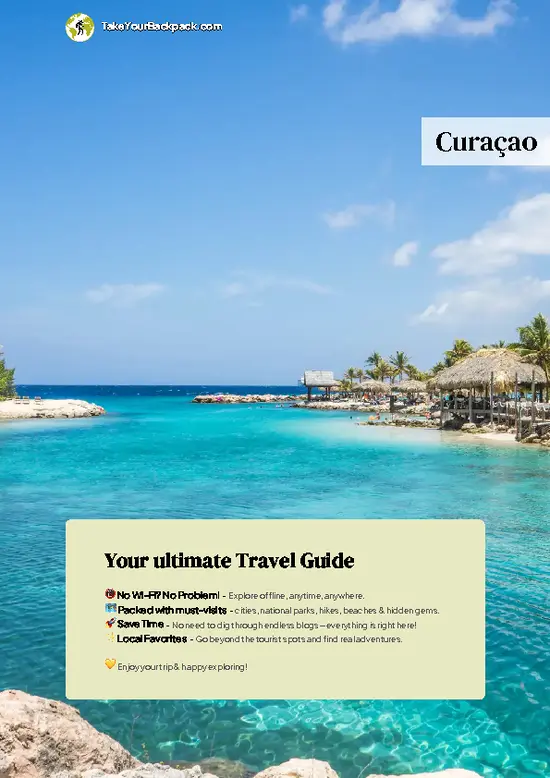
✈️ The backpacker research shortcutCuraçao Travel Guide

An offline-friendly backpacking guide with optimized travel routes, ranked highlights, transport advice, and the best areas to stay.
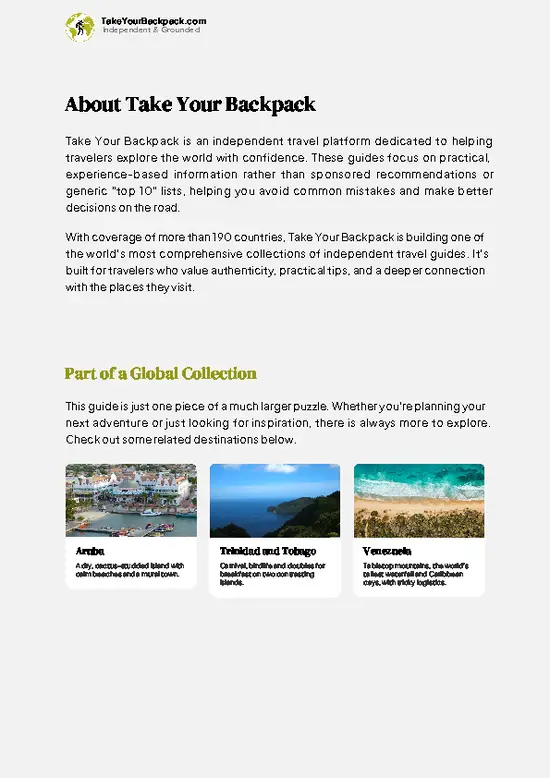
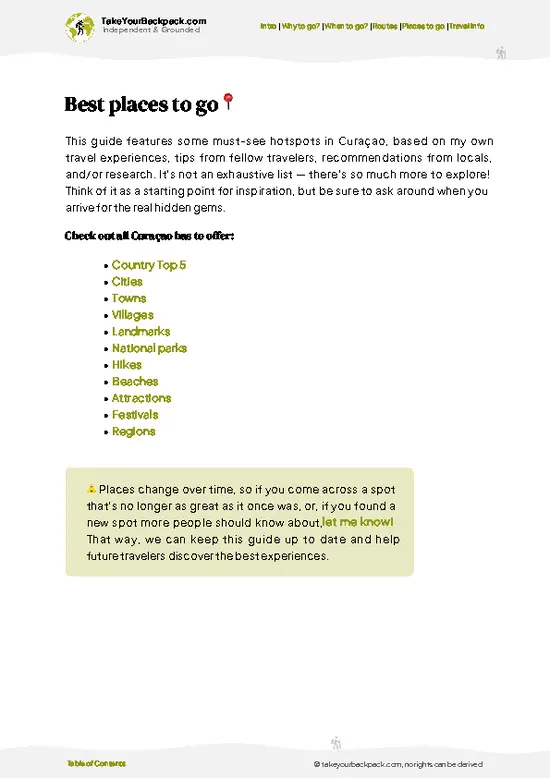
example page 0 from our offline Travel Guide for Curaçao
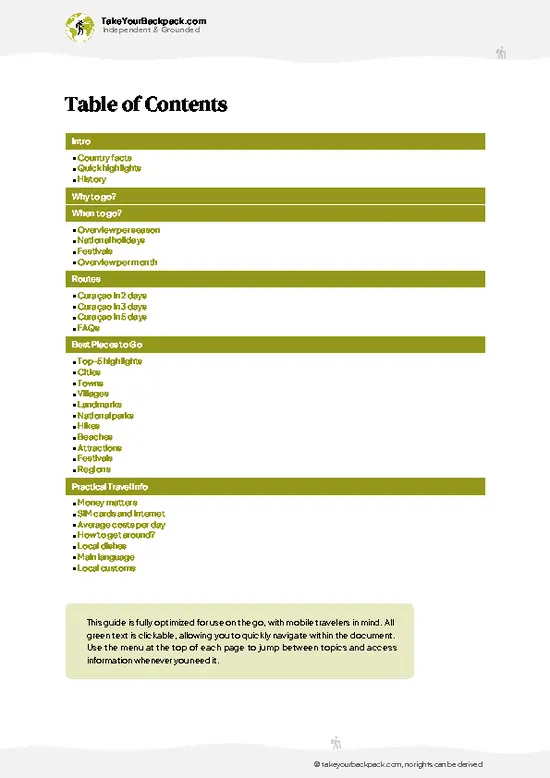
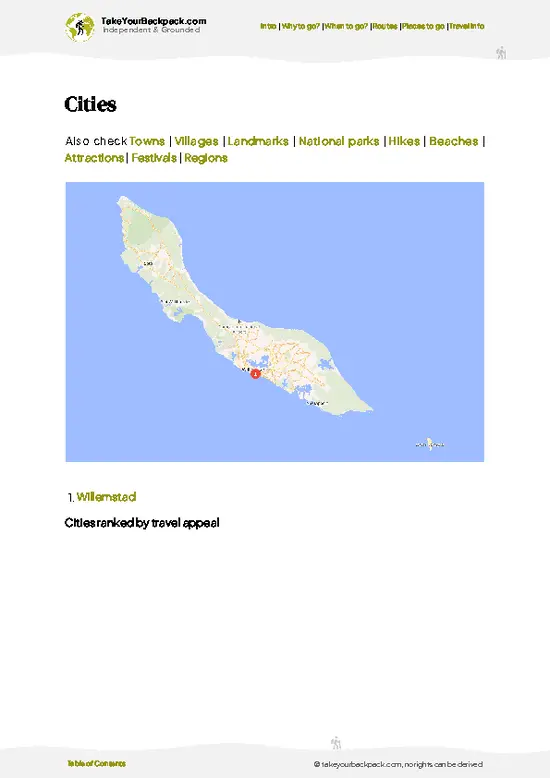
example page 1 from our offline Travel Guide for Curaçao
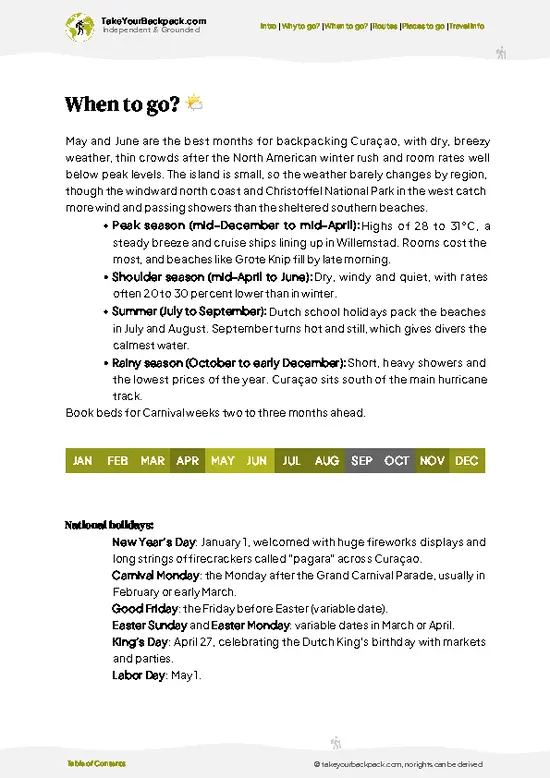
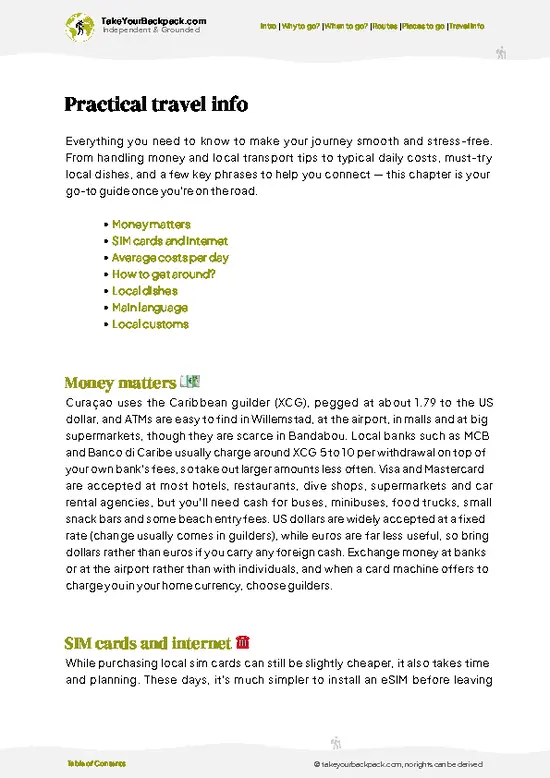
example page 2 from our offline Travel Guide for Curaçao
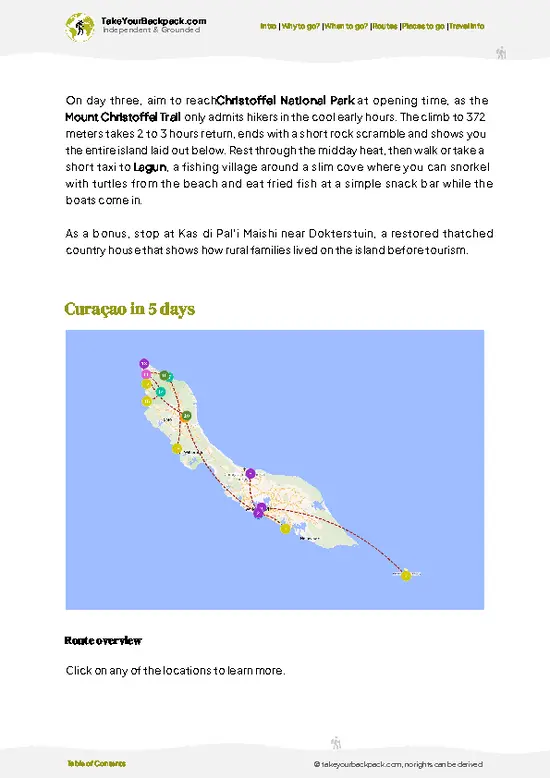
example page 3 from our offline Travel Guide for Curaçao
example page 4 from our offline Travel Guide for Curaçao
example page 5 from our offline Travel Guide for Curaçao
example page 6 from our offline Travel Guide for Curaçao
example page 7 from our offline Travel Guide for Curaçao
The digital guide (126 pages) contains:
✅ 33 highlights, ranked by travel appeal
✅ Optimized 2, 3 & 5-day travel routes
✅ Cities, national parks, landmarks, beaches
✅ How to get around
✅ Offline-friendly for travel without Wi-Fi
👉 Click to see all 30+ guide features

📅 Plan smarter in minutes, not weeks
✅ Month by month travel advice
✅ Festivals & national holidays
✅ Budget expectations

🗺️ Go to the right places, skip the overrated ones
✅ Honest pros & cons of destinations
✅ Top hikes, parks & viewpoints
✅ Lesser-known places most travelers miss
✅ Clear “worth it vs skip it” guidance

🛏️ Travel smoothly without rookie mistakes
✅ Best areas to stay
✅ Transport systems explained simply
✅ Common scams & safety advice
✅ SIM cards, money & practical tips

🌍 Understand the country, not just visit it
✅ Culture & traditions
✅ 52 Essential phrases & customs
✅ Festivals worth planning around
✅ Traveler-friendly historical context
✅ Insights that make places more meaningful

📱 Built for real travel conditions
✅ Fully downloadable PDF
✅ Works completely offline
✅ Optimized for phone use
✅ Useful in remote areas & buses
✅ Everything in one place
Stop searching, start planning
Get instant access to your full guide. 30‑day money-back guarantee.
+ Add another guide for just

By proceeding you agree to our terms.
Sent to your inbox immediately after payment • 100% Secure Checkout
Best Backpacking Travel Advisor 2025 tourism awardBest Backpacking
Travel Advisor
2025
What others say about Take Your Backpack Guides:
⭐⭐⭐⭐⭐
Fantastic, amazing amount of information!
⭐⭐⭐⭐⭐
My goodness this is amazing, it's what I've been looking for hats off too you!
⭐⭐⭐⭐⭐
I think this is absolutely BRILLIANT
⭐⭐⭐⭐
Very complete and informative. It's still missing places, but I gotta to commend you
⭐⭐⭐⭐⭐
This is truly amazing, thank you, can't wait to explore it with my kids!
⭐⭐⭐⭐⭐
Awesome resource, thank you!
⭐⭐⭐⭐⭐
This is amazing! Can't wait to explore the ones I haven't seen
⭐⭐⭐⭐
I love this! Well done, great idea.
⭐⭐⭐⭐⭐
Thanks for taking the time to make this gem!
⭐⭐⭐⭐⭐
This might be the best website I've ever seen.
⭐⭐⭐⭐⭐
Congratulations, and thank you so much for your work; it's incredibly valuable.
⭐⭐⭐⭐
In all seriousness I think you did a great job pointing out the important spots
⭐⭐⭐⭐⭐
10/10 very good
⭐⭐⭐⭐⭐
As someone who's only just starting to visit regularly this is awesome, thank you.
⭐⭐⭐⭐
Thank you very much! I'm going to visit my dad, it's going to be very useful!
⭐⭐⭐⭐⭐
This is really cool! We'll be travelling for the first time and this definitely come in handy.
⭐⭐⭐⭐⭐
You are now our minister of culture, congratulations 👨‍💼
⭐⭐⭐⭐⭐
Just wanted to tell you that this is a pearl! Going to follow your recommendations.
⭐⭐⭐⭐⭐
This is so cool. I'll definitely be using the resource for my travels soon.
⭐⭐⭐⭐⭐
This is very impressive! Good work.
⭐⭐⭐⭐⭐
This is an amazing and informative site. Very well done!

🛏️ Where to stay?Where to Stay in Curaçao

Curaçao has only a handful of true hostels, with dorm beds around Cg 55 to 80 (US$30 to 45), so most backpackers end up in guesthouses, small apartments or private rooms at Cg 125 to 215 (US$70 to 120) a night. In Willemstad, Pietermaai has the best mix of budget guesthouses, bars and late-night restaurants within walking distance of the old town, while Punda puts you beside the shopping streets and waterfront but goes quiet after dark, and Otrobanda is cheaper and right by the main bus terminal, though some of its back streets feel sketchy at night. Outside the capital, Jan Thiel trades city access for beaches and a calmer, resort-like feel, and Westpunt is the pick for snorkeling and silence … read more 👉
Curaçao has only a handful of true hostels, with dorm beds around Cg 55 to 80 (US$30 to 45), so most backpackers end up in guesthouses, small apartments or private rooms at Cg 125 to 215 (US$70 to 120) a night. In Willemstad, Pietermaai has the best mix of budget guesthouses, bars and late-night restaurants within walking distance of the old town, while Punda puts you beside the shopping streets and waterfront but goes quiet after dark, and Otrobanda is cheaper and right by the main bus terminal, though some of its back streets feel sketchy at night. Outside the capital, Jan Thiel trades city access for beaches and a calmer, resort-like feel, and Westpunt is the pick for snorkeling and silence if you have a rental car, since buses there are infrequent.

If you enjoy meeting fellow travelers, consider choosing hostels with high ratings for atmosphere. On the other hand, if you prefer having your own space, a hotel might be a better option.

CuraçaoMore of Curaçao

👋 Meet the founderWho’s Behind Take Your Backpack?

Johan, backpacker and founder of TakeYourBackpackHi, I’m Johan (Netherlands 🇳🇱), the creator of TakeYourBackpack. Over the past 3 decades, I’ve backpacked through 90+ countries across six continents, gaining extensive experience with independent travel, long-term trips, and overland routes.

This site is built on a combination of firsthand travel experience and carefully curated insights from other backpackers. Many guides are based on places I’ve personally visited, while others bring together tips, observations, and practical advice shared by trusted travelers I’ve met along the way.

The goal is to provide realistic, experience-driven guidance — not generic itineraries — so you can explore destinations with better context, clearer expectations, and more confidence.