×

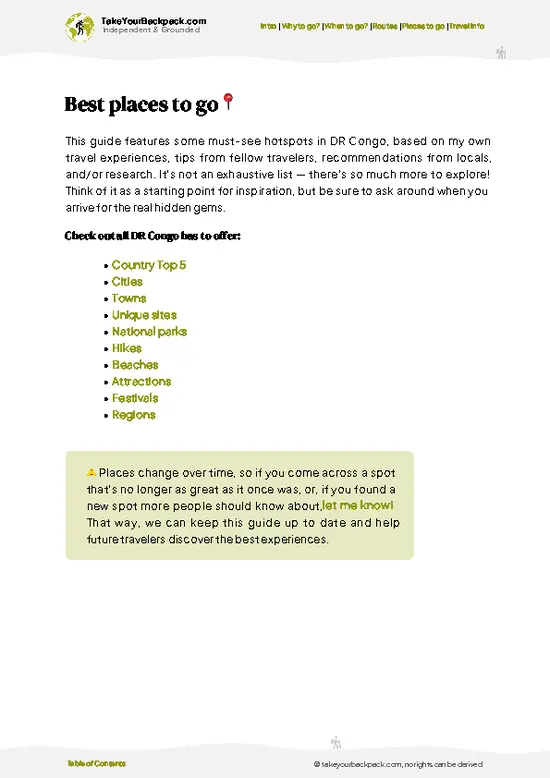
DR Congo🇨🇩 | citiesBandunduRiver confluence, ferry port, fishing communities | things to do and best time to go

Explore GemenaExplore Kindu

Backpacking in Bandundu
👌 Worth visitingcity ranked #16
By Johan Kruseman 🇳🇱 | Updated May 10, 2026

If you crave polished cafés, seamless Wi-Fi, or a parade of fellow backpackers, Bandundu is not your city. But if you’re drawn to the raw, unfiltered pulse of DR Congo, Bandundu rewards you with riverfront markets, colonial-era relics, and a front-row seat to daily Congolese life. Tucked at the confluence of the Kwilu and Kasai rivers, it’s a logistical puzzle—slow boats, rough roads, and minimal tourist infrastructure—but that’s the trade-off for authenticity. It’s less chaotic than Kinshasa, more approachable than Kikwit, and the vibe is gritty, communal, and utterly real. Safety is manageable with street smarts; costs are low, but comfort is basic.

Discover everything you want to know in the 📖 DR Congo Travel Guide.
Safety warning

The current risk level for DR Congo is high. Check the advice before going.


Get your DR Congo guide
96 ranked highlights, routes & tips, works offline (378 pages)
Loading the map 🌍
CLICK TO FILTER
cities
towns
landmarks
national parks
hikes
beaches
attractions
festivals
regions
SHOW COUNTRY’S BESTSHOW ALL

✨ Why go?
Ranked #16 city in DR Congo
Why Bandundu should be on your travel list

Backpackers flock to Bandundu in DR Congo for its unique blend of affordability and authenticity. This city serves as a solid basecamp for day trips into the surrounding wilderness, making it a strategic stop on your journey. The hostels here are budget-friendly and often filled with fellow travelers, fostering a sense of community. You’ll find local food that’s both delicious and cheap, allowing you to fuel up without breaking the bank. The city is walkable, making it easy to explore on foot, and the nightlife offers a taste of local culture without the touristy vibe. Plus, onward travel options are straightforward, letting you seamlessly continue your adventure. If you’re after a genuine experience without the frills, Bandundu is worth your time.
Want to include Bandundu in your DR Congo route?
Create a personalized DR Congo itinerary that includes Bandundu and the places that fit your trip — based on your travel style, budget, and available time. Get your route in seconds.

Generate my trip

💡 HighlightsPlaces and moments you shouldn't skip

  • Bandundu River Port (Quai fluvial) — The heart of the town’s life: ferries, pirogues and cargo boats coming and going on the Kwilu/Congo stretch. Great for people-watching, catching a boat, and seeing how river commerce actually works.
  • Marché Central de Bandundu — A chaotic, colourful market where produce, smoked fish, cloth and basic hardware are sold. You’ll feel the city’s pulse here and can barter for local snacks and small crafts.
  • Catholic diocesan cathedral — The main cathedral for the diocese is a focal point of local religious and social life; visit during a morning service to hear choirs and see community rhythms up close.
  • Riverside fish market and boat landings — A smaller, messier complement to the central market where fishermen land catches and locals haggle over fresh fish;
read more 👉
  • Bandundu River Port (Quai fluvial) — The heart of the town’s life: ferries, pirogues and cargo boats coming and going on the Kwilu/Congo stretch. Great for people-watching, catching a boat, and seeing how river commerce actually works.
  • Marché Central de Bandundu — A chaotic, colourful market where produce, smoked fish, cloth and basic hardware are sold. You’ll feel the city’s pulse here and can barter for local snacks and small crafts.
  • Catholic diocesan cathedral — The main cathedral for the diocese is a focal point of local religious and social life; visit during a morning service to hear choirs and see community rhythms up close.
  • Riverside fish market and boat landings — A smaller, messier complement to the central market where fishermen land catches and locals haggle over fresh fish; a visceral way to experience the river economy.
  • Old colonial-era avenue and administrative quarter — A handful of government buildings and old façades around the municipal center show the town’s layered history; walk here for architecture, portraits of local officials and informal street cafés.
  • Local craft workshops — Scattered woodcarvers, basket weavers and tailors work in small courtyards; drop in to watch a piece being made and buy directly from the maker for a fair price.
  • Ferry crossing hub — Watching (or riding) the larger ferries that link Bandundu to upriver and downriver towns is an experience in itself — expect delays, bargaining, and a lively crowd; it’s the real transport hub of the region.
  • Community squares and informal music spots — Open-air squares and small bars where local bands play and people dance; go in the evening for live Congolese rumba and the friendliest possible invitations to join in.
  • Chief’s quarter and local ceremonial sites — The compound of the customary chief and nearby ceremonial spaces give insight into traditional authority and cultural practices that still matter in daily life.
  • Riverbank sunset viewpoints — Simple, unmarked stretches of bank where locals gather at dusk; bring mosquito repellent, a drink, and watch the light on the water — it’s quietly memorable and free.
A few real day trips you can reach from Bandundu are boat rides to nearby riverside villages and the Kwilu-Kasai confluence, plus visits to nearby market towns such as Bulungu and the larger provincial centre of Kikwit.
Spotted a mistake or missing something? Contact us.
🏘️ NeighborhoodsHow different areas shape the experience

Bandundu is a vibrant hub in the heart of DR Congo, offering a mix of local culture and backpacker-friendly amenities. Here’s how the neighborhoods stack up:

Centre Ville: This is the beating heart of Bandundu. Expect a lively atmosphere with street vendors and local eateries. It’s walkable, making it easy to explore on foot. Costs are moderate, and you’ll find a mix of budget accommodations. Perfect for short stays, but the nightlife can get a bit loud.

Quartier Kasaï: A quieter area, ideal for those seeking a more relaxed vibe. It’s less touristy, which means lower prices and a chance to connect with locals. While public transport is accessible, walking is less convenient here. Great for longer stays if you want to immerse yourself in daily life.

Quartier Nganga: This neighborhood offers … read more 👉
Bandundu is a vibrant hub in the heart of DR Congo, offering a mix of local culture and backpacker-friendly amenities. Here’s how the neighborhoods stack up:

Centre Ville: This is the beating heart of Bandundu. Expect a lively atmosphere with street vendors and local eateries. It’s walkable, making it easy to explore on foot. Costs are moderate, and you’ll find a mix of budget accommodations. Perfect for short stays, but the nightlife can get a bit loud.

Quartier Kasaï: A quieter area, ideal for those seeking a more relaxed vibe. It’s less touristy, which means lower prices and a chance to connect with locals. While public transport is accessible, walking is less convenient here. Great for longer stays if you want to immerse yourself in daily life.

Quartier Nganga: This neighborhood offers a balance of comfort and affordability. It’s a bit more upscale, with better amenities and dining options. Nightlife is subdued, making it suitable for those who prefer a peaceful retreat after a day of exploration. Transport links are decent, but you might need to rely on taxis for longer distances.

⌛️ 1 daySeeing the highlights in 24 hours

Bandundu, in the heart of DR Congo, pulses with life and authenticity. It’s a city where the rhythm of daily life unfolds in vibrant markets and the laughter of children fills the air. You won’t find the usual tourist traps here, but that’s precisely what makes it special.

Start your morning at the bustling central market in the Nganga neighborhood. The aroma of fresh produce and spices will awaken your senses. Engage with local vendors; they’re often eager to share stories about their goods. Grab a breakfast of akam, a local porridge, paired with some fresh fruit.

In the afternoon, head to the banks of the Kasai River. This is where you can take a leisurely stroll or even rent a canoe for a unique perspective of the city. The riverbanks are less frequented by tourists, offering a glimpse … read more 👉
Bandundu, in the heart of DR Congo, pulses with life and authenticity. It’s a city where the rhythm of daily life unfolds in vibrant markets and the laughter of children fills the air. You won’t find the usual tourist traps here, but that’s precisely what makes it special.

Start your morning at the bustling central market in the Nganga neighborhood. The aroma of fresh produce and spices will awaken your senses. Engage with local vendors; they’re often eager to share stories about their goods. Grab a breakfast of akam, a local porridge, paired with some fresh fruit.

In the afternoon, head to the banks of the Kasai River. This is where you can take a leisurely stroll or even rent a canoe for a unique perspective of the city. The riverbanks are less frequented by tourists, offering a glimpse into the daily lives of local fishermen.

As evening approaches, make your way to the lively neighborhood of Kasaï. Here, you can find a local eatery serving up grilled fish and plantains. The atmosphere is electric, filled with music and laughter.

End your day by soaking in the local culture, perhaps catching a performance of traditional dance. Bandundu may not be on every traveler’s radar, but that’s what makes it a rewarding stop. You’ll leave with stories and memories that are truly your own.
Turn your Bandundu visit into an DR Congo adventure
Build a complete DR Congo route with Bandundu, hidden gems, must-see destinations, and realistic travel times included.

Generate my trip

🌤️ When to go?Best time to visit Bandundu


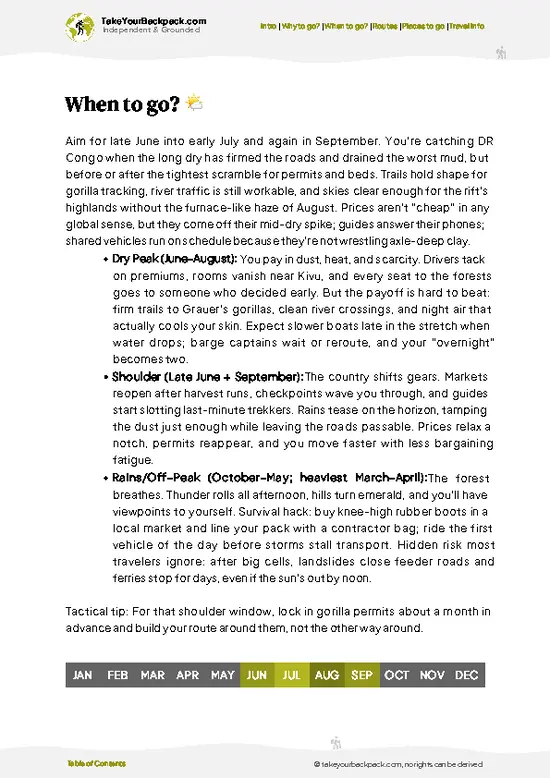
  • Topic: Weather – Bandundu’s climate swings between a wet season (October to May) and a dry season (June to September). The dry months offer easier trekking and less mud, but the wet season brings lush greenery and fuller rivers.

  • Topic: Temperature – Expect highs around 28-32°C (82-90°F) year-round, with nights cooling to 18-22°C (64-72°F). Temperature shifts are subtle, so rain and humidity are bigger timing factors.

  • Topic: Daylight Hours – Near the equator, daylight stays steady at about 12 hours daily, so no need to juggle your schedule around fading light.

  • Topic: Crowds – Bandundu isn’t a tourist hotspot, so crowds are minimal year-round. Peak local activity aligns with dry season markets and festivals.

  • Topic: Seasonal Activities – Dry season is best for river crossings and exploring
read more 👉

  • Topic: Weather – Bandundu’s climate swings between a wet season (October to May) and a dry season (June to September). The dry months offer easier trekking and less mud, but the wet season brings lush greenery and fuller rivers.

  • Topic: Temperature – Expect highs around 28-32°C (82-90°F) year-round, with nights cooling to 18-22°C (64-72°F). Temperature shifts are subtle, so rain and humidity are bigger timing factors.

  • Topic: Daylight Hours – Near the equator, daylight stays steady at about 12 hours daily, so no need to juggle your schedule around fading light.

  • Topic: Crowds – Bandundu isn’t a tourist hotspot, so crowds are minimal year-round. Peak local activity aligns with dry season markets and festivals.

  • Topic: Seasonal Activities – Dry season is best for river crossings and exploring trails without the risk of flooding. Wet season offers vibrant wildlife sightings but can limit access.

  • Topic: Price Fluctuations – Prices for lodging and transport dip during the wet season due to fewer visitors, but factor in potential delays and discomfort from rain.


Pro-tip: Aim for the shoulder months of May or September to balance manageable weather, fewer crowds, and better prices—getting the most bang for your backpacking buck.


source: climatestotravel.comJANJanuary: fair for travelingFEBFebruary: fair for travelingMARMarch: fair for travelingAPRApril: fair for travelingMAYMay: highly recommended for travelingJUNJune: excellent for travelingJULJuly: excellent for travelingAUGAugust: excellent for travelingSEPSeptember: highly recommended for travelingOCTOctober: fair for travelingNOVNovember: fair for travelingDECDecember: fair for traveling
when-to-go

✈️ The backpacker research shortcutDR Congo Travel Guide

An offline-friendly backpacking guide with optimized travel routes, ranked highlights, transport advice, and the best areas to stay.
example page 0 from our offline Travel Guide for Democratic Republic of the Congoexample page 1 from our offline Travel Guide for Democratic Republic of the Congoexample page 2 from our offline Travel Guide for Democratic Republic of the Congoexample page 3 from our offline Travel Guide for Democratic Republic of the Congoexample page 4 from our offline Travel Guide for Democratic Republic of the Congoexample page 5 from our offline Travel Guide for Democratic Republic of the Congoexample page 6 from our offline Travel Guide for Democratic Republic of the Congoexample page 7 from our offline Travel Guide for Democratic Republic of the Congo
The digital guide (378 pages) contains:
96 highlights, ranked by travel appeal
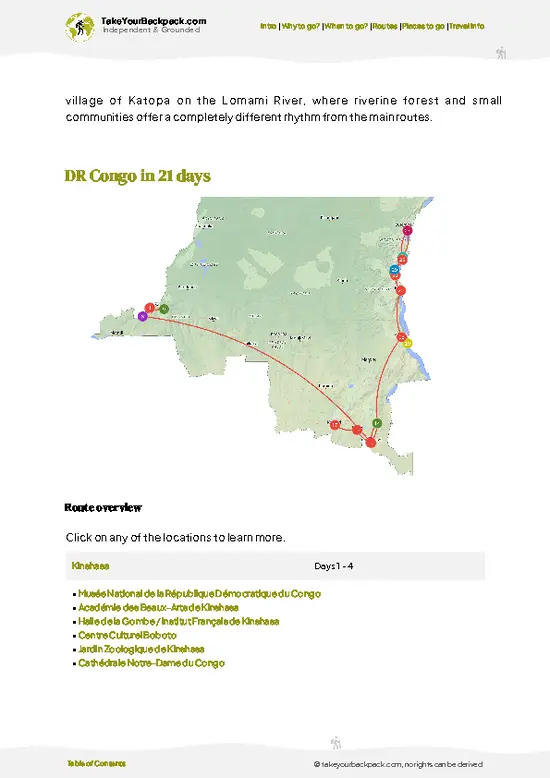
Optimized 7, 14 & 21-day travel routes
Cities, national parks, landmarks, beaches
How to get around
Offline-friendly for travel without Wi-Fi
👉 Click to see all 30+ guide features

📅 Plan smarter in minutes, not weeks
Month by month travel advice
Festivals & national holidays
Budget expectations

🗺️ Go to the right places, skip the overrated ones
Honest pros & cons of destinations
Top hikes, parks & viewpoints
Lesser-known places most travelers miss
Clear “worth it vs skip it” guidance

🛏️ Travel smoothly without rookie mistakes
Best areas to stay
Transport systems explained simply
Common scams & safety advice
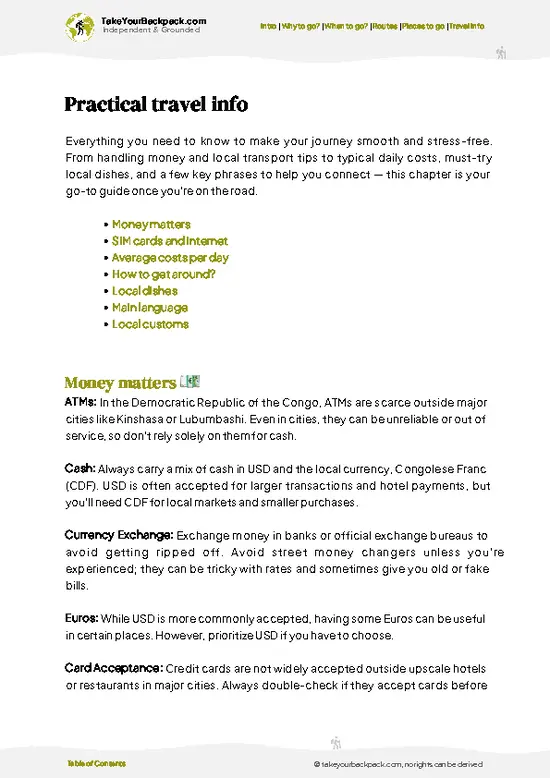
SIM cards, money & practical tips

🌍 Understand the country, not just visit it
Culture & traditions
52 Essential phrases & customs
Festivals worth planning around
Traveler-friendly historical context
Insights that make places more meaningful

📱 Built for real travel conditions
Fully downloadable PDF
Works completely offline
Optimized for phone use
Useful in remote areas & buses
Everything in one place
Save weeks of stressful planning
Get instant access to your full guide. 30‑day money-back guarantee.


By proceeding you agree to our terms.
Sent to your inbox immediately after payment • 100% Secure Checkout
Best Backpacking Travel Advisor 2025 tourism awardBest Backpacking
Travel Advisor
2025
What others say about Take Your Backpack Guides:
⭐⭐⭐⭐⭐
Fantastic, amazing amount of information!
⭐⭐⭐⭐⭐
My goodness this is amazing, it's what I've been looking for hats off too you!
⭐⭐⭐⭐⭐
I think this is absolutely BRILLIANT
⭐⭐⭐⭐
Very complete and informative. It's still missing places, but I gotta to commend you
⭐⭐⭐⭐⭐
This is truly amazing, thank you, can't wait to explore it with my kids!
⭐⭐⭐⭐⭐
Awesome resource, thank you!
⭐⭐⭐⭐⭐
This is amazing! Can't wait to explore the ones I haven't seen
⭐⭐⭐⭐
I love this! Well done, great idea.
⭐⭐⭐⭐⭐
Thanks for taking the time to make this gem!
⭐⭐⭐⭐⭐
This might be the best website I've ever seen.
⭐⭐⭐⭐⭐
Congratulations, and thank you so much for your work; it's incredibly valuable.
⭐⭐⭐⭐
In all seriousness I think you did a great job pointing out the important spots
⭐⭐⭐⭐⭐
10/10 very good
⭐⭐⭐⭐⭐
As someone who's only just starting to visit regularly this is awesome, thank you.
⭐⭐⭐⭐
Thank you very much! I'm going to visit my dad, it's going to be very useful!
⭐⭐⭐⭐⭐
This is really cool! We'll be travelling for the first time and this definitely come in handy.
⭐⭐⭐⭐⭐
You are now our minister of culture, congratulations 👨‍💼
⭐⭐⭐⭐⭐
Just wanted to tell you that this is a pearl! Going to follow your recommendations.
⭐⭐⭐⭐⭐
This is so cool. I'll definitely be using the resource for my travels soon.
⭐⭐⭐⭐⭐
This is very impressive! Good work.
⭐⭐⭐⭐⭐
This is an amazing and informative site. Very well done!

🛏️ Where to stay?Where staying makes the most sense

Bandundu’s backpacker scene is tightly focused around the city center, where safety and social opportunities intersect best. This area offers the most budget-friendly options, including a handful of hostels and guesthouses that attract solo travelers looking to connect. Staying here means you’re close to markets, local eateries, and transport hubs, cutting down on costly taxis and wasted time.

Venture outside the center, and you’ll quickly face fewer traveler-friendly spots and a bump in unpredictability—less social buzz, fewer secure accommodations, and a higher chance of logistical headaches. … read more 👉
Bandundu’s backpacker scene is tightly focused around the city center, where safety and social opportunities intersect best. This area offers the most budget-friendly options, including a handful of hostels and guesthouses that attract solo travelers looking to connect. Staying here means you’re close to markets, local eateries, and transport hubs, cutting down on costly taxis and wasted time.

Venture outside the center, and you’ll quickly face fewer traveler-friendly spots and a bump in unpredictability—less social buzz, fewer secure accommodations, and a higher chance of logistical headaches. The city’s outskirts lean toward residential or industrial zones, which don’t cater to backpackers’ needs. So, for a smart balance of comfort, cost, and community, the central district is your strategic base in Bandundu, DR Congo.

🚌 Getting aroundHow to get from A to B

Bandundu moves at its own rhythm—less a clockwork machine and more a pulse you learn to read. Here, time is elastic, bending around the needs of the moment rather than strict schedules. You’ll find that the city’s flow leans toward improvisation, where a bus might leave when full, not on the hour, and a ride can stretch longer if the road or conversation demands it. Understanding this is your first win: in Bandundu, patience and flexibility are your best travel companions, and every choice you make is a trade-off between time, money, and comfort.


  • Walking: The ultimate zero-cost option. Bandundu’s compact center makes walking practical and immersive. It’s slow but free, giving you full control over your pace and route, plus the chance to soak in street life and local markets.

  • Shared Minibus
read more 👉
Bandundu moves at its own rhythm—less a clockwork machine and more a pulse you learn to read. Here, time is elastic, bending around the needs of the moment rather than strict schedules. You’ll find that the city’s flow leans toward improvisation, where a bus might leave when full, not on the hour, and a ride can stretch longer if the road or conversation demands it. Understanding this is your first win: in Bandundu, patience and flexibility are your best travel companions, and every choice you make is a trade-off between time, money, and comfort.


  • Walking: The ultimate zero-cost option. Bandundu’s compact center makes walking practical and immersive. It’s slow but free, giving you full control over your pace and route, plus the chance to soak in street life and local markets.

  • Shared Minibus (Taxi-Brousse): The backbone of local transit. These minibuses run irregularly, often departing only when full, so expect waits. Fares are dirt cheap, usually under $1, but comfort is minimal—cramped seats and no air conditioning. Travel times vary widely depending on stops and road conditions.

  • Motorcycle Taxi (Moto-Taxi): Fast and flexible for short hops or weaving through traffic. Prices are negotiable but generally low. It’s less comfortable and can feel risky if you’re not used to the chaotic traffic, but it shaves off minutes where walking or minibuses drag.

  • Private Car Hire: The luxury option for those who want to save time and avoid the unpredictability of public transit. Costs jump significantly, but you gain door-to-door convenience and the ability to set your own schedule. Ideal if you’re traveling with a group and splitting costs.


Mastering Bandundu’s transit means balancing your priorities: save money and embrace unpredictability, or pay more for speed and comfort. Either way, you’re playing the game on your terms.

👛 Costs (as of 8 June 2026)What things cost and how to budget

Bandundu in DR Congo offers a raw, off-the-beaten-path experience, and understanding the daily costs here is key to mastering your travel budget.
  • Dorm Accommodation (High Season): Expect to pay around $10 to $15 per night. Options are limited, so prices can spike slightly during peak travel times due to demand.
  • Dorm Accommodation (Off-Season): Prices drop to about $7 to $10 per night. Fewer travelers mean better bargaining power and more availability.
  • Meals: Local eateries serve hearty meals for $3 to $6. Street food is cheaper, around $1 to $2, but stick to freshly cooked items to avoid stomach trouble.
  • Local Transport: Short rides on shared minibuses or motorcycle taxis cost between $0.50 and $1.50. These are the lifeblood of getting around town quickly.
  • City Transport Pass: Not commonly
read more 👉
Bandundu in DR Congo offers a raw, off-the-beaten-path experience, and understanding the daily costs here is key to mastering your travel budget.
  • Dorm Accommodation (High Season): Expect to pay around $10 to $15 per night. Options are limited, so prices can spike slightly during peak travel times due to demand.
  • Dorm Accommodation (Off-Season): Prices drop to about $7 to $10 per night. Fewer travelers mean better bargaining power and more availability.
  • Meals: Local eateries serve hearty meals for $3 to $6. Street food is cheaper, around $1 to $2, but stick to freshly cooked items to avoid stomach trouble.
  • Local Transport: Short rides on shared minibuses or motorcycle taxis cost between $0.50 and $1.50. These are the lifeblood of getting around town quickly.
  • City Transport Pass: Not commonly available in Bandundu. Most travelers rely on pay-per-ride options, so budget accordingly.
  • Basic Activities/Entry Fees: Cultural sites and local museums charge modest fees, typically $2 to $5. Guided tours are rare and usually negotiated locally.
  • Miscellaneous Expenses: Budget around $2 to $4 for essentials like bottled water, SIM cards, or small tips. These add up but are manageable with planning.

Total daily costs for backpacking in Bandundu generally range from $15 to $30. This range reflects a balance between stretching your dollar and maintaining a reasonable level of comfort and convenience. Knowing these trade-offs lets you decide where to save and where to invest in your experience.
⚠️ Prices can change and everyone travels differently, so take this as a rough guide. Hope it helps you plan your adventure!

🚌 Day tripsBest day trips from Bandundu

Bandundu is a fantastic base for day trips that dive deep into the heart of DR Congo’s culture and nature. Here are some worthwhile adventures that will make your trip memorable.

Kasaï River Exploration
Just a couple of hours from Bandundu, the Kasaï River offers a chance to experience local life along its banks. You can hop on a canoe and glide through the waters, taking in the lush scenery and vibrant communities. It’s a perfect way to connect with locals and witness traditional fishing methods. Expect to spend around $10 for canoe rentals and snacks. The best time to visit is during the dry season, from May to September, when the river is calm. A common mistake is underestimating the sun; bring sunscreen and a hat.


Lola Ya Bonobo Sanctuary
A short drive will take you to the Lola … read more 👉
Bandundu is a fantastic base for day trips that dive deep into the heart of DR Congo’s culture and nature. Here are some worthwhile adventures that will make your trip memorable.

Kasaï River Exploration
Just a couple of hours from Bandundu, the Kasaï River offers a chance to experience local life along its banks. You can hop on a canoe and glide through the waters, taking in the lush scenery and vibrant communities. It’s a perfect way to connect with locals and witness traditional fishing methods. Expect to spend around $10 for canoe rentals and snacks. The best time to visit is during the dry season, from May to September, when the river is calm. A common mistake is underestimating the sun; bring sunscreen and a hat.


Lola Ya Bonobo Sanctuary
A short drive will take you to the Lola Ya Bonobo Sanctuary, where you can meet the adorable bonobos being rehabilitated. This sanctuary is a unique opportunity to learn about conservation efforts while observing these fascinating primates up close. The entrance fee is about $15, and you’ll want to set aside half a day for the visit. The dry season is ideal, as the bonobos are more active. Many first-timers miss the guided tours, which provide invaluable insights, so don’t skip them!


Local Markets of Bandundu
Staying local can be just as rewarding. Spend a day exploring the bustling markets of Bandundu, where you can sample street food, buy handmade crafts, and immerse yourself in the local culture. You can easily navigate the markets on foot, and the experience is free unless you decide to indulge in some tasty treats. Anytime is good for this trip, but mornings are best for the freshest offerings. A common pitfall is sticking to touristy areas; venture into the heart of the market for the real experience.
Want to know what more DR Congo offers?
The DR Congo Travel Guide describes 96 highlights, from cities to national parks, from beaches to hikes

Get the Travel Guide -

🍲 FoodEating & Drinking in Bandundu

In Bandundu, local cuisine is a vibrant tapestry of flavors that tells the story of its people. You can’t miss trying fufu, a starchy staple made from cassava or plantains, often served with rich, spicy sauces. Pair it with moambe, a chicken dish simmered in palm oil and ground nuts, and you’ll understand why it’s a beloved classic.

Backpackers will find their culinary adventures in bustling markets and lively street food stalls. The aroma of grilled fish and fried plantains fills the air, inviting you to sample everything from samosas to bitter leaf soup. Casual eateries offer a chance to mingle with locals, where meals are often shared, reflecting the communal spirit.

When it comes to drinks, don’t overlook malwa, a traditional beer made from fermented maize. It’s often enjoyed in a relaxed … read more 👉
In Bandundu, local cuisine is a vibrant tapestry of flavors that tells the story of its people. You can’t miss trying fufu, a starchy staple made from cassava or plantains, often served with rich, spicy sauces. Pair it with moambe, a chicken dish simmered in palm oil and ground nuts, and you’ll understand why it’s a beloved classic.

Backpackers will find their culinary adventures in bustling markets and lively street food stalls. The aroma of grilled fish and fried plantains fills the air, inviting you to sample everything from samosas to bitter leaf soup. Casual eateries offer a chance to mingle with locals, where meals are often shared, reflecting the communal spirit.

When it comes to drinks, don’t overlook malwa, a traditional beer made from fermented maize. It’s often enjoyed in a relaxed setting, where sharing a drink is as important as the drink itself. Embrace the local customs—eating with your hands is common, and don’t be surprised if you’re invited to join in a toast.

🛡️ SafetyTraveler Safety Guide

In Bandundu, safety is generally manageable, but awareness is key. Stick to well-lit areas at night, especially if you’re solo. The streets can feel quiet, and a little caution goes a long way.

Common scams are rare, but be mindful of overly friendly locals who might want to guide you for a fee. Politely decline if you’re not interested. Everyday annoyances include persistent vendors; a firm but friendly “no, thank you” usually does the trick.

Keep your belongings close, especially in crowded places. A crossbody bag can be a lifesaver. Trust your instincts, and you’ll navigate Bandundu with ease.

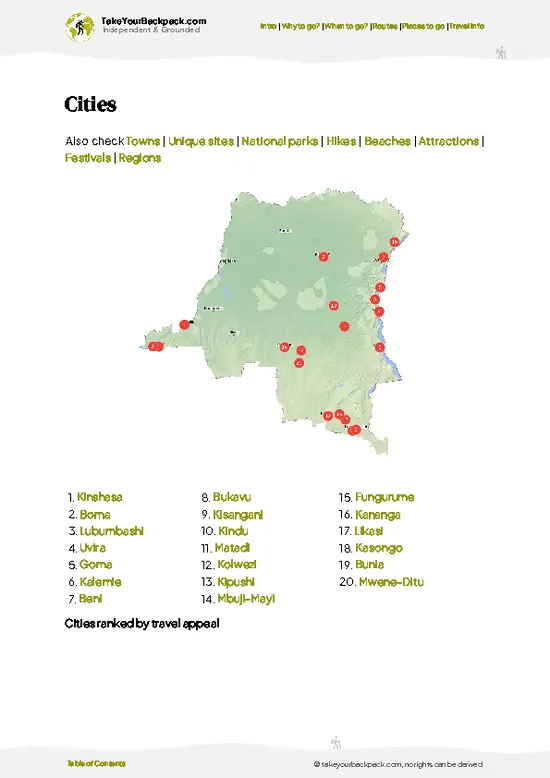
Other Congolese cities near Bandundu

Explore more nearby:

  • Inongo—Lake Mai-Ndombe, fishing port, forested shoreline| 185 km away
  • Kikwit—Kwilu River, ferry crossings, rural gateway| 248 km away
  • Kinshasa—Congo Riverfront, music scene, sprawling districts| 254 km away

💡 Not sure where to go next?
Create a personalized itinerary for DR Congo including Bandundu and the places that fit your trip.

Generate my itinerary

👉 Discover all cities

Or checkout all DR Congo has to offer (think cities, towns, villages, national parks, hikes, beaches, festivals)
Country photo of DR Congo

We 💚 feedbackFinal thoughts on visiting Bandundu

In Bandundu, the pulse of life is raw and real. Expect vibrant markets where laughter mingles with the scent of grilled fish. The best surprise? The warmth of the locals; they’ll invite you into their world without hesitation. Just a heads-up: infrastructure can be tricky, so pack patience along with your gear. Embrace the chaos; it’s part of the adventure.

✍️ Help improve this page!
The information on this page is based on in-depth research, insights shared by experienced travelers, and feedback from the local travel community in DR Congo. While every effort is made to keep the information accurate and current, conditions can change — so if you spot anything incorrect or outdated, please get in touch.


🙋‍♂️ Give feedback

👋 Meet the founderWho’s Behind Take Your Backpack?

Johan, backpacker and founder of TakeYourBackpackHi, I’m Johan (Netherlands 🇳🇱), the creator of TakeYourBackpack. Over the past decade, I’ve backpacked through 80+ countries across six continents, gaining extensive experience with independent travel, long-term trips, and overland routes.

This site is built on a combination of firsthand travel experience and carefully curated insights from other backpackers. Many guides are based on places I’ve personally visited, while others bring together tips, observations, and practical advice shared by trusted travelers I’ve met along the way.

The goal is to provide realistic, experience-driven guidance — not generic itineraries — so you can explore destinations with better context, clearer expectations, and more confidence.

Get full DR Congo guide •
Instant download • 96 highlights • Full Offline guide