v2.webp)
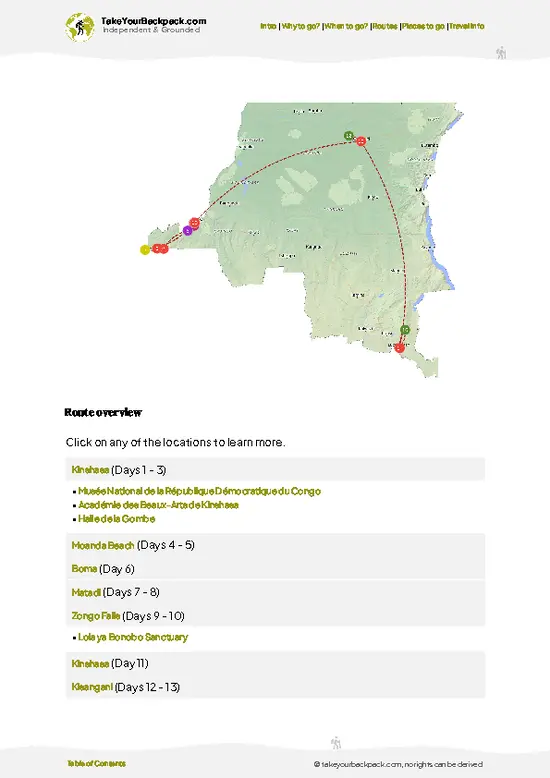
- Lake Mai-Ndombe shoreline: the town’s defining view, with wide brown-black water and pirogues at the landing. Go early morning or late afternoon. Free, 1 to 2 hours.
- Central market: smoked and dried fish, cassava leaves, palm oil and caterpillars when in season. Mornings are liveliest. Free to enter, 1 hour.
- Port and fishing landing: watch dugouts unload catch and passenger boats load. Early morning is best. Free, about 1 hour. Ask before taking photos.
- Pirogue trip on the lake: a hired local canoe gives you the best sense of the lake’s scale and reedy edges. Calm mornings are best. Roughly US$10 to 30 with a paddler, 2 to 3 hours.
- Cathedral and mission area: Catholic missions shaped the town, and Sunday Mass with loud choir singing is a real local event. Free, 1 to 2 hours.
- Provincial administrative
- Lake Mai-Ndombe shoreline: the town’s defining view, with wide brown-black water and pirogues at the landing. Go early morning or late afternoon. Free, 1 to 2 hours.
- Central market: smoked and dried fish, cassava leaves, palm oil and caterpillars when in season. Mornings are liveliest. Free to enter, 1 hour.
- Port and fishing landing: watch dugouts unload catch and passenger boats load. Early morning is best. Free, about 1 hour. Ask before taking photos.
- Pirogue trip on the lake: a hired local canoe gives you the best sense of the lake’s scale and reedy edges. Calm mornings are best. Roughly US$10 to 30 with a paddler, 2 to 3 hours.
- Cathedral and mission area: Catholic missions shaped the town, and Sunday Mass with loud choir singing is a real local event. Free, 1 to 2 hours.
- Provincial administrative quarter: a walk past colonial-era buildings shows the town’s layout and its administrative role. Free, 45 minutes.
Spotted a mistake or missing something? Contact us.

 Best Backpacking
.jpg) Hi, I’m Johan (Netherlands 🇳🇱), the creator of TakeYourBackpack. Over the past 3 decades, I’ve backpacked through 90+ countries across six continents, gaining extensive experience with independent travel, long-term trips, and overland routes.
Hi, I’m Johan (Netherlands 🇳🇱), the creator of TakeYourBackpack. Over the past 3 decades, I’ve backpacked through 90+ countries across six continents, gaining extensive experience with independent travel, long-term trips, and overland routes.