×

DR Congo🇨🇩 | citiesKinshasaCongo Riverfront, music scene, sprawling districts | things to do and best time to go

Explore GomaExplore Kisangani

Backpacking in Kinshasa
🏆 Top pickcity ranked #1
By Johan Kruseman 🇳🇱 | Updated May 10, 2026

Most backpackers expect Kinshasa to be all chaos and concrete, but here’s the twist: the city’s riverfront is a living room for locals, pulsing with music, grilled fish, and laughter—especially on weekends. Kinshasa sprawls along the Congo River in the far west of DR Congo, just across the water from Brazzaville. As a destination, Kinshasa is a paradox: it’s gritty, unpredictable, and expensive for Africa, but it’s also alive with energy you won’t find anywhere else in the country. The National Museum is genuinely world-class, and the Marché Central is a sensory overload—equal parts exhilarating and exhausting. Nightlife is wild, especially if you’re into Congolese rumba, but don’t expect a backpacker scene; you’ll meet more expats than travelers. Getting around is a test of patience, and safety is a real concern after dark. Compared to Lubumbashi or Goma, Kinshasa is bigger, brasher, and less forgiving, but if you want to see DR Congo’s creative soul, this is where it beats loudest.

Discover everything you want to know in the 📖 DR Congo Travel Guide.
Safety warning

The current risk level for DR Congo is high. Check the advice before going.


Get your DR Congo guide
96 ranked highlights, routes & tips, works offline (378 pages)
Loading the map 🌍
CLICK TO FILTER
cities
towns
landmarks
national parks
hikes
beaches
attractions
festivals
regions
SHOW COUNTRY’S BESTSHOW ALL

✨ Why go?
Ranked #1 city in DR Congo
Why visitors keep coming back

Kinshasa is a dynamic base for backpackers looking to dive into the heart of DR Congo. The city offers a unique blend of highlights and activities that cater to diverse interests, making it more than just a stopover. You’ll find affordable hostels that provide a solid launchpad for your adventures, often buzzing with fellow travelers eager to share tips and stories.

The food scene is a delightful mix of local flavors and street eats, giving you a taste of Congolese culture without breaking the bank. Plus, the city is surprisingly walkable, allowing you to soak in the vibrant street life and interact with locals.

When the sun sets, the nightlife kicks in, with lively bars and music venues that pulse with energy. Kinshasa also serves as a convenient hub for easy onward travel to other parts … read more 👉
Kinshasa is a dynamic base for backpackers looking to dive into the heart of DR Congo. The city offers a unique blend of highlights and activities that cater to diverse interests, making it more than just a stopover. You’ll find affordable hostels that provide a solid launchpad for your adventures, often buzzing with fellow travelers eager to share tips and stories.

The food scene is a delightful mix of local flavors and street eats, giving you a taste of Congolese culture without breaking the bank. Plus, the city is surprisingly walkable, allowing you to soak in the vibrant street life and interact with locals.

When the sun sets, the nightlife kicks in, with lively bars and music venues that pulse with energy. Kinshasa also serves as a convenient hub for easy onward travel to other parts of the country, whether you’re heading to the lush jungles or the stunning rivers.

If your travel style thrives on authentic experiences and cultural immersion, Kinshasa is worth more than just a fleeting visit; it’s a chance to connect deeply with the soul of DR Congo.
Want to include Kinshasa in your DR Congo route?
Create a personalized DR Congo itinerary that includes Kinshasa and the places that fit your trip — based on your travel style, budget, and available time. Get your route in seconds.

Generate my trip

💡 HighlightsTop highlights of Kinshasa

  • Palais du Peuple — the monumental parliament building in Gombe; impressive modernist architecture and a real pulse of Congolese politics you can feel from the forecourt and surrounding avenue.
  • Musée National de Kinshasa — the main museum for Congolese archaeology, ethnography and history; a compact place to see masks, royal regalia and objects that tell the country’s story.
  • Marché Central (Marché de la Liberté) — chaotic, colourful and utterly local: fresh produce, second-hand clothes, street food and vendors. Great for people-watching and bargaining if you like markets.
  • Quartier Matonge — Kinshasa’s cultural neighbourhood for music, fashion and nightlife; wander the streets for live music, tailors, record shops and the city’s vibrant street life.
  • Stade Tata Raphaël (Stade du 20 Mai)
read more 👉
  • Palais du Peuple — the monumental parliament building in Gombe; impressive modernist architecture and a real pulse of Congolese politics you can feel from the forecourt and surrounding avenue.
  • Musée National de Kinshasa — the main museum for Congolese archaeology, ethnography and history; a compact place to see masks, royal regalia and objects that tell the country’s story.
  • Marché Central (Marché de la Liberté) — chaotic, colourful and utterly local: fresh produce, second-hand clothes, street food and vendors. Great for people-watching and bargaining if you like markets.
  • Quartier Matonge — Kinshasa’s cultural neighbourhood for music, fashion and nightlife; wander the streets for live music, tailors, record shops and the city’s vibrant street life.
  • Stade Tata Raphaël (Stade du 20 Mai) — the old stadium where the Rumble in the Jungle took place and still a locus for big matches and concerts; a site that links global pop culture to Kinshasa history.
  • Stade des Martyrs — enormous national stadium with striking concrete architecture; catch a match, a political rally or just walk the exterior to see monumental sculptures and city scale.
  • Les quais / Corniche du Fleuve Congo — the riverfront promenade and ferry terminals; good for sunset views, small boat trips and watching the immense Congo River life (including the short ferry hop toward Brazzaville).
  • Village Artisanal (Gombe) — a cluster of workshops and stalls where artisans sell wood carvings, masks, textiles and jewellery; much more authentic and walkable than big souvenir shops.
  • Institut Français de Kinshasa — one of the main cultural centres in the city for francophone film screenings, exhibitions, talks and live shows—an easy way to tap into contemporary Kinshasa culture.
  • Académie des Beaux-Arts / local art studios — the beating heart of Kinshasa’s visual arts scene: public works, student shows and assorted small galleries and studios where you can see artists at work and buy original pieces.
A few great day trips outside Kinshasa: the Lola ya Bonobo sanctuary (close by and unforgettable), a short ferry trip to Brazzaville for a cross-river city hop, and the historic Kisantu Botanical Garden for big old trees and colonial-era landscaping.
Spotted a mistake or missing something? Contact us.

🏘️ NeighborhoodsUnderstanding the local layout

Kinshasa, the bustling capital of DR Congo, offers a vibrant mix of cultures and experiences. Here’s a breakdown of key neighborhoods to help you navigate your adventure.

Gombe: This is the heart of Kinshasa, where you’ll find a blend of modernity and local life. It’s walkable, with cafes and shops lining the streets. Expect higher prices here, but the nightlife is lively, with bars and clubs that pulse until dawn. Ideal for short stays, Gombe is your go-to for a taste of urban energy.

Matonge: Known for its lively atmosphere, Matonge is the cultural hub of Kinshasa. The streets are filled with music, art, and street vendors. Prices are moderate, making it accessible for backpackers. While it’s not the quietest area, the vibrant nightlife is balanced by daytime charm. Perfect for longer … read more 👉
Kinshasa, the bustling capital of DR Congo, offers a vibrant mix of cultures and experiences. Here’s a breakdown of key neighborhoods to help you navigate your adventure.

Gombe: This is the heart of Kinshasa, where you’ll find a blend of modernity and local life. It’s walkable, with cafes and shops lining the streets. Expect higher prices here, but the nightlife is lively, with bars and clubs that pulse until dawn. Ideal for short stays, Gombe is your go-to for a taste of urban energy.

Matonge: Known for its lively atmosphere, Matonge is the cultural hub of Kinshasa. The streets are filled with music, art, and street vendors. Prices are moderate, making it accessible for backpackers. While it’s not the quietest area, the vibrant nightlife is balanced by daytime charm. Perfect for longer stays if you want to immerse yourself in local culture.

Lingwala: A quieter neighborhood, Lingwala offers a more laid-back vibe. It’s less touristy, with local markets and parks. Prices are lower here, making it budget-friendly. Walkability is decent, but public transport is your best bet for getting around. Great for longer stays if you prefer a slower pace.

Ngaliema: This area is a mix of residential and commercial spaces. It’s more suburban, with a relaxed atmosphere. Costs are moderate, and while nightlife is limited, you’ll find local eateries. Transport options are available, but you might need to rely on taxis. Suitable for longer stays if you want a break from the hustle.

Understanding these neighborhoods will help you maximize your time, money, and comfort in Kinshasa. Choose wisely, and you’ll uncover the city’s unique character.

⌛️ 1 dayA smart one-day plan

Kinshasa, the bustling capital of DR Congo, pulses with life and energy. It’s a city where the rhythm of music fills the air, and the streets are alive with vibrant markets and spirited conversations. You’ll find a blend of rich history and modern hustle, making it a fascinating place to explore, even if just for a day.

Start your morning in the lively neighborhood of Gombe. Grab a cup of Congolese coffee at a local café, where the aroma alone is enough to wake you up. After that, take a stroll along Avenue Colonel Mondjiba, where you can admire the colonial architecture and the hustle of daily life. Don’t miss the vibrant Marché Central, a market that’s not on every tourist’s radar. Here, you can wander through stalls filled with colorful fabrics, spices, and handcrafted goods. Engage with … read more 👉
Kinshasa, the bustling capital of DR Congo, pulses with life and energy. It’s a city where the rhythm of music fills the air, and the streets are alive with vibrant markets and spirited conversations. You’ll find a blend of rich history and modern hustle, making it a fascinating place to explore, even if just for a day.

Start your morning in the lively neighborhood of Gombe. Grab a cup of Congolese coffee at a local café, where the aroma alone is enough to wake you up. After that, take a stroll along Avenue Colonel Mondjiba, where you can admire the colonial architecture and the hustle of daily life. Don’t miss the vibrant Marché Central, a market that’s not on every tourist’s radar. Here, you can wander through stalls filled with colorful fabrics, spices, and handcrafted goods. Engage with local vendors; they often have stories to share that add depth to your experience.

As the afternoon rolls in, head towards the Congo River. The riverside offers a refreshing escape from the city’s hustle. You can take a boat ride to see the city from a different angle. The views are stunning, especially with the backdrop of Kinshasa’s skyline. Afterward, visit the National Museum of the DR Congo. It’s a treasure trove of artifacts that tell the story of the nation’s rich cultural heritage.

As evening approaches, make your way to the lively neighborhood of Matonge, known for its vibrant nightlife. Enjoy dinner at a local eatery where you can savor traditional dishes like moambe chicken. The atmosphere is electric, filled with laughter and music. If you’re up for it, find a local bar where you can experience live music, a true reflection of Kinshasa’s soul.

In just one day, you’ll have tasted the essence of Kinshasa, balancing time, money, and comfort while immersing yourself in its unique rhythm.
Turn your Kinshasa visit into an DR Congo adventure
Build a complete DR Congo route with Kinshasa, hidden gems, must-see destinations, and realistic travel times included.

Generate my trip

🌤️ When to go?Seasonal considerations and timing


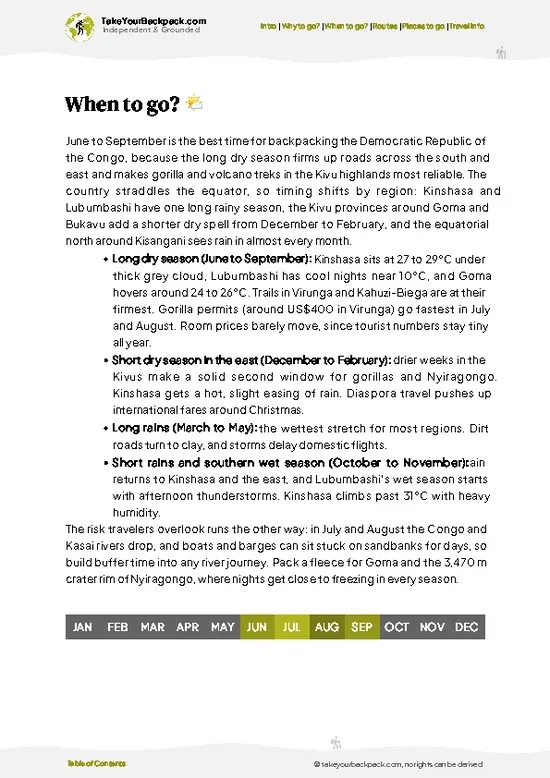
  • Topic: Weather and Temperature — Kinshasa’s climate is tropical, with a wet season from October to May and a dry season from June to September. Temperatures hover around 24-31°C (75-88°F) year-round, but humidity spikes during the rainy months, making it feel hotter and stickier.

  • Topic: Daylight Hours — Near the equator, daylight stays steady at about 12 hours daily. This consistency means your hiking or city exploration windows don’t fluctuate much, so timing won’t limit your daylight adventures.

  • Topic: Crowds — Tourist traffic is generally low year-round, but the dry season sees a slight uptick as travelers avoid the heavy rains. You’ll find fewer fellow backpackers during the wet months, which can mean more authentic local interactions but also more travel disruptions.

  • Topic: Seasonal
read more 👉

  • Topic: Weather and Temperature — Kinshasa’s climate is tropical, with a wet season from October to May and a dry season from June to September. Temperatures hover around 24-31°C (75-88°F) year-round, but humidity spikes during the rainy months, making it feel hotter and stickier.

  • Topic: Daylight Hours — Near the equator, daylight stays steady at about 12 hours daily. This consistency means your hiking or city exploration windows don’t fluctuate much, so timing won’t limit your daylight adventures.

  • Topic: Crowds — Tourist traffic is generally low year-round, but the dry season sees a slight uptick as travelers avoid the heavy rains. You’ll find fewer fellow backpackers during the wet months, which can mean more authentic local interactions but also more travel disruptions.

  • Topic: Seasonal Activities — Dry months favor outdoor activities like river excursions and city tours. The wet season can limit these but brings lush landscapes and vibrant local festivals, offering a different kind of cultural immersion.

  • Topic: Price Fluctuations — Accommodation and transport tend to be pricier in the dry season due to increased demand. The wet season offers better deals but comes with the trade-off of less predictable travel conditions.


Pro-tip: Aim for the shoulder months of May and September to balance manageable weather, fewer crowds, and better prices—your sweet spot for smart backpacking in Kinshasa.


source: climatestotravel.comJANJanuary: fair for travelingFEBFebruary: fair for travelingMARMarch: fair for travelingAPRApril: fair for travelingMAYMay: highly recommended for travelingJUNJune: highly recommended for travelingJULJuly: excellent for travelingAUGAugust: excellent for travelingSEPSeptember: highly recommended for travelingOCTOctober: fair for travelingNOVNovember: fair for travelingDECDecember: fair for traveling
democratic-republic-of-the-congo-city-kinshasa
© Google |

✈️ The backpacker research shortcutDR Congo Travel Guide

An offline-friendly backpacking guide with optimized travel routes, ranked highlights, transport advice, and the best areas to stay.
example page 0 from our offline Travel Guide for Democratic Republic of the Congoexample page 1 from our offline Travel Guide for Democratic Republic of the Congoexample page 2 from our offline Travel Guide for Democratic Republic of the Congoexample page 3 from our offline Travel Guide for Democratic Republic of the Congoexample page 4 from our offline Travel Guide for Democratic Republic of the Congoexample page 5 from our offline Travel Guide for Democratic Republic of the Congoexample page 6 from our offline Travel Guide for Democratic Republic of the Congoexample page 7 from our offline Travel Guide for Democratic Republic of the Congo
The digital guide (378 pages) contains:
96 highlights, ranked by travel appeal
Optimized 7, 14 & 21-day travel routes
Cities, national parks, landmarks, beaches
How to get around
Offline-friendly for travel without Wi-Fi
👉 Click to see all 30+ guide features

📅 Plan smarter in minutes, not weeks
Month by month travel advice
Festivals & national holidays
Budget expectations

🗺️ Go to the right places, skip the overrated ones
Honest pros & cons of destinations
Top hikes, parks & viewpoints
Lesser-known places most travelers miss
Clear “worth it vs skip it” guidance

🛏️ Travel smoothly without rookie mistakes
Best areas to stay
Transport systems explained simply
Common scams & safety advice
SIM cards, money & practical tips

🌍 Understand the country, not just visit it
Culture & traditions
52 Essential phrases & customs
Festivals worth planning around
Traveler-friendly historical context
Insights that make places more meaningful

📱 Built for real travel conditions
Fully downloadable PDF
Works completely offline
Optimized for phone use
Useful in remote areas & buses
Everything in one place
Save weeks of stressful planning
Get instant access to your full guide. 30‑day money-back guarantee.


By proceeding you agree to our terms.
Sent to your inbox immediately after payment • 100% Secure Checkout
Best Backpacking Travel Advisor 2025 tourism awardBest Backpacking
Travel Advisor
2025
What others say about Take Your Backpack Guides:
⭐⭐⭐⭐⭐
Fantastic, amazing amount of information!
⭐⭐⭐⭐⭐
My goodness this is amazing, it's what I've been looking for hats off too you!
⭐⭐⭐⭐⭐
I think this is absolutely BRILLIANT
⭐⭐⭐⭐
Very complete and informative. It's still missing places, but I gotta to commend you
⭐⭐⭐⭐⭐
This is truly amazing, thank you, can't wait to explore it with my kids!
⭐⭐⭐⭐⭐
Awesome resource, thank you!
⭐⭐⭐⭐⭐
This is amazing! Can't wait to explore the ones I haven't seen
⭐⭐⭐⭐
I love this! Well done, great idea.
⭐⭐⭐⭐⭐
Thanks for taking the time to make this gem!
⭐⭐⭐⭐⭐
This might be the best website I've ever seen.
⭐⭐⭐⭐⭐
Congratulations, and thank you so much for your work; it's incredibly valuable.
⭐⭐⭐⭐
In all seriousness I think you did a great job pointing out the important spots
⭐⭐⭐⭐⭐
10/10 very good
⭐⭐⭐⭐⭐
As someone who's only just starting to visit regularly this is awesome, thank you.
⭐⭐⭐⭐
Thank you very much! I'm going to visit my dad, it's going to be very useful!
⭐⭐⭐⭐⭐
This is really cool! We'll be travelling for the first time and this definitely come in handy.
⭐⭐⭐⭐⭐
You are now our minister of culture, congratulations 👨‍💼
⭐⭐⭐⭐⭐
Just wanted to tell you that this is a pearl! Going to follow your recommendations.
⭐⭐⭐⭐⭐
This is so cool. I'll definitely be using the resource for my travels soon.
⭐⭐⭐⭐⭐
This is very impressive! Good work.
⭐⭐⭐⭐⭐
This is an amazing and informative site. Very well done!

🛏️ Where to stay?How to pick the right area

Kinshasa’s backpacker scene is a puzzle of trade-offs, and the neighborhoods you pick shape your entire experience. For budget travelers and solo adventurers, the best bets are Gombe and La Gombe’s fringes. This area is the city’s diplomatic and business hub, which means it’s safer and cleaner than most parts of Kinshasa. You’ll find a handful of hostels and guesthouses here, offering basic but reliable comfort without the luxury price tag. The vibe is a mix of expats, NGO workers, and curious travelers, so it’s social enough to meet people but not overwhelming.

Compared to other districts, Gombe … read more 👉
Kinshasa’s backpacker scene is a puzzle of trade-offs, and the neighborhoods you pick shape your entire experience. For budget travelers and solo adventurers, the best bets are Gombe and La Gombe’s fringes. This area is the city’s diplomatic and business hub, which means it’s safer and cleaner than most parts of Kinshasa. You’ll find a handful of hostels and guesthouses here, offering basic but reliable comfort without the luxury price tag. The vibe is a mix of expats, NGO workers, and curious travelers, so it’s social enough to meet people but not overwhelming.

Compared to other districts, Gombe balances safety and accessibility. Neighborhoods like Bandalungwa or Ngaliema might feel more local and authentic but come with higher risks and fewer traveler-friendly accommodations. They’re better for those who have local contacts or want to dive deep into Kinshasa’s daily life, but not ideal for first-timers or solo backpackers prioritizing security.

Staying in Gombe means you’re trading off some local immersion for peace of mind and a network of fellow travelers. It’s a strategic choice: you spend less time worrying about safety and more time exploring the city’s markets, music scenes, and riverside spots. The comfort level is modest but consistent, and the social opportunities come naturally in shared hostel spaces or nearby cafés. In Kinshasa, that’s a winning formula.

🚌 Getting aroundHow to get around Kinshasa

Kinshasa moves to a rhythm all its own—less a clockwork precision and more a pulse you feel in the streets. Here, time bends around the chaos of honking motos, the shuffle of market crowds, and the occasional blaring horn that feels like a signal flare rather than a warning. Schedules exist, but they’re suggestions at best, often overridden by the city’s improvisational spirit. Your transit choices will reflect this dance between order and disorder, and understanding the trade-offs between time, money, and comfort is your key to mastering Kinshasa’s flow.


  • Walking: The purest way to absorb Kinshasa’s energy. Free, obviously, but expect slow progress through dense crowds and uneven sidewalks. Best for short hops or when you want to soak in street life without a filter. Comfort is minimal—watch
read more 👉
Kinshasa moves to a rhythm all its own—less a clockwork precision and more a pulse you feel in the streets. Here, time bends around the chaos of honking motos, the shuffle of market crowds, and the occasional blaring horn that feels like a signal flare rather than a warning. Schedules exist, but they’re suggestions at best, often overridden by the city’s improvisational spirit. Your transit choices will reflect this dance between order and disorder, and understanding the trade-offs between time, money, and comfort is your key to mastering Kinshasa’s flow.


  • Walking: The purest way to absorb Kinshasa’s energy. Free, obviously, but expect slow progress through dense crowds and uneven sidewalks. Best for short hops or when you want to soak in street life without a filter. Comfort is minimal—watch your step and your belongings.


  • Taxi-Brousse: These shared minibuses are the backbone of intercity and suburban travel. They run from early morning until late evening, roughly 6 AM to 9 PM, with fares starting around $0.50 for short trips. They’re cheap and relatively fast on main roads but can get packed to the brim, sacrificing comfort for speed and cost-efficiency. Expect unpredictable departure times—these vehicles leave when full, not on a schedule.


  • Public Buses: Operated by local companies, these buses cover major routes within Kinshasa. Tickets cost about $0.30 to $0.70. They run from 5:30 AM to 7 PM. Buses are slower than taxi-brousse due to frequent stops and traffic but offer a more stable schedule. Comfort is basic—hard seats, no air conditioning, and often standing room only during rush hours.


  • Motorcycle Taxis (Motos): The quickest way to weave through traffic jams, motos operate 24/7 and charge around $0.20 to $1 depending on distance. They excel in speed and flexibility but come with a higher risk factor and minimal comfort—helmet use is spotty, and the ride can be bumpy. Ideal for solo travelers needing to save time on short to medium distances.


  • Private Taxis: More expensive, usually $5 and up per ride, private taxis offer door-to-door service with a bit more comfort and security. They’re your best bet if you’re carrying heavy gear or traveling late at night. Availability varies, and haggling is common. Time-wise, they’re as fast as motos but far more comfortable and safer.


In Kinshasa, every transit choice is a strategic decision. You trade money for comfort, or time for safety, and sometimes all three in a single trip. The city’s pulse rewards those who read its signals—knowing when to sprint on a moto, when to settle into a crowded taxi-brousse, or when to simply walk and let the city reveal itself at your own pace. Master this balance, and you’re not just moving through Kinshasa—you’re moving with it.

👛 Costs (as of 8 June 2026)What things cost and how to budget

Backpacking in Kinshasa, DR Congo, demands a clear-eyed view of what your money buys in terms of comfort and convenience. Here’s how the daily costs typically stack up for an independent traveler navigating this bustling city.
  • Dorm Accommodation (High Season): Expect to pay around $15 to $25 per night. High season drives prices up due to demand from business travelers and expats, so availability tightens and rates climb.
  • Dorm Accommodation (Off-Season): Prices drop to about $10 to $18 per night. Fewer visitors mean better bargaining power and more options, but quality can vary significantly.
  • Meals: Street food and local eateries offer meals for $2 to $5. If you opt for mid-range restaurants, budget $7 to $12 per meal. Fresh ingredients and hearty portions are common, but imported foods
read more 👉
Backpacking in Kinshasa, DR Congo, demands a clear-eyed view of what your money buys in terms of comfort and convenience. Here’s how the daily costs typically stack up for an independent traveler navigating this bustling city.
  • Dorm Accommodation (High Season): Expect to pay around $15 to $25 per night. High season drives prices up due to demand from business travelers and expats, so availability tightens and rates climb.
  • Dorm Accommodation (Off-Season): Prices drop to about $10 to $18 per night. Fewer visitors mean better bargaining power and more options, but quality can vary significantly.
  • Meals: Street food and local eateries offer meals for $2 to $5. If you opt for mid-range restaurants, budget $7 to $12 per meal. Fresh ingredients and hearty portions are common, but imported foods push prices higher.
  • Local Transport: Minibuses and shared taxis cost roughly $0.30 to $0.70 per ride. They’re cheap but can be crowded and unpredictable, so factor in some patience.
  • City Transport Pass: Kinshasa doesn’t have a formal city transport pass system. Instead, budgeting around $3 to $5 daily for multiple rides is realistic if you plan to move around extensively.
  • Basic Activities/Entry Fees: Museums, cultural sites, and parks typically charge between $2 and $7. Some places might be free, but guided tours or special exhibits can push costs higher.
  • Miscellaneous Expenses: This includes bottled water, snacks, SIM cards, and occasional tips, usually around $3 to $6 daily. Always factor in a buffer for unexpected small expenses.

Kinshasa’s daily backpacking budget ranges roughly from $25 on the lean side during off-season dorm stays and street food meals, up to $50 or more if you lean into comfort with better accommodation and restaurant meals. Understanding these trade-offs lets you tailor your experience—whether you’re stretching every dollar or splurging smartly for convenience.
⚠️ Prices can change and everyone travels differently, so take this as a rough guide. Hope it helps you plan your adventure!

🚌 Day tripsEasy escapes and nearby places

Kinshasa serves as a vibrant launchpad for day trips that immerse you in the heart of DR Congo’s culture and natural beauty. Here are some standout options that pack a punch without draining your wallet.

Lola ya Bonobo
Just a short drive from Kinshasa, this sanctuary is dedicated to the rescue and rehabilitation of bonobos, our closest relatives. Spend the day learning about these fascinating creatures and the conservation efforts in place to protect them. The experience is not just educational; it’s a chance to connect with the local community and support their initiatives. Expect to spend around $15 for entry and transport, and plan your visit during the dry season from May to September for the best weather. A common mistake? Arriving too late in the day; the bonobos are most active in … read more 👉
Kinshasa serves as a vibrant launchpad for day trips that immerse you in the heart of DR Congo’s culture and natural beauty. Here are some standout options that pack a punch without draining your wallet.

Lola ya Bonobo
Just a short drive from Kinshasa, this sanctuary is dedicated to the rescue and rehabilitation of bonobos, our closest relatives. Spend the day learning about these fascinating creatures and the conservation efforts in place to protect them. The experience is not just educational; it’s a chance to connect with the local community and support their initiatives. Expect to spend around $15 for entry and transport, and plan your visit during the dry season from May to September for the best weather. A common mistake? Arriving too late in the day; the bonobos are most active in the morning.
👉 Explore Lola ya Bonobo

Zongo Falls
A bit further afield, Zongo Falls is a breathtaking cascade that offers a refreshing escape from the city. The journey takes about two hours by car, and the entrance fee is minimal, usually around $5. Bring a picnic and enjoy the stunning views while soaking in the natural beauty. The best time to visit is during the rainy season, when the falls are at their most impressive. Many first-timers underestimate the time needed for the drive; leave early to avoid traffic and maximize your time at the falls.
👉 Explore Zongo Falls

Kinsuka Beach
For a taste of local life, head to Kinsuka Beach, where you can relax by the river and enjoy the vibrant atmosphere. The beach is about an hour from Kinshasa, and you can grab a meal for under $10 at one of the local eateries. The best time to go is on weekends when the locals flock to the beach for fun and festivities. A common pitfall is not checking the tides; low tide offers the best experience for swimming and exploring.


Lola ya Bonobo
Just a short drive from Kinshasa, this sanctuary is dedicated to the rescue and rehabilitation of bonobos, our closest relatives. Spend the day learning about these fascinating creatures and the conservation efforts in place to protect them. The experience is not just educational; it’s a chance to connect with the local community and support their initiatives. Expect to spend around $15 for entry and transport, and plan your visit during the dry season from May to September for the best weather. A common mistake? Arriving too late in the day; the bonobos are most active in the morning.
👉 Explore Lola ya Bonobo

Mbandaka
If you’re feeling adventurous, consider a day trip to Mbandaka, a bustling river town about four hours away by boat. The journey is part of the experience, with stunning views of the Congo River. Costs can vary, but budget around $20 for the boat ride and meals. The best time to visit is during the dry season when the river is more navigable. First-timers often underestimate the boat schedules, so check ahead to avoid long waits.
👉 Explore Mbandaka
Want to know what more DR Congo offers?
The DR Congo Travel Guide describes 96 highlights, from cities to national parks, from beaches to hikes

Get the Travel Guide -

🍲 FoodLocal Cuisine & Drinks

In Kinshasa, the heart of the DR Congo, food and drink are more than sustenance; they’re a vibrant part of the culture. Dive into the local cuisine with moambe, a rich chicken stew simmered in palm oil and served with rice or plantains. The flavors are deep, earthy, and utterly satisfying. Don’t miss fufu, a starchy staple made from cassava or plantains, perfect for scooping up sauces.

Street food is where the magic happens. Vendors line the bustling streets, grilling skewers of saka-saka (cassava leaves) or serving up kwanga, a fermented cassava bread. The aroma of grilled fish wafts through the air, mingling with the chatter of locals. Markets are alive with energy, and you’ll find everything from fresh fruit to spicy snacks.

When it comes to drinks, try palm wine, a sweet, fermented … read more 👉
In Kinshasa, the heart of the DR Congo, food and drink are more than sustenance; they’re a vibrant part of the culture. Dive into the local cuisine with moambe, a rich chicken stew simmered in palm oil and served with rice or plantains. The flavors are deep, earthy, and utterly satisfying. Don’t miss fufu, a starchy staple made from cassava or plantains, perfect for scooping up sauces.

Street food is where the magic happens. Vendors line the bustling streets, grilling skewers of saka-saka (cassava leaves) or serving up kwanga, a fermented cassava bread. The aroma of grilled fish wafts through the air, mingling with the chatter of locals. Markets are alive with energy, and you’ll find everything from fresh fruit to spicy snacks.

When it comes to drinks, try palm wine, a sweet, fermented beverage that’s often enjoyed in social settings. It’s customary to share drinks, so don’t be surprised if someone offers you a taste.

Etiquette is relaxed; just be respectful and engage with locals. Eating with your hands is common, so embrace the messiness. Kinshasa’s food scene is a feast for the senses, inviting you to savor every bite and sip.

🛡️ SafetySafety Tips and Common Scams in Kinshasa

Kinshasa, the capital of DR Congo, has a vibrant pulse, but it’s wise to stay alert. While the city is generally safe, certain areas, especially around markets and crowded streets, can be hotspots for petty theft. Keep your belongings close and avoid flashy displays of wealth.

If you’re traveling solo, be cautious at night. Stick to well-lit areas and consider using a reputable taxi service instead of walking. The nightlife can be lively, but it’s best to have a local guide or a trusted friend with you.

Scams do exist, often revolving around currency exchange or overly friendly locals who may ask for money in exchange for “help.” Approach interactions with a healthy dose of skepticism.

Everyday annoyances include traffic jams and the occasional lack of reliable public transport. Embrace … read more 👉
Kinshasa, the capital of DR Congo, has a vibrant pulse, but it’s wise to stay alert. While the city is generally safe, certain areas, especially around markets and crowded streets, can be hotspots for petty theft. Keep your belongings close and avoid flashy displays of wealth.

If you’re traveling solo, be cautious at night. Stick to well-lit areas and consider using a reputable taxi service instead of walking. The nightlife can be lively, but it’s best to have a local guide or a trusted friend with you.

Scams do exist, often revolving around currency exchange or overly friendly locals who may ask for money in exchange for “help.” Approach interactions with a healthy dose of skepticism.

Everyday annoyances include traffic jams and the occasional lack of reliable public transport. Embrace the chaos; it’s part of the experience. By staying aware and grounded, you can navigate Kinshasa with confidence and enjoy its unique character.

Other Congolese cities near Kinshasa

Explore more nearby:

  • Zongo—Ubangi River crossing, ferry terminal, border town| 69 km away
  • Bandundu—River confluence, ferry port, fishing communities| 254 km away
  • Matadi—Congo River port, steep hills, colonial-era bridges| 267 km away

💡 Not sure where to go next?
Create a personalized itinerary for DR Congo including Kinshasa and the places that fit your trip.

Generate my itinerary

👉 Discover all cities

Or checkout all DR Congo has to offer (think cities, towns, villages, national parks, hikes, beaches, festivals)
Country photo of DR Congo

We 💚 feedbackWhat to keep in mind

Kinshasa is a whirlwind of energy. The streets pulse with music, and the people radiate warmth. You’ll find the best surprise in the local markets—vibrant, chaotic, and full of life. Just be ready for the sensory overload; it can be a lot at once. A small warning: traffic is a beast, so plan your outings wisely. Embrace the chaos, and you’ll leave with stories that stick with you long after you’ve returned home.

✍️ Help improve this page!
The information on this page is based on in-depth research, insights shared by experienced travelers, and feedback from the local travel community in DR Congo. While every effort is made to keep the information accurate and current, conditions can change — so if you spot anything incorrect or outdated, please get in touch.


🙋‍♂️ Give feedback

👋 Meet the founderWho’s Behind Take Your Backpack?

Johan, backpacker and founder of TakeYourBackpackHi, I’m Johan (Netherlands 🇳🇱), the creator of TakeYourBackpack. Over the past decade, I’ve backpacked through 80+ countries across six continents, gaining extensive experience with independent travel, long-term trips, and overland routes.

This site is built on a combination of firsthand travel experience and carefully curated insights from other backpackers. Many guides are based on places I’ve personally visited, while others bring together tips, observations, and practical advice shared by trusted travelers I’ve met along the way.

The goal is to provide realistic, experience-driven guidance — not generic itineraries — so you can explore destinations with better context, clearer expectations, and more confidence.

Get full DR Congo guide •
Instant download • 96 highlights • Full Offline guide