×

Democratic Republic of the Congo🇨🇩 | best citiesThe 10 Top cities in DR Congo

In the heart of Central Africa lies the DR Congo, a land of immense cultural richness and diverse urban landscapes. The cities here vary dramatically, from the bustling capital of Kinshasa to smaller hubs like Lubumbashi and Kisangani, each offering a unique vibe and experience. Major cities often boast better transport connections, making them more accessible for backpacking and independent travel. However, smaller urban centers can provide a more intimate glimpse into local life.

Understanding the regional nuances is crucial. For instance, the rainy season can affect travel plans, while cultural festivals can enhance your experience. Choosing the right city impacts your budget, safety, and the depth of your cultural immersion. Kinshasa pulses with nightlife and energy, while places like Goma offer stunning views of Lake Kivu and a slower pace. Each city tells its own story, and knowing these differences will help you navigate the complexities of travel in the DR Congo.

By Johan Kruseman 🇳🇱 | Updated May 13, 2026
Explore the best towns in DR Congo

Why go?Why These city Stand Out

In the heart of Africa, the cities of DR Congo pulse with a unique blend of cultural diversity and historical depth. Unlike many other countries, these urban centers are shaped by a complex tapestry of ethnic groups, languages, and traditions. This diversity is not just a backdrop; it’s the lifeblood of the cities, influencing everything from local cuisine to music and art. Travelers will find that each city offers a distinct regional identity, reflecting the rich heritage of its inhabitants.

However, the transport networks in DR Congo can be a double-edged sword. While major cities are connected by roads and air routes, the infrastructure can be inconsistent. This means that while you might save time flying between cities, you could miss out on the immersive experiences that come from overland … read more 👉
In the heart of Africa, the cities of DR Congo pulse with a unique blend of cultural diversity and historical depth. Unlike many other countries, these urban centers are shaped by a complex tapestry of ethnic groups, languages, and traditions. This diversity is not just a backdrop; it’s the lifeblood of the cities, influencing everything from local cuisine to music and art. Travelers will find that each city offers a distinct regional identity, reflecting the rich heritage of its inhabitants.

However, the transport networks in DR Congo can be a double-edged sword. While major cities are connected by roads and air routes, the infrastructure can be inconsistent. This means that while you might save time flying between cities, you could miss out on the immersive experiences that come from overland travel. The trade-off is significant: quick transit versus deeper exploration.

Geographically, DR Congo is vast, with varied climates that can affect travel plans. The rainy season can disrupt transport and limit access to certain areas, making timing crucial for any itinerary. Understanding these climatic factors is essential for planning a successful trip.

Moreover, the historical context of DR Congo adds layers to the urban experience. Colonial legacies and post-colonial struggles shape the cities’ landscapes and social dynamics. This history is palpable in the architecture, public spaces, and even in the conversations you’ll have with locals.

Travelers should be aware that while DR Congo offers rich experiences, it also demands patience and flexibility. The constraints of infrastructure and climate can challenge even the most seasoned adventurers. Embracing these realities will not only preserve your energy and budget but also enhance your understanding of this complex and vibrant country.
Our Approach to Ranking
The list of best cities in DR Congo is created based on culture, vibe, attractions, transport ease, and local charm. If you feel a city is missing in this list, please let us know.

When to go?Best Time to Visit DR Congo for cities

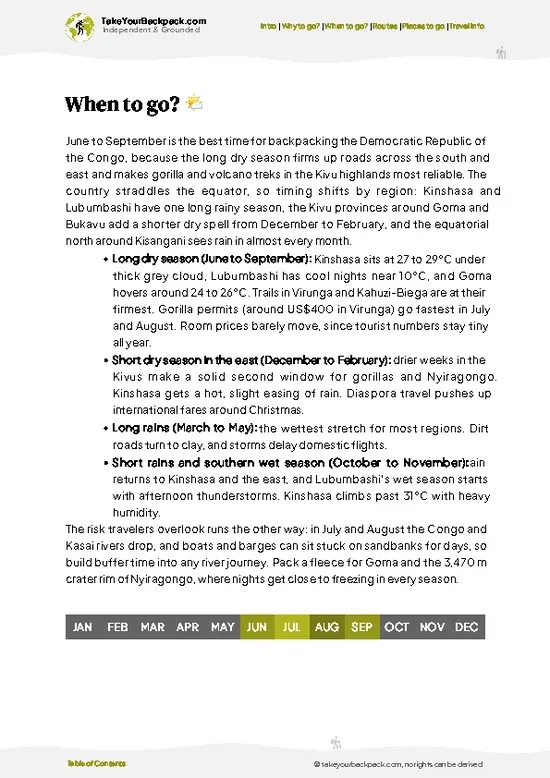
Seasonality in DR Congo


The rhythm of life in DR Congo shifts dramatically with the seasons. Understanding this can save time, money, and energy.

The dry season, typically from May to September, is when temperatures are more manageable and humidity drops. This is the most popular time to visit, leading to larger crowds and higher prices. If you want to experience the local culture without the tourist rush, consider the shoulder months of April and October. You’ll find fewer visitors, but be prepared for some rain and humidity.

The wet season, from October to April, brings heavy rains and higher humidity. While this might deter some travelers, it also means lush landscapes and vibrant wildlife. If you’re willing to brave the weather, you might catch local festivals that showcase the rich … read more 👉

Seasonality in DR Congo


The rhythm of life in DR Congo shifts dramatically with the seasons. Understanding this can save time, money, and energy.

The dry season, typically from May to September, is when temperatures are more manageable and humidity drops. This is the most popular time to visit, leading to larger crowds and higher prices. If you want to experience the local culture without the tourist rush, consider the shoulder months of April and October. You’ll find fewer visitors, but be prepared for some rain and humidity.

The wet season, from October to April, brings heavy rains and higher humidity. While this might deter some travelers, it also means lush landscapes and vibrant wildlife. If you’re willing to brave the weather, you might catch local festivals that showcase the rich culture. However, be aware that travel can be more challenging due to muddy roads and potential flooding.

Peak periods, particularly around major holidays or festivals, can significantly influence your experience. Expect crowded conditions and inflated prices during these times. If you’re looking to immerse yourself in local traditions, timing your visit around these events can be rewarding, but it comes with trade-offs in terms of comfort and convenience.

Ultimately, the best time to visit DR Congo depends on what you want from your trip. Weigh the benefits of ideal weather against the potential for crowds and costs. Planning around these seasonal patterns can help you preserve your energy and budget for the moments that truly matter.

city hoppingHow to Combine cities Into One Trip

Transport Networks and Regional Clustering


Traveling through DR Congo requires strategic planning. The country is vast, and cities are often far apart. Start by clustering cities by region. For instance, consider the western cities like Kinshasa and Matadi together, then move east to Goma and Bukavu. This minimizes backtracking and maximizes your time.

Routing Logic and Sequencing


When mapping your route, think about the direction of travel. A logical sequence might be Kinshasa, then head east to Kisangani, and finally to Goma. This flow not only saves time but also allows for a more coherent experience of the country’s diverse landscapes and cultures.

Time Management


Expect to spend at least two to three days in major cities to soak in the local vibe. For smaller towns, one day might … read more 👉

Transport Networks and Regional Clustering


Traveling through DR Congo requires strategic planning. The country is vast, and cities are often far apart. Start by clustering cities by region. For instance, consider the western cities like Kinshasa and Matadi together, then move east to Goma and Bukavu. This minimizes backtracking and maximizes your time.

Routing Logic and Sequencing


When mapping your route, think about the direction of travel. A logical sequence might be Kinshasa, then head east to Kisangani, and finally to Goma. This flow not only saves time but also allows for a more coherent experience of the country’s diverse landscapes and cultures.

Time Management


Expect to spend at least two to three days in major cities to soak in the local vibe. For smaller towns, one day might suffice. This pacing helps avoid burnout and ensures you’re not just ticking boxes.

Common Planning Mistakes


One common pitfall is trying to cram too much into too little time. DR Congo’s infrastructure can be unpredictable. Flights may be delayed, and road conditions can vary. Flexibility is key.

Trade-offs and Constraints


Speed versus depth is a constant trade-off. Rushing through cities means missing the nuances that make them special. Budget constraints can also impact comfort levels. Opt for local transport for a richer experience, but be prepared for longer travel times.

Realistic Pacing and Flexibility


Prioritize experiences over quantity. It’s better to explore fewer cities deeply than to skim the surface of many. Plan for downtime; it’s essential for recharging and truly absorbing the culture.

The ListMust-Visit cities in DR Congo

1 Kinshasa

Congo Riverfront, music scene, sprawling districts

Immerse yourself in a capital where music pulses through vast neighborhoods and the riverfront draws crowds day and night.

democratic-republic-of-the-congo-city-kinshasa
© Google |

2 Boma

Congo River port, colonial architecture, mangrove forests

Discover a riverside town marked by faded colonial buildings, river traffic, and the unique ecology of nearby mangroves.

3 Lubumbashi

Mining capital, wide boulevards, cultural institutions

Experience a southern city known for its mining economy, broad streets, and a mix of museums and galleries.

4 Uvira

Lake Tanganyika shore, border crossing, palm-lined avenues

Experience a lakeside town where cross-border trade, local markets, and mountain views shape daily life along the water’s edge.

5 Goma

Volcano proximity, lava fields, humanitarian base

Feel the presence of an active volcano in a city where lava flows, aid organizations, and lake views intersect.

6 Kalemie

port city, railway terminus, lakeside markets

Wander a transport hub where ferries, trains, and bustling markets converge on the banks of Lake Tanganyika.

7 Beni

market center, road junction, forested hills

Pass through a commercial hub surrounded by hills, where road links and local markets support both travelers and residents.

democratic-republic-of-the-congo-city-beni v1
© Google |

8 Bukavu

Lake Kivu shore, hillside neighborhoods, border crossing

Walk lakeside roads and steep hills in a city where cross-border movement and scenic views are part of everyday experience.

9 Kisangani

Stanley Falls, river port, colonial architecture

Explore a city where waterfalls, river traffic, and remnants of colonial buildings create a unique urban landscape.

democratic-republic-of-the-congo-city-kisangani v1
© Google |

10 Kindu

Maniema River port, remote access, timber transport

Arrive in a river town where timber barges, remote airstrips, and the slow pace of river life set the tone for visitors.

11 Matadi

Congo River port, steep hills, colonial-era bridges

Navigate a city where river trade shapes daily life, steep streets offer panoramic views, and bridges connect neighborhoods to the port.

democratic-republic-of-the-congo-city-matadi
© Google |

12 Kolwezi

Cobalt mines, mining camps, arid terrain

Discover a city at the heart of the global cobalt trade, with mining operations stretching across a dry, open landscape.

13 Kipushi

border post, copper mining, industrial outskirts

Visit a mining town on the border, where industrial sites and cross-border movement define the local experience.

14 Mbuji-Mayi

Diamond trade, sprawling neighborhoods, informal markets

Absorb the energy of a city built on diamond wealth, where commerce thrives in busy markets and neighborhoods stretch for miles.

15 Fungurume

cobalt mines, company town, arid hills

See a mining settlement surrounded by dry hills, where cobalt extraction and company compounds dominate the landscape.

16 Kananga

Railway junction, administrative center, savanna edge

Travel through a crossroads city where rail lines meet, government buildings cluster, and the savanna begins just beyond the outskirts.

17 Likasi

Copper mining, plateau landscapes, industrial outskirts

Experience a mining hub surrounded by highland scenery, where industry and local markets define the rhythm of the city.

18 Kasongo

river crossing, historic mosques, trade outpost

Step into a riverside settlement known for its historic Islamic sites and its role as a trading post along old caravan routes.

democratic-republic-of-the-congo-city-kasongo
© Google |

19 Bunia

Ituri forest edge, UN presence, regional crossroads

Encounter a city shaped by its proximity to dense forest, international agencies, and the movement of people from surrounding regions.

20 Mwene-Ditu

rail junction, mining supply town, plateau setting

Navigate a plateau town shaped by rail lines, mining logistics, and a steady flow of travelers heading deeper into the interior.

21 Butembo

Trade hub, volcanic foothills, local agriculture

Engage with a commercial center set among volcanic slopes, where agricultural goods and cross-border trade drive daily activity.

22 Kamina

railway hub, military base, savanna landscape

Travel through a strategic junction surrounded by open grasslands, where rail lines and military presence shape the local scene.

23 Kikwit

Kwilu River, ferry crossings, rural gateway

Cross rivers and explore a city that serves as a link between rural communities and the wider transport network of western Congo.

24 Lusambo

Sankuru River port, administrative center, river islands

Travel to a river town where administrative buildings, island settlements, and river transport are central to local life.

25 Mbandaka

Equator marker, rainforest edge, river transport

Stand at the equator in a city where rainforest meets river, and boats remain the main link to the outside world.

26 Inongo

Lake Mai-Ndombe, fishing port, forested shoreline

Experience a lakeside settlement where fishing, forested shores, and water transport are central to daily routines.

27 Tshikapa

Diamond fields, river crossings, informal settlements

Witness a city shaped by diamond extraction, with makeshift neighborhoods and river crossings central to daily routines.

28 Bandundu

River confluence, ferry port, fishing communities

Observe daily life at the meeting point of major rivers, where fishing boats and ferries shape the city’s rhythms.

29 Isiro

Coffee plantations, remote airstrip, forested hills

Venture into a remote city where coffee production and forested hills define the landscape, and access is often by small plane.

30 Pweto

Lake Mweru shore, fishing port, Zambian border

Arrive at a lakeside town where fishing boats, cross-border links, and a relaxed pace define the local atmosphere.

31 Gbadolite

Presidential palaces, remote location, tropical gardens

Visit a city marked by grand but decaying palaces, set in a remote area surrounded by lush gardens and forest.

32 Rutshuru

volcanic foothills, agricultural villages, park access

Explore a rural area near volcanic slopes, where farming communities and proximity to Virunga National Park attract adventurous travelers.

33 Lubero

highland town, agricultural center, cool climate

Enjoy a highland stopover with a cooler climate, where farming and small-scale trade support the local way of life.

34 Zongo

Ubangi River crossing, ferry terminal, border town

Cross the river at a border town where ferries, customs posts, and riverbank activity shape the daily routine.

35 Gemena

northern crossroads, administrative center, open-air markets

Find a practical stopover where administrative life, regional trade, and broad avenues define the rhythm of the north.

36 Bumba

Congo River port, river barges, market town

Watch river life unfold in a port town where cargo barges, local traders, and the wide river dominate the landscape.

37 Lodja

diamond trading, airstrip, central crossroads

Pass through a diamond-trading center where air traffic, regional commerce, and a crossroads location bring constant movement.

38 Ilebo

rail terminus, river port, transfer point

Connect at a key transport hub where rail and river routes meet, making it a vital stop for travelers heading west.

39 Nyunzu

savanna crossroads, cattle markets, remote setting

Pause in a remote crossroads town where cattle trading and wide-open savannas create a sense of space and isolation.

Think you know DR Congo?

Prove you’re a true local — uncover 29 lesser-known cities in DR Congo that locals tend to keep to themselves.
Loading the map 🌍

Expert viewWhat You Should Know

Transport Hubs
Navigating the DR Congo is a unique challenge. The major transport hubs are often chaotic, with a mix of local taxis, motorbikes, and the occasional bus. Expect delays and a lack of reliable schedules. If you’re flying, stick to the main airports, but be prepared for last-minute changes. Domestic flights can be a gamble; they’re often delayed or canceled. Ground transport is a different beast. Roads can be rough, and travel times can stretch far beyond what you’d expect. If you’re planning to hop between cities, factor in extra time for travel. It’s not just about getting from A to B; it’s about the journey itself.

Urban Pacing
The pace of life in the DR Congo varies dramatically from city to city. In some areas, you’ll find a frenetic energy, while others move at a more … read more 👉
Transport Hubs
Navigating the DR Congo is a unique challenge. The major transport hubs are often chaotic, with a mix of local taxis, motorbikes, and the occasional bus. Expect delays and a lack of reliable schedules. If you’re flying, stick to the main airports, but be prepared for last-minute changes. Domestic flights can be a gamble; they’re often delayed or canceled. Ground transport is a different beast. Roads can be rough, and travel times can stretch far beyond what you’d expect. If you’re planning to hop between cities, factor in extra time for travel. It’s not just about getting from A to B; it’s about the journey itself.

Urban Pacing
The pace of life in the DR Congo varies dramatically from city to city. In some areas, you’ll find a frenetic energy, while others move at a more leisurely rhythm. This can affect how you experience each place. If you’re rushing through cities, you’ll miss the nuances—the street vendors, the local music, the everyday interactions that make each city unique. I’ve seen travelers try to cram too much into too little time, only to leave feeling unsatisfied. Aim for a balance: visiting three to four cities allows you to dive deeper without feeling rushed.

Local Costs
Costs can be unpredictable. While some cities are relatively affordable, others can drain your budget quickly. Accommodations range from basic guesthouses to upscale hotels, but don’t expect consistent pricing. Street food is a fantastic way to experience local culture without breaking the bank, but be cautious about hygiene. Always have a buffer in your budget for unexpected expenses—whether it’s an impromptu tour or a local delicacy that catches your eye.

Trade-offs: Quick Exploration vs. Deep Immersion
Here’s the deal: you can either skim the surface of several cities or dive deep into a few. If you choose to explore more cities quickly, you’ll see a broader range of landscapes and cultures, but you’ll miss the chance to truly connect with the locals. On the flip side, spending more time in fewer places allows for richer experiences and deeper understanding. I’ve found that the most rewarding moments often come from those extended stays—sharing a meal with a local family or participating in a community event.

Planning and Prioritizing Cities
When planning your trip, prioritize cities based on what you want to experience. If you’re interested in culture, look for areas with vibrant local arts scenes. For nature lovers, consider cities that serve as gateways to national parks or natural reserves. Research local festivals or events that might align with your travel dates; they can provide a unique glimpse into the culture.

Contextual Explanations
The DR Congo is a land of contrasts. Urban areas can be bustling with life, while rural regions offer serene landscapes. Infrastructure varies widely; some cities have decent roads and services, while others are still developing. This disparity affects travel logistics and your overall experience. Be prepared for cultural differences, too. Local customs can be quite distinct, and understanding them will enhance your interactions.

Safety & Cultural Considerations
Safety is paramount. Always stay informed about the areas you plan to visit. While many regions are safe for tourists, some can be unpredictable. Keep a low profile, avoid flashy items, and be cautious when navigating unfamiliar areas. Engaging with locals can enrich your experience, but be respectful of cultural norms. A simple greeting in the local language can go a long way in building rapport.

Anecdotes for Value
I once met a traveler who rushed through the DR Congo, hitting five cities in ten days. He left feeling exhausted and disconnected. Contrast that with a friend who spent a week in just two cities, immersing himself in local life. He returned with stories, friendships, and a deeper appreciation for the culture. The difference was night and day.

In the end, the DR Congo is a place that rewards those who take their time. Whether you’re drawn to the vibrant urban life or the stunning natural beauty, your experience will be richer if you slow down and savor it. Prioritize quality over quantity, and you’ll find that the moments that matter most are often the ones you didn’t rush.

✈️ The backpacker research shortcutDR Congo Travel Guide

An offline-friendly backpacking guide with optimized travel routes, ranked highlights, transport advice, and the best areas to stay.
example page 0 from our offline Travel Guide for Democratic Republic of the Congoexample page 1 from our offline Travel Guide for Democratic Republic of the Congoexample page 2 from our offline Travel Guide for Democratic Republic of the Congoexample page 3 from our offline Travel Guide for Democratic Republic of the Congoexample page 4 from our offline Travel Guide for Democratic Republic of the Congoexample page 5 from our offline Travel Guide for Democratic Republic of the Congoexample page 6 from our offline Travel Guide for Democratic Republic of the Congoexample page 7 from our offline Travel Guide for Democratic Republic of the Congo
The digital guide (378 pages) contains:
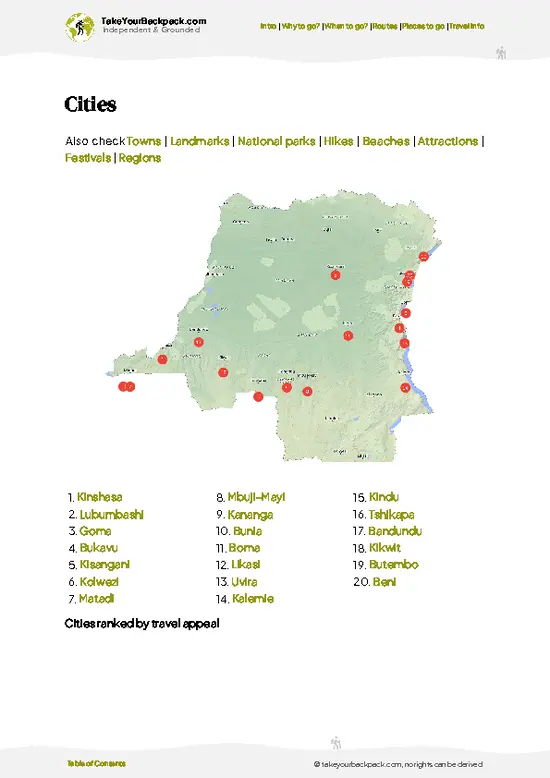
96 highlights, ranked by travel appeal
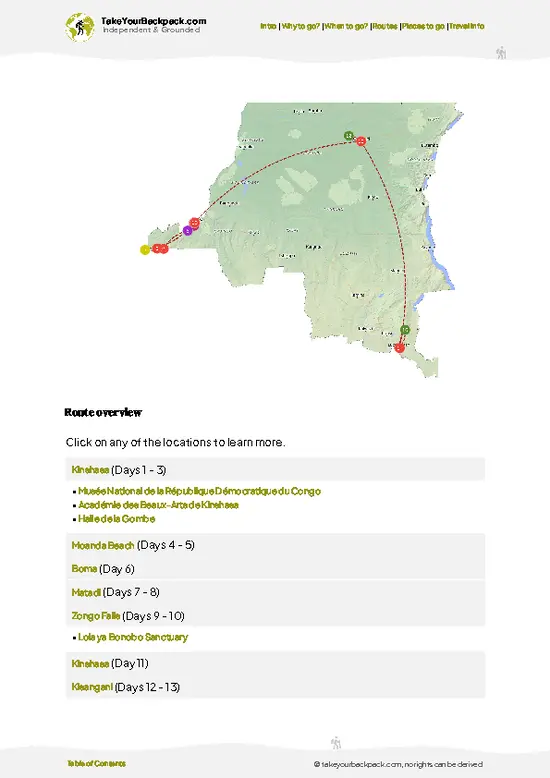
Optimized 7, 14 & 21-day travel routes
Cities, national parks, landmarks, beaches
How to get around
Offline-friendly for travel without Wi-Fi
👉 Click to see all 30+ guide features

📅 Plan smarter in minutes, not weeks
Month by month travel advice
Festivals & national holidays
Budget expectations

🗺️ Go to the right places, skip the overrated ones
Honest pros & cons of destinations
Top hikes, parks & viewpoints
Lesser-known places most travelers miss
Clear “worth it vs skip it” guidance

🛏️ Travel smoothly without rookie mistakes
Best areas to stay
Transport systems explained simply
Common scams & safety advice
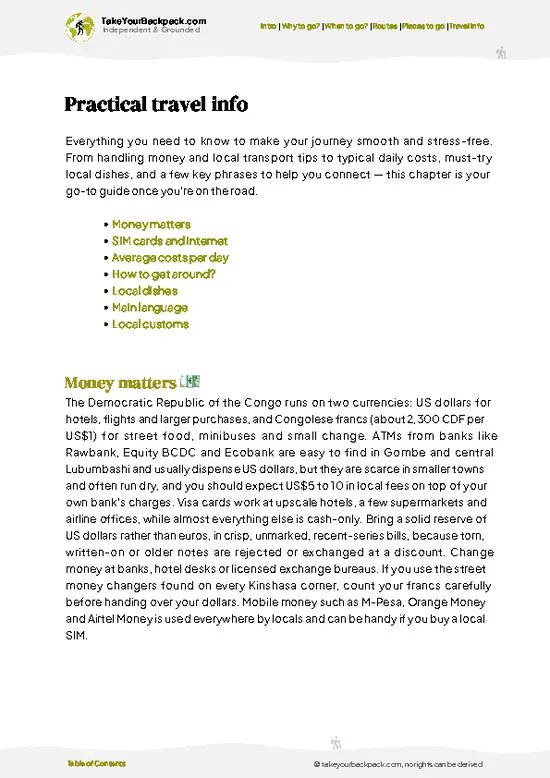
SIM cards, money & practical tips

🌍 Understand the country, not just visit it
Culture & traditions
52 Essential phrases & customs
Festivals worth planning around
Traveler-friendly historical context
Insights that make places more meaningful

📱 Built for real travel conditions
Fully downloadable PDF
Works completely offline
Optimized for phone use
Useful in remote areas & buses
Everything in one place
Save weeks of stressful planning
Get instant access to your full guide. 30‑day money-back guarantee.


By proceeding you agree to our terms.
Sent to your inbox immediately after payment • 100% Secure Checkout
Best Backpacking Travel Advisor 2025 tourism awardBest Backpacking
Travel Advisor
2025
What others say about Take Your Backpack Guides:
⭐⭐⭐⭐⭐
Fantastic, amazing amount of information!
⭐⭐⭐⭐⭐
My goodness this is amazing, it's what I've been looking for hats off too you!
⭐⭐⭐⭐⭐
I think this is absolutely BRILLIANT
⭐⭐⭐⭐
Very complete and informative. It's still missing places, but I gotta to commend you
⭐⭐⭐⭐⭐
This is truly amazing, thank you, can't wait to explore it with my kids!
⭐⭐⭐⭐⭐
Awesome resource, thank you!
⭐⭐⭐⭐⭐
This is amazing! Can't wait to explore the ones I haven't seen
⭐⭐⭐⭐
I love this! Well done, great idea.
⭐⭐⭐⭐⭐
Thanks for taking the time to make this gem!
⭐⭐⭐⭐⭐
This might be the best website I've ever seen.
⭐⭐⭐⭐⭐
Congratulations, and thank you so much for your work; it's incredibly valuable.
⭐⭐⭐⭐
In all seriousness I think you did a great job pointing out the important spots
⭐⭐⭐⭐⭐
10/10 very good
⭐⭐⭐⭐⭐
As someone who's only just starting to visit regularly this is awesome, thank you.
⭐⭐⭐⭐
Thank you very much! I'm going to visit my dad, it's going to be very useful!
⭐⭐⭐⭐⭐
This is really cool! We'll be travelling for the first time and this definitely come in handy.
⭐⭐⭐⭐⭐
You are now our minister of culture, congratulations 👨‍💼
⭐⭐⭐⭐⭐
Just wanted to tell you that this is a pearl! Going to follow your recommendations.
⭐⭐⭐⭐⭐
This is so cool. I'll definitely be using the resource for my travels soon.
⭐⭐⭐⭐⭐
This is very impressive! Good work.
⭐⭐⭐⭐⭐
This is an amazing and informative site. Very well done!

🛏️ Where to stay?Best Places to Stay in DR Congo

Yes — conventional hostels are scarce, but budget guesthouses and basic dorm-style accommodation exist in DR Congo’s main cities; expect rudimentary facilities, intermittent power and water, limited booking options, and bring cash, insect repellent and a power bank.

Goma: many budget guesthouses near Lake Kivu and the Nyiragongo trek — excellent for nature access and an active traveler community but security can be unpredictable and services basic; Bukavu: quieter lakeside guesthouses, good for boat trips and calmer nights but limited nightlife; Kinshasa — Gombe: safest, best nightlife and services but few cheap hostels and higher prices, while Kinshasa — Centre‑Ville has more low-cost options … read more 👉
Yes — conventional hostels are scarce, but budget guesthouses and basic dorm-style accommodation exist in DR Congo’s main cities; expect rudimentary facilities, intermittent power and water, limited booking options, and bring cash, insect repellent and a power bank.

Goma: many budget guesthouses near Lake Kivu and the Nyiragongo trek — excellent for nature access and an active traveler community but security can be unpredictable and services basic; Bukavu: quieter lakeside guesthouses, good for boat trips and calmer nights but limited nightlife; Kinshasa — Gombe: safest, best nightlife and services but few cheap hostels and higher prices, while Kinshasa — Centre‑Ville has more low-cost options but higher risk after dark; Lubumbashi (Centre‑Ville): several inexpensive hotels with some nightlife but variable standards; Kisangani: very basic, cheap guesthouses that are practical for transit but offer few amenities.

If you enjoy meeting fellow travelers, consider choosing hostels with high ratings for atmosphere. On the other hand, if you prefer having your own space, a hotel might be a better option.

DR CongoExplore DR Congo

👋 Meet the founderWho’s Behind Take Your Backpack?

Johan, backpacker and founder of TakeYourBackpackHi, I’m Johan (Netherlands 🇳🇱), the creator of TakeYourBackpack. Over the past decade, I’ve backpacked through 80+ countries across six continents, gaining extensive experience with independent travel, long-term trips, and overland routes.

This site is built on a combination of firsthand travel experience and carefully curated insights from other backpackers. Many guides are based on places I’ve personally visited, while others bring together tips, observations, and practical advice shared by trusted travelers I’ve met along the way.

The goal is to provide realistic, experience-driven guidance — not generic itineraries — so you can explore destinations with better context, clearer expectations, and more confidence.

Get full DR Congo guide •
Instant download • 96 highlights • Full Offline guide