×

DR Congo🇨🇩 | townsSakaniarail border crossing, copper belt, small town | things to do and best time to go

Explore KongoloExplore Dungu

Backpacking in Sakania
🌟 Highlighttown ranked #5
By Johan Kruseman 🇳🇱 | Updated June 30, 2026

If you crave polished cafés, nightlife, or Instagrammable city squares, Sakania will feel like a detour you didn’t need. But for backpackers who value the raw, borderland pulse of DR Congo, Sakania is a gritty, practical waypoint. Tucked near the Zambian border, this small town hums with the dust and diesel of cross-border trade, not tourist gloss. It’s more crossroads than destination—useful for overland routes between Lubumbashi and Zambia, or as a base to catch your breath before deeper Congo travel. The market is earthy and real, the pace slow, and you’ll likely be the only foreigner in sight. Costs are low, but infrastructure is basic; expect to walk most places, with shared taxis for longer hops. Safety is manageable with street sense, but the vibe is more functional than festive. Compared to Lubumbashi, Sakania is quieter, less social, and more about the journey than the scene.

Discover everything you want to know in the 📖 DR Congo Travel Guide.
Safety warning

The current risk level for DR Congo is high. Check the advice before going.


Get your DR Congo guide
95 ranked highlights, routes & tips, works offline (372 pages)
Loading the map 🌍
CLICK TO FILTER
cities
towns
landmarks
national parks
hikes
beaches
attractions
festivals
regions
SHOW COUNTRY’S BESTSHOW ALL

✨ Why go?
Ranked #5 town in DR Congo
The unique appeal for travelers

Backpackers flock to Sakania for its strategic location near stunning hikes and cultural sites. The walkable streets invite exploration, while small-scale guesthouses offer a cozy, intimate vibe. You’ll find local food stalls serving up hearty meals that reflect the region’s flavors. Many travelers stay a few days, soaking in the friendly atmosphere and connecting with fellow adventurers. It’s ideal for slow travelers and hikers who appreciate a blend of nature and culture without the rush. If you’re looking for a place to recharge before heading deeper into the DR Congo, Sakania is a perfect pit stop.
Want to include Sakania in your DR Congo route?
Create a personalized DR Congo itinerary that includes Sakania and the places that fit your trip — based on your travel style, budget, and available time. Get your route in seconds.

Generate my trip

💡 HighlightsPlaces and moments you shouldn't skip

  1. Sakania border crossing — The working frontier between the DRC and Zambia is the town’s defining feature: lively cross-border traffic, truck convoys, and a market atmosphere that gives a real feel for the region’s trade and movement of people. It’s the place to watch life on a functioning African border and see how goods and cultures mix here.
  2. Main town market (Sakania market) — The local market is where day-to-day culture is most visible: fresh produce, regional staples, secondhand clothing, and small traders. It’s the best spot to taste street food, bargain for practical travel gear, and observe everyday Congolese commerce away from touristified sites.
  3. Mining landscape and company infrastructure — Sakania sits in the Katanga/Copperbelt region, and the surrounding mining works, processing
read more 👉
  1. Sakania border crossing — The working frontier between the DRC and Zambia is the town’s defining feature: lively cross-border traffic, truck convoys, and a market atmosphere that gives a real feel for the region’s trade and movement of people. It’s the place to watch life on a functioning African border and see how goods and cultures mix here.
  2. Main town market (Sakania market) — The local market is where day-to-day culture is most visible: fresh produce, regional staples, secondhand clothing, and small traders. It’s the best spot to taste street food, bargain for practical travel gear, and observe everyday Congolese commerce away from touristified sites.
  3. Mining landscape and company infrastructure — Sakania sits in the Katanga/Copperbelt region, and the surrounding mining works, processing sites, slag heaps, and worker settlements tell the story of the area’s industrial backbone. Visiting these visible, above-ground features gives a concrete sense of the town’s economy and history (observe safety rules and restricted zones; stick to public viewpoints).
  4. Rail corridor and station area — The rail line that runs through Sakania is a practical and historical artery linking the town to regional trade routes into Zambia. The station area, freight yards, and passing trains offer a tangible look at long-distance transport in this part of Central Africa and are rewarding for anyone interested in industrial heritage and logistics.
A few nearby, visitable highlights good for day trips are the regional hub of Lubumbashi to the north and the Copperbelt towns across the Zambian border (for example Ndola), both of which offer museums, larger markets, and more services than Sakania.
Spotted a mistake or missing something? Contact us.

🏘️ NeighborhoodsWhere things are and how it's laid out

Sakania is a vibrant entry point into the heart of DR Congo, where the pulse of local life meets the thrill of exploration.

Centre Ville: This is the bustling heart of Sakania. Expect a lively atmosphere with street vendors and local eateries. It’s walkable, making it easy to soak in the sights and sounds. Perfect for short stays, but the nightlife can be loud, so light sleepers might want to consider other areas.

Quartier des Artisans: Known for its artisan shops, this neighborhood offers a quieter vibe. You can find unique crafts and local art. It’s less touristy, making it ideal for longer stays if you want to immerse yourself in local culture. Transport options are decent, but walking is best to enjoy the surroundings.

Zone Industrielle: This area is more utilitarian, with a focus on … read more 👉
Sakania is a vibrant entry point into the heart of DR Congo, where the pulse of local life meets the thrill of exploration.

Centre Ville: This is the bustling heart of Sakania. Expect a lively atmosphere with street vendors and local eateries. It’s walkable, making it easy to soak in the sights and sounds. Perfect for short stays, but the nightlife can be loud, so light sleepers might want to consider other areas.

Quartier des Artisans: Known for its artisan shops, this neighborhood offers a quieter vibe. You can find unique crafts and local art. It’s less touristy, making it ideal for longer stays if you want to immerse yourself in local culture. Transport options are decent, but walking is best to enjoy the surroundings.

Zone Industrielle: This area is more utilitarian, with a focus on commerce. It’s not the most picturesque, but it’s practical for those needing quick access to transport hubs. Nightlife is sparse, making it suitable for those seeking a peaceful retreat after a day of exploration.

⌛️ 1 day1-day itinerary for Sakania

Sakania, a vibrant town in the DR Congo, pulses with life and culture, often overlooked by travelers. Its streets hum with the sounds of local markets, and the air is rich with the scent of grilled plantains and spices.

Start your morning at the bustling market in the heart of the town. The colors of fresh produce and handmade crafts are a feast for the eyes. Engage with local vendors; their stories add depth to your experience. Grab a breakfast of akam, a traditional porridge, from a nearby stall. It’s warm and comforting, the perfect fuel for your day.

In the afternoon, wander through the residential neighborhoods, where you’ll find the charming architecture that reflects the town’s history. Visit the local art center, a hidden gem, where you can see artisans at work. Their passion for … read more 👉
Sakania, a vibrant town in the DR Congo, pulses with life and culture, often overlooked by travelers. Its streets hum with the sounds of local markets, and the air is rich with the scent of grilled plantains and spices.

Start your morning at the bustling market in the heart of the town. The colors of fresh produce and handmade crafts are a feast for the eyes. Engage with local vendors; their stories add depth to your experience. Grab a breakfast of akam, a traditional porridge, from a nearby stall. It’s warm and comforting, the perfect fuel for your day.

In the afternoon, wander through the residential neighborhoods, where you’ll find the charming architecture that reflects the town’s history. Visit the local art center, a hidden gem, where you can see artisans at work. Their passion for traditional crafts is palpable, and you might even snag a unique souvenir.

As evening falls, head to a local eatery for dinner. The atmosphere is lively, filled with laughter and music. Savor grilled fish seasoned with local spices, and let the day’s adventures settle in. Sakania is more than a stop; it’s a slice of authentic Congolese life waiting to be explored.
Turn your Sakania visit into an DR Congo adventure
Build a complete DR Congo route with Sakania, hidden gems, must-see destinations, and realistic travel times included.

Generate my trip

🌤️ When to go?Best time to visit Sakania


  • Weather: Sakania’s rainy season from October to April drenches trails and turns roads to mud, making travel sticky and slow. The dry season, May to September, offers clearer skies and easier trekking conditions.

  • Temperature: Expect highs around 25-28°C (77-82°F) year-round, but nights can dip to 10-15°C (50-59°F) during the dry months, so pack layers for chilly evenings.

  • Daylight Hours: Near the equator, daylight stays steady at about 12 hours daily, but the dry season’s crisp mornings and golden afternoons make for better hiking light and photography.

  • Crowds: Sakania is off the beaten path, so crowds are minimal year-round. However, local festivals in July can bring a lively buzz worth timing your visit for.

  • Seasonal Activities: Dry months reveal wildlife and open trails, perfect
read more 👉

  • Weather: Sakania’s rainy season from October to April drenches trails and turns roads to mud, making travel sticky and slow. The dry season, May to September, offers clearer skies and easier trekking conditions.

  • Temperature: Expect highs around 25-28°C (77-82°F) year-round, but nights can dip to 10-15°C (50-59°F) during the dry months, so pack layers for chilly evenings.

  • Daylight Hours: Near the equator, daylight stays steady at about 12 hours daily, but the dry season’s crisp mornings and golden afternoons make for better hiking light and photography.

  • Crowds: Sakania is off the beaten path, so crowds are minimal year-round. However, local festivals in July can bring a lively buzz worth timing your visit for.

  • Seasonal Activities: Dry months reveal wildlife and open trails, perfect for exploring. The rainy season floods some paths but brings lush greenery and birdwatching opportunities.

  • Price Fluctuations: Accommodation and transport costs dip slightly during the rainy season due to fewer visitors, but the trade-off is tougher travel conditions.


Pro-tip: Visit during the dry season for reliable trails and crisp air, then plan your days around early mornings and late afternoons to catch the best light and avoid midday heat.


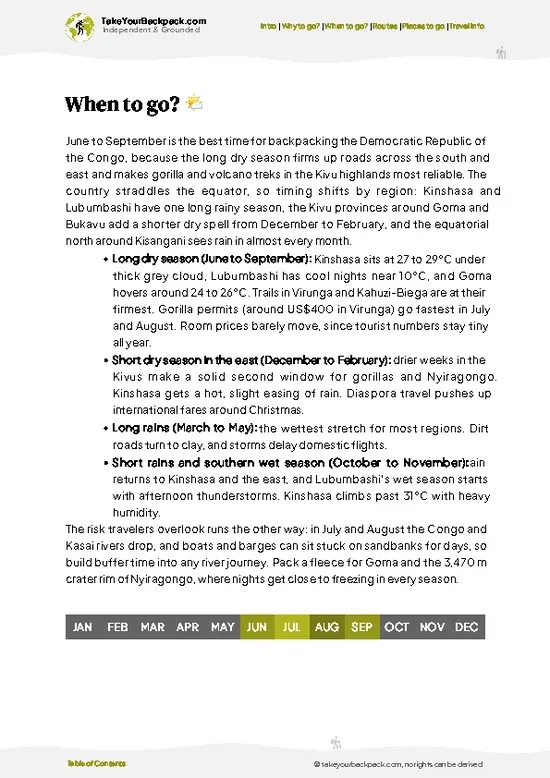
source: climatestotravel.comJANJanuary: fair for travelingFEBFebruary: fair for travelingMARMarch: fair for travelingAPRApril: fair for travelingMAYMay: highly recommended for travelingJUNJune: highly recommended for travelingJULJuly: excellent for travelingAUGAugust: highly recommended for travelingSEPSeptember: highly recommended for travelingOCTOctober: fair for travelingNOVNovember: fair for travelingDECDecember: fair for traveling
when-to-go

✈️ The backpacker research shortcutDR Congo Travel Guide

An offline-friendly backpacking guide with optimized travel routes, ranked highlights, transport advice, and the best areas to stay.
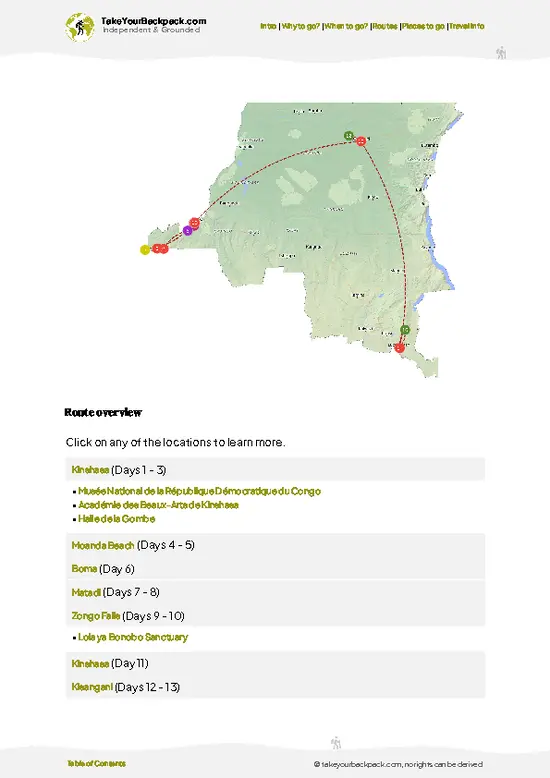
example page 0 from our offline Travel Guide for Democratic Republic of the Congo
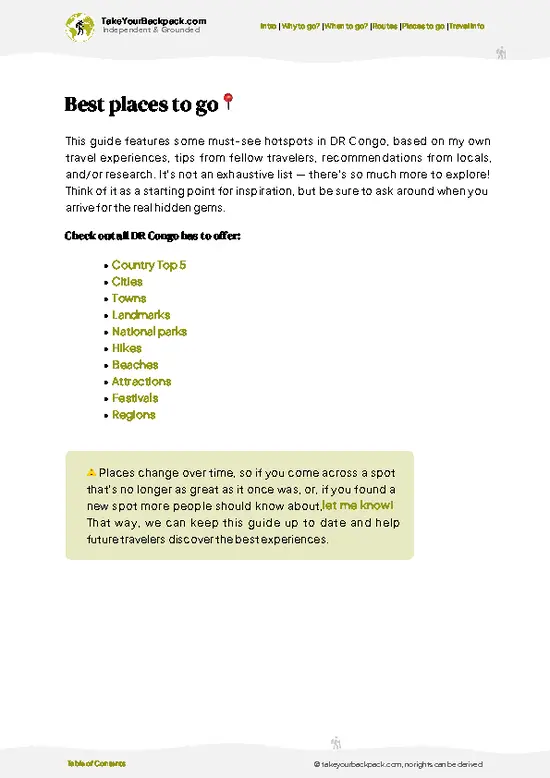
example page 1 from our offline Travel Guide for Democratic Republic of the Congo
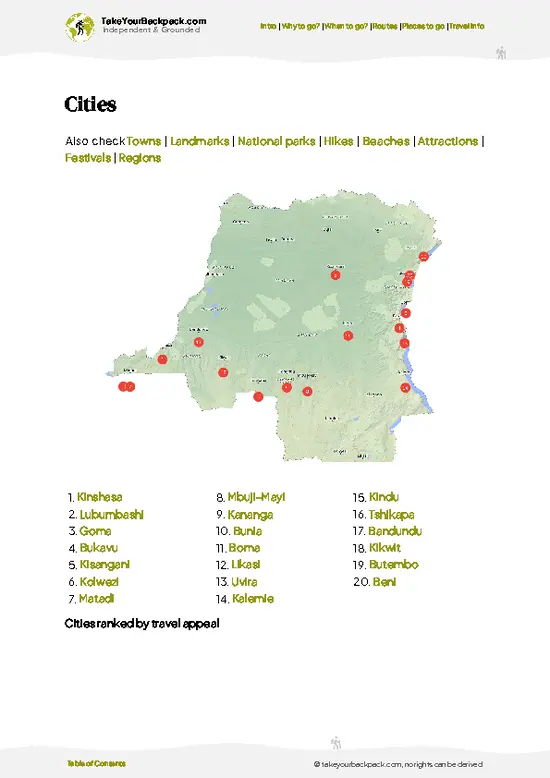
example page 2 from our offline Travel Guide for Democratic Republic of the Congo
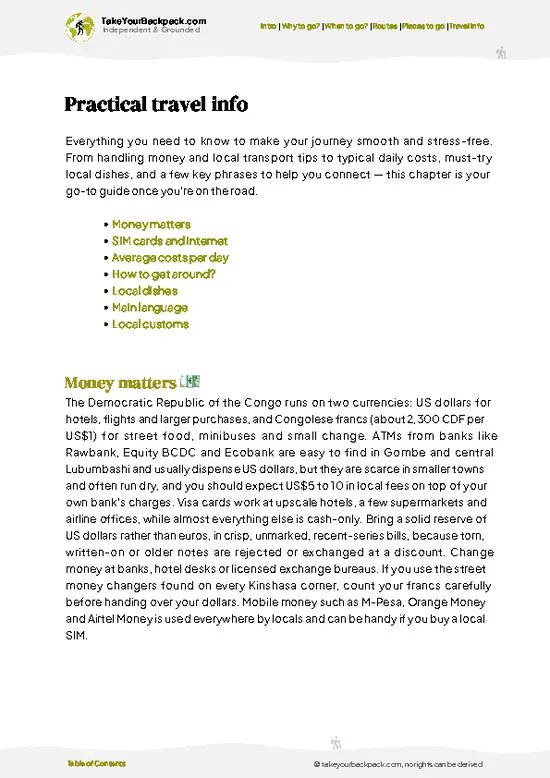
example page 3 from our offline Travel Guide for Democratic Republic of the Congo
example page 4 from our offline Travel Guide for Democratic Republic of the Congo
example page 5 from our offline Travel Guide for Democratic Republic of the Congo
example page 6 from our offline Travel Guide for Democratic Republic of the Congo
example page 7 from our offline Travel Guide for Democratic Republic of the Congo
The digital guide (372 pages) contains:
95 highlights, ranked by travel appeal
Optimized 7, 14 & 21-day travel routes
Cities, national parks, landmarks, beaches
How to get around
Offline-friendly for travel without Wi-Fi
👉 Click to see all 30+ guide features

📅 Plan smarter in minutes, not weeks
Month by month travel advice
Festivals & national holidays
Budget expectations

🗺️ Go to the right places, skip the overrated ones
Honest pros & cons of destinations
Top hikes, parks & viewpoints
Lesser-known places most travelers miss
Clear “worth it vs skip it” guidance

🛏️ Travel smoothly without rookie mistakes
Best areas to stay
Transport systems explained simply
Common scams & safety advice
SIM cards, money & practical tips

🌍 Understand the country, not just visit it
Culture & traditions
52 Essential phrases & customs
Festivals worth planning around
Traveler-friendly historical context
Insights that make places more meaningful

📱 Built for real travel conditions
Fully downloadable PDF
Works completely offline
Optimized for phone use
Useful in remote areas & buses
Everything in one place
Save weeks of stressful planning
Get instant access to your full guide. 30‑day money-back guarantee.


By proceeding you agree to our terms.
Sent to your inbox immediately after payment • 100% Secure Checkout
Best Backpacking Travel Advisor 2025 tourism awardBest Backpacking
Travel Advisor
2025
What others say about Take Your Backpack Guides:
⭐⭐⭐⭐⭐
Fantastic, amazing amount of information!
⭐⭐⭐⭐⭐
My goodness this is amazing, it's what I've been looking for hats off too you!
⭐⭐⭐⭐⭐
I think this is absolutely BRILLIANT
⭐⭐⭐⭐
Very complete and informative. It's still missing places, but I gotta to commend you
⭐⭐⭐⭐⭐
This is truly amazing, thank you, can't wait to explore it with my kids!
⭐⭐⭐⭐⭐
Awesome resource, thank you!
⭐⭐⭐⭐⭐
This is amazing! Can't wait to explore the ones I haven't seen
⭐⭐⭐⭐
I love this! Well done, great idea.
⭐⭐⭐⭐⭐
Thanks for taking the time to make this gem!
⭐⭐⭐⭐⭐
This might be the best website I've ever seen.
⭐⭐⭐⭐⭐
Congratulations, and thank you so much for your work; it's incredibly valuable.
⭐⭐⭐⭐
In all seriousness I think you did a great job pointing out the important spots
⭐⭐⭐⭐⭐
10/10 very good
⭐⭐⭐⭐⭐
As someone who's only just starting to visit regularly this is awesome, thank you.
⭐⭐⭐⭐
Thank you very much! I'm going to visit my dad, it's going to be very useful!
⭐⭐⭐⭐⭐
This is really cool! We'll be travelling for the first time and this definitely come in handy.
⭐⭐⭐⭐⭐
You are now our minister of culture, congratulations 👨‍💼
⭐⭐⭐⭐⭐
Just wanted to tell you that this is a pearl! Going to follow your recommendations.
⭐⭐⭐⭐⭐
This is so cool. I'll definitely be using the resource for my travels soon.
⭐⭐⭐⭐⭐
This is very impressive! Good work.
⭐⭐⭐⭐⭐
This is an amazing and informative site. Very well done!

🛏️ Where to stay?Where staying makes the most sense

In Sakania, the best spot for backpackers is the central district near the market and main bus station. This area hums with life—vendors shouting, spices and fresh produce scenting the air, and a steady flow of locals and travelers crossing paths. It’s where budget stays cluster, offering simple hostels that double as social hubs. You’ll find fellow backpackers swapping stories over shared meals, making it easier to connect and plan onward journeys. Compared to quieter, more residential neighborhoods, this zone feels safer by day and early evening, thanks to the constant foot traffic and informal … read more 👉
In Sakania, the best spot for backpackers is the central district near the market and main bus station. This area hums with life—vendors shouting, spices and fresh produce scenting the air, and a steady flow of locals and travelers crossing paths. It’s where budget stays cluster, offering simple hostels that double as social hubs. You’ll find fellow backpackers swapping stories over shared meals, making it easier to connect and plan onward journeys. Compared to quieter, more residential neighborhoods, this zone feels safer by day and early evening, thanks to the constant foot traffic and informal community watch. It’s the practical choice for solo travelers craving both security and a pulse on local life.

🚌 Getting aroundHow to get around Sakania

Sakania moves at its own rhythm—less clockwork, more pulse. The streets hum with a mix of purposeful strides and spontaneous stops, where the scent of frying plantains mingles with diesel and dust. Here, time bends around the market’s chatter and the slow shuffle of feet on cracked pavement. You won’t find strict schedules; instead, you’ll learn to read the flow, catching rides when they’re ready and savoring the moments between.


  • Walking: The best way to soak in Sakania’s atmosphere. The town’s compact center means you can cover most spots on foot in under 30 minutes, letting you catch the smells, sounds, and colors up close without spending a dime.

  • Bicycle Taxi (Vélo-taxi): Runs from dawn until dusk, costing around $0.50 per short trip. It’s faster than walking but expect a bumpy ride
read more 👉
Sakania moves at its own rhythm—less clockwork, more pulse. The streets hum with a mix of purposeful strides and spontaneous stops, where the scent of frying plantains mingles with diesel and dust. Here, time bends around the market’s chatter and the slow shuffle of feet on cracked pavement. You won’t find strict schedules; instead, you’ll learn to read the flow, catching rides when they’re ready and savoring the moments between.


  • Walking: The best way to soak in Sakania’s atmosphere. The town’s compact center means you can cover most spots on foot in under 30 minutes, letting you catch the smells, sounds, and colors up close without spending a dime.

  • Bicycle Taxi (Vélo-taxi): Runs from dawn until dusk, costing around $0.50 per short trip. It’s faster than walking but expect a bumpy ride on uneven roads. Great for quick hops across town when the sun’s high and the heat presses down.

  • Shared Minibus (Taxi-brousse): Leaves when full, usually between 6 a.m. and 6 p.m., fares hover around $1–$2 depending on distance. It’s the budget traveler’s lifeline for longer hauls, but patience is key—departure waits can stretch unpredictably.

  • Motorcycle Taxi (Moto-taxi): Available 24/7, prices start at about $1 for short trips. Fast and nimble, but hold tight—the roads can be rough, and drivers often weave through traffic with a fearless edge.

👛 Costs (as of 9 June 2026)Travel costs and budget guide for Sakania

Backpacking in Sakania, DR Congo, means navigating a place where costs are low but infrastructure is basic, so every dollar counts and every choice shapes your experience.
  • Dorm Accommodation: Expect to pay around $5 to $10 per night for a basic dorm bed. Options are limited and often simple—think mosquito nets, shared bathrooms, and sporadic electricity. It’s not luxury, but it’s enough to rest your head without breaking the bank.
  • Meals: Local meals are cheap and filling, usually between $2 and $5 per meal. Street food and small local eateries offer staples like rice, beans, and grilled meat or fish. Fresh fruit and vegetables are seasonal but affordable. Avoid imported goods—they hike prices unnecessarily.
  • Local Transport: Getting around Sakania typically involves shared minibuses or motorcycle
read more 👉
Backpacking in Sakania, DR Congo, means navigating a place where costs are low but infrastructure is basic, so every dollar counts and every choice shapes your experience.
  • Dorm Accommodation: Expect to pay around $5 to $10 per night for a basic dorm bed. Options are limited and often simple—think mosquito nets, shared bathrooms, and sporadic electricity. It’s not luxury, but it’s enough to rest your head without breaking the bank.
  • Meals: Local meals are cheap and filling, usually between $2 and $5 per meal. Street food and small local eateries offer staples like rice, beans, and grilled meat or fish. Fresh fruit and vegetables are seasonal but affordable. Avoid imported goods—they hike prices unnecessarily.
  • Local Transport: Getting around Sakania typically involves shared minibuses or motorcycle taxis, costing about $0.50 to $1 per short trip. Roads can be rough, so travel times might stretch, but the price stays friendly to your wallet.
  • Basic Activities/Entry Fees: Most local attractions, if any, have minimal or no entry fees, usually under $2. The real draw here is exploring the town’s markets and natural surroundings, which are free but require some legwork and local savvy.
  • Miscellaneous Expenses: Budget around $1 to $3 daily for essentials like bottled water, phone credit, or small tips. These add up but are crucial for comfort and connectivity in a place where amenities are sparse.

All told, you’re looking at roughly $10 to $20 per day to cover the basics in Sakania. It’s a lean budget, but one that rewards patience and a willingness to embrace simplicity, setting the stage for a raw and authentic DR Congo experience.


source: congotourisme.org
⚠️ Prices can change and everyone travels differently, so take this as a rough guide. Hope it helps you plan your adventure!

🚌 Day tripsShort trips worth adding

Sakania is a fantastic base for exploring the rich tapestry of DR Congo. The town’s accessibility and local vibe make it a perfect launchpad for day trips that reveal the country’s heart.

Katanga Mining Museum
Just a short taxi ride away, this museum offers a deep dive into the region’s mining history. You’ll find exhibits that showcase the minerals that have shaped the local economy. The scent of polished metal and the sound of machinery echo the industrious spirit of the area. Plan for about two hours here, and entry is usually around $2. A common mistake? Skipping the guided tour; it adds layers of insight that make the experience richer.


Lake Tshangalele
A 30-minute drive takes you to this serene lake, where the air is filled with the earthy scent of wet soil and the distant calls … read more 👉
Sakania is a fantastic base for exploring the rich tapestry of DR Congo. The town’s accessibility and local vibe make it a perfect launchpad for day trips that reveal the country’s heart.

Katanga Mining Museum
Just a short taxi ride away, this museum offers a deep dive into the region’s mining history. You’ll find exhibits that showcase the minerals that have shaped the local economy. The scent of polished metal and the sound of machinery echo the industrious spirit of the area. Plan for about two hours here, and entry is usually around $2. A common mistake? Skipping the guided tour; it adds layers of insight that make the experience richer.


Lake Tshangalele
A 30-minute drive takes you to this serene lake, where the air is filled with the earthy scent of wet soil and the distant calls of birds. Spend the day swimming or picnicking on the shores. The round-trip cost is about $10, including transport. The best time to visit is during the dry season, when the water is clear and inviting. Many first-timers underestimate the sun; pack sunscreen and a hat to avoid a sunburn.


Lubumbashi City Tour
A 90-minute bus ride leads you to Lubumbashi, the bustling capital of Katanga. The vibrant markets are a feast for the senses, with the aroma of street food wafting through the air. Expect to spend around $5 for transport and a few dollars more for snacks. The best time to explore is early morning when the city is waking up. Don’t rush through the markets; take your time to chat with locals and sample their wares.
Want to know what more DR Congo offers?
The DR Congo Travel Guide describes 95 highlights, from cities to national parks, from beaches to hikes

Get the Travel Guide -

🛡️ SafetyScams, Hazards, and Annoyances

Sakania, in the DR Congo, is generally safe, but a few practical tips can enhance your experience. Stay aware in crowded markets; pickpockets can be opportunistic. If you’re solo, avoid wandering too far after dark. The streets can feel different at night, and it’s best to stick to well-lit areas.

Watch for common scams, like inflated taxi fares; agree on a price beforehand. Locals are friendly, but a firm “no” is your best defense against persistent vendors. Carry yourself confidently, and you’ll blend in, making your journey smoother and more enjoyable.

Other Congolese towns near Sakania

Explore more nearby:

  • Kasumbalesa—major border crossing, customs zone, truck stop| 99 km away
  • Manono—tin mining, ruined factories, lakeside setting| 620 km away
  • Kongolo—Lualaba River bridge, rail crossing, local markets| 837 km away

💡 Not sure where to go next?
Create a personalized itinerary for DR Congo including Sakania and the places that fit your trip.

Generate my itinerary

👉 Discover all towns

Or checkout all DR Congo has to offer (think cities, towns, villages, national parks, hikes, beaches, festivals)
Country photo of DR Congo

We 💚 feedbackFinal thoughts on visiting Sakania

Sakania has a raw, electric vibe that pulses with life. The best surprise? The warmth of the locals; their laughter fills the air like music. Just be ready for the dust—it’s everywhere. Embrace it. It’s part of the experience, and it makes the beauty feel hard-won.

✍️ Help improve this page!
The information on this page is based on in-depth research, insights shared by experienced travelers, and feedback from the local travel community in DR Congo. While every effort is made to keep the information accurate and current, conditions can change — so if you spot anything incorrect or outdated, please get in touch.


🙋‍♂️ Give feedback

👋 Meet the founderWho’s Behind Take Your Backpack?

Johan, backpacker and founder of TakeYourBackpackHi, I’m Johan (Netherlands 🇳🇱), the creator of TakeYourBackpack. Over the past decade, I’ve backpacked through 80+ countries across six continents, gaining extensive experience with independent travel, long-term trips, and overland routes.

This site is built on a combination of firsthand travel experience and carefully curated insights from other backpackers. Many guides are based on places I’ve personally visited, while others bring together tips, observations, and practical advice shared by trusted travelers I’ve met along the way.

The goal is to provide realistic, experience-driven guidance — not generic itineraries — so you can explore destinations with better context, clearer expectations, and more confidence.

Get full DR Congo guide •
Instant download • 95 highlights • Full Offline guide