×

DR Congo🇨🇩 | citiesGomaVolcano proximity, lava fields, humanitarian base | things to do and best time to go

Explore BukavuExplore Kinshasa

Backpacking in Goma
🏆 Top pickcity ranked #3
By Johan Kruseman 🇳🇱 | Updated May 10, 2026

Goma’s lakeside cafés serve espresso strong enough to rattle your boots—yes, espresso—while Nyiragongo volcano smolders on the skyline. That’s the first surprise: Goma isn’t just a checkpoint for aid workers or a footnote in news cycles; it’s a city where backpackers can watch lava glow at night, then swap stories with Congolese artists over coffee the next morning. Wedged between Lake Kivu and the Rwandan border, Goma is the DR Congo’s wild card: more cosmopolitan than Bukavu, less chaotic than Kinshasa, but still a logistical puzzle. The city’s battered colonial hotels and the bustling Virunga market hint at a past and present that never quite sit still. Costs are high for Africa—think Kigali prices, not Kinshasa bargains—and safety is a real concern, especially after dark. Meeting other travelers is rare but memorable; you’ll find more UN jeeps than backpacks, but the few who make it here are all-in. Goma is gritty, unpredictable, and alive—never easy, but never boring.

Discover everything you want to know in the 📖 DR Congo Travel Guide.
Safety warning

The current risk level for DR Congo is high. Check the advice before going.


Get your DR Congo guide
96 ranked highlights, routes & tips, works offline (378 pages)
Loading the map 🌍
CLICK TO FILTER
cities
towns
landmarks
national parks
hikes
beaches
attractions
festivals
regions
SHOW COUNTRY’S BESTSHOW ALL

✨ Why go?
Ranked #3 city in DR Congo
The unique appeal for travelers

Goma in the DR Congo is a strategic stop for backpackers looking to balance time, money, and comfort. The city serves as a basecamp for day trips to nearby natural wonders, making it a practical choice for those eager to explore without committing to lengthy stays. Accommodations range from budget-friendly hostels to mid-range options, ensuring you can find a place that fits your wallet while still offering a decent level of comfort.

The food scene is diverse, with local eateries serving up hearty meals that won’t break the bank. You can easily navigate the city on foot, making it a walkable destination where you can soak in the local vibe without the hassle of transport. When the sun sets, Goma’s nightlife offers a mix of laid-back bars and lively spots, perfect for unwinding after a day … read more 👉
Goma in the DR Congo is a strategic stop for backpackers looking to balance time, money, and comfort. The city serves as a basecamp for day trips to nearby natural wonders, making it a practical choice for those eager to explore without committing to lengthy stays. Accommodations range from budget-friendly hostels to mid-range options, ensuring you can find a place that fits your wallet while still offering a decent level of comfort.

The food scene is diverse, with local eateries serving up hearty meals that won’t break the bank. You can easily navigate the city on foot, making it a walkable destination where you can soak in the local vibe without the hassle of transport. When the sun sets, Goma’s nightlife offers a mix of laid-back bars and lively spots, perfect for unwinding after a day of adventure.

For those planning to move on, Goma’s transport links are straightforward, connecting you to other parts of the DR Congo and beyond. If you’re looking for a city that enhances your travel route rather than detracts from it, Goma is a solid choice, especially for those who appreciate a blend of adventure and convenience.
Get the complete Travel Guide for DR Congo
Everything organized for offline planning — routes, highlights, costs & tips

See what’s inside 👉

Get the Travel Guide -

💡 HighlightsWhat this place is best known for

  • Observatoire Volcanologique de Goma (OVG) — The real place where scientists monitor Nyiragongo; you get context for the eruptions, maps, and explanations that make the strange lava history of this city actually make sense. Worth a stop before/after any volcano trip.
  • Lake Kivu waterfront and public beaches (Plage de Kivu) — Sunsets, lakeside cafés, swimming spots and simple beach bars. It’s where locals unwind, fishermen land their catch, and you can relax without leaving the city.
  • Port of Goma (the lake port) — Hustle, boats and a working harbor vibe. Take a short boat ride, watch cargo and passenger traffic, or use it as the jumping-off point for longer Lake Kivu trips to Bukavu or nearby islands.
  • Marché Central / Marché de la Liberté — The city’s main market: colorful stalls, spices,
read more 👉
  • Observatoire Volcanologique de Goma (OVG) — The real place where scientists monitor Nyiragongo; you get context for the eruptions, maps, and explanations that make the strange lava history of this city actually make sense. Worth a stop before/after any volcano trip.
  • Lake Kivu waterfront and public beaches (Plage de Kivu) — Sunsets, lakeside cafés, swimming spots and simple beach bars. It’s where locals unwind, fishermen land their catch, and you can relax without leaving the city.
  • Port of Goma (the lake port) — Hustle, boats and a working harbor vibe. Take a short boat ride, watch cargo and passenger traffic, or use it as the jumping-off point for longer Lake Kivu trips to Bukavu or nearby islands.
  • Marché Central / Marché de la Liberté — The city’s main market: colorful stalls, spices, produce, and fabrics. It’s noisy, chaotic and necessary if you want an honest feel for daily life and to buy inexpensive local goods.
  • 2002 lava flow scars and lava-lined streets — Walk or drive along areas where the Nyiragongo lava reached the city. You’ll see black rock, buildings that wore the flow, and neighborhoods rebuilt around that recent geological history — a powerful, unusual urban sight.
  • Goma International Airport (Aéroport de Goma) — Not glamorous, but the runway’s setting against lava fields and the short landing strip make plane-spotting unusually dramatic. It’s also a reminder of how close the city sits to active volcano terrain.
  • Lakeside fish landing and smoking operations — Early-morning activity where fishermen bring in the catch and women smoke fish on the beach. Visit to see the supply chain, try grilled tilapia, and meet people whose livelihoods depend on the lake.
  • Artisan stalls and small galleries along the lakeshore — Hand-carved woodwork, beadwork, textiles and paintings from local makers. Not a single grand museum, but a spread of small studios and sellers where you can buy authentic pieces and support local artists.
  • Street-art walk and live-music spots — Goma has an energetic, grassroots music and street-art scene; murals dot neighborhoods and small bars and clubs host live Afropop and rumba nights. A night out here shows the city’s creative pulse.
  • Community cultural spaces and local theatres — Small community centres, theatre groups and cultural projects around town stage plays, dance and workshops. They’re the best way to see authentic Congolese performance arts and meet movers in Goma’s cultural life.
For day trips just outside the city, plan for Mount Nyiragongo (the crater hike), Virunga National Park wildlife and ranger posts, and the neighboring Rwandan lakeside town of Gisenyi/Rubavu — all easily reached from Goma.
Spotted a mistake or missing something? Contact us.

🏘️ NeighborhoodsKey areas and districts to know

Goma is a vibrant hub for backpackers in DR Congo, offering a unique blend of adventure and culture. Here’s how the neighborhoods stack up:

Centre Ville: This is the heart of Goma. It’s bustling, with markets and street vendors everywhere. You’ll find affordable accommodations and easy access to transport. The vibe is energetic, perfect for those who love to be in the thick of things. Nightlife options are decent, with local bars and eateries. Ideal for short stays, but the noise might wear on you if you linger too long.

Lake Kivu Waterfront: If you’re after stunning views and a more relaxed atmosphere, this area is your go-to. It’s a bit pricier, but the experience is worth it. You can stroll along the lake, enjoy cafes, and soak in the scenery. It’s walkable and feels safe, making it great … read more 👉
Goma is a vibrant hub for backpackers in DR Congo, offering a unique blend of adventure and culture. Here’s how the neighborhoods stack up:

Centre Ville: This is the heart of Goma. It’s bustling, with markets and street vendors everywhere. You’ll find affordable accommodations and easy access to transport. The vibe is energetic, perfect for those who love to be in the thick of things. Nightlife options are decent, with local bars and eateries. Ideal for short stays, but the noise might wear on you if you linger too long.

Lake Kivu Waterfront: If you’re after stunning views and a more relaxed atmosphere, this area is your go-to. It’s a bit pricier, but the experience is worth it. You can stroll along the lake, enjoy cafes, and soak in the scenery. It’s walkable and feels safe, making it great for longer stays. The nightlife is quieter here, perfect for unwinding after a day of exploring.

Nguba: A bit off the beaten path, Nguba offers a more local experience. Accommodations are cheaper, and you’ll get a taste of everyday life in Goma. It’s less touristy, which means fewer amenities but a more authentic vibe. Walkability can be tricky, and public transport is less frequent. This area suits those looking to immerse themselves for a longer period.

Virunga National Park Gateway: For adventure seekers, this area is essential. It’s the launchpad for treks into the park. Prices vary, but you’ll find options for every budget. The vibe is adventurous, and while nightlife is limited, the focus here is on nature. Perfect for short stays before heading into the wild.

⌛️ 1 dayWhat you can realistically do in a day

Goma, a vibrant city on the shores of Lake Kivu, is a fascinating blend of natural beauty and rich culture. With the looming presence of the Virunga Mountains, it’s a place where adventure meets community spirit. You can feel the pulse of life here, and spending a day in Goma can be both enlightening and exhilarating.

Start your morning at the bustling **Goma Market**. The aroma of fresh produce and spices fills the air as vendors enthusiastically showcase their goods. Take your time wandering through the stalls, sampling local fruits like juicy mangoes or tangy passion fruit. This is a great way to immerse yourself in the local culture and connect with the people. Grab a quick breakfast from a street vendor—perhaps a warm, flaky **mandazi** (fried dough) paired with a cup of rich Congolese … read more 👉
Goma, a vibrant city on the shores of Lake Kivu, is a fascinating blend of natural beauty and rich culture. With the looming presence of the Virunga Mountains, it’s a place where adventure meets community spirit. You can feel the pulse of life here, and spending a day in Goma can be both enlightening and exhilarating.

Start your morning at the bustling **Goma Market**. The aroma of fresh produce and spices fills the air as vendors enthusiastically showcase their goods. Take your time wandering through the stalls, sampling local fruits like juicy mangoes or tangy passion fruit. This is a great way to immerse yourself in the local culture and connect with the people. Grab a quick breakfast from a street vendor—perhaps a warm, flaky **mandazi** (fried dough) paired with a cup of rich Congolese coffee.

Afterward, head towards **Lac Kivu** for a leisurely stroll along the waterfront. The views are breathtaking, with the mountains reflecting off the water. If you’re feeling adventurous, consider renting a kayak to paddle around the lake. It’s a unique way to experience the landscape and get a bit of exercise.

In the afternoon, make your way to the **Nyiragongo Volcano** visitor center. While a full hike to the summit might take too long for a day trip, the center offers insights into the area’s volcanic activity and the local ecosystem. It’s a lesser-known spot that provides a deeper understanding of the region’s natural wonders.

As evening approaches, return to the city and explore the **Kibati neighborhood**. Here, you’ll find local eateries serving up delicious dishes like **pondu** (cassava leaves) and grilled fish. Enjoy your meal while soaking in the lively atmosphere.

Wrap up your day by heading to a local bar or café to unwind. The energy of Goma is infectious, and you’ll leave with a sense of connection to this remarkable place.
Build the Right Itinerary
Use the DR Congo Travel Guide’s 7, 14 & 21-day routes as a starting point to plan a trip that actually works on the ground.

Get the Travel Guide -

🌤️ When to go?Choosing the right time of year


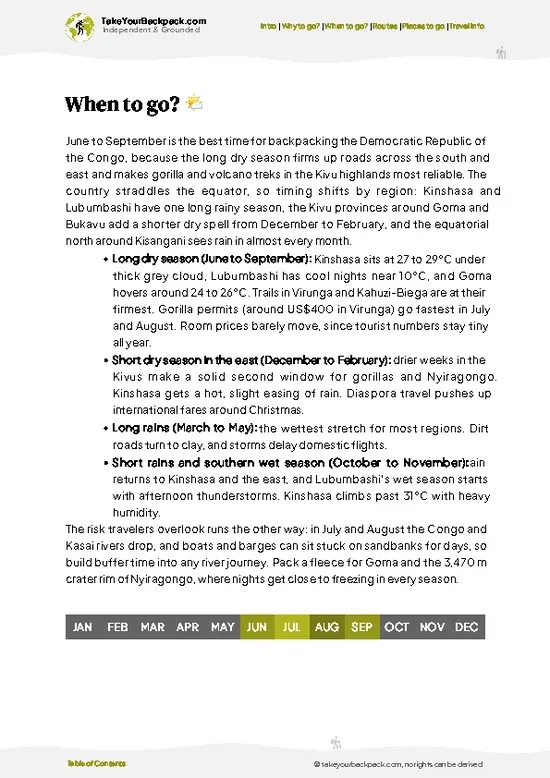
  • Topic: Weather – Goma’s climate swings between a wet season from October to May and a dry season from June to September. The dry months offer clearer skies and less mud, making trekking and exploring easier. The wet season can turn trails into slippery challenges and limit outdoor plans.

  • Topic: Temperature – Expect daytime highs around 24-27°C (75-81°F) year-round, with nights dipping to 15-18°C (59-64°F). Temperature shifts are mild, so your timing won’t hinge on heat but on rain and humidity.

  • Topic: Daylight Hours – Near the equator, Goma enjoys roughly 12 hours of daylight year-round. Sunrise and sunset times stay consistent, so your daily schedule won’t need much adjustment.

  • Topic: Crowds – Tourist traffic is generally low, but the dry season attracts more visitors, especially
read more 👉

  • Topic: Weather – Goma’s climate swings between a wet season from October to May and a dry season from June to September. The dry months offer clearer skies and less mud, making trekking and exploring easier. The wet season can turn trails into slippery challenges and limit outdoor plans.

  • Topic: Temperature – Expect daytime highs around 24-27°C (75-81°F) year-round, with nights dipping to 15-18°C (59-64°F). Temperature shifts are mild, so your timing won’t hinge on heat but on rain and humidity.

  • Topic: Daylight Hours – Near the equator, Goma enjoys roughly 12 hours of daylight year-round. Sunrise and sunset times stay consistent, so your daily schedule won’t need much adjustment.

  • Topic: Crowds – Tourist traffic is generally low, but the dry season attracts more visitors, especially those aiming for Virunga National Park treks. Expect a quieter experience during the rainy months, though some services may scale back.

  • Topic: Seasonal Activities – The dry season is prime for volcano hikes and wildlife spotting. The wet season limits access to some trails but offers lush landscapes and fewer tourists, which can appeal if you prefer solitude over convenience.

  • Topic: Price Fluctuations – Accommodation and tour prices tend to rise during the dry season due to higher demand. Traveling in the shoulder months (May or September) can balance cost savings with decent weather.


Pro-tip: Aim for the dry season to maximize comfort and activity options, but if you’re flexible and want to dodge crowds and save money, the shoulder months offer a clever compromise.


source: climatestotravel.comJANJanuary: fair for travelingFEBFebruary: fair for travelingMARMarch: fair for travelingAPRApril: fair for travelingMAYMay: good for travelingJUNJune: excellent for travelingJULJuly: excellent for travelingAUGAugust: excellent for travelingSEPSeptember: good for travelingOCTOctober: fair for travelingNOVNovember: fair for travelingDECDecember: fair for traveling
when-to-go

✈️ The backpacker research shortcutDR Congo Travel Guide

An offline-friendly backpacking guide with optimized travel routes, ranked highlights, transport advice, and the best areas to stay.
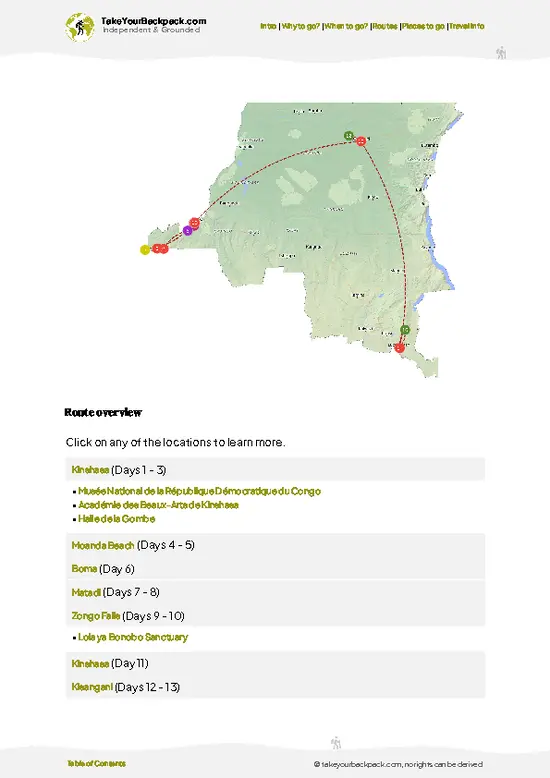
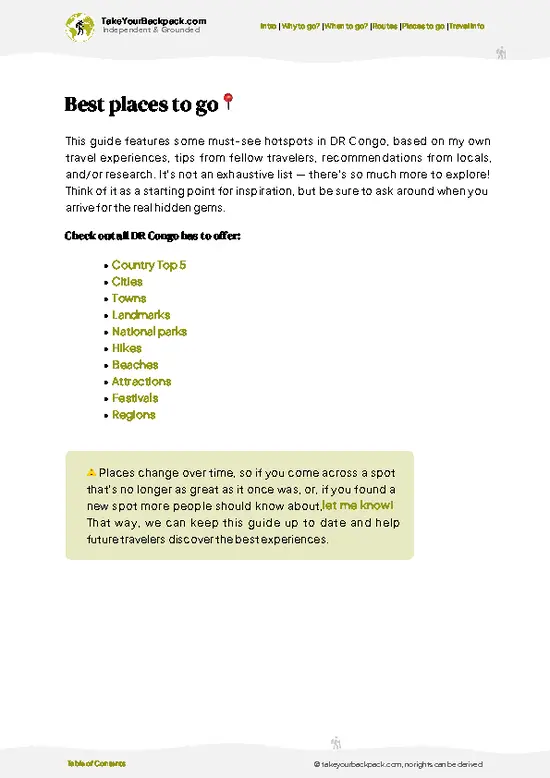
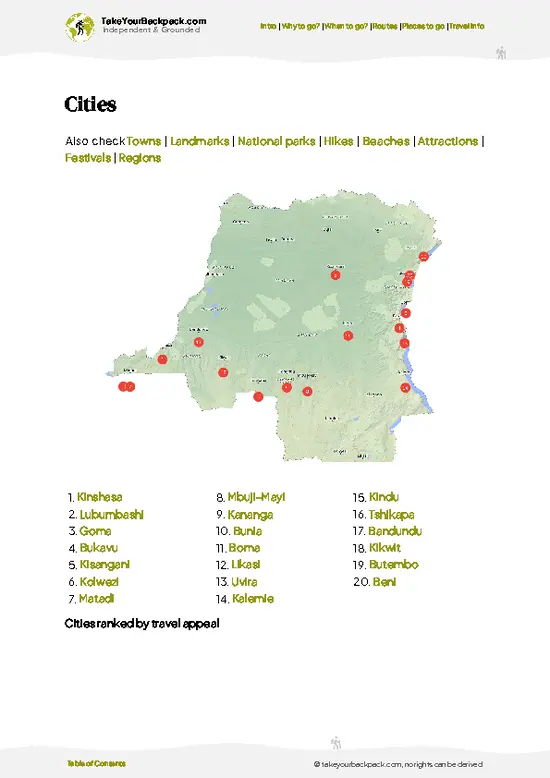
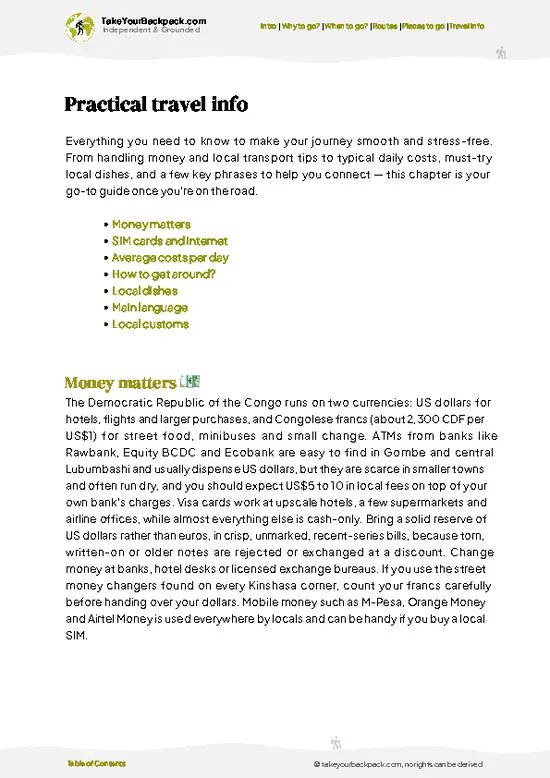
example page 0 from our offline Travel Guide for Democratic Republic of the Congoexample page 1 from our offline Travel Guide for Democratic Republic of the Congoexample page 2 from our offline Travel Guide for Democratic Republic of the Congoexample page 3 from our offline Travel Guide for Democratic Republic of the Congoexample page 4 from our offline Travel Guide for Democratic Republic of the Congoexample page 5 from our offline Travel Guide for Democratic Republic of the Congoexample page 6 from our offline Travel Guide for Democratic Republic of the Congoexample page 7 from our offline Travel Guide for Democratic Republic of the Congo
The digital guide (378 pages) contains:
96 highlights, ranked by travel appeal
Optimized 7, 14 & 21-day travel routes
Cities, national parks, beaches, historical sites, ...
How to get around
Offline-friendly for travel without Wi-Fi
👉 Click to see all 30+ guide features

📅 Plan smarter in minutes, not weeks
Month by month travel advice
Festivals & national holidays
Budget expectations

🗺️ Go to the right places, skip the overrated ones
Honest pros & cons of destinations
Top hikes, parks & viewpoints
Lesser-known places most travelers miss
Clear “worth it vs skip it” guidance

🛏️ Travel smoothly without rookie mistakes
Best areas to stay
Transport systems explained simply
Common scams & safety advice
SIM cards, money & practical tips

🌍 Understand the country, not just visit it
Culture & traditions
52 Essential phrases & customs
Festivals worth planning around
Traveler-friendly historical context
Insights that make places more meaningful

📱 Built for real travel conditions
Fully downloadable PDF
Works completely offline
Optimized for phone use
Useful in remote areas & buses
Everything in one place
Save weeks of stressful planning
Get instant access to the full guide directly. 30-day money-back guarantee.


Sent to your inbox immediately after payment • 100% Secure Checkout
Best Backpacking Travel Advisor 2025 tourism awardBest Backpacking
Travel Advisor
2025
What others say about Take Your Backpack Guides:
⭐⭐⭐⭐⭐
Fantastic, amazing amount of information!
⭐⭐⭐⭐⭐
My goodness this is amazing, it's what I've been looking for hats off too you!
⭐⭐⭐⭐⭐
I think this is absolutely BRILLIANT
⭐⭐⭐⭐
Very complete and informative. It's still missing places, but I gotta to commend you
⭐⭐⭐⭐⭐
This is truly amazing, thank you, can't wait to explore it with my kids!
⭐⭐⭐⭐⭐
Awesome resource, thank you!
⭐⭐⭐⭐⭐
This is amazing! Can't wait to explore the ones I haven't seen
⭐⭐⭐⭐
I love this! Well done, great idea.
⭐⭐⭐⭐⭐
Thanks for taking the time to make this gem!
⭐⭐⭐⭐⭐
This might be the best website I've ever seen.
⭐⭐⭐⭐⭐
Congratulations, and thank you so much for your work; it's incredibly valuable.
⭐⭐⭐⭐
In all seriousness I think you did a great job pointing out the important spots
⭐⭐⭐⭐⭐
10/10 very good
⭐⭐⭐⭐⭐
As someone who's only just starting to visit regularly this is awesome, thank you.
⭐⭐⭐⭐
Thank you very much! I'm going to visit my dad, it's going to be very useful!
⭐⭐⭐⭐⭐
This is really cool! We'll be travelling for the first time and this definitely come in handy.
⭐⭐⭐⭐⭐
You are now our minister of culture, congratulations 👨‍💼
⭐⭐⭐⭐⭐
Just wanted to tell you that this is a pearl! Going to follow your recommendations.
⭐⭐⭐⭐⭐
This is so cool. I'll definitely be using the resource for my travels soon.
⭐⭐⭐⭐⭐
This is very impressive! Good work.
⭐⭐⭐⭐⭐
This is an amazing and informative site. Very well done!

🛏️ Where to stay?Choosing the right base

In Goma, DR Congo, the trade-off between safety, social buzz, and budget options narrows down to a couple of key neighborhoods. The city’s center, around the downtown area, is the go-to for backpackers who want to stay connected and safe without blowing the budget. It’s where you’ll find the most hostels catering to solo travelers and small groups, offering a mix of dorms and private rooms. The vibe here is practical but lively—street vendors, local cafés, and a steady flow of other travelers make it easy to strike up conversations and swap tips.

Venture a bit east toward the Katindo district, … read more 👉
In Goma, DR Congo, the trade-off between safety, social buzz, and budget options narrows down to a couple of key neighborhoods. The city’s center, around the downtown area, is the go-to for backpackers who want to stay connected and safe without blowing the budget. It’s where you’ll find the most hostels catering to solo travelers and small groups, offering a mix of dorms and private rooms. The vibe here is practical but lively—street vendors, local cafés, and a steady flow of other travelers make it easy to strike up conversations and swap tips.

Venture a bit east toward the Katindo district, and you’ll find a quieter, more residential feel. It’s safer and less hectic, but with fewer hostel options and less nightlife. This is a trade-off for comfort and calm over social energy. If you’re after a slower pace and a chance to blend with locals, Katindo edges out downtown, but you’ll sacrifice some of the backpacker camaraderie.

Other parts of Goma lean toward either high-end or sketchy, so they’re less practical for budget travelers. The downtown area wins for balancing safety, social life, and affordability—making it the strategic base camp for backpackers navigating Goma’s complex urban landscape.

🚌 Getting aroundMoving around without the hassle

Goma moves at its own rhythm—part chaos, part calculation. The city’s pulse is less about strict timetables and more about reading the street’s mood, the ebb and flow of people and vehicles negotiating space and time. Here, schedules are suggestions, and intuition is your best compass. If you want to master Goma’s transit game, you need to understand the trade-offs between time, money, and comfort, because every choice here is a strategic move.


  • Walking: The ultimate budget option, free and flexible, but expect uneven sidewalks and the occasional dodge of street vendors and motorcycles. Walking lets you soak in the city’s textures at your own pace, but it’s slow—plan for 20-30 minutes to cross central neighborhoods.


  • Boda-Boda (Motorcycle Taxi): Fast and cheap, boda-bodas zip through
read more 👉
Goma moves at its own rhythm—part chaos, part calculation. The city’s pulse is less about strict timetables and more about reading the street’s mood, the ebb and flow of people and vehicles negotiating space and time. Here, schedules are suggestions, and intuition is your best compass. If you want to master Goma’s transit game, you need to understand the trade-offs between time, money, and comfort, because every choice here is a strategic move.


  • Walking: The ultimate budget option, free and flexible, but expect uneven sidewalks and the occasional dodge of street vendors and motorcycles. Walking lets you soak in the city’s textures at your own pace, but it’s slow—plan for 20-30 minutes to cross central neighborhoods.


  • Boda-Boda (Motorcycle Taxi): Fast and cheap, boda-bodas zip through traffic jams with ease. Prices hover around $0.50 to $1 per short trip, but comfort is minimal and safety varies wildly. Use this if you’re in a hurry and okay with a bit of adrenaline.


  • Minibus Taxi: The backbone of Goma’s public transit, minibuses run from early morning (around 6 AM) until dusk (6-7 PM). Fares are typically under $1, making them wallet-friendly, but expect cramped conditions and unpredictable stops. They’re slower than boda-bodas but more comfortable and safer for longer distances.


  • Shared Taxis: Slightly pricier than minibuses, shared taxis offer a bit more comfort and speed, especially for routes heading out of the city center. They operate on a semi-flexible schedule, often leaving when full, so timing can be a gamble. Expect to pay around $1.50 to $3 depending on distance.


  • Private Taxi: The most comfortable and fastest option, but also the most expensive—rates start around $10 for short trips. Ideal if you’re traveling with a group or carrying heavy gear, but not the best choice for budget travelers.


In Goma, every transit choice is a trade-off puzzle. You can save money by walking or hopping on a minibus, but it costs you time and sometimes comfort. Opt for a boda-boda, and you gain speed but sacrifice safety and calm. Private taxis give you control and ease but demand a steep price. Understanding these dynamics lets you play the city’s flow like a pro, turning what looks like chaos into a series of smart, deliberate moves.

👛 Costs (as of 12 June 2026)What things cost and how to budget

Backpacking in Goma, DR Congo, demands a clear-eyed view of what your money buys—and what it doesn’t. Here’s the breakdown to help you play the budget game smartly.
  • Dorm Accommodation (High Season): Expect to pay around $10-$15 per night. High season drives prices up due to demand, especially in guesthouses near Lake Kivu or the city center.
  • Dorm Accommodation (Off-Season): Prices drop to about $6-$10 per night. Fewer travelers mean better bargaining power and quieter stays, but some places may close or reduce services.
  • Meals: Street food and local eateries offer meals for $2-$5. Western-style restaurants or tourist spots push that to $7-$12. Fresh fish from the lake or grilled meat skew higher but remain affordable.
  • Local Transport: Minibus taxis and moto-taxis dominate, costing roughly
read more 👉
Backpacking in Goma, DR Congo, demands a clear-eyed view of what your money buys—and what it doesn’t. Here’s the breakdown to help you play the budget game smartly.
  • Dorm Accommodation (High Season): Expect to pay around $10-$15 per night. High season drives prices up due to demand, especially in guesthouses near Lake Kivu or the city center.
  • Dorm Accommodation (Off-Season): Prices drop to about $6-$10 per night. Fewer travelers mean better bargaining power and quieter stays, but some places may close or reduce services.
  • Meals: Street food and local eateries offer meals for $2-$5. Western-style restaurants or tourist spots push that to $7-$12. Fresh fish from the lake or grilled meat skew higher but remain affordable.
  • Local Transport: Minibus taxis and moto-taxis dominate, costing roughly $0.30-$1 per ride depending on distance. Negotiation is part of the game, and multiple short trips add up.
  • City Transport Pass: Goma doesn’t have a formal city transport pass system. Budgeting for daily transport means counting on individual rides rather than a flat rate pass.
  • Basic Activities/Entry Fees: Visiting Virunga National Park or local museums can cost $10-$30 per entry, sometimes more with guides or permits. These are the splurges that define your experience.
  • Miscellaneous Expenses: SIM cards and data packages run about $5-$10 for decent coverage. Bottled water, snacks, and small tips add another $2-$5 daily.

The trade-off here is clear: you can save on accommodation and meals but expect transport and activities to eat into your budget. A realistic daily budget for backpackers in Goma ranges from $20 on the lean side to $50 if you want a bit more comfort and flexibility. Knowing where your money goes lets you decide what’s worth the splurge and what’s not.
⚠️ Prices can change and everyone travels differently, so take this as a rough guide. Hope it helps you plan your adventure!

🚌 Day tripsEasy escapes and nearby places

Goma is a fantastic launchpad for day trips that offer a taste of the DR Congo’s rich landscapes and culture. Here’s how to make the most of your time without breaking the bank.

Volcano National Park
Just a short drive from Goma, Volcano National Park is a must for any backpacker. The park is home to the active Nyiragongo volcano, where a hike to the summit rewards you with breathtaking views of the lava lake. Expect about 5-6 hours of hiking, so start early. The entrance fee is around $200, which includes a guide—worth every penny for safety and insight. The best time to go is during the dry season, from June to September. A common mistake is underestimating the hike’s difficulty; pack plenty of water and snacks.


Lake Kivu
A day at Lake Kivu is a perfect way to unwind. Just a 30-minute … read more 👉
Goma is a fantastic launchpad for day trips that offer a taste of the DR Congo’s rich landscapes and culture. Here’s how to make the most of your time without breaking the bank.

Volcano National Park
Just a short drive from Goma, Volcano National Park is a must for any backpacker. The park is home to the active Nyiragongo volcano, where a hike to the summit rewards you with breathtaking views of the lava lake. Expect about 5-6 hours of hiking, so start early. The entrance fee is around $200, which includes a guide—worth every penny for safety and insight. The best time to go is during the dry season, from June to September. A common mistake is underestimating the hike’s difficulty; pack plenty of water and snacks.


Lake Kivu
A day at Lake Kivu is a perfect way to unwind. Just a 30-minute ride from Goma, you can swim, kayak, or simply relax on the beach. The cost for a kayak rental is about $5, and you can grab a local meal for around $3. The lake is beautiful year-round, but the dry season offers the best weather. Many first-timers miss out on the local eateries; don’t just stick to the tourist spots.


Beni
A trip to Beni gives you a glimpse into local life and culture. It’s about a 3-hour drive, and you’ll find vibrant markets and friendly locals. The cost for transport is around $10, and you can enjoy a hearty meal for about $4. The best time to visit is during market days, typically Wednesdays and Saturdays. A common pitfall is not negotiating prices; haggling is part of the experience!
👉 Explore Beni

Mikeno Lodge
For a unique experience, consider a day at Mikeno Lodge, where you can learn about gorilla conservation. It’s a 30-minute drive from Goma, and while the lodge itself is upscale, you can join a tour for around $50. The best time to visit is during the dry season when wildlife is more active. Many backpackers overlook the educational aspect; take the time to engage with the staff.
Want to know what more DR Congo offers?
The DR Congo Travel Guide describes 96 highlights, from cities to national parks, from beaches to hikes

Get the Travel Guide -

🍲 FoodWhat to Eat & Drink

In Goma, the food scene is a vibrant tapestry of flavors that tells the story of the DR Congo. You can’t miss trying fufu, a starchy staple made from cassava or plantains, often served with a rich, spicy sauce. Pair it with saka-saka, a dish of cassava leaves cooked with palm oil and ground peanuts. The aroma alone is enough to draw you in.

Street food is where the heart of Goma beats. Vendors line the streets, grilling brochettes—skewered meat marinated in spices. The smoky scent wafts through the air, inviting you to grab a few for a quick snack. Markets are bustling with life; you’ll find fresh fruit juices made from local ingredients like mango and passion fruit. These drinks are not just refreshing; they’re a burst of the region’s tropical essence.

Dining here is a communal affair. … read more 👉
In Goma, the food scene is a vibrant tapestry of flavors that tells the story of the DR Congo. You can’t miss trying fufu, a starchy staple made from cassava or plantains, often served with a rich, spicy sauce. Pair it with saka-saka, a dish of cassava leaves cooked with palm oil and ground peanuts. The aroma alone is enough to draw you in.

Street food is where the heart of Goma beats. Vendors line the streets, grilling brochettes—skewered meat marinated in spices. The smoky scent wafts through the air, inviting you to grab a few for a quick snack. Markets are bustling with life; you’ll find fresh fruit juices made from local ingredients like mango and passion fruit. These drinks are not just refreshing; they’re a burst of the region’s tropical essence.

Dining here is a communal affair. Expect to share dishes, which fosters a sense of connection. When you sit down, it’s customary to greet everyone at the table. Don’t rush; meals are enjoyed slowly, allowing for conversation and laughter. Embrace the local pace; it’s part of the experience. In Goma, every bite and sip is a chance to connect with the culture and its people.

🛡️ SafetyStaying Safe: What Travelers Should Know

Goma, in DR Congo, is generally safe, but a few smart practices can enhance your experience. Stay aware in crowded areas, especially around the bustling markets. Pickpockets can be a nuisance, so keep your belongings close and avoid flashy displays of wealth.

If you’re traveling solo, consider your timing. While daytime exploration is vibrant and engaging, nighttime can be trickier. Stick to well-lit areas and consider using a trusted taxi service rather than walking after dark.

Common scams include overly friendly locals who may offer unsolicited help, expecting a tip. Politely decline and keep your interactions brief. Also, be cautious with street food vendors; while many are legitimate, choose busy stalls where locals eat to minimize risk.

Overall, a calm demeanor and a bit of street … read more 👉
Goma, in DR Congo, is generally safe, but a few smart practices can enhance your experience. Stay aware in crowded areas, especially around the bustling markets. Pickpockets can be a nuisance, so keep your belongings close and avoid flashy displays of wealth.

If you’re traveling solo, consider your timing. While daytime exploration is vibrant and engaging, nighttime can be trickier. Stick to well-lit areas and consider using a trusted taxi service rather than walking after dark.

Common scams include overly friendly locals who may offer unsolicited help, expecting a tip. Politely decline and keep your interactions brief. Also, be cautious with street food vendors; while many are legitimate, choose busy stalls where locals eat to minimize risk.

Overall, a calm demeanor and a bit of street smarts will serve you well. Embrace the energy of Goma while staying grounded in your surroundings, and you’ll navigate the city like a pro.

Other Congolese cities near Goma

Explore more nearby:

  • Rutshuru—volcanic foothills, agricultural villages, park access| 58 km away
  • Bukavu—Lake Kivu shore, hillside neighborhoods, border crossing| 104 km away
  • Lubero—highland town, agricultural center, cool climate| 167 km away

👉 Discover all cities

Or checkout all DR Congo has to offer (think cities, towns, villages, national parks, hikes, beaches, festivals)
Country photo of DR Congo

We 💚 feedbackSumming up the experience

Goma has a raw energy that’s hard to shake off. The vibrant local markets pulse with life, and the views of Lake Kivu are a perfect backdrop for reflection. Don’t miss the chance to chat with locals; their stories are the real treasures here. Just a heads-up: the infrastructure can be a bit rough around the edges, so pack your patience. Embrace the chaos, and you’ll find moments that stick with you long after you leave.

✍️ Help improve this page!
The information on this page is based on in-depth research, insights shared by experienced travelers, and feedback from the local travel community in DR Congo. While every effort is made to keep the information accurate and current, conditions can change — so if you spot anything incorrect or outdated, please get in touch.


🙋‍♂️ Give feedback

👋 Meet the founderWho’s Behind Take Your Backpack?

Johan, backpacker and founder of TakeYourBackpackHi, I’m Johan (Netherlands 🇳🇱), the creator of TakeYourBackpack. Over the past decade, I’ve backpacked through 80+ countries across six continents, gaining extensive experience with independent travel, long-term trips, and overland routes.

This site is built on a combination of firsthand travel experience and carefully curated insights from other backpackers. Many guides are based on places I’ve personally visited, while others bring together tips, observations, and practical advice shared by trusted travelers I’ve met along the way.

The goal is to provide realistic, experience-driven guidance — not generic itineraries — so you can explore destinations with better context, clearer expectations, and more confidence.

Get full DR Congo guide •
Instant download • 96 highlights • Full Offline guide