×

DR Congo🇨🇩 | citiesKaminarailway hub, military base, savanna landscape | things to do and best time to go

Explore KinduExplore Kasongo

Backpacking in Kamina
👍 Recommendedcity ranked #12
By Johan Kruseman 🇳🇱 | Updated May 13, 2026

Everyone hears about Kamina’s old Belgian airbase, but unless you’re an aviation buff or chasing Cold War ghosts, that’s not why you’re here. What matters more is Kamina’s pulse as a crossroads—deep in southern DR Congo, where the red dust settles on your boots and the air smells faintly of woodsmoke and diesel. Kamina isn’t a destination for urban thrills or postcard views; it’s a practical, lived-in town that works best as a launchpad for the wild, lake-dotted countryside or as a necessary stop between Lubumbashi and the north. The market’s lively, the food is honest, and the pace is slow—don’t expect backpacker bars or hostels, but you’ll find a few basic guesthouses and plenty of curious locals. Getting in means braving long, unpredictable train or bus rides, and once you’re here, you’ll walk or flag down a moto. It’s cheaper than Lubumbashi, less hectic, and far less touristy—think of Kamina as a place to catch your breath, not chase a bucket list. Safety is mostly about common sense; the real challenge is patience, not danger.

Discover everything you want to know in the 📖 DR Congo Travel Guide.
Safety warning

The current risk level for DR Congo is high. Check the advice before going.


Get your DR Congo guide
96 ranked highlights, routes & tips, works offline (378 pages)
Loading the map 🌍
CLICK TO FILTER
cities
towns
landmarks
national parks
hikes
beaches
attractions
festivals
regions
SHOW COUNTRY’S BESTSHOW ALL

✨ Why go?
Ranked #12 city in DR Congo
What makes this city worth visiting

Kamina is a gateway for backpackers exploring the DR Congo. It’s not just a stopover; it’s a launchpad for nearby hikes and cultural sites. The walkable streets invite you to wander, with small-scale hostels and guesthouses that feel like home. You’ll find local food stalls serving up hearty dishes that warm the soul, filling the air with the scent of spices and grilled meats.

Travelers often stay a few days, soaking in the friendly social atmosphere. It’s a place where slow travelers and solo adventurers can connect over shared experiences. The vibe is relaxed, perfect for those who want to recharge before tackling the rugged beauty of the surrounding landscapes. While it’s not a nightlife hub, the evenings can be lively with stories exchanged among fellow backpackers. If you’re looking … read more 👉
Kamina is a gateway for backpackers exploring the DR Congo. It’s not just a stopover; it’s a launchpad for nearby hikes and cultural sites. The walkable streets invite you to wander, with small-scale hostels and guesthouses that feel like home. You’ll find local food stalls serving up hearty dishes that warm the soul, filling the air with the scent of spices and grilled meats.

Travelers often stay a few days, soaking in the friendly social atmosphere. It’s a place where slow travelers and solo adventurers can connect over shared experiences. The vibe is relaxed, perfect for those who want to recharge before tackling the rugged beauty of the surrounding landscapes. While it’s not a nightlife hub, the evenings can be lively with stories exchanged among fellow backpackers. If you’re looking for a base to explore the wilds of the DR Congo, Kamina offers that essential blend of convenience and community.
Want to include Kamina in your DR Congo route?
Create a personalized DR Congo itinerary that includes Kamina and the places that fit your trip — based on your travel style, budget, and available time. Get your route in seconds.

Generate my trip

💡 HighlightsPlaces and moments you shouldn't skip

  • Kamina Airport / Former Kamina Air Base — The town’s defining landmark: a large colonial-era airfield with visible old hangars and a long runway that tell the story of Kamina’s military and transport role in the Belgian Congo and the Congo Crisis. You can visit the perimeter, watch aircraft movements, and feel the scale of the place that turned this town into a strategic hub.
  • Gare de Kamina (Kamina Railway Station) — Kamina’s working rail junction on the national network where freight and passenger trains converge. The station area offers a gritty, authentic look at Congo’s rail logistics, bustling loading activity, and daily life around the rails—excellent for photography and seeing commerce in motion.
  • Catholic Cathedral (seat of the Diocese of Kamina) — The main Catholic church in town
read more 👉
  • Kamina Airport / Former Kamina Air Base — The town’s defining landmark: a large colonial-era airfield with visible old hangars and a long runway that tell the story of Kamina’s military and transport role in the Belgian Congo and the Congo Crisis. You can visit the perimeter, watch aircraft movements, and feel the scale of the place that turned this town into a strategic hub.
  • Gare de Kamina (Kamina Railway Station) — Kamina’s working rail junction on the national network where freight and passenger trains converge. The station area offers a gritty, authentic look at Congo’s rail logistics, bustling loading activity, and daily life around the rails—excellent for photography and seeing commerce in motion.
  • Catholic Cathedral (seat of the Diocese of Kamina) — The main Catholic church in town and the center of religious life for the region. Visiting gives a view of local architecture, parish life, and community gatherings—especially meaningful on service days when the cathedral is full and vibrant.
  • Marché Central de Kamina — The town’s main market where fresh produce, household goods, clothing and local crafts are bought and sold. This is the best place to experience daily Kamina: street food, bargaining, and the rhythms of trade that sustain the city.
A few real, visitable highlights just outside Kamina worth day trips are the traditional villages and savannah landscapes of the Haut-Lomami countryside, nearby railway towns along the same line (good for train-spotting and local markets), and the town of Kabongo for a broader view of regional life.
Spotted a mistake or missing something? Contact us.

🏘️ NeighborhoodsHow different areas shape the experience

Kamina is a vibrant hub in the heart of DR Congo, offering a unique blend of culture and adventure. Here’s how to navigate its neighborhoods like a pro:

Centre Ville: This is the bustling core of Kamina. It’s where you’ll find local markets and street vendors. The vibe is energetic, with the scent of grilled meat wafting through the air. Walkability is high, making it easy to explore on foot. Nightlife is lively, with small bars and music filling the streets. Perfect for short stays, but be prepared for noise.

Quartier Kasaï: A quieter area, ideal for those seeking a more laid-back experience. The streets are lined with trees, offering a refreshing contrast to the city’s hustle. Accommodation here tends to be more affordable, and it’s a great spot for longer stays. Public transport is accessible, … read more 👉
Kamina is a vibrant hub in the heart of DR Congo, offering a unique blend of culture and adventure. Here’s how to navigate its neighborhoods like a pro:

Centre Ville: This is the bustling core of Kamina. It’s where you’ll find local markets and street vendors. The vibe is energetic, with the scent of grilled meat wafting through the air. Walkability is high, making it easy to explore on foot. Nightlife is lively, with small bars and music filling the streets. Perfect for short stays, but be prepared for noise.

Quartier Kasaï: A quieter area, ideal for those seeking a more laid-back experience. The streets are lined with trees, offering a refreshing contrast to the city’s hustle. Accommodation here tends to be more affordable, and it’s a great spot for longer stays. Public transport is accessible, but you might need to walk a bit to reach the main attractions.

Quartier Mbandaka: This neighborhood has a mix of residential and commercial spaces. It’s less touristy, giving you a genuine feel for local life. The atmosphere is relaxed, making it suitable for longer stays. Transport options are decent, but be ready for a bit of a trek to the city center.

Each area has its own charm, so choose based on your vibe and how you want to experience Kamina.

⌛️ 1 dayWhat you can realistically do in a day

Kamina, a town in the heart of DR Congo, pulses with life and a rich tapestry of culture. It’s not on every traveler’s radar, but that’s what makes it special. The air is thick with the scent of earth after rain, and the vibrant chatter of locals fills the streets.

Start your morning at the bustling market in the center of town. Here, the colors of fresh produce and handmade crafts explode like a painter’s palette. Engage with vendors; their smiles are as warm as the sun rising overhead. Grab a local breakfast of akam, a fermented porridge, and sip on sweet, strong coffee. This is where you’ll feel the town’s heartbeat.

In the afternoon, take a stroll through the nearby neighborhoods, particularly around the Avenue de la Réunification. The architecture tells stories of colonial times, and … read more 👉
Kamina, a town in the heart of DR Congo, pulses with life and a rich tapestry of culture. It’s not on every traveler’s radar, but that’s what makes it special. The air is thick with the scent of earth after rain, and the vibrant chatter of locals fills the streets.

Start your morning at the bustling market in the center of town. Here, the colors of fresh produce and handmade crafts explode like a painter’s palette. Engage with vendors; their smiles are as warm as the sun rising overhead. Grab a local breakfast of akam, a fermented porridge, and sip on sweet, strong coffee. This is where you’ll feel the town’s heartbeat.

In the afternoon, take a stroll through the nearby neighborhoods, particularly around the Avenue de la Réunification. The architecture tells stories of colonial times, and the locals are eager to share theirs. Head to the Parc de la Réserve, a lesser-known spot where you can relax under the shade of towering trees and listen to the rustle of leaves. It’s a perfect escape from the hustle, allowing you to soak in the atmosphere.

As evening approaches, make your way to the local cultural center. Here, you might catch a traditional dance performance that showcases the rich heritage of the region. The rhythmic beats and colorful costumes will draw you in, making you feel part of something larger.

End your day at a small eatery where you can savor grilled fish and plantains, surrounded by the laughter of locals. In Kamina, every moment is a chance to connect, to learn, and to appreciate the beauty that comes from stepping off the beaten path.
Turn your Kamina visit into an DR Congo adventure
Build a complete DR Congo route with Kamina, hidden gems, must-see destinations, and realistic travel times included.

Generate my trip

🌤️ When to go?Weather, crowds, and seasonal trade-offs


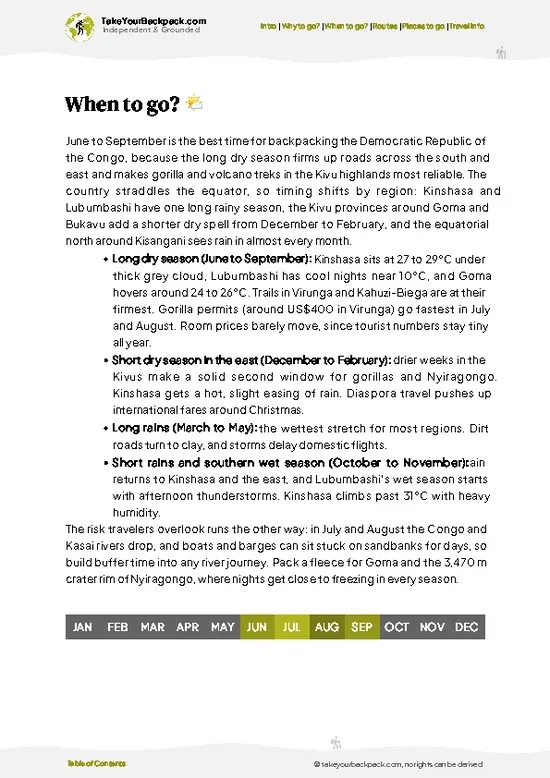
  • Topic: Weather – Kamina’s climate swings between a wet season from October to May and a dry season from June to September. The dry months bring clearer skies and less mud, making trails and roads far more manageable for backpackers.

  • Topic: Temperature – Expect daytime highs around 25-28°C (77-82°F) during the dry season, with nights cooling to 15-18°C (59-64°F). The wet season is warmer but stickier, which can sap your energy on long hikes.

  • Topic: Daylight Hours – Near the equator, Kamina enjoys roughly 12 hours of daylight year-round, so you won’t lose much time to fading light regardless of when you visit.

  • Topic: Crowds – Tourism here is low-key year-round, but the dry season sees a slight uptick as travelers avoid the mud and heavy rains, so expect a few more fellow adventurers
read more 👉

  • Topic: Weather – Kamina’s climate swings between a wet season from October to May and a dry season from June to September. The dry months bring clearer skies and less mud, making trails and roads far more manageable for backpackers.

  • Topic: Temperature – Expect daytime highs around 25-28°C (77-82°F) during the dry season, with nights cooling to 15-18°C (59-64°F). The wet season is warmer but stickier, which can sap your energy on long hikes.

  • Topic: Daylight Hours – Near the equator, Kamina enjoys roughly 12 hours of daylight year-round, so you won’t lose much time to fading light regardless of when you visit.

  • Topic: Crowds – Tourism here is low-key year-round, but the dry season sees a slight uptick as travelers avoid the mud and heavy rains, so expect a few more fellow adventurers then.

  • Topic: Seasonal Activities – Dry months open up access to local markets and cultural events that can be washed out or inaccessible during heavy rains, giving you a richer, more immersive experience.

  • Topic: Price Fluctuations – Prices for lodging and transport tend to rise modestly during the dry season due to demand, but the trade-off is smoother travel and better conditions for exploring.


Pro-tip: Aim for the early dry season (June-July) to catch firm trails, manageable crowds, and local life in full swing before prices peak.


source: climatestotravel.comJANJanuary: fair for travelingFEBFebruary: fair for travelingMARMarch: fair for travelingAPRApril: fair for travelingMAYMay: fair for travelingJUNJune: excellent for travelingJULJuly: excellent for travelingAUGAugust: highly recommended for travelingSEPSeptember: highly recommended for travelingOCTOctober: fair for travelingNOVNovember: fair for travelingDECDecember: fair for traveling
when-to-go

✈️ The backpacker research shortcutDR Congo Travel Guide

An offline-friendly backpacking guide with optimized travel routes, ranked highlights, transport advice, and the best areas to stay.
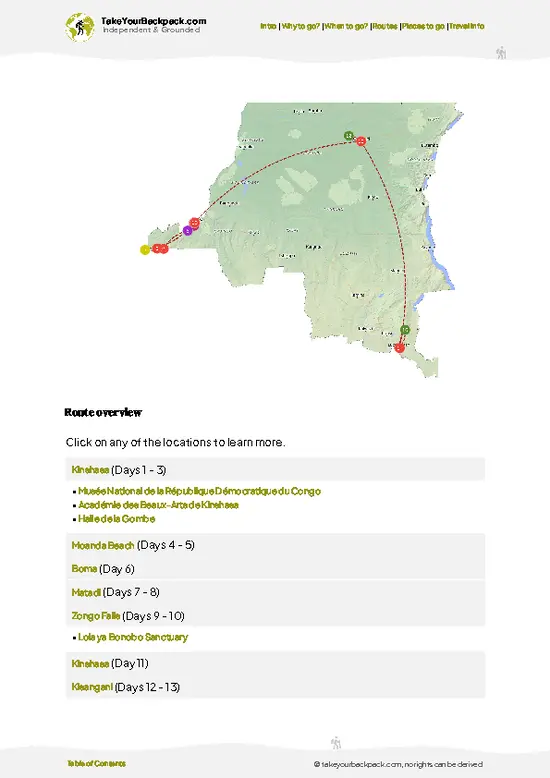
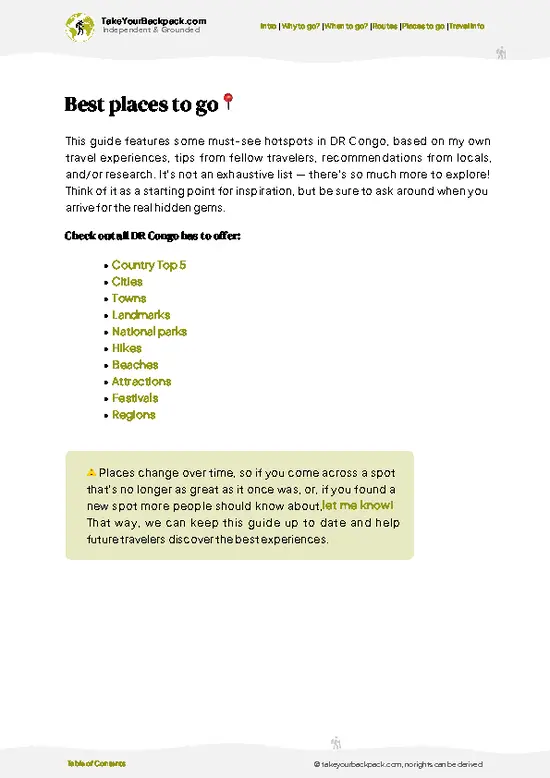
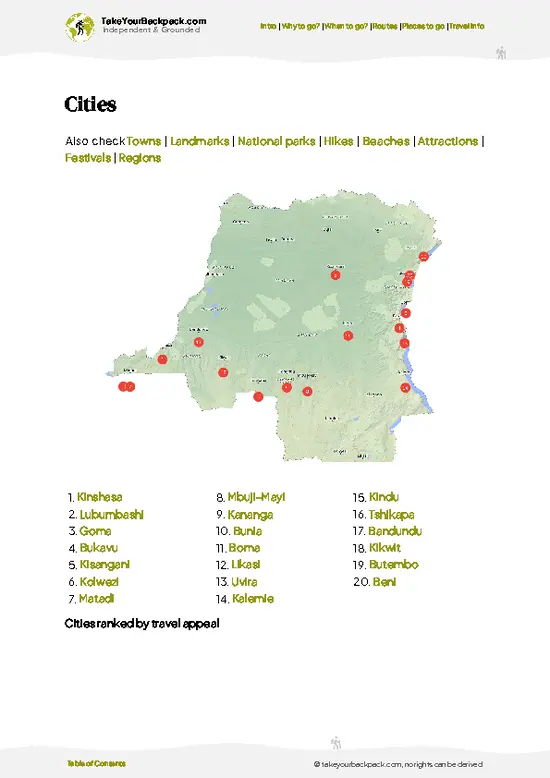
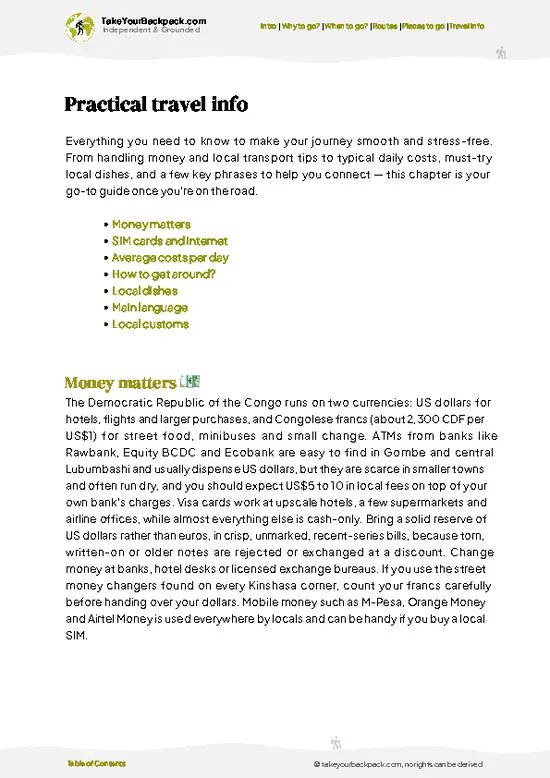
example page 0 from our offline Travel Guide for Democratic Republic of the Congo
example page 1 from our offline Travel Guide for Democratic Republic of the Congo
example page 2 from our offline Travel Guide for Democratic Republic of the Congo
example page 3 from our offline Travel Guide for Democratic Republic of the Congo
example page 4 from our offline Travel Guide for Democratic Republic of the Congo
example page 5 from our offline Travel Guide for Democratic Republic of the Congo
example page 6 from our offline Travel Guide for Democratic Republic of the Congo
example page 7 from our offline Travel Guide for Democratic Republic of the Congo
The digital guide (378 pages) contains:
96 highlights, ranked by travel appeal
Optimized 7, 14 & 21-day travel routes
Cities, national parks, landmarks, beaches
How to get around
Offline-friendly for travel without Wi-Fi
👉 Click to see all 30+ guide features

📅 Plan smarter in minutes, not weeks
Month by month travel advice
Festivals & national holidays
Budget expectations

🗺️ Go to the right places, skip the overrated ones
Honest pros & cons of destinations
Top hikes, parks & viewpoints
Lesser-known places most travelers miss
Clear “worth it vs skip it” guidance

🛏️ Travel smoothly without rookie mistakes
Best areas to stay
Transport systems explained simply
Common scams & safety advice
SIM cards, money & practical tips

🌍 Understand the country, not just visit it
Culture & traditions
52 Essential phrases & customs
Festivals worth planning around
Traveler-friendly historical context
Insights that make places more meaningful

📱 Built for real travel conditions
Fully downloadable PDF
Works completely offline
Optimized for phone use
Useful in remote areas & buses
Everything in one place
Save weeks of stressful planning
Get instant access to your full guide. 30‑day money-back guarantee.


By proceeding you agree to our terms.
Sent to your inbox immediately after payment • 100% Secure Checkout
Best Backpacking Travel Advisor 2025 tourism awardBest Backpacking
Travel Advisor
2025
What others say about Take Your Backpack Guides:
⭐⭐⭐⭐⭐
Fantastic, amazing amount of information!
⭐⭐⭐⭐⭐
My goodness this is amazing, it's what I've been looking for hats off too you!
⭐⭐⭐⭐⭐
I think this is absolutely BRILLIANT
⭐⭐⭐⭐
Very complete and informative. It's still missing places, but I gotta to commend you
⭐⭐⭐⭐⭐
This is truly amazing, thank you, can't wait to explore it with my kids!
⭐⭐⭐⭐⭐
Awesome resource, thank you!
⭐⭐⭐⭐⭐
This is amazing! Can't wait to explore the ones I haven't seen
⭐⭐⭐⭐
I love this! Well done, great idea.
⭐⭐⭐⭐⭐
Thanks for taking the time to make this gem!
⭐⭐⭐⭐⭐
This might be the best website I've ever seen.
⭐⭐⭐⭐⭐
Congratulations, and thank you so much for your work; it's incredibly valuable.
⭐⭐⭐⭐
In all seriousness I think you did a great job pointing out the important spots
⭐⭐⭐⭐⭐
10/10 very good
⭐⭐⭐⭐⭐
As someone who's only just starting to visit regularly this is awesome, thank you.
⭐⭐⭐⭐
Thank you very much! I'm going to visit my dad, it's going to be very useful!
⭐⭐⭐⭐⭐
This is really cool! We'll be travelling for the first time and this definitely come in handy.
⭐⭐⭐⭐⭐
You are now our minister of culture, congratulations 👨‍💼
⭐⭐⭐⭐⭐
Just wanted to tell you that this is a pearl! Going to follow your recommendations.
⭐⭐⭐⭐⭐
This is so cool. I'll definitely be using the resource for my travels soon.
⭐⭐⭐⭐⭐
This is very impressive! Good work.
⭐⭐⭐⭐⭐
This is an amazing and informative site. Very well done!

🛏️ Where to stay?How to pick the right area

In Kamina, the best spot for backpackers is the central district around the main market and transport hub. This area hums with life—vendors shouting, the scent of grilled street food, and the constant shuffle of locals and travelers. It’s where you’ll find the few hostels catering to budget travelers, offering a chance to connect with others swapping stories over shared meals or late-night drinks. Safety here is relative but better than the outskirts, thanks to the steady presence of local commerce and informal community watchfulness.

Avoid the quieter residential neighborhoods; they’re less … read more 👉
In Kamina, the best spot for backpackers is the central district around the main market and transport hub. This area hums with life—vendors shouting, the scent of grilled street food, and the constant shuffle of locals and travelers. It’s where you’ll find the few hostels catering to budget travelers, offering a chance to connect with others swapping stories over shared meals or late-night drinks. Safety here is relative but better than the outskirts, thanks to the steady presence of local commerce and informal community watchfulness.

Avoid the quieter residential neighborhoods; they’re less welcoming to outsiders and lack the social pulse that makes solo travel rewarding. Staying near the transport hub also means easy access to buses and taxis, cutting down on the hassle of getting around. The vibe is raw and unpolished, but that’s the point—it’s where you feel the city’s heartbeat, not a sanitized tourist bubble. This gritty atmosphere is the backdrop for authentic encounters and a true sense of place.

🚌 Getting aroundHow to get around Kamina

Kamina in DR Congo moves at its own rhythm—less a clockwork town and more a pulse you feel underfoot. The streets hum with a mix of purposeful strides and spontaneous stops, where schedules bend to the heat of the day and the chatter of vendors. It’s not about catching a bus at the exact minute but about tuning into the flow of the crowd, the scent of roasting maize, and the sudden burst of laughter from a corner café. This is a place where transit isn’t just a way to get from A to B; it’s a chance to soak in the local tempo, a dance between patience and momentum.


  • Walking: The heart of Kamina’s transit. Most neighborhoods are compact enough to explore on foot, letting you catch the scent of fresh bread from street stalls and the vibrant colors of market life. Walking costs nothing and
read more 👉
Kamina in DR Congo moves at its own rhythm—less a clockwork town and more a pulse you feel underfoot. The streets hum with a mix of purposeful strides and spontaneous stops, where schedules bend to the heat of the day and the chatter of vendors. It’s not about catching a bus at the exact minute but about tuning into the flow of the crowd, the scent of roasting maize, and the sudden burst of laughter from a corner café. This is a place where transit isn’t just a way to get from A to B; it’s a chance to soak in the local tempo, a dance between patience and momentum.


  • Walking: The heart of Kamina’s transit. Most neighborhoods are compact enough to explore on foot, letting you catch the scent of fresh bread from street stalls and the vibrant colors of market life. Walking costs nothing and offers the richest sensory experience, but be ready for uneven sidewalks and the occasional burst of dust from passing motos.


  • Shared Taxis (Taxi-Brousse): These minibuses are the backbone of local travel, running from early morning around 6:30 AM until dusk. Fares are cheap—often just a few hundred Congolese francs—and they weave through the town’s main arteries with a stop-anywhere attitude. They’re not the fastest, but they’re a direct line to the pulse of Kamina’s daily grind.


  • Motos (Motorcycle Taxis): When time is tight or the sun is high, motos are your go-to. They dart through traffic with ease, offering quick hops for a few hundred francs. Helmets aren’t always guaranteed, so if you’re cautious, bring your own. The ride is bumpy but gives you a front-row seat to the city’s kinetic energy.


  • Bicycle Rentals: For those wanting a bit more control and speed without the noise, renting a bike is a solid option. Prices are modest, and you can cover more ground than walking while still feeling the breeze and the city’s smells. Just watch for potholes and the occasional stray dog.

👛 Costs (as of 10 June 2026)How expensive it really is

Backpacking in Kamina, DR Congo, demands a practical approach to budgeting, as prices reflect both local living standards and the limited tourist infrastructure.
  • Dorm Accommodation: Expect to pay around $5 to $10 per night for basic dorm beds. Options are sparse and often very simple, with minimal amenities. Cleanliness and security can vary, so factor in a bit of flexibility.
  • Meals: Street food and local eateries dominate. A typical meal costs between $1 and $3, featuring staples like rice, beans, and grilled meat or fish. Western-style restaurants are rare and pricier, so sticking to local fare keeps costs low.
  • Local Transport: Transport mainly means shared taxis or minibuses, costing roughly $0.50 to $1 per short trip within town. For longer distances or private rides, prices can rise
read more 👉
Backpacking in Kamina, DR Congo, demands a practical approach to budgeting, as prices reflect both local living standards and the limited tourist infrastructure.
  • Dorm Accommodation: Expect to pay around $5 to $10 per night for basic dorm beds. Options are sparse and often very simple, with minimal amenities. Cleanliness and security can vary, so factor in a bit of flexibility.
  • Meals: Street food and local eateries dominate. A typical meal costs between $1 and $3, featuring staples like rice, beans, and grilled meat or fish. Western-style restaurants are rare and pricier, so sticking to local fare keeps costs low.
  • Local Transport: Transport mainly means shared taxis or minibuses, costing roughly $0.50 to $1 per short trip within town. For longer distances or private rides, prices can rise to $5 or more, but these are less common for backpackers.
  • Basic Activities/Entry Fees: Kamina isn’t a hotspot for formal tourist attractions, so entry fees are minimal or nonexistent. Visiting local markets or cultural spots is usually free, though small donations or tips might be appreciated.
  • Miscellaneous Expenses: Budget around $1 to $3 daily for essentials like bottled water, snacks, or phone credit. Internet access is patchy and often requires buying local SIM cards or paying for data bundles.

Altogether, you’re looking at roughly $8 to $20 per day to cover the essentials in Kamina. This range reflects the town’s basic infrastructure and the need to balance comfort with local realities. The payoff is an authentic experience where every dollar stretches into genuine local encounters.


source: congotourisme.org
⚠️ Prices can change and everyone travels differently, so take this as a rough guide. Hope it helps you plan your adventure!

🚌 Day tripsWhere to go beyond the main area

Kamina is a fantastic base for exploring the raw beauty of the DR Congo. The town’s vibrant markets and friendly locals set the stage for unforgettable day trips. Here are a few that truly capture the spirit of the region.

Trip to Lake Kisale
Just a short ride from Kamina, Lake Kisale is a serene escape. The journey takes about an hour, winding through lush landscapes and small villages. Once there, the lake’s calm waters reflect the sky, creating a perfect spot for a picnic. Bring some local snacks from Kamina’s market, and enjoy the tranquility. The best time to visit is during the dry season, when the sun sparkles on the water. A common mistake? Forgetting to pack sunscreen; the sun can be relentless.


Hike to the Chutes de Kinsuka
This stunning waterfall is about two hours from … read more 👉
Kamina is a fantastic base for exploring the raw beauty of the DR Congo. The town’s vibrant markets and friendly locals set the stage for unforgettable day trips. Here are a few that truly capture the spirit of the region.

Trip to Lake Kisale
Just a short ride from Kamina, Lake Kisale is a serene escape. The journey takes about an hour, winding through lush landscapes and small villages. Once there, the lake’s calm waters reflect the sky, creating a perfect spot for a picnic. Bring some local snacks from Kamina’s market, and enjoy the tranquility. The best time to visit is during the dry season, when the sun sparkles on the water. A common mistake? Forgetting to pack sunscreen; the sun can be relentless.


Hike to the Chutes de Kinsuka
This stunning waterfall is about two hours from Kamina, and the hike is worth every step. The trail meanders through dense forest, where the air is thick with the scent of damp earth and wildflowers. When you finally reach the falls, the roar of the water is exhilarating. Bring sturdy shoes and plenty of water; the terrain can be tricky. Aim for the early morning to avoid the heat and catch the falls at their most vibrant. Many first-timers underestimate the hike’s difficulty, so prepare accordingly.


Visit the Local Artisan Markets
Staying in Kamina doesn’t mean you can’t explore. Spend a day wandering through local artisan markets, where the colors of handmade crafts pop against the earthy backdrop. You can find everything from woven baskets to intricate wood carvings. This is a great way to connect with the community and pick up unique souvenirs. Allocate a few hours, and don’t rush; the atmosphere is part of the experience. A common mistake is to bargain too aggressively; remember, these artisans rely on fair trade.
Want to know what more DR Congo offers?
The DR Congo Travel Guide describes 96 highlights, from cities to national parks, from beaches to hikes

Get the Travel Guide -

🍲 FoodEating & Drinking in Kamina

In Kamina, DR Congo, food is a lively negotiation between bold flavors and simple, hearty ingredients. You’ll want to dive into moambe chicken, a rich stew simmered in palm nut sauce that tastes like the forest itself distilled into a bowl. It’s often paired with fufu, a dense, doughy staple made from cassava or plantains—perfect for scooping up every last drop.

Backpackers find their rhythm in the bustling markets and street stalls, where the air hums with sizzling grills and the scent of spices. Casual eateries serve up generous portions without fuss, inviting you to eat with your hands and join the local rhythm.

Drinking here isn’t about fancy cocktails but about sharing palm wine or a cold local beer, often enjoyed in groups, where conversation flows as freely as the drinks. Expect … read more 👉
In Kamina, DR Congo, food is a lively negotiation between bold flavors and simple, hearty ingredients. You’ll want to dive into moambe chicken, a rich stew simmered in palm nut sauce that tastes like the forest itself distilled into a bowl. It’s often paired with fufu, a dense, doughy staple made from cassava or plantains—perfect for scooping up every last drop.

Backpackers find their rhythm in the bustling markets and street stalls, where the air hums with sizzling grills and the scent of spices. Casual eateries serve up generous portions without fuss, inviting you to eat with your hands and join the local rhythm.

Drinking here isn’t about fancy cocktails but about sharing palm wine or a cold local beer, often enjoyed in groups, where conversation flows as freely as the drinks. Expect a relaxed vibe, where hospitality means offering a sip or two before you even ask. In Kamina, food and drink are less about formality and more about connection—jump in with an open mind and a hungry appetite.

🛡️ SafetyTraveler Safety Guide

Kamina, in the heart of DR Congo, is generally safe, but a few practical tips can enhance your experience. Stay aware in crowded markets; pickpockets can be opportunistic. Keep your valuables close and avoid flashy displays.

If you’re traveling solo, stick to well-lit areas after dark. The atmosphere shifts at night, and while locals are friendly, it’s wise to blend in and not draw attention.

Common scams are rare, but be cautious of overly eager guides offering unsolicited help. Politely decline and seek out reputable services.

Annoyances like erratic transportation can test your patience. Embrace the unpredictability; it’s part of the adventure. Carry a local SIM for navigation and communication, and you’ll navigate Kamina like a pro.

Other Congolese cities near Kamina

Explore more nearby:

  • Kolwezi—Cobalt mines, mining camps, arid terrain| 229 km away
  • Fungurume—cobalt mines, company town, arid hills| 255 km away
  • Mwene-Ditu—rail junction, mining supply town, plateau setting| 256 km away

💡 Not sure where to go next?
Create a personalized itinerary for DR Congo including Kamina and the places that fit your trip.

Generate my itinerary

👉 Discover all cities

Or checkout all DR Congo has to offer (think cities, towns, villages, national parks, hikes, beaches, festivals)
Country photo of DR Congo

We 💚 feedbackFinal thoughts on visiting Kamina

Kamina has a raw energy that pulses through its streets, a blend of bustling markets and the scent of fresh cassava wafting through the air. The best surprise? The warmth of the locals; their smiles make the effort to connect worthwhile. Just a heads-up: the infrastructure can be tricky, so patience is key. Embrace the chaos, and you’ll find beauty in the unexpected moments that make this place truly special.

✍️ Help improve this page!
The information on this page is based on in-depth research, insights shared by experienced travelers, and feedback from the local travel community in DR Congo. While every effort is made to keep the information accurate and current, conditions can change — so if you spot anything incorrect or outdated, please get in touch.


🙋‍♂️ Give feedback

👋 Meet the founderWho’s Behind Take Your Backpack?

Johan, backpacker and founder of TakeYourBackpackHi, I’m Johan (Netherlands 🇳🇱), the creator of TakeYourBackpack. Over the past decade, I’ve backpacked through 80+ countries across six continents, gaining extensive experience with independent travel, long-term trips, and overland routes.

This site is built on a combination of firsthand travel experience and carefully curated insights from other backpackers. Many guides are based on places I’ve personally visited, while others bring together tips, observations, and practical advice shared by trusted travelers I’ve met along the way.

The goal is to provide realistic, experience-driven guidance — not generic itineraries — so you can explore destinations with better context, clearer expectations, and more confidence.

Get full DR Congo guide •
Instant download • 96 highlights • Full Offline guide