×

DR Congo🇨🇩 | citiesKasongoriver crossing, historic mosques, trade outpost | things to do and best time to go

Explore KaminaExplore Gbadolite

Backpacking in Kasongo
👍 Recommendedcity ranked #24
By Johan Kruseman 🇳🇱 | Updated September 3, 2026

Kasongo is not for anyone craving polished infrastructure, nightlife, or a curated tourist circuit—if you want cappuccinos and Instagrammable murals, keep moving. But for backpackers who thrive on raw, real travel, Kasongo rewards patience with a sense of discovery you can’t fake. Deep in eastern DR Congo, Kasongo sits far from the main arteries, a place where the air smells of woodsmoke and earth after rain, and the pace is dictated by the river and the market, not a timetable. It’s more a waypoint than a destination—useful as a launchpad for exploring the Lualaba River or as a pause between bigger towns like Kindu and Kabambare. Don’t expect hostels or a backpacker scene; you’ll likely be the only foreigner, which means evenings are quiet, and connections happen over shared meals, not bar crawls. Getting here is a test of patience—think battered bush taxis or riverboats, not express buses. Costs are low, but so are comforts. Safety is reasonable if you stick to daylight and local advice, but you’ll need your wits. Compared to Kindu, Kasongo is more relaxed, less practical, and far less touristic—a place where the journey is the story, not just the scenery.

Discover everything you want to know in the 📖 DR Congo Travel Guide.
Safety warning

The current risk level for DR Congo is high. Check the advice before going.


Get your DR Congo guide
95 ranked highlights, routes & tips, works offline (372 pages)
Loading the map 🌍
CLICK TO FILTER
cities
towns
landmarks
national parks
hikes
beaches
attractions
festivals
regions
SHOW COUNTRY’S BESTSHOW ALL

✨ Why go?
Ranked #24 city in DR Congo
The unique appeal for travelers

Backpackers flock to Kasongo in the DR Congo for its strategic position as a gateway to hikes and cultural experiences. The town’s walkable streets invite exploration, where the scent of local street food mingles with the chatter of friendly locals. Small-scale guesthouses offer a cozy atmosphere, perfect for solo travelers or small groups looking to connect. While some pass through quickly, many linger a few days to soak in the laid-back vibe and enjoy the nearby beaches along the river. It’s not a party town; instead, it’s a place where slow travelers can recharge and immerse themselves in the rhythm of local life. If you appreciate a blend of nature and community, Kasongo is a rewarding stop on your journey.
Want to include Kasongo in your DR Congo route?
Create a personalized DR Congo itinerary that includes Kasongo and the places that fit your trip — based on your travel style, budget, and available time. Get your route in seconds.

Generate my trip

💡 HighlightsEssential experiences to have while visiting Kasongo

  • Kasongo Central Market — The heartbeat of the town: a busy, no-frills market where traders sell fresh produce, fish, charcoal, and everyday goods. Visiting gives a clear, on-the-ground sense of local life, flavors, and bargaining culture.
  • Kasongo Cathedral (seat of the Roman Catholic Diocese) — The main Catholic church in town and administrative center for the diocese. It’s a focal point for community events and a place to see missionary-era architecture and local religious life in action.
  • Kasongo Airstrip — The small regional airstrip that serves Kasongo and the surrounding territory. It’s the practical arrival/departure point for many visitors and offers a useful perspective on regional travel logistics and the scale of the town.
Nearby day trips to consider: the provincial hub of Kindu … read more 👉
  • Kasongo Central Market — The heartbeat of the town: a busy, no-frills market where traders sell fresh produce, fish, charcoal, and everyday goods. Visiting gives a clear, on-the-ground sense of local life, flavors, and bargaining culture.
  • Kasongo Cathedral (seat of the Roman Catholic Diocese) — The main Catholic church in town and administrative center for the diocese. It’s a focal point for community events and a place to see missionary-era architecture and local religious life in action.
  • Kasongo Airstrip — The small regional airstrip that serves Kasongo and the surrounding territory. It’s the practical arrival/departure point for many visitors and offers a useful perspective on regional travel logistics and the scale of the town.
Nearby day trips to consider: the provincial hub of Kindu for a larger market and river port, Maiko National Park for remote wildlife-trekking options (access requires planning), and the surrounding Maniema river villages and rural markets for authentic local culture.
Spotted a mistake or missing something? Contact us.
🏘️ NeighborhoodsUnderstanding the local layout

Kasongo is a vibrant hub in the heart of DR Congo, where the pulse of local life beats strong. Here’s how to navigate its neighborhoods for an authentic experience.

Centre Ville: This is the bustling heart of Kasongo. Expect a lively atmosphere with street vendors and local shops. It’s walkable, making it easy to explore on foot. The nightlife here is modest but lively, with a few bars where you can mingle with locals. Perfect for short stays, as you can soak in the energy quickly.

Quartier Kasaï: A quieter area, ideal for those seeking a more laid-back vibe. It’s less touristy, offering a glimpse into everyday life. Accommodation here is affordable, and you can find small eateries serving local dishes. It’s a bit further from the main transport hubs, so plan for longer stays to truly appreciate … read more 👉
Kasongo is a vibrant hub in the heart of DR Congo, where the pulse of local life beats strong. Here’s how to navigate its neighborhoods for an authentic experience.

Centre Ville: This is the bustling heart of Kasongo. Expect a lively atmosphere with street vendors and local shops. It’s walkable, making it easy to explore on foot. The nightlife here is modest but lively, with a few bars where you can mingle with locals. Perfect for short stays, as you can soak in the energy quickly.

Quartier Kasaï: A quieter area, ideal for those seeking a more laid-back vibe. It’s less touristy, offering a glimpse into everyday life. Accommodation here is affordable, and you can find small eateries serving local dishes. It’s a bit further from the main transport hubs, so plan for longer stays to truly appreciate the slower pace.

Quartier Mbandaka: This neighborhood strikes a balance between activity and tranquility. It has decent transport links and a few markets. The vibe is friendly, making it suitable for both short and longer visits. You’ll find a mix of local cafes and shops, perfect for unwinding after a day of exploration.

⌛️ 1 daySeeing the highlights in 24 hours

Kasongo, a town steeped in history and culture, offers a glimpse into the heart of DR Congo. Its vibrant markets and the rhythmic pulse of daily life create an atmosphere that’s both inviting and authentic.

Start your morning at the bustling central market. The air is thick with the scent of fresh produce and spices. Engage with local vendors; their stories add layers to the experience. Grab a breakfast of *fufu* and *saka-saka* from a nearby stall. It’s a hearty way to fuel up for the day ahead.

In the afternoon, head to the banks of the Lualaba River. The shimmering water reflects the sky, and the gentle breeze carries the sounds of laughter and chatter. Take a stroll along the riverbank, where you might spot fishermen casting their nets or children playing. For a unique twist, visit … read more 👉
Kasongo, a town steeped in history and culture, offers a glimpse into the heart of DR Congo. Its vibrant markets and the rhythmic pulse of daily life create an atmosphere that’s both inviting and authentic.

Start your morning at the bustling central market. The air is thick with the scent of fresh produce and spices. Engage with local vendors; their stories add layers to the experience. Grab a breakfast of *fufu* and *saka-saka* from a nearby stall. It’s a hearty way to fuel up for the day ahead.

In the afternoon, head to the banks of the Lualaba River. The shimmering water reflects the sky, and the gentle breeze carries the sounds of laughter and chatter. Take a stroll along the riverbank, where you might spot fishermen casting their nets or children playing. For a unique twist, visit the nearby village of Munganga, often overlooked by tourists. Here, you can witness traditional crafts and perhaps even join a workshop.

As evening falls, return to Kasongo and find a local eatery. The aroma of grilled fish fills the air, and the warmth of the community wraps around you. Share stories with fellow travelers or locals, soaking in the rich tapestry of life in this remarkable town.
Turn your Kasongo visit into an DR Congo adventure
Build a complete DR Congo route with Kasongo, hidden gems, must-see destinations, and realistic travel times included.

Generate my trip

🌤️ When to go?Seasonal considerations and timing


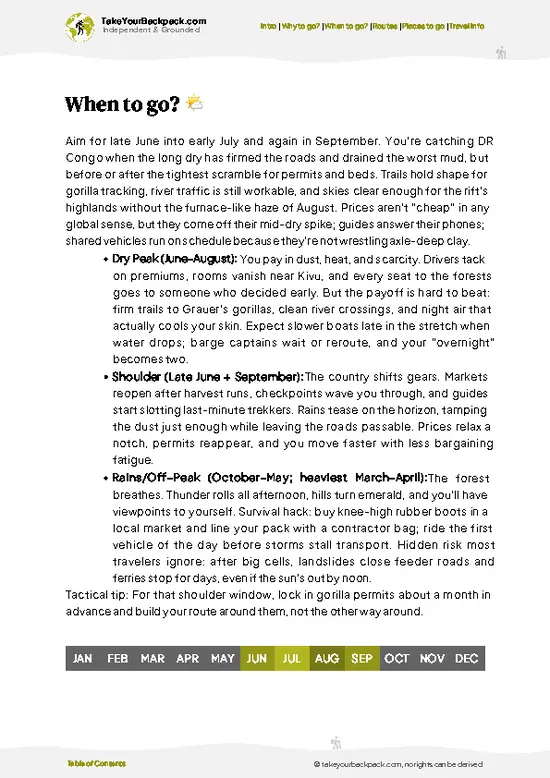
  • Weather: Kasongo’s climate swings between a wet season from October to May and a dry season from June to September. The dry months offer dusty trails and fewer mosquitoes, making trekking far more pleasant.

  • Temperature: Expect highs around 28-32°C (82-90°F) year-round, but the dry season brings cooler evenings dipping to 18°C (64°F), a relief after the day’s heat.

  • Daylight Hours: Near the equator, daylight is steady—about 12 hours daily—so you get reliable light for early starts or late finishes without worrying about fading sun.

  • Crowds: Kasongo is off the beaten path, so crowds are minimal year-round. However, the dry season sees a slight uptick in adventurous travelers, meaning more chances to swap stories around the campfire.

  • Seasonal Activities: The dry season is prime for hiking
read more 👉

  • Weather: Kasongo’s climate swings between a wet season from October to May and a dry season from June to September. The dry months offer dusty trails and fewer mosquitoes, making trekking far more pleasant.

  • Temperature: Expect highs around 28-32°C (82-90°F) year-round, but the dry season brings cooler evenings dipping to 18°C (64°F), a relief after the day’s heat.

  • Daylight Hours: Near the equator, daylight is steady—about 12 hours daily—so you get reliable light for early starts or late finishes without worrying about fading sun.

  • Crowds: Kasongo is off the beaten path, so crowds are minimal year-round. However, the dry season sees a slight uptick in adventurous travelers, meaning more chances to swap stories around the campfire.

  • Seasonal Activities: The dry season is prime for hiking and river excursions, while the wet season’s lush greenery transforms the landscape but can make trails slippery and river crossings tricky.

  • Price Fluctuations: Local prices stay fairly stable, but transport costs can spike during the wet season due to difficult road conditions, so budgeting for dry months stretches your travel funds further.


Pro-tip: Aim for the early dry season—June to July—when the air is crisp, the landscape still fresh from rains, and the trails firm enough to explore without slogging through mud.


source: climatestotravel.comJANJanuary: fair for travelingFEBFebruary: fair for travelingMARMarch: fair for travelingAPRApril: fair for travelingMAYMay: fair for travelingJUNJune: excellent for travelingJULJuly: excellent for travelingAUGAugust: highly recommended for travelingSEPSeptember: highly recommended for travelingOCTOctober: fair for travelingNOVNovember: fair for travelingDECDecember: fair for traveling
democratic-republic-of-the-congo-city-kasongo
© Google |

✈️ The backpacker research shortcutDR Congo Travel Guide

An offline-friendly backpacking guide with optimized travel routes, ranked highlights, transport advice, and the best areas to stay.
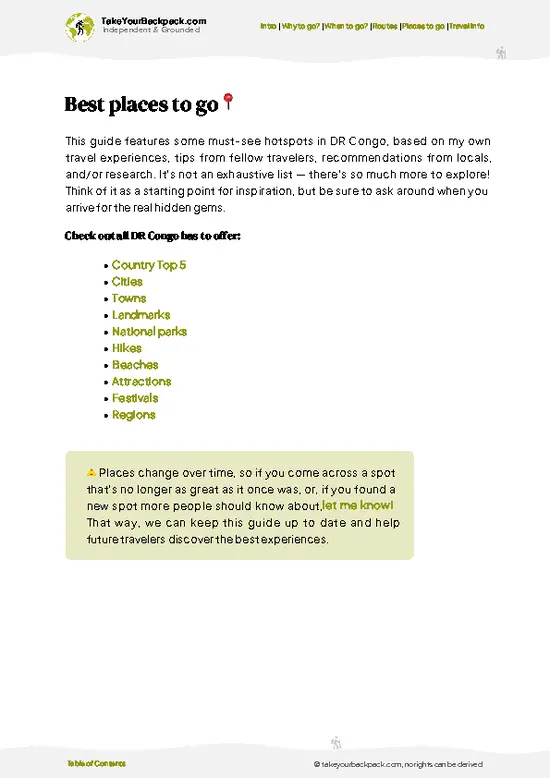
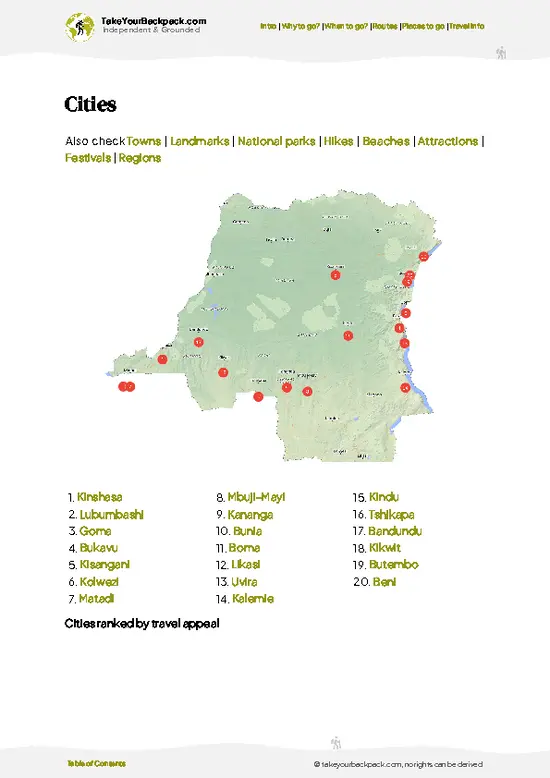
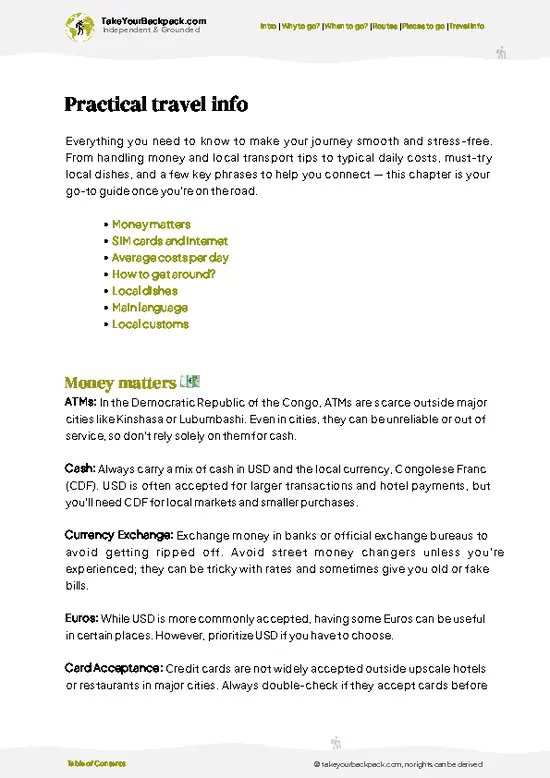
example page 0 from our offline Travel Guide for Democratic Republic of the Congo
example page 1 from our offline Travel Guide for Democratic Republic of the Congo
example page 2 from our offline Travel Guide for Democratic Republic of the Congo
example page 3 from our offline Travel Guide for Democratic Republic of the Congo
example page 4 from our offline Travel Guide for Democratic Republic of the Congo
example page 5 from our offline Travel Guide for Democratic Republic of the Congo
example page 6 from our offline Travel Guide for Democratic Republic of the Congo
example page 7 from our offline Travel Guide for Democratic Republic of the Congo
The digital guide (372 pages) contains:
95 highlights, ranked by travel appeal
Optimized 7, 14 & 21-day travel routes
Cities, national parks, landmarks, beaches
How to get around
Offline-friendly for travel without Wi-Fi
👉 Click to see all 30+ guide features

📅 Plan smarter in minutes, not weeks
Month by month travel advice
Festivals & national holidays
Budget expectations

🗺️ Go to the right places, skip the overrated ones
Honest pros & cons of destinations
Top hikes, parks & viewpoints
Lesser-known places most travelers miss
Clear “worth it vs skip it” guidance

🛏️ Travel smoothly without rookie mistakes
Best areas to stay
Transport systems explained simply
Common scams & safety advice
SIM cards, money & practical tips

🌍 Understand the country, not just visit it
Culture & traditions
52 Essential phrases & customs
Festivals worth planning around
Traveler-friendly historical context
Insights that make places more meaningful

📱 Built for real travel conditions
Fully downloadable PDF
Works completely offline
Optimized for phone use
Useful in remote areas & buses
Everything in one place
Save weeks of stressful planning
Get instant access to your full guide. 30‑day money-back guarantee.
+ Add another guide for just US$7.80

By proceeding you agree to our terms.
Sent to your inbox immediately after payment • 100% Secure Checkout
Best Backpacking Travel Advisor 2025 tourism awardBest Backpacking
Travel Advisor
2025
What others say about Take Your Backpack Guides:
⭐⭐⭐⭐⭐
Fantastic, amazing amount of information!
⭐⭐⭐⭐⭐
My goodness this is amazing, it's what I've been looking for hats off too you!
⭐⭐⭐⭐⭐
I think this is absolutely BRILLIANT
⭐⭐⭐⭐
Very complete and informative. It's still missing places, but I gotta to commend you
⭐⭐⭐⭐⭐
This is truly amazing, thank you, can't wait to explore it with my kids!
⭐⭐⭐⭐⭐
Awesome resource, thank you!
⭐⭐⭐⭐⭐
This is amazing! Can't wait to explore the ones I haven't seen
⭐⭐⭐⭐
I love this! Well done, great idea.
⭐⭐⭐⭐⭐
Thanks for taking the time to make this gem!
⭐⭐⭐⭐⭐
This might be the best website I've ever seen.
⭐⭐⭐⭐⭐
Congratulations, and thank you so much for your work; it's incredibly valuable.
⭐⭐⭐⭐
In all seriousness I think you did a great job pointing out the important spots
⭐⭐⭐⭐⭐
10/10 very good
⭐⭐⭐⭐⭐
As someone who's only just starting to visit regularly this is awesome, thank you.
⭐⭐⭐⭐
Thank you very much! I'm going to visit my dad, it's going to be very useful!
⭐⭐⭐⭐⭐
This is really cool! We'll be travelling for the first time and this definitely come in handy.
⭐⭐⭐⭐⭐
You are now our minister of culture, congratulations 👨‍💼
⭐⭐⭐⭐⭐
Just wanted to tell you that this is a pearl! Going to follow your recommendations.
⭐⭐⭐⭐⭐
This is so cool. I'll definitely be using the resource for my travels soon.
⭐⭐⭐⭐⭐
This is very impressive! Good work.
⭐⭐⭐⭐⭐
This is an amazing and informative site. Very well done!

🛏️ Where to stay?Where staying makes the most sense

Kasongo’s heart for backpackers beats strongest in its central district, where the streets hum with local markets and the scent of fresh cassava mingles with the earth after rain. This area offers a rare blend of safety and social energy—key for solo travelers craving connection without the chaos. Unlike the quieter, more residential outskirts, here you’ll find a handful of budget lodgings that cater to the wandering crowd, places where you can swap stories over a shared meal or plan your next move with fellow adventurers. The vibe is unpolished but genuine, with the kind of warmth that comes … read more 👉
Kasongo’s heart for backpackers beats strongest in its central district, where the streets hum with local markets and the scent of fresh cassava mingles with the earth after rain. This area offers a rare blend of safety and social energy—key for solo travelers craving connection without the chaos. Unlike the quieter, more residential outskirts, here you’ll find a handful of budget lodgings that cater to the wandering crowd, places where you can swap stories over a shared meal or plan your next move with fellow adventurers. The vibe is unpolished but genuine, with the kind of warmth that comes from a community used to visitors who aren’t just passing through. Steering clear of the more isolated neighborhoods isn’t just about safety—it’s about unlocking the pulse of Kasongo, where the light shifts through dusty streets and every corner invites a new conversation. This is the spot to settle in, recharge, and soak up the real rhythm of DR Congo’s lesser-known towns.

🚌 Getting aroundHow to get around Kasongo

Kasongo moves at its own rhythm—less a clockwork town and more a pulse you feel underfoot. The air carries the scent of earth and smoke, punctuated by the chatter of market vendors and the occasional rumble of a passing motorbike. Time here is elastic; schedules are suggestions, not rules. You’ll find that patience isn’t just a virtue—it’s your best tool. The town’s layout encourages wandering on foot, but when you need to cover ground, the transit options reflect the local improvisation and resourcefulness. Understanding this flow means you’re not just getting from A to B—you’re syncing with Kasongo’s heartbeat, making every step part of the experience.


  • Walking: The most reliable and immersive way to navigate Kasongo. Streets are uneven and dust-laden, so sturdy shoes are a must. Walking
read more 👉
Kasongo moves at its own rhythm—less a clockwork town and more a pulse you feel underfoot. The air carries the scent of earth and smoke, punctuated by the chatter of market vendors and the occasional rumble of a passing motorbike. Time here is elastic; schedules are suggestions, not rules. You’ll find that patience isn’t just a virtue—it’s your best tool. The town’s layout encourages wandering on foot, but when you need to cover ground, the transit options reflect the local improvisation and resourcefulness. Understanding this flow means you’re not just getting from A to B—you’re syncing with Kasongo’s heartbeat, making every step part of the experience.


  • Walking: The most reliable and immersive way to navigate Kasongo. Streets are uneven and dust-laden, so sturdy shoes are a must. Walking lets you catch the smells of fresh cassava frying and the vibrant calls of street sellers. It’s free, flexible, and the best way to absorb the town’s texture.


  • Bicycle Taxi (Vélo-Taxi): These are everywhere and perfect for short to medium distances. Expect to pay around 200-500 CDF per ride. They’re quick through narrow lanes but can be bumpy, so hold on tight. They run from dawn until dusk, but don’t count on strict schedules—just flag one down when you need it.


  • Shared Minibus (Taxi-Brousse): For longer trips out of town or to nearby villages, these minibuses are your go-to. Prices vary but are generally affordable, around 1,000-2,000 CDF depending on distance. They leave when full, so timing is unpredictable—arrive early if you want a seat. Comfort is basic, and expect frequent stops for passengers and goods.


  • Motorbike Taxi (Moto-Taxi): Faster than bicycles and able to navigate rougher terrain, moto-taxis are a staple for locals. Fares start at about 500 CDF and can rise after dark. Helmets are rare, so brace yourself for the raw, open-air ride. They operate from early morning until late evening, but negotiate fares upfront to avoid surprises.

👛 Costs (as of 3 September 2026)How expensive it really is

Backpacking in Kasongo, DR Congo, demands a clear grasp of costs to keep your trip smooth and your wallet intact. Here’s the breakdown of what you’re likely to spend daily:
  • Dorm Accommodation: Kasongo’s options are limited and basic. Expect to pay around $5 to $10 USD per night for a dorm bed in a guesthouse or simple hostel. The rooms are often spartan, with mosquito nets and shared bathrooms, but clean enough to rest after a day in the heat.
  • Meals: Food here is straightforward and filling. Local eateries serve up staples like cassava, rice, and grilled fish or chicken for about $2 to $5 USD per meal. Street food is cheaper but less reliable for hygiene. Budget around $6 to $12 USD daily if you stick to local spots.
  • Local Transport: Transport options are mostly motorbike taxis or shared
read more 👉
Backpacking in Kasongo, DR Congo, demands a clear grasp of costs to keep your trip smooth and your wallet intact. Here’s the breakdown of what you’re likely to spend daily:
  • Dorm Accommodation: Kasongo’s options are limited and basic. Expect to pay around $5 to $10 USD per night for a dorm bed in a guesthouse or simple hostel. The rooms are often spartan, with mosquito nets and shared bathrooms, but clean enough to rest after a day in the heat.
  • Meals: Food here is straightforward and filling. Local eateries serve up staples like cassava, rice, and grilled fish or chicken for about $2 to $5 USD per meal. Street food is cheaper but less reliable for hygiene. Budget around $6 to $12 USD daily if you stick to local spots.
  • Local Transport: Transport options are mostly motorbike taxis or shared minibuses. A short motorbike ride costs roughly $0.50 to $1 USD, while longer trips around town or to nearby villages can run $2 to $4 USD. Walking is often the best way to soak in the atmosphere and save money.
  • Basic Activities/Entry Fees: Kasongo isn’t a tourist hotspot, so entry fees are minimal or nonexistent. Visiting local markets, churches, or community events is usually free. If you hire a local guide for cultural insights or nature walks, expect to pay around $10 to $15 USD for a half-day.
  • Miscellaneous Expenses: This covers bottled water, snacks, phone credit, and occasional small tips. Plan for about $2 to $5 USD daily. Water safety is a concern, so bottled water is a must, adding to your daily costs.

Altogether, a realistic daily budget for Kasongo falls between $15 and $35 USD. This range covers the essentials without cutting corners on safety or comfort, letting you focus on the raw, unfiltered experience of DR Congo’s heartland.


source: congotourisme.org
⚠️ Prices can change and everyone travels differently, so take this as a rough guide. Hope it helps you plan your adventure!

🚌 Day tripsEasy escapes and nearby places

Kasongo is a vibrant hub for backpackers eager to explore the heart of the DR Congo. With its rich culture and stunning landscapes, it serves as an ideal base for unforgettable day trips.

Lake Upemba Adventure
A trip to Lake Upemba is a must. The shimmering waters reflect the sky, and the surrounding wetlands are alive with the sounds of birds. It takes about two hours to reach the lake by local transport, and you can expect to spend around $10 for the round trip. Bring a packed lunch to enjoy by the water. The best time to visit is during the dry season, when the wildlife is more active. A common mistake is underestimating the local transport schedule; it can be unpredictable, so plan to leave early.


Exploring the Lualaba River
The Lualaba River offers a chance to experience the … read more 👉
Kasongo is a vibrant hub for backpackers eager to explore the heart of the DR Congo. With its rich culture and stunning landscapes, it serves as an ideal base for unforgettable day trips.

Lake Upemba Adventure
A trip to Lake Upemba is a must. The shimmering waters reflect the sky, and the surrounding wetlands are alive with the sounds of birds. It takes about two hours to reach the lake by local transport, and you can expect to spend around $10 for the round trip. Bring a packed lunch to enjoy by the water. The best time to visit is during the dry season, when the wildlife is more active. A common mistake is underestimating the local transport schedule; it can be unpredictable, so plan to leave early.


Exploring the Lualaba River
The Lualaba River offers a chance to experience the DR Congo’s natural beauty up close. Rent a canoe for about $5 and paddle through the lush banks, where you might spot hippos or colorful birds. The trip can take half a day, and the river is best visited in the morning when the light dances on the water. Many first-timers miss the chance to hire a local guide, which can enhance your experience with stories and insights about the area.


Cultural Immersion in Kasongo
Stay local and dive into Kasongo’s vibrant markets. Spend a few hours wandering through stalls filled with spices, textiles, and handmade crafts. This is a great way to connect with locals and understand daily life. The market is bustling on Saturdays, so plan your visit accordingly. You can enjoy this experience for less than $5, but be prepared to haggle. Many backpackers overlook the cultural richness right at their doorstep, opting instead for distant attractions.
Want to know what more DR Congo offers?
The DR Congo Travel Guide describes 95 highlights, from cities to national parks, from beaches to hikes

Get the Travel Guide -

🍲 FoodWhat to Eat & Drink

Kasongo’s food scene is a lively dive into DR Congo’s heartland flavors. Expect to find moambe chicken, a rich stew simmered in palm nut sauce, often served with fufu—a dense, doughy staple made from cassava or plantains. This combo is the real deal, grounding you in local taste traditions that have fueled generations.

Backpackers will mostly eat where the locals do: bustling markets and street stalls where the air hums with sizzling grills and the sharp tang of fermented fish. These spots offer a raw, unfiltered experience—grab a skewer of grilled meat or a bowl of cassava leaves cooked down with peanuts and spices. Casual eateries here don’t fuss with menus; it’s all about what’s fresh and on hand.

Drinking is straightforward but social. Locals favor palm wine, a mildly alcoholic, slightly … read more 👉
Kasongo’s food scene is a lively dive into DR Congo’s heartland flavors. Expect to find moambe chicken, a rich stew simmered in palm nut sauce, often served with fufu—a dense, doughy staple made from cassava or plantains. This combo is the real deal, grounding you in local taste traditions that have fueled generations.

Backpackers will mostly eat where the locals do: bustling markets and street stalls where the air hums with sizzling grills and the sharp tang of fermented fish. These spots offer a raw, unfiltered experience—grab a skewer of grilled meat or a bowl of cassava leaves cooked down with peanuts and spices. Casual eateries here don’t fuss with menus; it’s all about what’s fresh and on hand.

Drinking is straightforward but social. Locals favor palm wine, a mildly alcoholic, slightly sweet sap that’s as much about the communal ritual as the taste. Sharing a calabash of it breaks down barriers and invites conversation. Remember, eating with your right hand is the norm, and don’t rush—meals are moments to connect, not just refuel.

🛡️ SafetyTraveler Safety Guide

Kasongo in DR Congo has a laid-back vibe, but staying aware is key. The town is generally safe, yet some areas can feel a bit sketchy after dark. Stick to well-lit streets and avoid wandering alone at night; it’s just common sense.

Watch for common scams, like overly friendly locals who might ask for money or offer unsolicited guidance. A polite but firm “no, thank you” usually suffices. Carry yourself confidently, and don’t flash valuables.

The atmosphere is rich with local life, but a little caution goes a long way in ensuring you enjoy every moment without unnecessary distractions.

FAQFrequently asked questions about Kasongo

2 to 3 days are sufficient to explore Kasongo, focusing on its local markets and nearby natural attractions. This allows time to experience the town's culture and visit the surrounding countryside without rushing.
No, Kasongo is generally not considered safe for solo backpackers due to limited infrastructure and security concerns. Travelers should join groups or hire local guides, especially after dark or when venturing outside the town center.
Kasongo is known for its role as a regional trading hub and its proximity to the Lualaba River. It serves as a gateway for exploring the surrounding rural areas and traditional communities in the Maniema province.
⚠️ Things can change over time, so always validate details locally before you go.

Other Congolese cities near Kasongo

Explore more nearby:

  • Kindu—Maniema River port, remote access, timber transport| 184 km away
  • Nyunzu—savanna crossroads, cattle markets, remote setting| 196 km away
  • Uvira—Lake Tanganyika shore, border crossing, palm-lined avenues| 298 km away

💡 Not sure where to go next?
Create a personalized itinerary for DR Congo including Kasongo and the places that fit your trip.

Generate my itinerary

👉 Discover all cities

Or checkout all DR Congo has to offer (think cities, towns, villages, national parks, hikes, beaches, festivals)
Country photo of DR Congo

We 💚 feedbackWhat to keep in mind

Kasongo has a raw, electric vibe that pulses with life. The best surprise? The local markets, where the scent of spices mingles with laughter and music. Just be ready for the heat—stay hydrated and pace yourself. Embrace the chaos; it’s part of the charm. You’ll leave with stories that linger long after you’re gone.

✍️ Help improve this page!
The information on this page is based on in-depth research, insights shared by experienced travelers, and feedback from the local travel community in DR Congo. While every effort is made to keep the information accurate and current, conditions can change — so if you spot anything incorrect or outdated, please get in touch.


🙋‍♂️ Give feedback

👋 Meet the founderWho’s Behind Take Your Backpack?

Johan, backpacker and founder of TakeYourBackpackHi, I’m Johan (Netherlands 🇳🇱), the creator of TakeYourBackpack. Over the past decade, I’ve backpacked through 80+ countries across six continents, gaining extensive experience with independent travel, long-term trips, and overland routes.

This site is built on a combination of firsthand travel experience and carefully curated insights from other backpackers. Many guides are based on places I’ve personally visited, while others bring together tips, observations, and practical advice shared by trusted travelers I’ve met along the way.

The goal is to provide realistic, experience-driven guidance — not generic itineraries — so you can explore destinations with better context, clearer expectations, and more confidence.

Get full DR Congo guide •
Instant download • 95 highlights • Full Offline guide