×

DR Congo🇨🇩 | citiesMbuji-MayiDiamond trade, sprawling neighborhoods, informal markets | things to do and best time to go

Explore KolweziExplore Kananga

Backpacking in Mbuji-Mayi
🌟 Highlightcity ranked #8
By Johan Kruseman 🇳🇱 | Updated May 6, 2026

Forget the idea that Mbuji-Mayi is just a dusty mining outpost with nothing for a traveler—this city, deep in the heart of south-central DR Congo, is more than its diamond trade. For backpackers, Mbuji-Mayi is a test of resourcefulness and curiosity. You won’t find polished museums or a café scene, but you will find the kinetic energy of Bonzola Market, the faded grandeur of colonial-era buildings, and the rare chance to see a Congolese city almost untouched by tourism. Travel here is slow, infrastructure is basic, and English is rare—expect to rely on French and patience. Costs are unpredictable; you’ll pay more for comfort, less if you go local. Safety is manageable with street smarts, but it’s not as relaxed as Lubumbashi. The vibe? Raw, real, and rewarding for those who thrive on challenge over convenience.

Discover everything you want to know in the 📖 DR Congo Travel Guide.
Safety warning

The current risk level for DR Congo is high. Check the advice before going.


Get your DR Congo guide
96 ranked highlights, routes & tips, works offline (378 pages)
Loading the map 🌍
CLICK TO FILTER
cities
towns
landmarks
national parks
hikes
beaches
attractions
festivals
regions
SHOW COUNTRY’S BESTSHOW ALL

✨ Why go?
Ranked #8 city in DR Congo
What makes this city worth visiting

Mbuji-Mayi is a strategic stop for backpackers navigating the DR Congo. It’s not just a city; it’s a basecamp for adventure. The highlights here are diverse, offering a mix of culture and nature that keeps your itinerary fresh. You’ll find affordable hostels that cater to budget travelers, making it easy to recharge without breaking the bank.

The food scene is a delightful surprise, with local eateries serving up hearty meals that fuel your explorations. Plus, the city is walkable, allowing you to soak in the atmosphere without the hassle of transport. When the sun sets, the nightlife buzzes with energy, offering a chance to mingle with locals and fellow travelers alike.

Mbuji-Mayi also serves as a gateway to day trips, connecting you to the surrounding beauty of the region. If you’re looking … read more 👉
Mbuji-Mayi is a strategic stop for backpackers navigating the DR Congo. It’s not just a city; it’s a basecamp for adventure. The highlights here are diverse, offering a mix of culture and nature that keeps your itinerary fresh. You’ll find affordable hostels that cater to budget travelers, making it easy to recharge without breaking the bank.

The food scene is a delightful surprise, with local eateries serving up hearty meals that fuel your explorations. Plus, the city is walkable, allowing you to soak in the atmosphere without the hassle of transport. When the sun sets, the nightlife buzzes with energy, offering a chance to mingle with locals and fellow travelers alike.

Mbuji-Mayi also serves as a gateway to day trips, connecting you to the surrounding beauty of the region. If you’re looking for a place that balances comfort and value, this city fits the bill. It’s perfect for those who want to experience the essence of the DR Congo without the pressure of a packed schedule.
Want to include Mbuji-Mayi in your DR Congo route?
Create a personalized DR Congo itinerary that includes Mbuji-Mayi and the places that fit your trip — based on your travel style, budget, and available time. Get your route in seconds.

Generate my trip

💡 HighlightsPlaces and moments you shouldn't skip

  • MIBA (Société Minière de Bakwanga) compound and diamond quarter — The literal heart of Mbuji-Mayi’s story: headquarters, old mining infrastructure and licensed trading houses show how diamonds shaped the city’s economy and daily life; walking the area gives a direct look at mining heritage and the informal market networks that grew around it.
  • Marché Central (Central Market) — A bustling, sensory place where traders sell food, fabrics, carved woodwork and everyday goods; prime for watching local commerce, tasting street food and hunting for Kasaï textiles or small carvings that reflect local style.
  • Sanga Balende matches at the city stadium — Catching a home game of Mbuji-Mayi’s main football club is the best way to experience local passion and community life: loud supporters, vendors, chants
read more 👉
  • MIBA (Société Minière de Bakwanga) compound and diamond quarter — The literal heart of Mbuji-Mayi’s story: headquarters, old mining infrastructure and licensed trading houses show how diamonds shaped the city’s economy and daily life; walking the area gives a direct look at mining heritage and the informal market networks that grew around it.
  • Marché Central (Central Market) — A bustling, sensory place where traders sell food, fabrics, carved woodwork and everyday goods; prime for watching local commerce, tasting street food and hunting for Kasaï textiles or small carvings that reflect local style.
  • Sanga Balende matches at the city stadium — Catching a home game of Mbuji-Mayi’s main football club is the best way to experience local passion and community life: loud supporters, vendors, chants and a very Congolese match-day atmosphere.
  • Mbuji-Mayi Airport (Aéroport de Mbuji-Mayi) — The city’s transport hub; useful to visit for practical travel arrangements and offers a clear sense of regional connections and arrivals that keep the city moving.
  • Diulu neighborhood craft and workshop quarter — A down-to-earth area of small workshops and tailors where you can see local artisans at work making carvings, clothing and everyday tools; great for authentic souvenirs and a close look at everyday craft traditions.
Nearby visitable highlights worth a day trip include the regional city of Kananga, the mining towns and diamond-field villages around Mbuji-Mayi, and the larger regional hub of Tshikapa.
Spotted a mistake or missing something? Contact us.

🏘️ NeighborhoodsNeighborhood guide to Mbuji-Mayi

Mbuji-Mayi is a vibrant hub in the heart of DR Congo, offering a unique blend of local culture and backpacker-friendly options. Here’s how the neighborhoods stack up for your adventure:

Centre Ville: This is the beating heart of Mbuji-Mayi. Expect a lively atmosphere with bustling markets and street vendors. Costs are moderate, and it’s highly walkable. Nightlife is buzzing, with local bars and music venues. Perfect for short stays, as you can soak in the city’s energy quickly.

Kasai: A bit quieter, Kasai offers a more laid-back vibe. It’s ideal for longer stays if you want to immerse yourself in local life. Costs are lower here, and while nightlife is limited, you’ll find cozy spots to relax. Transport options are decent, making it easy to explore further afield.

Ngandajika: This area … read more 👉
Mbuji-Mayi is a vibrant hub in the heart of DR Congo, offering a unique blend of local culture and backpacker-friendly options. Here’s how the neighborhoods stack up for your adventure:

Centre Ville: This is the beating heart of Mbuji-Mayi. Expect a lively atmosphere with bustling markets and street vendors. Costs are moderate, and it’s highly walkable. Nightlife is buzzing, with local bars and music venues. Perfect for short stays, as you can soak in the city’s energy quickly.

Kasai: A bit quieter, Kasai offers a more laid-back vibe. It’s ideal for longer stays if you want to immerse yourself in local life. Costs are lower here, and while nightlife is limited, you’ll find cozy spots to relax. Transport options are decent, making it easy to explore further afield.

Ngandajika: This area is a hidden treasure for those seeking authenticity. It’s less touristy, which means lower prices and a genuine local experience. Walkability is moderate; you might need to rely on local transport. Nightlife is minimal, but the community vibe is rich. Great for longer stays if you want to connect deeply with the culture.

Mbujimayi Airport Area: Convenient for quick access to flights, this area is more functional than fun. Costs can be higher due to proximity to the airport. It’s not the best for nightlife, but it’s practical for short stays or if you’re in transit.

⌛️ 1 dayA smart one-day plan

Mbuji-Mayi, in the heart of DR Congo, pulses with a unique rhythm. Known primarily for its diamond mining, the city offers a glimpse into local life that’s rich in culture and community. It’s not on every traveler’s radar, but that’s what makes it special.

Start your morning in the bustling neighborhood of Kasaï, where the aroma of fresh mandazi (fried doughnuts) fills the air. Grab a few from a street vendor and enjoy them while watching the locals start their day. After fueling up, head to the vibrant market at Place de l’Indépendance. Here, you’ll find everything from colorful fabrics to handmade crafts. Engage with the vendors; they often have stories that add depth to your experience.

As the afternoon rolls in, make your way to the Parc de la Réserve. This green oasis is a perfect … read more 👉
Mbuji-Mayi, in the heart of DR Congo, pulses with a unique rhythm. Known primarily for its diamond mining, the city offers a glimpse into local life that’s rich in culture and community. It’s not on every traveler’s radar, but that’s what makes it special.

Start your morning in the bustling neighborhood of Kasaï, where the aroma of fresh mandazi (fried doughnuts) fills the air. Grab a few from a street vendor and enjoy them while watching the locals start their day. After fueling up, head to the vibrant market at Place de l’Indépendance. Here, you’ll find everything from colorful fabrics to handmade crafts. Engage with the vendors; they often have stories that add depth to your experience.

As the afternoon rolls in, make your way to the Parc de la Réserve. This green oasis is a perfect spot to unwind. Take a leisurely stroll, or simply sit and soak in the atmosphere. You might even catch a glimpse of local artists showcasing their work. For a taste of local life, visit the nearby neighborhood of Mbuji-Mayi Centre. It’s less touristy but offers a genuine feel of the city’s spirit.

As evening approaches, head to a local eatery like Le Relais. Here, you can savor traditional dishes like saka-saka (cassava leaves) while mingling with residents. The ambiance is relaxed, and the food is authentic.

Before wrapping up your day, consider a quick visit to the nearby diamond market. It’s not a typical tourist stop, but it offers insight into the city’s economic heartbeat. Just remember to be respectful and aware of your surroundings.

Mbuji-Mayi is a city that rewards those willing to explore its layers. Each moment spent here is a chance to connect with its vibrant soul.
Turn your Mbuji-Mayi visit into an DR Congo adventure
Build a complete DR Congo route with Mbuji-Mayi, hidden gems, must-see destinations, and realistic travel times included.

Generate my trip

🌤️ When to go?Seasonal considerations and timing


  • Topic: Weather – Mbuji-Mayi experiences a tropical wet and dry climate. The dry season from May to September offers less rain, making trails and roads more accessible. The wet season, October to April, brings heavy rains that can turn paths into mud traps and disrupt travel plans.

  • Topic: Temperature – Temperatures hover between 20°C and 28°C (68°F to 82°F) year-round. The dry season feels more comfortable with lower humidity, while the wet season’s humidity can make even mild heat feel sticky and draining.

  • Topic: Daylight Hours – Daylight remains fairly consistent, around 12 hours daily, thanks to its equatorial location. This means you can plan your hikes and explorations without worrying about early sunsets.

  • Topic: Crowds – Tourist traffic is minimal year-round, but the dry season
read more 👉

  • Topic: Weather – Mbuji-Mayi experiences a tropical wet and dry climate. The dry season from May to September offers less rain, making trails and roads more accessible. The wet season, October to April, brings heavy rains that can turn paths into mud traps and disrupt travel plans.

  • Topic: Temperature – Temperatures hover between 20°C and 28°C (68°F to 82°F) year-round. The dry season feels more comfortable with lower humidity, while the wet season’s humidity can make even mild heat feel sticky and draining.

  • Topic: Daylight Hours – Daylight remains fairly consistent, around 12 hours daily, thanks to its equatorial location. This means you can plan your hikes and explorations without worrying about early sunsets.

  • Topic: Crowds – Tourist traffic is minimal year-round, but the dry season sees a slight uptick as travelers avoid the rain. You’ll rarely feel overwhelmed, but expect a bit more company during these months.

  • Topic: Seasonal Activities – Dry months are prime for outdoor activities like trekking and visiting local markets. Wet months limit these options but offer lush landscapes and fewer visitors, which might appeal if you prefer solitude.

  • Topic: Price Fluctuations – Prices for accommodation and transport tend to rise during the dry season due to increased demand. The wet season offers better deals but comes with the trade-off of less reliable travel conditions.


Pro-tip: Aim for the shoulder months of May or September to balance decent weather, fewer crowds, and moderate prices—your sweet spot for smart backpacking in Mbuji-Mayi.


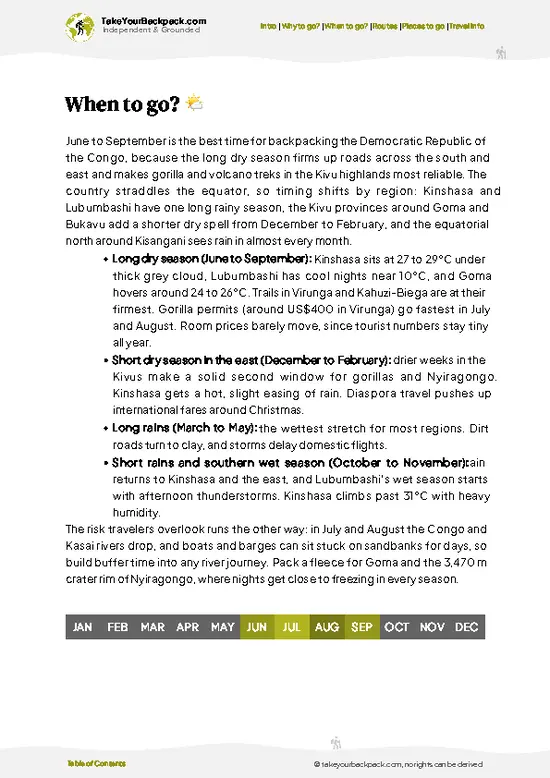
source: climatestotravel.comJANJanuary: fair for travelingFEBFebruary: fair for travelingMARMarch: fair for travelingAPRApril: fair for travelingMAYMay: highly recommended for travelingJUNJune: excellent for travelingJULJuly: excellent for travelingAUGAugust: excellent for travelingSEPSeptember: highly recommended for travelingOCTOctober: fair for travelingNOVNovember: fair for travelingDECDecember: fair for traveling
when-to-go

✈️ The backpacker research shortcutDR Congo Travel Guide

An offline-friendly backpacking guide with optimized travel routes, ranked highlights, transport advice, and the best areas to stay.
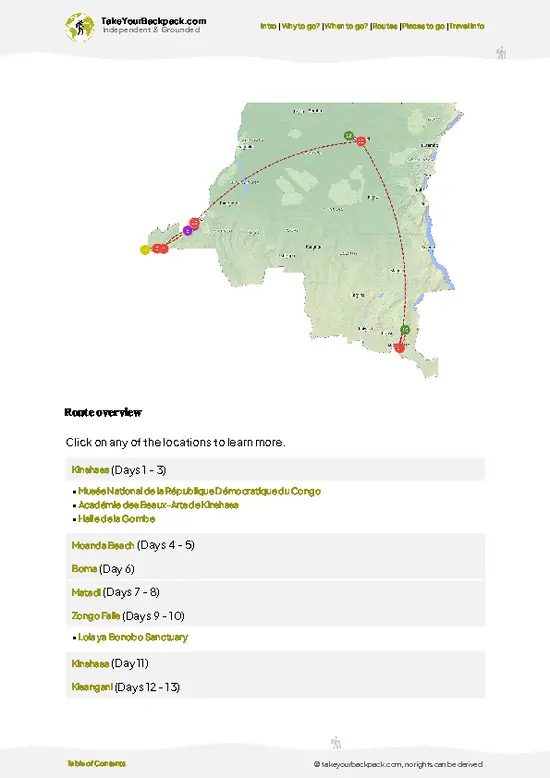
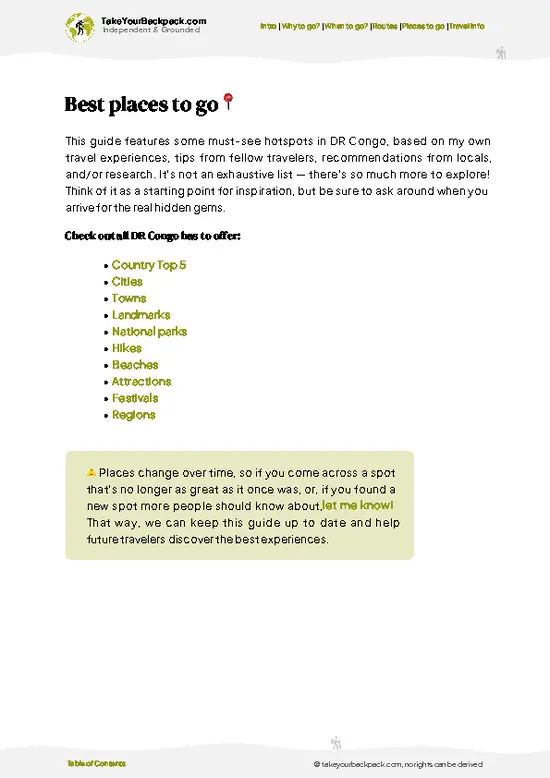
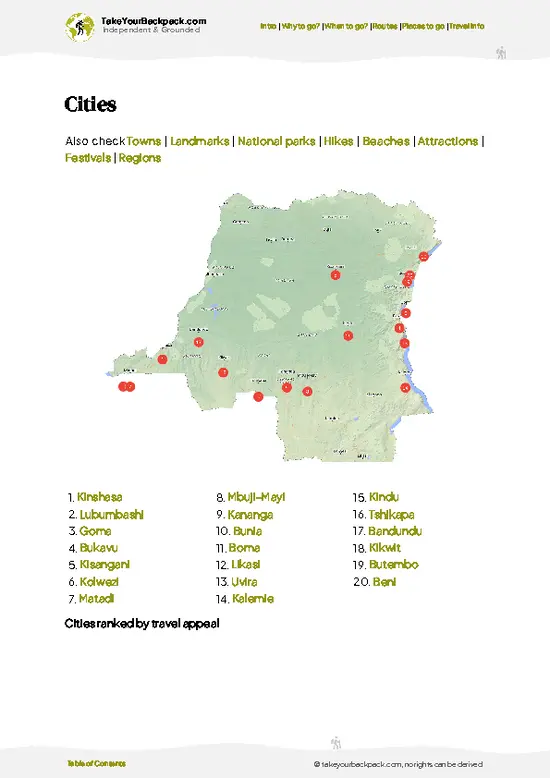
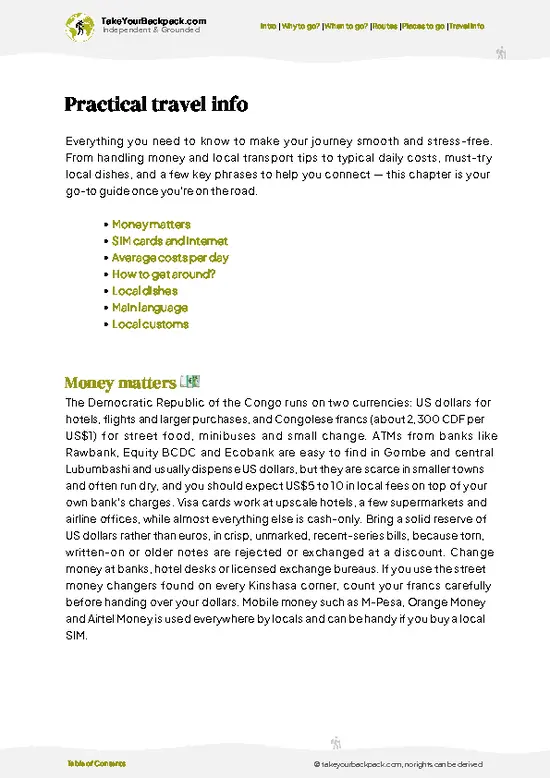
example page 0 from our offline Travel Guide for Democratic Republic of the Congoexample page 1 from our offline Travel Guide for Democratic Republic of the Congoexample page 2 from our offline Travel Guide for Democratic Republic of the Congoexample page 3 from our offline Travel Guide for Democratic Republic of the Congoexample page 4 from our offline Travel Guide for Democratic Republic of the Congoexample page 5 from our offline Travel Guide for Democratic Republic of the Congoexample page 6 from our offline Travel Guide for Democratic Republic of the Congoexample page 7 from our offline Travel Guide for Democratic Republic of the Congo
The digital guide (378 pages) contains:
96 highlights, ranked by travel appeal
Optimized 7, 14 & 21-day travel routes
Cities, national parks, landmarks, beaches
How to get around
Offline-friendly for travel without Wi-Fi
👉 Click to see all 30+ guide features

📅 Plan smarter in minutes, not weeks
Month by month travel advice
Festivals & national holidays
Budget expectations

🗺️ Go to the right places, skip the overrated ones
Honest pros & cons of destinations
Top hikes, parks & viewpoints
Lesser-known places most travelers miss
Clear “worth it vs skip it” guidance

🛏️ Travel smoothly without rookie mistakes
Best areas to stay
Transport systems explained simply
Common scams & safety advice
SIM cards, money & practical tips

🌍 Understand the country, not just visit it
Culture & traditions
52 Essential phrases & customs
Festivals worth planning around
Traveler-friendly historical context
Insights that make places more meaningful

📱 Built for real travel conditions
Fully downloadable PDF
Works completely offline
Optimized for phone use
Useful in remote areas & buses
Everything in one place
Save weeks of stressful planning
Get instant access to your full guide. 30‑day money-back guarantee.


Sent to your inbox immediately after payment • 100% Secure Checkout
Best Backpacking Travel Advisor 2025 tourism awardBest Backpacking
Travel Advisor
2025
What others say about Take Your Backpack Guides:
⭐⭐⭐⭐⭐
Fantastic, amazing amount of information!
⭐⭐⭐⭐⭐
My goodness this is amazing, it's what I've been looking for hats off too you!
⭐⭐⭐⭐⭐
I think this is absolutely BRILLIANT
⭐⭐⭐⭐
Very complete and informative. It's still missing places, but I gotta to commend you
⭐⭐⭐⭐⭐
This is truly amazing, thank you, can't wait to explore it with my kids!
⭐⭐⭐⭐⭐
Awesome resource, thank you!
⭐⭐⭐⭐⭐
This is amazing! Can't wait to explore the ones I haven't seen
⭐⭐⭐⭐
I love this! Well done, great idea.
⭐⭐⭐⭐⭐
Thanks for taking the time to make this gem!
⭐⭐⭐⭐⭐
This might be the best website I've ever seen.
⭐⭐⭐⭐⭐
Congratulations, and thank you so much for your work; it's incredibly valuable.
⭐⭐⭐⭐
In all seriousness I think you did a great job pointing out the important spots
⭐⭐⭐⭐⭐
10/10 very good
⭐⭐⭐⭐⭐
As someone who's only just starting to visit regularly this is awesome, thank you.
⭐⭐⭐⭐
Thank you very much! I'm going to visit my dad, it's going to be very useful!
⭐⭐⭐⭐⭐
This is really cool! We'll be travelling for the first time and this definitely come in handy.
⭐⭐⭐⭐⭐
You are now our minister of culture, congratulations 👨‍💼
⭐⭐⭐⭐⭐
Just wanted to tell you that this is a pearl! Going to follow your recommendations.
⭐⭐⭐⭐⭐
This is so cool. I'll definitely be using the resource for my travels soon.
⭐⭐⭐⭐⭐
This is very impressive! Good work.
⭐⭐⭐⭐⭐
This is an amazing and informative site. Very well done!

🛏️ Where to stay?Best areas to stay in DR Congo

In Mbuji-Mayi, the backpacker’s sweet spot is the central district around Quartier Industriel. This area strikes a rare balance in DR Congo’s urban landscape—it’s relatively safe compared to the city’s outskirts, and it buzzes with local life without tipping into chaos. For solo travelers, Quartier Industriel offers a social pulse: street vendors, small cafés, and informal markets where you can strike up conversations and get a feel for daily rhythms. Hostels here are limited but present, catering mostly to budget travelers who value connection over luxury.

Contrast this with neighborhoods farther … read more 👉
In Mbuji-Mayi, the backpacker’s sweet spot is the central district around Quartier Industriel. This area strikes a rare balance in DR Congo’s urban landscape—it’s relatively safe compared to the city’s outskirts, and it buzzes with local life without tipping into chaos. For solo travelers, Quartier Industriel offers a social pulse: street vendors, small cafés, and informal markets where you can strike up conversations and get a feel for daily rhythms. Hostels here are limited but present, catering mostly to budget travelers who value connection over luxury.

Contrast this with neighborhoods farther out, where safety drops and amenities vanish, or the more commercial zones that cater to business travelers but lack warmth and social energy. Choosing Quartier Industriel means sacrificing some comfort—expect basic facilities and occasional power cuts—but you gain immersion and a network of fellow travelers and locals. It’s a trade-off: less polish, more authenticity, and a chance to navigate Mbuji-Mayi’s real heartbeat. That’s the kind of value that turns a trip from a checklist into a story worth telling.

🚌 Getting aroundMoving around without the hassle

Mbuji-Mayi moves at its own rhythm—less a clockwork city and more a pulse you feel in the streets. Forget strict timetables; here, intuition and local knowledge rule. The flow is a blend of hustle and patience, where waiting is part of the game and every ride is a negotiation between time, money, and comfort. Your challenge is to decode this system, spotting where you can save minutes or francs without sacrificing too much ease. It’s a balancing act, but once you get the hang of it, you’re not just a traveler—you’re a strategist.


  • Walking: The ultimate zero-cost option. Mbuji-Mayi’s core neighborhoods are compact enough to explore on foot, giving you full control over your pace and route. It’s free, healthy, and immersive, but expect to spend more time moving between points, especially
read more 👉
Mbuji-Mayi moves at its own rhythm—less a clockwork city and more a pulse you feel in the streets. Forget strict timetables; here, intuition and local knowledge rule. The flow is a blend of hustle and patience, where waiting is part of the game and every ride is a negotiation between time, money, and comfort. Your challenge is to decode this system, spotting where you can save minutes or francs without sacrificing too much ease. It’s a balancing act, but once you get the hang of it, you’re not just a traveler—you’re a strategist.


  • Walking: The ultimate zero-cost option. Mbuji-Mayi’s core neighborhoods are compact enough to explore on foot, giving you full control over your pace and route. It’s free, healthy, and immersive, but expect to spend more time moving between points, especially under the midday sun.


  • Shared Taxis (Taxi Collectifs): These are the backbone of local transit. They run on flexible schedules, leaving only when full, which means you might wait but pay just a fraction of private taxi fares—usually around 200 to 500 CDF per trip. They’re faster than walking but can get cramped and bumpy on rough roads. Comfort is minimal, but the price and speed hit a sweet spot for budget travelers.


  • Motorcycle Taxis (Moto-Taxis): If you’re short on time and willing to spend a bit more, moto-taxis zip through traffic and rough patches with ease. Expect to pay roughly double a shared taxi fare, but you’ll cut travel time significantly. Comfort is low, and safety varies, so buckle up mentally for a wild ride.


  • Private Taxis: The most comfortable and quickest option, but also the priciest. Negotiated fares start around 3,000 CDF and can climb depending on distance and time of day. Ideal if you’re traveling with luggage or need to hit a tight schedule, but not the best bang for your buck if you’re watching expenses.


  • Minibuses: Less common but worth noting if you find one. They operate on set routes with fixed fares, offering a middle ground between shared taxis and private cars. They run from early morning until early evening, balancing cost and comfort better than motos but less flexible on timing.

👛 Costs (as of 6 June 2026)What things cost and how to budget

Backpacking in Mbuji-Mayi, DR Congo, is a study in balancing essentials with local realities. Here’s the breakdown of what you’ll typically spend daily, giving you a clear picture of where your money goes and what you’re trading off.
  • Dorm Accommodation (High Season): Expect to pay around €10-€15 per night. Options are limited and basic, but this is the going rate when demand peaks.
  • Dorm Accommodation (Off-Season): Prices drop to about €6-€10 per night. Fewer travelers mean more negotiating power and quieter stays.
  • Meals: Local street food and simple eateries cost roughly €3-€6 per day. You’re paying for hearty, filling meals—think staple grains, beans, and occasional meat—without the frills.
  • Local Transport: Short rides on shared minibuses or moto-taxis run about €0.30-€0.60 each. It’s
read more 👉
Backpacking in Mbuji-Mayi, DR Congo, is a study in balancing essentials with local realities. Here’s the breakdown of what you’ll typically spend daily, giving you a clear picture of where your money goes and what you’re trading off.
  • Dorm Accommodation (High Season): Expect to pay around €10-€15 per night. Options are limited and basic, but this is the going rate when demand peaks.
  • Dorm Accommodation (Off-Season): Prices drop to about €6-€10 per night. Fewer travelers mean more negotiating power and quieter stays.
  • Meals: Local street food and simple eateries cost roughly €3-€6 per day. You’re paying for hearty, filling meals—think staple grains, beans, and occasional meat—without the frills.
  • Local Transport: Short rides on shared minibuses or moto-taxis run about €0.30-€0.60 each. It’s cheap but expect crowded and unpredictable conditions.
  • City Transport Pass: Not commonly available or necessary in Mbuji-Mayi; most rely on pay-per-ride transport options.
  • Basic Activities/Entry Fees: Cultural sites and local attractions are minimal and often free or cost under €2. This is a place where the experience is more about immersion than ticketed tours.
  • Miscellaneous Expenses: Budget €1-€3 for essentials like bottled water, snacks, or small tips. These add up but remain modest.

In total, you’re looking at roughly €20-€30 per day for a no-frills backpacking experience in Mbuji-Mayi. The trade-off is clear: you save money by embracing simplicity and local rhythms, but you sacrifice comfort and convenience that come with higher budgets. This is a place where your time and adaptability become your best currency.


source: congotourisme.org
⚠️ Prices can change and everyone travels differently, so take this as a rough guide. Hope it helps you plan your adventure!

🚌 Day tripsWhere to go beyond the main area

Mbuji-Mayi is a fantastic launchpad for day trips that dive deep into the heart of DR Congo’s culture and landscapes. Here are some standout options that make the most of your time, money, and comfort.

Kasaï River Adventure
Just a couple of hours from Mbuji-Mayi, the Kasaï River offers a refreshing escape. You can rent a canoe and paddle through serene waters, soaking in the lush surroundings. The river is alive with local wildlife, and you might even spot fishermen casting their nets. Expect to spend around $10 for canoe rental and snacks. The best time to go is during the dry season, from May to September, when the river is calm. A common mistake? Underestimating the sun—bring sunscreen and a hat!


Lomami National Park
A bit further afield, about three hours by bus, Lomami National … read more 👉
Mbuji-Mayi is a fantastic launchpad for day trips that dive deep into the heart of DR Congo’s culture and landscapes. Here are some standout options that make the most of your time, money, and comfort.

Kasaï River Adventure
Just a couple of hours from Mbuji-Mayi, the Kasaï River offers a refreshing escape. You can rent a canoe and paddle through serene waters, soaking in the lush surroundings. The river is alive with local wildlife, and you might even spot fishermen casting their nets. Expect to spend around $10 for canoe rental and snacks. The best time to go is during the dry season, from May to September, when the river is calm. A common mistake? Underestimating the sun—bring sunscreen and a hat!


Lomami National Park
A bit further afield, about three hours by bus, Lomami National Park is a treasure trove for nature lovers. The park is home to unique wildlife, including the elusive okapi. Guided tours are available for around $25, which includes transportation and a local guide. The dry season is ideal for spotting animals, while the wet season can make trails tricky. Many first-timers forget to pack sturdy shoes, so don’t skimp on footwear!


Local Market Tour
For a taste of everyday life, head to Mbuji-Mayi’s bustling markets. Spend a few hours wandering through stalls filled with vibrant fabrics, fresh produce, and local crafts. This trip is practically free—just a few dollars for snacks or small purchases. The best time to visit is early morning when the market is at its liveliest. A common pitfall is not bargaining; it’s part of the experience!


Kibali Falls
About an hour’s drive from the city, Kibali Falls is a hidden delight. The sound of cascading water and the surrounding greenery create a perfect backdrop for a picnic. You can spend the day swimming and relaxing for minimal cost—just a few dollars for transport. The dry season is best for clear views and easy access. Many newcomers miss the trailhead, so ask locals for directions!


These day trips not only enrich your experience but also allow you to explore the diverse beauty of DR Congo without breaking the bank.
Want to know what more DR Congo offers?
The DR Congo Travel Guide describes 96 highlights, from cities to national parks, from beaches to hikes

Get the Travel Guide -

🍲 FoodWhat to Eat & Drink

In Mbuji-Mayi, the local cuisine is a vibrant reflection of the region’s culture. You can’t miss trying moambe, a rich chicken stew simmered in palm oil and served with fufu, a starchy side made from cassava or plantains. The flavors are deep and comforting, a true taste of home.

Street food is where the action is. Vendors line the bustling markets, grilling skewers of kebabs or frying akara, savory bean cakes that are crispy on the outside and soft inside. The aroma wafts through the air, drawing you in. Grab a few and enjoy them on the go; it’s a rite of passage for any backpacker.

When it comes to drinks, don’t overlook the local palm wine. It’s sweet, slightly fizzy, and often enjoyed in social settings. Sharing a calabash of this drink with locals is a great way to connect and soak … read more 👉
In Mbuji-Mayi, the local cuisine is a vibrant reflection of the region’s culture. You can’t miss trying moambe, a rich chicken stew simmered in palm oil and served with fufu, a starchy side made from cassava or plantains. The flavors are deep and comforting, a true taste of home.

Street food is where the action is. Vendors line the bustling markets, grilling skewers of kebabs or frying akara, savory bean cakes that are crispy on the outside and soft inside. The aroma wafts through the air, drawing you in. Grab a few and enjoy them on the go; it’s a rite of passage for any backpacker.

When it comes to drinks, don’t overlook the local palm wine. It’s sweet, slightly fizzy, and often enjoyed in social settings. Sharing a calabash of this drink with locals is a great way to connect and soak in the atmosphere.

Etiquette is relaxed here, but it’s polite to greet vendors and share a smile. Eating with your hands is common, so embrace the messiness—it’s part of the experience. Mbuji-Mayi invites you to savor every bite and sip, making each moment deliciously memorable.

🛡️ SafetyTraveler Safety Guide

Mbuji-Mayi in DR Congo is generally safe, but a few smart practices can enhance your experience. Stay alert in crowded markets, where pickpockets might lurk. Keep your valuables close and avoid flashy displays of wealth.

If you’re traveling solo, especially at night, stick to well-lit areas and consider using a trusted taxi service instead of walking. The streets can be quiet, and it’s better to be cautious.

Common annoyances include persistent street vendors and the occasional overly friendly local who might expect something in return for their help. A polite but firm “no, thank you” usually does the trick.

Overall, approach Mbuji-Mayi with an open mind and a keen sense of awareness. You’ll navigate the city’s quirks like a pro and enjoy its unique character without unnecessary stress.

Other Congolese cities near Mbuji-Mayi

Explore more nearby:

  • Mwene-Ditu—rail junction, mining supply town, plateau setting| 99 km away
  • Lusambo—Sankuru River port, administrative center, river islands| 131 km away
  • Kananga—Railway junction, administrative center, savanna edge| 133 km away

💡 Not sure where to go next?
Create a personalized itinerary for DR Congo including Mbuji-Mayi and the places that fit your trip.

Generate my itinerary

👉 Discover all cities

Or checkout all DR Congo has to offer (think cities, towns, villages, national parks, hikes, beaches, festivals)
Country photo of DR Congo

We 💚 feedbackKey takeaways before you go

Mbuji-Mayi has a raw energy that’s hard to shake off. The vibrant local markets pulse with life, and the music? It’s infectious. You might stumble upon a spontaneous dance party—definitely a highlight. Just keep in mind, the infrastructure can be a bit rough around the edges. Don’t expect luxury; embrace the chaos. It’s all part of the experience. Dive in, and you’ll find moments that stick with you long after you leave.

✍️ Help improve this page!
The information on this page is based on in-depth research, insights shared by experienced travelers, and feedback from the local travel community in DR Congo. While every effort is made to keep the information accurate and current, conditions can change — so if you spot anything incorrect or outdated, please get in touch.


🙋‍♂️ Give feedback

👋 Meet the founderWho’s Behind Take Your Backpack?

Johan, backpacker and founder of TakeYourBackpackHi, I’m Johan (Netherlands 🇳🇱), the creator of TakeYourBackpack. Over the past decade, I’ve backpacked through 80+ countries across six continents, gaining extensive experience with independent travel, long-term trips, and overland routes.

This site is built on a combination of firsthand travel experience and carefully curated insights from other backpackers. Many guides are based on places I’ve personally visited, while others bring together tips, observations, and practical advice shared by trusted travelers I’ve met along the way.

The goal is to provide realistic, experience-driven guidance — not generic itineraries — so you can explore destinations with better context, clearer expectations, and more confidence.

Get full DR Congo guide •
Instant download • 96 highlights • Full Offline guide