×

DR Congo🇨🇩 | citiesLusamboSankuru River port, administrative center, river islands | things to do and best time to go

Explore ZongoExplore Inongo

Backpacking in Lusambo
👍 Recommendedcity ranked #13
By Johan Kruseman 🇳🇱 | Updated April 28, 2026

Everyone talks about Lusambo’s colonial-era cathedral as if it’s the main draw, but you’ll find the real pulse of this riverside town in the slow churn of the Sankuru River and the earthy scent of red dust after rain. Lusambo sits in central DR Congo, far from the tourist circuits, and it’s more crossroads than destination. For backpackers, Lusambo is a practical pause—less about sights, more about catching your breath between the chaos of Kananga and the remoteness of Kisangani. The market’s lively, but don’t expect a food scene or nightlife; evenings are quiet, and you’ll likely be the only foreigner. Getting here is a test of patience—think battered bush taxis, not buses or trains. Costs are low, but so is comfort. Safety is manageable if you keep a low profile. Compared to busier towns, Lusambo feels raw and unfiltered—worth it if you want to see DR Congo as it is, not as a postcard.

Discover everything you want to know in the 📖 DR Congo Travel Guide.
Safety warning

The current risk level for DR Congo is high. Check the advice before going.


Get your DR Congo guide
96 ranked highlights, routes & tips, works offline (378 pages)
Loading the map 🌍
CLICK TO FILTER
city
town
unique site
national park
hike
beach
attraction
festival
region
SHOW COUNTRY’S BESTSHOW ALL

✨ Why go?
Ranked #13 city in DR Congo
What makes it a must-see city

Backpackers flock to Lusambo for its strategic location along the route to stunning hikes and cultural sites. The walkable streets create a cozy atmosphere, perfect for solo travelers or small groups looking to connect. You’ll find small-scale hostels and guesthouses that offer a taste of local life, often with home-cooked meals that burst with flavor. Many travelers stay a few days, soaking in the friendly vibe and exploring nearby beaches. It’s not a party town, but the sense of community makes it easy to share stories over a meal. If you appreciate a slower pace and genuine interactions, Lusambo is a worthwhile stop.
Get the complete Travel Guide for DR Congo
Everything organized for offline planning — routes, highlights, costs & tips

See what’s inside 👉

Get the Travel Guide -

💡 HighlightsMust-see experiences and standout moments

  • Marché Central de Lusambo (Central Market) — The heart of town: noisy stalls, fresh produce, smoked fish, handfuls of spices and locally sewn clothes. Best place to watch daily life, bargain for souvenirs, and sample street food you won’t find in guidebooks.
  • Sankuru riverfront & wharf — A working riverbank where pirogues, trading boats and fishermen converge. Great for golden-hour photos, catching a cheap boat ride upriver, and seeing how the river shapes local transport and trade.
  • Old colonial administrative quarter — Cluster of Belgian-era buildings and faded facades that tell Lusambo’s 20th-century story. You won’t find a polished museum here, but wandering the quarter gives a direct, tactile sense of the town’s layered history.
  • Catholic parish church (main city church) — The big church
read more 👉
  • Marché Central de Lusambo (Central Market) — The heart of town: noisy stalls, fresh produce, smoked fish, handfuls of spices and locally sewn clothes. Best place to watch daily life, bargain for souvenirs, and sample street food you won’t find in guidebooks.
  • Sankuru riverfront & wharf — A working riverbank where pirogues, trading boats and fishermen converge. Great for golden-hour photos, catching a cheap boat ride upriver, and seeing how the river shapes local transport and trade.
  • Old colonial administrative quarter — Cluster of Belgian-era buildings and faded facades that tell Lusambo’s 20th-century story. You won’t find a polished museum here, but wandering the quarter gives a direct, tactile sense of the town’s layered history.
  • Catholic parish church (main city church) — The big church is a living landmark: architecture, Sunday services, and community gatherings offer insight into religion’s role in daily life and local cultural rhythms.
  • Lusambo airstrip — Functional and low-key, the airstrip is how many visitors actually arrive. It’s worth visiting for a quick orientation of the town, a view of the landscape, and the unpredictable bustle when a plane is due.
  • Local artisanal workshops — Small woodcarvers, basket weavers and textile stalls tucked into side streets. Meet makers directly, learn quick techniques, and pick up affordable, authentic crafts while supporting local livelihoods.
  • Riverside fish market (early morning) — If you can rise early, this is where the freshest catches hit the stalls and traders haggle loudly. It’s an unvarnished slice of food culture and great for seeing how the river feeds the town.
  • Municipal stadium & sports grounds — Catch a local football match or community event. The energy at a weekend game is a reliable way to make friends, hear local music, and feel the town’s communal pulse.
  • Colonial-era cemetery — Quiet, shaded and full of old stone markers. It’s a reflective stop where tomb inscriptions and graves reveal personal and colonial histories most guidebooks skip.
  • Sankuru riverside neighborhoods — Walkable stretches of everyday life: street vendors, riverside kitchens, kids paddling canoes. These neighborhoods are where you’ll get the truest sense of Lusambo beyond monuments—real people, real routines.
A few good day trips outside Lusambo: explore villages and river islands along the Sankuru, visit the larger market town of Lodja for regional trade and transport links, or take short trips into the surrounding countryside to see small-scale farming and forest-edge communities.
Spotted a mistake or missing something? Contact us.

🏘️ NeighborhoodsKey areas and districts to know

Lusambo is a vibrant hub in the heart of DR Congo, offering a unique blend of culture and adventure for backpackers. Here’s how to navigate its neighborhoods:

Centre Ville: The bustling heart of Lusambo, this area is alive with local markets and street vendors. It’s walkable, making it easy to explore on foot. Expect affordable accommodations and a lively atmosphere, perfect for short stays. Nightlife is modest but engaging, with local bars offering a taste of Congolese music.

Quartier Kasaï: A quieter residential area, ideal for longer stays. It’s less touristy, giving you a genuine feel of daily life. The vibe is relaxed, with local eateries serving up hearty meals. Transport options are limited, so be prepared to walk or use a bike.

Quartier Mbandaka: This area strikes a balance between … read more 👉
Lusambo is a vibrant hub in the heart of DR Congo, offering a unique blend of culture and adventure for backpackers. Here’s how to navigate its neighborhoods:

Centre Ville: The bustling heart of Lusambo, this area is alive with local markets and street vendors. It’s walkable, making it easy to explore on foot. Expect affordable accommodations and a lively atmosphere, perfect for short stays. Nightlife is modest but engaging, with local bars offering a taste of Congolese music.

Quartier Kasaï: A quieter residential area, ideal for longer stays. It’s less touristy, giving you a genuine feel of daily life. The vibe is relaxed, with local eateries serving up hearty meals. Transport options are limited, so be prepared to walk or use a bike.

Quartier Mbandaka: This area strikes a balance between nightlife and tranquility. It’s a bit pricier but offers a range of guesthouses. The local scene is vibrant, with bars and music venues that come alive after dark. Great for those looking to socialize while still having a peaceful retreat.

⌛️ 1 dayWhat you can realistically do in a day

Lusambo, a vibrant town in the heart of DR Congo, pulses with life along the banks of the Lualaba River. It’s a place where the rhythm of daily life unfolds against a backdrop of lush greenery and bustling markets.

Start your morning at the local market in the city center. The air is thick with the scent of fresh produce and spices, and the chatter of vendors fills your ears. Grab a steaming cup of local coffee and a few fried plantains to fuel your day.

In the afternoon, head to the nearby Lualaba River. Rent a canoe and paddle along the serene waters, where you might spot fishermen casting their nets or children playing on the banks. This isn’t just a scenic escape; it’s a glimpse into the daily lives of the locals.

As evening falls, make your way to the lively neighborhood of Kasaï. … read more 👉
Lusambo, a vibrant town in the heart of DR Congo, pulses with life along the banks of the Lualaba River. It’s a place where the rhythm of daily life unfolds against a backdrop of lush greenery and bustling markets.

Start your morning at the local market in the city center. The air is thick with the scent of fresh produce and spices, and the chatter of vendors fills your ears. Grab a steaming cup of local coffee and a few fried plantains to fuel your day.

In the afternoon, head to the nearby Lualaba River. Rent a canoe and paddle along the serene waters, where you might spot fishermen casting their nets or children playing on the banks. This isn’t just a scenic escape; it’s a glimpse into the daily lives of the locals.

As evening falls, make your way to the lively neighborhood of Kasaï. Here, you’ll find small eateries serving up traditional dishes like moambe chicken. Enjoy your meal while soaking in the vibrant atmosphere, where laughter and music blend seamlessly into the night. This day in Lusambo isn’t just about sights; it’s about connecting with the soul of the town.
Build the Right Itinerary
Use the DR Congo Travel Guide’s 7, 14 & 21-day routes as a starting point to plan a trip that actually works on the ground.

Get the Travel Guide -

🌤️ When to go?Weather, crowds, and seasonal trade-offs


  • Topic: Weather – Lusambo’s tropical climate means heavy rains from October to May, turning trails into mud baths and rivers into barriers. The dry season, June to September, offers clearer skies and easier trekking conditions.

  • Topic: Temperature – Expect daytime highs around 28–32°C (82–90°F) year-round, but humidity drops in the dry months, making heat more bearable. Nights cool to 18–22°C (64–72°F), perfect for campfires.

  • Topic: Daylight Hours – Near the equator, daylight stays steady at about 12 hours daily, so you get reliable sunrise and sunset times year-round, ideal for planning long hikes.

  • Topic: Crowds – Lusambo isn’t a tourist hotspot, so crowds are minimal anytime. Visiting during the dry season means more locals outdoors, adding authentic vibrancy without overwhelming
read more 👉

  • Topic: Weather – Lusambo’s tropical climate means heavy rains from October to May, turning trails into mud baths and rivers into barriers. The dry season, June to September, offers clearer skies and easier trekking conditions.

  • Topic: Temperature – Expect daytime highs around 28–32°C (82–90°F) year-round, but humidity drops in the dry months, making heat more bearable. Nights cool to 18–22°C (64–72°F), perfect for campfires.

  • Topic: Daylight Hours – Near the equator, daylight stays steady at about 12 hours daily, so you get reliable sunrise and sunset times year-round, ideal for planning long hikes.

  • Topic: Crowds – Lusambo isn’t a tourist hotspot, so crowds are minimal anytime. Visiting during the dry season means more locals outdoors, adding authentic vibrancy without overwhelming numbers.

  • Topic: Seasonal Activities – Dry months open up river crossings and forest trails for wildlife spotting and village visits. The wet season limits access but brings lush greenery and bird migrations if you’re up for a soggy adventure.

  • Topic: Price Fluctuations – Local prices stay stable, but transport costs spike in the rainy season due to difficult road conditions. Booking during dry months saves money and hassle.


Pro-tip: Aim for July to September—dry, cooler, and road-friendly—so you spend less time stuck and more time soaking in the raw, earthy pulse of Lusambo.


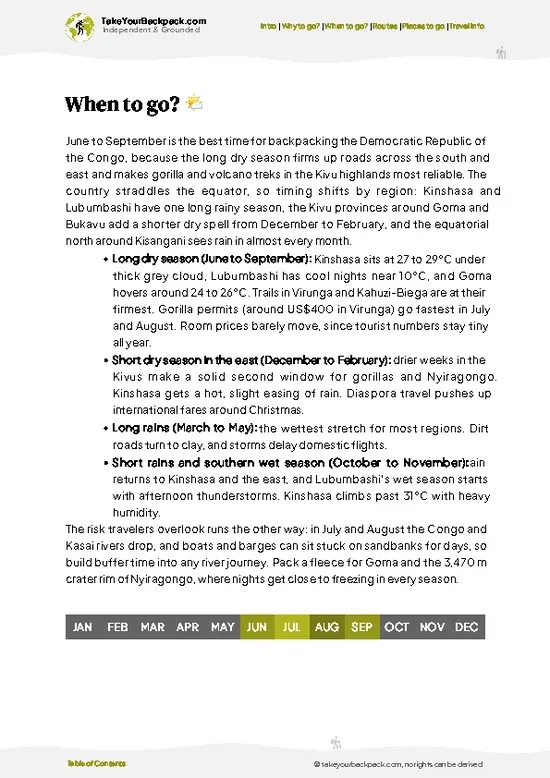
source: climatestotravel.comJANJanuary: fair for travelingFEBFebruary: fair for travelingMARMarch: fair for travelingAPRApril: fair for travelingMAYMay: fair for travelingJUNJune: highly recommended for travelingJULJuly: excellent for travelingAUGAugust: excellent for travelingSEPSeptember: excellent for travelingOCTOctober: fair for travelingNOVNovember: fair for travelingDECDecember: fair for traveling
when-to-go

✈️ The backpacker research shortcutDR Congo Travel Guide

An offline-friendly backpacking guide with optimized travel routes, ranked highlights, transport advice, and the best areas to stay.
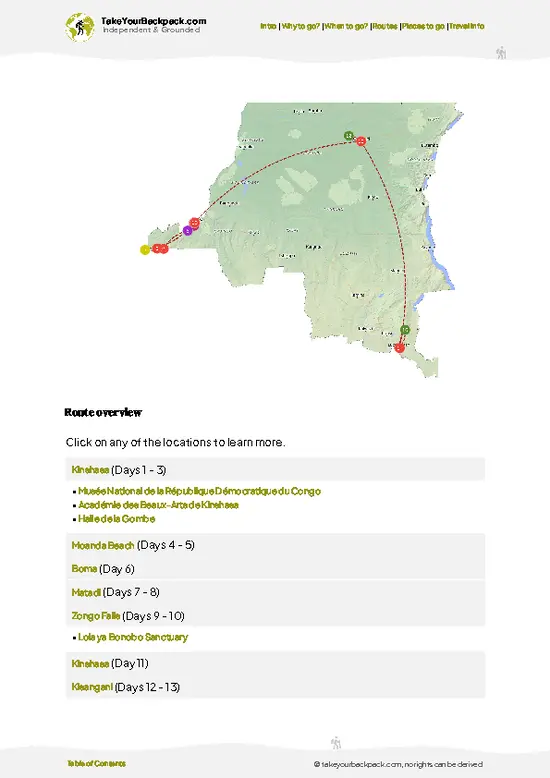
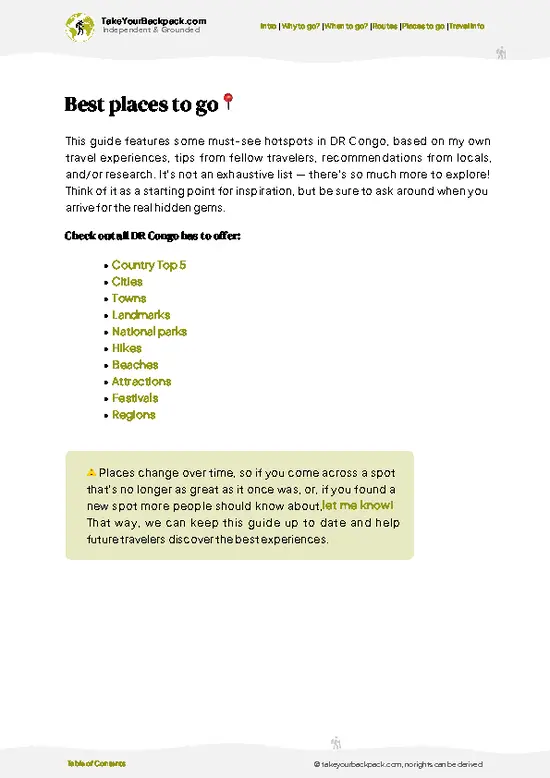
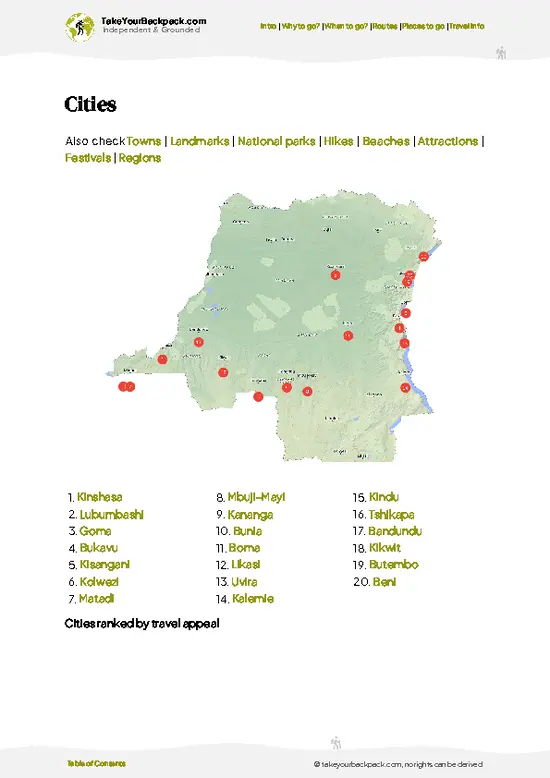
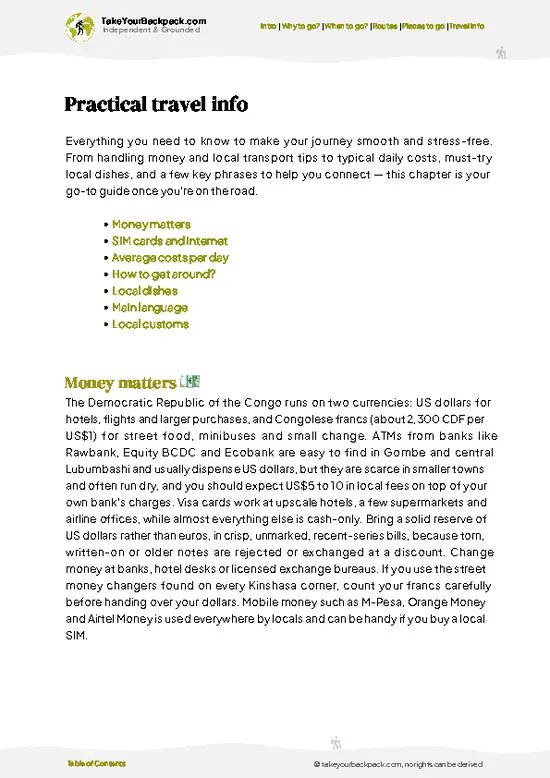
example page 0 from our offline Travel Guide for Democratic Republic of the Congoexample page 1 from our offline Travel Guide for Democratic Republic of the Congoexample page 2 from our offline Travel Guide for Democratic Republic of the Congoexample page 3 from our offline Travel Guide for Democratic Republic of the Congoexample page 4 from our offline Travel Guide for Democratic Republic of the Congoexample page 5 from our offline Travel Guide for Democratic Republic of the Congoexample page 6 from our offline Travel Guide for Democratic Republic of the Congoexample page 7 from our offline Travel Guide for Democratic Republic of the Congo
The digital guide (378 pages) contains:
96 highlights, ranked by travel appeal
Optimized 7, 14 & 21-day travel routes
Cities, national parks, beaches, historical sites, ...
How to get around
Offline-friendly for travel without Wi-Fi
👉 Click to see all 30+ guide features

📅 Plan smarter in minutes, not weeks
Month by month travel advice
Festivals & national holidays
Budget expectations

🗺️ Go to the right places, skip the overrated ones
Honest pros & cons of destinations
Top hikes, parks & viewpoints
Lesser-known places most travelers miss
Clear “worth it vs skip it” guidance

🛏️ Travel smoothly without rookie mistakes
Best areas to stay
Transport systems explained simply
Common scams & safety advice
SIM cards, money & practical tips

🌍 Understand the country, not just visit it
Culture & traditions
52 Essential phrases & customs
Festivals worth planning around
Traveler-friendly historical context
Insights that make places more meaningful

📱 Built for real travel conditions
Fully downloadable PDF
Works completely offline
Optimized for phone use
Useful in remote areas & buses
Everything in one place
Save weeks of stressful planning
Get instant access to the full guide directly. 30-day money-back guarantee.


Sent to your inbox immediately after payment • 100% Secure Checkout
Best Backpacking Travel Advisor 2025 tourism awardBest Backpacking
Travel Advisor
2025
What others say about Take Your Backpack Guides:
⭐⭐⭐⭐⭐
Fantastic, amazing amount of information!
⭐⭐⭐⭐⭐
My goodness this is amazing, it's what I've been looking for hats off too you!
⭐⭐⭐⭐⭐
I think this is absolutely BRILLIANT
⭐⭐⭐⭐
Very complete and informative. It's still missing places, but I gotta to commend you
⭐⭐⭐⭐⭐
This is truly amazing, thank you, can't wait to explore it with my kids!
⭐⭐⭐⭐⭐
Awesome resource, thank you!
⭐⭐⭐⭐⭐
This is amazing! Can't wait to explore the ones I haven't seen
⭐⭐⭐⭐
I love this! Well done, great idea.
⭐⭐⭐⭐⭐
Thanks for taking the time to make this gem!
⭐⭐⭐⭐⭐
This might be the best website I've ever seen.
⭐⭐⭐⭐⭐
Congratulations, and thank you so much for your work; it's incredibly valuable.
⭐⭐⭐⭐
In all seriousness I think you did a great job pointing out the important spots
⭐⭐⭐⭐⭐
10/10 very good
⭐⭐⭐⭐⭐
As someone who's only just starting to visit regularly this is awesome, thank you.
⭐⭐⭐⭐
Thank you very much! I'm going to visit my dad, it's going to be very useful!
⭐⭐⭐⭐⭐
This is really cool! We'll be travelling for the first time and this definitely come in handy.
⭐⭐⭐⭐⭐
You are now our minister of culture, congratulations 👨‍💼
⭐⭐⭐⭐⭐
Just wanted to tell you that this is a pearl! Going to follow your recommendations.
⭐⭐⭐⭐⭐
This is so cool. I'll definitely be using the resource for my travels soon.
⭐⭐⭐⭐⭐
This is very impressive! Good work.
⭐⭐⭐⭐⭐
This is an amazing and informative site. Very well done!

🛏️ Where to stay?How to pick the right area

In Lusambo, the best spot for backpackers is the central district near the market and riverfront. This area hums with life—vendors shouting, the scent of grilled fish mingling with fresh earth after rain. It’s where locals gather, making it safer and more social than the quieter outskirts. Budget travelers find a handful of simple hostels here, places where you can swap stories with other solo adventurers over shared meals or a cold drink. The streets are dusty but walkable, and the light in the late afternoon casts long shadows that soften the city’s raw edges.

Avoid the peripheral neighborhoods … read more 👉
In Lusambo, the best spot for backpackers is the central district near the market and riverfront. This area hums with life—vendors shouting, the scent of grilled fish mingling with fresh earth after rain. It’s where locals gather, making it safer and more social than the quieter outskirts. Budget travelers find a handful of simple hostels here, places where you can swap stories with other solo adventurers over shared meals or a cold drink. The streets are dusty but walkable, and the light in the late afternoon casts long shadows that soften the city’s raw edges.

Avoid the peripheral neighborhoods where infrastructure thins out and the vibe shifts to isolation. Staying central means you’re plugged into the pulse of Lusambo, with easy access to transport and local eateries. It’s not polished, but that’s the point—the roughness is part of the city’s character, and being in the thick of it unlocks the real DR Congo experience.

🚌 Getting aroundMoving around without the hassle

Lusambo moves at its own rhythm—a mix of deliberate pauses and bursts of activity that feel like a dance between the old and the new. The sun filters through dusty streets, casting long shadows on weathered walls, while the scent of earth and smoke lingers in the air. Here, time isn’t dictated by clocks but by the flow of daily life: market vendors shouting their wares, motorbikes weaving through crowds, and the occasional lull when the town catches its breath. You won’t find rigid schedules; instead, you’ll learn to read the subtle cues of when transport is ready to roll. This is a place where patience pays off, and understanding the local pulse unlocks smoother, more authentic travel.

Walking: The heart of Lusambo is compact enough to explore on foot. Walking lets you absorb the textures—the … read more 👉
Lusambo moves at its own rhythm—a mix of deliberate pauses and bursts of activity that feel like a dance between the old and the new. The sun filters through dusty streets, casting long shadows on weathered walls, while the scent of earth and smoke lingers in the air. Here, time isn’t dictated by clocks but by the flow of daily life: market vendors shouting their wares, motorbikes weaving through crowds, and the occasional lull when the town catches its breath. You won’t find rigid schedules; instead, you’ll learn to read the subtle cues of when transport is ready to roll. This is a place where patience pays off, and understanding the local pulse unlocks smoother, more authentic travel.

Walking: The heart of Lusambo is compact enough to explore on foot. Walking lets you absorb the textures—the cracked pavement, the chatter from street corners, the smell of fresh cassava frying. It’s free, flexible, and the best way to catch the town’s true character up close.

Shared Taxis: These minibuses or cars run informal routes around town and to nearby villages. They leave when full, so timing is unpredictable but usually frequent during daylight hours. Fares are low, often just a few hundred Congolese francs, making them a budget staple. Expect a tight squeeze and a lively atmosphere.

Motorcycle Taxis (Boda-Bodas): When you need speed or want to reach spots beyond walking distance, boda-bodas are your go-to. They’re everywhere, weaving through traffic with a buzz of engines and dust. Negotiate fares upfront—typically cheap—and hold on tight for a bumpy but exhilarating ride.

River Boats: Lusambo sits near the Sankuru River, and small boats offer transport to riverside communities. These trips depend heavily on weather and river conditions, so schedules are fluid. Prices vary, but the slow, scenic journey is worth it if you have time and want to see life along the water.

Bicycle Rentals: For a bit more speed than walking but still budget-friendly, renting a bike is a solid option. The roads can be rough, so a sturdy bike is essential. Riding lets you cover more ground without losing the sensory connection to the town’s sights and sounds.

Mastering Lusambo’s transit means embracing its unpredictability and tuning into the local tempo. Each option offers a different slice of life, turning travel logistics into part of the adventure itself.

👛 Costs (as of 9 June 2026)Money, prices, and spending tips

Backpacking in Lusambo, DR Congo, is a raw, off-the-beaten-path experience, and your daily budget reflects the simplicity and local pace of life here.
  • Dorm Accommodation: Options are limited and basic. Expect to pay around $5 to $10 USD per night for a shared room in a guesthouse or budget hotel. These places often have minimal amenities, so bring your own essentials like a mosquito net and toiletries.
  • Meals: Street food and local eateries dominate. A typical meal of rice, beans, and grilled fish or chicken will cost between $2 and $4 USD. Fresh fruit and snacks from markets are even cheaper, around $0.50 to $1.50 USD. Western-style meals or imported goods are rare and pricier.
  • Local Transport: Transport is mostly informal—shared taxis or motorbike taxis (boda-bodas). Short rides cost about
read more 👉
Backpacking in Lusambo, DR Congo, is a raw, off-the-beaten-path experience, and your daily budget reflects the simplicity and local pace of life here.
  • Dorm Accommodation: Options are limited and basic. Expect to pay around $5 to $10 USD per night for a shared room in a guesthouse or budget hotel. These places often have minimal amenities, so bring your own essentials like a mosquito net and toiletries.
  • Meals: Street food and local eateries dominate. A typical meal of rice, beans, and grilled fish or chicken will cost between $2 and $4 USD. Fresh fruit and snacks from markets are even cheaper, around $0.50 to $1.50 USD. Western-style meals or imported goods are rare and pricier.
  • Local Transport: Transport is mostly informal—shared taxis or motorbike taxis (boda-bodas). Short rides cost about $0.50 to $1 USD. For longer trips within the town or nearby villages, budget $2 to $5 USD. Walking is often the best way to soak in the atmosphere and avoid extra costs.
  • Basic Activities/Entry Fees: Lusambo is not a tourist hotspot, so organized activities are scarce. Visiting local markets or cultural sites is usually free or costs a nominal fee of $1 to $3 USD. If you find a guide for a cultural tour, expect to pay around $10 to $15 USD for a half-day.
  • Miscellaneous Expenses: This includes bottled water, snacks, phone credit, and small tips. Budget around $2 to $4 USD daily. Keep in mind that clean drinking water is a must, so bottled water is a non-negotiable expense.

All told, you’re looking at roughly $12 to $25 USD per day to cover the essentials in Lusambo. It’s a modest sum, but it buys you a genuine slice of life in a place where the pace is slow, the air is thick with tropical humidity, and the real adventure is in the details you discover by stepping off the usual routes.
⚠️ Prices can change and everyone travels differently, so take this as a rough guide. Hope it helps you plan your adventure!

🚌 Day tripsShort trips worth adding

Lusambo is a fantastic base for day trips that reveal the heart of DR Congo’s rich landscapes and vibrant culture. Here are some standout adventures.

Lake Mweru Exploration
Just a couple of hours from Lusambo, Lake Mweru offers a serene escape. The water shimmers under the sun, and the air is filled with the scent of fresh fish being grilled by local vendors. Spend the day swimming or fishing, and don’t miss the chance to chat with fishermen about their daily catch. Budget around $10 for transport and snacks. The best time to visit is during the dry season, from May to September, when the weather is perfect for outdoor activities. First-timers often underestimate the lake’s size; plan for a full day to soak it all in.


Kasongo-Lunda Falls
A bit more adventurous, the Kasongo-Lunda Falls … read more 👉
Lusambo is a fantastic base for day trips that reveal the heart of DR Congo’s rich landscapes and vibrant culture. Here are some standout adventures.

Lake Mweru Exploration
Just a couple of hours from Lusambo, Lake Mweru offers a serene escape. The water shimmers under the sun, and the air is filled with the scent of fresh fish being grilled by local vendors. Spend the day swimming or fishing, and don’t miss the chance to chat with fishermen about their daily catch. Budget around $10 for transport and snacks. The best time to visit is during the dry season, from May to September, when the weather is perfect for outdoor activities. First-timers often underestimate the lake’s size; plan for a full day to soak it all in.


Kasongo-Lunda Falls
A bit more adventurous, the Kasongo-Lunda Falls are about a three-hour drive from Lusambo. The sound of cascading water fills the air as you approach, and the lush greenery surrounding the falls is a feast for the eyes. Bring a picnic to enjoy while you take in the view. Expect to spend around $15 on transport and food. The rainy season can make the roads tricky, so aim for the dry months for easier access. Many overlook the trail leading to the best viewpoints; don’t skip it!


Local Market Day
Dive into the vibrant local culture by visiting Lusambo’s market, just a short walk from your base. The colors of fresh produce and handmade crafts are a sensory overload, and the aroma of spices fills the air. Spend a few hours wandering, tasting street food, and chatting with locals. This experience is free, aside from what you choose to buy. The market is busiest on Saturdays, so plan accordingly. First-timers often rush through; take your time to really engage with the vendors.
Want to know what more DR Congo offers?
The DR Congo Travel Guide describes 96 highlights, from cities to national parks, from beaches to hikes

Get the Travel Guide -

🍲 FoodLocal Cuisine & Drinks

In Lusambo, DR Congo, food is a lively negotiation between bold flavors and simple, hearty ingredients. You’ll want to dive into moambe chicken, a rich stew simmered in palm nut sauce that tastes like the forest itself. It’s often served with fufu, a dense, doughy staple made from cassava or plantains—perfect for scooping up every last drop.

Backpackers usually find themselves drawn to the bustling markets and street stalls, where the air is thick with the smell of grilled fish and spicy sauces. Casual eateries here don’t fuss with fancy menus; it’s all about fresh, local, and filling. Don’t expect silverware—eating with your hands is the norm, and sharing food is a social glue.

When it comes to drinks, palm wine is the local go-to, sweet and slightly fermented, best enjoyed slowly while … read more 👉
In Lusambo, DR Congo, food is a lively negotiation between bold flavors and simple, hearty ingredients. You’ll want to dive into moambe chicken, a rich stew simmered in palm nut sauce that tastes like the forest itself. It’s often served with fufu, a dense, doughy staple made from cassava or plantains—perfect for scooping up every last drop.

Backpackers usually find themselves drawn to the bustling markets and street stalls, where the air is thick with the smell of grilled fish and spicy sauces. Casual eateries here don’t fuss with fancy menus; it’s all about fresh, local, and filling. Don’t expect silverware—eating with your hands is the norm, and sharing food is a social glue.

When it comes to drinks, palm wine is the local go-to, sweet and slightly fermented, best enjoyed slowly while chatting with locals. The drinking culture is relaxed but communal, so expect to be invited into conversations and maybe even a toast or two.

🛡️ SafetyScams, Hazards, and Annoyances

Lusambo is generally safe, but staying aware is key. Stick to well-lit areas after dark, especially if you’re solo. The local vibe is friendly, but some may try to sell you overpriced goods or services. Keep your wits about you; a firm “no” usually suffices.

Watch for common scams like overcharging for transport. Always agree on a fare beforehand. Carry small bills to avoid awkward change situations. By blending in and being assertive, you’ll navigate Lusambo smoothly and enjoy its authentic charm.

Other Congolese cities near Lusambo

Explore more nearby:

  • Mbuji-Mayi—Diamond trade, sprawling neighborhoods, informal markets| 131 km away
  • Kananga—Railway junction, administrative center, savanna edge| 154 km away
  • Lodja—diamond trading, airstrip, central crossroads| 161 km away

👉 Discover all cities

Or checkout all DR Congo has to offer (think cities, towns, villages, national parks, hikes, beaches, festivals)
Country photo of DR Congo

We 💚 feedbackSumming up the experience

Lusambo has a raw, electric vibe that pulses with life. The best surprise? The warmth of the locals; their laughter echoes through the bustling markets. Just be ready for the humidity—it’s relentless. Embrace it; it’s part of the experience in DR Congo.

✍️ Help improve this page!
The information on this page is based on in-depth research, insights shared by experienced travelers, and feedback from the local travel community in DR Congo. While every effort is made to keep the information accurate and current, conditions can change — so if you spot anything incorrect or outdated, please get in touch.


🙋‍♂️ Give feedback

👋 Meet the founderWho’s Behind Take Your Backpack?

Johan, backpacker and founder of TakeYourBackpackHi, I’m Johan (Netherlands 🇳🇱), the creator of TakeYourBackpack. Over the past decade, I’ve backpacked through 80+ countries across six continents, gaining extensive experience with independent travel, long-term trips, and overland routes.

This site is built on a combination of firsthand travel experience and carefully curated insights from other backpackers. Many guides are based on places I’ve personally visited, while others bring together tips, observations, and practical advice shared by trusted travelers I’ve met along the way.

The goal is to provide realistic, experience-driven guidance — not generic itineraries — so you can explore destinations with better context, clearer expectations, and more confidence.

Get full DR Congo guide •
Instant download • 96 highlights • Full Offline guide