×

Djibouti🇩🇯 | attractionsDjibouti Railway StationColonial terminus, Ethiopia line, port-side tracks, old European quarter | things to do and best time to go

Explore Place MenelikExplore Port de Pêche de Djibouti

Backpacking in Djibouti Railway Station
👌 Worth visitingattraction ranked #7
By Johan Kruseman 🇳🇱 | Updated October 22, 2026

Djibouti Railway Station sits in the middle of the capital, so you can reach it on foot from most central guesthouses and skip taxis altogether. It stands in Djibouti’s capital, near the old European quarter and the port. The historic terminus served the line to Ethiopia, but passenger trains now leave from a newer station on the city’s edge, because the modern line needed a different alignment and a bigger site. Check the current schedule before you plan any departure from here. Expect a quiet, faded colonial-era building, not a working hub, which suits anyone who likes railway history more than spectacle. Crowds are thin and entry is easy. Shoot photos of the railway premises from public ground, since the area sits close to port security. A first day could mean coffee nearby, an hour at the station, then a slow loop through the old streets.

Discover everything you want to know in the 📖 Djibouti Travel Guide.


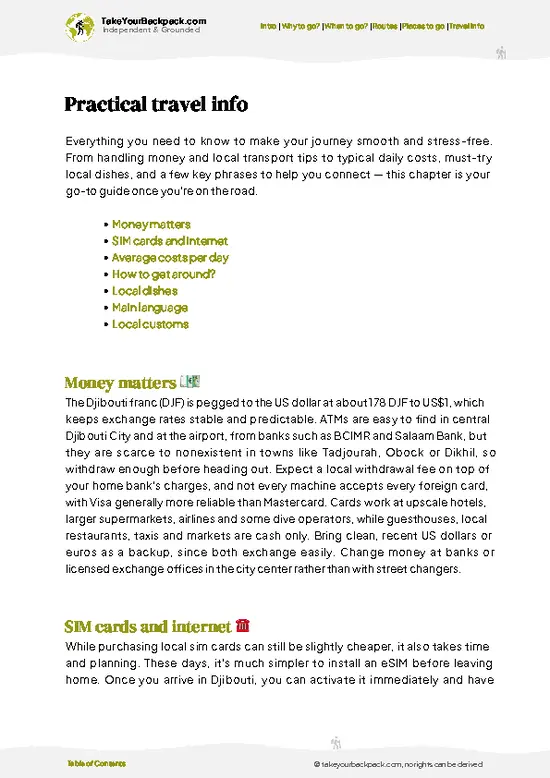
example page 0 from our offline Travel Guide for Djibouti
example page 1 from our offline Travel Guide for Djibouti
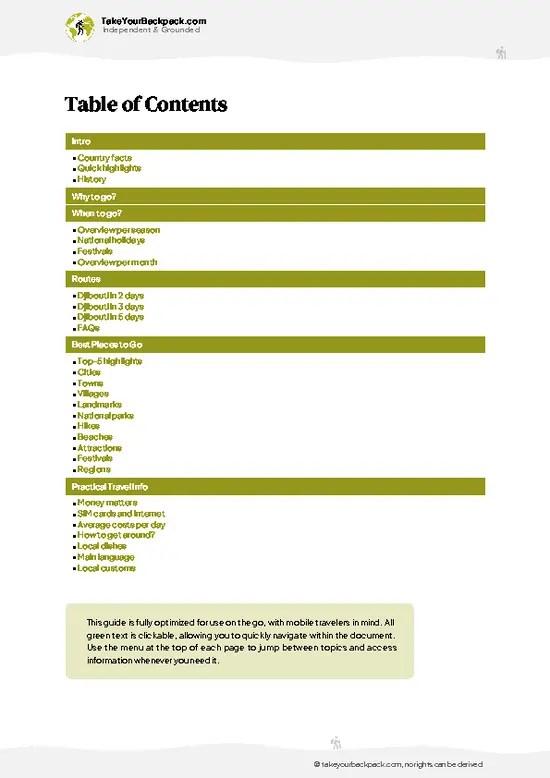
example page 2 from our offline Travel Guide for Djibouti
example page 3 from our offline Travel Guide for Djibouti
example page 4 from our offline Travel Guide for Djibouti
example page 5 from our offline Travel Guide for Djibouti
example page 6 from our offline Travel Guide for Djibouti
example page 7 from our offline Travel Guide for Djibouti
Loading the map 🌍
CLICK TO FILTER
cities
towns
villages
landmarks
national parks
hikes
beaches
attractions
festivals
regions
SHOW COUNTRY’S BESTSHOW ALL

✨ Why go?
Ranked #7 attraction in Djibouti
What makes it a must-see attraction

Djibouti Railway Station is where the line to Addis Ababa began, and that gives it a weight its modest frontage doesn’t advertise. The French-built Franco-Ethiopian railway turned a small coastal outpost into the gateway for landlocked Ethiopia, and you can still read that logic in how the city sits between port, rails and market. Standing here makes the country’s economic story concrete in a way no museum in town manages.

For route planners it is a useful marker. It pairs naturally with the newer Nagad terminus, where the modern electrified service to Ethiopia departs, so you can see both generations of the same corridor in one trip. It costs nothing, takes under an hour, and gives the old center some context before you head inland to the salt lakes or the Gulf of Tadjoura.

💡 HighlightsTop highlights of Djibouti Railway Station

  1. The old station building: The colonial-era terminus is the reason to come. Look at the weathered facade, the platform canopy and the tracks that once carried the line toward Dire Dawa and Addis Ababa.
  2. The railway tracks and yard: Walk along the public edge to see how the line ties into the nearby port. Freight history is written in the rails, and the layout explains the city’s shape.
  3. Place Ménélik: The central square has arcaded buildings and cafés in a Mediterranean-colonial style. It is the easiest place to sit with a coffee and watch the center of town work.
  4. Hamoudi Mosque: A landmark with a tall minaret near the old center. Its simple, clean lines contrast with the busier streets around it. Dress modestly and ask before entering.
  5. Marché Central: The main market is loud, close-packed and useful.
… read more 👉
  1. The old station building: The colonial-era terminus is the reason to come. Look at the weathered facade, the platform canopy and the tracks that once carried the line toward Dire Dawa and Addis Ababa.
  2. The railway tracks and yard: Walk along the public edge to see how the line ties into the nearby port. Freight history is written in the rails, and the layout explains the city’s shape.
  3. Place Ménélik: The central square has arcaded buildings and cafés in a Mediterranean-colonial style. It is the easiest place to sit with a coffee and watch the center of town work.
  4. Hamoudi Mosque: A landmark with a tall minaret near the old center. Its simple, clean lines contrast with the busier streets around it. Dress modestly and ask before entering.
  5. Marché Central: The main market is loud, close-packed and useful. You will find fabric, spices, khat sellers and cheap snacks, and it shows daily life far better than any monument.
  6. Place du 27 Juin: Named for independence day, this square holds government buildings and the old quarter’s main crossroads. It is a good point to orient yourself on foot.
  7. Cathedral of Our Lady of the Good Shepherd: A Catholic church from the French era with a distinctive striped tower. It is a quiet stop that points to the city’s mixed colonial history.
Djibouti Railway Station and Place Ménélik combine well in one morning, since the square is a short walk away and the cafés there suit a break after the tracks.
Spotted a mistake or missing something? Contact us.

Things to do near Djibouti Railway Station

Ratings based on Tripadvisor reviews. When you book through this link, you support our work at no extra cost to you.

🌤️ When to go?Best time to visit Djibouti Railway Station

  • Cool Season (November to March): Djibouti City runs about 24 to 31°C (75 to 88°F), humid but bearable, and this is when walking the Boulevard de Gaulle area around the old station is least punishing. Hotel prices and flight fares peak, especially around December and January.
  • Shoulder (April and October): Highs climb to 33 to 36°C (91 to 97°F). Fewer visitors, easier bargaining on rooms.
  • Hot Season (May to September): Highs often reach 38 to 42°C (100 to 108°F) with oppressive humidity and dust-laden winds. Rooms are cheapest, crowds thin, and daylight is about 12.5 hours, but midday outdoors is draining.
  • Rain: Rainfall is scarce, with a few short downpours between October and March that can flood streets briefly.
Plan train-related visits around the Ethiopia line timetable, which runs only a few … read more 👉
  • Cool Season (November to March): Djibouti City runs about 24 to 31°C (75 to 88°F), humid but bearable, and this is when walking the Boulevard de Gaulle area around the old station is least punishing. Hotel prices and flight fares peak, especially around December and January.
  • Shoulder (April and October): Highs climb to 33 to 36°C (91 to 97°F). Fewer visitors, easier bargaining on rooms.
  • Hot Season (May to September): Highs often reach 38 to 42°C (100 to 108°F) with oppressive humidity and dust-laden winds. Rooms are cheapest, crowds thin, and daylight is about 12.5 hours, but midday outdoors is draining.
  • Rain: Rainfall is scarce, with a few short downpours between October and March that can flood streets briefly.
Plan train-related visits around the Ethiopia line timetable, which runs only a few times a week, and arrive at the station well before departure.


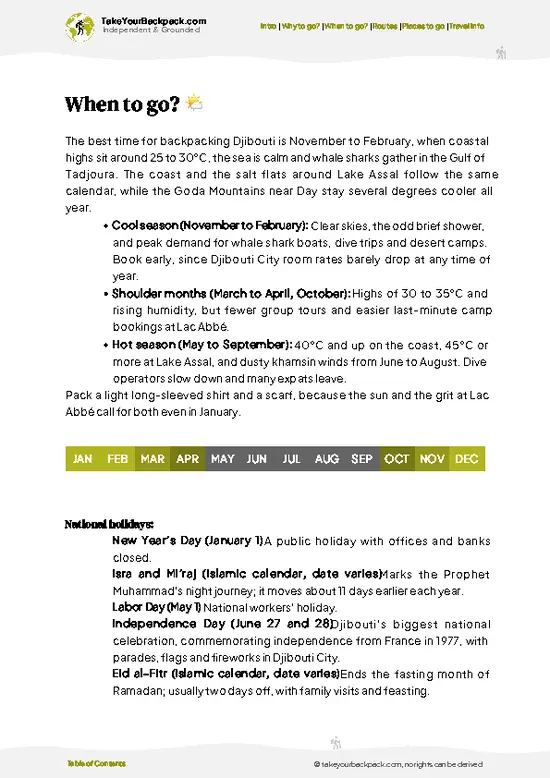
source: climatestotravel.comJANJanuary: excellent for travelingFEBFebruary: excellent for travelingMARMarch: highly recommended for travelingAPRApril: highly recommended for travelingMAYMay: fair for travelingJUNJune: fair for travelingJULJuly: below average for travelingAUGAugust: below average for travelingSEPSeptember: fair for travelingOCTOctober: good for travelingNOVNovember: excellent for travelingDECDecember: highly recommended for traveling
when-to-go

✈️ The backpacker research shortcutDjibouti Travel Guide

An offline-friendly backpacking guide with optimized travel routes, ranked highlights, transport advice, and the best areas to stay.
example page 0 from our offline Travel Guide for Djibouti
example page 1 from our offline Travel Guide for Djibouti
example page 2 from our offline Travel Guide for Djibouti
example page 3 from our offline Travel Guide for Djibouti
example page 4 from our offline Travel Guide for Djibouti
example page 5 from our offline Travel Guide for Djibouti
example page 6 from our offline Travel Guide for Djibouti
example page 7 from our offline Travel Guide for Djibouti
The digital guide (186 pages) contains:
✅ 44 highlights, ranked by travel appeal
✅ Optimized 2, 3 & 5-day travel routes
✅ Cities, national parks, landmarks, beaches
✅ How to get around
✅ Offline-friendly for travel without Wi-Fi
👉 Click to see all 30+ guide features

📅 Plan smarter in minutes, not weeks
✅ Month by month travel advice
✅ Festivals & national holidays
✅ Budget expectations

🗺️ Go to the right places, skip the overrated ones
✅ Honest pros & cons of destinations
✅ Top hikes, parks & viewpoints
✅ Lesser-known places most travelers miss
✅ Clear “worth it vs skip it” guidance

🛏️ Travel smoothly without rookie mistakes
✅ Best areas to stay
✅ Transport systems explained simply
✅ Common scams & safety advice
✅ SIM cards, money & practical tips

🌍 Understand the country, not just visit it
✅ Culture & traditions
✅ 52 Essential phrases & customs
✅ Festivals worth planning around
✅ Traveler-friendly historical context
✅ Insights that make places more meaningful

📱 Built for real travel conditions
✅ Fully downloadable PDF
✅ Works completely offline
✅ Optimized for phone use
✅ Useful in remote areas & buses
✅ Everything in one place
Stop searching, start planning
Get instant access to your full guide. 30‑day money-back guarantee.
+ Add another guide for just

By proceeding you agree to our terms.
Sent to your inbox immediately after payment • 100% Secure Checkout
Best Backpacking Travel Advisor 2025 tourism awardBest Backpacking
Travel Advisor
2025
What others say about Take Your Backpack Guides:
⭐⭐⭐⭐⭐
Fantastic, amazing amount of information!
⭐⭐⭐⭐⭐
My goodness this is amazing, it's what I've been looking for hats off too you!
⭐⭐⭐⭐⭐
I think this is absolutely BRILLIANT
⭐⭐⭐⭐
Very complete and informative. It's still missing places, but I gotta to commend you
⭐⭐⭐⭐⭐
This is truly amazing, thank you, can't wait to explore it with my kids!
⭐⭐⭐⭐⭐
Awesome resource, thank you!
⭐⭐⭐⭐⭐
This is amazing! Can't wait to explore the ones I haven't seen
⭐⭐⭐⭐
I love this! Well done, great idea.
⭐⭐⭐⭐⭐
Thanks for taking the time to make this gem!
⭐⭐⭐⭐⭐
This might be the best website I've ever seen.
⭐⭐⭐⭐⭐
Congratulations, and thank you so much for your work; it's incredibly valuable.
⭐⭐⭐⭐
In all seriousness I think you did a great job pointing out the important spots
⭐⭐⭐⭐⭐
10/10 very good
⭐⭐⭐⭐⭐
As someone who's only just starting to visit regularly this is awesome, thank you.
⭐⭐⭐⭐
Thank you very much! I'm going to visit my dad, it's going to be very useful!
⭐⭐⭐⭐⭐
This is really cool! We'll be travelling for the first time and this definitely come in handy.
⭐⭐⭐⭐⭐
You are now our minister of culture, congratulations 👨‍💼
⭐⭐⭐⭐⭐
Just wanted to tell you that this is a pearl! Going to follow your recommendations.
⭐⭐⭐⭐⭐
This is so cool. I'll definitely be using the resource for my travels soon.
⭐⭐⭐⭐⭐
This is very impressive! Good work.
⭐⭐⭐⭐⭐
This is an amazing and informative site. Very well done!

🛏️ Where to stay?How to pick the right area

The best base for backpackers is the central Ville Européenne and Place Menelik area, a 10 to 25 minute walk or a short taxi hop from Djibouti Railway Station, with most budget beds at US$20 to 50 a night. This is the city’s walkable core, with cafés, bakeries, money changers and small restaurants open late, so you can eat and find a taxi after dark without much planning. Solo travelers tend to gather here because the few budget guesthouses and hostels are within a few blocks of each other, which makes meeting people for shared day trips to Lac Assal or Tadjoura much easier. The Plateau du Serpent … read more 👉
The best base for backpackers is the central Ville Européenne and Place Menelik area, a 10 to 25 minute walk or a short taxi hop from Djibouti Railway Station, with most budget beds at US$20 to 50 a night. This is the city’s walkable core, with cafés, bakeries, money changers and small restaurants open late, so you can eat and find a taxi after dark without much planning. Solo travelers tend to gather here because the few budget guesthouses and hostels are within a few blocks of each other, which makes meeting people for shared day trips to Lac Assal or Tadjoura much easier. The Plateau du Serpent district, a little further out, has quieter streets and more mid-range hotels, but fewer social options. Staying right beside the station is possible, though the immediate surroundings are industrial and empty in the evenings, so I would not choose it for atmosphere. Whichever area you pick, take taxis after dark rather than walking long distances, and agree the fare before getting in.

👛 Costs (as of 22 October 2026)Typical daily expenses

Djibouti Railway Station costs a backpacker about US$75 to 120 a day, and the building itself is free to look at. The figure below covers a night in the city, food, local transport and a possible train ticket. Prices are paid in Djiboutian francs, though many places quote in dollars or euros.
CategoryBudget RangeLocal Reality
Station entryUS$0No ticket needed to see the exterior or concourse.
Accommodation (high season)US$25 to 50Basic guesthouse or hostel bed in the center; rooms drop in summer.
MealsUS$10 to 20Fish and rice or grilled meat at local restaurants, plus café stops.
Local transportUS$3 to 10Shared minibuses are cheapest; taxis within the city need a negotiated fare.
Train ticket (optional)US$10 to 25Ethiopia-line seats are priced by class; check the schedule locally.
Water and extrasUS$2
… read more 👉
Djibouti Railway Station costs a backpacker about US$75 to 120 a day, and the building itself is free to look at. The figure below covers a night in the city, food, local transport and a possible train ticket. Prices are paid in Djiboutian francs, though many places quote in dollars or euros.
CategoryBudget RangeLocal Reality
Station entryUS$0No ticket needed to see the exterior or concourse.
Accommodation (high season)US$25 to 50Basic guesthouse or hostel bed in the center; rooms drop in summer.
MealsUS$10 to 20Fish and rice or grilled meat at local restaurants, plus café stops.
Local transportUS$3 to 10Shared minibuses are cheapest; taxis within the city need a negotiated fare.
Train ticket (optional)US$10 to 25Ethiopia-line seats are priced by class; check the schedule locally.
Water and extrasUS$2 to 5Bottled water and snacks, which you will need in the heat.
Total Daily BudgetUS$75 to 120Lower if you skip the train ticket.
⚠️ Prices can change and everyone travels differently, so take this as a rough guide. Hope it helps you plan your adventure!

FAQCommon questions from travelers

Djibouti Railway Station needs only 30 to 60 minutes if you just want to see the colonial-era building and platforms. Allow another hour if you are buying a ticket, since the office is slow. Pair it with a walk through Place Menelik, which is about 2 km away, for a half-day outing.
Djibouti Railway Station has no entrance fee, so the question is more about what you get for your time. You pay nothing to see the exterior and concourse, and a train ticket toward Ethiopia costs roughly US$10 to 25 depending on class. For railway fans it is clearly worth a short stop, while casual visitors may find it a quick photo detour.
Djibouti Railway Station lies on the southwestern edge of central Djibouti City, a 10 to 15 minute taxi ride from Place Menelik for about US$3 to 6. Shared minibuses pass nearby for less, though routes are unmarked. From Ambouli International Airport it is about 6 km, around 15 minutes by taxi for US$8 to 15.
⚠️ Things can change over time, so always validate details locally before you go.

Other Djiboutian attractions near Djibouti Railway Station

Explore more nearby:


💡 Not sure where to go next?
Create a personalized itinerary for Djibouti including Djibouti Railway Station and the places that fit your trip.

Generate my itinerary

👉 Discover all attractions

Or checkout all Djibouti has to offer (think cities, towns, villages, national parks, hikes, beaches, festivals)
Country photo of Djibouti

We 💚 feedbackFinal thoughts on visiting Djibouti Railway Station

Djibouti Railway Station works best in the cooler months, between November and March, when you can walk the old center without the heat flattening your day. Go at midday only if you plan to sit in a café afterward, otherwise choose the softer hours. I would bring a hat, carry small cash for coffee, and skip pointing a camera at the port.

✍️ Help improve this page!
The information on this page is based on in-depth research, insights shared by experienced travelers, and feedback from the local travel community in Djibouti. While every effort is made to keep the information accurate and current, conditions can change — so if you spot anything incorrect or outdated, please get in touch.


🙋‍♂️ Give feedback

👋 Meet the founderWho’s Behind Take Your Backpack?

Johan, backpacker and founder of TakeYourBackpackHi, I’m Johan (Netherlands 🇳🇱), the creator of TakeYourBackpack. Over the past 3 decades, I’ve backpacked through 90+ countries across six continents, gaining extensive experience with independent travel, long-term trips, and overland routes.

This site is built on a combination of firsthand travel experience and carefully curated insights from other backpackers. Many guides are based on places I’ve personally visited, while others bring together tips, observations, and practical advice shared by trusted travelers I’ve met along the way.

The goal is to provide realistic, experience-driven guidance — not generic itineraries — so you can explore destinations with better context, clearer expectations, and more confidence.