×

Djibouti🇩🇯 | attractionsPort de Pêche de Djiboutifishing boats, morning catch, waterfront bustle | things to do and best time to go

Explore Djibouti Railway StationExplore Camp Lemonier Plane-spotting Viewpoints

Backpacking in Port de Pêche de Djibouti
👍 Recommendedattraction ranked #5
By Johan Kruseman 🇳🇱 | Updated May 28, 2026

Forget the Instagram fantasy of Port de Pêche de Djibouti as some sleepy, pastel-hued fishing village where you’ll sip mint tea with grizzled sailors at sunset. The reality? This is the beating, chaotic heart of Djibouti City’s waterfront—wedged between the city center and the Gulf of Tadjoura, where the air smells like salt, diesel, and ambition. Backpackers come here for a jolt of authenticity, not serenity. The wow-factor isn’t in curated photo ops, but in the raw spectacle: fishermen hauling in the morning’s catch, haggling that borders on performance art, and the kind of street food that’ll make you forget every overpriced hotel buffet in the Horn of Africa. Yes, it’s crowded, especially at dawn, and you’ll pay tourist prices if you look lost, but it’s still cheaper and far more alive than Djibouti’s sanitized malls or the overhyped Lake Assal day trips. If you want the real Djibouti—loud, gritty, and utterly human—this is it.

Discover everything you want to know in the 📖 Djibouti Travel Guide.


Get your Djibouti guide
48 ranked highlights, routes & tips, works offline (205 pages)
Loading the map 🌍
CLICK TO FILTER
cities
towns
villages
landmarks
national parks
hikes
beaches
attractions
festivals
regions
SHOW COUNTRY’S BESTSHOW ALL

✨ Why go?
Ranked #5 attraction in Djibouti
Why visitors keep coming back

Port de Pêche de Djibouti isn’t your typical postcard spot. Sure, it’s busy—crowded with fishermen hauling in their daily catch, traders shouting prices, and locals weaving through the chaos. It’s noisy, gritty, and far from polished. But that’s exactly why backpackers carve out time here. This port is the heartbeat of Djibouti’s maritime culture, a raw snapshot of a working harbor that’s been the lifeline of the city for decades.

Forget sanitized tourist traps; here you get authentic hustle—the smell of salt and fish mingling with diesel and spices, the sight of colorful boats bobbing against the backdrop of the Gulf of Tadjoura, and the chance to witness centuries-old fishing traditions still alive and kicking. It’s a major milestone on any Djibouti route because it connects you to the … read more 👉
Port de Pêche de Djibouti isn’t your typical postcard spot. Sure, it’s busy—crowded with fishermen hauling in their daily catch, traders shouting prices, and locals weaving through the chaos. It’s noisy, gritty, and far from polished. But that’s exactly why backpackers carve out time here. This port is the heartbeat of Djibouti’s maritime culture, a raw snapshot of a working harbor that’s been the lifeline of the city for decades.

Forget sanitized tourist traps; here you get authentic hustle—the smell of salt and fish mingling with diesel and spices, the sight of colorful boats bobbing against the backdrop of the Gulf of Tadjoura, and the chance to witness centuries-old fishing traditions still alive and kicking. It’s a major milestone on any Djibouti route because it connects you to the country’s historical depth and economic pulse in a way no museum or monument can.

If you’re chasing adrenaline, the port’s frenetic energy delivers. It’s a sensory overload that rewards your effort with stories, faces, and moments you won’t find in guidebooks. This isn’t just a stop; it’s a living, breathing chapter of Djibouti’s story that every backpacker should experience firsthand.
Want to include Port de Pêche de Djibouti in your Djibouti route?
Create a personalized Djibouti itinerary that includes Port de Pêche de Djibouti and the places that fit your trip — based on your travel style, budget, and available time. Get your route in seconds.

Generate my trip

💡 HighlightsThe experiences that define the visit

1. The Morning Fish Auction: Controlled Chaos with Character
Forget the sanitized, Instagram-filtered fish markets you’ve seen in Europe or Japan. The Port de Pêche’s morning auction is a sensory overload—raw, loud, and absolutely electric. Fishermen haul in the night’s catch just after sunrise, and the air is thick with salt, diesel, and the shouts of haggling buyers. You’ll see everything from glistening kingfish to alien-looking groupers, all flopped out on battered tarps. This isn’t a show for tourists; it’s the real economic engine of Djibouti’s working class. If you want to understand how a city eats, hustles, and survives, stand in the middle of this chaos for twenty minutes. You’ll walk away with a story, not a souvenir.


2. Watching the Traditional Skiffs Return: Old-School Seamanship
There’s … read more 👉
1. The Morning Fish Auction: Controlled Chaos with Character
Forget the sanitized, Instagram-filtered fish markets you’ve seen in Europe or Japan. The Port de Pêche’s morning auction is a sensory overload—raw, loud, and absolutely electric. Fishermen haul in the night’s catch just after sunrise, and the air is thick with salt, diesel, and the shouts of haggling buyers. You’ll see everything from glistening kingfish to alien-looking groupers, all flopped out on battered tarps. This isn’t a show for tourists; it’s the real economic engine of Djibouti’s working class. If you want to understand how a city eats, hustles, and survives, stand in the middle of this chaos for twenty minutes. You’ll walk away with a story, not a souvenir.


2. Watching the Traditional Skiffs Return: Old-School Seamanship
There’s a hypnotic rhythm to the battered wooden skiffs gliding back into port at dawn. These aren’t Instagram props—they’re the backbone of the local fishing fleet, patched and repainted a hundred times over. Watch the crews—often barefoot, sunburned, and grinning—navigate the choppy harbor with a confidence that comes from generations on the water. It’s a living lesson in adaptation and grit, and it’s a reminder that not every coastline has been conquered by fiberglass and outboard motors.


3. Street Food Stalls: The Real Taste of Djibouti
Skip the hotel breakfast. The ramshackle stalls lining the port serve up the freshest fish you’ll ever eat, usually fried or grilled right in front of you. Try the spicy samosas stuffed with yesterday’s catch, or grab a plate of grilled barracuda with a squeeze of lime. The flavors are bold, the prices are honest, and nobody’s catering to Western palates. You’ll eat elbow-to-elbow with dockworkers and local families, which is exactly the point.


4. People-Watching: Humanity in High Definition
If you’re the kind of traveler who likes to sit back and soak in a place, the port is a goldmine. You’ll see Somali traders in flowing robes, Yemeni merchants, French expats, and local kids darting between the boats. The mix is chaotic but never dull. Every face tells a story, and every transaction is a tiny drama. Bring a notebook, not a selfie stick.


5. The Edge-of-Africa Atmosphere: Nowhere Else Feels Like This
Here’s the truth: Port de Pêche isn’t pretty in the conventional sense. It’s gritty, sun-bleached, and unapologetically real. But that’s the magic. You’re standing at the literal edge of the continent, where the Red Sea meets the Gulf of Aden, and the sense of place is almost physical. The port’s energy is relentless, but if you lean into it, you’ll feel plugged into something ancient and ongoing. This isn’t a backdrop for your feed—it’s a front-row seat to the real Djibouti.
Spotted a mistake or missing something? Contact us.

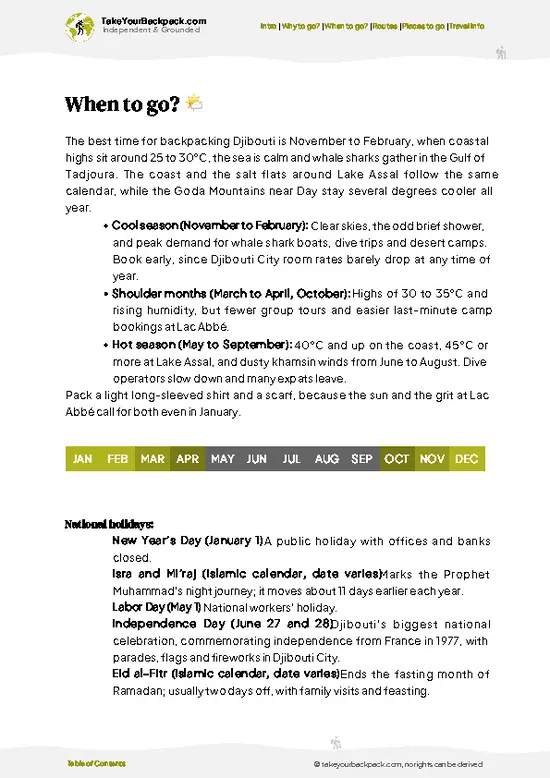
🌤️ When to go?Best time to visit Port de Pêche de Djibouti


  • Weather: Djibouti’s coastal heat is no joke. From June to September, expect relentless highs around 38-42°C (100-108°F), making daytime exploration brutal. The cooler months, December through February, offer a more bearable 25-28°C (77-82°F), perfect for lingering by the port without melting.

  • Temperature: Nights rarely drop below 20°C (68°F) year-round, so pack light layers but don’t expect a chill. The real discomfort is the midday sun, especially in the summer months when it’s a dry, scorching furnace.

  • Daylight Hours: Daylight is steady, roughly 11.5 to 12.5 hours year-round. Sunrise hovers around 6:00 AM, sunset near 6:30 PM, giving you ample time to catch the port’s early morning fish auctions or late afternoon boat comings and goings.

  • Crowds: The port is a working hub, not a
read more 👉

  • Weather: Djibouti’s coastal heat is no joke. From June to September, expect relentless highs around 38-42°C (100-108°F), making daytime exploration brutal. The cooler months, December through February, offer a more bearable 25-28°C (77-82°F), perfect for lingering by the port without melting.

  • Temperature: Nights rarely drop below 20°C (68°F) year-round, so pack light layers but don’t expect a chill. The real discomfort is the midday sun, especially in the summer months when it’s a dry, scorching furnace.

  • Daylight Hours: Daylight is steady, roughly 11.5 to 12.5 hours year-round. Sunrise hovers around 6:00 AM, sunset near 6:30 PM, giving you ample time to catch the port’s early morning fish auctions or late afternoon boat comings and goings.

  • Crowds: The port is a working hub, not a tourist magnet, but expect a slight uptick in visitors during the cooler months, especially December and January. The rest of the year, you’ll mostly rub shoulders with locals and fishermen.

  • Seasonal Activities: The best action is in the early mornings when fishermen unload their catch—fresh seafood is king here. Avoid the hot season when activity slows and the port feels deserted and oppressive.

  • Price Fluctuations: Prices for local seafood and small boat tours spike slightly during the cooler months due to increased demand. Off-season, you can haggle better but risk missing the lively atmosphere.


Pro-tip: Aim for December to February to dodge the heat and catch the port buzzing with life—just brace for slightly higher prices and a few more tourists.


source: climatestotravel.comJANJanuary: excellent for travelingFEBFebruary: excellent for travelingMARMarch: good for travelingAPRApril: good for travelingMAYMay: fair for travelingJUNJune: below average for travelingJULJuly: below average for travelingAUGAugust: below average for travelingSEPSeptember: fair for travelingOCTOctober: good for travelingNOVNovember: good for travelingDECDecember: excellent for traveling
djibouti-attraction-port-de-peche-de-djibouti v1
© Google |

✈️ The backpacker research shortcutDjibouti Travel Guide

An offline-friendly backpacking guide with optimized travel routes, ranked highlights, transport advice, and the best areas to stay.
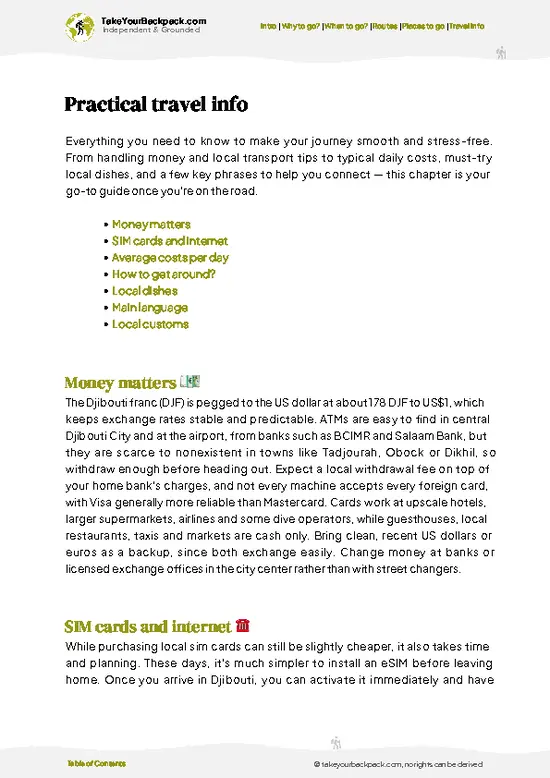
example page 0 from our offline Travel Guide for Djibouti
example page 1 from our offline Travel Guide for Djibouti
example page 2 from our offline Travel Guide for Djibouti
example page 3 from our offline Travel Guide for Djibouti
example page 4 from our offline Travel Guide for Djibouti
example page 5 from our offline Travel Guide for Djibouti
example page 6 from our offline Travel Guide for Djibouti
example page 7 from our offline Travel Guide for Djibouti
The digital guide (205 pages) contains:
48 highlights, ranked by travel appeal
Optimized 2, 3 & 5-day travel routes
Cities, national parks, landmarks, beaches
How to get around
Offline-friendly for travel without Wi-Fi
👉 Click to see all 30+ guide features

📅 Plan smarter in minutes, not weeks
Month by month travel advice
Festivals & national holidays
Budget expectations

🗺️ Go to the right places, skip the overrated ones
Honest pros & cons of destinations
Top hikes, parks & viewpoints
Lesser-known places most travelers miss
Clear “worth it vs skip it” guidance

🛏️ Travel smoothly without rookie mistakes
Best areas to stay
Transport systems explained simply
Common scams & safety advice
SIM cards, money & practical tips

🌍 Understand the country, not just visit it
Culture & traditions
52 Essential phrases & customs
Festivals worth planning around
Traveler-friendly historical context
Insights that make places more meaningful

📱 Built for real travel conditions
Fully downloadable PDF
Works completely offline
Optimized for phone use
Useful in remote areas & buses
Everything in one place
Save weeks of stressful planning
Get instant access to your full guide. 30‑day money-back guarantee.


By proceeding you agree to our terms.
Sent to your inbox immediately after payment • 100% Secure Checkout
Best Backpacking Travel Advisor 2025 tourism awardBest Backpacking
Travel Advisor
2025
What others say about Take Your Backpack Guides:
⭐⭐⭐⭐⭐
Fantastic, amazing amount of information!
⭐⭐⭐⭐⭐
My goodness this is amazing, it's what I've been looking for hats off too you!
⭐⭐⭐⭐⭐
I think this is absolutely BRILLIANT
⭐⭐⭐⭐
Very complete and informative. It's still missing places, but I gotta to commend you
⭐⭐⭐⭐⭐
This is truly amazing, thank you, can't wait to explore it with my kids!
⭐⭐⭐⭐⭐
Awesome resource, thank you!
⭐⭐⭐⭐⭐
This is amazing! Can't wait to explore the ones I haven't seen
⭐⭐⭐⭐
I love this! Well done, great idea.
⭐⭐⭐⭐⭐
Thanks for taking the time to make this gem!
⭐⭐⭐⭐⭐
This might be the best website I've ever seen.
⭐⭐⭐⭐⭐
Congratulations, and thank you so much for your work; it's incredibly valuable.
⭐⭐⭐⭐
In all seriousness I think you did a great job pointing out the important spots
⭐⭐⭐⭐⭐
10/10 very good
⭐⭐⭐⭐⭐
As someone who's only just starting to visit regularly this is awesome, thank you.
⭐⭐⭐⭐
Thank you very much! I'm going to visit my dad, it's going to be very useful!
⭐⭐⭐⭐⭐
This is really cool! We'll be travelling for the first time and this definitely come in handy.
⭐⭐⭐⭐⭐
You are now our minister of culture, congratulations 👨‍💼
⭐⭐⭐⭐⭐
Just wanted to tell you that this is a pearl! Going to follow your recommendations.
⭐⭐⭐⭐⭐
This is so cool. I'll definitely be using the resource for my travels soon.
⭐⭐⭐⭐⭐
This is very impressive! Good work.
⭐⭐⭐⭐⭐
This is an amazing and informative site. Very well done!

🛏️ Where to stay?Choosing the right base

If you’re heading to Port de Pêche de Djibouti, brace yourself for a scene that’s far from the polished postcards. This is a working fishing port, raw and noisy, with the smell of salt, fish, and diesel hanging thick in the air. Crowds? Yes, but not the tourist hordes you might expect—mostly local fishermen hustling their catch, traders shouting prices, and a few curious onlookers. It’s gritty, chaotic, and utterly real.

For backpackers, the best places to stay are in the nearby city center neighborhoods—specifically around the Quartier 1 and Quartier 2 districts. These areas are your best bet … read more 👉
If you’re heading to Port de Pêche de Djibouti, brace yourself for a scene that’s far from the polished postcards. This is a working fishing port, raw and noisy, with the smell of salt, fish, and diesel hanging thick in the air. Crowds? Yes, but not the tourist hordes you might expect—mostly local fishermen hustling their catch, traders shouting prices, and a few curious onlookers. It’s gritty, chaotic, and utterly real.

For backpackers, the best places to stay are in the nearby city center neighborhoods—specifically around the Quartier 1 and Quartier 2 districts. These areas are your best bet for safety and social vibes. They’re where you’ll find a mix of budget guesthouses and small inns that cater to solo travelers and backpackers. The streets here pulse with local life, street food stalls, and small cafés where you can meet other travelers or locals without the touristy gloss.

Why stay here? Because it puts you within walking distance of the port’s authentic daily rhythm without plunging you into sketchy zones. You get to soak in the real Djibouti—its smells, sounds, and stubborn charm—while having a base that’s secure and social enough to recharge after a day of sensory overload. It’s not about luxury; it’s about connection, and these neighborhoods deliver that in spades.

👛 Costs (as of 24 June 2025)Typical daily expenses

Visiting Port de Pêche de Djibouti is free of charge. However, if you plan to engage in activities such as fishing, organized tours, or excursions, additional costs may apply. For instance, fishing trips can range from €50 to €150 per day, depending on the operator and package. It's advisable to contact local tour operators or the port authority directly for the most current pricing and availability.

source: portdedjibouti.com
⚠️ Prices can change and everyone travels differently, so take this as a rough guide. Hope it helps you plan your adventure!

Other Djiboutian attractions near Port de Pêche de Djibouti

Explore more nearby:


💡 Not sure where to go next?
Create a personalized itinerary for Djibouti including Port de Pêche de Djibouti and the places that fit your trip.

Generate my itinerary

👉 Discover all attractions

Or checkout all Djibouti has to offer (think cities, towns, villages, national parks, hikes, beaches, festivals)
Country photo of Djibouti

We 💚 feedbackWhat to keep in mind

Port de Pêche de Djibouti isn’t a postcard-perfect spot. It’s noisy, gritty, and packed with locals hustling their catch, not tourists snapping selfies. But that’s exactly why it’s worth your time. The real magic is in the raw, unfiltered energy—the smell of fresh fish, the sharp calls of vendors, and the unexpected kindness of fishermen who’ll share stories if you listen. Don’t expect luxury or quiet; expect authenticity. If you want a sanitized experience, skip it. But if you want a pulse on Djibouti’s daily grind and soul, this is where you find it.

✍️ Help improve this page!
The information on this page is based on in-depth research, insights shared by experienced travelers, and feedback from the local travel community in Djibouti. While every effort is made to keep the information accurate and current, conditions can change — so if you spot anything incorrect or outdated, please get in touch.


🙋‍♂️ Give feedback

👋 Meet the founderWho’s Behind Take Your Backpack?

Johan, backpacker and founder of TakeYourBackpackHi, I’m Johan (Netherlands 🇳🇱), the creator of TakeYourBackpack. Over the past decade, I’ve backpacked through 80+ countries across six continents, gaining extensive experience with independent travel, long-term trips, and overland routes.

This site is built on a combination of firsthand travel experience and carefully curated insights from other backpackers. Many guides are based on places I’ve personally visited, while others bring together tips, observations, and practical advice shared by trusted travelers I’ve met along the way.

The goal is to provide realistic, experience-driven guidance — not generic itineraries — so you can explore destinations with better context, clearer expectations, and more confidence.

Get full Djibouti guide •
Instant download • 48 highlights • Full Offline guide