×

Djibouti🇩🇯 | national parksLake Abbelimestone chimneys, salt flats, Afar culture | things to do and best time to go

Explore Abourma Rock Art SiteExplore Ali Sabieh Plateau

Backpacking in Lake Abbe
🌟 Highlightnational park ranked #2
By Johan Kruseman 🇳🇱 | Updated June 12, 2026

Most travelers show up expecting Lake Abbe to be a classic blue lake—wrong. It’s a surreal salt pan, more lunar than aquatic, with steaming vents and limestone chimneys that look like a sci-fi set. You’ll find Lake Abbe on Djibouti’s far western edge, right on the border with Ethiopia, in a region that feels like the end of the earth. For backpackers, this national park is a test of curiosity and patience: the hiking is raw and open, with wide horizons and almost no shade, but the scenery is genuinely otherworldly. Wildlife is sparse—think camels and the odd flamingo, not herds of big game. Getting here is expensive and slow, with rough tracks and mandatory guides driving up costs. Entrance fees are real, and so are the logistical headaches. Camping is basic, and budget accommodation means a mattress in a hut, not a hostel. Unlike Djibouti’s more accessible Day Forest National Park, Lake Abbe is never crowded, but it’s also less lush and less forgiving. The reward is silence, space, and a landscape that doesn’t care if you’re impressed.

Discover everything you want to know in the 📖 Djibouti Travel Guide.


Get your Djibouti guide
48 ranked highlights, routes & tips, works offline (205 pages)
Loading the map 🌍
CLICK TO FILTER
cities
towns
villages
landmarks
national parks
hikes
beaches
attractions
festivals
regions
SHOW COUNTRY’S BESTSHOW ALL

✨ Why go?
Ranked #2 national park in Djibouti
The unique appeal for travelers

Backpackers flock to Lake Abbe in Djibouti for its raw beauty and sense of adventure. The park offers a chance for independent exploration; you can wander the otherworldly landscapes without a guide. This freedom is a huge draw for those who prefer to set their own pace.

Budget camping options are available nearby, making it easy to stretch your funds. If you’re not into pitching a tent, there are hostels that provide a cozy base without breaking the bank.

The trail variety is another highlight. You can choose from easy walks to more challenging treks, all while soaking in the surreal scenery of limestone chimneys and salt flats.

For self-guided travelers, this park is a dream. You won’t feel pressured to stick to a tour schedule, allowing you to savor the moments that truly matter. … read more 👉
Backpackers flock to Lake Abbe in Djibouti for its raw beauty and sense of adventure. The park offers a chance for independent exploration; you can wander the otherworldly landscapes without a guide. This freedom is a huge draw for those who prefer to set their own pace.

Budget camping options are available nearby, making it easy to stretch your funds. If you’re not into pitching a tent, there are hostels that provide a cozy base without breaking the bank.

The trail variety is another highlight. You can choose from easy walks to more challenging treks, all while soaking in the surreal scenery of limestone chimneys and salt flats.

For self-guided travelers, this park is a dream. You won’t feel pressured to stick to a tour schedule, allowing you to savor the moments that truly matter. Just be mindful of the heat and plan your hikes accordingly. This way, you preserve your energy and budget for the experiences that will stick with you long after you leave.
Want to include Lake Abbe in your Djibouti route?
Create a personalized Djibouti itinerary that includes Lake Abbe and the places that fit your trip — based on your travel style, budget, and available time. Get your route in seconds.

Generate my trip

💡 HighlightsMust-see experiences and standout moments

  • Limestone chimneys — The signature sight: towering, otherworldly limestone/salt chimneys rising from the lake shore like ruined cathedral spires. Walking around them feels lunar; each stack is sculpted by mineral-rich springs and looks different up close.
  • Geothermal pools and fumaroles — Bubbling hot springs, steam vents and sulfur-smelling fumaroles dot the shoreline. They create boiling pools, strange mineral crusts and warm pockets — great photo opportunities and a reminder the place is geologically alive.
  • Salt flats and mineral textures — Vast white and rust-colored salt pans stretch away from the water, with delicate crusts, hexagonal patterns and streaks of ochre and green from minerals. It’s a photographer’s dream for abstract landscapes and close-up textures.
  • Flamingos and birdlife
read more 👉
  • Limestone chimneys — The signature sight: towering, otherworldly limestone/salt chimneys rising from the lake shore like ruined cathedral spires. Walking around them feels lunar; each stack is sculpted by mineral-rich springs and looks different up close.
  • Geothermal pools and fumaroles — Bubbling hot springs, steam vents and sulfur-smelling fumaroles dot the shoreline. They create boiling pools, strange mineral crusts and warm pockets — great photo opportunities and a reminder the place is geologically alive.
  • Salt flats and mineral textures — Vast white and rust-colored salt pans stretch away from the water, with delicate crusts, hexagonal patterns and streaks of ochre and green from minerals. It’s a photographer’s dream for abstract landscapes and close-up textures.
  • Flamingos and birdlife — Shallow, salty lagoons attract flocks of flamingos and other waterbirds, especially at dawn and dusk. Even if you don’t get huge colonies, the contrast of pink birds against a bleached landscape is striking.
  • Hiking among the chimneys and rim trails — Short hikes and easy scrambles let you weave between formations and climb modest ridges for panoramic views. Trails aren’t formalized, so the best routes are often simple loops you can do in a few hours—bring good shoes and water.
  • Sunrise and sunset panoramas — Colors here change fast: warm light paints the chimneys, the salt flats, and the distant Ethiopian highlands in surreal hues. Plan to be on the shore for either golden hour — it’s when the place truly transforms.
  • Stargazing and desert solitude — Far from city lights, the night sky is wide and intense. Combine the silence, the silhouette of chimneys and a carpet of stars for one of the most peaceful overnight experiences in Djibouti.
  • Afar culture and salt caravans — If you’re lucky you’ll see Afar nomads and camel salt caravans at the margins of the park. It’s a living reminder that this harsh, beautiful landscape is also home and a source of livelihood for local people.
Spotted a mistake or missing something? Contact us.

Things to do near Lake Abbe

Ratings based on Tripadvisor reviews. When you book through this link, you support our work at no extra cost to you.

🌤️ When to go?Best time to explore Lake Abbe


  • Weather: The best time to visit Lake Abbe is during the cooler months from November to February. Temperatures then hover between 20-30°C (68-86°F), which is far more bearable than the scorching heat of summer.

  • Temperature: Summer months can push daytime highs above 40°C (104°F), making hiking and exploring exhausting and potentially dangerous without proper preparation.

  • Daylight Hours: Djibouti enjoys fairly consistent daylight year-round, roughly 11 to 12 hours per day. This means you won’t lose much daylight time no matter when you go, but cooler months make those hours more usable.

  • Crowds: Lake Abbe is remote and rarely crowded, but the cooler season sees a slight uptick in visitors, mostly researchers and serious adventurers. Expect solitude, but not complete isolation.

  • Seasonal
read more 👉

  • Weather: The best time to visit Lake Abbe is during the cooler months from November to February. Temperatures then hover between 20-30°C (68-86°F), which is far more bearable than the scorching heat of summer.

  • Temperature: Summer months can push daytime highs above 40°C (104°F), making hiking and exploring exhausting and potentially dangerous without proper preparation.

  • Daylight Hours: Djibouti enjoys fairly consistent daylight year-round, roughly 11 to 12 hours per day. This means you won’t lose much daylight time no matter when you go, but cooler months make those hours more usable.

  • Crowds: Lake Abbe is remote and rarely crowded, but the cooler season sees a slight uptick in visitors, mostly researchers and serious adventurers. Expect solitude, but not complete isolation.

  • Seasonal Activities: Cooler months are ideal for trekking and photography, especially at dawn and dusk when the lake’s famous limestone chimneys cast dramatic shadows. Avoid the rainy season (July-September) when access can be tricky.

  • Price Fluctuations: Prices for guides and accommodation remain relatively stable year-round due to the park’s remoteness, but expect slightly higher rates during peak cooler months when demand rises.


Pro-tip: Plan your visit for early mornings and late afternoons in the cooler season to maximize comfort and capture the lake’s eerie landscape in the best light.


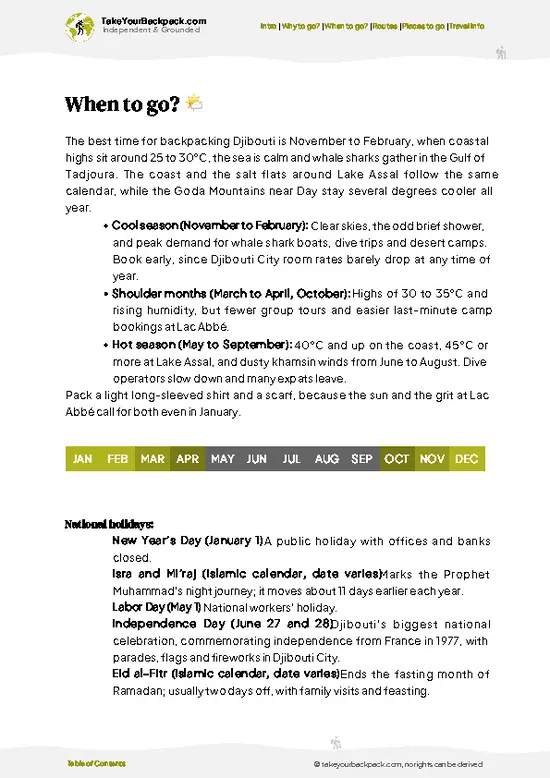
source: climatestotravel.comJANJanuary: excellent for travelingFEBFebruary: excellent for travelingMARMarch: highly recommended for travelingAPRApril: good for travelingMAYMay: good for travelingJUNJune: fair for travelingJULJuly: below average for travelingAUGAugust: below average for travelingSEPSeptember: below average for travelingOCTOctober: good for travelingNOVNovember: excellent for travelingDECDecember: excellent for traveling
djibouti-national-park-lake-abbe
© Google |

✈️ The backpacker research shortcutDjibouti Travel Guide

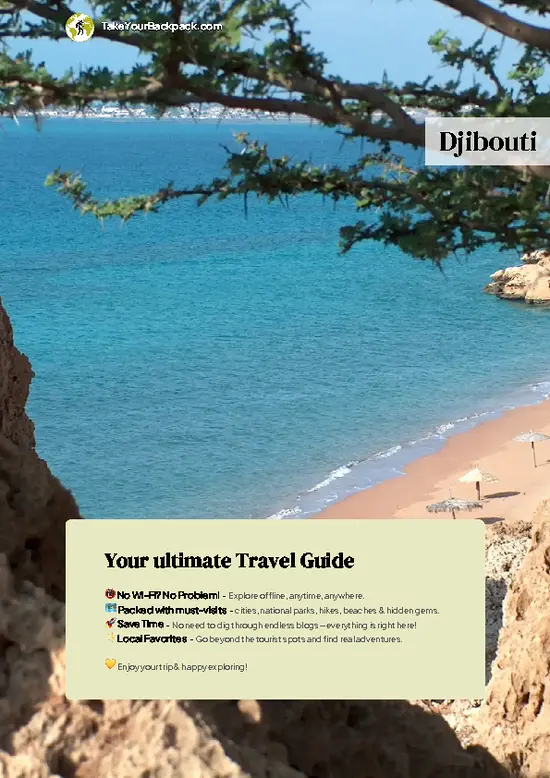
An offline-friendly backpacking guide with optimized travel routes, ranked highlights, transport advice, and the best areas to stay.
example page 0 from our offline Travel Guide for Djibouti
example page 1 from our offline Travel Guide for Djibouti
example page 2 from our offline Travel Guide for Djibouti
example page 3 from our offline Travel Guide for Djibouti
example page 4 from our offline Travel Guide for Djibouti
example page 5 from our offline Travel Guide for Djibouti
example page 6 from our offline Travel Guide for Djibouti
example page 7 from our offline Travel Guide for Djibouti
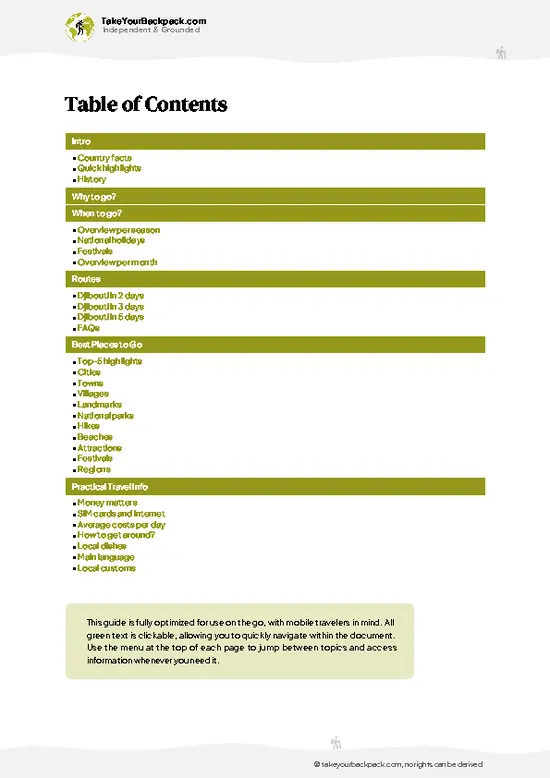
The digital guide (205 pages) contains:
48 highlights, ranked by travel appeal
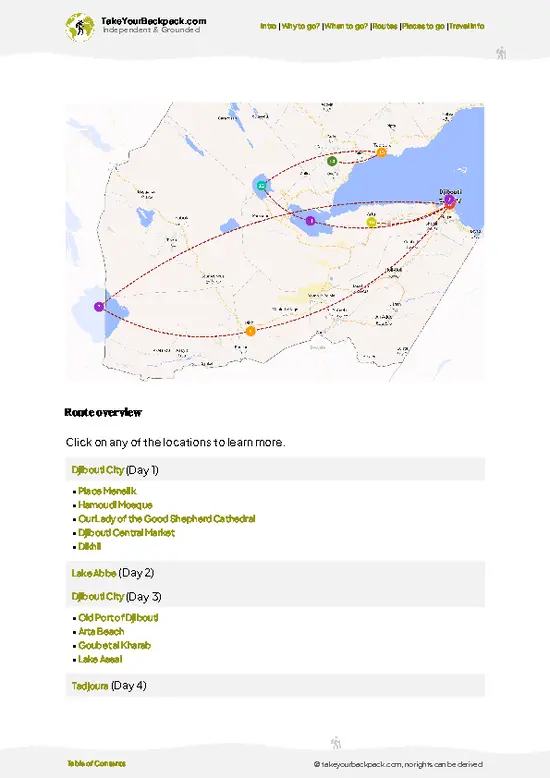
Optimized 2, 3 & 5-day travel routes
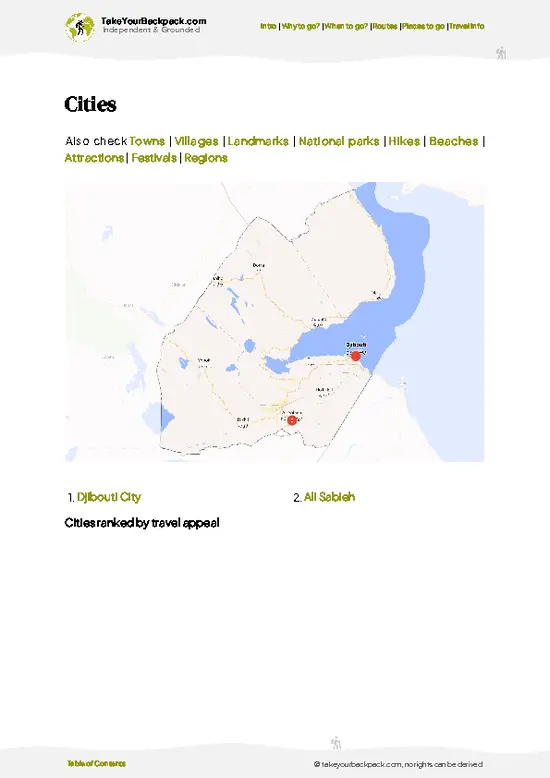
Cities, national parks, landmarks, beaches
How to get around
Offline-friendly for travel without Wi-Fi
👉 Click to see all 30+ guide features

📅 Plan smarter in minutes, not weeks
Month by month travel advice
Festivals & national holidays
Budget expectations

🗺️ Go to the right places, skip the overrated ones
Honest pros & cons of destinations
Top hikes, parks & viewpoints
Lesser-known places most travelers miss
Clear “worth it vs skip it” guidance

🛏️ Travel smoothly without rookie mistakes
Best areas to stay
Transport systems explained simply
Common scams & safety advice
SIM cards, money & practical tips

🌍 Understand the country, not just visit it
Culture & traditions
52 Essential phrases & customs
Festivals worth planning around
Traveler-friendly historical context
Insights that make places more meaningful

📱 Built for real travel conditions
Fully downloadable PDF
Works completely offline
Optimized for phone use
Useful in remote areas & buses
Everything in one place
Save weeks of stressful planning
Get instant access to your full guide. 30‑day money-back guarantee.


By proceeding you agree to our terms.
Sent to your inbox immediately after payment • 100% Secure Checkout
Best Backpacking Travel Advisor 2025 tourism awardBest Backpacking
Travel Advisor
2025
What others say about Take Your Backpack Guides:
⭐⭐⭐⭐⭐
Fantastic, amazing amount of information!
⭐⭐⭐⭐⭐
My goodness this is amazing, it's what I've been looking for hats off too you!
⭐⭐⭐⭐⭐
I think this is absolutely BRILLIANT
⭐⭐⭐⭐
Very complete and informative. It's still missing places, but I gotta to commend you
⭐⭐⭐⭐⭐
This is truly amazing, thank you, can't wait to explore it with my kids!
⭐⭐⭐⭐⭐
Awesome resource, thank you!
⭐⭐⭐⭐⭐
This is amazing! Can't wait to explore the ones I haven't seen
⭐⭐⭐⭐
I love this! Well done, great idea.
⭐⭐⭐⭐⭐
Thanks for taking the time to make this gem!
⭐⭐⭐⭐⭐
This might be the best website I've ever seen.
⭐⭐⭐⭐⭐
Congratulations, and thank you so much for your work; it's incredibly valuable.
⭐⭐⭐⭐
In all seriousness I think you did a great job pointing out the important spots
⭐⭐⭐⭐⭐
10/10 very good
⭐⭐⭐⭐⭐
As someone who's only just starting to visit regularly this is awesome, thank you.
⭐⭐⭐⭐
Thank you very much! I'm going to visit my dad, it's going to be very useful!
⭐⭐⭐⭐⭐
This is really cool! We'll be travelling for the first time and this definitely come in handy.
⭐⭐⭐⭐⭐
You are now our minister of culture, congratulations 👨‍💼
⭐⭐⭐⭐⭐
Just wanted to tell you that this is a pearl! Going to follow your recommendations.
⭐⭐⭐⭐⭐
This is so cool. I'll definitely be using the resource for my travels soon.
⭐⭐⭐⭐⭐
This is very impressive! Good work.
⭐⭐⭐⭐⭐
This is an amazing and informative site. Very well done!

🛏️ Where to stay?Choosing the right base

When it comes to staying near Lake Abbe in Djibouti, options are limited but solid. Inside the national park, there aren’t formal accommodations. This means you’ll need to plan for a bit of a trek to find a place to rest your head.

The closest town is Tadjoura, about an hour and a half away. Here, you’ll find a few guesthouses that cater to budget travelers. Look for places like the Hotel Alia or the more basic Hotel de la Plage. They offer decent amenities and a chance to mingle with locals. Staying in Tadjoura gives you access to the stunning coastline, which is a nice bonus after a day of … read more 👉
When it comes to staying near Lake Abbe in Djibouti, options are limited but solid. Inside the national park, there aren’t formal accommodations. This means you’ll need to plan for a bit of a trek to find a place to rest your head.

The closest town is Tadjoura, about an hour and a half away. Here, you’ll find a few guesthouses that cater to budget travelers. Look for places like the Hotel Alia or the more basic Hotel de la Plage. They offer decent amenities and a chance to mingle with locals. Staying in Tadjoura gives you access to the stunning coastline, which is a nice bonus after a day of exploring the surreal landscapes of Lake Abbe.

If you’re up for a bit more travel, consider Djibouti City, roughly two hours from the park. It’s bustling and has a wider range of accommodations, from hostels to mid-range hotels. Just be aware that the city vibe is different from the serene park atmosphere.

Plan ahead. Bring your camping gear if you want to experience the park more intimately. This way, you can soak in the otherworldly scenery at sunrise or sunset without the hassle of returning to town.

👛 Costs (as of 10 July 2025)Travel costs and budget guide for Lake Abbe

Visiting Lake Abbe in Djibouti can be an incredible experience, but it’s essential to be aware of the costs involved to avoid any surprises.

First, the entrance fee to the national park is typically around €10 to €15 per person. This fee grants you access to the stunning landscapes and unique geological features of the area.

Transportation is another significant cost. If you’re not driving yourself, hiring a 4x4 vehicle is advisable. Expect to pay between €100 and €150 per day for a rental, plus fuel. If you opt for a guided tour, prices can range from €50 to €100 per person, depending on the inclusions.

Accommodation options near Lake Abbe vary. Basic lodges or campsites can cost around €20 to €50 per night. For a more comfortable stay, expect to pay upwards of €70 to €100 for mid-range … read more 👉
Visiting Lake Abbe in Djibouti can be an incredible experience, but it’s essential to be aware of the costs involved to avoid any surprises.

First, the entrance fee to the national park is typically around €10 to €15 per person. This fee grants you access to the stunning landscapes and unique geological features of the area.

Transportation is another significant cost. If you’re not driving yourself, hiring a 4x4 vehicle is advisable. Expect to pay between €100 and €150 per day for a rental, plus fuel. If you opt for a guided tour, prices can range from €50 to €100 per person, depending on the inclusions.

Accommodation options near Lake Abbe vary. Basic lodges or campsites can cost around €20 to €50 per night. For a more comfortable stay, expect to pay upwards of €70 to €100 for mid-range hotels.

Food is generally affordable. Meals at local restaurants can range from €5 to €15. However, if you’re in a more remote area, prices may increase due to limited options.

Lastly, consider additional costs for activities or excursions. Guided hikes or cultural experiences may add another €20 to €50 to your budget.

Being aware of these costs will help you manage your budget effectively, allowing you to focus on enjoying the unique beauty of Lake Abbe without financial stress.
⚠️ Prices can change and everyone travels differently, so take this as a rough guide. Hope it helps you plan your adventure!

🥾 TrailsExploring Lake Abbe: trails, terrain, and views

Lake Abbe in Djibouti is a wild gem, offering a unique blend of stunning landscapes and intriguing wildlife. The area is marked by surreal limestone chimneys and the shimmering lake itself, which presents a backdrop that feels almost otherworldly. As you hike, you might spot flamingos wading in the shallows or hear the distant calls of various birds. The terrain can be rocky and uneven, so good footwear is a must.

One of the main trails in the park is the Lake Abbe Loop. Here are the details:
  • Length: 8 km
  • Estimated Duration: 3-4 hours
  • Difficulty Level: Moderate
  • Key Features: Stunning views of the
read more 👉
Lake Abbe in Djibouti is a wild gem, offering a unique blend of stunning landscapes and intriguing wildlife. The area is marked by surreal limestone chimneys and the shimmering lake itself, which presents a backdrop that feels almost otherworldly. As you hike, you might spot flamingos wading in the shallows or hear the distant calls of various birds. The terrain can be rocky and uneven, so good footwear is a must.

One of the main trails in the park is the Lake Abbe Loop. Here are the details:
  • Length: 8 km
  • Estimated Duration: 3-4 hours
  • Difficulty Level: Moderate
  • Key Features: Stunning views of the lake, unique rock formations, and potential wildlife sightings
  • Terrain: Rocky paths with some steep sections

Getting to Lake Abbe isn’t too tricky, but public transport can be a bit hit or miss. You might need to take a taxi or arrange a ride from Djibouti City. The park isn’t usually crowded, so you can enjoy the scenery without feeling rushed. Just keep in mind there might be a small entrance fee, so have a little cash handy. Overall, it’s a fantastic spot for those looking to escape the usual tourist trails and immerse themselves in nature.
⚠️ Hiking info can sometimes be outdated or inaccurate. Before you hit the trail, check the latest conditions with locals. If you do spot anything that's off, I'd love to hear from you, so I can update it for fellow travelers.

🛡️ SafetyStaying Safe: What Travelers Should Know

Lake Abbe in Djibouti offers a striking landscape, but it’s essential to approach it with a grounded mindset. The weather can shift unexpectedly, so pack layers and stay hydrated. Daytime heat can be intense, while nights may drop in temperature, so be prepared for both extremes.

The terrain is generally manageable, but watch your footing on rocky paths. Navigation is straightforward, yet a map or GPS can be invaluable, especially if you stray from well-trodden routes. River crossings are rare but can occur after heavy rains, so keep an eye on the forecast.

Wildlife encounters are part of the experience, but maintain a respectful distance. Animals like flamingos are best appreciated from afar.

First-timers often underestimate the importance of timing; early mornings are ideal for cooler … read more 👉
Lake Abbe in Djibouti offers a striking landscape, but it’s essential to approach it with a grounded mindset. The weather can shift unexpectedly, so pack layers and stay hydrated. Daytime heat can be intense, while nights may drop in temperature, so be prepared for both extremes.

The terrain is generally manageable, but watch your footing on rocky paths. Navigation is straightforward, yet a map or GPS can be invaluable, especially if you stray from well-trodden routes. River crossings are rare but can occur after heavy rains, so keep an eye on the forecast.

Wildlife encounters are part of the experience, but maintain a respectful distance. Animals like flamingos are best appreciated from afar.

First-timers often underestimate the importance of timing; early mornings are ideal for cooler temperatures and fewer crowds. Prioritize comfort in your gear—good boots and sun protection are non-negotiable. This preparation will help you focus on the stunning views rather than potential pitfalls.

Other Djiboutian national parks near Lake Abbe

Explore more nearby:


💡 Not sure where to go next?
Create a personalized itinerary for Djibouti including Lake Abbe and the places that fit your trip.

Generate my itinerary

👉 Discover all national parks

Or checkout all Djibouti has to offer (think cities, towns, villages, national parks, hikes, beaches, festivals)
Country photo of Djibouti

We 💚 feedbackParting advice and final tips

Lake Abbe is a surreal experience, like stepping onto another planet. The salt formations and bubbling springs are mesmerizing, but don’t underestimate the heat; it can drain your energy fast. Bring plenty of water and a good hat. The best surprise? Watching the sun dip below the horizon, painting the sky in colors you didn’t think existed. Just remember, the remoteness means you’ll want to plan your logistics carefully. It’s worth it for those moments of pure magic.

✍️ Help improve this page!
The information on this page is based on in-depth research, insights shared by experienced travelers, and feedback from the local travel community in Djibouti. While every effort is made to keep the information accurate and current, conditions can change — so if you spot anything incorrect or outdated, please get in touch.


🙋‍♂️ Give feedback

👋 Meet the founderWho’s Behind Take Your Backpack?

Johan, backpacker and founder of TakeYourBackpackHi, I’m Johan (Netherlands 🇳🇱), the creator of TakeYourBackpack. Over the past decade, I’ve backpacked through 80+ countries across six continents, gaining extensive experience with independent travel, long-term trips, and overland routes.

This site is built on a combination of firsthand travel experience and carefully curated insights from other backpackers. Many guides are based on places I’ve personally visited, while others bring together tips, observations, and practical advice shared by trusted travelers I’ve met along the way.

The goal is to provide realistic, experience-driven guidance — not generic itineraries — so you can explore destinations with better context, clearer expectations, and more confidence.

Get full Djibouti guide •
Instant download • 48 highlights • Full Offline guide