×

Djibouti🇩🇯 | landmarksMosque of King Hassan IIwhite minaret, geometric tilework, city center landmark, prayer hall | things to do and best time to go

Explore Goubet al KharabExplore Old Port of Djibouti

Backpacking in Mosque of King Hassan II
By Johan Kruseman 🇳🇱 | Updated September 3, 2026

Here’s what nobody tells you: the Mosque of King Hassan II is open to non-Muslim visitors during specific hours, but if you show up outside those windows, you’re stuck admiring the exterior with a crowd of frustrated tourists. Located right on the waterfront in Djibouti City, this mosque isn’t just a photo op—it’s a cultural heavyweight. The scale is jaw-dropping, but so are the entrance fees and the tour groups. Still, the mosaic work and ocean views deliver a kind of quiet awe that no Instagram filter can fake.

Discover everything you want to know in the 📖 Djibouti Travel Guide.


Get your Djibouti guide
47 ranked highlights, routes & tips, works offline (200 pages)
Loading the map 🌍
CLICK TO FILTER
cities
towns
villages
landmarks
national parks
hikes
beaches
attractions
festivals
regions
SHOW COUNTRY’S BESTSHOW ALL

✨ Why go?
Ranked #99 unique site in Djibouti
Why Mosque of King Hassan II should be on your travel list

The Mosque of King Hassan II in Djibouti isn’t just another stop on your backpacking route; it’s a must-see that packs a punch. Sure, it’s popular, and yes, you’ll share the space with other travelers, but the scale and craftsmanship are jaw-dropping. This isn’t just a building; it’s a testament to the artistry of Islamic architecture, with intricate tile work and soaring minarets that make you feel small in the best way.

Access is straightforward. It’s right in the heart of Djibouti City, making it easy to fit into your itinerary. Plus, entry is often low-cost, so you won’t break the bank.

But here’s the kicker: visiting the mosque naturally leads you to explore the vibrant local culture. Grab a coffee at a nearby café, chat with locals, and soak in the buzz of the city. It’s not just … read more 👉
The Mosque of King Hassan II in Djibouti isn’t just another stop on your backpacking route; it’s a must-see that packs a punch. Sure, it’s popular, and yes, you’ll share the space with other travelers, but the scale and craftsmanship are jaw-dropping. This isn’t just a building; it’s a testament to the artistry of Islamic architecture, with intricate tile work and soaring minarets that make you feel small in the best way.

Access is straightforward. It’s right in the heart of Djibouti City, making it easy to fit into your itinerary. Plus, entry is often low-cost, so you won’t break the bank.

But here’s the kicker: visiting the mosque naturally leads you to explore the vibrant local culture. Grab a coffee at a nearby café, chat with locals, and soak in the buzz of the city. It’s not just about the mosque; it’s about the experience that surrounds it. This landmark is a gateway to the real Djibouti, and that’s what makes it worth your time.
Want to include Mosque of King Hassan II in your Djibouti route?
Create a personalized Djibouti itinerary that includes Mosque of King Hassan II and the places that fit your trip — based on your travel style, budget, and available time. Get your route in seconds.

Generate my trip

💡 HighlightsEssential experiences to have while visiting Mosque of King Hassan II

  • Namesake and diplomatic symbol — The mosque is named for King Hassan II of Morocco and stands as an obvious symbol of the historical and diplomatic ties between Djibouti and Morocco.
  • Prominent city landmark — Located in Djibouti City, the mosque is one of the city’s major religious buildings and an easy visual reference for locals and visitors navigating the urban landscape.
  • Distinctive minaret and exterior silhouette — The mosque’s minaret and overall external form make it a clear skyline feature; it’s a strong photographic subject at different times of day.
  • Traditional Islamic interior layout — The prayer hall follows the conventional mosque layout with an open, carpeted space oriented toward Mecca and decorated in Islamic artistic traditions, creating a calm environment for worship.
read more 👉
  • Namesake and diplomatic symbol — The mosque is named for King Hassan II of Morocco and stands as an obvious symbol of the historical and diplomatic ties between Djibouti and Morocco.
  • Prominent city landmark — Located in Djibouti City, the mosque is one of the city’s major religious buildings and an easy visual reference for locals and visitors navigating the urban landscape.
  • Distinctive minaret and exterior silhouette — The mosque’s minaret and overall external form make it a clear skyline feature; it’s a strong photographic subject at different times of day.
  • Traditional Islamic interior layout — The prayer hall follows the conventional mosque layout with an open, carpeted space oriented toward Mecca and decorated in Islamic artistic traditions, creating a calm environment for worship.
  • Community and religious hub — The mosque functions as a focal point for daily prayers, Friday congregations, and major Islamic festivals, making it important to local religious and social life.
  • Architectural and decorative details — Visitors notice the mosque’s use of Islamic motifs, calligraphic elements, and patterned surfaces that reflect regional mosque-building practices and craftsmanship.
Spotted a mistake or missing something? Contact us.

🌤️ When to go?Best time to visit Mosque of King Hassan II


  • Weather: Djibouti is hot and arid year-round, but the best window is November to February when temperatures drop to a bearable 20-25°C (68-77°F). Avoid the scorching summer months hitting 40°C+ (104°F+), which can drain your energy fast.

  • Daylight Hours: Consistent year-round, roughly 11-12 hours of daylight. Early mornings and late afternoons offer softer light for photos and cooler exploration.

  • Crowds: The mosque isn’t a tourist magnet like other landmarks, but local worshippers peak during Fridays and religious holidays, so plan accordingly if you want quieter visits.

  • Seasonal Activities: Ramadan months bring a unique atmosphere but limited access during fasting hours. Visiting outside Ramadan means full access and more relaxed vibes.

  • Price Fluctuations: Djibouti’s tourism is
read more 👉

  • Weather: Djibouti is hot and arid year-round, but the best window is November to February when temperatures drop to a bearable 20-25°C (68-77°F). Avoid the scorching summer months hitting 40°C+ (104°F+), which can drain your energy fast.

  • Daylight Hours: Consistent year-round, roughly 11-12 hours of daylight. Early mornings and late afternoons offer softer light for photos and cooler exploration.

  • Crowds: The mosque isn’t a tourist magnet like other landmarks, but local worshippers peak during Fridays and religious holidays, so plan accordingly if you want quieter visits.

  • Seasonal Activities: Ramadan months bring a unique atmosphere but limited access during fasting hours. Visiting outside Ramadan means full access and more relaxed vibes.

  • Price Fluctuations: Djibouti’s tourism is low-volume; prices for guides and accommodations stay steady year-round, so timing won’t save you much cash but will save your sanity.


Pro-tip: Aim for the cooler months and weekdays to dodge heat and crowds, turning your visit into a genuinely immersive experience rather than a sweaty, rushed photo op.


source: climatestotravel.comJANJanuary: excellent for travelingFEBFebruary: excellent for travelingMARMarch: highly recommended for travelingAPRApril: fair for travelingMAYMay: fair for travelingJUNJune: below average for travelingJULJuly: below average for travelingAUGAugust: below average for travelingSEPSeptember: fair for travelingOCTOctober: good for travelingNOVNovember: excellent for travelingDECDecember: excellent for traveling
djibouti-unique-site-mosque-of-king-hassan-ii
© Google |

✈️ The backpacker research shortcutDjibouti Travel Guide

An offline-friendly backpacking guide with optimized travel routes, ranked highlights, transport advice, and the best areas to stay.
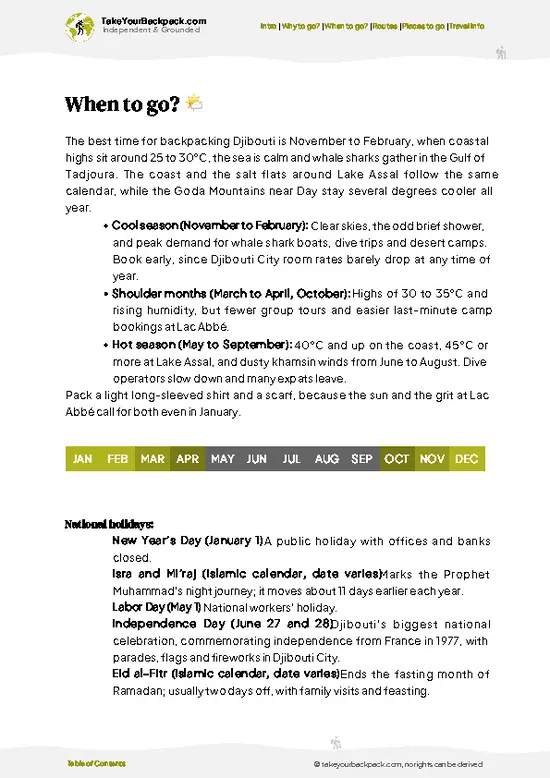
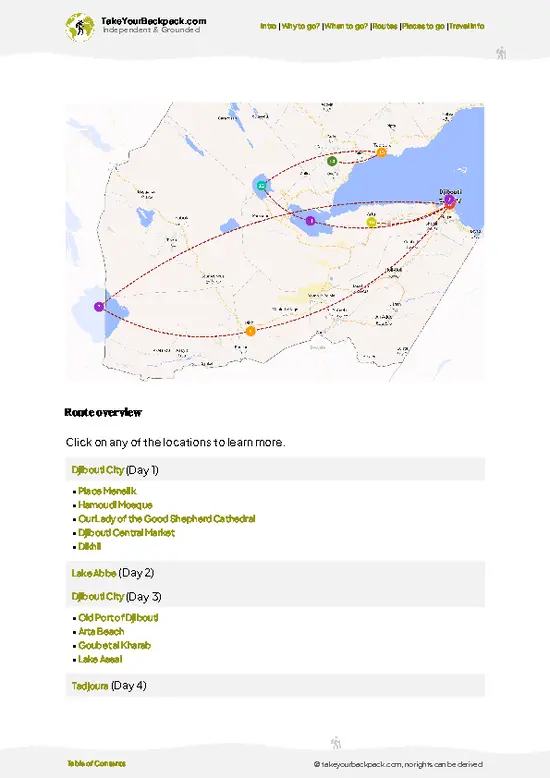
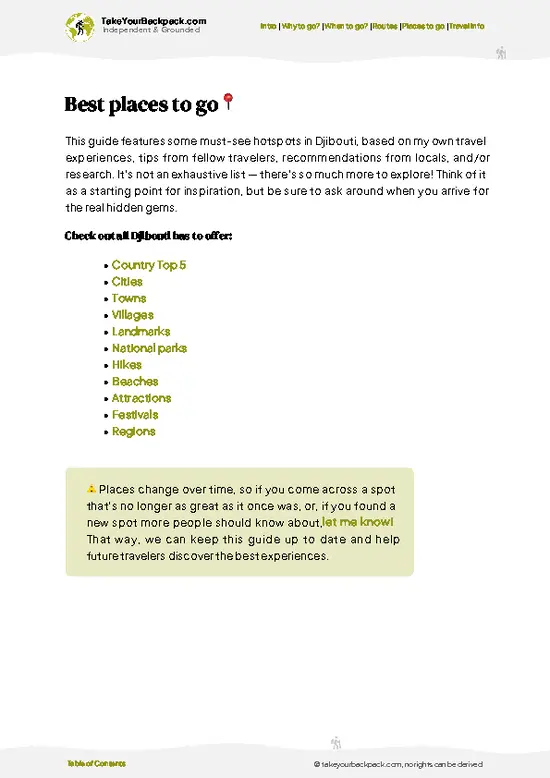
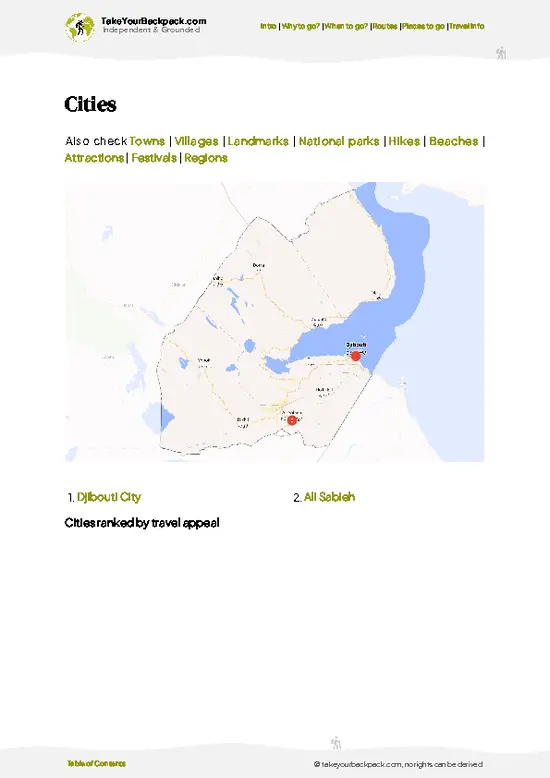
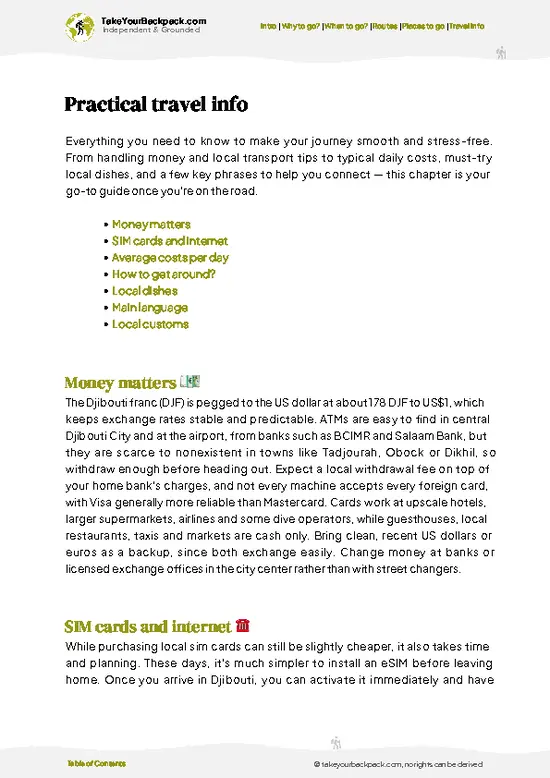
example page 0 from our offline Travel Guide for Djibouti
example page 1 from our offline Travel Guide for Djibouti
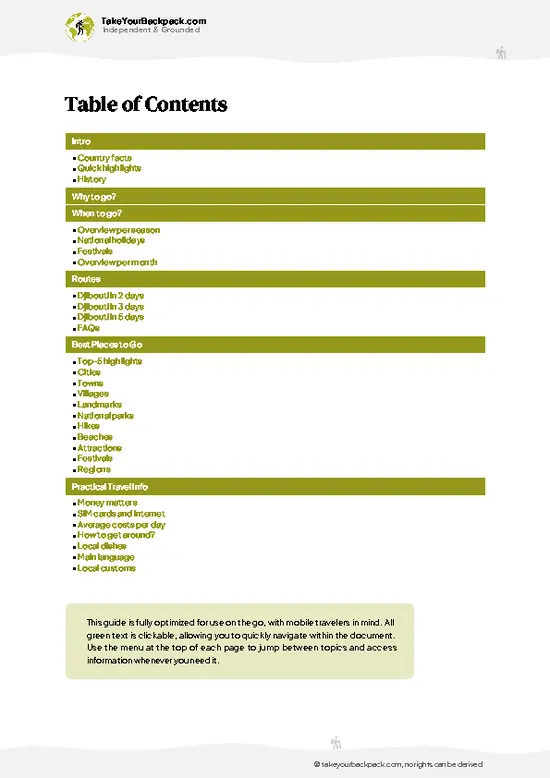
example page 2 from our offline Travel Guide for Djibouti
example page 3 from our offline Travel Guide for Djibouti
example page 4 from our offline Travel Guide for Djibouti
example page 5 from our offline Travel Guide for Djibouti
example page 6 from our offline Travel Guide for Djibouti
example page 7 from our offline Travel Guide for Djibouti
The digital guide (200 pages) contains:
47 highlights, ranked by travel appeal
Optimized 2, 3 & 5-day travel routes
Cities, national parks, landmarks, beaches
How to get around
Offline-friendly for travel without Wi-Fi
👉 Click to see all 30+ guide features

📅 Plan smarter in minutes, not weeks
Month by month travel advice
Festivals & national holidays
Budget expectations

🗺️ Go to the right places, skip the overrated ones
Honest pros & cons of destinations
Top hikes, parks & viewpoints
Lesser-known places most travelers miss
Clear “worth it vs skip it” guidance

🛏️ Travel smoothly without rookie mistakes
Best areas to stay
Transport systems explained simply
Common scams & safety advice
SIM cards, money & practical tips

🌍 Understand the country, not just visit it
Culture & traditions
52 Essential phrases & customs
Festivals worth planning around
Traveler-friendly historical context
Insights that make places more meaningful

📱 Built for real travel conditions
Fully downloadable PDF
Works completely offline
Optimized for phone use
Useful in remote areas & buses
Everything in one place
Save weeks of stressful planning
Get instant access to your full guide. 30‑day money-back guarantee.
+ Add another guide for just US$7.80

By proceeding you agree to our terms.
Sent to your inbox immediately after payment • 100% Secure Checkout
Best Backpacking Travel Advisor 2025 tourism awardBest Backpacking
Travel Advisor
2025
What others say about Take Your Backpack Guides:
⭐⭐⭐⭐⭐
Fantastic, amazing amount of information!
⭐⭐⭐⭐⭐
My goodness this is amazing, it's what I've been looking for hats off too you!
⭐⭐⭐⭐⭐
I think this is absolutely BRILLIANT
⭐⭐⭐⭐
Very complete and informative. It's still missing places, but I gotta to commend you
⭐⭐⭐⭐⭐
This is truly amazing, thank you, can't wait to explore it with my kids!
⭐⭐⭐⭐⭐
Awesome resource, thank you!
⭐⭐⭐⭐⭐
This is amazing! Can't wait to explore the ones I haven't seen
⭐⭐⭐⭐
I love this! Well done, great idea.
⭐⭐⭐⭐⭐
Thanks for taking the time to make this gem!
⭐⭐⭐⭐⭐
This might be the best website I've ever seen.
⭐⭐⭐⭐⭐
Congratulations, and thank you so much for your work; it's incredibly valuable.
⭐⭐⭐⭐
In all seriousness I think you did a great job pointing out the important spots
⭐⭐⭐⭐⭐
10/10 very good
⭐⭐⭐⭐⭐
As someone who's only just starting to visit regularly this is awesome, thank you.
⭐⭐⭐⭐
Thank you very much! I'm going to visit my dad, it's going to be very useful!
⭐⭐⭐⭐⭐
This is really cool! We'll be travelling for the first time and this definitely come in handy.
⭐⭐⭐⭐⭐
You are now our minister of culture, congratulations 👨‍💼
⭐⭐⭐⭐⭐
Just wanted to tell you that this is a pearl! Going to follow your recommendations.
⭐⭐⭐⭐⭐
This is so cool. I'll definitely be using the resource for my travels soon.
⭐⭐⭐⭐⭐
This is very impressive! Good work.
⭐⭐⭐⭐⭐
This is an amazing and informative site. Very well done!

🛏️ Where to stay?How to pick the right area

Staying near the Mosque of King Hassan II in Djibouti? You’re in for a treat, but let’s cut through the fluff. The area around the mosque can get crowded, especially during prayer times. Expect a mix of locals and tourists, which can feel overwhelming but also vibrant.

Focus on the neighborhoods of Balbala and the city center. Balbala offers a more local vibe, with affordable guesthouses that let you soak in the daily hustle. You’ll find street food stalls serving up spicy sambusas and fresh juices, perfect for fueling your adventures.

The city center is where the action is. It’s buzzing with … read more 👉
Staying near the Mosque of King Hassan II in Djibouti? You’re in for a treat, but let’s cut through the fluff. The area around the mosque can get crowded, especially during prayer times. Expect a mix of locals and tourists, which can feel overwhelming but also vibrant.

Focus on the neighborhoods of Balbala and the city center. Balbala offers a more local vibe, with affordable guesthouses that let you soak in the daily hustle. You’ll find street food stalls serving up spicy sambusas and fresh juices, perfect for fueling your adventures.

The city center is where the action is. It’s buzzing with cafes and shops, making it easy to meet fellow travelers. Look for spots near the waterfront; the views are worth it, especially at sunset.

Safety is generally good, but keep your wits about you. Stick to well-lit areas at night and be mindful of your belongings. The real magic here isn’t just the mosque; it’s the connections you’ll make and the stories you’ll gather. Embrace the chaos, and you’ll find the heart of Djibouti.

👛 Costs (as of 3 September 2026)Travel costs and budget guide for Mosque of King Hassan II

Visiting the Mosque of King Hassan II in Djibouti is an experience that comes with its own set of costs. Here’s a breakdown to help you budget wisely.
  • Entrance Fee: Expect to pay around €10 to €15 for a guided tour. This fee grants you access to the mosque’s stunning interior and the chance to learn about its history. It’s worth it for the insights you’ll gain.
  • Transportation: Getting there can vary. A taxi ride from the city center will cost you about €5 to €10. If you’re feeling adventurous, public transport is cheaper, around €1, but it may take longer and require some navigation.
  • Food and Drink: After your visit, you might want to grab a bite. Local eateries offer meals for €5 to €15. If you opt for a sit-down restaurant, expect to spend closer to €20. Hydration is key, so factor in another
read more 👉
Visiting the Mosque of King Hassan II in Djibouti is an experience that comes with its own set of costs. Here’s a breakdown to help you budget wisely.
  • Entrance Fee: Expect to pay around €10 to €15 for a guided tour. This fee grants you access to the mosque’s stunning interior and the chance to learn about its history. It’s worth it for the insights you’ll gain.
  • Transportation: Getting there can vary. A taxi ride from the city center will cost you about €5 to €10. If you’re feeling adventurous, public transport is cheaper, around €1, but it may take longer and require some navigation.
  • Food and Drink: After your visit, you might want to grab a bite. Local eateries offer meals for €5 to €15. If you opt for a sit-down restaurant, expect to spend closer to €20. Hydration is key, so factor in another €1 to €3 for water or a soft drink.
  • Souvenirs: If you’re looking to take home a piece of the experience, budget around €5 to €30 for local crafts or trinkets. Prices can vary widely based on what you choose, so haggle a bit to get a fair deal.
  • Photography Fees: Some areas may require a small fee for photography, typically around €2 to €5. It’s a small price to pay for capturing the mosque’s beauty.

Be prepared for crowds, especially during peak tourist seasons. The mosque is a popular spot, so timing your visit early in the morning or later in the afternoon can help you avoid the hustle. The real magic lies not just in the architecture, but in the stories and the atmosphere that surround this iconic site.
⚠️ Prices can change and everyone travels differently, so take this as a rough guide. Hope it helps you plan your adventure!

FAQTraveler FAQ

The Mosque of King Hassan II is a large mosque located in Djibouti, known for its impressive architecture and cultural significance. It is one of the key religious sites in the country, featuring intricate designs and a prominent minaret.
Visiting the Mosque of King Hassan II typically requires about 1 to 2 hours to fully appreciate the architecture and surroundings. Guided tours may take longer, around 2 hours, depending on the level of detail provided.
To get to the Mosque of King Hassan II, you can take a taxi or local transport from Djibouti city center, as it is located within the city. The mosque is accessible by road and is approximately a 10 to 15-minute drive from the main city area.
⚠️ Things can change over time, so always validate details locally before you go.

Other Djiboutian landmarks near Mosque of King Hassan II

Explore more nearby:

  • Lake Abhe—limestone chimneys, steaming vents, Afar herders, salt flats
  • Goubet al Kharab—rift valley cliffs, deep blue waters, tidal whirlpools, volcanic terrain
  • Ras Siyyan—coral reefs, sand spit, migratory birds, Gulf of Tadjoura

💡 Not sure where to go next?
Create a personalized itinerary for Djibouti including Mosque of King Hassan II and the places that fit your trip.

Generate my itinerary

👉 Discover all landmarks

Or checkout all Djibouti has to offer (think cities, towns, villages, national parks, hikes, beaches, festivals)
Country photo of Djibouti

We 💚 feedbackWhat to keep in mind

Visiting the Mosque of King Hassan II is a mixed bag. The crowds can be overwhelming, especially during prayer times, but don’t let that scare you off. The real magic happens when you step inside. The intricate tile work and the sheer scale of the place will leave you breathless. Just be mindful of the dress code—modesty is key. If you can, catch the sunset from the nearby coast; it’s a moment that feels like a secret just for you.

✍️ Help improve this page!
The information on this page is based on in-depth research, insights shared by experienced travelers, and feedback from the local travel community in Djibouti. While every effort is made to keep the information accurate and current, conditions can change — so if you spot anything incorrect or outdated, please get in touch.


🙋‍♂️ Give feedback

👋 Meet the founderWho’s Behind Take Your Backpack?

Johan, backpacker and founder of TakeYourBackpackHi, I’m Johan (Netherlands 🇳🇱), the creator of TakeYourBackpack. Over the past decade, I’ve backpacked through 80+ countries across six continents, gaining extensive experience with independent travel, long-term trips, and overland routes.

This site is built on a combination of firsthand travel experience and carefully curated insights from other backpackers. Many guides are based on places I’ve personally visited, while others bring together tips, observations, and practical advice shared by trusted travelers I’ve met along the way.

The goal is to provide realistic, experience-driven guidance — not generic itineraries — so you can explore destinations with better context, clearer expectations, and more confidence.

Get full Djibouti guide •
Instant download • 47 highlights • Full Offline guide