×

Dominican Republic🇩🇴 | attractionsFaro a Colónmonumental cross, mausoleum, panoramic terrace | things to do and best time to go

Explore Catedral Primada de AméricaExplore Museo del Hombre Dominicano

Backpacking in Faro a Colón
🌟 Highlightattraction ranked #5
By Johan Kruseman 🇳🇱 | Updated May 26, 2026

Forget the Instagram myth: Faro a Colón is not some dreamy, sun-drenched lighthouse perched on a cliff. It’s a hulking, brutalist concrete cross—half mausoleum, half spaceship—planted on the edge of Santo Domingo, in the Dominican Republic’s capital sprawl. Backpackers, brace yourself: this is not a place for quiet contemplation or postcard-perfect shots. The wow-factor here is raw scale and audacity, not beauty. You’ll find a monument that tries to be both a tomb for Columbus and a beacon for the Americas, but ends up feeling more like a Cold War relic than a spiritual pilgrimage. The crowds are mostly school groups and tour buses, not fellow wanderers. Entry fees are modest, but the vibe is stark and institutional, especially compared to the music-soaked streets of Zona Colonial or the wild beaches up north. Still, if you want to feel the weight of history—awkward, controversial, and utterly human—Faro a Colón delivers a jolt you won’t get anywhere else in the country.

Discover everything you want to know in the 📖 Dominican Republic Travel Guide.
Loading the map 🌍
CLICK TO FILTER
cities
towns
landmarks
national parks
hikes
beaches
attractions
festivals
regions
SHOW COUNTRY’S BESTSHOW ALL

✨ Why go?
Ranked #5 attraction in Dominican Republic
Reasons people choose to visit here

Faro a Colón is not your typical postcard stop. Yes, it’s crowded, and yes, the entrance fee can sting a bit if you’re used to free beaches and street food. But here’s the kicker: this lighthouse isn’t just a beacon; it’s a cultural heavyweight. Built to honor Christopher Columbus, it’s a monument that doubles as a mausoleum, housing what some claim are his remains. That alone makes it a magnet for history buffs and skeptics alike. The architecture is unapologetically bold, a concrete fortress that feels more like a time capsule than a tourist trap.

Backpackers who carve out time for Faro a Colón aren’t just ticking off a checklist—they’re diving into the Dominican Republic’s complex identity. The site sits at a crossroads of myth, colonial legacy, and national pride, making it a major milestone … read more 👉
Faro a Colón is not your typical postcard stop. Yes, it’s crowded, and yes, the entrance fee can sting a bit if you’re used to free beaches and street food. But here’s the kicker: this lighthouse isn’t just a beacon; it’s a cultural heavyweight. Built to honor Christopher Columbus, it’s a monument that doubles as a mausoleum, housing what some claim are his remains. That alone makes it a magnet for history buffs and skeptics alike. The architecture is unapologetically bold, a concrete fortress that feels more like a time capsule than a tourist trap.

Backpackers who carve out time for Faro a Colón aren’t just ticking off a checklist—they’re diving into the Dominican Republic’s complex identity. The site sits at a crossroads of myth, colonial legacy, and national pride, making it a major milestone on any cultural route through the country. The effort to get there pays off with a mix of solemn reflection and jaw-dropping views, especially when the sun hits the stained glass windows inside. It’s not about flashy thrills; it’s about standing in a place where history and legend collide, and feeling the weight of that moment. That’s the real magic.
Want to include Faro a Colón in your Dominican Republic route?
Create a personalized Dominican Republic itinerary that includes Faro a Colón and the places that fit your trip — based on your travel style, budget, and available time. Get your route in seconds.

Generate my trip

💡 HighlightsThe experiences that define the visit

The Colossal Cross-Shaped Architecture
Let’s get real: the Faro a Colón is not “beautiful” in the classic sense. It’s a brutalist behemoth, a concrete cross the size of a small airport runway, and it’s impossible to ignore. The sheer audacity of its design—part mausoleum, part spaceship, part dictator’s fever dream—makes it a spectacle you won’t find anywhere else in the Caribbean. You don’t come here for subtlety; you come for the jaw-drop factor. Stand at the base and let the scale hit you. It’s a monument that doesn’t care if you like it. It dares you to have an opinion.


The Laser Light Show (When It Works)
Here’s the thing: most guidebooks will hype the Faro’s famous nighttime light show, where massive beams project a cross into the sky, supposedly visible for miles. The truth? It’s rare. … read more 👉
The Colossal Cross-Shaped Architecture
Let’s get real: the Faro a Colón is not “beautiful” in the classic sense. It’s a brutalist behemoth, a concrete cross the size of a small airport runway, and it’s impossible to ignore. The sheer audacity of its design—part mausoleum, part spaceship, part dictator’s fever dream—makes it a spectacle you won’t find anywhere else in the Caribbean. You don’t come here for subtlety; you come for the jaw-drop factor. Stand at the base and let the scale hit you. It’s a monument that doesn’t care if you like it. It dares you to have an opinion.


The Laser Light Show (When It Works)
Here’s the thing: most guidebooks will hype the Faro’s famous nighttime light show, where massive beams project a cross into the sky, supposedly visible for miles. The truth? It’s rare. The system is old, and the city doesn’t always flip the switch. But if you catch it, it’s pure spectacle—think Gotham City meets Vatican ambition. The lights slice through the Caribbean night, and for a few minutes, the whole city seems to pause. It’s over-the-top, a little eerie, and totally unforgettable if you’re lucky enough to witness it.


The Columbus “Tomb” and the Global Relic Debate
Inside, you’ll find what’s claimed to be Christopher Columbus’s remains. Is it really him? Spain and the Dominican Republic have been arguing about that for decades. But the drama is part of the draw. The tomb itself is a stark, almost clinical affair—no velvet ropes or Disney theatrics. You’re face-to-face with the messy legacy of exploration, conquest, and myth-making. It’s a history lesson with teeth, not sugar-coating.


The International Exhibits
This isn’t just a Dominican monument. The Faro houses a series of small exhibits donated by countries from across the Americas and Europe. Some are dusty, some are fascinating, all are a little surreal. You’ll see gifts from Cuba, Mexico, Italy, and more—think of it as a diplomatic time capsule from the early ‘90s. It’s a global patchwork that feels both random and oddly poignant, especially when you stumble across a forgotten artifact from a country you’ve never visited.


The Rooftop Views (If You Can Access Them)
Security and access rules change, but if you can get up to the higher levels, do it. The view is raw and honest: Santo Domingo’s sprawl, the Ozama River, the sea in the distance. No manicured gardens, no Instagram-perfect angles—just the real city, with all its grit and energy. It’s a reminder that the Faro isn’t just a monument; it’s a piece of the living, breathing capital.
Spotted a mistake or missing something? Contact us.

Things to do around Faro a Colón

Ratings based on Tripadvisor reviews. When you book through this link, you support our work at no extra cost to you.

🌤️ When to go?Seasonal considerations and timing


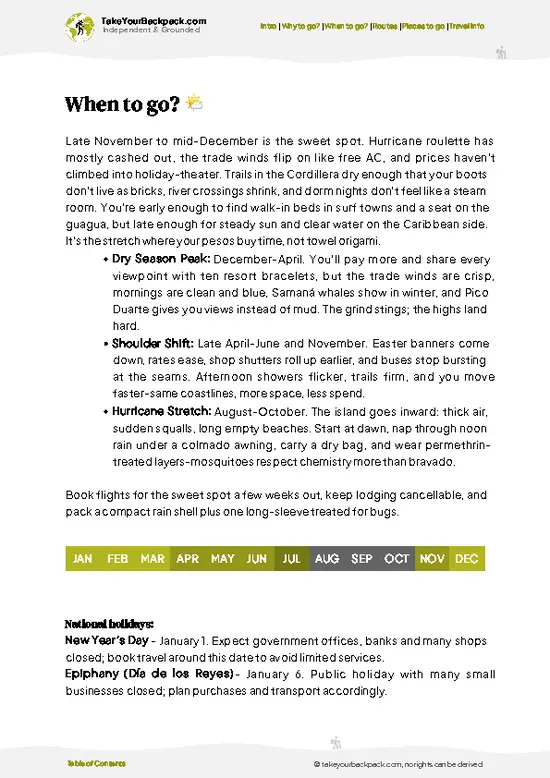
  • Weather: The Dominican Republic’s Caribbean climate means it’s warm year-round, but from June to November, expect heavy rain and the threat of hurricanes. The dry season, December through April, offers clearer skies and less humidity, making it the most comfortable window for exploring Faro a Colón.

  • Temperature: Temperatures hover between 24°C to 31°C (75°F to 88°F) in the dry months, which is manageable for backpackers. The wet season can push temps higher with sticky humidity, turning sightseeing into a sweaty slog.

  • Daylight Hours: Daylight is fairly consistent year-round, roughly 11 to 12 hours daily. This means you won’t lose much time to darkness, but the dry season’s clearer mornings and evenings make for better photo ops and walking conditions.

  • Crowds: Peak tourist season aligns
read more 👉

  • Weather: The Dominican Republic’s Caribbean climate means it’s warm year-round, but from June to November, expect heavy rain and the threat of hurricanes. The dry season, December through April, offers clearer skies and less humidity, making it the most comfortable window for exploring Faro a Colón.

  • Temperature: Temperatures hover between 24°C to 31°C (75°F to 88°F) in the dry months, which is manageable for backpackers. The wet season can push temps higher with sticky humidity, turning sightseeing into a sweaty slog.

  • Daylight Hours: Daylight is fairly consistent year-round, roughly 11 to 12 hours daily. This means you won’t lose much time to darkness, but the dry season’s clearer mornings and evenings make for better photo ops and walking conditions.

  • Crowds: Peak tourist season aligns with the dry months, especially December through February, when international travelers flock to escape winter elsewhere. Expect more crowds and higher prices then. The shoulder months of April and November offer a quieter experience without sacrificing weather quality.

  • Seasonal Activities: The dry season brings cultural festivals and local events around Santo Domingo, adding layers to your visit beyond the monument itself. The wet season is quieter but less lively, with some tours and activities scaling back.

  • Price Fluctuations: Accommodation and tours spike in the dry season, particularly around Christmas and Easter. Booking in shoulder months like March or November can save you a decent chunk of cash without a major trade-off in comfort or access.


Pro-tip: Aim for late November to early April to dodge the rain and crowds, but if you want a bargain and don’t mind a few showers, the shoulder months offer the best balance.


source: climatestotravel.comJANJanuary: excellent for travelingFEBFebruary: excellent for travelingMARMarch: highly recommended for travelingAPRApril: highly recommended for travelingMAYMay: fair for travelingJUNJune: fair for travelingJULJuly: fair for travelingAUGAugust: fair for travelingSEPSeptember: below average for travelingOCTOctober: fair for travelingNOVNovember: highly recommended for travelingDECDecember: excellent for traveling
dominican-republic-attraction-faro-a-colon
© Google |

✈️ The backpacker research shortcutDominican Republic Travel Guide

An offline-friendly backpacking guide with optimized travel routes, ranked highlights, transport advice, and the best areas to stay.
example page 0 from our offline Travel Guide for Dominican Republic
example page 1 from our offline Travel Guide for Dominican Republic
example page 2 from our offline Travel Guide for Dominican Republic
example page 3 from our offline Travel Guide for Dominican Republic
example page 4 from our offline Travel Guide for Dominican Republic
example page 5 from our offline Travel Guide for Dominican Republic
example page 6 from our offline Travel Guide for Dominican Republic
example page 7 from our offline Travel Guide for Dominican Republic
The digital guide (431 pages) contains:
119 highlights, ranked by travel appeal
Optimized 5, 10 & 15-day travel routes
Cities, national parks, landmarks, beaches
How to get around
Offline-friendly for travel without Wi-Fi
👉 Click to see all 30+ guide features

📅 Plan smarter in minutes, not weeks
Month by month travel advice
Festivals & national holidays
Budget expectations

🗺️ Go to the right places, skip the overrated ones
Honest pros & cons of destinations
Top hikes, parks & viewpoints
Lesser-known places most travelers miss
Clear “worth it vs skip it” guidance

🛏️ Travel smoothly without rookie mistakes
Best areas to stay
Transport systems explained simply
Common scams & safety advice
SIM cards, money & practical tips

🌍 Understand the country, not just visit it
Culture & traditions
52 Essential phrases & customs
Festivals worth planning around
Traveler-friendly historical context
Insights that make places more meaningful

📱 Built for real travel conditions
Fully downloadable PDF
Works completely offline
Optimized for phone use
Useful in remote areas & buses
Everything in one place
Save weeks of stressful planning
Get instant access to your full guide. 30‑day money-back guarantee.


By proceeding you agree to our terms.
Sent to your inbox immediately after payment • 100% Secure Checkout
Best Backpacking Travel Advisor 2025 tourism awardBest Backpacking
Travel Advisor
2025
What others say about Take Your Backpack Guides:
⭐⭐⭐⭐⭐
Fantastic, amazing amount of information!
⭐⭐⭐⭐⭐
My goodness this is amazing, it's what I've been looking for hats off too you!
⭐⭐⭐⭐⭐
I think this is absolutely BRILLIANT
⭐⭐⭐⭐
Very complete and informative. It's still missing places, but I gotta to commend you
⭐⭐⭐⭐⭐
This is truly amazing, thank you, can't wait to explore it with my kids!
⭐⭐⭐⭐⭐
Awesome resource, thank you!
⭐⭐⭐⭐⭐
This is amazing! Can't wait to explore the ones I haven't seen
⭐⭐⭐⭐
I love this! Well done, great idea.
⭐⭐⭐⭐⭐
Thanks for taking the time to make this gem!
⭐⭐⭐⭐⭐
This might be the best website I've ever seen.
⭐⭐⭐⭐⭐
Congratulations, and thank you so much for your work; it's incredibly valuable.
⭐⭐⭐⭐
In all seriousness I think you did a great job pointing out the important spots
⭐⭐⭐⭐⭐
10/10 very good
⭐⭐⭐⭐⭐
As someone who's only just starting to visit regularly this is awesome, thank you.
⭐⭐⭐⭐
Thank you very much! I'm going to visit my dad, it's going to be very useful!
⭐⭐⭐⭐⭐
This is really cool! We'll be travelling for the first time and this definitely come in handy.
⭐⭐⭐⭐⭐
You are now our minister of culture, congratulations 👨‍💼
⭐⭐⭐⭐⭐
Just wanted to tell you that this is a pearl! Going to follow your recommendations.
⭐⭐⭐⭐⭐
This is so cool. I'll definitely be using the resource for my travels soon.
⭐⭐⭐⭐⭐
This is very impressive! Good work.
⭐⭐⭐⭐⭐
This is an amazing and informative site. Very well done!

🛏️ Where to stay?How to pick the right area

Faro a Colón is a major draw in Santo Domingo, but let’s cut through the tourist brochure gloss: the immediate area around the monument isn’t exactly a backpacker’s playground. It’s a bit quiet, more residential, and not buzzing with nightlife or social hubs where you’d naturally meet fellow travelers. If you’re chasing that classic backpacker vibe—safe streets, easy socializing, and budget-friendly options—you want to look a little beyond the monument itself.

The best move is to base yourself in the Colonial Zone or the nearby neighborhoods like Gazcue. The Colonial Zone is where the city’s … read more 👉
Faro a Colón is a major draw in Santo Domingo, but let’s cut through the tourist brochure gloss: the immediate area around the monument isn’t exactly a backpacker’s playground. It’s a bit quiet, more residential, and not buzzing with nightlife or social hubs where you’d naturally meet fellow travelers. If you’re chasing that classic backpacker vibe—safe streets, easy socializing, and budget-friendly options—you want to look a little beyond the monument itself.

The best move is to base yourself in the Colonial Zone or the nearby neighborhoods like Gazcue. The Colonial Zone is where the city’s heartbeat really pulses—cobblestone streets, street food vendors, and a mix of locals and travelers that keeps the energy alive well into the night. It’s safe enough to wander solo, and you’ll find plenty of budget guesthouses and hostels that cater to solo backpackers. Plus, it’s a short, cheap ride from Faro a Colón, so you get the best of both worlds.

Gazcue, just south of the Colonial Zone, offers a quieter, more residential feel but still has cafes and bars where you can connect with other travelers. It’s a bit less touristy, which means better prices and a more authentic local vibe. Both areas give you the social scene and safety you need without sacrificing easy access to the monument. Skip the immediate Faro a Colón neighborhood unless you want to be isolated and stuck with taxis.

👛 Costs (as of 5 August 2025)Travel costs and budget guide for Faro a Colón

As of the most recent estimates, the entrance fee for adults is approximately RD$100 (around $2 USD), with children's tickets priced at RD$20. Additional costs may include guided tours, which are often available for a tip-based fee.

source: barcelo.com
⚠️ Prices can change and everyone travels differently, so take this as a rough guide. Hope it helps you plan your adventure!

Other Dominican attractions near Faro a Colón

Explore more nearby:


💡 Not sure where to go next?
Create a personalized itinerary for Dominican Republic including Faro a Colón and the places that fit your trip.

Generate my itinerary

👉 Discover all attractions

Or checkout all Dominican Republic has to offer (think cities, towns, villages, national parks, hikes, beaches, festivals)
Country photo of Dominican Republic

We 💚 feedbackWhat to keep in mind

Faro a Colón isn’t your typical shiny tourist stop. Yes, it can feel a bit crowded and the entrance fee isn’t pocket change, but that’s where most people stop. The real magic is in the way the light filters through the stained glass inside, casting colors that feel almost sacred. It’s a quiet moment amid the buzz, a reminder that this place was built with a serious vision, not just for show. If you’re after something deeper than a photo op, this is it.

✍️ Help improve this page!
The information on this page is based on in-depth research, insights shared by experienced travelers, and feedback from the local travel community in Dominican Republic. While every effort is made to keep the information accurate and current, conditions can change — so if you spot anything incorrect or outdated, please get in touch.


🙋‍♂️ Give feedback

👋 Meet the founderWho’s Behind Take Your Backpack?

Johan, backpacker and founder of TakeYourBackpackHi, I’m Johan (Netherlands 🇳🇱), the creator of TakeYourBackpack. Over the past decade, I’ve backpacked through 80+ countries across six continents, gaining extensive experience with independent travel, long-term trips, and overland routes.

This site is built on a combination of firsthand travel experience and carefully curated insights from other backpackers. Many guides are based on places I’ve personally visited, while others bring together tips, observations, and practical advice shared by trusted travelers I’ve met along the way.

The goal is to provide realistic, experience-driven guidance — not generic itineraries — so you can explore destinations with better context, clearer expectations, and more confidence.

Get full country guide •
Instant download • 119 highlights • Full Offline guide