v2.webp)
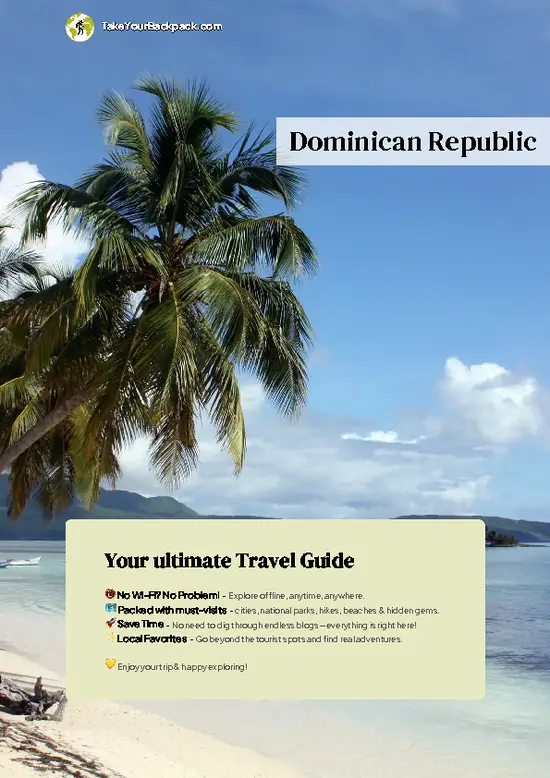


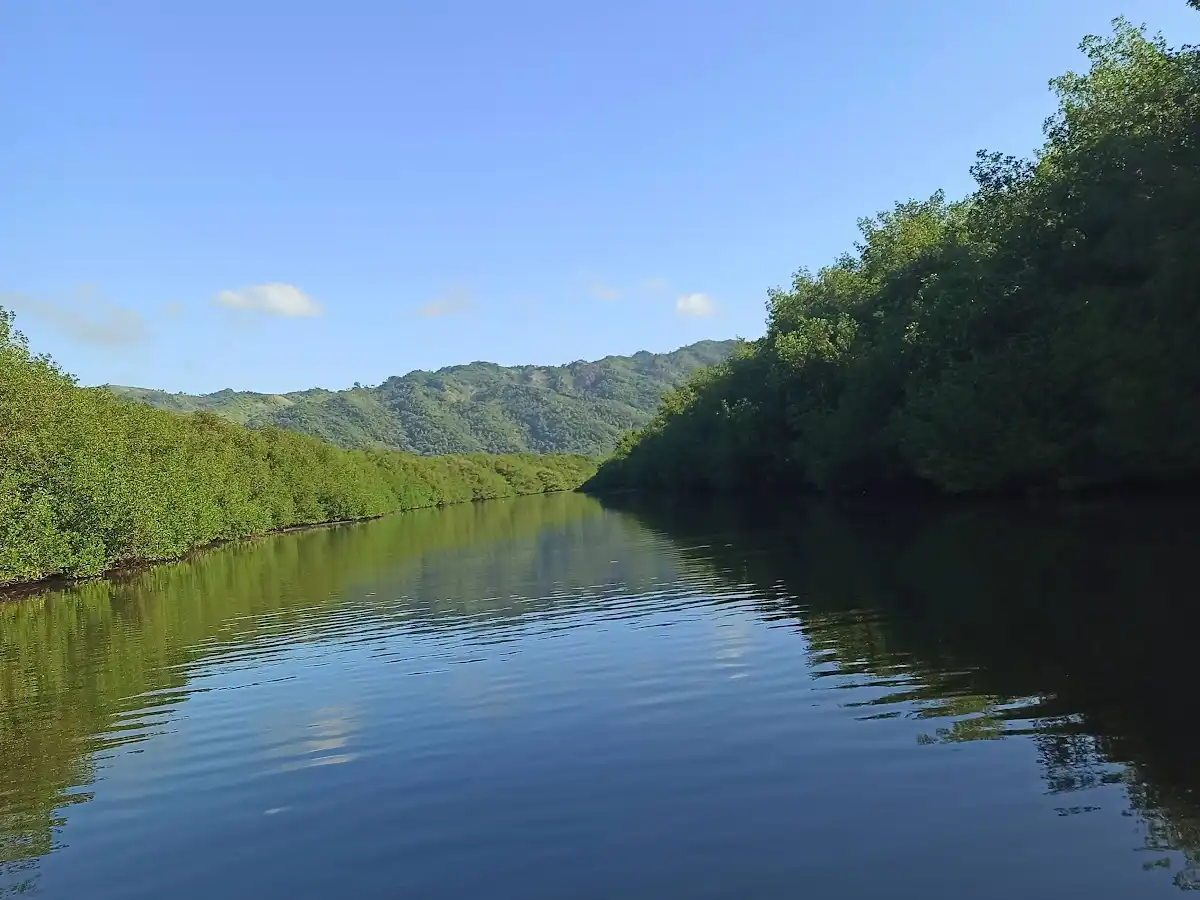
- Yuna River mangrove channels: Narrow waterways under red mangrove arches, best explored by small boat, with roots dropping into brown tidal water.
- Birdlife at the river mouth: Herons, egrets, pelicans and kingfishers gather where fresh water meets the bay, easiest to spot in the early morning.
- Samaná Bay edge: Open water views where the mangrove fringe meets the sea, with fishing boats working the shallows.
- Sánchez waterfront: A small bay town near the boat landings, with fishermen mending nets along the shore.
- Mangrove root nurseries: Shallow pockets where juvenile fish and crabs shelter among the stilt roots, visible when the boat slows to a drift.
- Quiet backwater lagoons: Still, glassy stretches off the main channel where the only movement is wading birds and the occasional jumping mullet.
- Yuna River mangrove channels: Narrow waterways under red mangrove arches, best explored by small boat, with roots dropping into brown tidal water.
- Birdlife at the river mouth: Herons, egrets, pelicans and kingfishers gather where fresh water meets the bay, easiest to spot in the early morning.
- Samaná Bay edge: Open water views where the mangrove fringe meets the sea, with fishing boats working the shallows.
- Sánchez waterfront: A small bay town near the boat landings, with fishermen mending nets along the shore.
- Mangrove root nurseries: Shallow pockets where juvenile fish and crabs shelter among the stilt roots, visible when the boat slows to a drift.
- Quiet backwater lagoons: Still, glassy stretches off the main channel where the only movement is wading birds and the occasional jumping mullet.
Spotted a mistake or missing something? Contact us.
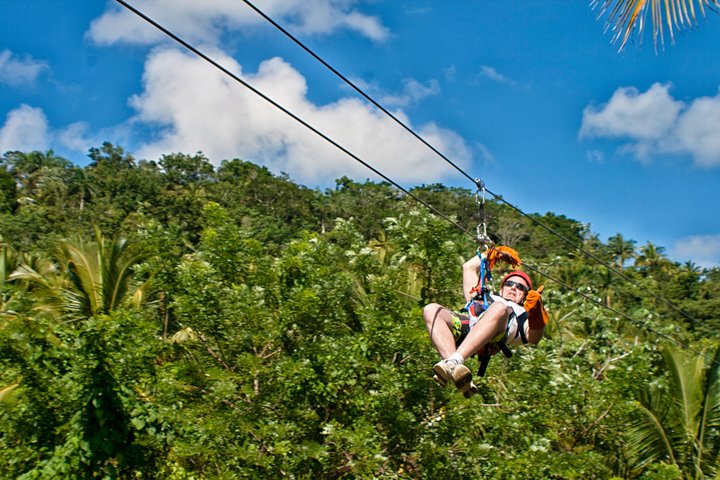
Zipline Adventure in El Limón

Private Transportation From To Airpot and Punta Cana Hotels (1-6)

Haitian National Park and fell up

Whale watching more fell up

El Limón Waterfall Guided Tour & Horseback Riding Adventure

FourWheel Adventure Tours The grounds plus lemon waterfall

Half Day Tour and Buggie Adventure at Samana

Monkeyland Samana Shared Adventure

ATV Adventure in Moron Beach with Lunch Included

 Best Backpacking
.jpg) Hi, I’m Johan (Netherlands 🇳🇱), the creator of TakeYourBackpack. Over the past 3 decades, I’ve backpacked through 90+ countries across six continents, gaining extensive experience with independent travel, long-term trips, and overland routes.
Hi, I’m Johan (Netherlands 🇳🇱), the creator of TakeYourBackpack. Over the past 3 decades, I’ve backpacked through 90+ countries across six continents, gaining extensive experience with independent travel, long-term trips, and overland routes.