v2.webp)
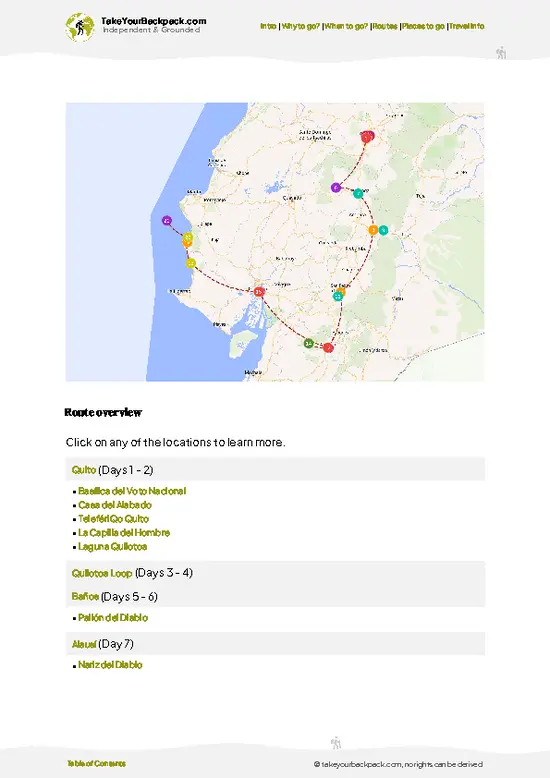
- Crater Rim Loop: The trail circles the whole caldera and is the reason most people come. You get constantly changing angles on the lake, with the water shifting from deep blue to green depending on cloud and sun.
- Teodoro Wolf Island and Yerovi Island: These two dome-shaped islands rose from volcanic activity and sit in the middle of the lake. Their dark, thickly vegetated slopes make a striking focal point from every side of the rim.
- Lake Boat Tour: Short rides leave from the dock near the visitor area and loop around the islands. You get close to the steaming fumaroles, where gas bubbles up through the water and sulfur smell drifts across.
- Cotacachi Volcano Views: From the western and northern stretches of the rim, the broad flank of Cotacachi fills the horizon. On clear mornings the summit
- Crater Rim Loop: The trail circles the whole caldera and is the reason most people come. You get constantly changing angles on the lake, with the water shifting from deep blue to green depending on cloud and sun.
- Teodoro Wolf Island and Yerovi Island: These two dome-shaped islands rose from volcanic activity and sit in the middle of the lake. Their dark, thickly vegetated slopes make a striking focal point from every side of the rim.
- Lake Boat Tour: Short rides leave from the dock near the visitor area and loop around the islands. You get close to the steaming fumaroles, where gas bubbles up through the water and sulfur smell drifts across.
- Cotacachi Volcano Views: From the western and northern stretches of the rim, the broad flank of Cotacachi fills the horizon. On clear mornings the summit stands crisp above the crater, and it makes a superb backdrop for photos.
- Mirador and Visitor Area: The viewpoint above the parking lot offers the classic overview of the lake and islands before you commit to the loop. A small information center and cafes sell hot drinks, and local vendors offer roasted guinea pig for adventurous eaters.
Spotted a mistake or missing something? Contact us.


 Best Backpacking
.jpg) Hi, I’m Johan (Netherlands 🇳🇱), the creator of TakeYourBackpack. Over the past 3 decades, I’ve backpacked through 90+ countries across six continents, gaining extensive experience with independent travel, long-term trips, and overland routes.
Hi, I’m Johan (Netherlands 🇳🇱), the creator of TakeYourBackpack. Over the past 3 decades, I’ve backpacked through 90+ countries across six continents, gaining extensive experience with independent travel, long-term trips, and overland routes.