×

Ecuador🇪🇨 | national parksBosque Protector Mindo-NambilloCock-of-the-rock lek, waterfall trail, butterfly farm, chocolate farms | things to do and best time to go

Explore Machalilla National ParkExplore Sangay National Park

Backpacking in Bosque Protector Mindo-Nambillo
🌟 Highlightnational park ranked #6
By Johan Kruseman 🇳🇱 | Updated October 19, 2026

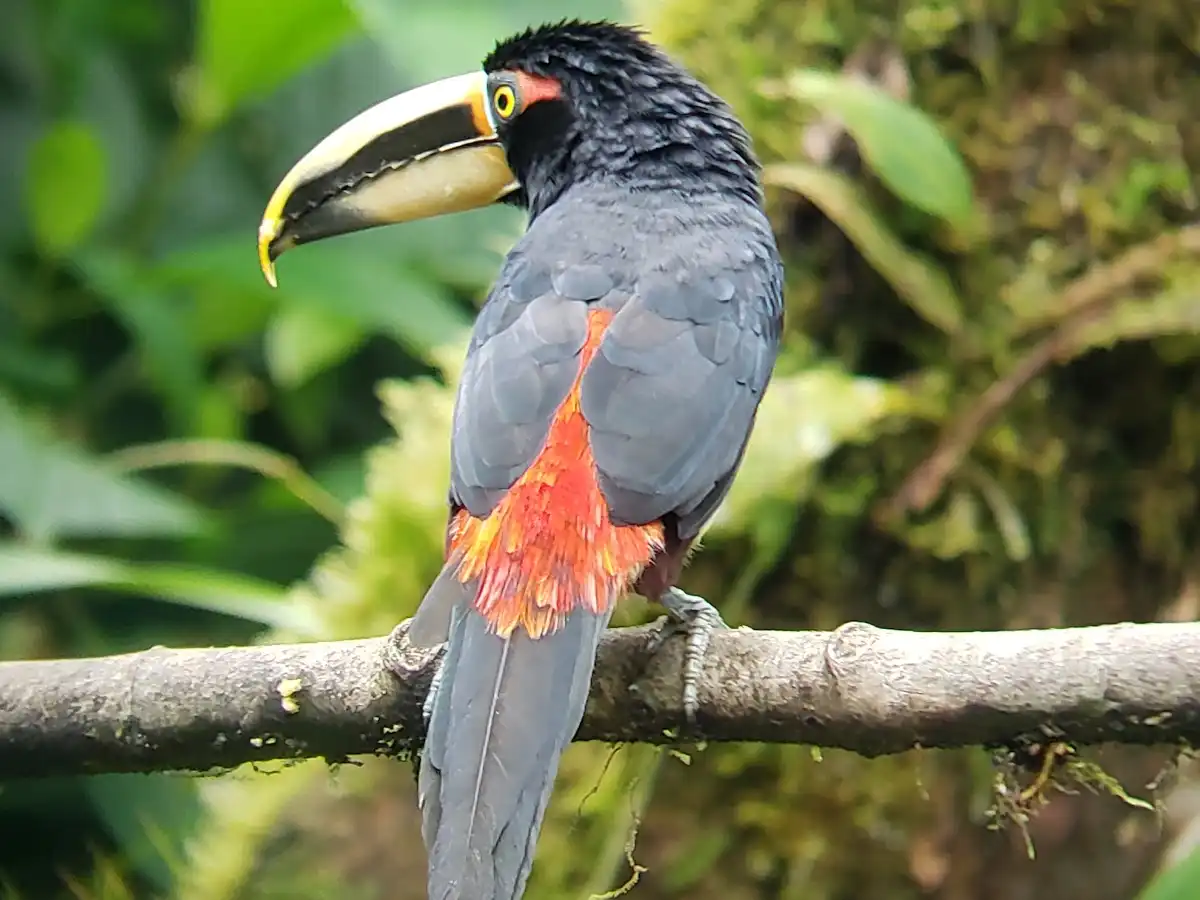
Bosque Protector Mindo-Nambillo sits roughly two hours by road from Quito, which means you can be watching toucan barbets over breakfast and still sleep in the capital that night. It lies in the northwest of Ecuador, on the western Andean slope, where the Mindo-Nambillo reserve drops through mist-hung ridges. Hiking is easy to moderate, waterfalls are close, and hummingbirds crowd the feeders. Weekends bring loud Quito day-trippers, so go midweek. Weekend buses fill and trails clog. I expected silence and found the forest roaring: frogs, cicadas and distant howlers layered into one steady wall of sound, so loud I had to stop and just listen. Rain turns trails to mud, so wear boots and not sandals. Book guided birding and canopy rides ahead on busy weekends, skip tours you can walk to yourself, and carry small bills for entry gates. Bring cash before you arrive, because ATMs are scarce.

Discover everything you want to know in the 📖 Ecuador Travel Guide.


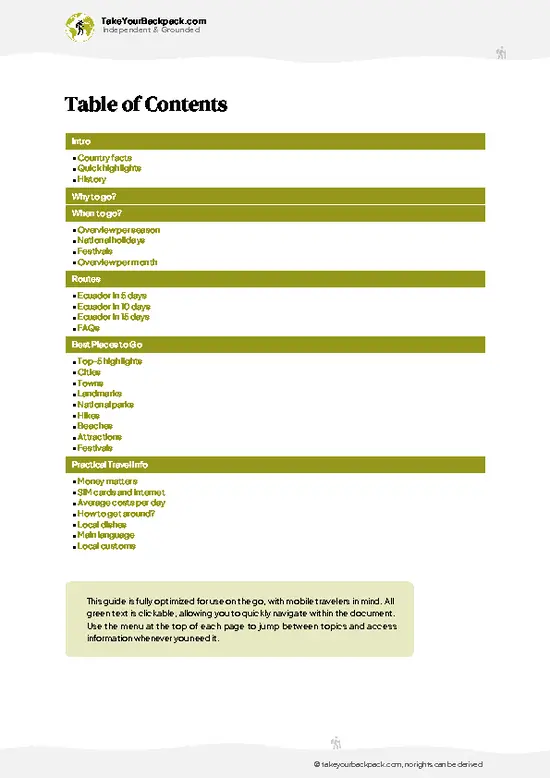
example page 0 from our offline Travel Guide for Ecuador
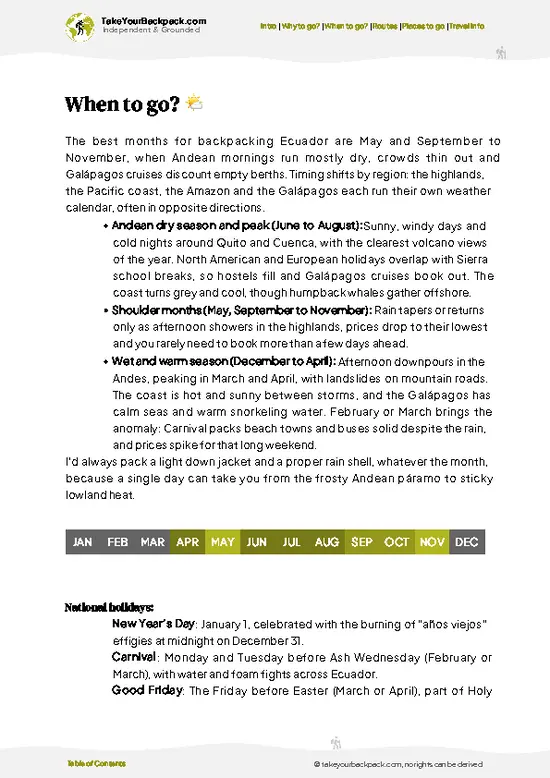
example page 1 from our offline Travel Guide for Ecuador
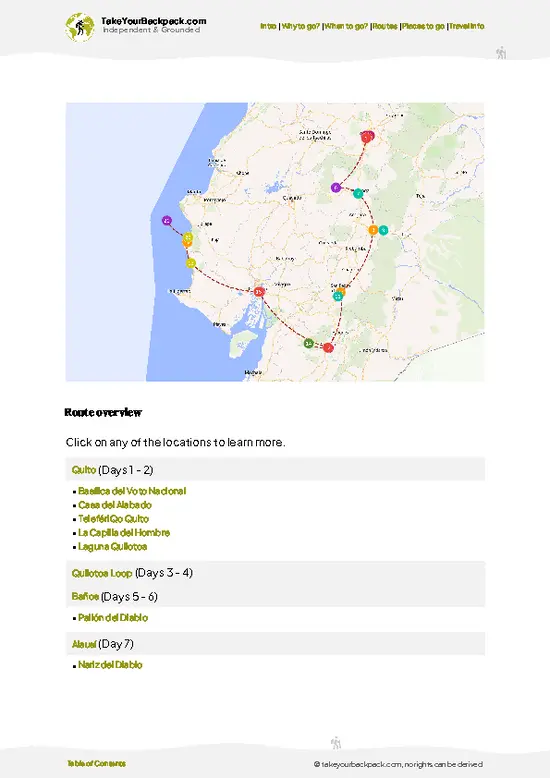
example page 2 from our offline Travel Guide for Ecuador
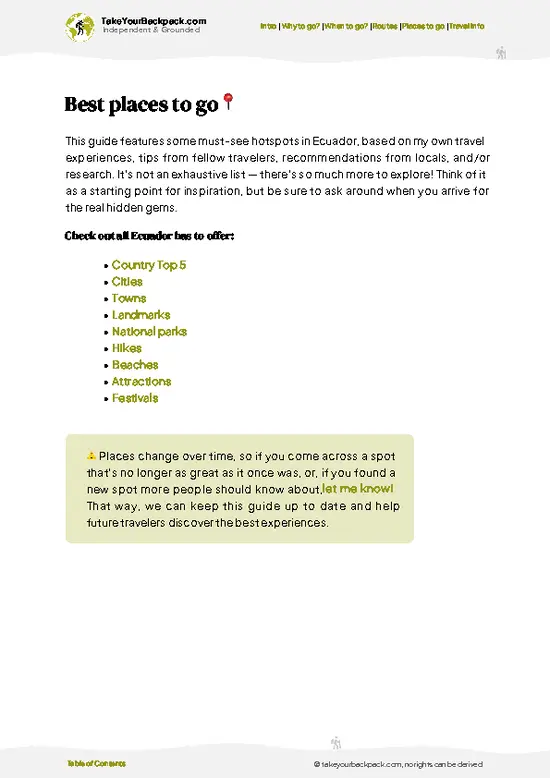
example page 3 from our offline Travel Guide for Ecuador
example page 4 from our offline Travel Guide for Ecuador
example page 5 from our offline Travel Guide for Ecuador
example page 6 from our offline Travel Guide for Ecuador
example page 7 from our offline Travel Guide for Ecuador
Loading the map 🌍
CLICK TO FILTER
cities
towns
landmarks
national parks
hikes
beaches
attractions
festivals
SHOW COUNTRY’S BESTSHOW ALL

✨ Why go?
Ranked #6 national park in Ecuador
Why Bosque Protector Mindo-Nambillo should be on your travel list

Bosque Protector Mindo-Nambillo suits backpackers who like piecing together their own days, because the best sights sit along short, well-marked paths you can walk without a guide. The Nambillo waterfall circuit links several cascades on foot, and the Mindo-Nambillo Protected Forest covers a huge altitude range, so birds change every few hundred meters of elevation. Over 500 bird species are recorded here, and you can see many of them from public lodge feeders and roadside trails for little or no charge. Cheap hostels and campsites in the small town keep a long stay affordable, and you can mix paid thrills like ziplines with free riverside strolls. Tours help if you want a specialist for the Andean cock-of-the-rock lek or night frog walks, but nothing forces you into a package. Pick two or three anchors and leave room to wander.

💡 HighlightsThe experiences that define the visit

  1. Andean cock-of-the-rock lek: Males gather at dawn in a few reserves near town, screeching and flashing scarlet plumage. Entry is typically small, and it is the bird most people come here to see.
  2. Hummingbird feeders: Dozens of species whir around sugar feeders at lodges and reserves, including violet-tailed sylphs and purple-bibbed whitetips. You can sit with a coffee at arm’s reach.
  3. Nambillo Waterfalls trail: A forest path past several falls, with a cable car crossing the valley. The cascades are cool for a swim in the pools in the heat of the day.
  4. Mariposas de Mindo butterfly farm: Walk through a screened garden where blue morphos and owl butterflies land on fruit trays. Mornings are the most active.
  5. Mindo canopy zipline: Cables run high across forested valleys, with long, fast stretches over
… read more 👉
  1. Andean cock-of-the-rock lek: Males gather at dawn in a few reserves near town, screeching and flashing scarlet plumage. Entry is typically small, and it is the bird most people come here to see.
  2. Hummingbird feeders: Dozens of species whir around sugar feeders at lodges and reserves, including violet-tailed sylphs and purple-bibbed whitetips. You can sit with a coffee at arm’s reach.
  3. Nambillo Waterfalls trail: A forest path past several falls, with a cable car crossing the valley. The cascades are cool for a swim in the pools in the heat of the day.
  4. Mariposas de Mindo butterfly farm: Walk through a screened garden where blue morphos and owl butterflies land on fruit trays. Mornings are the most active.
  5. Mindo canopy zipline: Cables run high across forested valleys, with long, fast stretches over the treetops. Good for adrenaline without technical skill.
  6. Tubing on the Mindo River: Hop on an inner tube and float or bump through easy rapids. Expect to get soaked and to laugh a lot.
  7. Chocolate and coffee tours: Local farms show the process from bean to bar, with tastings. Many are just a short walk from town.
  8. Night frog walk: A guided walk with headlamps picks out tiny glass frogs and tree frogs on leaves along the trail.
The cock-of-the-rock lek at dawn pairs well with a midday swim at the Nambillo falls.
Spotted a mistake or missing something? Contact us.

Things to do around Bosque Protector Mindo-Nambillo

Ratings based on Tripadvisor reviews. When you book through this link, you support our work at no extra cost to you.

🌤️ When to go?Weather, crowds, and seasonal trade-offs

  • Dry Season (June to September): Fewer downpours and the best trail conditions, with mornings around 14 to 18°C (57 to 64°F) and afternoons of 22 to 26°C (72 to 79°F). Birdwatching is at its sharpest, and weekends fill up with Quito day-trippers. Lodge and tour prices rise slightly.
  • Wet Season (October to May): Afternoon rain arrives most days, often after a bright morning, and mist hangs in the canopy. Trails turn muddy and waterfall pools run high. Temperatures stay similar, 15 to 25°C (59 to 77°F). Crowds thin out midweek and rooms are easier to bargain for.
  • Holidays and Weekends: Carnival (February or March), Easter week, and long weekends bring packed hostels and busy tubing rivers. Daylight is steady at about 12 hours all year, so plan hikes to finish by late afternoon.
Book a midweek stay … read more 👉
  • Dry Season (June to September): Fewer downpours and the best trail conditions, with mornings around 14 to 18°C (57 to 64°F) and afternoons of 22 to 26°C (72 to 79°F). Birdwatching is at its sharpest, and weekends fill up with Quito day-trippers. Lodge and tour prices rise slightly.
  • Wet Season (October to May): Afternoon rain arrives most days, often after a bright morning, and mist hangs in the canopy. Trails turn muddy and waterfall pools run high. Temperatures stay similar, 15 to 25°C (59 to 77°F). Crowds thin out midweek and rooms are easier to bargain for.
  • Holidays and Weekends: Carnival (February or March), Easter week, and long weekends bring packed hostels and busy tubing rivers. Daylight is steady at about 12 hours all year, so plan hikes to finish by late afternoon.
Book a midweek stay in July or August and start trails by 7 a.m. for clear views and quiet paths.


source: climatestotravel.comJANJanuary: fair for travelingFEBFebruary: fair for travelingMARMarch: fair for travelingAPRApril: fair for travelingMAYMay: highly recommended for travelingJUNJune: excellent for travelingJULJuly: excellent for travelingAUGAugust: excellent for travelingSEPSeptember: excellent for travelingOCTOctober: highly recommended for travelingNOVNovember: fair for travelingDECDecember: fair for traveling
ecuador-national-park-bosque-protector-mindo-nambillo
© Google |

✈️ The backpacker research shortcutEcuador Travel Guide

An offline-friendly backpacking guide with optimized travel routes, ranked highlights, transport advice, and the best areas to stay.
example page 0 from our offline Travel Guide for Ecuador
example page 1 from our offline Travel Guide for Ecuador
example page 2 from our offline Travel Guide for Ecuador
example page 3 from our offline Travel Guide for Ecuador
example page 4 from our offline Travel Guide for Ecuador
example page 5 from our offline Travel Guide for Ecuador
example page 6 from our offline Travel Guide for Ecuador
example page 7 from our offline Travel Guide for Ecuador
The digital guide (274 pages) contains:
✅ 87 highlights, ranked by travel appeal
✅ Optimized 5, 10 & 15-day travel routes
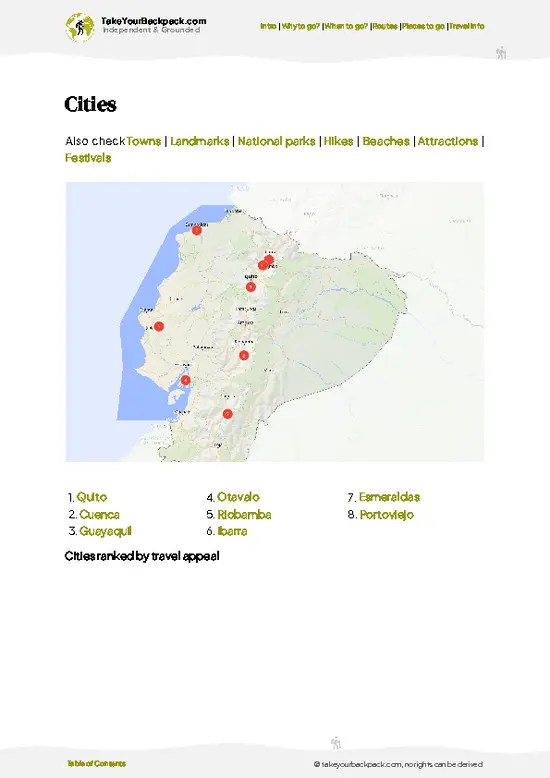
✅ Cities, national parks, landmarks, beaches
✅ How to get around
✅ Offline-friendly for travel without Wi-Fi
👉 Click to see all 30+ guide features

📅 Plan smarter in minutes, not weeks
✅ Month by month travel advice
✅ Festivals & national holidays
✅ Budget expectations

🗺️ Go to the right places, skip the overrated ones
✅ Honest pros & cons of destinations
✅ Top hikes, parks & viewpoints
✅ Lesser-known places most travelers miss
✅ Clear “worth it vs skip it” guidance

🛏️ Travel smoothly without rookie mistakes
✅ Best areas to stay
✅ Transport systems explained simply
✅ Common scams & safety advice
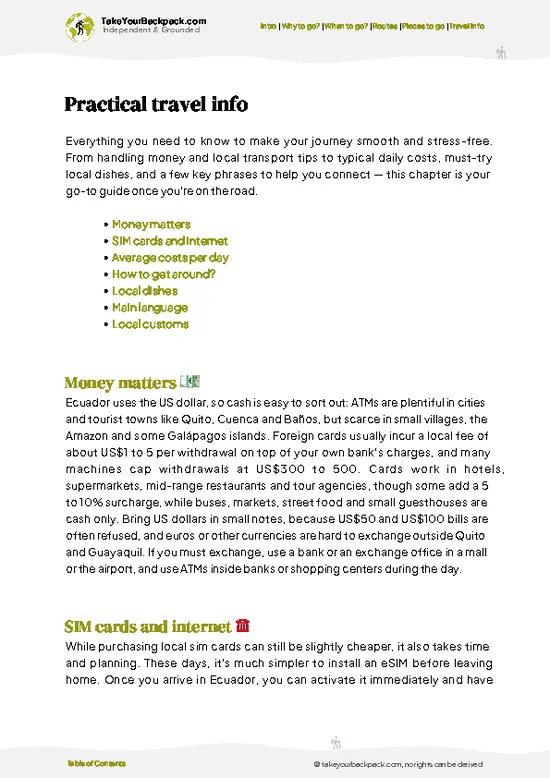
✅ SIM cards, money & practical tips

🌍 Understand the country, not just visit it
✅ Culture & traditions
✅ 52 Essential phrases & customs
✅ Festivals worth planning around
✅ Traveler-friendly historical context
✅ Insights that make places more meaningful

📱 Built for real travel conditions
✅ Fully downloadable PDF
✅ Works completely offline
✅ Optimized for phone use
✅ Useful in remote areas & buses
✅ Everything in one place
Stop searching, start planning
Get instant access to your full guide. 30‑day money-back guarantee.
+ Add another guide for just

By proceeding you agree to our terms.
Sent to your inbox immediately after payment • 100% Secure Checkout
Best Backpacking Travel Advisor 2025 tourism awardBest Backpacking
Travel Advisor
2025
What others say about Take Your Backpack Guides:
⭐⭐⭐⭐⭐
Fantastic, amazing amount of information!
⭐⭐⭐⭐⭐
My goodness this is amazing, it's what I've been looking for hats off too you!
⭐⭐⭐⭐⭐
I think this is absolutely BRILLIANT
⭐⭐⭐⭐
Very complete and informative. It's still missing places, but I gotta to commend you
⭐⭐⭐⭐⭐
This is truly amazing, thank you, can't wait to explore it with my kids!
⭐⭐⭐⭐⭐
Awesome resource, thank you!
⭐⭐⭐⭐⭐
This is amazing! Can't wait to explore the ones I haven't seen
⭐⭐⭐⭐
I love this! Well done, great idea.
⭐⭐⭐⭐⭐
Thanks for taking the time to make this gem!
⭐⭐⭐⭐⭐
This might be the best website I've ever seen.
⭐⭐⭐⭐⭐
Congratulations, and thank you so much for your work; it's incredibly valuable.
⭐⭐⭐⭐
In all seriousness I think you did a great job pointing out the important spots
⭐⭐⭐⭐⭐
10/10 very good
⭐⭐⭐⭐⭐
As someone who's only just starting to visit regularly this is awesome, thank you.
⭐⭐⭐⭐
Thank you very much! I'm going to visit my dad, it's going to be very useful!
⭐⭐⭐⭐⭐
This is really cool! We'll be travelling for the first time and this definitely come in handy.
⭐⭐⭐⭐⭐
You are now our minister of culture, congratulations 👨‍💼
⭐⭐⭐⭐⭐
Just wanted to tell you that this is a pearl! Going to follow your recommendations.
⭐⭐⭐⭐⭐
This is so cool. I'll definitely be using the resource for my travels soon.
⭐⭐⭐⭐⭐
This is very impressive! Good work.
⭐⭐⭐⭐⭐
This is an amazing and informative site. Very well done!

🛏️ Where to stay?Where staying makes the most sense

Mindo town is the best base for backpackers, since the cloud forest reserves are scattered around it and no real lodging exists inside the protected areas themselves. The town sits about 2 to 2.5 hours by road northwest of Quito, and its small grid of streets holds most hostels, cafes and tour offices.
Hostels in town charge roughly US$10 to 15 for a dorm bed and US$25 to 40 for a private room. Several have gardens with hummingbird feeders, shared kitchens and hammocks, and staff can arrange tubing, canopy zip lines and bird guides.
For quieter nights, look along the roads outside town toward the … read more 👉
Mindo town is the best base for backpackers, since the cloud forest reserves are scattered around it and no real lodging exists inside the protected areas themselves. The town sits about 2 to 2.5 hours by road northwest of Quito, and its small grid of streets holds most hostels, cafes and tour offices.
Hostels in town charge roughly US$10 to 15 for a dorm bed and US$25 to 40 for a private room. Several have gardens with hummingbird feeders, shared kitchens and hammocks, and staff can arrange tubing, canopy zip lines and bird guides.
For quieter nights, look along the roads outside town toward the Bosque Protector Mindo-Nambillo reserve area, where eco-lodges and small cabins cost about US$30 to 70 a night. Some reserves also offer basic rustic cabins or camping, usually US$8 to 15 per person, which puts you on the trail before the day-trip buses arrive.
If you prefer city comforts, stay in Quito's Mariscal or Old Town and make the trip as a long day. Staying overnight in Mindo gives you the dawn bird chorus, which is the real reason to come.

👛 Costs (as of 19 October 2026)What things cost and how to budget

A comfortable backpacker day in Bosque Protector Mindo-Nambillo runs about US$62 once you add a dorm bed, food, a few activities and local transport.
CategoryBudget RangeLocal Reality
Accommodation (high season)US$10 to 15Dorm beds in town; private rooms run US$25 to 40.
Reserve entrance feesUS$3 to 10Most private reserves and waterfall trails charge a small fee, often paid in cash.
ActivitiesUS$10 to 25Tubing costs about US$10 to 15, zip lines or cable car about US$20 to 25, and a guided bird walk US$25 to 50.
FoodUS$10 to 18Set lunches (almuerzos) cost US$3 to 5, and dinners at tourist cafes US$7 to 12.
Local transportUS$2 to 8Pickup trucks and taxis to trailheads cost US$2 to 8 per trip, often shared.
Bus from QuitoUS$3 to 5One way, about 2 to 2.5 hours, from Quito's northern terminal.
Total Daily
… read more 👉
A comfortable backpacker day in Bosque Protector Mindo-Nambillo runs about US$62 once you add a dorm bed, food, a few activities and local transport.
CategoryBudget RangeLocal Reality
Accommodation (high season)US$10 to 15Dorm beds in town; private rooms run US$25 to 40.
Reserve entrance feesUS$3 to 10Most private reserves and waterfall trails charge a small fee, often paid in cash.
ActivitiesUS$10 to 25Tubing costs about US$10 to 15, zip lines or cable car about US$20 to 25, and a guided bird walk US$25 to 50.
FoodUS$10 to 18Set lunches (almuerzos) cost US$3 to 5, and dinners at tourist cafes US$7 to 12.
Local transportUS$2 to 8Pickup trucks and taxis to trailheads cost US$2 to 8 per trip, often shared.
Bus from QuitoUS$3 to 5One way, about 2 to 2.5 hours, from Quito's northern terminal.
Total Daily BudgetUS$38 to 81About US$62 for a typical mid-range backpacker day.


source: ecuador.travel
⚠️ Prices can change and everyone travels differently, so take this as a rough guide. Hope it helps you plan your adventure!

🥾 TrailsBest hikes in Bosque Protector Mindo-Nambillo national park

Bosque Protector Mindo-Nambillo offers walks that range from flat, ten-minute strolls to steep muddy climbs, all through dense, mossy forest with orchids, bromeliads and constant birdsong. Terrain is slippery, with roots and stream crossings, so boots with grip are worth wearing.
  • Nambillo Waterfalls Trail: About 3 to 4 km round trip, 2 to 3 hours, easy to moderate. A descending forest path leads to a string of waterfalls with swimming pools; the return climb is the hard part.
  • Cascada Nambillo to Cascada de la Virgen: Roughly 2 to 3 hours, moderate. Muddy sections and stream crossings, with good
… read more 👉
Bosque Protector Mindo-Nambillo offers walks that range from flat, ten-minute strolls to steep muddy climbs, all through dense, mossy forest with orchids, bromeliads and constant birdsong. Terrain is slippery, with roots and stream crossings, so boots with grip are worth wearing.
  • Nambillo Waterfalls Trail: About 3 to 4 km round trip, 2 to 3 hours, easy to moderate. A descending forest path leads to a string of waterfalls with swimming pools; the return climb is the hard part.
  • Cascada Nambillo to Cascada de la Virgen: Roughly 2 to 3 hours, moderate. Muddy sections and stream crossings, with good chances of seeing tanagers and toucans.
  • Río Mindo riverside paths: Flat, easy walks of 1 to 2 hours near town, good for casual birdwatching and dipping your feet.
  • Reserve birding loops: Private reserves have short marked loops of 30 minutes to 2 hours, often moderate, where cock-of-the-rock and trogons turn up.
  • Wildlife: Expect hummingbirds, toucans, tanagers and frogs. Mammals are shy; sightings of kinkajous or sloths are rare.
A bus from Quito’s northern terminal reaches Mindo in about two hours, and you can then walk or take a pickup to most trailheads. Weekends are crowded, while weekdays are quiet. The wider protected forest is free to enter, but many private reserves, falls and trail access points charge small fees, usually US$2 to 10, so carry cash.
⚠️ Hiking info can sometimes be outdated or inaccurate. Before you hit the trail, check the latest conditions with locals. If you do spot anything that's off, I'd love to hear from you, so I can update it for fellow travelers.

🛡️ SafetyTraveler Safety Guide

Bosque Protector Mindo-Nambillo is a well-visited, straightforward destination, and the main issues are mud, rain and slippery footing. Trails around the reserves are generally marked, but steps and wooden bridges get greasy, so wear boots with real tread rather than sneakers. Showers arrive most afternoons, so start early, carry a light rain jacket and keep electronics in a dry bag.
The altitude is moderate, roughly 1,200 to 2,000 meters, and rarely troubles anyone. Humidity makes climbs feel harder than they are, so pace yourself and carry at least 2 liters of water.
Wildlife is mostly birds, butterflies and the occasional snake or biting insects. Watch where you place hands and feet, use repellent, and never feed animals. Swim and tube only with a guide after heavy rain, since rivers rise … read more 👉
Bosque Protector Mindo-Nambillo is a well-visited, straightforward destination, and the main issues are mud, rain and slippery footing. Trails around the reserves are generally marked, but steps and wooden bridges get greasy, so wear boots with real tread rather than sneakers. Showers arrive most afternoons, so start early, carry a light rain jacket and keep electronics in a dry bag.
The altitude is moderate, roughly 1,200 to 2,000 meters, and rarely troubles anyone. Humidity makes climbs feel harder than they are, so pace yourself and carry at least 2 liters of water.
Wildlife is mostly birds, butterflies and the occasional snake or biting insects. Watch where you place hands and feet, use repellent, and never feed animals. Swim and tube only with a guide after heavy rain, since rivers rise quickly. Keep valuables out of sight in parked cars at trailheads.

FAQCommon questions from travelers

Plan two nights for Bosque Protector Mindo-Nambillo, which lets you cover a waterfall hike, a bird walk and a river activity without rushing. A single long day trip from Quito is possible, since the drive takes about 2 to 2.5 hours each way. Birders and photographers often stay three nights to catch the dawn activity at the feeders.
Yes, Bosque Protector Mindo-Nambillo is easy without a car. Buses from Quito's Ofelia or Carcelén terminals run to Mindo town for roughly US$3 to 5, taking about 2 to 2.5 hours. In town, you can walk to many hostels and cafes, and pickup trucks or taxis reach the waterfalls and reserves for about US$2 to 8.
Bosque Protector Mindo-Nambillo is a mix of private reserves and community trails, so no national park permit is needed, but most sites charge their own fee. Expect about US$3 to 10 per reserve or waterfall trail, and more for activities such as the cable car or zip lines at around US$20 to 25. Bring small US dollar bills, because many entrances take cash only.
⚠️ Things can change over time, so always validate details locally before you go.

Other Ecuadorian national parks near Bosque Protector Mindo-Nambillo

Explore more nearby:


💡 Not sure where to go next?
Create a personalized itinerary for Ecuador including Bosque Protector Mindo-Nambillo and the places that fit your trip.

Generate my itinerary

👉 Discover all national parks

Or checkout all Ecuador has to offer (think cities, towns, villages, national parks, hikes, beaches, festivals)
Country photo of Ecuador

We 💚 feedbackKey takeaways before you go

Two nights is the sweet spot for Bosque Protector Mindo-Nambillo: one full day for the lek and waterfalls, one slower day for birds and a river float. A day trip from Quito feels rushed and leaves you chasing buses. I would stay a third night only if you plan serious birding. Bring a light rain jacket.

✈️ When did I visit Ecuador?
Ecuador I visited during my half year trip through South and Central America back in 2003

✍️ Help improve this page!
The information on this page is based on my own backpacking experience in Ecuador, supplemented with up-to-date research and feedback from other travelers. Travel details can change, so if you notice anything outdated or incomplete, feel free to let me know.


🙋‍♂️ Give feedback

👋 Meet the founderWho’s Behind Take Your Backpack?

Johan, backpacker and founder of TakeYourBackpackHi, I’m Johan (Netherlands 🇳🇱), the creator of TakeYourBackpack. Over the past 3 decades, I’ve backpacked through 90+ countries across six continents, gaining extensive experience with independent travel, long-term trips, and overland routes.

This site is built on a combination of firsthand travel experience and carefully curated insights from other backpackers. Many guides are based on places I’ve personally visited, while others bring together tips, observations, and practical advice shared by trusted travelers I’ve met along the way.

The goal is to provide realistic, experience-driven guidance — not generic itineraries — so you can explore destinations with better context, clearer expectations, and more confidence.