



×

Ecuador🇪🇨 | townsPuerto Baquerizo MorenoBeach sea lions, Tijeretas trail, Playa Mann, Punta Carola surf | things to do and best time to go

Explore Puerto VillamilExplore Cayambe

Backpacking in Puerto Baquerizo Moreno
🏆 Top picktown ranked #4
By Johan Kruseman 🇳🇱 | Updated October 19, 2026

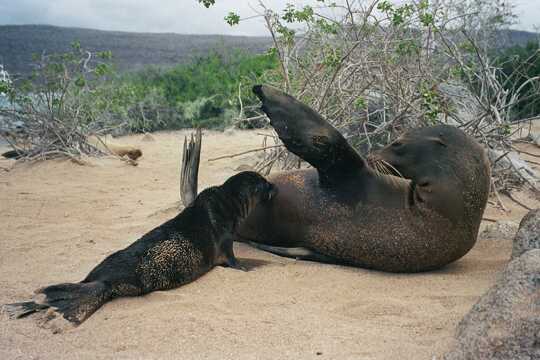
Walk off the plane at San Cristóbal airport and you are in town within minutes, with snorkeling beaches reachable on foot. Puerto Baquerizo Moreno sits on San Cristóbal Island in the Galápagos, Ecuador, and it is the cheapest, most relaxed place in the archipelago to see wildlife. Sea lions sprawl across benches on the malecón, bark at joggers and block the sand at Playa Mann. I expected animals to hide in reserves, so finding them napping beside the ice cream stand surprised me. Tours to Kicker Rock and Isla Lobos leave from the dock, and the trail to Tijeretas Bay delivers frigatebirds and a swim off the rocks. Evenings are quiet, with a few bars and seafood spots, though hostels and dive shops make meeting people easy. Nature lovers and slow travelers will adore it. Nightlife seekers and anyone allergic to sea lion smell won’t.

Discover everything you want to know in the 📖 Ecuador Travel Guide.


example page 0 from our offline Travel Guide for Ecuador
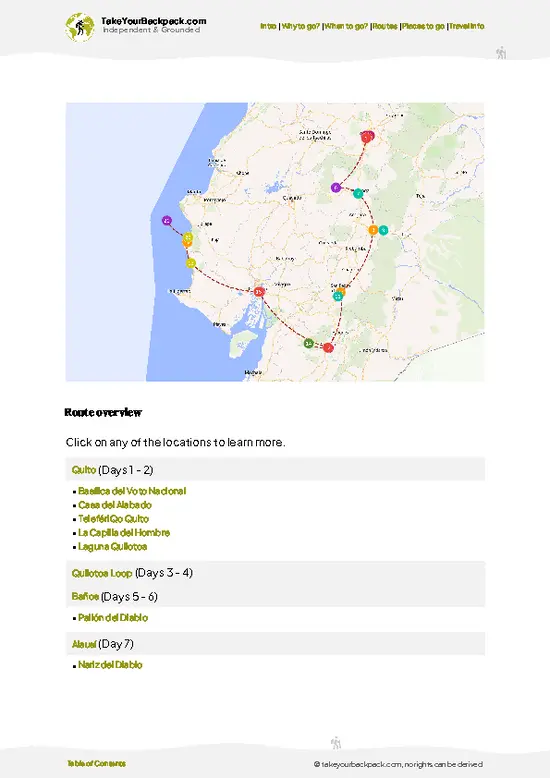
example page 1 from our offline Travel Guide for Ecuador
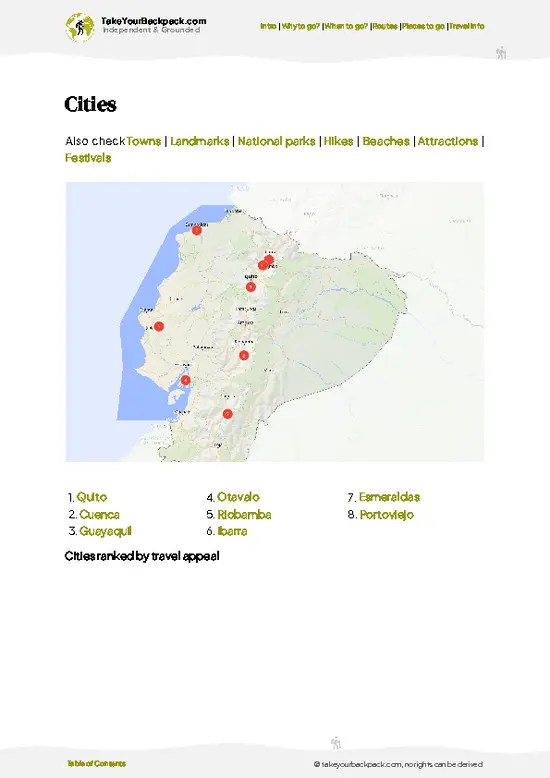
example page 2 from our offline Travel Guide for Ecuador
example page 3 from our offline Travel Guide for Ecuador
example page 4 from our offline Travel Guide for Ecuador
example page 5 from our offline Travel Guide for Ecuador
example page 6 from our offline Travel Guide for Ecuador
example page 7 from our offline Travel Guide for Ecuador
Loading the map 🌍
CLICK TO FILTER
cities
towns
landmarks
national parks
hikes
beaches
attractions
festivals
SHOW COUNTRY’S BESTSHOW ALL

✨ Why go?
Ranked #4 town in Ecuador
What makes it a must-see town

Puerto Baquerizo Moreno gives you the Galápagos without the cruise-ship price tag, and that is the main draw. You can snorkel with sea lions at Playa Mann after breakfast, walk to Tijeretas Bay by afternoon, and still be back for a seafood dinner on the waterfront. Most travelers stay three to four days, long enough to add a boat day to Kicker Rock, then move on by ferry to Santa Cruz or Isabela. The town is small and flat, so you walk everywhere, and guesthouses are family run, which makes for easy chats with other solo travelers over coffee. It suits hikers, snorkelers, divers and anyone who likes a slow pace. Evenings stay calm, with a handful of bars and the sound of sea lions barking along the shore. If you want clubs or big-city sights, this is the wrong island, but for wildlife on your doorstep it is hard to beat.

💡 HighlightsDon't-miss highlights and experiences

  1. Playa Mann: The town’s own beach, where sea lions loaf on the sand and snorkelers swim among sea turtles and fish. Go in the morning for calmer water. Free, 1 to 2 hours.
  2. Tijeretas Bay (Frigatebird Hill) trail: A 1 to 2 hour walk past the Interpretation Center, with frigatebirds overhead and clear water for swimming off the rocks at the end. Go early or late to avoid the sun. Free, 2 to 3 hours.
  3. Interpretation Center: Exhibits on the human and natural history of the islands, including how settlement and conservation developed. Good on a hot afternoon. Free, 1 to 1.5 hours.
  4. La Lobería: A rocky coast near the airport where sea lions bask and marine iguanas cling to the lava. Best in the morning or late afternoon. Free, 1 to 2 hours.
  5. Malecón and Playa Punta Carola: A waterfront promenade lined with
… read more 👉
  1. Playa Mann: The town’s own beach, where sea lions loaf on the sand and snorkelers swim among sea turtles and fish. Go in the morning for calmer water. Free, 1 to 2 hours.
  2. Tijeretas Bay (Frigatebird Hill) trail: A 1 to 2 hour walk past the Interpretation Center, with frigatebirds overhead and clear water for swimming off the rocks at the end. Go early or late to avoid the sun. Free, 2 to 3 hours.
  3. Interpretation Center: Exhibits on the human and natural history of the islands, including how settlement and conservation developed. Good on a hot afternoon. Free, 1 to 1.5 hours.
  4. La Lobería: A rocky coast near the airport where sea lions bask and marine iguanas cling to the lava. Best in the morning or late afternoon. Free, 1 to 2 hours.
  5. Malecón and Playa Punta Carola: A waterfront promenade lined with sea lions and a nearby surf beach with strong waves. Surfers go in the morning, while sunsets draw everyone else. Free, 1 hour.
For day trips, boats head to Kicker Rock (León Dormido), Isla Lobos, and Puerto Chino beach. Playa Mann and the Tijeretas trail pair well in one day, with a morning swim followed by a walk.
Spotted a mistake or missing something? Contact us.

Things to do near Puerto Baquerizo Moreno

Ratings based on Tripadvisor reviews. When you book through this link, you support our work at no extra cost to you.

🏘️ NeighborhoodsHow different areas shape the experience

Puerto Baquerizo Moreno, on San Cristóbal in the Galápagos, is small enough to cover on foot, and every area has its own pace.
  • The Malecón (Avenida Charles Darwin): The waterfront promenade is where you start. Sea lions sprawl on benches and steps, and pelicans work the docks. Stroll it end to end in 20 minutes, then come back at dusk for cheap grilled fish and juice stalls with the bay turning orange.
  • Calle Darwin and Española: The main commercial streets run behind the water. Dive shops, tour agencies, bakeries and set-lunch spots (almuerzos) cluster here, so you can compare tour prices on foot and eat a full plate without overspending.
  • Playa Mann and the Interpretation Center trail: Walk east past the cove and keep going on a paved, then dirt path. You pass a swimming beach with sea lions,
… read more 👉
Puerto Baquerizo Moreno, on San Cristóbal in the Galápagos, is small enough to cover on foot, and every area has its own pace.
  • The Malecón (Avenida Charles Darwin): The waterfront promenade is where you start. Sea lions sprawl on benches and steps, and pelicans work the docks. Stroll it end to end in 20 minutes, then come back at dusk for cheap grilled fish and juice stalls with the bay turning orange.
  • Calle Darwin and Española: The main commercial streets run behind the water. Dive shops, tour agencies, bakeries and set-lunch spots (almuerzos) cluster here, so you can compare tour prices on foot and eat a full plate without overspending.
  • Playa Mann and the Interpretation Center trail: Walk east past the cove and keep going on a paved, then dirt path. You pass a swimming beach with sea lions, reach the Interpretation Center, then continue to Cerro Tijeretas, where frigatebirds hover and you can snorkel Darwin’s landing bay.
  • Punta Carola: A 20-minute walk from town leads to a surf and snorkel beach. Hop in the water with turtles, then dry off on the sand beside sunbathing sea lions.
  • Barrio Los Algarrobos and uptown: Head inland for quieter, residential blocks, local bakeries and cheaper meals. Locals greet you, and it feels nothing like the tourist front.

⌛️ 1 dayHow to make the most of one day

Plan to walk everywhere, with a long break in the midday heat and an afternoon swim. Taxis are cheap if you want to save your legs.
7:30 AM: Malecón. Grab coffee and a pastry, then stroll the waterfront while sea lions stir awake. It is the calmest light for photos.
9:00 AM: Interpretation Center. Walk the short road out of town and spend an hour learning how the islands were settled and protected.
10:30 AM: Tijeretas Bay. Follow the trail to the lookout, then climb down to the rocks for a swim and snorkel among fish and sea lions.
1:00 PM: Lunch in town. Return for fresh fish, ceviche or a set lunch at a small local spot, and rest out of the sun.
3:30 PM: La Lobería. Take a taxi toward the airport and walk the coast. Few visitors linger here, so you get marine iguanas and sea lions mostly to yourself. … read more 👉
Plan to walk everywhere, with a long break in the midday heat and an afternoon swim. Taxis are cheap if you want to save your legs.
7:30 AM: Malecón. Grab coffee and a pastry, then stroll the waterfront while sea lions stir awake. It is the calmest light for photos.
9:00 AM: Interpretation Center. Walk the short road out of town and spend an hour learning how the islands were settled and protected.
10:30 AM: Tijeretas Bay. Follow the trail to the lookout, then climb down to the rocks for a swim and snorkel among fish and sea lions.
1:00 PM: Lunch in town. Return for fresh fish, ceviche or a set lunch at a small local spot, and rest out of the sun.
3:30 PM: La Lobería. Take a taxi toward the airport and walk the coast. Few visitors linger here, so you get marine iguanas and sea lions mostly to yourself.
5:30 PM: Playa Punta Carola. Walk along the sand, watch surfers in the waves, and stay for the sunset glow.
7:30 PM: Dinner on the waterfront. Finish with grilled seafood and a cold drink, then stroll back past the sleeping sea lions.

🌤️ When to go?When to go for the best experience

Puerto Baquerizo Moreno has two distinct seasons, and each one suits a different kind of trip.
  • Warm, wet season (December to May): Air runs 25 to 31°C (77 to 88°F), the sea is 24 to 27°C (75 to 81°F) and snorkeling visibility is at its best. Short, heavy showers pass quickly, and the sun feels fierce.
  • Cool, dry season (June to November): Air is 20 to 26°C (68 to 79°F) with gray skies and garúa drizzle. Water drops to 19 to 23°C (66 to 73°F), and a thin wetsuit helps. Sea life is active, and blue-footed boobies and albatross nesting draw wildlife fans.
  • Crowds and prices: Peak demand comes in July and August and from mid-December to early January. Flights and tours cost more then, and last-minute deals are easier in May, June, September and October.
  • Daylight: Days stay close to 12 hours all year.
… read more 👉
Puerto Baquerizo Moreno has two distinct seasons, and each one suits a different kind of trip.
  • Warm, wet season (December to May): Air runs 25 to 31°C (77 to 88°F), the sea is 24 to 27°C (75 to 81°F) and snorkeling visibility is at its best. Short, heavy showers pass quickly, and the sun feels fierce.
  • Cool, dry season (June to November): Air is 20 to 26°C (68 to 79°F) with gray skies and garúa drizzle. Water drops to 19 to 23°C (66 to 73°F), and a thin wetsuit helps. Sea life is active, and blue-footed boobies and albatross nesting draw wildlife fans.
  • Crowds and prices: Peak demand comes in July and August and from mid-December to early January. Flights and tours cost more then, and last-minute deals are easier in May, June, September and October.
  • Daylight: Days stay close to 12 hours all year.
Book flights early for peak months, but wait until you arrive to compare day tours.


source: climatestotravel.comJANJanuary: fair for travelingFEBFebruary: fair for travelingMARMarch: fair for travelingAPRApril: fair for travelingMAYMay: highly recommended for travelingJUNJune: excellent for travelingJULJuly: excellent for travelingAUGAugust: excellent for travelingSEPSeptember: excellent for travelingOCTOctober: highly recommended for travelingNOVNovember: fair for travelingDECDecember: fair for traveling
when-to-go

✈️ The backpacker research shortcutEcuador Travel Guide

An offline-friendly backpacking guide with optimized travel routes, ranked highlights, transport advice, and the best areas to stay.
example page 0 from our offline Travel Guide for Ecuador
example page 1 from our offline Travel Guide for Ecuador
example page 2 from our offline Travel Guide for Ecuador
example page 3 from our offline Travel Guide for Ecuador
example page 4 from our offline Travel Guide for Ecuador
example page 5 from our offline Travel Guide for Ecuador
example page 6 from our offline Travel Guide for Ecuador
example page 7 from our offline Travel Guide for Ecuador
The digital guide (274 pages) contains:
✅ 87 highlights, ranked by travel appeal
✅ Optimized 5, 10 & 15-day travel routes
✅ Cities, national parks, landmarks, beaches
✅ How to get around
✅ Offline-friendly for travel without Wi-Fi
👉 Click to see all 30+ guide features

📅 Plan smarter in minutes, not weeks
✅ Month by month travel advice
✅ Festivals & national holidays
✅ Budget expectations

🗺️ Go to the right places, skip the overrated ones
✅ Honest pros & cons of destinations
✅ Top hikes, parks & viewpoints
✅ Lesser-known places most travelers miss
✅ Clear “worth it vs skip it” guidance

🛏️ Travel smoothly without rookie mistakes
✅ Best areas to stay
✅ Transport systems explained simply
✅ Common scams & safety advice
✅ SIM cards, money & practical tips

🌍 Understand the country, not just visit it
✅ Culture & traditions
✅ 52 Essential phrases & customs
✅ Festivals worth planning around
✅ Traveler-friendly historical context
✅ Insights that make places more meaningful

📱 Built for real travel conditions
✅ Fully downloadable PDF
✅ Works completely offline
✅ Optimized for phone use
✅ Useful in remote areas & buses
✅ Everything in one place
Stop searching, start planning
Get instant access to your full guide. 30‑day money-back guarantee.
+ Add another guide for just

By proceeding you agree to our terms.
Sent to your inbox immediately after payment • 100% Secure Checkout
Best Backpacking Travel Advisor 2025 tourism awardBest Backpacking
Travel Advisor
2025
What others say about Take Your Backpack Guides:
⭐⭐⭐⭐⭐
Fantastic, amazing amount of information!
⭐⭐⭐⭐⭐
My goodness this is amazing, it's what I've been looking for hats off too you!
⭐⭐⭐⭐⭐
I think this is absolutely BRILLIANT
⭐⭐⭐⭐
Very complete and informative. It's still missing places, but I gotta to commend you
⭐⭐⭐⭐⭐
This is truly amazing, thank you, can't wait to explore it with my kids!
⭐⭐⭐⭐⭐
Awesome resource, thank you!
⭐⭐⭐⭐⭐
This is amazing! Can't wait to explore the ones I haven't seen
⭐⭐⭐⭐
I love this! Well done, great idea.
⭐⭐⭐⭐⭐
Thanks for taking the time to make this gem!
⭐⭐⭐⭐⭐
This might be the best website I've ever seen.
⭐⭐⭐⭐⭐
Congratulations, and thank you so much for your work; it's incredibly valuable.
⭐⭐⭐⭐
In all seriousness I think you did a great job pointing out the important spots
⭐⭐⭐⭐⭐
10/10 very good
⭐⭐⭐⭐⭐
As someone who's only just starting to visit regularly this is awesome, thank you.
⭐⭐⭐⭐
Thank you very much! I'm going to visit my dad, it's going to be very useful!
⭐⭐⭐⭐⭐
This is really cool! We'll be travelling for the first time and this definitely come in handy.
⭐⭐⭐⭐⭐
You are now our minister of culture, congratulations 👨‍💼
⭐⭐⭐⭐⭐
Just wanted to tell you that this is a pearl! Going to follow your recommendations.
⭐⭐⭐⭐⭐
This is so cool. I'll definitely be using the resource for my travels soon.
⭐⭐⭐⭐⭐
This is very impressive! Good work.
⭐⭐⭐⭐⭐
This is an amazing and informative site. Very well done!

🛏️ Where to stay?Best areas to stay in Ecuador

The best budget area is the blocks around the Malecón and Avenida Charles Darwin, where you can walk to dining, dive shops and the dock in minutes. Budget rooms and hostel beds are limited in number but easy to find, with dorms from about US$15 to 25 and basic private rooms from about US$30 to 50. Airport and ferry dock are minutes away by taxi, so arrival days are simple.
Nights here are calm. The strip is lively until about 10 pm with restaurants and a few bars, and then it quiets down, so light sleepers should avoid rooms directly on the seafront on weekends. Sea lions bark all night, but that … read more 👉
The best budget area is the blocks around the Malecón and Avenida Charles Darwin, where you can walk to dining, dive shops and the dock in minutes. Budget rooms and hostel beds are limited in number but easy to find, with dorms from about US$15 to 25 and basic private rooms from about US$30 to 50. Airport and ferry dock are minutes away by taxi, so arrival days are simple.
Nights here are calm. The strip is lively until about 10 pm with restaurants and a few bars, and then it quiets down, so light sleepers should avoid rooms directly on the seafront on weekends. Sea lions bark all night, but that is part of the place.
The second option is the streets one or two blocks inland, toward Española and the residential barrios. Prices drop a little, rooms are quieter, and you still walk to the waterfront in five to ten minutes. Lighting at night is fine, and locals are around. Book ahead in July, August and December, since the few cheap beds fill early, and ask whether breakfast, kitchen access and air conditioning are included before comparing prices.

🚌 Getting aroundGetting around like a local

From the airport, a taxi to the center costs about US$2 to 3 and takes five minutes, since the terminal sits right beside town. There is no bus station, and you will not need one: Puerto Baquerizo Moreno is compact, traffic is light, and you can reach most places on foot. Beyond the main streets, you rely on taxis, pickup trucks and boats.
  • Walking: Free, and the best way to explore. The Malecón, Playa Mann and the trail to the Interpretation Center and Cerro Tijeretas are all walkable, and you will pass sea lions at every turn.
  • Taxi: The white pickup trucks and cars charge a flat fare of about US$1.50 to 2 inside town. Ask for a ride to Punta Carola or La Lobería and you will arrive without sweat, often for US$2 to 3.
  • Shared pickup to the highlands: A ride to El Progreso or the road toward La
… read more 👉
From the airport, a taxi to the center costs about US$2 to 3 and takes five minutes, since the terminal sits right beside town. There is no bus station, and you will not need one: Puerto Baquerizo Moreno is compact, traffic is light, and you can reach most places on foot. Beyond the main streets, you rely on taxis, pickup trucks and boats.
  • Walking: Free, and the best way to explore. The Malecón, Playa Mann and the trail to the Interpretation Center and Cerro Tijeretas are all walkable, and you will pass sea lions at every turn.
  • Taxi: The white pickup trucks and cars charge a flat fare of about US$1.50 to 2 inside town. Ask for a ride to Punta Carola or La Lobería and you will arrive without sweat, often for US$2 to 3.
  • Shared pickup to the highlands: A ride to El Progreso or the road toward La Loberia costs around US$1 to 3. Rides run during daytime, so you can see the highlands cheaply.
  • Rental bikes and scooters: Bikes cost roughly US$10 to 15 a day, and the coastal and highland roads reward riders with ocean views. Roads are smooth, but watch the sun.
  • Boats and water taxis: Short hops by water taxi from the pier cost about US$0.60 to 1, and they take you to anchored boats or Playa Mann. Inter-island ferries to Santa Cruz run about two hours and cost around US$30 to 35, with morning and afternoon departures.

👛 Costs (as of 19 October 2026)What things cost and how to budget

A backpacker in Puerto Baquerizo Moreno typically spends about US$100 to 125 a day, and the total below is US$112 using high-season dorm prices.
CategoryBudget RangeLocal Reality
Dorm accommodationUS$15 to 25 (high season), US$12 to 18 (low season)Dorm beds are few, so many travelers choose cheap private rooms at about US$30 to 50. Book early in peak months. High-season figure used: US$25.
MealsUS$15 to 30Set almuerzos cost about US$5 to 8 and include soup, a main dish and juice. Dinner on the Malecón is US$10 to 15. Budget: US$25.
Local transportUS$2 to 6Taxis inside town cost US$1.50 to 2. Walking is free. Budget: US$4.
Basic activities/entry feesUS$10 to 80Many beaches and trails are free, but snorkel gear rental costs US$5 to 10 and a full-day tour can cost US$100 or more. Budget: US$50.
Miscellaneous
… read more 👉
A backpacker in Puerto Baquerizo Moreno typically spends about US$100 to 125 a day, and the total below is US$112 using high-season dorm prices.
CategoryBudget RangeLocal Reality
Dorm accommodationUS$15 to 25 (high season), US$12 to 18 (low season)Dorm beds are few, so many travelers choose cheap private rooms at about US$30 to 50. Book early in peak months. High-season figure used: US$25.
MealsUS$15 to 30Set almuerzos cost about US$5 to 8 and include soup, a main dish and juice. Dinner on the Malecón is US$10 to 15. Budget: US$25.
Local transportUS$2 to 6Taxis inside town cost US$1.50 to 2. Walking is free. Budget: US$4.
Basic activities/entry feesUS$10 to 80Many beaches and trails are free, but snorkel gear rental costs US$5 to 10 and a full-day tour can cost US$100 or more. Budget: US$50.
Miscellaneous expensesUS$5 to 15Bottled water, sunscreen, snacks and laundry. Budget: US$8.
Total Daily BudgetUS$112Based on one high-season dorm bed and a mix of free and paid activities.
To save money, eat the fixed-price almuerzo at a local restaurant away from the waterfront, and split taxi tours of the highlands with other travelers.


source: ecuador.travel
⚠️ Prices can change and everyone travels differently, so take this as a rough guide. Hope it helps you plan your adventure!

🚌 Day tripsWhere to go beyond the main area

Puerto Baquerizo Moreno works well as a base because most day trips start within walking distance of the pier or a short taxi ride away.
Kicker Rock (León Dormido):
The famed basalt spire is the best snorkeling day on the island. Boats leave around 8 am, take about 45 minutes each way, and tours cost roughly US$100 to 150 including gear and lunch. You swim with sharks, rays and turtles in the channel. Currents are strong, so first-timers should not skip the wetsuit. Best from December to May, when water is clear.

La Lobería:
A sea lion colony and surf spot lie about 2 km from town. Walk or take a US$2 taxi, and snorkel with turtles or watch marine iguanas on the lava rocks. It is free and best in the morning, before the sun gets harsh. Many first-timers wear no sun protection and burn badly. … read more 👉
Puerto Baquerizo Moreno works well as a base because most day trips start within walking distance of the pier or a short taxi ride away.
Kicker Rock (León Dormido):
The famed basalt spire is the best snorkeling day on the island. Boats leave around 8 am, take about 45 minutes each way, and tours cost roughly US$100 to 150 including gear and lunch. You swim with sharks, rays and turtles in the channel. Currents are strong, so first-timers should not skip the wetsuit. Best from December to May, when water is clear.

La Lobería:
A sea lion colony and surf spot lie about 2 km from town. Walk or take a US$2 taxi, and snorkel with turtles or watch marine iguanas on the lava rocks. It is free and best in the morning, before the sun gets harsh. Many first-timers wear no sun protection and burn badly.

El Junco Lagoon and the Highlands:
The freshwater lake sits in a volcanic crater at about 700 meters above sea level. A taxi tour with stops at the Galapaguera tortoise reserve and Puerto Chino beach costs about US$40 to 60 split among passengers. Allow four to six hours. Mist can hide the lake in the cooler months, so go earlier in the day.

Puerto Chino and Playa Cerro Brujo:
A wide white beach for sunbathing and swimming sits about 30 minutes by road. Cerro Brujo is reached by boat on a half-day tour for roughly US$60 to 90, with chances to spot blue-footed boobies. Bring your own water and snacks, since there are no shops.

🛡️ SafetyStaying Safe: What Travelers Should Know

Puerto Baquerizo Moreno is very safe, and violent crime against travelers is rare. Petty theft does occur, so keep your phone and wallet out of sight at the beach and do not leave bags unattended on the sand or on the pier. The town is quiet after dark, with well-lit main streets, and solo travelers, including women, can walk the Malecón at night without trouble. Avoid the dark trails toward Playa Mann and Punta Carola after sunset, since there are few people and no lighting.
The main annoyances are natural. Sea lions can bite, especially bulls and mothers with pups, so keep at least two meters away and never step between them and the water. The sun at the equator burns in under 30 minutes, so use reef-safe sunscreen. Tour operators sometimes quote prices that are higher than their neighbors, … read more 👉
Puerto Baquerizo Moreno is very safe, and violent crime against travelers is rare. Petty theft does occur, so keep your phone and wallet out of sight at the beach and do not leave bags unattended on the sand or on the pier. The town is quiet after dark, with well-lit main streets, and solo travelers, including women, can walk the Malecón at night without trouble. Avoid the dark trails toward Playa Mann and Punta Carola after sunset, since there are few people and no lighting.
The main annoyances are natural. Sea lions can bite, especially bulls and mothers with pups, so keep at least two meters away and never step between them and the water. The sun at the equator burns in under 30 minutes, so use reef-safe sunscreen. Tour operators sometimes quote prices that are higher than their neighbors, so compare two or three agencies before booking. Keep a copy of your park entry receipt, since officials sometimes check it.

FAQFrequently asked questions about Puerto Baquerizo Moreno

Puerto Baquerizo Moreno is worth a proper visit, because the sea lion colony sits right on the waterfront and several of the best easy sites are within walking distance. Playa Mann and La Lobería are a short stroll or a US$1 to 3 taxi ride from the pier, Tijeretas Hill gives snorkeling and a lookout, and the Interpretation Center is free. Most travelers also use it as a launch point for Kicker Rock (León Dormido) tours, which cost roughly US$100 to 150.
Two to four days works well in Puerto Baquerizo Moreno. Two days covers the town sites (Tijeretas, La Lobería, the Interpretation Center, Playa Mann), and a third day usually goes to a Kicker Rock snorkeling tour or a trip to Puerto Chino beach, a 30-minute ride by road plus a short walk. Add a fourth day for the highland visit to El Junco Lagoon, about 30 minutes from town by taxi or tour.
Not really, because Puerto Baquerizo Moreno sits on San Cristóbal island and the nearest big city, Puerto Ayora on Santa Cruz, is a separate island. Speedboats run between the two islands in about 2 to 2.5 hours and cost around US$30 to 35 each way, so a same-day round trip leaves very little time. Flights from Quito or Guayaquil take roughly 2 hours (via Guayaquil from Quito) and land minutes from town, so mainland visitors should plan at least a couple of nights.
⚠️ Things can change over time, so always validate details locally before you go.

Other Ecuadorian towns near Puerto Baquerizo Moreno

Explore more nearby:

  • Puerto Ayora—Tortoise research station, Tortuga Bay, pier fish market, Las Grietas| 80 km away
  • Puerto Villamil—Sierra Negra crater, Tintoreras sharks, Wall of Tears, flamingo lagoons| 151 km away
  • Puerto López—Humpback season, fishing boats, Salango museum, malecón grills| 982 km away

💡 Not sure where to go next?
Create a personalized itinerary for Ecuador including Puerto Baquerizo Moreno and the places that fit your trip.

Generate my itinerary

👉 Discover all towns

Or checkout all Ecuador has to offer (think cities, towns, villages, national parks, hikes, beaches, festivals)
Country photo of Ecuador

We 💚 feedbackSumming up the experience

Puerto Baquerizo Moreno works best as the first or last stop on a Galápagos loop, paired with a ferry hop to Santa Cruz and Isabela. Give it three nights. I would book the Kicker Rock tour on arrival, and skip nothing on the free coastal walks.

✈️ When did I visit Ecuador?
Ecuador I visited during my half year trip through South and Central America back in 2003

✍️ Help improve this page!
The information on this page is based on my own backpacking experience in Ecuador, supplemented with up-to-date research and feedback from other travelers. Travel details can change, so if you notice anything outdated or incomplete, feel free to let me know.


🙋‍♂️ Give feedback

👋 Meet the founderWho’s Behind Take Your Backpack?

Johan, backpacker and founder of TakeYourBackpackHi, I’m Johan (Netherlands 🇳🇱), the creator of TakeYourBackpack. Over the past 3 decades, I’ve backpacked through 90+ countries across six continents, gaining extensive experience with independent travel, long-term trips, and overland routes.

This site is built on a combination of firsthand travel experience and carefully curated insights from other backpackers. Many guides are based on places I’ve personally visited, while others bring together tips, observations, and practical advice shared by trusted travelers I’ve met along the way.

The goal is to provide realistic, experience-driven guidance — not generic itineraries — so you can explore destinations with better context, clearer expectations, and more confidence.