×

Ecuador🇪🇨 | townsAlausíDevil’s Nose switchbacks, gorge-side station, San Pedro lookout | things to do and best time to go

Explore PuyoExplore Puerto Ayora

Backpacking in Alausí
👍 Recommendedtown ranked #9
By Johan Kruseman 🇳🇱 | Updated October 19, 2026

The train whistle cuts through the cobbled street, and half the town seems to drift toward the station with coffee in hand. That is Alausí, in the Andean highlands of Ecuador, perched on a steep hillside above the Chanchán River gorge. Your first impression is of wrought-iron balconies, pastel facades and a Gothic-style church watching over everything. The Devil’s Nose train is the big draw, but tickets sell out, so book ahead through the official online ticket sales and ignore street touts who add a markup. Hostels are few and evenings are quiet, so you meet other travelers on the train platform and at breakfast. Buses along the Panamericana make arrival easy. Hikers, train fans and slow travelers will love it; nightlife seekers will be bored.

Discover everything you want to know in the 📖 Ecuador Travel Guide.


example page 0 from our offline Travel Guide for Ecuador
example page 1 from our offline Travel Guide for Ecuador
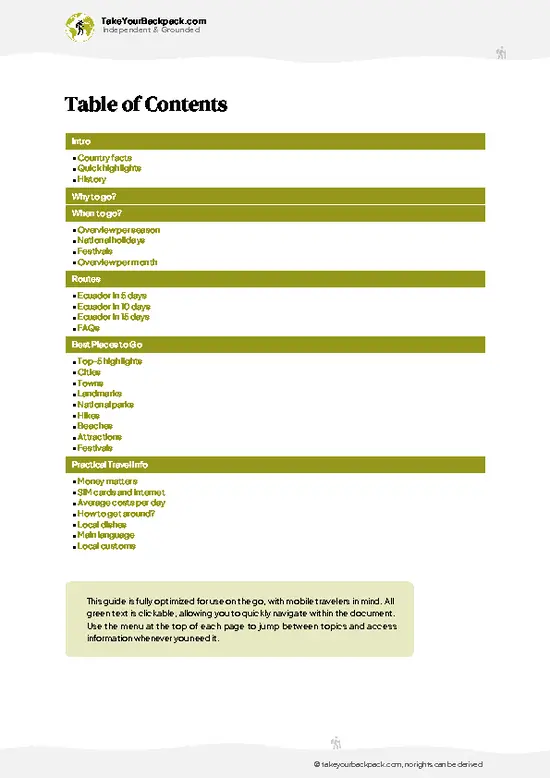
example page 2 from our offline Travel Guide for Ecuador
example page 3 from our offline Travel Guide for Ecuador
example page 4 from our offline Travel Guide for Ecuador
example page 5 from our offline Travel Guide for Ecuador
example page 6 from our offline Travel Guide for Ecuador
example page 7 from our offline Travel Guide for Ecuador
Loading the map 🌍
CLICK TO FILTER
cities
towns
landmarks
national parks
hikes
beaches
attractions
festivals
SHOW COUNTRY’S BESTSHOW ALL

✨ Why go?
Ranked #9 town in Ecuador
Why Alausí should be on your travel list

Alausí earns its place on a southern Ecuador route because the Devil’s Nose railway starts here, and it is the only practical base for it. Most travelers stay one night, some two, and the extra day goes to the hills above town. The streets climb steeply, so every lane ends in a view of the valley, and the pace is slow enough that you can finish the main sights before lunch. The town is small and friendly, with a handful of family guesthouses where you end up chatting with the owner over breakfast. Look for the giant statue of San Pedro on the hill, the Devil’s Nose departures from the station, and the rail line that cuts through the old center. It suits hikers, solo travelers and rail fans, but not anyone chasing a party.

💡 HighlightsPlaces and moments you shouldn't skip

  1. Devil’s Nose Train (Nariz del Diablo): The signature switchback descent starts at the Alausí station and drops down a near vertical rock face via a zigzag track. Expect roughly US$30 to 40 for the round trip, about 2 to 3 hours, and morning departures are usually clearest.
  2. Mirador San Pedro: A large statue of San Pedro on the hill gives a sweeping view of town rooftops and the gorge. Go early morning or late afternoon for softer light. Free, 1 to 1.5 hours including the climb.
  3. Iglesia de San Pedro: The Gothic-style church on the main plaza has a striking facade and a quiet interior. Free, 20 to 30 minutes, best outside mass times.
  4. Alausí Train Station and Railway Museum area: The old station buildings and platforms show how central the line was to the town. Free to look around, about 30 minutes,
… read more 👉
  1. Devil’s Nose Train (Nariz del Diablo): The signature switchback descent starts at the Alausí station and drops down a near vertical rock face via a zigzag track. Expect roughly US$30 to 40 for the round trip, about 2 to 3 hours, and morning departures are usually clearest.
  2. Mirador San Pedro: A large statue of San Pedro on the hill gives a sweeping view of town rooftops and the gorge. Go early morning or late afternoon for softer light. Free, 1 to 1.5 hours including the climb.
  3. Iglesia de San Pedro: The Gothic-style church on the main plaza has a striking facade and a quiet interior. Free, 20 to 30 minutes, best outside mass times.
  4. Alausí Train Station and Railway Museum area: The old station buildings and platforms show how central the line was to the town. Free to look around, about 30 minutes, and livelier when trains are due.
  5. Parque Central and the old streets: Wander the colonial balconies and small shops around the plaza, with a local snack or coffee stop. Free, 1 hour, best in the morning when the market stalls are active.
Chunchi, the Inca remains of Ingapirca and the Atillo lakes in Sangay National Park are good day trips. Book the train first, because departures fill and everything else fits around it.
Spotted a mistake or missing something? Contact us.

Things to do near Alausí

Ratings based on Tripadvisor reviews. When you book through this link, you support our work at no extra cost to you.

🏘️ NeighborhoodsHow different areas shape the experience

Alausí climbs a steep hillside, so you explore it in tiers, and the smarter move is to start at the top and let gravity do the work on the way down. Streets are narrow and cobbled, which is why a taxi up and a walk down beats the reverse at 2,350 meters.
  • Mirador and Parque de la Libertad: The 12-meter San Pedro statue and the viewpoint above town give you the whole valley in one look. Go early, before clouds fill the gorge, and walk down from here.
  • Central Plaza and Calle 5 de Junio: The church, the Parque Central and the market stalls sit here. Grab hornado (roast pork) and a cup of colada morada in season at the market, where plates cost far less than at tourist cafes. It is flat enough to cover in 20 minutes.
  • Train Station and Calle Av. 5 de Junio strip: The old rail station anchors the lower
… read more 👉
Alausí climbs a steep hillside, so you explore it in tiers, and the smarter move is to start at the top and let gravity do the work on the way down. Streets are narrow and cobbled, which is why a taxi up and a walk down beats the reverse at 2,350 meters.
  • Mirador and Parque de la Libertad: The 12-meter San Pedro statue and the viewpoint above town give you the whole valley in one look. Go early, before clouds fill the gorge, and walk down from here.
  • Central Plaza and Calle 5 de Junio: The church, the Parque Central and the market stalls sit here. Grab hornado (roast pork) and a cup of colada morada in season at the market, where plates cost far less than at tourist cafes. It is flat enough to cover in 20 minutes.
  • Train Station and Calle Av. 5 de Junio strip: The old rail station anchors the lower town, with the trains to the Nariz del Diablo leaving from here. Book tickets ahead on the official site, since walk-up seats often sell out. Evenings are quiet, with a few bars and little else.
  • Upper residential streets: Steep and local, with views and almost no services. Wander with good shoes, and expect nightlife to be nonexistent anywhere in town.

⌛️ 1 dayA smart one-day plan

The day works on foot, since the center is compact and steep, with a taxi only for the hill viewpoint if your legs need a break.
7:30 AM: Breakfast at the plaza Start with coffee and fresh bread near the church, then check in at the station to confirm your train time.
9:00 AM: Devil’s Nose train Board at the station and ride the zigzag descent, which takes a few hours round trip. The view of the cliff from the tracks is the point.
12:30 PM: Lunch in town Look for a small family restaurant near the center for a set lunch of soup and a main plate.
2:00 PM: Mirador San Pedro Walk or take a short taxi up to the statue, where the whole valley opens out below you.
4:00 PM: Back lanes Skip the main plaza and wander the upper residential streets, where you see daily life, old balconies and small bakeries … read more 👉
The day works on foot, since the center is compact and steep, with a taxi only for the hill viewpoint if your legs need a break.
7:30 AM: Breakfast at the plaza Start with coffee and fresh bread near the church, then check in at the station to confirm your train time.
9:00 AM: Devil’s Nose train Board at the station and ride the zigzag descent, which takes a few hours round trip. The view of the cliff from the tracks is the point.
12:30 PM: Lunch in town Look for a small family restaurant near the center for a set lunch of soup and a main plate.
2:00 PM: Mirador San Pedro Walk or take a short taxi up to the statue, where the whole valley opens out below you.
4:00 PM: Back lanes Skip the main plaza and wander the upper residential streets, where you see daily life, old balconies and small bakeries few visitors reach.
6:00 PM: Evening at the station Finish with a quiet dinner, since the town winds down early.

🌤️ When to go?Choosing the right time of year

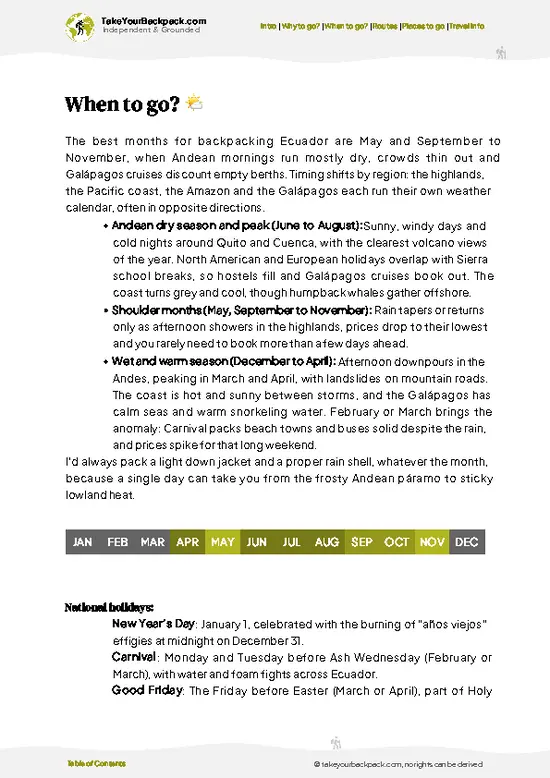
June to September is the driest stretch, with sunny mornings of about 18 to 22°C (64 to 72°F) and cool nights near 8 to 10°C (46 to 50°F).
  • Dry Season (June to September): The best rail views and the biggest crowds, with train seats selling out on weekends and holidays. Prices for tours and rooms rise modestly.
  • Wet Season (October to May): Afternoon showers are common and peak from February to April, when mist can hide the gorge. Rooms are easier to find and cheaper.
  • Festivals: Late June brings the San Pedro celebrations with parades and packed lodging. Book ahead.
  • Daylight: Days stay near 12 hours all year, so plan outdoor time before the afternoon clouds.
Book the morning train, because cloud usually thickens after lunch.

source: climatestotravel.comJANJanuary: fair for travelingFEBFebruary: fair for travelingMARMarch: fair for travelingAPRApril: fair for travelingMAYMay: highly recommended for travelingJUNJune: highly recommended for travelingJULJuly: excellent for travelingAUGAugust: excellent for travelingSEPSeptember: highly recommended for travelingOCTOctober: highly recommended for travelingNOVNovember: fair for travelingDECDecember: fair for traveling
when-to-go

✈️ The backpacker research shortcutEcuador Travel Guide

An offline-friendly backpacking guide with optimized travel routes, ranked highlights, transport advice, and the best areas to stay.
example page 0 from our offline Travel Guide for Ecuador
example page 1 from our offline Travel Guide for Ecuador
example page 2 from our offline Travel Guide for Ecuador
example page 3 from our offline Travel Guide for Ecuador
example page 4 from our offline Travel Guide for Ecuador
example page 5 from our offline Travel Guide for Ecuador
example page 6 from our offline Travel Guide for Ecuador
example page 7 from our offline Travel Guide for Ecuador
The digital guide (274 pages) contains:
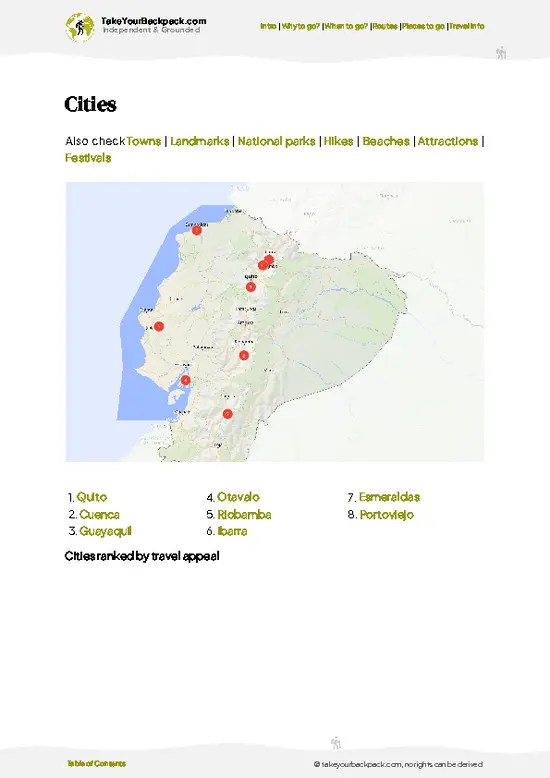
✅ 87 highlights, ranked by travel appeal
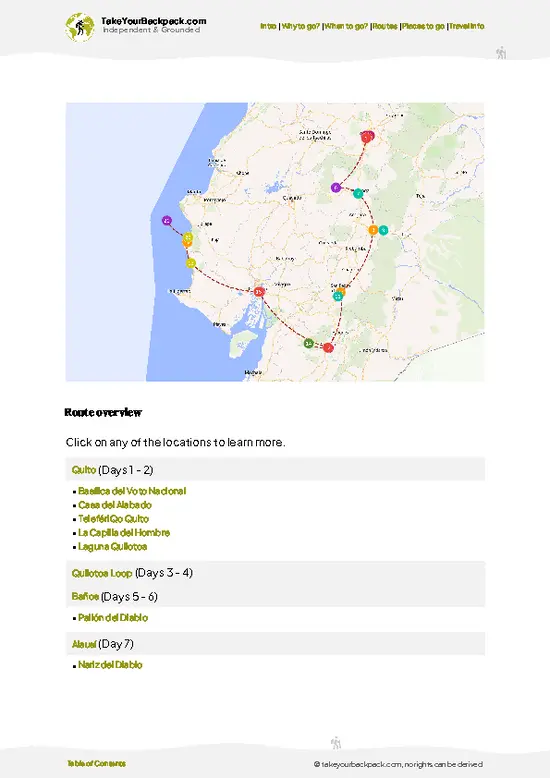
✅ Optimized 5, 10 & 15-day travel routes
✅ Cities, national parks, landmarks, beaches
✅ How to get around
✅ Offline-friendly for travel without Wi-Fi
👉 Click to see all 30+ guide features

📅 Plan smarter in minutes, not weeks
✅ Month by month travel advice
✅ Festivals & national holidays
✅ Budget expectations

🗺️ Go to the right places, skip the overrated ones
✅ Honest pros & cons of destinations
✅ Top hikes, parks & viewpoints
✅ Lesser-known places most travelers miss
✅ Clear “worth it vs skip it” guidance

🛏️ Travel smoothly without rookie mistakes
✅ Best areas to stay
✅ Transport systems explained simply
✅ Common scams & safety advice
✅ SIM cards, money & practical tips

🌍 Understand the country, not just visit it
✅ Culture & traditions
✅ 52 Essential phrases & customs
✅ Festivals worth planning around
✅ Traveler-friendly historical context
✅ Insights that make places more meaningful

📱 Built for real travel conditions
✅ Fully downloadable PDF
✅ Works completely offline
✅ Optimized for phone use
✅ Useful in remote areas & buses
✅ Everything in one place
Stop searching, start planning
Get instant access to your full guide. 30‑day money-back guarantee.
+ Add another guide for just

By proceeding you agree to our terms.
Sent to your inbox immediately after payment • 100% Secure Checkout
Best Backpacking Travel Advisor 2025 tourism awardBest Backpacking
Travel Advisor
2025
What others say about Take Your Backpack Guides:
⭐⭐⭐⭐⭐
Fantastic, amazing amount of information!
⭐⭐⭐⭐⭐
My goodness this is amazing, it's what I've been looking for hats off too you!
⭐⭐⭐⭐⭐
I think this is absolutely BRILLIANT
⭐⭐⭐⭐
Very complete and informative. It's still missing places, but I gotta to commend you
⭐⭐⭐⭐⭐
This is truly amazing, thank you, can't wait to explore it with my kids!
⭐⭐⭐⭐⭐
Awesome resource, thank you!
⭐⭐⭐⭐⭐
This is amazing! Can't wait to explore the ones I haven't seen
⭐⭐⭐⭐
I love this! Well done, great idea.
⭐⭐⭐⭐⭐
Thanks for taking the time to make this gem!
⭐⭐⭐⭐⭐
This might be the best website I've ever seen.
⭐⭐⭐⭐⭐
Congratulations, and thank you so much for your work; it's incredibly valuable.
⭐⭐⭐⭐
In all seriousness I think you did a great job pointing out the important spots
⭐⭐⭐⭐⭐
10/10 very good
⭐⭐⭐⭐⭐
As someone who's only just starting to visit regularly this is awesome, thank you.
⭐⭐⭐⭐
Thank you very much! I'm going to visit my dad, it's going to be very useful!
⭐⭐⭐⭐⭐
This is really cool! We'll be travelling for the first time and this definitely come in handy.
⭐⭐⭐⭐⭐
You are now our minister of culture, congratulations 👨‍💼
⭐⭐⭐⭐⭐
Just wanted to tell you that this is a pearl! Going to follow your recommendations.
⭐⭐⭐⭐⭐
This is so cool. I'll definitely be using the resource for my travels soon.
⭐⭐⭐⭐⭐
This is very impressive! Good work.
⭐⭐⭐⭐⭐
This is an amazing and informative site. Very well done!

🛏️ Where to stay?Best areas to stay in Ecuador

The central plaza area and the lanes just below it are the best places to sleep for budget travelers, with a handful of simple hostels and guesthouses at roughly US$10 to 20 per person. Beds are limited, so reserve ahead in July and on festival weekends. You are within a five minute walk of food, the train station and buses to Riobamba and Cuenca. Nights are quiet and the streets feel safe after dark, though the hill is dim and steep, so carry a light. Rooms near the plaza can hear church bells and early market trucks, so earplugs help. The streets near the train station are the second choice. … read more 👉
The central plaza area and the lanes just below it are the best places to sleep for budget travelers, with a handful of simple hostels and guesthouses at roughly US$10 to 20 per person. Beds are limited, so reserve ahead in July and on festival weekends. You are within a five minute walk of food, the train station and buses to Riobamba and Cuenca. Nights are quiet and the streets feel safe after dark, though the hill is dim and steep, so carry a light. Rooms near the plaza can hear church bells and early market trucks, so earplugs help. The streets near the train station are the second choice. They cost a touch less and put you close to the early departures, but food options thin out after dark. Dorms are rare in Alausí, so solo travelers should expect private singles or doubles. Hot water can be slow and nights are cold at this altitude, so ask for extra blankets.

🚌 Getting aroundTransportation options and practical tips

From the bus terminal on the edge of town you can walk or take a taxi (US$1 to 2) up the hill to the central plaza, a 10 to 15 minute uphill climb. Alausí is compact, but the slopes are steep, which is why most people walk down and ride up. Buses connect to the Panamericana, so long-distance travel is simple.
  • Walking: Free, and covers every sight in town. Cobbles get slick when wet, so wear shoes with grip and take it slowly at this altitude.
  • Taxi and pickup trucks: Short rides cost US$1 to 2, and a ride to the train station or viewpoint is similar. Agree on the fare before climbing in, since there are no meters.
  • Intercity buses: Frequent departures to Riobamba (about 1.5 to 2 hours, US$2 to 3) and Cuenca (about 4 hours, US$6 to 8) run from early morning to evening. Ask for a seat on the right
… read more 👉
From the bus terminal on the edge of town you can walk or take a taxi (US$1 to 2) up the hill to the central plaza, a 10 to 15 minute uphill climb. Alausí is compact, but the slopes are steep, which is why most people walk down and ride up. Buses connect to the Panamericana, so long-distance travel is simple.
  • Walking: Free, and covers every sight in town. Cobbles get slick when wet, so wear shoes with grip and take it slowly at this altitude.
  • Taxi and pickup trucks: Short rides cost US$1 to 2, and a ride to the train station or viewpoint is similar. Agree on the fare before climbing in, since there are no meters.
  • Intercity buses: Frequent departures to Riobamba (about 1.5 to 2 hours, US$2 to 3) and Cuenca (about 4 hours, US$6 to 8) run from early morning to evening. Ask for a seat on the right side for gorge views.
  • Tourist train: The Nariz del Diablo route runs from the station down to Sibambe and back in about 2 hours, usually US$30 to 40 for foreigners. Buy online ahead of time, because daily departures are limited.

👛 Costs (as of 19 October 2026)Travel costs and budget guide for Alausí

Expect to spend about US$48 a day in Alausí on a tight budget, with the train ride as the largest single cost.
CategoryBudget RangeLocal Reality
Dorm accommodationUS$10 to 18Few true dorms exist, so you mostly pay for a simple private room, and prices rise in July.
MealsUS$8 to 14Set lunches (almuerzos) cost US$3 to 4, with market hornado and soups filling in the rest.
Local transportUS$2 to 6Taxis are US$1 to 2 within town, with buses to Riobamba at US$2 to 3.
Basic activities/entry feesUS$0 to 35The mirador is free, while the Nariz del Diablo train costs US$30 to 40 and is the major splurge.
Miscellaneous expensesUS$3 to 6Snacks, water, and the occasional coffee or phone data.
Total Daily BudgetUS$48Based on high season lodging and including one train ride on a splurge day.
Eat the almuerzo at the … read more 👉
Expect to spend about US$48 a day in Alausí on a tight budget, with the train ride as the largest single cost.
CategoryBudget RangeLocal Reality
Dorm accommodationUS$10 to 18Few true dorms exist, so you mostly pay for a simple private room, and prices rise in July.
MealsUS$8 to 14Set lunches (almuerzos) cost US$3 to 4, with market hornado and soups filling in the rest.
Local transportUS$2 to 6Taxis are US$1 to 2 within town, with buses to Riobamba at US$2 to 3.
Basic activities/entry feesUS$0 to 35The mirador is free, while the Nariz del Diablo train costs US$30 to 40 and is the major splurge.
Miscellaneous expensesUS$3 to 6Snacks, water, and the occasional coffee or phone data.
Total Daily BudgetUS$48Based on high season lodging and including one train ride on a splurge day.
Eat the almuerzo at the market as your main meal, since it includes soup, a main, and a drink for a fraction of restaurant prices.


source: ecuador.travel
⚠️ Prices can change and everyone travels differently, so take this as a rough guide. Hope it helps you plan your adventure!

🚌 Day tripsEasy escapes and nearby places

Alausí works well as a base for day trips because the rail line and Panamericana put several highlights within a morning's reach.Nariz del Diablo Train: The signature ride descends a switchback track carved into a cliff, about 2 hours round trip from Alausí station. Expect US$30 to 40 per person. Book early and take the morning departure for clearer views. First-timers often arrive without a reservation and find it full.
👉 Explore Nariz del DiabloAchupallas and Ingapirca Trail: Rolling highland villages with Cañari culture sit above town and can be reached by local pickup (about US$2 to 4). The Inca Trail hiking route here is long, so most day visitors only sample a section. Dry months from June to September are best.
Ingapirca: Ecuador's largest Inca ruins are about 2 hours by bus plus a transfer, … read more 👉
Alausí works well as a base for day trips because the rail line and Panamericana put several highlights within a morning's reach.Nariz del Diablo Train: The signature ride descends a switchback track carved into a cliff, about 2 hours round trip from Alausí station. Expect US$30 to 40 per person. Book early and take the morning departure for clearer views. First-timers often arrive without a reservation and find it full.
👉 Explore Nariz del DiabloAchupallas and Ingapirca Trail: Rolling highland villages with Cañari culture sit above town and can be reached by local pickup (about US$2 to 4). The Inca Trail hiking route here is long, so most day visitors only sample a section. Dry months from June to September are best.
Ingapirca: Ecuador's largest Inca ruins are about 2 hours by bus plus a transfer, with a total of roughly US$8 to 12 including entry. Go early and carry a layer, as the site sits above 3,100 meters and turns windy.
👉 Explore IngapircaRiobamba: A market city 1.5 to 2 hours north, with the Saturday market at its busiest. Buses run at US$2 to 3 each way. Leave Alausí early to get back before the last buses.
👉 Explore Riobamba

🛡️ SafetyScams, Hazards, and Annoyances

Alausí is calm and small, and most visitors report no trouble beyond petty issues. Take normal care with bags at the bus terminal and market, where crowds can hide pickpockets. Streets are steep and poorly lit, so a headlamp helps after dark and solo travelers should avoid empty upper streets late at night. Taxis have no meters, so agree on fares first. Touts occasionally sell train tickets at inflated prices near the station, so book through the official railway channels. Altitude of about 2,350 meters can bring headaches in your first day, so drink water and go slowly. Landslides have affected parts of the hillside in the past, so follow local guidance if an area is closed. Keep a copy of your passport rather than carrying the original.

FAQFrequently asked questions about Alausí

Alausí is worth a stop of its own, mainly for the Nariz del Diablo train and the hillside viewpoint with the large San Pedro statue. The train ride lasts about 2 hours and costs roughly US$30 to 40. Pair it with the Riobamba and Cuenca route, since buses run both ways several times a day.
One to two days is enough in Alausí. A full day covers the train, the viewpoint and the market, while a second day suits a trip to Achupallas or Ingapirca. Overnighting costs US$10 to 20 for a simple room and helps with altitude.
Alausí can be done as a day trip from Riobamba, which is 1.5 to 2 hours by bus at about US$2 to 3 each way. An early departure gets you there for a morning train and a late-afternoon bus back. Cuenca is about 4 hours away, so staying overnight is easier from there.
⚠️ Things can change over time, so always validate details locally before you go.

Other Ecuadorian towns near Alausí

Explore more nearby:

  • Baños—Thermal pools, bridge swings, Tungurahua views, waterfall road| 101 km away
  • Puyo—Maito in bijao leaf, Omaere forest park, Puyo riverwalk, Amazon gateway| 123 km away
  • Tena—Jatunyacu rafting, river confluence, island park, Amazon fruit market| 176 km away

💡 Not sure where to go next?
Create a personalized itinerary for Ecuador including Alausí and the places that fit your trip.

Generate my itinerary

👉 Discover all towns

Or checkout all Ecuador has to offer (think cities, towns, villages, national parks, hikes, beaches, festivals)
Country photo of Ecuador

We 💚 feedbackParting advice and final tips

Alausí is best on a clear morning when the train leaves and the valley is sharp, so I would sleep here the night before and be at the station early. Afternoon cloud often rolls in over the gorge, so keep the viewpoint for a second morning if you can.

✈️ When did I visit Ecuador?
Ecuador I visited during my half year trip through South and Central America back in 2003

✍️ Help improve this page!
The information on this page is based on my own backpacking experience in Ecuador, supplemented with up-to-date research and feedback from other travelers. Travel details can change, so if you notice anything outdated or incomplete, feel free to let me know.


🙋‍♂️ Give feedback

👋 Meet the founderWho’s Behind Take Your Backpack?

Johan, backpacker and founder of TakeYourBackpackHi, I’m Johan (Netherlands 🇳🇱), the creator of TakeYourBackpack. Over the past 3 decades, I’ve backpacked through 90+ countries across six continents, gaining extensive experience with independent travel, long-term trips, and overland routes.

This site is built on a combination of firsthand travel experience and carefully curated insights from other backpackers. Many guides are based on places I’ve personally visited, while others bring together tips, observations, and practical advice shared by trusted travelers I’ve met along the way.

The goal is to provide realistic, experience-driven guidance — not generic itineraries — so you can explore destinations with better context, clearer expectations, and more confidence.