×

Equatorial Guinea🇬🇶 | townsCogoisland access, estuary location, stilt houses | things to do and best time to go

Explore MbiniExplore Rebola

Backpacking in Cogo
👌 Worth visitingtown ranked #9
By Johan Kruseman 🇳🇱 | Updated October 13, 2026

If you crave nightlife, gourmet coffee, or a parade of hostels, Cogo will leave you restless. This is not the place for urban thrills or curated Instagram moments. But if you’re the kind of backpacker who finds value in the slow, humid hush of a riverside town where the Río Muni meets the Atlantic, Cogo rewards patience. Tucked in southern Equatorial Guinea, near the Gabonese border, it’s a crossroads more than a destination—best as a pause between Bata and the wilds of Monte Alen, or a launchpad for river explorations. The old colonial center is faded but walkable, with the scent of woodsmoke and salt in the air. Transport is basic—expect shared taxis, not buses. Evenings are quiet, and you’ll likely be the only foreigner in town. It’s cheaper than Bata, safer than border posts, and more authentic than the coastal resorts.

Discover everything you want to know in the 📖 Equatorial Guinea Travel Guide.


Loading the map 🌍
CLICK TO FILTER
cities
towns
villages
landmarks
national parks
hikes
beaches
attractions
festivals
regions
SHOW COUNTRY’S BESTSHOW ALL

✨ Why go?
Ranked #9 town in Equatorial Guinea
What sets this place apart

Cogo, in Equatorial Guinea, is a strategic base for backpackers seeking both adventure and authenticity. Its proximity to hikes like the lush trails of Monte Alén National Park makes it a natural stop for those craving the thrill of the wild. The beaches nearby offer a refreshing escape, where the scent of saltwater mingles with the earthy aroma of the surrounding jungle.

Accommodations here are cozy and affordable, with small-scale hostels and guesthouses that foster a friendly social atmosphere. You’ll find fellow travelers swapping stories over local dishes, like grilled fish or spicy stews, at nearby eateries. The walkable streets invite exploration, making it easy to soak in the local culture without feeling rushed.

Most backpackers tend to stay a few days, enjoying the laid-back vibe … read more 👉
Cogo, in Equatorial Guinea, is a strategic base for backpackers seeking both adventure and authenticity. Its proximity to hikes like the lush trails of Monte Alén National Park makes it a natural stop for those craving the thrill of the wild. The beaches nearby offer a refreshing escape, where the scent of saltwater mingles with the earthy aroma of the surrounding jungle.

Accommodations here are cozy and affordable, with small-scale hostels and guesthouses that foster a friendly social atmosphere. You’ll find fellow travelers swapping stories over local dishes, like grilled fish or spicy stews, at nearby eateries. The walkable streets invite exploration, making it easy to soak in the local culture without feeling rushed.

Most backpackers tend to stay a few days, enjoying the laid-back vibe that encourages both slow travel and connection. Cogo suits solo travelers and small groups alike, especially those who appreciate a blend of nature and community. It’s not a party town, but rather a place where the journey feels as rewarding as the destination.

💡 HighlightsKey sights and experiences for travelers

  • Cogo waterfront and river port — The real heart of the village: fishermen landing catches, pirogues coming and going, and the best place to watch daily life on the mouth of the Muni River and get a boat to nearby islands.
  • Central market (Mercado de Cogo) — A chaotic, colorful market where you can sample fresh fish, local produce and spices, haggle with vendors, and soak up the rhythms of local commerce.
  • Old customs/port warehouses — Weathered Spanish-era buildings and shed-ruins along the quay that tell the story of regional trade; great for photography and imagining Cogo’s colonial past.
  • The village parish church — The Catholic church is both an architectural landmark and a living social hub: attend a service, hear local choirs, or just observe community life around it.
  • Mangrove edge
… read more 👉
  • Cogo waterfront and river port — The real heart of the village: fishermen landing catches, pirogues coming and going, and the best place to watch daily life on the mouth of the Muni River and get a boat to nearby islands.
  • Central market (Mercado de Cogo) — A chaotic, colorful market where you can sample fresh fish, local produce and spices, haggle with vendors, and soak up the rhythms of local commerce.
  • Old customs/port warehouses — Weathered Spanish-era buildings and shed-ruins along the quay that tell the story of regional trade; great for photography and imagining Cogo’s colonial past.
  • The village parish church — The Catholic church is both an architectural landmark and a living social hub: attend a service, hear local choirs, or just observe community life around it.
  • Mangrove edge and estuary trails — Short walks from town into the mangroves for birdwatching, tide-pooling, and quiet sunset views over the estuary; bring mosquito repellent and sensible shoes.
  • Local boatyards and pirogue workshops — Watch skilled boat-builders at work repairing wooden canoes and nets; it’s a hands-on glimpse into livelihoods that keep the village moving.
  • Town square and municipal façade — The small plaza where locals gather, announcements are posted, and you’ll find the clearest sense of daily social life—ideal for people-watching with a cold drink.
  • Street-food lanes and informal eateries — Tiny grills and shacks serving fish stews, plantain, and local snacks; cheap, authentic, and a direct route to tasting regional flavors.
  • Old cemetery — Quiet, shaded, and lined with older tombs that reflect both local customs and colonial-era burials; a reflective spot for history and photography.
  • Estuary mudflats and small beaches — At low tide the exposed mudflats reveal crabs, shellfish and local foraging activity; not a postcard beach, but a unique coastal ecology you can explore safely from shore.
A few real day-trip options nearby: short boat rides to the tiny Elobey Grande and Elobey Chico islands, visits to Corisco Island, and exploring more of the Muni Estuary mangrove channels — all easily reachable from Cogo as half- to full-day trips.
Spotted a mistake or missing something? Contact us.

Things to do near Cogo

Ratings based on Tripadvisor reviews. When you book through this link, you support our work at no extra cost to you.

🏘️ NeighborhoodsHow different areas shape the experience

Cogo, a small coastal town in Equatorial Guinea, offers a unique blend of local culture and natural beauty. Here’s how to navigate its neighborhoods for the best backpacking experience.

Centro: This is the heart of Cogo. The vibe is lively, with local markets and street vendors filling the air with the scent of grilled fish and fresh fruits. It’s walkable, making it easy to explore shops and cafes. Prices are reasonable, perfect for budget travelers. Nightlife is low-key, with a few bars where you can sip on local brews. Ideal for short stays, as you can soak up the local culture quickly.

Playa de Cogo: If you’re after sun and surf, this beach area is your go-to. The atmosphere is relaxed, with the sound of waves crashing and palm trees swaying. Accommodation here can be pricier, but the … read more 👉
Cogo, a small coastal town in Equatorial Guinea, offers a unique blend of local culture and natural beauty. Here’s how to navigate its neighborhoods for the best backpacking experience.

Centro: This is the heart of Cogo. The vibe is lively, with local markets and street vendors filling the air with the scent of grilled fish and fresh fruits. It’s walkable, making it easy to explore shops and cafes. Prices are reasonable, perfect for budget travelers. Nightlife is low-key, with a few bars where you can sip on local brews. Ideal for short stays, as you can soak up the local culture quickly.

Playa de Cogo: If you’re after sun and surf, this beach area is your go-to. The atmosphere is relaxed, with the sound of waves crashing and palm trees swaying. Accommodation here can be pricier, but the beachfront views are worth it. It’s less walkable, so consider renting a bike. Nightlife is virtually non-existent, making it perfect for those seeking peace. Great for longer stays if you want to unwind.

La Loma: This hillside neighborhood offers stunning views and a more local feel. The air is fresher, and the pace is slower. It’s a bit of a trek to get to the center, but the tranquility is a trade-off. Costs are lower here, and you’ll find homestays that provide a genuine experience. Ideal for longer stays, especially if you enjoy hiking and nature.

⌛️ 1 dayHow to make the most of one day

Cogo, a small coastal town in Equatorial Guinea, offers a unique blend of vibrant local culture and stunning natural beauty. It’s not on the typical tourist radar, but that’s part of its charm. The air is thick with the scent of salt and fresh fish, and the rhythm of life here is slow, inviting you to savor each moment.

Start your day early at the bustling local market, Mercado de Cogo. The sun rises, casting a warm glow over colorful stalls brimming with fresh produce and handmade crafts. Engage with the vendors; their smiles and stories add a personal touch to your experience. Grab a local breakfast of *fufu* and grilled fish, a hearty start that fuels your adventures ahead.

After breakfast, take a stroll along the coastline. The sound of waves crashing against the rocky shore is both … read more 👉
Cogo, a small coastal town in Equatorial Guinea, offers a unique blend of vibrant local culture and stunning natural beauty. It’s not on the typical tourist radar, but that’s part of its charm. The air is thick with the scent of salt and fresh fish, and the rhythm of life here is slow, inviting you to savor each moment.

Start your day early at the bustling local market, Mercado de Cogo. The sun rises, casting a warm glow over colorful stalls brimming with fresh produce and handmade crafts. Engage with the vendors; their smiles and stories add a personal touch to your experience. Grab a local breakfast of *fufu* and grilled fish, a hearty start that fuels your adventures ahead.

After breakfast, take a stroll along the coastline. The sound of waves crashing against the rocky shore is both calming and invigorating. Head towards the lesser-known Playa de Cogo, where you can find a quiet spot to soak in the sun or dip your toes in the warm water. This beach isn’t crowded, allowing you to enjoy the scenery without the hustle of more popular spots.

In the afternoon, explore the neighborhood of Nko, where you’ll find traditional architecture and friendly locals. Visit the small community center, often overlooked by tourists, where you can witness local artisans at work. The vibrant colors of their crafts reflect the spirit of the town, and you might even pick up a unique souvenir.

As evening approaches, make your way to the waterfront. The sunset here is a spectacle, painting the sky in hues of orange and pink. Grab dinner at a local eatery, savoring dishes like *yuca* and grilled shrimp while listening to the sounds of laughter and music around you.

Cogo may not be the most famous destination, but its authenticity and warmth will leave you with lasting memories. Embrace the slower pace, and you’ll find that the beauty of this town is in the details, waiting to be discovered.

🌤️ When to go?Best time to visit Cogo

  • Topic: Weather - Cogo’s equatorial climate means it’s hot and humid year-round, but the heavy rains from March to June can turn trails into mud baths and limit outdoor plans. The drier months, July to February, offer clearer skies and less oppressive humidity, making trekking and exploring far more enjoyable.
  • Topic: Temperature - Expect daily highs around 28-32°C (82-90°F) with nights cooling slightly to 22-24°C (72-75°F). The temperature doesn’t fluctuate much, but the dry season’s lower humidity makes the heat feel less suffocating.
  • Topic: Daylight Hours - Near the equator, daylight stays steady at about 12 hours year-round. This consistency means you can plan hikes and activities without worrying about early sunsets cutting your day short.
  • Topic: Crowds - Tourism is low-key in Cogo,
… read more 👉
  • Topic: Weather - Cogo’s equatorial climate means it’s hot and humid year-round, but the heavy rains from March to June can turn trails into mud baths and limit outdoor plans. The drier months, July to February, offer clearer skies and less oppressive humidity, making trekking and exploring far more enjoyable.
  • Topic: Temperature - Expect daily highs around 28-32°C (82-90°F) with nights cooling slightly to 22-24°C (72-75°F). The temperature doesn’t fluctuate much, but the dry season’s lower humidity makes the heat feel less suffocating.
  • Topic: Daylight Hours - Near the equator, daylight stays steady at about 12 hours year-round. This consistency means you can plan hikes and activities without worrying about early sunsets cutting your day short.
  • Topic: Crowds - Tourism is low-key in Cogo, but the dry season sees a modest uptick in visitors. You’ll find more fellow travelers from July to October, which can be a plus if you want company but still avoid the crush.
  • Topic: Seasonal Activities - The dry months are prime for wildlife spotting and coastal excursions. Mangrove tours and fishing trips thrive when the waters are calmer, while the rainy season’s lush greenery is best admired from a hammock rather than a trail.
  • Topic: Price Fluctuations - Accommodation and local transport costs rise slightly during the dry season due to increased demand. Booking ahead can secure better rates and avoid last-minute price hikes.
Pro-tip: Aim for late July to early October—when the air is breathable, the trails are passable, and the town hums quietly with just enough visitors to keep things lively without overwhelming the experience.


source: climatestotravel.comJANJanuary: highly recommended for travelingFEBFebruary: highly recommended for travelingMARMarch: fair for travelingAPRApril: fair for travelingMAYMay: fair for travelingJUNJune: fair for travelingJULJuly: excellent for travelingAUGAugust: excellent for travelingSEPSeptember: excellent for travelingOCTOctober: highly recommended for travelingNOVNovember: highly recommended for travelingDECDecember: highly recommended for traveling
when-to-go

✈️ The backpacker research shortcutEquatorial Guinea Travel Guide

An offline-friendly backpacking guide with optimized travel routes, ranked highlights, transport advice, and the best areas to stay.
example page 0 from our offline Travel Guide for Equatorial Guinea
example page 1 from our offline Travel Guide for Equatorial Guinea
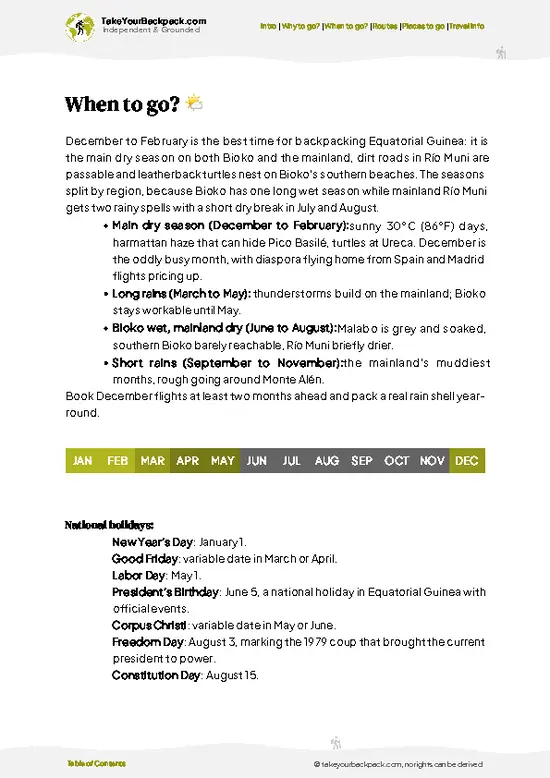
example page 2 from our offline Travel Guide for Equatorial Guinea
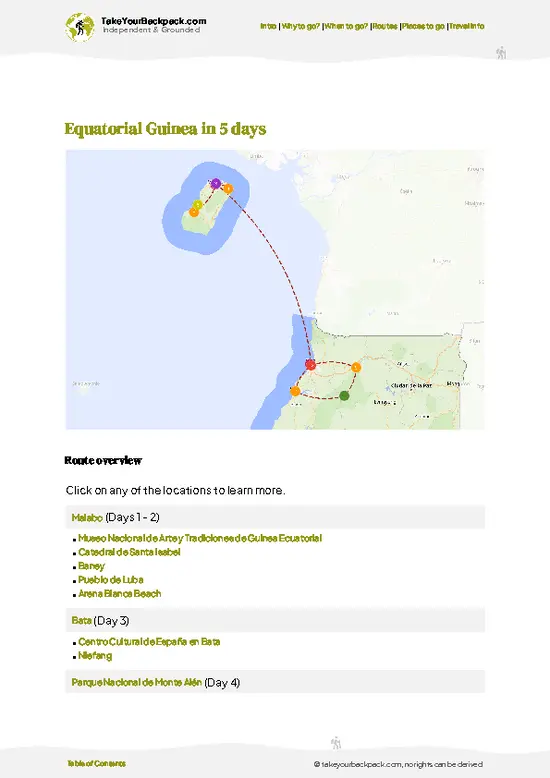
example page 3 from our offline Travel Guide for Equatorial Guinea
example page 4 from our offline Travel Guide for Equatorial Guinea
example page 5 from our offline Travel Guide for Equatorial Guinea
example page 6 from our offline Travel Guide for Equatorial Guinea
example page 7 from our offline Travel Guide for Equatorial Guinea
The digital guide (199 pages) contains:
✅ 46 highlights, ranked by travel appeal
✅ Optimized 2, 3 & 5-day travel routes
✅ Cities, national parks, landmarks, beaches
✅ How to get around
✅ Offline-friendly for travel without Wi-Fi
👉 Click to see all 30+ guide features

📅 Plan smarter in minutes, not weeks
✅ Month by month travel advice
✅ Festivals & national holidays
✅ Budget expectations

🗺️ Go to the right places, skip the overrated ones
✅ Honest pros & cons of destinations
✅ Top hikes, parks & viewpoints
✅ Lesser-known places most travelers miss
✅ Clear “worth it vs skip it” guidance

🛏️ Travel smoothly without rookie mistakes
✅ Best areas to stay
✅ Transport systems explained simply
✅ Common scams & safety advice
✅ SIM cards, money & practical tips

🌍 Understand the country, not just visit it
✅ Culture & traditions
✅ 52 Essential phrases & customs
✅ Festivals worth planning around
✅ Traveler-friendly historical context
✅ Insights that make places more meaningful

📱 Built for real travel conditions
✅ Fully downloadable PDF
✅ Works completely offline
✅ Optimized for phone use
✅ Useful in remote areas & buses
✅ Everything in one place
Stop searching, start planning
Get instant access to your full guide. 30‑day money-back guarantee.
+ Add another guide for just

By proceeding you agree to our terms.
Sent to your inbox immediately after payment • 100% Secure Checkout
Best Backpacking Travel Advisor 2025 tourism awardBest Backpacking
Travel Advisor
2025
What others say about Take Your Backpack Guides:
⭐⭐⭐⭐⭐
Fantastic, amazing amount of information!
⭐⭐⭐⭐⭐
My goodness this is amazing, it's what I've been looking for hats off too you!
⭐⭐⭐⭐⭐
I think this is absolutely BRILLIANT
⭐⭐⭐⭐
Very complete and informative. It's still missing places, but I gotta to commend you
⭐⭐⭐⭐⭐
This is truly amazing, thank you, can't wait to explore it with my kids!
⭐⭐⭐⭐⭐
Awesome resource, thank you!
⭐⭐⭐⭐⭐
This is amazing! Can't wait to explore the ones I haven't seen
⭐⭐⭐⭐
I love this! Well done, great idea.
⭐⭐⭐⭐⭐
Thanks for taking the time to make this gem!
⭐⭐⭐⭐⭐
This might be the best website I've ever seen.
⭐⭐⭐⭐⭐
Congratulations, and thank you so much for your work; it's incredibly valuable.
⭐⭐⭐⭐
In all seriousness I think you did a great job pointing out the important spots
⭐⭐⭐⭐⭐
10/10 very good
⭐⭐⭐⭐⭐
As someone who's only just starting to visit regularly this is awesome, thank you.
⭐⭐⭐⭐
Thank you very much! I'm going to visit my dad, it's going to be very useful!
⭐⭐⭐⭐⭐
This is really cool! We'll be travelling for the first time and this definitely come in handy.
⭐⭐⭐⭐⭐
You are now our minister of culture, congratulations 👨‍💼
⭐⭐⭐⭐⭐
Just wanted to tell you that this is a pearl! Going to follow your recommendations.
⭐⭐⭐⭐⭐
This is so cool. I'll definitely be using the resource for my travels soon.
⭐⭐⭐⭐⭐
This is very impressive! Good work.
⭐⭐⭐⭐⭐
This is an amazing and informative site. Very well done!

🛏️ Where to stay?How to pick the right area

In Cogo, the best spot for backpackers is the central district near the waterfront. This area hums with local life—fishermen hauling in their catch, street vendors grilling fresh fish, and the scent of saltwater mixed with smoky charcoal. It’s where you’ll find the most affordable guesthouses and a handful of hostels that cater to solo travelers and budget adventurers. The vibe here is relaxed but lively, with easy access to markets and small cafés where you can strike up conversations with locals and fellow travelers alike.

Compared to the quieter residential neighborhoods, this central zone … read more 👉
In Cogo, the best spot for backpackers is the central district near the waterfront. This area hums with local life—fishermen hauling in their catch, street vendors grilling fresh fish, and the scent of saltwater mixed with smoky charcoal. It’s where you’ll find the most affordable guesthouses and a handful of hostels that cater to solo travelers and budget adventurers. The vibe here is relaxed but lively, with easy access to markets and small cafés where you can strike up conversations with locals and fellow travelers alike.

Compared to the quieter residential neighborhoods, this central zone feels safer after dark because of the steady foot traffic and informal street lighting. It’s also more social—perfect if you want to swap stories over a cold drink or find a walking buddy for exploring nearby beaches. Other parts of Cogo tend to be more isolated or geared toward locals, which can make navigation tricky and socializing rare. Staying near the waterfront means you’re plugged into the pulse of the town, with practical access to transport and a genuine slice of daily life that’s worth every step.

🚌 Getting aroundTransportation options and practical tips

Cogo moves at its own rhythm—less a strict timetable and more a pulse you feel in the air. The streets hum with a mix of purposeful strides and spontaneous stops, where the scent of street food mingles with diesel and sea salt. Here, transit isn’t about catching a precise moment but syncing with the ebb and flow of local life. The sun’s angle shifts the mood; mornings bring a crisp clarity, while evenings soften the chaos into a warm, golden haze. Understanding this flow means you don’t just get from A to B—you glide through the city’s character, making every trip part of the experience.
  • Walking: The best way to absorb Cogo’s texture. Streets are compact, and many neighborhoods reveal their quirks only on foot. It’s free, flexible, and lets you catch the scent of fresh bread or the chatter
… read more 👉
Cogo moves at its own rhythm—less a strict timetable and more a pulse you feel in the air. The streets hum with a mix of purposeful strides and spontaneous stops, where the scent of street food mingles with diesel and sea salt. Here, transit isn’t about catching a precise moment but syncing with the ebb and flow of local life. The sun’s angle shifts the mood; mornings bring a crisp clarity, while evenings soften the chaos into a warm, golden haze. Understanding this flow means you don’t just get from A to B—you glide through the city’s character, making every trip part of the experience.
  • Walking: The best way to absorb Cogo’s texture. Streets are compact, and many neighborhoods reveal their quirks only on foot. It’s free, flexible, and lets you catch the scent of fresh bread or the chatter spilling from open windows. Expect uneven sidewalks and occasional street vendors, so wear sturdy shoes and keep your senses sharp.
  • Minibus (Local “Colectivo”): Runs roughly from 6:00 AM to 9:00 PM, with no fixed schedule—buses leave when full. Cost is dirt cheap, usually under $1, but expect a tight squeeze and frequent stops. It’s slow but immersive, weaving through narrow alleys and main roads alike, offering a front-row seat to daily life.
  • Motorcycle Taxi (“Moto-Taxi”): Available 24/7, these are the fastest way to cut through traffic jams or reach spots minibuses don’t serve. Prices vary but are generally affordable for short hops. Helmets are provided but hold on tight—the ride is bumpy and the wind carries the city’s mixed scents right to your face.
  • Shared Tuk-Tuks: Operating mainly from 7:00 AM to 8:00 PM, tuk-tuks balance speed and cost. They’re more comfortable than minibuses and cheaper than private taxis. Ideal for short to mid-range distances, they navigate tight corners and busy markets with surprising agility.
  • Private Taxi: Best for late-night trips or when you’re hauling gear. Prices are negotiable, so agree on a fare before hopping in. Taxis offer air conditioning and a smoother ride but can be twice the cost of other options. Use them sparingly to stretch your budget.

👛 Costs (as of 13 October 2026)How expensive it really is

Backpacking in Cogo, Equatorial Guinea, means navigating a place where costs are modest but the infrastructure is basic, so every euro or dollar stretches differently than you might expect elsewhere.
  • Dorm Accommodation: Options are limited and often informal. Expect to pay around €10-15 per night for a basic dorm bed or shared room in guesthouses. Facilities might be simple, with intermittent electricity and minimal amenities, but clean enough to rest after a day of exploring.
  • Meals: Local eateries serve hearty, straightforward meals. A typical plate of grilled fish or chicken with rice and vegetables costs about €3-5. Street food snacks like fried plantains or small pastries go for under €1. Fresh fruit from markets is cheap and refreshing, perfect for hot afternoons.
  • Local Transport:
… read more 👉
Backpacking in Cogo, Equatorial Guinea, means navigating a place where costs are modest but the infrastructure is basic, so every euro or dollar stretches differently than you might expect elsewhere.
  • Dorm Accommodation: Options are limited and often informal. Expect to pay around €10-15 per night for a basic dorm bed or shared room in guesthouses. Facilities might be simple, with intermittent electricity and minimal amenities, but clean enough to rest after a day of exploring.
  • Meals: Local eateries serve hearty, straightforward meals. A typical plate of grilled fish or chicken with rice and vegetables costs about €3-5. Street food snacks like fried plantains or small pastries go for under €1. Fresh fruit from markets is cheap and refreshing, perfect for hot afternoons.
  • Local Transport: Getting around relies mostly on shared taxis or minibuses. Fares are low, usually around €0.50-1 per trip within town. The rides can be crowded and bumpy, but they’re the most authentic way to feel the pulse of daily life and catch the scents of the sea and tropical foliage.
  • Basic Activities/Entry Fees: Cultural sites and natural spots rarely charge more than €2-3 for entry. Guided tours are scarce and often arranged locally, so expect to negotiate prices. The real cost here is time and patience, as infrastructure is minimal and signage limited.
  • Miscellaneous Expenses: Budget a few euros for bottled water (important in the humid climate), occasional SIM cards or data top-ups, and small tips. These usually add up to about €2-4 daily, depending on your needs and habits.

The daily budget for backpacking in Cogo typically falls between €18 and €30. This range covers the essentials without glossing over the rough edges—embracing the slower pace and raw atmosphere that make the experience uniquely rewarding.


source: guineaecuatorialpress.com
⚠️ Prices can change and everyone travels differently, so take this as a rough guide. Hope it helps you plan your adventure!

🚌 Day tripsShort trips worth adding

Cogo, Equatorial Guinea, is a backpacker’s dream base for day trips, offering a blend of adventure and cultural immersion. The vibrant atmosphere of the town sets the stage for exploring the surrounding natural wonders.

Trip to Monte Alén National Park
Just a couple of hours from Cogo, Monte Alén National Park is a lush paradise where the air is thick with the scent of damp earth and wild orchids. The park is a haven for biodiversity, with trails that wind through dense rainforest and lead to stunning waterfalls. Expect to pay around $10 for entry and transport, and bring a packed lunch to enjoy amidst the sounds of nature. The best time to visit is during the dry season, from December to February, when trails are more accessible. A common mistake is underestimating the park’s size; plan … read more 👉
Cogo, Equatorial Guinea, is a backpacker’s dream base for day trips, offering a blend of adventure and cultural immersion. The vibrant atmosphere of the town sets the stage for exploring the surrounding natural wonders.

Trip to Monte Alén National Park
Just a couple of hours from Cogo, Monte Alén National Park is a lush paradise where the air is thick with the scent of damp earth and wild orchids. The park is a haven for biodiversity, with trails that wind through dense rainforest and lead to stunning waterfalls. Expect to pay around $10 for entry and transport, and bring a packed lunch to enjoy amidst the sounds of nature. The best time to visit is during the dry season, from December to February, when trails are more accessible. A common mistake is underestimating the park’s size; plan for a full day to truly soak it all in.


Day Trip to the Beaches of Ureca
A short bus ride from Cogo takes you to Ureca, where the coastline is kissed by gentle waves and the air is salty and refreshing. This beach is less frequented by tourists, offering a peaceful retreat. You can spend the day swimming, sunbathing, or exploring the nearby mangroves. Budget around $15 for transport and snacks. The best time to go is during the dry season, but be mindful of tides; they can change quickly. Many first-timers miss the chance to explore the mangroves, which are teeming with wildlife.


Visit to the Town of Luba
Luba, a bustling port town, is about an hour from Cogo and offers a glimpse into local life. The market here is a sensory overload—colors, sounds, and the aroma of fresh fish and spices fill the air. You can grab a delicious meal for under $5 and chat with locals who are often eager to share stories. The best time to visit is early morning when the market is at its liveliest. A common mistake is sticking to the main roads; venture into the side alleys for a more authentic experience.


Exploration of the Bioko Island Highlands
For those craving a bit of altitude, the Bioko Island Highlands are a must. It’s about a two-hour journey, but the panoramic views of the island are worth every minute. The highlands are cooler, with a crisp breeze that invigorates your senses. Expect to spend around $20 for transport and snacks. The dry season is ideal for hiking, but be prepared for sudden weather changes. Many newcomers overlook the importance of sturdy footwear; the trails can be rocky and steep.

🛡️ SafetyScams, Hazards, and Annoyances

Cogo, Equatorial Guinea, is generally safe, but a few practical tips can enhance your experience. The streets can feel quiet, especially at night, so if you’re solo, stick to well-lit areas and avoid wandering too far from the main thoroughfares. Trust your instincts; if a situation feels off, it probably is.

While scams aren’t rampant, be cautious with unofficial taxi drivers. Always negotiate fares upfront or use a reputable app if available. Street vendors can be persistent, but a polite “no, thank you” usually does the trick.

Keep your belongings close, especially in crowded markets. The atmosphere is lively, filled with the scent of grilled fish and the sound of laughter, but a quick glance over your shoulder can save you from minor annoyances.

Overall, approach Cogo with a sense … read more 👉
Cogo, Equatorial Guinea, is generally safe, but a few practical tips can enhance your experience. The streets can feel quiet, especially at night, so if you’re solo, stick to well-lit areas and avoid wandering too far from the main thoroughfares. Trust your instincts; if a situation feels off, it probably is.

While scams aren’t rampant, be cautious with unofficial taxi drivers. Always negotiate fares upfront or use a reputable app if available. Street vendors can be persistent, but a polite “no, thank you” usually does the trick.

Keep your belongings close, especially in crowded markets. The atmosphere is lively, filled with the scent of grilled fish and the sound of laughter, but a quick glance over your shoulder can save you from minor annoyances.

Overall, approach Cogo with a sense of curiosity and awareness, and you’ll find its charm unfolds beautifully.

FAQFrequently asked questions about Cogo

Cogo is worth visiting for its quiet coastal charm and local culture, not just a stopover. It offers a glimpse into Equatorial Guinea's less touristy side with fishing villages and nearby beaches. The town is small but provides a unique experience compared to larger cities.
Two to three days are sufficient to explore Cogo and its surroundings. This allows time to visit local markets, relax on the beaches, and possibly take a boat trip to nearby islands. Staying longer is only necessary if you want a slower pace or more beach time.
No, Cogo cannot be easily visited as a day trip from nearby cities due to limited transport options and travel times. The nearest major city, Bata, is about 120 kilometers away, and the journey can take several hours by road. Overnight stays in Cogo are recommended to fully experience the area.
⚠️ Things can change over time, so always validate details locally before you go.

Other Equatoguinean towns near Cogo

Explore more nearby:

  • Mbini—river mouth, mangrove swamps, fishing boats| 56 km away
  • Niefang—river crossing, gateway town, mixed cultures| 102 km away
  • Evinayong—hilltop setting, administrative center, panoramic views| 104 km away

💡 Not sure where to go next?
Create a personalized itinerary for Equatorial Guinea including Cogo and the places that fit your trip.

Generate my itinerary

👉 Discover all towns

Or checkout all Equatorial Guinea has to offer (think cities, towns, villages, national parks, hikes, beaches, festivals)
Country photo of Equatorial Guinea

We 💚 feedbackParting advice and final tips

Cogo has a raw, unfiltered vibe that feels like stepping into a world untouched by time. The scent of the ocean mingles with the earthy aroma of the surrounding rainforest, creating a sensory feast. Don’t miss the local market; the vibrant colors and lively chatter are a delightful surprise. Just be ready for the humidity—it’s intense. Embrace it. The sweat is a small price for the warmth of the people and the beauty of the landscape. You’ll leave with stories that linger long after you’ve returned home.

✍️ Help improve this page!
The information on this page is based on in-depth research, insights shared by experienced travelers, and feedback from the local travel community in Equatorial Guinea. While every effort is made to keep the information accurate and current, conditions can change — so if you spot anything incorrect or outdated, please get in touch.


🙋‍♂️ Give feedback

👋 Meet the founderWho’s Behind Take Your Backpack?

Johan, backpacker and founder of TakeYourBackpackHi, I’m Johan (Netherlands 🇳🇱), the creator of TakeYourBackpack. Over the past 3 decades, I’ve backpacked through 90+ countries across six continents, gaining extensive experience with independent travel, long-term trips, and overland routes.

This site is built on a combination of firsthand travel experience and carefully curated insights from other backpackers. Many guides are based on places I’ve personally visited, while others bring together tips, observations, and practical advice shared by trusted travelers I’ve met along the way.

The goal is to provide realistic, experience-driven guidance — not generic itineraries — so you can explore destinations with better context, clearer expectations, and more confidence.