×

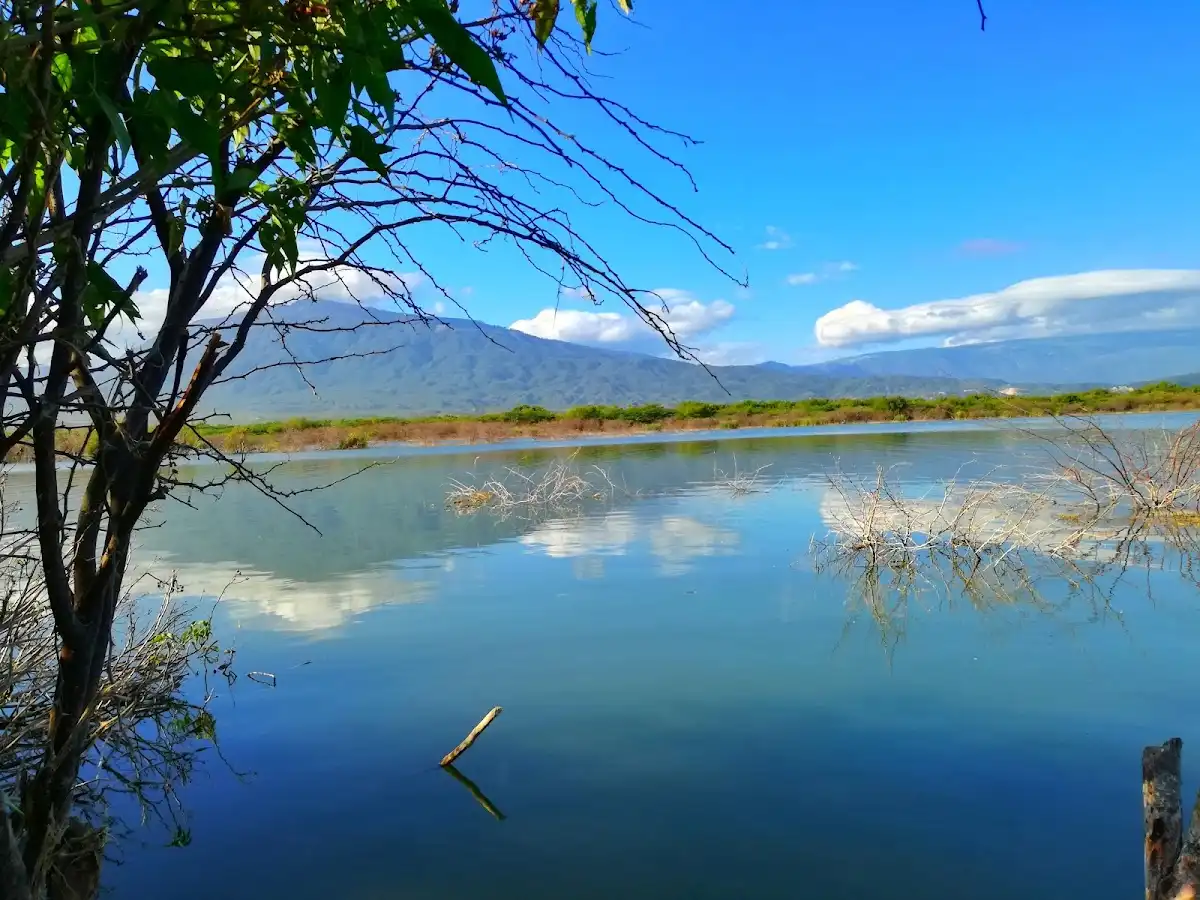
Equatorial Guinea🇬🇶 | landmarksLaguna de Rincónbrackish lagoon, mangrove edges, birdlife habitat | things to do and best time to go

Explore Cerro de la PazExplore Pico de Santa Isabel

Backpacking in Laguna de Rincón
👌 Worth visitingunique site ranked #4
By Johan Kruseman 🇳🇱 | Updated September 3, 2026

Your boots crunch over a crust of salt so white it hurts your eyes, and the air tastes faintly metallic—like you’ve licked a battery. Flamingos, shock-pink against the blinding flats, scatter in a slow-motion ballet. This is Laguna de Rincón, tucked into the northern crook of Bioko Island, Equatorial Guinea, where the Atlantic humidity meets a salt lagoon that looks like it belongs on another planet. Here’s the straight truth: you won’t find crowds, because most travelers don’t even know it exists, and the ones who do are usually expats or local families on a weekend. There’s no ticket booth, no Instagrammable boardwalk, and no snack vendors—just raw, surreal landscape and the occasional fisherman. Getting here is a hassle unless you’ve got wheels and patience for potholes. But if you want a place that feels like you’ve slipped through a crack in the world, this is it. The photos barely scratch the surface; the real magic is the silence, the salt, and the sense that you’re somewhere nobody’s trying to sell you.

Discover everything you want to know in the 📖 Equatorial Guinea Travel Guide.
Loading the map 🌍
CLICK TO FILTER
cities
towns
villages
landmarks
national parks
hikes
beaches
attractions
festivals
regions
SHOW COUNTRY’S BESTSHOW ALL

✨ Why go?
Ranked #4 unique site in Equatorial Guinea
What makes this unique site worth visiting

Laguna de Rincón isn’t just another pretty picture for your Instagram feed; it’s a raw experience that cuts through the tourist fluff. Yes, it can get crowded, especially during peak seasons, but that’s part of the charm. You’re not just visiting a site; you’re diving into the pulse of Equatorial Guinea.

The cost? Minimal. You can explore this stunning lagoon without breaking the bank, making it a backpacker’s dream. The real magic lies in its unique biodiversity—think vibrant wildlife and lush surroundings that feel untouched.

It fits seamlessly into a broader route through the region. Pair it with a trek through nearby national parks or a visit to local villages, and you’ve got a full itinerary that’s rich in culture and adventure.

So, while others chase the latest social media trend, … read more 👉
Laguna de Rincón isn’t just another pretty picture for your Instagram feed; it’s a raw experience that cuts through the tourist fluff. Yes, it can get crowded, especially during peak seasons, but that’s part of the charm. You’re not just visiting a site; you’re diving into the pulse of Equatorial Guinea.

The cost? Minimal. You can explore this stunning lagoon without breaking the bank, making it a backpacker’s dream. The real magic lies in its unique biodiversity—think vibrant wildlife and lush surroundings that feel untouched.

It fits seamlessly into a broader route through the region. Pair it with a trek through nearby national parks or a visit to local villages, and you’ve got a full itinerary that’s rich in culture and adventure.

So, while others chase the latest social media trend, you’ll be soaking in the authenticity of a place that’s as much about the journey as it is about the destination.
Want to include Laguna de Rincón in your Equatorial Guinea route?
Create a personalized Equatorial Guinea itinerary that includes Laguna de Rincón and the places that fit your trip — based on your travel style, budget, and available time. Get your route in seconds.

Generate my trip

💡 HighlightsEssential experiences to have while visiting Laguna de Rincón

  • Birdwatching for wetland species — Calm lagoon waters and reed edges attract waterbirds you’ll actually see: African fish eagle, herons and egrets, and small kingfishers, making it a reliable spot for half-day birding with easy photo opportunities.
  • Mangrove and shoreline ecology — Dense mangrove fringes act as a visible nursery for fish and crabs; the tangled roots, mudbanks and tidal channels are great for learning about coastal ecology and spotting juvenile marine life up close.
  • Traditional pirogue fishing — Local fishermen still work the lagoon in dugout canoes using hand nets and lines; watching or joining a short pirogue trip shows the day-to-day livelihood and techniques that haven’t changed much for generations.
  • Boat trips through narrow channels — Short guided skiff or canoe rides
read more 👉
  • Birdwatching for wetland species — Calm lagoon waters and reed edges attract waterbirds you’ll actually see: African fish eagle, herons and egrets, and small kingfishers, making it a reliable spot for half-day birding with easy photo opportunities.
  • Mangrove and shoreline ecology — Dense mangrove fringes act as a visible nursery for fish and crabs; the tangled roots, mudbanks and tidal channels are great for learning about coastal ecology and spotting juvenile marine life up close.
  • Traditional pirogue fishing — Local fishermen still work the lagoon in dugout canoes using hand nets and lines; watching or joining a short pirogue trip shows the day-to-day livelihood and techniques that haven’t changed much for generations.
  • Boat trips through narrow channels — Short guided skiff or canoe rides navigate tight channels and mangrove passages, offering close views of shorebirds, crabs, and the lagoon’s microhabitats you can’t reach on foot.
  • Sunset and reflective-water photography — The lagoon’s flat surface and low shoreline produce dramatic golden-hour reflections and silhouettes of mangroves and birds, making it the best time for memorable landscape shots.
Spotted a mistake or missing something? Contact us.
🌤️ When to go?Choosing the right time of year


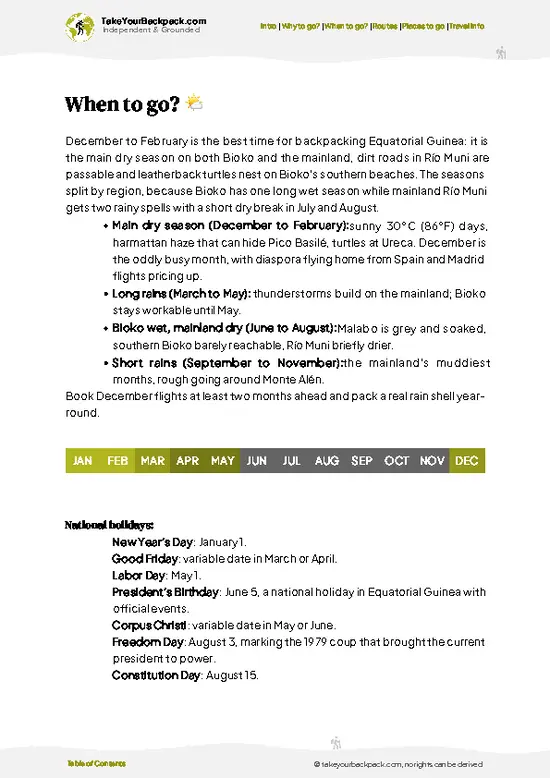
  • Weather: The dry season, from June to September, is your best bet. Expect less rain, which means clearer trails and better views. The wet season (October to May) turns the area into a muddy mess, making hiking tough and less enjoyable.

  • Temperature: Temperatures hover between 24°C and 30°C (75°F to 86°F) year-round. It’s warm but not scorching, so pack light layers for early mornings and evenings when it cools down a bit.

  • Daylight Hours: Being near the equator, daylight is steady—about 12 hours daily. This consistency means you can plan your hikes without worrying about early sunsets cutting your adventure short.

  • Crowds: Don’t expect Instagram-level crowds here. Even in peak season, it’s a quiet spot. You’ll mostly share the space with local guides and a handful of other travelers,
read more 👉

  • Weather: The dry season, from June to September, is your best bet. Expect less rain, which means clearer trails and better views. The wet season (October to May) turns the area into a muddy mess, making hiking tough and less enjoyable.

  • Temperature: Temperatures hover between 24°C and 30°C (75°F to 86°F) year-round. It’s warm but not scorching, so pack light layers for early mornings and evenings when it cools down a bit.

  • Daylight Hours: Being near the equator, daylight is steady—about 12 hours daily. This consistency means you can plan your hikes without worrying about early sunsets cutting your adventure short.

  • Crowds: Don’t expect Instagram-level crowds here. Even in peak season, it’s a quiet spot. You’ll mostly share the space with local guides and a handful of other travelers, which keeps the experience genuine and peaceful.

  • Seasonal Activities: Dry months open up opportunities for wildlife spotting and swimming in the lagoon’s clear waters. The wet season floods some paths, limiting access and activities.

  • Price Fluctuations: Prices for guides and accommodations stay fairly stable year-round. However, booking during the dry season might cost a bit more due to higher demand, but it’s worth the premium for better conditions.


Pro-tip: Aim for late August or early September—dry, fewer crowds, and the lagoon at its most inviting.


source: climatestotravel.comJANJanuary: fair for travelingFEBFebruary: fair for travelingMARMarch: fair for travelingAPRApril: fair for travelingMAYMay: fair for travelingJUNJune: excellent for travelingJULJuly: excellent for travelingAUGAugust: excellent for travelingSEPSeptember: excellent for travelingOCTOctober: fair for travelingNOVNovember: fair for travelingDECDecember: fair for traveling
equatorial-guinea-unique-site-laguna-de-rincon
© Google |

✈️ The backpacker research shortcutEquatorial Guinea Travel Guide

An offline-friendly backpacking guide with optimized travel routes, ranked highlights, transport advice, and the best areas to stay.
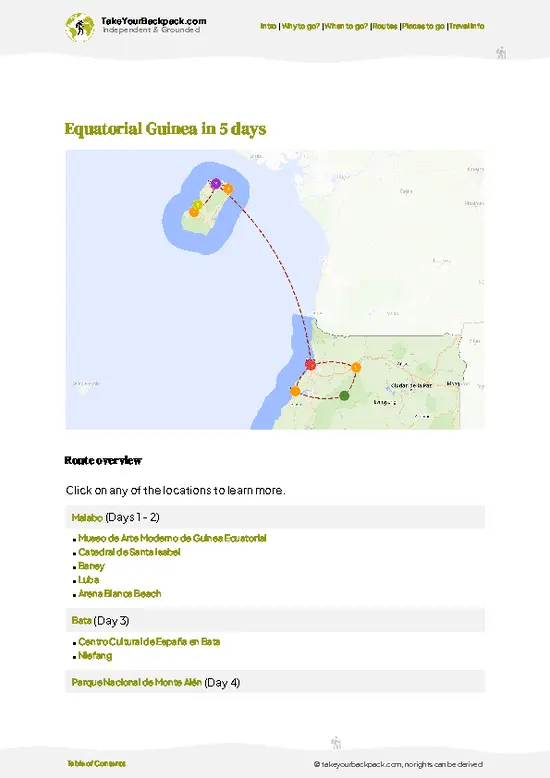
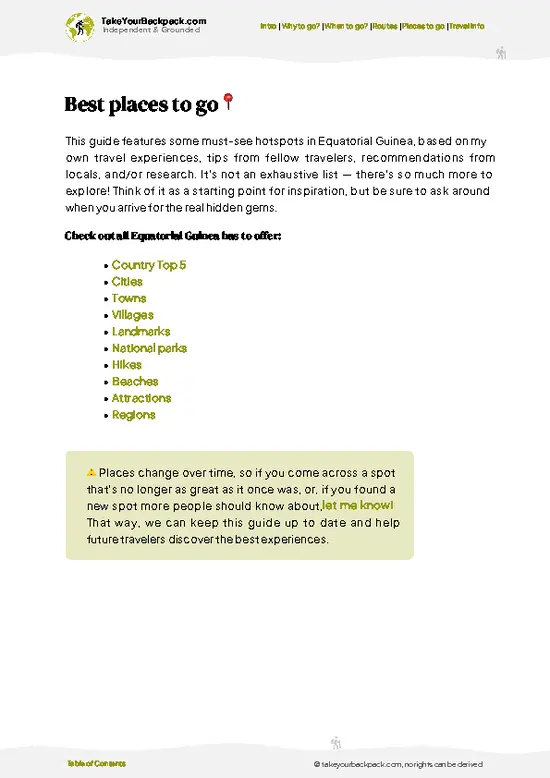
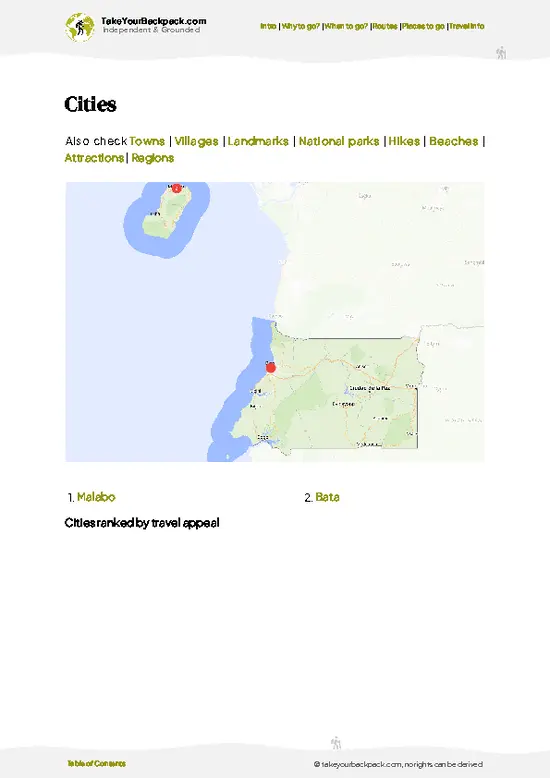
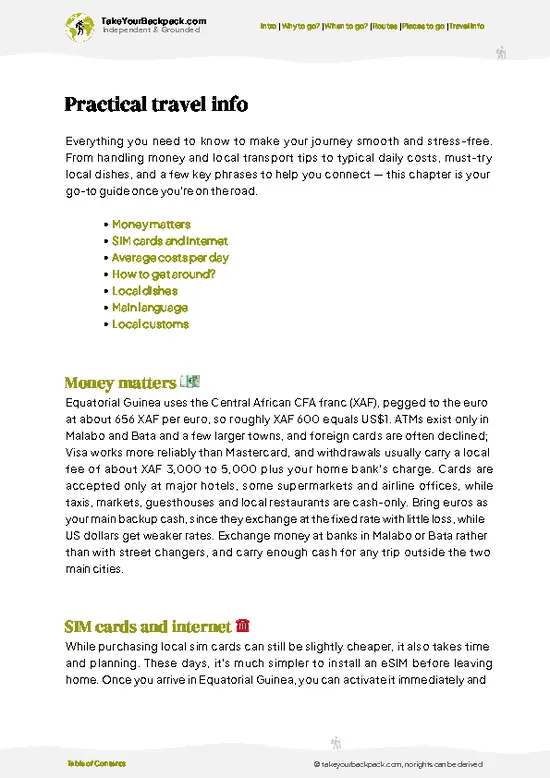
example page 0 from our offline Travel Guide for Equatorial Guinea
example page 1 from our offline Travel Guide for Equatorial Guinea
example page 2 from our offline Travel Guide for Equatorial Guinea
example page 3 from our offline Travel Guide for Equatorial Guinea
example page 4 from our offline Travel Guide for Equatorial Guinea
example page 5 from our offline Travel Guide for Equatorial Guinea
example page 6 from our offline Travel Guide for Equatorial Guinea
example page 7 from our offline Travel Guide for Equatorial Guinea
The digital guide (202 pages) contains:
48 highlights, ranked by travel appeal
Optimized 2, 3 & 5-day travel routes
Cities, national parks, landmarks, beaches
How to get around
Offline-friendly for travel without Wi-Fi
👉 Click to see all 30+ guide features

📅 Plan smarter in minutes, not weeks
Month by month travel advice
Festivals & national holidays
Budget expectations

🗺️ Go to the right places, skip the overrated ones
Honest pros & cons of destinations
Top hikes, parks & viewpoints
Lesser-known places most travelers miss
Clear “worth it vs skip it” guidance

🛏️ Travel smoothly without rookie mistakes
Best areas to stay
Transport systems explained simply
Common scams & safety advice
SIM cards, money & practical tips

🌍 Understand the country, not just visit it
Culture & traditions
52 Essential phrases & customs
Festivals worth planning around
Traveler-friendly historical context
Insights that make places more meaningful

📱 Built for real travel conditions
Fully downloadable PDF
Works completely offline
Optimized for phone use
Useful in remote areas & buses
Everything in one place
Save weeks of stressful planning
Get instant access to your full guide. 30‑day money-back guarantee.
+ Add another guide for just US$7.80

By proceeding you agree to our terms.
Sent to your inbox immediately after payment • 100% Secure Checkout
Best Backpacking Travel Advisor 2025 tourism awardBest Backpacking
Travel Advisor
2025
What others say about Take Your Backpack Guides:
⭐⭐⭐⭐⭐
Fantastic, amazing amount of information!
⭐⭐⭐⭐⭐
My goodness this is amazing, it's what I've been looking for hats off too you!
⭐⭐⭐⭐⭐
I think this is absolutely BRILLIANT
⭐⭐⭐⭐
Very complete and informative. It's still missing places, but I gotta to commend you
⭐⭐⭐⭐⭐
This is truly amazing, thank you, can't wait to explore it with my kids!
⭐⭐⭐⭐⭐
Awesome resource, thank you!
⭐⭐⭐⭐⭐
This is amazing! Can't wait to explore the ones I haven't seen
⭐⭐⭐⭐
I love this! Well done, great idea.
⭐⭐⭐⭐⭐
Thanks for taking the time to make this gem!
⭐⭐⭐⭐⭐
This might be the best website I've ever seen.
⭐⭐⭐⭐⭐
Congratulations, and thank you so much for your work; it's incredibly valuable.
⭐⭐⭐⭐
In all seriousness I think you did a great job pointing out the important spots
⭐⭐⭐⭐⭐
10/10 very good
⭐⭐⭐⭐⭐
As someone who's only just starting to visit regularly this is awesome, thank you.
⭐⭐⭐⭐
Thank you very much! I'm going to visit my dad, it's going to be very useful!
⭐⭐⭐⭐⭐
This is really cool! We'll be travelling for the first time and this definitely come in handy.
⭐⭐⭐⭐⭐
You are now our minister of culture, congratulations 👨‍💼
⭐⭐⭐⭐⭐
Just wanted to tell you that this is a pearl! Going to follow your recommendations.
⭐⭐⭐⭐⭐
This is so cool. I'll definitely be using the resource for my travels soon.
⭐⭐⭐⭐⭐
This is very impressive! Good work.
⭐⭐⭐⭐⭐
This is an amazing and informative site. Very well done!

🛏️ Where to stay?How to pick the right area

When you’re heading to Laguna de Rincón, the right place to stay can make all the difference. Forget the glossy Instagram shots; let’s talk real. The area around the lagoon is a mix of local charm and backpacker-friendly vibes.

Look for accommodations in the nearby towns of Bata or Luba. These spots are buzzing with life and offer a taste of the local culture. You’ll find budget-friendly guesthouses where you can swap stories with fellow travelers. Safety is decent, but always keep your wits about you.

Bata is larger, with more options for socializing. Check out local markets and street food … read more 👉
When you’re heading to Laguna de Rincón, the right place to stay can make all the difference. Forget the glossy Instagram shots; let’s talk real. The area around the lagoon is a mix of local charm and backpacker-friendly vibes.

Look for accommodations in the nearby towns of Bata or Luba. These spots are buzzing with life and offer a taste of the local culture. You’ll find budget-friendly guesthouses where you can swap stories with fellow travelers. Safety is decent, but always keep your wits about you.

Bata is larger, with more options for socializing. Check out local markets and street food stalls; they’re a feast for the senses and a great way to connect with locals. Luba, on the other hand, has a more laid-back atmosphere, perfect for unwinding after a day of exploring.

Both towns serve as excellent bases for day trips to the lagoon. You’ll get the authentic experience without the tourist traps. Embrace the simplicity, and you’ll find the real magic of Equatorial Guinea waiting for you.

👛 Costs (as of 3 September 2026)Money, prices, and spending tips

Visiting Laguna de Rincón in Equatorial Guinea isn’t just about the stunning views; it’s also about navigating the costs that come with it. Here’s the real deal on what you can expect to spend.
  • Transportation: Getting to Laguna de Rincón can be a bit of a trek. Expect to pay around €50 to €100 for a round-trip taxi from Malabo. If you’re feeling adventurous, local buses are cheaper, usually around €5 to €10, but they can be less reliable and take longer.
  • Accommodation: Options near the lagoon are limited. Budget hotels start at about €30 per night, while mid-range accommodations can go up to €80. If you want something more upscale, you might be looking at €100 or more. Book ahead, especially during peak seasons.
  • Food: Dining can vary widely. Street food is a steal at around €2 to €5 per meal,
read more 👉
Visiting Laguna de Rincón in Equatorial Guinea isn’t just about the stunning views; it’s also about navigating the costs that come with it. Here’s the real deal on what you can expect to spend.
  • Transportation: Getting to Laguna de Rincón can be a bit of a trek. Expect to pay around €50 to €100 for a round-trip taxi from Malabo. If you’re feeling adventurous, local buses are cheaper, usually around €5 to €10, but they can be less reliable and take longer.
  • Accommodation: Options near the lagoon are limited. Budget hotels start at about €30 per night, while mid-range accommodations can go up to €80. If you want something more upscale, you might be looking at €100 or more. Book ahead, especially during peak seasons.
  • Food: Dining can vary widely. Street food is a steal at around €2 to €5 per meal, giving you a taste of local flavors. Restaurants will charge you between €10 to €20 for a decent meal. If you’re craving something fancier, expect to pay upwards of €30.
  • Activities: Access to the lagoon itself is often free, but guided tours can enhance your experience. These typically range from €20 to €50, depending on what’s included. Consider investing in a local guide to get the most out of your visit.
  • Miscellaneous: Don’t forget about small expenses like water, snacks, and souvenirs. Budget around €10 to €20 for these extras. It adds up, but it’s worth it for the local crafts and treats.

Plan wisely, and you’ll find that the real magic of Laguna de Rincón is worth every cent.


source: guineaecuatorialpress.com
⚠️ Prices can change and everyone travels differently, so take this as a rough guide. Hope it helps you plan your adventure!

FAQCommon questions from travelers

Laguna de Rincón is a volcanic crater lake located on Bioko Island in Equatorial Guinea, known for its striking turquoise waters and surrounding lush rainforest. It is a unique natural site formed by volcanic activity and offers opportunities for hiking and wildlife observation.
Visiting Laguna de Rincón typically requires a full day, around 6 to 8 hours, to hike to the lake, explore the area, and return. The trail can be challenging, so allocate enough time for a safe and enjoyable visit.
To get to Laguna de Rincón, travel to Bioko Island's capital, Malabo, then arrange local transport to the trailhead near the village of Rincón. From there, access is by foot via a marked hiking trail through the rainforest.
⚠️ Things can change over time, so always validate details locally before you go.

Other Equatoguinean landmarks near Laguna de Rincón

Explore more nearby:


💡 Not sure where to go next?
Create a personalized itinerary for Equatorial Guinea including Laguna de Rincón and the places that fit your trip.

Generate my itinerary

👉 Discover all landmarks

Or checkout all Equatorial Guinea has to offer (think cities, towns, villages, national parks, hikes, beaches, festivals)
Country photo of Equatorial Guinea

We 💚 feedbackSumming up the experience

Laguna de Rincón isn’t for the faint-hearted. Expect crowds and a hefty price tag if you’re chasing that Instagram shot. But here’s the kicker: the real magic lies in the local vibe. Grab a plate of fresh fish from a nearby vendor, and you’ll taste the soul of Equatorial Guinea. Just be ready for the humidity—it’s intense. Embrace it, and you’ll find a connection to this place that no filter can capture.

✍️ Help improve this page!
The information on this page is based on in-depth research, insights shared by experienced travelers, and feedback from the local travel community in Equatorial Guinea. While every effort is made to keep the information accurate and current, conditions can change — so if you spot anything incorrect or outdated, please get in touch.


🙋‍♂️ Give feedback

👋 Meet the founderWho’s Behind Take Your Backpack?

Johan, backpacker and founder of TakeYourBackpackHi, I’m Johan (Netherlands 🇳🇱), the creator of TakeYourBackpack. Over the past decade, I’ve backpacked through 80+ countries across six continents, gaining extensive experience with independent travel, long-term trips, and overland routes.

This site is built on a combination of firsthand travel experience and carefully curated insights from other backpackers. Many guides are based on places I’ve personally visited, while others bring together tips, observations, and practical advice shared by trusted travelers I’ve met along the way.

The goal is to provide realistic, experience-driven guidance — not generic itineraries — so you can explore destinations with better context, clearer expectations, and more confidence.

Get full country guide •
Instant download • 48 highlights • Full Offline guide