×

Eritrea🇪🇷 | regionsGash-Barkaagricultural plains, gold mining sites, borderland villages, Baobab trees | things to do and best time to go

Explore BarkaExplore Dahlak Archipelago

Backpacking in Gash-Barka
🌟 Highlightregion ranked #2
By Johan Kruseman 🇳🇱 | Updated May 27, 2026

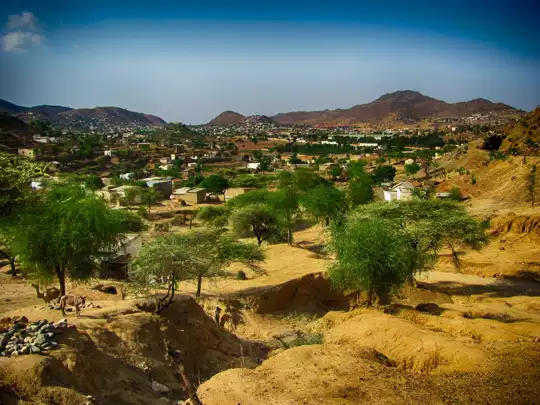
Here’s the trick nobody tells you: in Gash-Barka, you can stretch a single day into what feels like three, thanks to the region’s slow pace and the way buses sync up with sunrise. You’ll find Gash-Barka sprawled across Eritrea’s far west, hugging the Sudanese border—a place where the map thins out and the crowds vanish. Backpackers who make it this far get a raw, unfiltered Eritrea: think endless acacia-dotted savannah, the Gash River carving through dry plains, and towns like Barentu that feel more frontier outpost than tourist stop. It’s cheap—food, beds, even the minibus rides—but you’ll trade comfort for authenticity. Roads are rough, schedules are loose, and English is rare outside the main towns. But if you’re after real-deal markets, tribal festivals, or a shot at spotting elephants in Gash-Setit National Park, this is where Eritrea drops its guard. Compared to the highland cities or the Red Sea coast, Gash-Barka is all grit and heart, not gloss.

Discover everything you want to know in the 📖 Eritrea Travel Guide.
Safety warning

The current risk level for Eritrea is high. Check the advice before going.


Get your Eritrea guide
59 ranked highlights, routes & tips, works offline (253 pages)
Loading the map 🌍
CLICK TO FILTER
cities
towns
landmarks
national parks
hikes
beaches
attractions
festivals
regions
SHOW COUNTRY’S BESTSHOW ALL

✨ Why go?
Ranked #2 region in Eritrea
What makes this region worth visiting

In the heart of Eritrea, Gash-Barka is a backpacker’s playground, and here’s why savvy travelers flock to this region. First off, the variety of landscapes is mind-blowing. You can hike through rugged mountains, chill by serene lakes, or wander across arid plains—all without the hassle of constant relocation. This means you get to soak in the beauty without feeling rushed.

Transport options are surprisingly flexible. Whether you’re hopping on a local bus or sharing a ride with fellow adventurers, getting around is straightforward. This gives you the freedom to explore at your own pace, a key element of slow travel.

But it’s not just about nature; Gash-Barka is rich in culture too. You can dive into local traditions, sample authentic Eritrean cuisine, and connect with friendly locals who … read more 👉
In the heart of Eritrea, Gash-Barka is a backpacker’s playground, and here’s why savvy travelers flock to this region. First off, the variety of landscapes is mind-blowing. You can hike through rugged mountains, chill by serene lakes, or wander across arid plains—all without the hassle of constant relocation. This means you get to soak in the beauty without feeling rushed.

Transport options are surprisingly flexible. Whether you’re hopping on a local bus or sharing a ride with fellow adventurers, getting around is straightforward. This gives you the freedom to explore at your own pace, a key element of slow travel.

But it’s not just about nature; Gash-Barka is rich in culture too. You can dive into local traditions, sample authentic Eritrean cuisine, and connect with friendly locals who are eager to share their stories.

By spending time here, you’re not just ticking off boxes; you’re immersing yourself in a tapestry of experiences that blend nature and culture seamlessly. So, if you want to savor every moment, Gash-Barka is where you want to be.
Get the complete Travel Guide for Eritrea
Everything organized for offline planning — routes, highlights, costs & tips

See what’s inside 👉

Get the Travel Guide -

💡 HighlightsWhat this place is best known for

  • Barka River floodplain (seasonal channels and oxbow lakes) — The Barka’s dry riverbed turns dramatic in the rainy season: braided channels, shallow lakes, tons of birds and local farmers working the rich silt. It’s a landscape you won’t see on Eritrea’s highlands — walk the channel, watch fishermen and herders, and feel how the river shapes local life.
  • Gash-Setit Wildlife Area — One of Eritrea’s few lowland savanna reserves. Expect acacia-dotted plains, big skies and pockets of wildlife and migratory birds that are unique to the western lowlands. It’s raw, remote, and gives a good sense of how different western Eritrea feels from the Red Sea coast or the highlands.
  • Barentu market and Kunama cultural quarter — Barentu’s market is the best place to meet Kunama people (traditional dress,
read more 👉
  • Barka River floodplain (seasonal channels and oxbow lakes) — The Barka’s dry riverbed turns dramatic in the rainy season: braided channels, shallow lakes, tons of birds and local farmers working the rich silt. It’s a landscape you won’t see on Eritrea’s highlands — walk the channel, watch fishermen and herders, and feel how the river shapes local life.
  • Gash-Setit Wildlife Area — One of Eritrea’s few lowland savanna reserves. Expect acacia-dotted plains, big skies and pockets of wildlife and migratory birds that are unique to the western lowlands. It’s raw, remote, and gives a good sense of how different western Eritrea feels from the Red Sea coast or the highlands.
  • Barentu market and Kunama cultural quarter — Barentu’s market is the best place to meet Kunama people (traditional dress, crafts, dance) and buy locally woven goods, honey and smoked meats. The mix of languages, colors and food stalls is very region-specific — a genuine cultural snapshot rather than a staged tourist show.
  • Agordat’s Italian-era town center and old railway remnants — Agordat still wears its colonial layer: palm-lined streets, faded Italian facades and the remnants of the old Massawa-Agordat railway infrastructure. Great for slow wandering, photography, and chatting with locals about how the town used to be connected to the coast.
  • Teseney border bazaar — A working border town where Sudanese and Eritrean trade meet: textiles, spices, Sudanese breads and an energetic market atmosphere. It’s a pragmatic, noisy, fascinating experience that shows cross-border life more than any souvenir shop ever could.
  • Palm groves and irrigation fields around Agordat and the Barka delta — Small-scale irrigation plots and dense date palm belts feel almost tropical compared with the surrounding scrub. Walk among the groves at dusk to see irrigation channels, farmers tending sorghum and those little local agricultural systems that make the region Eritrea’s “breadbasket.”
  • Kunama village homestays (hidden gem) — Outside the main towns, small Kunama villages offer simple homestays, traditional cooking, and storytelling. These are low-key, locally run experiences — no tour operas — and they give honest insight into language, ceremony and daily life that you won’t get in bigger centers.
  • Nara and Kunama pastoral camps along the Gash (hidden gem) — Walk or ride out to meet pastoral families who move with cattle and goats. Their small camps, seasonal grazing patterns and lightweight shelters are a live lesson in adapting to the western lowlands — intimate, rarely visited, and immensely human.
  • Small wetland pockets and birding hides near seasonal marshes (hidden gem) — Scattered shallow marshes that fill after rains host some surprising birdlife — kingfishers, herons and migrant species. Binoculars and a patient local guide will reward you more than any easy “top site” because these stops are tiny, unmarked and used mostly by locals.
  • Shambuko district walking routes and village treks — Low-traffic tracks connecting villages, market days and small hill views around Shambuko are ideal for easy treks. You’ll pass millet fields, traditional granaries and roadside teashops — quiet, everyday scenes that show rural life in Gash-Barka without the crowds.
Spotted a mistake or missing something? Contact us.

⌛️ 5 days5-day itinerary for Gash-Barka

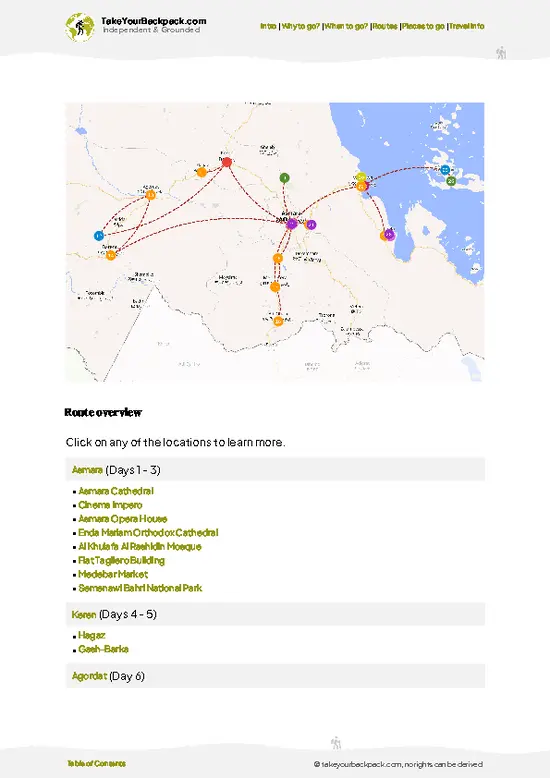
Day 1: Asmara
The journey kicks off in Asmara, the capital. Spend your first day soaking in the unique Italian architecture and vibrant café culture. The transport system here is a breeze; you can hop on a local bus or grab a taxi to explore. This city is your launchpad, and it sets the tone for the rest of your trip. Don’t miss the local markets—grab some fresh injera and chat with vendors.

Day 2: Asmara to Keren
On Day 2, take a morning bus to Keren. The ride is about two hours, and the scenery shifts dramatically. You’ll see the rugged beauty of Eritrea unfold outside your window. Keren is known for its rich history and cultural diversity. Spend the afternoon visiting the local sites, like the impressive Keren War Memorial. The pace here is slower, allowing you to absorb the local … read more 👉
Day 1: Asmara
The journey kicks off in Asmara, the capital. Spend your first day soaking in the unique Italian architecture and vibrant café culture. The transport system here is a breeze; you can hop on a local bus or grab a taxi to explore. This city is your launchpad, and it sets the tone for the rest of your trip. Don’t miss the local markets—grab some fresh injera and chat with vendors.

Day 2: Asmara to Keren
On Day 2, take a morning bus to Keren. The ride is about two hours, and the scenery shifts dramatically. You’ll see the rugged beauty of Eritrea unfold outside your window. Keren is known for its rich history and cultural diversity. Spend the afternoon visiting the local sites, like the impressive Keren War Memorial. The pace here is slower, allowing you to absorb the local vibe.

Day 3: Keren to Massawa
Day 3 is a longer haul, but it’s worth it. Catch an early bus to Massawa, which takes around four hours. The coastal city offers a refreshing contrast to the highlands. You’ll want to dive into the Red Sea here, so pack your swimsuit. The transport options can be limited, so plan ahead. This is where you can truly unwind and enjoy fresh seafood by the water.

Day 4: Massawa to Gash-Barka Region
On Day 4, head towards the Gash-Barka region. This is where the transport system gets trickier, so be prepared for a bumpy ride. The journey can take up to six hours, but the landscapes are stunning. You’ll pass through arid plains and lush valleys. This is your chance to see the real Eritrea.

Day 5: Off-Path Reward - Trekking in Gash-Barka
Dedicate your last day to an off-path trek in Gash-Barka. The trails here are less traveled, and you’ll encounter local communities and breathtaking views. This detour adds depth to your experience, allowing you to connect with the land and its people.

The must-do day? Day 3 in Massawa. The blend of culture, relaxation, and adventure makes it the highlight of your trip. You’ll leave with stories that resonate long after you’ve returned home.
Build the Right Itinerary
Use the Eritrea Travel Guide’s 5, 10 & 15-day routes as a starting point to plan a trip that actually works on the ground.

Get the Travel Guide -

🌤️ When to go?Weather, crowds, and seasonal trade-offs


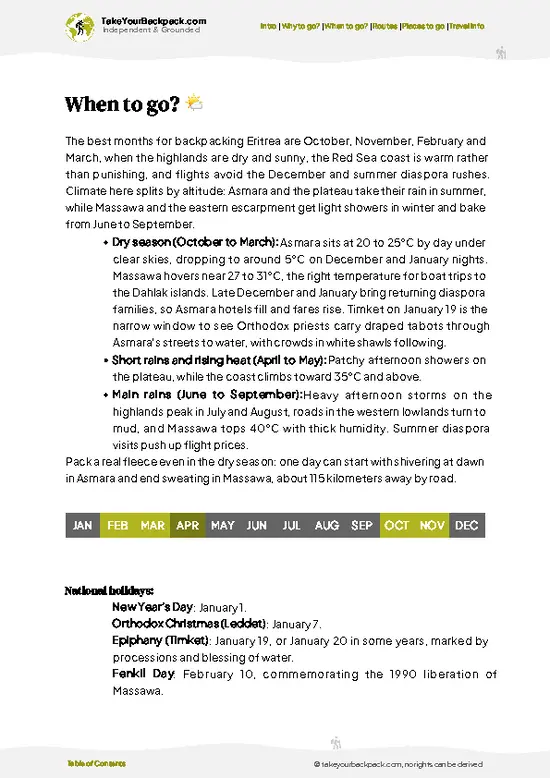
  • Weather: The best window is from October to March. This is Eritrea’s dry season, so you avoid the heavy rains that turn trails into mud traps. Expect clear skies and manageable humidity—perfect for trekking.

  • Temperature: Daytime highs hover around 25-30°C (77-86°F) during these months, cooling off nicely at night to 15-20°C (59-68°F). It’s warm but not oppressive, which means you can hike without overheating or freezing.

  • Daylight Hours: Days are fairly consistent year-round, with about 11 to 12 hours of daylight. Still, during the dry season, mornings start crisp and clear, giving you a head start on the trails before afternoon heat sets in.

  • Crowds: Gash-Barka isn’t exactly a tourist hotspot, but the dry season draws more local visitors and a handful of international trekkers. You’ll
read more 👉

  • Weather: The best window is from October to March. This is Eritrea’s dry season, so you avoid the heavy rains that turn trails into mud traps. Expect clear skies and manageable humidity—perfect for trekking.

  • Temperature: Daytime highs hover around 25-30°C (77-86°F) during these months, cooling off nicely at night to 15-20°C (59-68°F). It’s warm but not oppressive, which means you can hike without overheating or freezing.

  • Daylight Hours: Days are fairly consistent year-round, with about 11 to 12 hours of daylight. Still, during the dry season, mornings start crisp and clear, giving you a head start on the trails before afternoon heat sets in.

  • Crowds: Gash-Barka isn’t exactly a tourist hotspot, but the dry season draws more local visitors and a handful of international trekkers. You’ll find a quiet vibe with just enough company to swap stories without feeling swamped.

  • Seasonal Activities: This is prime time for cultural festivals and market days in local villages. You’ll catch traditional dances and crafts at their liveliest, adding a rich layer to your backpacking experience.

  • Price Fluctuations: Accommodation and transport costs tend to rise slightly during the dry season due to demand. But the trade-off is worth it—better weather means fewer delays and more reliable connections.


Pro-tip: Arrive just as the rains end in October to snag lower prices and enjoy freshly green landscapes before the peak season buzz kicks in.


source: climatestotravel.comJANJanuary: excellent for travelingFEBFebruary: excellent for travelingMARMarch: excellent for travelingAPRApril: good for travelingMAYMay: fair for travelingJUNJune: below average for travelingJULJuly: below average for travelingAUGAugust: below average for travelingSEPSeptember: fair for travelingOCTOctober: excellent for travelingNOVNovember: excellent for travelingDECDecember: excellent for traveling
when-to-go

✈️ The backpacker research shortcutEritrea Travel Guide

An offline-friendly backpacking guide with optimized travel routes, ranked highlights, transport advice, and the best areas to stay.
example page 0 from our offline Travel Guide for Eritreaexample page 1 from our offline Travel Guide for Eritreaexample page 2 from our offline Travel Guide for Eritreaexample page 3 from our offline Travel Guide for Eritreaexample page 4 from our offline Travel Guide for Eritreaexample page 5 from our offline Travel Guide for Eritreaexample page 6 from our offline Travel Guide for Eritreaexample page 7 from our offline Travel Guide for Eritrea
The digital guide (253 pages) contains:
59 highlights, ranked by travel appeal
Optimized 5, 10 & 15-day travel routes
Cities, national parks, beaches, historical sites, ...
How to get around
Offline-friendly for travel without Wi-Fi
👉 Click to see all 30+ guide features

📅 Plan smarter in minutes, not weeks
Month by month travel advice
Festivals & national holidays
Budget expectations

🗺️ Go to the right places, skip the overrated ones
Honest pros & cons of destinations
Top hikes, parks & viewpoints
Lesser-known places most travelers miss
Clear “worth it vs skip it” guidance

🛏️ Travel smoothly without rookie mistakes
Best areas to stay
Transport systems explained simply
Common scams & safety advice
SIM cards, money & practical tips

🌍 Understand the country, not just visit it
Culture & traditions
52 Essential phrases & customs
Festivals worth planning around
Traveler-friendly historical context
Insights that make places more meaningful

📱 Built for real travel conditions
Fully downloadable PDF
Works completely offline
Optimized for phone use
Useful in remote areas & buses
Everything in one place
Save weeks of stressful planning
Get instant access to the full guide directly. 30-day money-back guarantee.


Sent to your inbox immediately after payment • 100% Secure Checkout
Best Backpacking Travel Advisor 2025 tourism awardBest Backpacking
Travel Advisor
2025
What others say about Take Your Backpack Guides:
⭐⭐⭐⭐⭐
Fantastic, amazing amount of information!
⭐⭐⭐⭐⭐
My goodness this is amazing, it's what I've been looking for hats off too you!
⭐⭐⭐⭐⭐
I think this is absolutely BRILLIANT
⭐⭐⭐⭐
Very complete and informative. It's still missing places, but I gotta to commend you
⭐⭐⭐⭐⭐
This is truly amazing, thank you, can't wait to explore it with my kids!
⭐⭐⭐⭐⭐
Awesome resource, thank you!
⭐⭐⭐⭐⭐
This is amazing! Can't wait to explore the ones I haven't seen
⭐⭐⭐⭐
I love this! Well done, great idea.
⭐⭐⭐⭐⭐
Thanks for taking the time to make this gem!
⭐⭐⭐⭐⭐
This might be the best website I've ever seen.
⭐⭐⭐⭐⭐
Congratulations, and thank you so much for your work; it's incredibly valuable.
⭐⭐⭐⭐
In all seriousness I think you did a great job pointing out the important spots
⭐⭐⭐⭐⭐
10/10 very good
⭐⭐⭐⭐⭐
As someone who's only just starting to visit regularly this is awesome, thank you.
⭐⭐⭐⭐
Thank you very much! I'm going to visit my dad, it's going to be very useful!
⭐⭐⭐⭐⭐
This is really cool! We'll be travelling for the first time and this definitely come in handy.
⭐⭐⭐⭐⭐
You are now our minister of culture, congratulations 👨‍💼
⭐⭐⭐⭐⭐
Just wanted to tell you that this is a pearl! Going to follow your recommendations.
⭐⭐⭐⭐⭐
This is so cool. I'll definitely be using the resource for my travels soon.
⭐⭐⭐⭐⭐
This is very impressive! Good work.
⭐⭐⭐⭐⭐
This is an amazing and informative site. Very well done!

🛏️ Where to stay?Best areas to stay in Eritrea

In Gash-Barka, Eritrea, the right spots can turn your trip from ordinary to extraordinary.

Start in Keren. This town is a backpacker’s dream. It’s safe, with a vibrant local scene. You’ll find markets buzzing with life, where you can haggle for spices or grab a quick bite. The people are welcoming, and you’ll easily strike up conversations. Plus, the surrounding hills offer stunning hikes that are just a stone’s throw away.

Next up is Asmara, the capital, but don’t overlook its outskirts. While it’s a bit more urban, the charm lies in its colonial architecture and coffee culture. Grab a macchiato … read more 👉
In Gash-Barka, Eritrea, the right spots can turn your trip from ordinary to extraordinary.

Start in Keren. This town is a backpacker’s dream. It’s safe, with a vibrant local scene. You’ll find markets buzzing with life, where you can haggle for spices or grab a quick bite. The people are welcoming, and you’ll easily strike up conversations. Plus, the surrounding hills offer stunning hikes that are just a stone’s throw away.

Next up is Asmara, the capital, but don’t overlook its outskirts. While it’s a bit more urban, the charm lies in its colonial architecture and coffee culture. Grab a macchiato at a local café and soak in the atmosphere. It’s a great place to meet fellow travelers and locals alike.

Then there’s Barentu. It’s less frequented but has a laid-back vibe that’s perfect for solo backpackers. The streets are quieter, and you can really immerse yourself in the local lifestyle.

Each of these areas offers a unique slice of Eritrean life. Choose wisely based on what you want to experience, and you’ll find that the trade-offs between time, money, and comfort can lead to some of the best memories.

🚌 Getting aroundMoving around without the hassle

Gash-Barka is a wild dance of movement, where schedules are more like suggestions than rules. Picture this: dusty roads winding through rugged landscapes, punctuated by the laughter of locals and the occasional honk of a shared taxi. The vibe here is less about rigid timetables and more about the pulse of the moment. You’ll find yourself hopping on a bus or a shared taxi, guided by the whims of the day rather than a clock. It’s chaotic, sure, but that’s where the magic lies. Embrace the unpredictability, and you’ll uncover the true essence of this captivating region.


  • Shared Taxis: These are your go-to for quick hops between towns. They usually run from early morning until sunset, with prices around 20-30 Nakfa for short distances. Expect a cozy squeeze with locals, but the speed and direct
read more 👉
Gash-Barka is a wild dance of movement, where schedules are more like suggestions than rules. Picture this: dusty roads winding through rugged landscapes, punctuated by the laughter of locals and the occasional honk of a shared taxi. The vibe here is less about rigid timetables and more about the pulse of the moment. You’ll find yourself hopping on a bus or a shared taxi, guided by the whims of the day rather than a clock. It’s chaotic, sure, but that’s where the magic lies. Embrace the unpredictability, and you’ll uncover the true essence of this captivating region.


  • Shared Taxis: These are your go-to for quick hops between towns. They usually run from early morning until sunset, with prices around 20-30 Nakfa for short distances. Expect a cozy squeeze with locals, but the speed and direct routes make it worth it.


  • Public Buses: A bit slower but a great way to soak in the scenery. Buses leave when full, typically in the morning, and cost about 50-100 Nakfa depending on the distance. Comfort varies, but you’ll get a real taste of local life.


  • Motorbike Taxis: For those who crave a bit of adrenaline, these are a fun option. Prices are negotiable, usually around 30-50 Nakfa for short trips. They’re fast and can weave through traffic, but hold on tight!


  • Private Car Rentals: If you’re feeling flush, renting a car gives you the freedom to explore at your own pace. Expect to pay around 1,000 Nakfa per day, plus fuel. This option offers the most comfort and flexibility, but make sure you’re comfortable navigating the roads.


  • Walking: Don’t underestimate the power of your own two feet. Many towns are small enough to explore on foot, and it’s the best way to connect with locals. Plus, it’s free!


For a tactical tip: always ask locals about the best times to travel. They know the rhythms of the region better than any schedule. Early mornings are often the best for shared taxis, while afternoons can be hit-or-miss. Stay flexible, and you’ll find your way through Gash-Barka like a pro.

🍲 FoodEating & Drinking in Gash-Barka

In Gash-Barka, the food scene is a vibrant tapestry of flavors that tells the story of its people. You can’t miss trying injera, the spongy sourdough flatbread that serves as both plate and utensil. Pair it with zighni, a spicy meat stew that packs a punch, or shiro, a chickpea-based dish that’s rich and comforting. The aroma of spices wafts through the air, drawing you into bustling markets where locals gather.

Street food is where the magic happens. Grab a sambusa, a crispy pastry filled with lentils or meat, from a vendor and enjoy it while mingling with the locals. Cafés buzz with chatter, serving kawa, Eritrean coffee brewed in traditional pots. The ritual of coffee preparation is a social event, so don’t rush it; savor the moment.

Dining customs are relaxed but come with their quirks. … read more 👉
In Gash-Barka, the food scene is a vibrant tapestry of flavors that tells the story of its people. You can’t miss trying injera, the spongy sourdough flatbread that serves as both plate and utensil. Pair it with zighni, a spicy meat stew that packs a punch, or shiro, a chickpea-based dish that’s rich and comforting. The aroma of spices wafts through the air, drawing you into bustling markets where locals gather.

Street food is where the magic happens. Grab a sambusa, a crispy pastry filled with lentils or meat, from a vendor and enjoy it while mingling with the locals. Cafés buzz with chatter, serving kawa, Eritrean coffee brewed in traditional pots. The ritual of coffee preparation is a social event, so don’t rush it; savor the moment.

Dining customs are relaxed but come with their quirks. Sharing food is common, so don’t be surprised if someone offers you a piece of their injera. It’s a sign of hospitality. Remember, eating with your right hand is the norm, so keep your left hand to yourself. Embrace the communal vibe, and you’ll feel like a true insider in this captivating region.

Other Eritrean regions near Gash-Barka

Explore more nearby:

  • Barka—seasonal rivers, acacia savanna, camel herding, rural markets| 248 km away
  • Dahlak Archipelago—coral reefs, remote islands, pearl diving history, turquoise shallows| 276 km away

👉 Discover all regions

Or checkout all Eritrea has to offer (think cities, towns, villages, national parks, hikes, beaches, festivals)
Country photo of Eritrea

We 💚 feedbackSumming up the experience

Gash-Barka is a wild card. You’ll find stunning landscapes and a raw, unfiltered vibe that feels like stepping back in time. The best surprise? The local coffee ceremonies—don’t miss them. They’re a ritual, not just a drink. But here’s the catch: roads can be rough, and patience is key. Embrace the slow pace; it’s part of the charm. Just remember, the real magic happens when you let go of the itinerary and dive into the moment.

✍️ Help improve this page!
The information on this page is based on in-depth research, insights shared by experienced travelers, and feedback from the local travel community in Eritrea. While every effort is made to keep the information accurate and current, conditions can change — so if you spot anything incorrect or outdated, please get in touch.


🙋‍♂️ Give feedback

👋 Meet the founderWho’s Behind Take Your Backpack?

Johan, backpacker and founder of TakeYourBackpackHi, I’m Johan (Netherlands 🇳🇱), the creator of TakeYourBackpack. Over the past decade, I’ve backpacked through 80+ countries across six continents, gaining extensive experience with independent travel, long-term trips, and overland routes.

This site is built on a combination of firsthand travel experience and carefully curated insights from other backpackers. Many guides are based on places I’ve personally visited, while others bring together tips, observations, and practical advice shared by trusted travelers I’ve met along the way.

The goal is to provide realistic, experience-driven guidance — not generic itineraries — so you can explore destinations with better context, clearer expectations, and more confidence.

Get full Eritrea guide •
Instant download • 59 highlights • Full Offline guide