v2.webp)
- Safira Dam (Mai Sufra): A large rock-cut reservoir with stone-lined sides, thought to date from the Aksumite era. It is the best-known sight on the plateau and is still used for water.
- Adi Alauti rock paintings: Cave and overhang art showing cattle and human figures in ochre and white pigment. They are reached on foot, with a local guide, across rough ground.
- The Great Escarpment edge: The plateau ends in a cliff of several hundred meters above the Rift Valley. The view toward the Danakil lowlands is the most dramatic on the site.
- Tomb of Gabri-Sessa (Aksumite-era tombs): Rock-cut burial chambers scattered across the plateau, some with carved entrances. Their craftsmanship shows the settlement's importance.
- Standing pillars and foundations: Broken columns and the outlines of buildings mark the
- Safira Dam (Mai Sufra): A large rock-cut reservoir with stone-lined sides, thought to date from the Aksumite era. It is the best-known sight on the plateau and is still used for water.
- Adi Alauti rock paintings: Cave and overhang art showing cattle and human figures in ochre and white pigment. They are reached on foot, with a local guide, across rough ground.
- The Great Escarpment edge: The plateau ends in a cliff of several hundred meters above the Rift Valley. The view toward the Danakil lowlands is the most dramatic on the site.
- Tomb of Gabri-Sessa (Aksumite-era tombs): Rock-cut burial chambers scattered across the plateau, some with carved entrances. Their craftsmanship shows the settlement's importance.
- Standing pillars and foundations: Broken columns and the outlines of buildings mark the former town. A guide helps make sense of what each ruin was.
- Nearby Kohaito village: A small highland settlement with farmers, stone houses and a few simple places to eat or sleep. It gives you a sense of present-day plateau life.
- Walks along the plateau: Paths cross open grassland, juniper trees and terraced fields. The air is thin and cool, and the light is clear for photographs.
Spotted a mistake or missing something? Contact us.


 Best Backpacking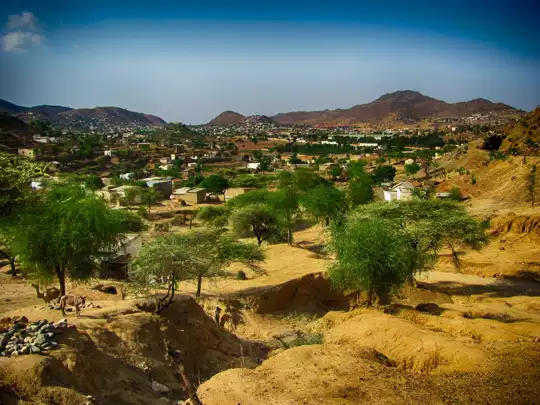
.jpg) Hi, I’m Johan (Netherlands 🇳🇱), the creator of TakeYourBackpack. Over the past 3 decades, I’ve backpacked through 90+ countries across six continents, gaining extensive experience with independent travel, long-term trips, and overland routes.
Hi, I’m Johan (Netherlands 🇳🇱), the creator of TakeYourBackpack. Over the past 3 decades, I’ve backpacked through 90+ countries across six continents, gaining extensive experience with independent travel, long-term trips, and overland routes.