×

Eritrea🇪🇷 | villagesZulaAdulis ruins, Gulf shoreline, permit-only access, Afar and Tigre daily life | things to do and best time to go

Explore QohaitoExplore Asmara Opera House

Backpacking in Zula
🏆 Top pickvillage ranked #3
By Johan Kruseman 🇳🇱 | Updated October 22, 2026

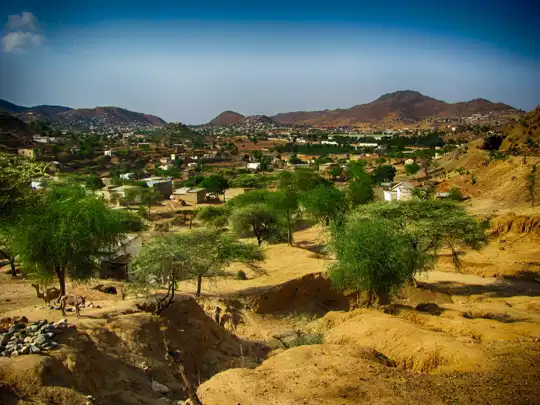
The Aksumite ruins of Adulis, which draw most visitors here, lie outside Zula itself, on the plain a few kilometers away near the village of Foro. Zula is a small coastal settlement in the north of Eritrea, on the western shore of the Gulf of Zula, south of Massawa. It has no hostel scene, no beach resort and no restaurant row. What it gives you is a low, hot, quiet shoreline, Afar and Tigre communities going about their day, and access to one of the oldest port sites in Africa. Foreigners need a travel permit from Asmara to come this way, and most arrive by arranged vehicle with a guide. Evenings are early and still, and you are unlikely to meet other travelers. Pack water and shade. Unlike Massawa, which has an old town, cafes and island boats, Zula is a working village with almost nothing set up for visitors.

Discover everything you want to know in the 📖 Eritrea Travel Guide.


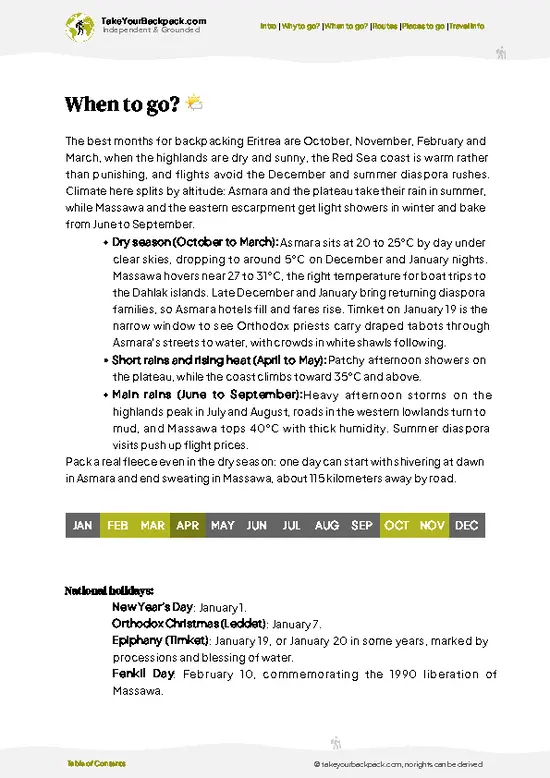
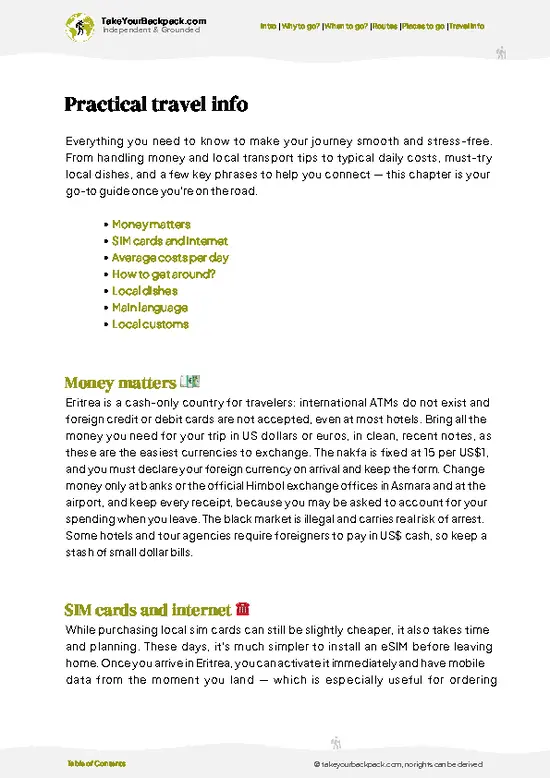
example page 0 from our offline Travel Guide for Eritrea
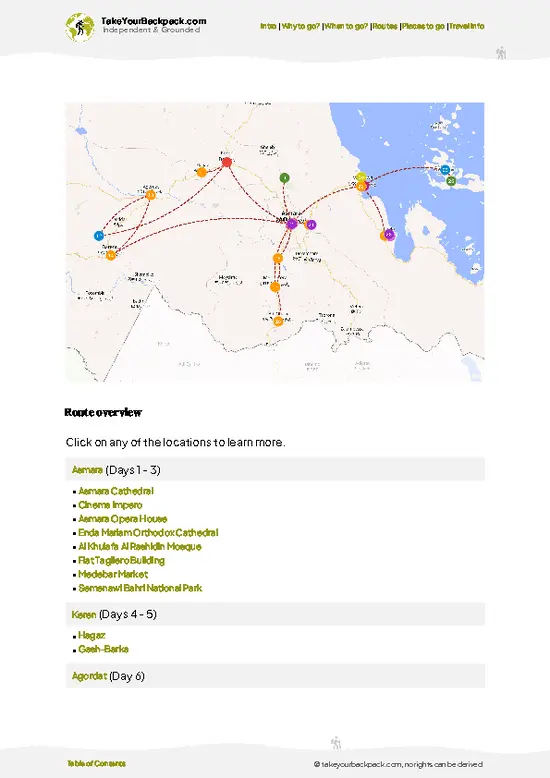
example page 1 from our offline Travel Guide for Eritrea
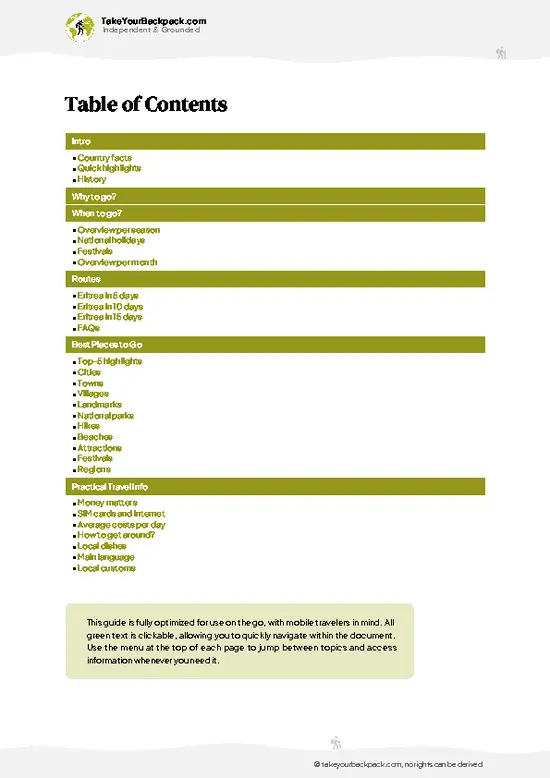
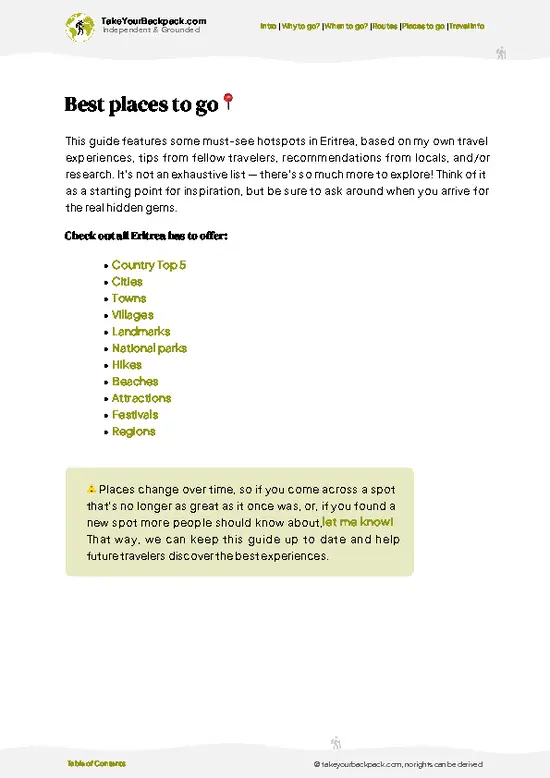
example page 2 from our offline Travel Guide for Eritrea
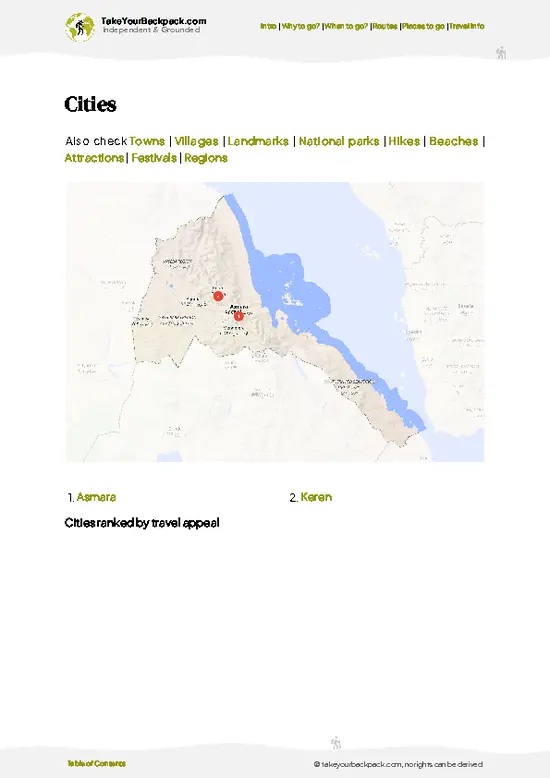
example page 3 from our offline Travel Guide for Eritrea
example page 4 from our offline Travel Guide for Eritrea
example page 5 from our offline Travel Guide for Eritrea
example page 6 from our offline Travel Guide for Eritrea
example page 7 from our offline Travel Guide for Eritrea
Loading the map 🌍
CLICK TO FILTER
cities
towns
villages
landmarks
national parks
hikes
beaches
attractions
festivals
regions
SHOW COUNTRY’S BESTSHOW ALL

✨ Why go?
Ranked #3 village in Eritrea
What makes it a must-see village

Zula suits the backpacker who wants Eritrea's Red Sea coast without the Massawa crowd, which is small anyway. The first reason is Adulis, the ancient harbor of the Aksumite kingdom, where excavated church foundations and scattered stonework sit in open, scrubby ground. You can read about it in an hour and still need the site to make it real. The second is the Gulf of Zula itself, a shallow, warm bay with a flat horizon and fishing boats pulled onto the sand. Few travelers linger. Most come for a morning or an afternoon and then continue to Massawa or back toward the highlands, and that is the right scale for the place. It fits history readers, photographers and slow travelers who are comfortable with heat, bare surroundings and limited services. If you need company, cafes or a choice of beds, choose Massawa and treat Zula as an excursion.

💡 HighlightsEssential experiences to have while visiting Zula

  1. Adulis archaeological site: Once the main seaport of the Aksumite kingdom, Adulis was trading ivory and tortoiseshell by the early centuries AD. Visitors walk among excavated church foundations and low walls on a flat, dusty plain a few kilometers from Zula. A local guide makes the layout understandable. Go early in the morning, since there is almost no shade. Allow 1 to 2 hours. Entry is small, roughly US$0 to 5, and guide arrangements are usually part of your permit and transport setup.
  2. Gulf of Zula shoreline: The waterfront at Zula is where the village meets the sea, with fishing boats, nets and low mangrove-like scrub along the shallows. It is a place for watching rather than swimming, and for a calm photograph of a coast that sees very few visitors. Early morning and late afternoon are
… read more 👉
  1. Adulis archaeological site: Once the main seaport of the Aksumite kingdom, Adulis was trading ivory and tortoiseshell by the early centuries AD. Visitors walk among excavated church foundations and low walls on a flat, dusty plain a few kilometers from Zula. A local guide makes the layout understandable. Go early in the morning, since there is almost no shade. Allow 1 to 2 hours. Entry is small, roughly US$0 to 5, and guide arrangements are usually part of your permit and transport setup.
  2. Gulf of Zula shoreline: The waterfront at Zula is where the village meets the sea, with fishing boats, nets and low mangrove-like scrub along the shallows. It is a place for watching rather than swimming, and for a calm photograph of a coast that sees very few visitors. Early morning and late afternoon are the most comfortable. It costs nothing and 30 to 60 minutes is enough. Ask before photographing people or boats.
Beyond Zula, the old coral-stone town of Massawa, the Dogali memorial on the road from the highlands and the Dahlak Archipelago offshore make the best day trips. Adulis needs a valid travel permit arranged through Asmara before you set out, while the shoreline needs no ticket.
Spotted a mistake or missing something? Contact us.

Things to do near Zula

Ratings based on Tripadvisor reviews. When you book through this link, you support our work at no extra cost to you.

🌤️ When to go?Best time to visit Zula

  • Winter (November to March): Zula’s most comfortable stretch, with daytime highs of 28 to 33°C (82 to 91°F) and nights of 20 to 24°C (68 to 75°F). Light showers are possible but brief. Daylight runs about 11 to 12 hours, so start early.
  • Shoulder Months (April, May and October): Highs climb to 33 to 38°C (91 to 100°F) and the humidity thickens. Midday walking at the Adulis ruins gets harsh, but mornings are fine.
  • Summer (June to September): Coastal heat of 38 to 45°C (100 to 113°F) with sticky air and almost no relief at night. Few travelers come, and prices barely change at any time of year because the village has so little tourist trade.
  • Crowds and Prices: Visitors are rare in every season. Transport and food costs stay flat, so weather is your only real deciding factor.
Go between December and … read more 👉
  • Winter (November to March): Zula’s most comfortable stretch, with daytime highs of 28 to 33°C (82 to 91°F) and nights of 20 to 24°C (68 to 75°F). Light showers are possible but brief. Daylight runs about 11 to 12 hours, so start early.
  • Shoulder Months (April, May and October): Highs climb to 33 to 38°C (91 to 100°F) and the humidity thickens. Midday walking at the Adulis ruins gets harsh, but mornings are fine.
  • Summer (June to September): Coastal heat of 38 to 45°C (100 to 113°F) with sticky air and almost no relief at night. Few travelers come, and prices barely change at any time of year because the village has so little tourist trade.
  • Crowds and Prices: Visitors are rare in every season. Transport and food costs stay flat, so weather is your only real deciding factor.
Go between December and February, and finish outdoor stops before late morning.


source: climatestotravel.comJANJanuary: excellent for travelingFEBFebruary: excellent for travelingMARMarch: highly recommended for travelingAPRApril: good for travelingMAYMay: fair for travelingJUNJune: below average for travelingJULJuly: below average for travelingAUGAugust: below average for travelingSEPSeptember: below average for travelingOCTOctober: fair for travelingNOVNovember: highly recommended for travelingDECDecember: excellent for traveling
when-to-go

✈️ The backpacker research shortcutEritrea Travel Guide

An offline-friendly backpacking guide with optimized travel routes, ranked highlights, transport advice, and the best areas to stay.
example page 0 from our offline Travel Guide for Eritrea
example page 1 from our offline Travel Guide for Eritrea
example page 2 from our offline Travel Guide for Eritrea
example page 3 from our offline Travel Guide for Eritrea
example page 4 from our offline Travel Guide for Eritrea
example page 5 from our offline Travel Guide for Eritrea
example page 6 from our offline Travel Guide for Eritrea
example page 7 from our offline Travel Guide for Eritrea
The digital guide (245 pages) contains:
✅ 56 highlights, ranked by travel appeal
✅ Optimized 5, 10 & 15-day travel routes
✅ Cities, national parks, landmarks, beaches
✅ How to get around
✅ Offline-friendly for travel without Wi-Fi
👉 Click to see all 30+ guide features

📅 Plan smarter in minutes, not weeks
✅ Month by month travel advice
✅ Festivals & national holidays
✅ Budget expectations

🗺️ Go to the right places, skip the overrated ones
✅ Honest pros & cons of destinations
✅ Top hikes, parks & viewpoints
✅ Lesser-known places most travelers miss
✅ Clear “worth it vs skip it” guidance

🛏️ Travel smoothly without rookie mistakes
✅ Best areas to stay
✅ Transport systems explained simply
✅ Common scams & safety advice
✅ SIM cards, money & practical tips

🌍 Understand the country, not just visit it
✅ Culture & traditions
✅ 52 Essential phrases & customs
✅ Festivals worth planning around
✅ Traveler-friendly historical context
✅ Insights that make places more meaningful

📱 Built for real travel conditions
✅ Fully downloadable PDF
✅ Works completely offline
✅ Optimized for phone use
✅ Useful in remote areas & buses
✅ Everything in one place
Stop searching, start planning
Get instant access to your full guide. 30‑day money-back guarantee.
+ Add another guide for just

By proceeding you agree to our terms.
Sent to your inbox immediately after payment • 100% Secure Checkout
Best Backpacking Travel Advisor 2025 tourism awardBest Backpacking
Travel Advisor
2025
What others say about Take Your Backpack Guides:
⭐⭐⭐⭐⭐
Fantastic, amazing amount of information!
⭐⭐⭐⭐⭐
My goodness this is amazing, it's what I've been looking for hats off too you!
⭐⭐⭐⭐⭐
I think this is absolutely BRILLIANT
⭐⭐⭐⭐
Very complete and informative. It's still missing places, but I gotta to commend you
⭐⭐⭐⭐⭐
This is truly amazing, thank you, can't wait to explore it with my kids!
⭐⭐⭐⭐⭐
Awesome resource, thank you!
⭐⭐⭐⭐⭐
This is amazing! Can't wait to explore the ones I haven't seen
⭐⭐⭐⭐
I love this! Well done, great idea.
⭐⭐⭐⭐⭐
Thanks for taking the time to make this gem!
⭐⭐⭐⭐⭐
This might be the best website I've ever seen.
⭐⭐⭐⭐⭐
Congratulations, and thank you so much for your work; it's incredibly valuable.
⭐⭐⭐⭐
In all seriousness I think you did a great job pointing out the important spots
⭐⭐⭐⭐⭐
10/10 very good
⭐⭐⭐⭐⭐
As someone who's only just starting to visit regularly this is awesome, thank you.
⭐⭐⭐⭐
Thank you very much! I'm going to visit my dad, it's going to be very useful!
⭐⭐⭐⭐⭐
This is really cool! We'll be travelling for the first time and this definitely come in handy.
⭐⭐⭐⭐⭐
You are now our minister of culture, congratulations 👨‍💼
⭐⭐⭐⭐⭐
Just wanted to tell you that this is a pearl! Going to follow your recommendations.
⭐⭐⭐⭐⭐
This is so cool. I'll definitely be using the resource for my travels soon.
⭐⭐⭐⭐⭐
This is very impressive! Good work.
⭐⭐⭐⭐⭐
This is an amazing and informative site. Very well done!

🛏️ Where to stay?Where staying makes the most sense

Zula itself has almost no lodging, so the practical choice is a bed in Massawa, about an hour north by road. Massawa has the nearest range of rooms, and its old coral-stone quarter on the mainland and the island of Batsi have small guesthouses and basic hotels. Expect US$15 to 30 a night for a simple double with a fan or air conditioning. Pay extra for air conditioning, because summer nights on the coast stay above 30°C (86°F) and a fan alone won’t get you any sleep.
The Dahlak Hotel on Taulud island is the pricier choice at roughly US$50 to 90 a night. It has sea views and a more reliable generator, … read more 👉
Zula itself has almost no lodging, so the practical choice is a bed in Massawa, about an hour north by road. Massawa has the nearest range of rooms, and its old coral-stone quarter on the mainland and the island of Batsi have small guesthouses and basic hotels. Expect US$15 to 30 a night for a simple double with a fan or air conditioning. Pay extra for air conditioning, because summer nights on the coast stay above 30°C (86°F) and a fan alone won’t get you any sleep.
The Dahlak Hotel on Taulud island is the pricier choice at roughly US$50 to 90 a night. It has sea views and a more reliable generator, which matters when the grid drops. Payment is usually in cash, so bring enough US dollars or Eritrean nakfa from Asmara before you head down to the coast.
If you want to sleep near Zula, ask the local administration or a driver about a family room in the village. This is informal, so treat it as a backup and not a plan. Carry your own water, a sheet and a mosquito net. Book a Massawa room first and treat Zula as the daytime stop.

🚌 Day tripsWhere to go beyond the main area

Zula works as a day-trip stop more than as a base, since beds are scarce, but the sites around it are close and the road is flat. Every trip beyond Asmara needs a valid travel permit from the Ministry of Tourism, which is the step first-timers skip.
Adulis Ruins:
This is the reason to come. Adulis was the main port of the Aksumite kingdom, and its excavated church foundations and mounds sit in dry scrubland a short ride from Zula. Allow two to three hours on site and bring your own water, because there is no shade or shop. Hire a local driver for US$15 to 30 for the round trip. Visit in winter and in the early morning, since the exposed ground bakes by 10 a.m. Many first-timers expect signs and a ticket booth, but you will do better with a guide who knows which mounds matter.
👉 Explore Adulis
Massawa: … read more 👉
Zula works as a day-trip stop more than as a base, since beds are scarce, but the sites around it are close and the road is flat. Every trip beyond Asmara needs a valid travel permit from the Ministry of Tourism, which is the step first-timers skip.
Adulis Ruins:
This is the reason to come. Adulis was the main port of the Aksumite kingdom, and its excavated church foundations and mounds sit in dry scrubland a short ride from Zula. Allow two to three hours on site and bring your own water, because there is no shade or shop. Hire a local driver for US$15 to 30 for the round trip. Visit in winter and in the early morning, since the exposed ground bakes by 10 a.m. Many first-timers expect signs and a ticket booth, but you will do better with a guide who knows which mounds matter.
👉 Explore Adulis
Massawa:
The Red Sea port lies roughly 50 to 60 km north, about an hour by minibus or shared taxi for US$2 to 5. The old town has Ottoman and Egyptian coral-stone houses, a fish market and a causeway to Taulud and Batsi islands. Plan a full day, with seafood lunch at US$5 to 10. Go between December and March, and leave Zula early because the last shared transport back thins out by late afternoon.
👉 Explore Massawa
Gulf of Zula Shoreline:
The gulf’s shallow coast, a short drive east of the village, has mudflats, mangroves, fishing boats and migrating birds in winter. A driver costs about US$10 to 20 for a half day. Bring a hat and sun protection, since there is nothing but open flats for shade. Do not swim near fishing areas without asking locals first.

🛡️ SafetyScams, Hazards, and Annoyances

Zula Beach in Eritrea is a slice of paradise, but like any good adventure, it comes with its quirks. The swimming conditions are generally friendly, with gentle waves that won’t have you wrestling with the ocean. Still, keep an eye on the currents; they can surprise you if you’re not paying attention. Locals know the best spots, so follow their lead—if they’re splashing around, you’re probably in the clear.

As for marine life, you might spot some rays gliding by, but sharks are more of a myth here than a reality. Just watch out for the occasional jellyfish; they’re not usually a problem, but it’s good to be aware.

The sun can be relentless, especially around midday, so slather on that sunscreen and seek shade when you can. Theft isn’t rampant, but keep your valuables close—no one wants … read more 👉
Zula Beach in Eritrea is a slice of paradise, but like any good adventure, it comes with its quirks. The swimming conditions are generally friendly, with gentle waves that won’t have you wrestling with the ocean. Still, keep an eye on the currents; they can surprise you if you’re not paying attention. Locals know the best spots, so follow their lead—if they’re splashing around, you’re probably in the clear.

As for marine life, you might spot some rays gliding by, but sharks are more of a myth here than a reality. Just watch out for the occasional jellyfish; they’re not usually a problem, but it’s good to be aware.

The sun can be relentless, especially around midday, so slather on that sunscreen and seek shade when you can. Theft isn’t rampant, but keep your valuables close—no one wants to lose their gear to a sneaky beach thief. Enjoy the waves, but stay smart; it’s all part of the fun.

FAQFrequently asked questions about Zula

Fly into Asmara, then travel by road to Massawa, roughly 115 km and 2.5 to 3 hours by bus for US$3 to 6, and continue south to Zula for about an hour. You need a travel permit from the Ministry of Tourism in Asmara before leaving the capital. A driver from Massawa to Zula and back costs roughly US$25 to 50, and a shared minibus is cheaper but less frequent.
Zula is worth it if ancient history matters to you, because the Aksumite port of Adulis lies a short ride away and almost nobody else is there. Expect heat, few services and no real tourist infrastructure, so it suits independent travelers more than anyone chasing beaches. Allow half a day for the ruins and the gulf shore, and add Massawa if you have two days.
Yes, Zula can be done in a day from Massawa, about an hour each way by road. Leave by 7 a.m., see the Adulis ruins and the gulf shore, and return by late afternoon. Budget US$25 to 50 for a hired car and driver, plus food and water, and carry your permit because checkpoints are common.
⚠️ Things can change over time, so always validate details locally before you go.

Ideas for continuing your journey

Zula isn’t the only highlight in Eritrea. Explore all what Eritrea has to offer.
Country photo of Eritrea

We 💚 feedbackParting advice and final tips

Zula looks like a pause on the way to somewhere else, but the first-time mistake is missing the shoreline because everyone heads straight for Adulis. I would walk the gulf edge in the early morning, when the fishing boats are working and the heat has not built. Bring more water than you think you need, and a hat.

✍️ Help improve this page!
The information on this page is based on in-depth research, insights shared by experienced travelers, and feedback from the local travel community in Eritrea. While every effort is made to keep the information accurate and current, conditions can change — so if you spot anything incorrect or outdated, please get in touch.


🙋‍♂️ Give feedback

👋 Meet the founderWho’s Behind Take Your Backpack?

Johan, backpacker and founder of TakeYourBackpackHi, I’m Johan (Netherlands 🇳🇱), the creator of TakeYourBackpack. Over the past 3 decades, I’ve backpacked through 90+ countries across six continents, gaining extensive experience with independent travel, long-term trips, and overland routes.

This site is built on a combination of firsthand travel experience and carefully curated insights from other backpackers. Many guides are based on places I’ve personally visited, while others bring together tips, observations, and practical advice shared by trusted travelers I’ve met along the way.

The goal is to provide realistic, experience-driven guidance — not generic itineraries — so you can explore destinations with better context, clearer expectations, and more confidence.