v2.webp)
- Tsorona battlefield remains: Trenches and abandoned armor on the hills around town mark one of the main fronts of the border war. Go with a permit-approved guide, in the morning when the light is clear. Allow 1 to 2 hours. Guide arrangements usually run US$10 to 30.
- Main road and town center: A short walk takes in the shops, the tea stalls and the church, and it is the easiest way to talk with residents. Free, about 1 hour, best in the early morning or late afternoon.
- Highland viewpoints above town: The terraced slopes drop toward the Mereb lowlands, and the open ridges give a wide view of the farmland. Free, 1 hour, best early before haze builds.
- Tsorona battlefield remains: Trenches and abandoned armor on the hills around town mark one of the main fronts of the border war. Go with a permit-approved guide, in the morning when the light is clear. Allow 1 to 2 hours. Guide arrangements usually run US$10 to 30.
- Main road and town center: A short walk takes in the shops, the tea stalls and the church, and it is the easiest way to talk with residents. Free, about 1 hour, best in the early morning or late afternoon.
- Highland viewpoints above town: The terraced slopes drop toward the Mereb lowlands, and the open ridges give a wide view of the farmland. Free, 1 hour, best early before haze builds.
Spotted a mistake or missing something? Contact us.


 Best Backpacking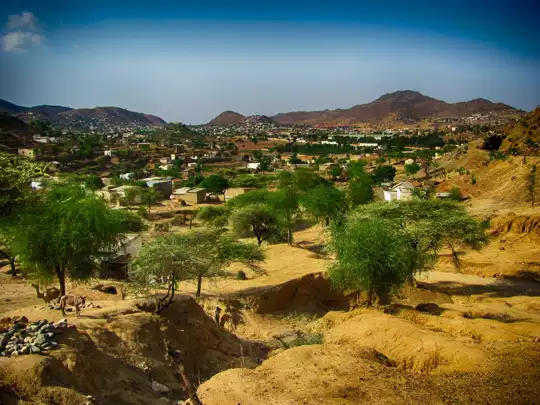
.jpg) Hi, I’m Johan (Netherlands 🇳🇱), the creator of TakeYourBackpack. Over the past 3 decades, I’ve backpacked through 90+ countries across six continents, gaining extensive experience with independent travel, long-term trips, and overland routes.
Hi, I’m Johan (Netherlands 🇳🇱), the creator of TakeYourBackpack. Over the past 3 decades, I’ve backpacked through 90+ countries across six continents, gaining extensive experience with independent travel, long-term trips, and overland routes.