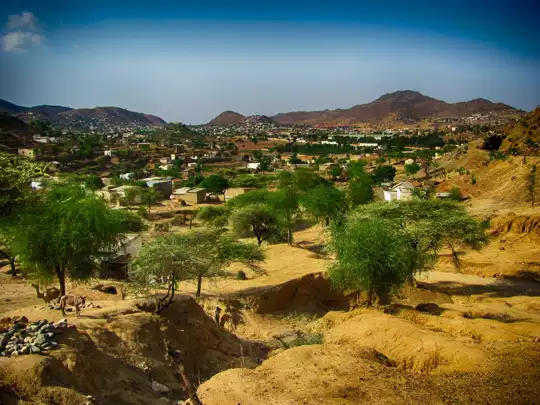
- Gelalo Central Market (Souq) — The heartbeat of the village: noisy stalls, fresh produce, local spices, and artisans selling woven mats and leatherwork. Visiting in the morning gives real insight into daily life, bargaining customs, and local food you won’t find in guidebooks.
- Village Mosque — A simple, active place of worship where you can observe daily prayer rhythms and the role religion plays in community life. Respectful visitors get a clear sense of local customs, dress, and hospitality.
- Local Orthodox/Christian Church — The village church is a social as well as spiritual hub; services, iconography, and the surrounding ritual practices show centuries-old traditions adapted to village life.
- Community Well / Water Point — More than a water source, this is where neighbors meet, swap
- Gelalo Central Market (Souq) — The heartbeat of the village: noisy stalls, fresh produce, local spices, and artisans selling woven mats and leatherwork. Visiting in the morning gives real insight into daily life, bargaining customs, and local food you won’t find in guidebooks.
- Village Mosque — A simple, active place of worship where you can observe daily prayer rhythms and the role religion plays in community life. Respectful visitors get a clear sense of local customs, dress, and hospitality.
- Local Orthodox/Christian Church — The village church is a social as well as spiritual hub; services, iconography, and the surrounding ritual practices show centuries-old traditions adapted to village life.
- Community Well / Water Point — More than a water source, this is where neighbors meet, swap news, and coordinate work. Watching the routines around water collection is one of the most direct ways to understand rural rhythms and gendered roles.
- Traditional Tukul Cluster (vernacular houses) — Walk through the older quarter to see round, thatch-roofed homes and household compounds. The construction, courtyard layouts, and material use tell a clear story about local architecture and family structure.
- Village School — A small, active primary school where classroom visits reveal local education practices, community involvement, and often warm welcomes from students eager to practice English or show their classrooms.
- Local Coffee/Ceremony Host — Sit for an Eritrean coffee ceremony in a family compound. It’s slow, social, and the most authentic way to meet locals and experience hospitality first-hand.
- Small Agricultural Plots & Irrigation Works — Walk the nearby cultivated plots to see what villagers grow (sorghum, millet, vegetables) and local irrigation techniques; it’s a hands-on look at subsistence farming that sustains the community.
- Village Memorial / Independence Plaque — A modest monument or plaque honoring local participants in Eritrea’s struggle for independence. These spots are important for community memory and often have stories shared by elders.
- Local Artisan Workshop — A small-scale place where leather, basketry, or metalwork is made. Watching techniques passed down through generations is a concrete cultural experience and a chance to buy directly from makers.
Spotted a mistake or missing something? Contact us.
v2.webp)


Best Backpacking
Hi, I’m Johan (Netherlands 🇳🇱), the creator of TakeYourBackpack. Over the past decade, I’ve backpacked through 80+ countries across six continents, gaining extensive experience with independent travel, long-term trips, and overland routes.