×

Eswatini🇸🇿 | townsBig Bendsugar mill, riverside setting, game reserve access | things to do and best time to go

Explore Ezulwini ValleyExplore Bulembu

Backpacking in Big Bend
🌟 Highlighttown ranked #7
By Johan Kruseman 🇳🇱 | Updated June 9, 2026

The real trick with Big Bend is how its isolation flips from inconvenience to secret weapon: most travelers only realize after arriving that the quiet here isn’t just rural, it’s liberating. Big Bend sits in the far southeast of Eswatini, where the sugarcane fields meet the slow, looping Usutu River. For backpackers, this isn’t a town that dazzles on arrival—there’s no bustling market square or nightlife to chase. Instead, Big Bend works as a launchpad for the wild: it’s the closest town to Mhlosinga Nature Reserve and the entry point for day trips into the lowveld’s sun-baked reserves. You’ll find a couple of basic guesthouses, a handful of local eateries, and a pace that makes even sleepy Manzini feel hectic. Buses connect you to the rest of the country, but you’ll want your own wheels for real freedom. Costs are low, safety is solid, and while you won’t find a hostel crowd, the slow evenings and open landscapes make it easy to swap stories with whoever’s passing through.

Discover everything you want to know in the 📖 Eswatini Travel Guide.


Get your Eswatini guide
46 ranked highlights, routes & tips, works offline (202 pages)
Loading the map 🌍
CLICK TO FILTER
cities
towns
landmarks
national parks
hikes
attractions
festivals
regions
SHOW COUNTRY’S BESTSHOW ALL

✨ Why go?
Ranked #7 town in Eswatini
Why Big Bend should be on your travel list

Backpackers flock to Big Bend in Eswatini for its strategic location along popular hiking routes and proximity to stunning beaches and rich cultural sites. The town serves as a convenient base for those eager to explore the breathtaking landscapes of the surrounding area. You’ll find a handful of cozy hostels and guesthouses that cater to budget travelers, offering a chance to connect with fellow adventurers over local food experiences. The streets are walkable, inviting you to meander and soak in the atmosphere.

Most travelers tend to stay for a few days, enjoying the friendly social vibe that encourages conversation and camaraderie. It’s ideal for slow travelers, solo adventurers, and small groups looking for a blend of exploration and relaxation. If you prefer a quieter pace, you’ll appreciate … read more 👉
Backpackers flock to Big Bend in Eswatini for its strategic location along popular hiking routes and proximity to stunning beaches and rich cultural sites. The town serves as a convenient base for those eager to explore the breathtaking landscapes of the surrounding area. You’ll find a handful of cozy hostels and guesthouses that cater to budget travelers, offering a chance to connect with fellow adventurers over local food experiences. The streets are walkable, inviting you to meander and soak in the atmosphere.

Most travelers tend to stay for a few days, enjoying the friendly social vibe that encourages conversation and camaraderie. It’s ideal for slow travelers, solo adventurers, and small groups looking for a blend of exploration and relaxation. If you prefer a quieter pace, you’ll appreciate the balance between activity and downtime, making Big Bend a worthwhile stop on your journey.
Want to include Big Bend in your Eswatini route?
Create a personalized Eswatini itinerary that includes Big Bend and the places that fit your trip — based on your travel style, budget, and available time. Get your route in seconds.

Generate my trip

💡 HighlightsTop highlights of Big Bend

  • Big Bend sugar estate & mill (the sugar complex) — The town exists because of sugar. Walking or driving around the estate gives a real sense of scale: endless cane, canal irrigation, and the mill itself. Industrial landscapes, smells and all, tell the economic and social story of the place. Ask locally or the Royal Swazi Sugar office about any public visiting hours or guided talks.
  • Great Usuthu River banks at Big Bend — The Usuthu cuts a green ribbon through the area. It’s a good spot for birding, a lazy riverside picnic, watching local fishermen, and seeing how the river feeds the irrigation system that keeps the cane alive.
  • Big Bend railway area — The freight railway that serves the sugar industry is part of town life. The old station area, sidings and goods sheds make interesting low-key
read more 👉
  • Big Bend sugar estate & mill (the sugar complex) — The town exists because of sugar. Walking or driving around the estate gives a real sense of scale: endless cane, canal irrigation, and the mill itself. Industrial landscapes, smells and all, tell the economic and social story of the place. Ask locally or the Royal Swazi Sugar office about any public visiting hours or guided talks.
  • Great Usuthu River banks at Big Bend — The Usuthu cuts a green ribbon through the area. It’s a good spot for birding, a lazy riverside picnic, watching local fishermen, and seeing how the river feeds the irrigation system that keeps the cane alive.
  • Big Bend railway area — The freight railway that serves the sugar industry is part of town life. The old station area, sidings and goods sheds make interesting low-key industrial-photography stops and a peek into transport history here.
  • Main Street market / morning produce stalls — Small, lively, and local: morning markets sell fresh veggies, sugarcane snacks and street food. It’s the best place to practice SiSwati greetings, buy affordable fruit, and watch daily life unfold.
  • Sugarcane estate drives and farm roads — Rent a bike or take a slow taxi down the grid of dirt service roads between fields. You’ll find great photo ops, rural homesteads, irrigation channels and an authentic working-landscape vibe that you won’t get from a map.
  • Local craft stalls and informal workshops — Scattered around town you’ll find small sellers making baskets, beads and simple woodwork. These are low-key places to buy something handcrafted and directly support local makers—ask around the market for the best spots.
  • Town centre cafés, shebeens and meeting spots — Big Bend’s social life happens in modest cafés and shebeens. Drop in for cheap coffee, a cold drink and conversation; it’s where you’ll hear local stories and get practical tips for exploring the area.
  • Community sports ground (local football matches) — If your timing’s right, a weekend match is a brilliant cultural quick-win: energetic, friendly crowds and a genuine slice of community life. Locals are usually happy to have visitors watch.
  • Estate interpretive boards and small info displays — Around the sugar works and along some public roads there are information panels about irrigation, cane varieties and local history. They’re short, direct ways to understand why Big Bend looks and runs the way it does.
  • Riverside villages and homestead walks — Short guided walks (arrange through a local guide or your lodge) to nearby homesteads let you meet families, learn about daily Swazi farming life and see traditional household crafts and cooking up close.
A few solid day trips nearby: Hlane Royal National Park (big-game and guided drives), Mlawula Nature Reserve (good trails and birds), and the sugar town of Simunye with its own estate sights are all easily reachable from Big Bend.
Spotted a mistake or missing something? Contact us.

🏘️ NeighborhoodsWhere things are and how it's laid out

Big Bend in Eswatini is a vibrant hub for backpackers, offering a mix of culture, convenience, and character. Here’s how to navigate its neighborhoods for the best experience.

Mbabane: The capital city pulses with life. It’s affordable and walkable, making it perfect for short stays. You’ll find bustling markets and local eateries. Nightlife is low-key, with a few bars where you can mingle with locals. Public transport is accessible, connecting you to other areas.

Manzini: This area is a bit more laid-back but still lively. It’s a great spot for longer stays, with budget accommodations and a friendly vibe. The markets here are a sensory delight—think spices and crafts. While nightlife is quieter, you can find some local music venues. Transport options are solid, with minibuses frequently … read more 👉
Big Bend in Eswatini is a vibrant hub for backpackers, offering a mix of culture, convenience, and character. Here’s how to navigate its neighborhoods for the best experience.

Mbabane: The capital city pulses with life. It’s affordable and walkable, making it perfect for short stays. You’ll find bustling markets and local eateries. Nightlife is low-key, with a few bars where you can mingle with locals. Public transport is accessible, connecting you to other areas.

Manzini: This area is a bit more laid-back but still lively. It’s a great spot for longer stays, with budget accommodations and a friendly vibe. The markets here are a sensory delight—think spices and crafts. While nightlife is quieter, you can find some local music venues. Transport options are solid, with minibuses frequently running.

Hlatikulu: For those seeking tranquility, Hlatikulu is your go-to. It’s less touristy, offering a more authentic experience. The scenery is stunning, with cooler temperatures. Walkability is decent, but you might need to rely on taxis for longer distances. Perfect for a peaceful retreat, though nightlife is almost non-existent.

Each area has its own charm, so choose based on your mood and travel style.

⌛️ 1 daySeeing the highlights in 24 hours

Big Bend, Eswatini, is a vibrant tapestry of culture and nature, where the lush landscapes meet the warmth of local hospitality. Start your day early with a stroll through the bustling market in the heart of the town. The air is thick with the aroma of freshly baked bread and spices, a sensory invitation to dive into local life. Grab a traditional breakfast of ”sishwala” (a maize porridge) paired with a cup of strong, sweet tea. This is where you’ll feel the pulse of the community.

After fueling up, head to the nearby Hlane Royal National Park. It’s a bit off the usual tourist path, but the chance to see elephants roaming freely is worth the detour. Spend your morning hiking the trails, soaking in the sounds of nature—the rustle of leaves, the distant calls of birds. The light filtering through … read more 👉
Big Bend, Eswatini, is a vibrant tapestry of culture and nature, where the lush landscapes meet the warmth of local hospitality. Start your day early with a stroll through the bustling market in the heart of the town. The air is thick with the aroma of freshly baked bread and spices, a sensory invitation to dive into local life. Grab a traditional breakfast of ”sishwala” (a maize porridge) paired with a cup of strong, sweet tea. This is where you’ll feel the pulse of the community.

After fueling up, head to the nearby Hlane Royal National Park. It’s a bit off the usual tourist path, but the chance to see elephants roaming freely is worth the detour. Spend your morning hiking the trails, soaking in the sounds of nature—the rustle of leaves, the distant calls of birds. The light filtering through the trees creates a magical atmosphere, making every step feel like an adventure.

In the afternoon, return to Big Bend and explore the local art scene. Visit the small galleries showcasing the work of local artisans. The vibrant colors and intricate designs tell stories of the region’s heritage. As the sun begins to set, find a cozy spot at a local eatery. Enjoy a plate of ”braai” (grilled meat) while chatting with locals, who are eager to share their stories.

As night falls, the town transforms. The stars emerge, and the air cools. Take a leisurely walk through the streets, absorbing the warmth of the community. Big Bend isn’t just a stop; it’s a place that invites you to connect, explore, and savor every moment.
Turn your Big Bend visit into an Eswatini adventure
Build a complete Eswatini route with Big Bend, hidden gems, must-see destinations, and realistic travel times included.

Generate my trip

🌤️ When to go?Best time to visit Big Bend


  • Topic: Weather – Big Bend’s climate swings between a hot, wet summer and a cooler, dry winter. From November to March, expect highs around 30-35°C (86-95°F) with heavy rains that can turn trails into mudslides. April to October cools down to 15-25°C (59-77°F), making hiking more comfortable and the landscape less oppressive.

  • Topic: Temperature – Daytime warmth peaks in summer but nights can be surprisingly chilly in winter, dropping to 5-10°C (41-50°F). Layering is key; the dry season’s crisp mornings reward early risers with clear skies and fresh air.

  • Topic: Daylight Hours – Near the equator, daylight stays fairly steady year-round, around 11-12 hours. This consistency means you can plan long treks without worrying about early darkness, but the dry season’s clearer skies enhance visibility
read more 👉

  • Topic: Weather – Big Bend’s climate swings between a hot, wet summer and a cooler, dry winter. From November to March, expect highs around 30-35°C (86-95°F) with heavy rains that can turn trails into mudslides. April to October cools down to 15-25°C (59-77°F), making hiking more comfortable and the landscape less oppressive.

  • Topic: Temperature – Daytime warmth peaks in summer but nights can be surprisingly chilly in winter, dropping to 5-10°C (41-50°F). Layering is key; the dry season’s crisp mornings reward early risers with clear skies and fresh air.

  • Topic: Daylight Hours – Near the equator, daylight stays fairly steady year-round, around 11-12 hours. This consistency means you can plan long treks without worrying about early darkness, but the dry season’s clearer skies enhance visibility and the quality of golden-hour light.

  • Topic: Crowds – The dry season draws more visitors, especially July and August, when locals and tourists escape the heat elsewhere. You’ll find more buzz at campsites and trails, but also better social vibes and guided tour availability.

  • Topic: Seasonal Activities – Wildlife spotting peaks in the dry months when animals gather near waterholes, making safaris more rewarding. Conversely, the wet season bursts with birdlife and lush greenery, perfect for photographers who don’t mind a splash of mud.

  • Topic: Price Fluctuations – Accommodation and tours hike prices during the dry season’s peak months. Visiting shoulder months like April or September offers a sweet spot: fewer crowds, decent weather, and better deals.


Pro-tip: Aim for the shoulder seasons—April or September—when the air smells fresh, the trails are quieter, and you get the best balance of weather, wildlife, and wallet-friendly prices.


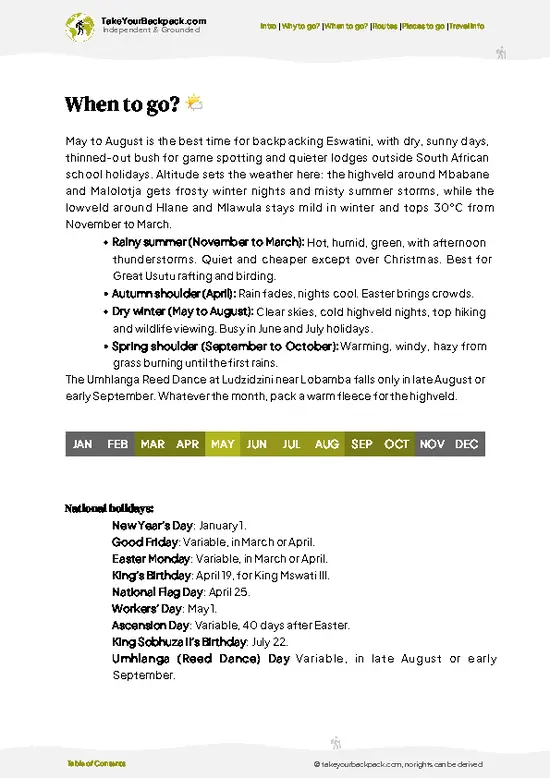
source: climatestotravel.comJANJanuary: fair for travelingFEBFebruary: fair for travelingMARMarch: fair for travelingAPRApril: highly recommended for travelingMAYMay: highly recommended for travelingJUNJune: highly recommended for travelingJULJuly: excellent for travelingAUGAugust: excellent for travelingSEPSeptember: highly recommended for travelingOCTOctober: highly recommended for travelingNOVNovember: fair for travelingDECDecember: fair for traveling
when-to-go

✈️ The backpacker research shortcutEswatini Travel Guide

An offline-friendly backpacking guide with optimized travel routes, ranked highlights, transport advice, and the best areas to stay.
example page 0 from our offline Travel Guide for Eswatini
example page 1 from our offline Travel Guide for Eswatini
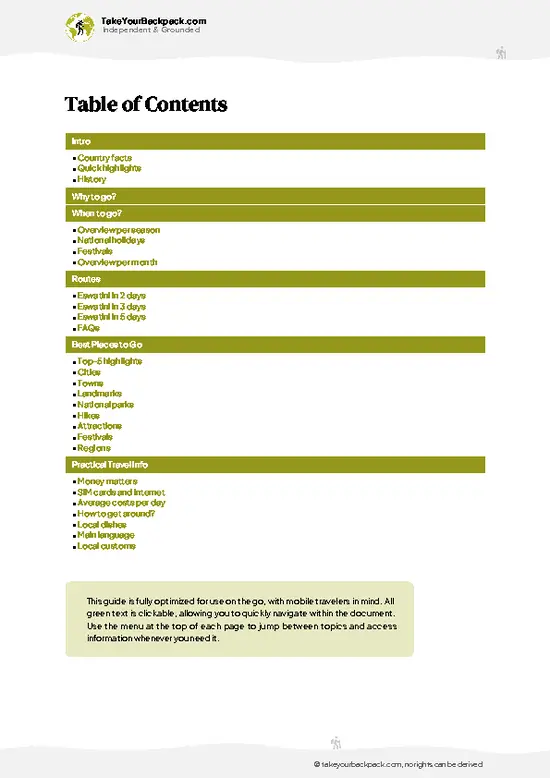
example page 2 from our offline Travel Guide for Eswatini
example page 3 from our offline Travel Guide for Eswatini
example page 4 from our offline Travel Guide for Eswatini
example page 5 from our offline Travel Guide for Eswatini
example page 6 from our offline Travel Guide for Eswatini
example page 7 from our offline Travel Guide for Eswatini
The digital guide (202 pages) contains:
46 highlights, ranked by travel appeal
Optimized 2, 3 & 5-day travel routes
Cities, national parks, landmarks, beaches
How to get around
Offline-friendly for travel without Wi-Fi
👉 Click to see all 30+ guide features

📅 Plan smarter in minutes, not weeks
Month by month travel advice
Festivals & national holidays
Budget expectations

🗺️ Go to the right places, skip the overrated ones
Honest pros & cons of destinations
Top hikes, parks & viewpoints
Lesser-known places most travelers miss
Clear “worth it vs skip it” guidance

🛏️ Travel smoothly without rookie mistakes
Best areas to stay
Transport systems explained simply
Common scams & safety advice
SIM cards, money & practical tips

🌍 Understand the country, not just visit it
Culture & traditions
52 Essential phrases & customs
Festivals worth planning around
Traveler-friendly historical context
Insights that make places more meaningful

📱 Built for real travel conditions
Fully downloadable PDF
Works completely offline
Optimized for phone use
Useful in remote areas & buses
Everything in one place
Save weeks of stressful planning
Get instant access to your full guide. 30‑day money-back guarantee.


By proceeding you agree to our terms.
Sent to your inbox immediately after payment • 100% Secure Checkout
Best Backpacking Travel Advisor 2025 tourism awardBest Backpacking
Travel Advisor
2025
What others say about Take Your Backpack Guides:
⭐⭐⭐⭐⭐
Fantastic, amazing amount of information!
⭐⭐⭐⭐⭐
My goodness this is amazing, it's what I've been looking for hats off too you!
⭐⭐⭐⭐⭐
I think this is absolutely BRILLIANT
⭐⭐⭐⭐
Very complete and informative. It's still missing places, but I gotta to commend you
⭐⭐⭐⭐⭐
This is truly amazing, thank you, can't wait to explore it with my kids!
⭐⭐⭐⭐⭐
Awesome resource, thank you!
⭐⭐⭐⭐⭐
This is amazing! Can't wait to explore the ones I haven't seen
⭐⭐⭐⭐
I love this! Well done, great idea.
⭐⭐⭐⭐⭐
Thanks for taking the time to make this gem!
⭐⭐⭐⭐⭐
This might be the best website I've ever seen.
⭐⭐⭐⭐⭐
Congratulations, and thank you so much for your work; it's incredibly valuable.
⭐⭐⭐⭐
In all seriousness I think you did a great job pointing out the important spots
⭐⭐⭐⭐⭐
10/10 very good
⭐⭐⭐⭐⭐
As someone who's only just starting to visit regularly this is awesome, thank you.
⭐⭐⭐⭐
Thank you very much! I'm going to visit my dad, it's going to be very useful!
⭐⭐⭐⭐⭐
This is really cool! We'll be travelling for the first time and this definitely come in handy.
⭐⭐⭐⭐⭐
You are now our minister of culture, congratulations 👨‍💼
⭐⭐⭐⭐⭐
Just wanted to tell you that this is a pearl! Going to follow your recommendations.
⭐⭐⭐⭐⭐
This is so cool. I'll definitely be using the resource for my travels soon.
⭐⭐⭐⭐⭐
This is very impressive! Good work.
⭐⭐⭐⭐⭐
This is an amazing and informative site. Very well done!

🛏️ Where to stay?Choosing the right base

Big Bend’s backpacker sweet spot is the area around the town center, where the pulse of daily life hums with a laid-back, approachable energy. This neighborhood is compact enough to walk everywhere, which means you’re never far from a local market’s earthy spice scents or the chatter spilling from small cafés. It’s safe, thanks to a steady presence of locals and fellow travelers, so you can wander after dark without that nagging edge of caution.

Hostels here cluster near the main road, offering a social vibe that’s hard to beat—think communal dinners under string lights and impromptu storytelling … read more 👉
Big Bend’s backpacker sweet spot is the area around the town center, where the pulse of daily life hums with a laid-back, approachable energy. This neighborhood is compact enough to walk everywhere, which means you’re never far from a local market’s earthy spice scents or the chatter spilling from small cafés. It’s safe, thanks to a steady presence of locals and fellow travelers, so you can wander after dark without that nagging edge of caution.

Hostels here cluster near the main road, offering a social vibe that’s hard to beat—think communal dinners under string lights and impromptu storytelling sessions. This contrasts sharply with the quieter, more residential outskirts, where isolation can feel more like loneliness than peace. Staying central means you tap into the town’s rhythm, from early morning traders setting up stalls to the slow, golden light of sunset over the nearby sugarcane fields.

Choosing this hub isn’t just about convenience; it’s about immersion. You get the raw, unfiltered Eswatini experience, where every street corner smells like wood smoke and every conversation could lead to a new adventure.

🚌 Getting aroundTransportation options and practical tips

Big Bend doesn’t rush you. The town’s rhythm is slow, deliberate—like the sun dipping behind the Chisos Mountains, casting long shadows that stretch across dusty streets. It’s not a place where you’ll find a bus honking at every corner or a subway train roaring underground. Instead, you move with the land, the light, and the sparse crowd of fellow adventurers. Here, transit isn’t about strict schedules; it’s about timing your moves with the natural flow of the day and the limited services that respect the vastness around you. The scent of creosote and juniper drifts in the dry air, and every step feels like a small victory against the sprawling wilderness. Understanding how to get around isn’t just practical—it’s part of the experience, a way to sync with the place rather than fight it.


read more 👉
Big Bend doesn’t rush you. The town’s rhythm is slow, deliberate—like the sun dipping behind the Chisos Mountains, casting long shadows that stretch across dusty streets. It’s not a place where you’ll find a bus honking at every corner or a subway train roaring underground. Instead, you move with the land, the light, and the sparse crowd of fellow adventurers. Here, transit isn’t about strict schedules; it’s about timing your moves with the natural flow of the day and the limited services that respect the vastness around you. The scent of creosote and juniper drifts in the dry air, and every step feels like a small victory against the sprawling wilderness. Understanding how to get around isn’t just practical—it’s part of the experience, a way to sync with the place rather than fight it.


  • Walking: The most authentic way to soak in Big Bend’s quiet charm. Trails and roads are often gravel or dirt, so sturdy boots are a must. Walking lets you catch the subtle shifts in light and the occasional rustle of wildlife. Distances between key spots can be long, so plan for several hours if you’re trekking between the park entrance and the village.


  • Big Bend Transit Shuttle: This seasonal shuttle service connects the main park entrances and the small towns nearby. It runs roughly from 8 a.m. to 6 p.m., with a few trips per day. Tickets are affordable, around $10-$15 per ride, but the schedule is sparse—missing a shuttle can mean a long wait. It’s a solid option if you want to avoid driving but don’t mind planning around limited departure times.


  • Local Taxi Services: Few and far between, but available if you call ahead. Expect to pay a premium compared to shuttles, often $30-$50 for short trips. Taxis offer flexibility and speed, especially if you’re heading out early or late when shuttles aren’t running. They’re your best bet for last-minute rides but not a budget staple.


  • Car Rentals: The most practical for serious exploration. Rental agencies are limited, so book in advance. A vehicle lets you chase sunrise views or remote trailheads on your own schedule. Gas stations are sparse and pricey, so fill up whenever you can. Renting a car is an upfront cost but pays off in freedom and access.

👛 Costs (as of 6 May 2026)Travel costs and budget guide for Big Bend

Backpacking in Big Bend, Eswatini, offers a raw, authentic experience where costs stay modest but the value is high. Here’s what you can expect to spend day-to-day as an independent traveler.
  • Dorm Accommodation: Budget hostels or guesthouses typically charge between $10 and $20 per night. These places are basic but clean, often with shared bathrooms and a communal vibe that’s perfect for meeting other travelers.
  • Meals: Local eateries serve hearty meals for around $3 to $7. Think fresh maize porridge, grilled meats, and vegetable stews. If you shop at markets and cook yourself, you can push this down closer to $2 to $4 per meal.
  • Local Transport: Minibus taxis are the go-to option, costing roughly $1 to $3 for short trips within and around Big Bend. They’re frequent but can be crowded and
read more 👉
Backpacking in Big Bend, Eswatini, offers a raw, authentic experience where costs stay modest but the value is high. Here’s what you can expect to spend day-to-day as an independent traveler.
  • Dorm Accommodation: Budget hostels or guesthouses typically charge between $10 and $20 per night. These places are basic but clean, often with shared bathrooms and a communal vibe that’s perfect for meeting other travelers.
  • Meals: Local eateries serve hearty meals for around $3 to $7. Think fresh maize porridge, grilled meats, and vegetable stews. If you shop at markets and cook yourself, you can push this down closer to $2 to $4 per meal.
  • Local Transport: Minibus taxis are the go-to option, costing roughly $1 to $3 for short trips within and around Big Bend. They’re frequent but can be crowded and a bit unpredictable, so factor in some extra time.
  • Basic Activities/Entry Fees: Exploring nearby natural reserves or cultural sites usually costs between $5 and $15. This includes guided walks or entry to community-run projects, which are well worth the price for the insight and support they provide.
  • Miscellaneous Expenses: Budget around $2 to $5 for things like bottled water, snacks, or a local SIM card top-up. These small costs add up but are essential for comfort and connectivity.

Altogether, you’re looking at roughly $20 to $50 per day to cover the essentials in Big Bend. This range lets you keep things lean without cutting corners on the experiences that make the trip worthwhile.


source: thekingdomofeswatini.com
⚠️ Prices can change and everyone travels differently, so take this as a rough guide. Hope it helps you plan your adventure!

🚌 Day tripsWhere to go beyond the main area

Big Bend, Eswatini, is a fantastic launchpad for day trips that immerse you in the local culture and stunning landscapes. Here are some standout options that make the effort worthwhile.

Hiking the Malolotja Nature Reserve
Just a short drive from Big Bend, Malolotja offers breathtaking views and diverse wildlife. The trails vary in difficulty, but the reward is always the same: sweeping vistas of the lush valleys below. Expect to spend about 3-4 hours hiking, with a modest entrance fee around $5. The best time to visit is during the cooler months from May to September, when the air is crisp and the scenery is vibrant. Many first-timers underestimate the importance of bringing enough water; the trails can be more demanding than they appear.
👉 Explore Malolotja Nature Reserve

Exploring read more 👉
Big Bend, Eswatini, is a fantastic launchpad for day trips that immerse you in the local culture and stunning landscapes. Here are some standout options that make the effort worthwhile.

Hiking the Malolotja Nature Reserve
Just a short drive from Big Bend, Malolotja offers breathtaking views and diverse wildlife. The trails vary in difficulty, but the reward is always the same: sweeping vistas of the lush valleys below. Expect to spend about 3-4 hours hiking, with a modest entrance fee around $5. The best time to visit is during the cooler months from May to September, when the air is crisp and the scenery is vibrant. Many first-timers underestimate the importance of bringing enough water; the trails can be more demanding than they appear.
👉 Explore Malolotja Nature Reserve

Exploring the Ngwenya Glass Factory
A visit to the Ngwenya Glass Factory is a unique experience where you can witness artisans crafting beautiful glassware from recycled materials. It’s only about a 30-minute drive from Big Bend, making it an easy half-day trip. The factory tour costs around $3, and you can even pick up a piece of local craftsmanship to take home. Aim for a morning visit to catch the glassblowers in action, and don’t miss the chance to enjoy a coffee at the on-site café, where the aroma of freshly brewed beans fills the air.


Visiting the Hlane Royal National Park
Hlane is a wildlife haven, just over an hour from Big Bend. You can spot elephants, lions, and a variety of birds in their natural habitat. A day trip here typically costs around $10 for entrance and a guided tour, which is highly recommended for spotting wildlife. The best time to go is early morning or late afternoon when animals are most active. A common mistake is underestimating the time needed for the drive; plan for at least two hours to soak in the scenery along the way.
👉 Explore Hlane Royal National Park

Discovering the Cultural Heritage of Siteki
Siteki is a vibrant town about 45 minutes from Big Bend, rich in Swazi culture. You can explore local markets, taste traditional dishes, and engage with friendly locals. Budget around $10 for food and transport. The best time to visit is during the harvest season, when the community is bustling with activity. Many backpackers miss out on the local cuisine; don’t skip the chance to try a plate of “sishwala” — it’s a staple that tells you a lot about the region.
👉 Explore Siteki
Want to know what more Eswatini offers?
The Eswatini Travel Guide describes 46 highlights, from cities to national parks, from beaches to hikes

Get the Travel Guide -

🛡️ SafetyScams, Hazards, and Annoyances

Big Bend, Eswatini, is generally safe, but a few practical tips can enhance your experience. Stay aware in crowded markets; pickpocketing can happen when you’re distracted by the vibrant stalls. If you’re solo, avoid wandering too far after dark. The streets can feel quiet, and a little caution goes a long way.

Common scams are rare, but be mindful of overly friendly locals who might want to guide you for a fee. A polite but firm “no, thank you” usually suffices. Carry your belongings close, especially in busy areas, and keep your phone tucked away to avoid drawing attention. With these simple strategies, you’ll navigate Big Bend like a pro, soaking in the rich culture without unnecessary hassles.

Other Swazi towns near Big Bend

Explore more nearby:

  • Siphofaneni—railway junction, sugar transport, river crossing| 27 km away
  • Siteki—hilltop location, regional market, border access| 38 km away
  • Hluthi—border proximity, rural crossroads, agricultural supply stores| 59 km away

💡 Not sure where to go next?
Create a personalized itinerary for Eswatini including Big Bend and the places that fit your trip.

Generate my itinerary

👉 Discover all towns

Or checkout all Eswatini has to offer (think cities, towns, villages, national parks, hikes, beaches, festivals)
Country photo of Eswatini

We 💚 feedbackIs it worth it?

Big Bend in Eswatini is a breath of fresh air, where the mountains cradle the valleys and the air smells like wild sage. The best surprise? Stumbling upon a local market where the laughter of children mingles with the scent of grilled maize. Just a heads-up: the trails can be rugged, so sturdy shoes are a must. Embrace the challenge; the views are worth every step.

✍️ Help improve this page!
The information on this page is based on in-depth research, insights shared by experienced travelers, and feedback from the local travel community in Eswatini. While every effort is made to keep the information accurate and current, conditions can change — so if you spot anything incorrect or outdated, please get in touch.


🙋‍♂️ Give feedback

👋 Meet the founderWho’s Behind Take Your Backpack?

Johan, backpacker and founder of TakeYourBackpackHi, I’m Johan (Netherlands 🇳🇱), the creator of TakeYourBackpack. Over the past decade, I’ve backpacked through 80+ countries across six continents, gaining extensive experience with independent travel, long-term trips, and overland routes.

This site is built on a combination of firsthand travel experience and carefully curated insights from other backpackers. Many guides are based on places I’ve personally visited, while others bring together tips, observations, and practical advice shared by trusted travelers I’ve met along the way.

The goal is to provide realistic, experience-driven guidance — not generic itineraries — so you can explore destinations with better context, clearer expectations, and more confidence.

Get full Eswatini guide •
Instant download • 46 highlights • Full Offline guide