v2.webp)
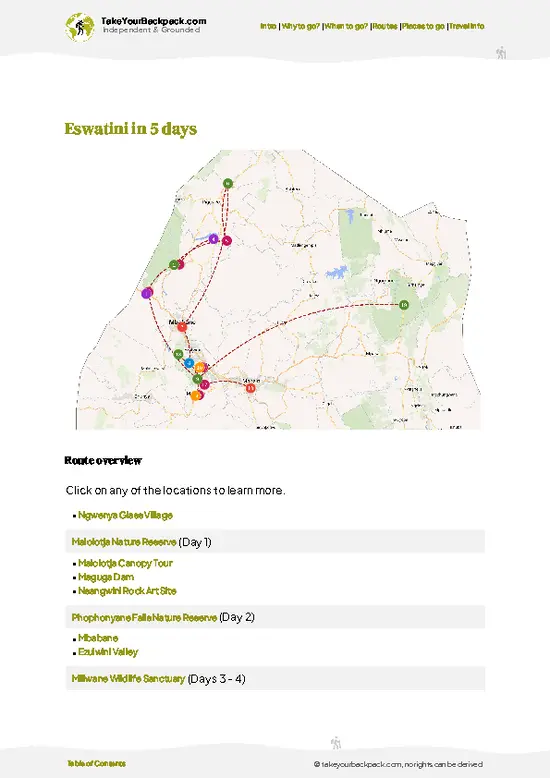
- Lobamba Royal Village (Ludzidzini): the seat of the Queen Mother and the stage for the Reed Dance. Outside ceremonies you can only view it from the road, so go in late August or early September when the event is open to spectators. Allow 3 to 5 hours on ceremony days; entry is usually free, with photography rules strictly enforced.
- King Sobhuza II Memorial Park: a monument and museum with a bronze statue of the late king, photographs and personal belongings. Mornings are quietest. Entry is about US$2 to 3 and a visit takes 45 minutes to an hour.
- Eswatini National Museum: displays on Swazi culture, history and natural heritage, including traditional dress and royal items. It is small and easy to cover in 45 minutes to an hour for around US$2 to 3. Weekday mornings are calmest.
- Parliament of Eswatini
- Lobamba Royal Village (Ludzidzini): the seat of the Queen Mother and the stage for the Reed Dance. Outside ceremonies you can only view it from the road, so go in late August or early September when the event is open to spectators. Allow 3 to 5 hours on ceremony days; entry is usually free, with photography rules strictly enforced.
- King Sobhuza II Memorial Park: a monument and museum with a bronze statue of the late king, photographs and personal belongings. Mornings are quietest. Entry is about US$2 to 3 and a visit takes 45 minutes to an hour.
- Eswatini National Museum: displays on Swazi culture, history and natural heritage, including traditional dress and royal items. It is small and easy to cover in 45 minutes to an hour for around US$2 to 3. Weekday mornings are calmest.
- Parliament of Eswatini (Libandla): the legislative complex in the valley. Mostly appreciated from outside, it takes about 20 minutes to photograph and is free. Go on a weekday when it is in session if you want to see the activity around it.
- Mandvulo Cultural Center area: the nearby Mantenga Cultural Village is the easiest place to see Swazi dance and homestead life. Shows run during the day and cost roughly US$8 to 12 with 1.5 to 2 hours needed. Morning visits avoid the heat.
Spotted a mistake or missing something? Contact us.

 Best Backpacking
.jpg) Hi, I’m Johan (Netherlands 🇳🇱), the creator of TakeYourBackpack. Over the past 3 decades, I’ve backpacked through 90+ countries across six continents, gaining extensive experience with independent travel, long-term trips, and overland routes.
Hi, I’m Johan (Netherlands 🇳🇱), the creator of TakeYourBackpack. Over the past 3 decades, I’ve backpacked through 90+ countries across six continents, gaining extensive experience with independent travel, long-term trips, and overland routes.