×

Eswatini🇸🇿 | townsEzulwiniMantenga Falls, beehive huts, hot springs, roadside craft stalls | things to do and best time to go

Explore LobambaExplore Malkerns

Backpacking in Ezulwini
🏆 Top picktown ranked #1
By Johan Kruseman 🇳🇱 | Updated October 22, 2026

The Ezulwini Valley is known as the “Valley of Heaven”, and its fame rests on Mantenga Falls and the cultural village, hot springs, craft stalls and a run of older resort hotels. It sits in western Eswatini, on the road between Mbabane and Manzini. There is no town center. The valley is a long strip along one highway, so places that look close on a map are too far apart to walk in the heat, and the roadsides have little pavement. Experienced travelers pick two or three stops per day and use the minibuses and local taxis that run along the main road. The valley is easy to reach from both cities. Evenings are quiet, because the hotels and lodges do the entertaining and there is no hostel street. You will meet other backpackers mostly at the few hostels and on shared transport. It suits hikers, culture-minded travelers and slow movers. If you want bars and a late scene, you will find it thin.

Discover everything you want to know in the 📖 Eswatini Travel Guide.


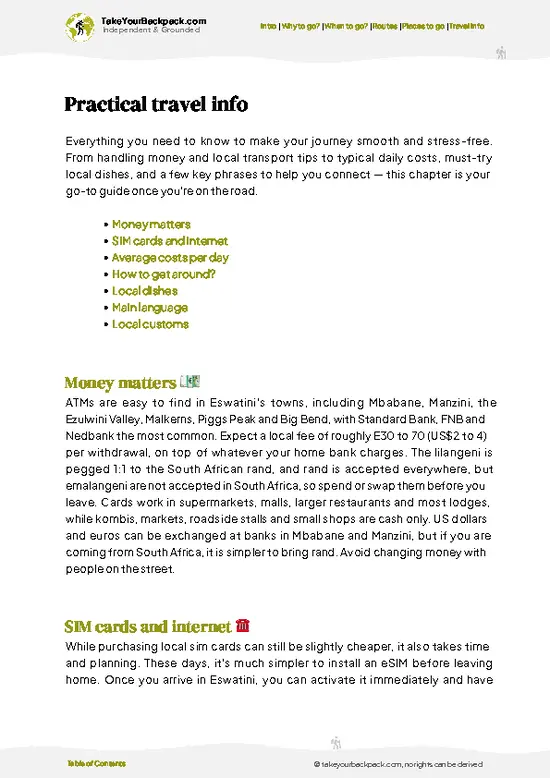
example page 0 from our offline Travel Guide for Eswatini
example page 1 from our offline Travel Guide for Eswatini
example page 2 from our offline Travel Guide for Eswatini
example page 3 from our offline Travel Guide for Eswatini
example page 4 from our offline Travel Guide for Eswatini
example page 5 from our offline Travel Guide for Eswatini
example page 6 from our offline Travel Guide for Eswatini
example page 7 from our offline Travel Guide for Eswatini
Loading the map 🌍
CLICK TO FILTER
cities
towns
landmarks
national parks
hikes
attractions
festivals
regions
SHOW COUNTRY’S BESTSHOW ALL

✨ Why go?
Ranked #1 town in Eswatini
What sets this place apart

Ezulwini works as a calm base between the two main cities, with the royal and cultural sites of the valley right on its doorstep. The anchor is Mantenga, where a reserve, a waterfall and a reconstructed beehive homestead sit together and give you the clearest introduction to Swazi customs in the country. Nearby, the Lobamba royal and parliamentary area and the game walks of Mlilwane are close enough to reach in an easy day, which is why many travelers stay two or three nights rather than just passing through. The craft stalls and workshops make shopping more rewarding than in most capitals, and you can talk to the makers. It is a good fit for slow travelers, solo visitors who like having a quiet bed after a full day, and anyone building a route around Eswatini’s cultural highlights. The social … read more 👉
Ezulwini works as a calm base between the two main cities, with the royal and cultural sites of the valley right on its doorstep. The anchor is Mantenga, where a reserve, a waterfall and a reconstructed beehive homestead sit together and give you the clearest introduction to Swazi customs in the country. Nearby, the Lobamba royal and parliamentary area and the game walks of Mlilwane are close enough to reach in an easy day, which is why many travelers stay two or three nights rather than just passing through. The craft stalls and workshops make shopping more rewarding than in most capitals, and you can talk to the makers. It is a good fit for slow travelers, solo visitors who like having a quiet bed after a full day, and anyone building a route around Eswatini’s cultural highlights. The social side stays low-key. Expect conversations over breakfast and on minibuses rather than a party crowd. Those who want hard hiking will move on to Malolotja, while others will find a night or two is enough.

💡 HighlightsDon't-miss highlights and experiences

  1. Mantenga Cultural Village: A reconstructed Swazi homestead of beehive huts, where guides explain how a traditional family lived, from the layout of the huts to the roles of each household member. The highlight is the dance performance, held at set times in the late morning and afternoon. Entry is roughly US$8 to 12 and a visit takes 1.5 to 2 hours. Go for the morning show, before the tour buses fill the arena.
  2. Mantenga Falls and Nature Reserve: A short walk from the village takes you to the falls, which drop about 45 meters in the wet season and thin to a trickle in winter. Trails through the reserve are easy, and impala and other small antelope are often seen. The reserve fee is about US$4 to 6 and the walk takes 1 to 2 hours. Start early, because the paths can be slippery after rain.
  3. Cuddle
… read more 👉
  1. Mantenga Cultural Village: A reconstructed Swazi homestead of beehive huts, where guides explain how a traditional family lived, from the layout of the huts to the roles of each household member. The highlight is the dance performance, held at set times in the late morning and afternoon. Entry is roughly US$8 to 12 and a visit takes 1.5 to 2 hours. Go for the morning show, before the tour buses fill the arena.
  2. Mantenga Falls and Nature Reserve: A short walk from the village takes you to the falls, which drop about 45 meters in the wet season and thin to a trickle in winter. Trails through the reserve are easy, and impala and other small antelope are often seen. The reserve fee is about US$4 to 6 and the walk takes 1 to 2 hours. Start early, because the paths can be slippery after rain.
  3. Cuddle Puppy Hot Springs: A small thermal pool complex in the valley, a good place to ease sore legs after a hike. Expect to pay around US$3 to 6 and plan on an hour or two. Late afternoon is best, when the daytime heat has gone and the water feels welcome.
  4. Gone Rural: A craft enterprise that sells handwoven grass goods and other items made by rural women across the country. The pieces are good quality and the income goes to the makers. Browsing is free, and a stop takes 30 to 45 minutes. Go in the morning when the workshop is active.
  5. Ezulwini Craft Market: Roadside stalls selling woodcarvings, baskets, beadwork and batik. Prices are negotiable, and the first offer is rarely the last. Allow 45 minutes to an hour, and carry small notes. Mornings are quieter and less pushy.
Ezulwini also puts several fine day trips within reach, including Mlilwane Wildlife Sanctuary, the royal and parliament area at Lobamba, Sibebe Rock near Mbabane and the highland trails of Malolotja Nature Reserve. Browsing the craft market costs nothing, and Gone Rural is free to look around, so those two are the cheapest stops.
Spotted a mistake or missing something? Contact us.

🏘️ NeighborhoodsUnderstanding the local layout

Ezulwini is a 12 km (7.5 mile) strip along the MR3 highway rather than a town with a center, so you learn it as a handful of clusters, and distances between them are why walking only works in parts.
  • Lobamba and the royal village: This is the cultural heart of the valley, home to the Parliament, the National Museum and the Mantenga-side royal sites. Flat, quiet and walkable within itself. Come in the morning, since offices and the museum close by late afternoon, and dress modestly.
  • Mantenga: A green pocket at the southern end with the Mantenga Nature Reserve, its waterfall and a reconstructed Swazi homestead. Expect birdsong and little else at night. The reserve entrance is a short ride off the highway, so arrange a minibus drop rather than walking the access road.
  • Central Ezulwini and the craft
… read more 👉
Ezulwini is a 12 km (7.5 mile) strip along the MR3 highway rather than a town with a center, so you learn it as a handful of clusters, and distances between them are why walking only works in parts.
  • Lobamba and the royal village: This is the cultural heart of the valley, home to the Parliament, the National Museum and the Mantenga-side royal sites. Flat, quiet and walkable within itself. Come in the morning, since offices and the museum close by late afternoon, and dress modestly.
  • Mantenga: A green pocket at the southern end with the Mantenga Nature Reserve, its waterfall and a reconstructed Swazi homestead. Expect birdsong and little else at night. The reserve entrance is a short ride off the highway, so arrange a minibus drop rather than walking the access road.
  • Central Ezulwini and the craft strip: Roadside craft stalls, candle and glass workshops and a few cafes line the highway, with casual restaurants serving grilled meat and pap. Shops are spread out, so walk short stretches and flag a minibus for the rest. Evenings are calm, with live music at a few lodge bars.
  • Lozitha and Sibebe side: The northern end toward Mbabane is more residential, with hotels and the casino complex pulling most of the nightlife. It is the only part where evenings feel lively. Pavements are patchy, and traffic moves fast, so take a minibus after dark.

⌛️ 1 day1-day itinerary for Ezulwini

The valley is spread along one highway, so the day runs on short taxi or minibus hops between stops, with a long break at midday when the heat peaks.
8:30 AM, Ezulwini Craft Market: Start with the roadside stalls before the sun gets strong. Browse the carvings and baskets, set a limit, and bargain politely. Take a taxi to the next stop.
10:00 AM, Gone Rural: Watch the weaving and look through the finished pieces. Items come from rural women across the country, and the quality is easy to judge up close. It takes about 40 minutes.
11:15 AM, Mantenga Cultural Village: Catch the late-morning dance performance and tour the beehive huts with a guide. The singing and stamping are physical and loud, and worth watching from the front.
1:00 PM, Lunch and a rest: Eat at a cafe or lodge near Mantenga and … read more 👉
The valley is spread along one highway, so the day runs on short taxi or minibus hops between stops, with a long break at midday when the heat peaks.
8:30 AM, Ezulwini Craft Market: Start with the roadside stalls before the sun gets strong. Browse the carvings and baskets, set a limit, and bargain politely. Take a taxi to the next stop.
10:00 AM, Gone Rural: Watch the weaving and look through the finished pieces. Items come from rural women across the country, and the quality is easy to judge up close. It takes about 40 minutes.
11:15 AM, Mantenga Cultural Village: Catch the late-morning dance performance and tour the beehive huts with a guide. The singing and stamping are physical and loud, and worth watching from the front.
1:00 PM, Lunch and a rest: Eat at a cafe or lodge near Mantenga and sit out the hottest hours in the shade.
2:30 PM, Mantenga Falls: Walk the short trail through the reserve to the falls and spend time at the viewpoint. It is quiet in the afternoon, and impala sometimes graze along the track.
4:30 PM, Lobamba village roads (off the usual route): Take a taxi to the quieter lanes around the national memorial and parliament area. Most travelers rush past, but the surrounding homesteads and small shops show everyday life in the royal district. Keep your camera down around official buildings, and ask before photographing people.
6:00 PM, Cuddle Puppy Hot Springs: Finish with a soak in the thermal water to ease your legs. Then head back to your bed for an early night.

🌤️ When to go?When to go for the best experience

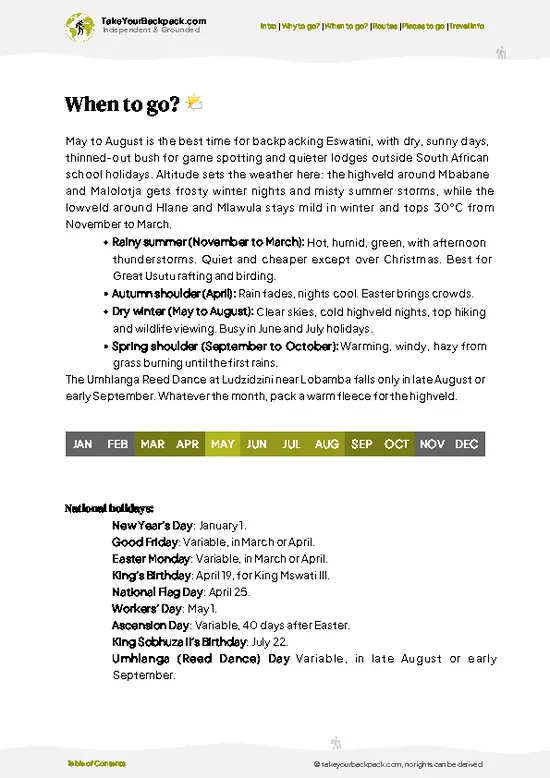
May to September is the easiest window, with dry, sunny days and cool nights. Winter days reach 20 to 24°C (68 to 75°F), but nights in the valley can drop to 5 to 8°C (41 to 46°F), so pack a fleece.
  • Winter (May to August): Clear skies, crisp mornings and short days with about 10.5 hours of daylight. Grass turns golden, hiking is comfortable and the Mantenga trails are dry. Lodge prices are steady.
  • Spring (September to October): Warming to 25 to 30°C (77 to 86°F), with the first storms toward October. Blooming jacarandas and few crowds make this a pleasant shoulder period.
  • Summer (November to March): Hot and humid, 28 to 33°C (82 to 91°F), with afternoon thunderstorms and daylight up to 14 hours. Everything is green, though gravel roads turn muddy. December to January brings local holiday traffic
… read more 👉
May to September is the easiest window, with dry, sunny days and cool nights. Winter days reach 20 to 24°C (68 to 75°F), but nights in the valley can drop to 5 to 8°C (41 to 46°F), so pack a fleece.
  • Winter (May to August): Clear skies, crisp mornings and short days with about 10.5 hours of daylight. Grass turns golden, hiking is comfortable and the Mantenga trails are dry. Lodge prices are steady.
  • Spring (September to October): Warming to 25 to 30°C (77 to 86°F), with the first storms toward October. Blooming jacarandas and few crowds make this a pleasant shoulder period.
  • Summer (November to March): Hot and humid, 28 to 33°C (82 to 91°F), with afternoon thunderstorms and daylight up to 14 hours. Everything is green, though gravel roads turn muddy. December to January brings local holiday traffic and slightly higher prices.
  • Culture Season (late August to early September): The Umhlanga Reed Dance draws large crowds to nearby Lobamba and pushes up lodging prices.
Book ahead if you want to catch the Reed Dance, and otherwise travel in May or September for the lowest prices.


source: climatestotravel.comJANJanuary: fair for travelingFEBFebruary: fair for travelingMARMarch: good for travelingAPRApril: good for travelingMAYMay: highly recommended for travelingJUNJune: excellent for travelingJULJuly: excellent for travelingAUGAugust: excellent for travelingSEPSeptember: highly recommended for travelingOCTOctober: good for travelingNOVNovember: good for travelingDECDecember: fair for traveling
when-to-go

✈️ The backpacker research shortcutEswatini Travel Guide

An offline-friendly backpacking guide with optimized travel routes, ranked highlights, transport advice, and the best areas to stay.
example page 0 from our offline Travel Guide for Eswatini
example page 1 from our offline Travel Guide for Eswatini
example page 2 from our offline Travel Guide for Eswatini
example page 3 from our offline Travel Guide for Eswatini
example page 4 from our offline Travel Guide for Eswatini
example page 5 from our offline Travel Guide for Eswatini
example page 6 from our offline Travel Guide for Eswatini
example page 7 from our offline Travel Guide for Eswatini
The digital guide (151 pages) contains:
✅ 33 highlights, ranked by travel appeal
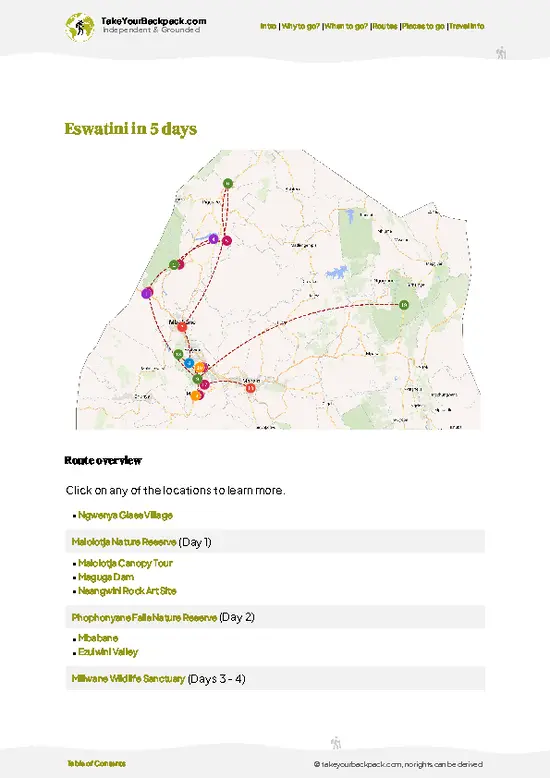
✅ Optimized 2, 3 & 5-day travel routes
✅ Cities, national parks, landmarks, beaches
✅ How to get around
✅ Offline-friendly for travel without Wi-Fi
👉 Click to see all 30+ guide features

📅 Plan smarter in minutes, not weeks
✅ Month by month travel advice
✅ Festivals & national holidays
✅ Budget expectations

🗺️ Go to the right places, skip the overrated ones
✅ Honest pros & cons of destinations
✅ Top hikes, parks & viewpoints
✅ Lesser-known places most travelers miss
✅ Clear “worth it vs skip it” guidance

🛏️ Travel smoothly without rookie mistakes
✅ Best areas to stay
✅ Transport systems explained simply
✅ Common scams & safety advice
✅ SIM cards, money & practical tips

🌍 Understand the country, not just visit it
✅ Culture & traditions
✅ 52 Essential phrases & customs
✅ Festivals worth planning around
✅ Traveler-friendly historical context
✅ Insights that make places more meaningful

📱 Built for real travel conditions
✅ Fully downloadable PDF
✅ Works completely offline
✅ Optimized for phone use
✅ Useful in remote areas & buses
✅ Everything in one place
Stop searching, start planning
Get instant access to your full guide. 30‑day money-back guarantee.
+ Add another guide for just

By proceeding you agree to our terms.
Sent to your inbox immediately after payment • 100% Secure Checkout
Best Backpacking Travel Advisor 2025 tourism awardBest Backpacking
Travel Advisor
2025
What others say about Take Your Backpack Guides:
⭐⭐⭐⭐⭐
Fantastic, amazing amount of information!
⭐⭐⭐⭐⭐
My goodness this is amazing, it's what I've been looking for hats off too you!
⭐⭐⭐⭐⭐
I think this is absolutely BRILLIANT
⭐⭐⭐⭐
Very complete and informative. It's still missing places, but I gotta to commend you
⭐⭐⭐⭐⭐
This is truly amazing, thank you, can't wait to explore it with my kids!
⭐⭐⭐⭐⭐
Awesome resource, thank you!
⭐⭐⭐⭐⭐
This is amazing! Can't wait to explore the ones I haven't seen
⭐⭐⭐⭐
I love this! Well done, great idea.
⭐⭐⭐⭐⭐
Thanks for taking the time to make this gem!
⭐⭐⭐⭐⭐
This might be the best website I've ever seen.
⭐⭐⭐⭐⭐
Congratulations, and thank you so much for your work; it's incredibly valuable.
⭐⭐⭐⭐
In all seriousness I think you did a great job pointing out the important spots
⭐⭐⭐⭐⭐
10/10 very good
⭐⭐⭐⭐⭐
As someone who's only just starting to visit regularly this is awesome, thank you.
⭐⭐⭐⭐
Thank you very much! I'm going to visit my dad, it's going to be very useful!
⭐⭐⭐⭐⭐
This is really cool! We'll be travelling for the first time and this definitely come in handy.
⭐⭐⭐⭐⭐
You are now our minister of culture, congratulations 👨‍💼
⭐⭐⭐⭐⭐
Just wanted to tell you that this is a pearl! Going to follow your recommendations.
⭐⭐⭐⭐⭐
This is so cool. I'll definitely be using the resource for my travels soon.
⭐⭐⭐⭐⭐
This is very impressive! Good work.
⭐⭐⭐⭐⭐
This is an amazing and informative site. Very well done!

🛏️ Where to stay?Best areas to stay in Eswatini

The best budget base is central Ezulwini near the craft strip, because it has the highest concentration of backpacker-priced rooms, minibus stops at the door and food within a short walk. Dorm beds are limited in the valley, so many travelers pay for a basic double or a camping spot at around US$15 to 40 per person. Being on the MR3 means minibuses reach you easily until the early evening, and a quick call to a local taxi covers the rest.

The second option is the Mantenga end of the valley, which suits you if you want quiet. It is green, low on traffic and noise, with a handful of guesthouses … read more 👉
The best budget base is central Ezulwini near the craft strip, because it has the highest concentration of backpacker-priced rooms, minibus stops at the door and food within a short walk. Dorm beds are limited in the valley, so many travelers pay for a basic double or a camping spot at around US$15 to 40 per person. Being on the MR3 means minibuses reach you easily until the early evening, and a quick call to a local taxi covers the rest.

The second option is the Mantenga end of the valley, which suits you if you want quiet. It is green, low on traffic and noise, with a handful of guesthouses and campsites. Nights are very still, so it is a good place for sleep, and the setting feels safe, with lodge security common. The trade-off is fewer places to eat, so plan to buy groceries beforehand or arrange dinner at your lodge.

The northern end near Lozitha is less convenient on a tight budget, as accommodation here leans toward larger hotels and the casino complex. It does put you closer to Mbabane, but walking after dark along the highway is not advisable.

Book ahead in late August and early September around the Reed Dance, and around December holidays, when rooms fill and prices rise.

🚌 Getting aroundMoving around without the hassle

Ezulwini is easiest to handle by minibus taxi, because they run constantly along the single MR3 highway that connects every cluster of the valley. The distances are too long to walk end to end, and there is no metro or city bus system, so the minibus is how locals and backpackers alike cover the strip.
  • Minibus taxis (kombis): Flag one down from the roadside anywhere on the MR3. Fares are roughly US$0.50 to 1.50 for hops within the valley, and about US$1 to 1.50 to Mbabane or Manzini. They run from about 5 am until around 7 or 8 pm, and thin out after dark. They leave when full, so a wait of 5 to 15 minutes at quieter stops is normal. Carry small change, since drivers rarely have much.
  • Walking: Works within Lobamba, Mantenga and short stretches of the craft strip. Pavements are patchy and traffic
… read more 👉
Ezulwini is easiest to handle by minibus taxi, because they run constantly along the single MR3 highway that connects every cluster of the valley. The distances are too long to walk end to end, and there is no metro or city bus system, so the minibus is how locals and backpackers alike cover the strip.
  • Minibus taxis (kombis): Flag one down from the roadside anywhere on the MR3. Fares are roughly US$0.50 to 1.50 for hops within the valley, and about US$1 to 1.50 to Mbabane or Manzini. They run from about 5 am until around 7 or 8 pm, and thin out after dark. They leave when full, so a wait of 5 to 15 minutes at quieter stops is normal. Carry small change, since drivers rarely have much.
  • Walking: Works within Lobamba, Mantenga and short stretches of the craft strip. Pavements are patchy and traffic on the highway is quick, so stay off the verge at dusk and avoid walking between clusters after dark. Day walks to craft stalls are pleasant, with shade scarce around midday.
  • Private taxis and ride hailing: Local taxis are available from hotels and can be called by phone. A trip along the valley costs about US$6 to 15 depending on distance, and negotiating the fare before you get in is standard. They are the practical option after the minibuses stop, or if you carry a large pack to a lodge off the highway.
  • Hitching: Locals do it, and drivers often stop for a small fee. Fares for shared lifts are similar to minibus rates. Do it in daylight, avoid doing it alone after dark, and agree on the price first.
  • Rental car: Driving is on the left. A small car costs around US$35 to 60 a day, and roads along the valley are tarred and in decent shape. Watch for pedestrians and livestock, and for speed cameras on the MR3. Fuel is available in the valley and in Mbabane.
For the Mantenga reserve and royal sites, ask the driver to drop you at the turnoff, since the last stretch is a short walk or a quick private ride.

👛 Costs (as of 22 October 2026)Travel costs and budget guide for Ezulwini

Ezulwini costs around US$55 to 90 a day for a backpacker, with accommodation as the biggest expense because dorm beds are scarce. Prices are lower if you camp and cook.
CategoryBudget RangeLocal Reality
Dorm accommodationUS$15 to 30 (low season US$12 to 25)Few true dorms, so a basic room share or campsite is common. Prices rise around the Reed Dance and December holidays.
MealsUS$10 to 20Grilled meat, pap and stews at casual spots cost US$4 to 7. Lodge restaurants cost more, and groceries are in Mbabane.
Local transportUS$2 to 6Minibus hops cost US$0.50 to 1.50. Private taxis after dark cost US$6 to 15.
Basic activities/entry feesUS$8 to 20Mantenga reserve and Mlilwane entries are the main costs. Craft workshops are free to browse.
Miscellaneous expensesUS$5 to 10Water, snacks, data and the occasional
… read more 👉
Ezulwini costs around US$55 to 90 a day for a backpacker, with accommodation as the biggest expense because dorm beds are scarce. Prices are lower if you camp and cook.
CategoryBudget RangeLocal Reality
Dorm accommodationUS$15 to 30 (low season US$12 to 25)Few true dorms, so a basic room share or campsite is common. Prices rise around the Reed Dance and December holidays.
MealsUS$10 to 20Grilled meat, pap and stews at casual spots cost US$4 to 7. Lodge restaurants cost more, and groceries are in Mbabane.
Local transportUS$2 to 6Minibus hops cost US$0.50 to 1.50. Private taxis after dark cost US$6 to 15.
Basic activities/entry feesUS$8 to 20Mantenga reserve and Mlilwane entries are the main costs. Craft workshops are free to browse.
Miscellaneous expensesUS$5 to 10Water, snacks, data and the occasional craft purchase.
Total Daily BudgetUS$55 to 90Around US$60 on a typical day with camping or a shared room.
Buying groceries in Mbabane and cooking at your lodge can cut food costs by half. Travelers pay in the local lilangeni, though US dollar amounts here are converted for reference.
⚠️ Prices can change and everyone travels differently, so take this as a rough guide. Hope it helps you plan your adventure!

🚌 Day tripsShort trips worth adding

Ezulwini sits at the center of the Mbabane to Manzini corridor, so day trips by minibus are easy and cheap, with most ending before dark.
Mlilwane Wildlife Sanctuary:
Zebra, giraffe, impala and hippo roam in a sanctuary where you can walk or cycle among animals, with no big predators. It is around 15 minutes by minibus and short walk from the main road. Budget about US$25 to 40 including entry, and rent a bike for an easy loop. Go in the cooler months for comfortable walking, and arrive early because animals are most active in the morning.
👉 Explore Mlilwane Wildlife Sanctuary
Mbabane:
The capital is about 20 to 30 minutes away by minibus for US$1 to 1.50. It is useful for markets, banks, and cheap meals, and for stocking up on supplies. It is not a sightseeing highlight, so plan a half day. … read more 👉
Ezulwini sits at the center of the Mbabane to Manzini corridor, so day trips by minibus are easy and cheap, with most ending before dark.
Mlilwane Wildlife Sanctuary:
Zebra, giraffe, impala and hippo roam in a sanctuary where you can walk or cycle among animals, with no big predators. It is around 15 minutes by minibus and short walk from the main road. Budget about US$25 to 40 including entry, and rent a bike for an easy loop. Go in the cooler months for comfortable walking, and arrive early because animals are most active in the morning.
👉 Explore Mlilwane Wildlife Sanctuary
Mbabane:
The capital is about 20 to 30 minutes away by minibus for US$1 to 1.50. It is useful for markets, banks, and cheap meals, and for stocking up on supplies. It is not a sightseeing highlight, so plan a half day. Many first-timers arrive in late afternoon, when minibuses thin out, so be back before about 6 pm.
👉 Explore Mbabane
Sibebe Rock:
One of the world’s largest granite domes, reached by a signed track north of Mbabane. The guided climb takes around 2 to 3 hours and costs roughly US$10 to 15. Travel time from Ezulwini is about 45 minutes with a minibus change in Mbabane. Go in the dry season, because wet granite is slippery, and wear shoes with real grip rather than sandals.
👉 Explore Sibebe Rock
Malolotja Nature Reserve:
A higher, wilder park with grassland, waterfalls and well-marked trails, about 1 to 1.5 hours from Ezulwini toward the north. Public transport only reaches the main road, so a hired car or private driver at US$40 to 70 makes it practical. Entry is around US$5 to 8. Start early, since afternoon storms are common in summer.
👉 Explore Malolotja Nature Reserve

🛡️ SafetyStaying Safe: What Travelers Should Know

Ezulwini is generally calm, and most problems are petty and avoidable. The main risk is theft from unattended bags and parked cars, so keep belongings out of sight and take valuables with you when you leave a vehicle at a trailhead or craft stall. Walking along the MR3 highway after dark is the situation that most often causes trouble, because the road is unlit in places, traffic is fast and pavements are patchy. After sundown, use a local taxi arranged by your lodge instead. Solo travelers, including women, usually find the valley easy, though isolated stretches and quiet campsites are better avoided at night. Minibus pickpocketing is uncommon, but keep phones and cash in front pockets when it is full. Craft sellers can be persistent but are friendly, and a polite no works. Haggle gently, … read more 👉
Ezulwini is generally calm, and most problems are petty and avoidable. The main risk is theft from unattended bags and parked cars, so keep belongings out of sight and take valuables with you when you leave a vehicle at a trailhead or craft stall. Walking along the MR3 highway after dark is the situation that most often causes trouble, because the road is unlit in places, traffic is fast and pavements are patchy. After sundown, use a local taxi arranged by your lodge instead. Solo travelers, including women, usually find the valley easy, though isolated stretches and quiet campsites are better avoided at night. Minibus pickpocketing is uncommon, but keep phones and cash in front pockets when it is full. Craft sellers can be persistent but are friendly, and a polite no works. Haggle gently, since prices are lower than in larger tourist hubs. Dress modestly around Lobamba and royal sites, and ask before photographing people or official buildings.

FAQCommon questions from travelers

Ezulwini is worth visiting for two or three days, mainly for its cultural sites and easy wildlife. The Mantenga Nature Reserve and cultural village, the Lobamba royal sites and nearby Mlilwane Sanctuary are all within a short minibus ride. Hiking, craft shopping and relaxed evenings make it a good base rather than just a stopover.
Ezulwini works best with two to three days. One day covers Mantenga and the Lobamba museum and parliament area, while another suits Mlilwane Wildlife Sanctuary, about 15 minutes away. A third day lets you add Sibebe Rock or the Mbabane markets, about 30 to 45 minutes by minibus.
Ezulwini can be visited as a day trip from Mbabane, which is only 20 to 30 minutes away by minibus for US$1 to 1.50, and from Manzini at about 30 to 40 minutes. A day gives time for the Mantenga reserve and Lobamba, but not for Mlilwane or hiking. The last minibuses run around 7 to 8 pm, so plan a return before dark.
⚠️ Things can change over time, so always validate details locally before you go.

Other Swazi towns near Ezulwini

Explore more nearby:

  • Lobamba—Royal village, Reed Dance, parliament, memorial museums| 6 km away
  • Malkerns—Glassblowers, candle workshops, pineapple farms, live music| 15 km away
  • Bulembu—Ex-asbestos mine, misty hills, sawmill, rough road| 50 km away

💡 Not sure where to go next?
Create a personalized itinerary for Eswatini including Ezulwini and the places that fit your trip.

Generate my itinerary

👉 Discover all towns

Or checkout all Eswatini has to offer (think cities, towns, villages, national parks, hikes, beaches, festivals)
Country photo of Eswatini

We 💚 feedbackParting advice and final tips

Ezulwini looks compact on a map, and that is where travelers go wrong: they set out on foot along the highway and end up sunburned, dodging traffic with nowhere to stop. Plan two or three stops per day and flag a minibus or taxi between them. I would also book your Mantenga visit for the morning dance show, then spend the afternoon at the hot springs.

✍️ Help improve this page!
The information on this page is based on in-depth research, insights shared by experienced travelers, and feedback from the local travel community in Eswatini. While every effort is made to keep the information accurate and current, conditions can change — so if you spot anything incorrect or outdated, please get in touch.


🙋‍♂️ Give feedback

👋 Meet the founderWho’s Behind Take Your Backpack?

Johan, backpacker and founder of TakeYourBackpackHi, I’m Johan (Netherlands 🇳🇱), the creator of TakeYourBackpack. Over the past 3 decades, I’ve backpacked through 90+ countries across six continents, gaining extensive experience with independent travel, long-term trips, and overland routes.

This site is built on a combination of firsthand travel experience and carefully curated insights from other backpackers. Many guides are based on places I’ve personally visited, while others bring together tips, observations, and practical advice shared by trusted travelers I’ve met along the way.

The goal is to provide realistic, experience-driven guidance — not generic itineraries — so you can explore destinations with better context, clearer expectations, and more confidence.