×

Eswatini🇸🇿 | townsMbabanecapital city, government offices, hillside neighborhoods | things to do and best time to go

Explore LobambaExplore Nhlangano

Backpacking in Mbabane
🏆 Top picktown ranked #1
By Johan Kruseman 🇳🇱 | Updated June 10, 2026

You’re standing on a cracked sidewalk in Mbabane just after a rainstorm, the air sharp with eucalyptus and woodsmoke, the hills around town still beaded with mist. Mbabane sits in the highlands of northwestern Eswatini, a compact capital that feels more like a mountain outpost than a city. For backpackers, it’s a practical pause—less a destination in itself, more a springboard for the real show: the green ridges of Malolotja Nature Reserve, the craft markets at Ezulwini, or the slow, scenic road to Mozambique. The town’s center is walkable but small, with a handful of cafés and a market where you’ll find woven baskets and the occasional soccer jersey. Nights are quiet, hostels are few, and you’ll meet more aid workers than travelers swapping stories. Minibuses connect you to bigger adventures, but don’t expect seamless schedules. Mbabane is safer and more relaxed than Manzini, but less lively—think mountain air and early nights, not nightlife. Costs are moderate, but the real value is in the easy access to Eswatini’s wild side.

Discover everything you want to know in the 📖 Eswatini Travel Guide.


Get your Eswatini guide
46 ranked highlights, routes & tips, works offline (202 pages)
Loading the map 🌍
CLICK TO FILTER
cities
towns
landmarks
national parks
hikes
attractions
festivals
regions
SHOW COUNTRY’S BESTSHOW ALL

✨ Why go?
Ranked #1 town in Eswatini
Why Mbabane should be on your travel list

Backpackers flock to Mbabane for its strategic location within Eswatini, serving as a gateway to stunning hikes and cultural experiences. The surrounding mountains offer trails that range from easy strolls to challenging treks, making it a perfect base for hikers. You can easily access the Mlilwane Wildlife Sanctuary or the Blyde River Canyon, both within a short drive.

The town itself is a friendly hub with small-scale hostels and guesthouses that encourage interaction among travelers. You’ll find local food stalls where the aroma of grilled meats and spicy stews fills the air, inviting you to dive into authentic Eswatini cuisine. The walkable streets create a cozy atmosphere, perfect for solo travelers or small groups looking to connect.

Most backpackers tend to stay for a few days, … read more 👉
Backpackers flock to Mbabane for its strategic location within Eswatini, serving as a gateway to stunning hikes and cultural experiences. The surrounding mountains offer trails that range from easy strolls to challenging treks, making it a perfect base for hikers. You can easily access the Mlilwane Wildlife Sanctuary or the Blyde River Canyon, both within a short drive.

The town itself is a friendly hub with small-scale hostels and guesthouses that encourage interaction among travelers. You’ll find local food stalls where the aroma of grilled meats and spicy stews fills the air, inviting you to dive into authentic Eswatini cuisine. The walkable streets create a cozy atmosphere, perfect for solo travelers or small groups looking to connect.

Most backpackers tend to stay for a few days, soaking in the local vibe and planning their next adventure. It’s not a party town, so if you’re seeking a lively nightlife, you might want to keep moving. Instead, Mbabane offers a calm retreat for those who appreciate the journey as much as the destination.
Want to include Mbabane in your Eswatini route?
Create a personalized Eswatini itinerary that includes Mbabane and the places that fit your trip — based on your travel style, budget, and available time. Get your route in seconds.

Generate my trip

💡 HighlightsWhat this place is best known for

  • Indingilizi Gallery — Mbabane’s best spot for Swazi contemporary and traditional art, with rotating exhibitions, locally made paintings, prints and sculpture. It’s the place to see how modern Swazi artists interpret tradition and to pick up authentic pieces you won’t find in souvlaki-style tourist shops.
  • Mbabane Market (Main Market) — The city’s bustling open-air market where farmers, traders and craft sellers converge. It’s the clearest, most immediate way to feel daily life in Mbabane: fresh produce stalls, baskets and beadwork, secondhand clothing and lively bargaining. Great for people-watching and finding affordable local handicrafts.
Nearby day-trip highlights you can visit easily from Mbabane include Mantenga Cultural Village and Mantenga Falls, the wildlife and walking trails at … read more 👉
  • Indingilizi Gallery — Mbabane’s best spot for Swazi contemporary and traditional art, with rotating exhibitions, locally made paintings, prints and sculpture. It’s the place to see how modern Swazi artists interpret tradition and to pick up authentic pieces you won’t find in souvlaki-style tourist shops.
  • Mbabane Market (Main Market) — The city’s bustling open-air market where farmers, traders and craft sellers converge. It’s the clearest, most immediate way to feel daily life in Mbabane: fresh produce stalls, baskets and beadwork, secondhand clothing and lively bargaining. Great for people-watching and finding affordable local handicrafts.
Nearby day-trip highlights you can visit easily from Mbabane include Mantenga Cultural Village and Mantenga Falls, the wildlife and walking trails at Mlilwane Wildlife Sanctuary in the Ezulwini Valley, and the hiking and scenic ridges at Malolotja Nature Reserve.
Spotted a mistake or missing something? Contact us.

🏘️ NeighborhoodsUnderstanding the local layout

Mbabane, the capital of Eswatini, offers a unique blend of urban life and natural beauty. Each neighborhood has its own character, making it essential to choose wisely for your backpacking adventure.

City Center
This is the heartbeat of Mbabane. Bustling markets, shops, and eateries fill the streets. The vibe is energetic, perfect for those who thrive on activity. Prices are generally reasonable, but you can find splurges if you seek them out. Walkability is high, with most attractions within a short stroll. Nightlife here is lively, with bars and live music, making it suitable for both short and longer stays.

Manzini Road
A bit quieter, this area offers a more local experience. You’ll find cozy guesthouses and local eateries serving traditional dishes. The atmosphere is laid-back, ideal … read more 👉
Mbabane, the capital of Eswatini, offers a unique blend of urban life and natural beauty. Each neighborhood has its own character, making it essential to choose wisely for your backpacking adventure.

City Center
This is the heartbeat of Mbabane. Bustling markets, shops, and eateries fill the streets. The vibe is energetic, perfect for those who thrive on activity. Prices are generally reasonable, but you can find splurges if you seek them out. Walkability is high, with most attractions within a short stroll. Nightlife here is lively, with bars and live music, making it suitable for both short and longer stays.

Manzini Road
A bit quieter, this area offers a more local experience. You’ll find cozy guesthouses and local eateries serving traditional dishes. The atmosphere is laid-back, ideal for those wanting to escape the hustle. Transport links are solid, with easy access to public transport. It’s a great spot for longer stays, allowing you to soak in the local culture without the constant buzz.

Hhohho Region
Just outside the city, this area is perfect for nature lovers. Hiking trails and scenic views abound, making it a refreshing escape. Accommodation here tends to be more rustic and budget-friendly. While it’s less walkable, the tranquility is worth it. Ideal for longer stays, you can immerse yourself in the stunning landscapes and local wildlife.

Ngwane Park
This residential area offers a peaceful retreat. It’s less touristy, giving you a chance to connect with locals. Prices are lower, and the vibe is relaxed. While nightlife is minimal, the quiet streets are perfect for unwinding after a day of exploration. Short stays work well here, especially if you want a taste of everyday life in Mbabane.

⌛️ 1 day1-day itinerary for Mbabane

Mbabane, the capital of Eswatini, is a vibrant blend of urban life and lush landscapes. The air carries a hint of pine from the surrounding hills, and the streets hum with the rhythm of local markets and friendly chatter. It’s a place where tradition meets modernity, and spending a day here can be both enriching and invigorating.

Start your morning at the Mbabane Market. The scent of fresh produce and spices fills the air as you navigate through colorful stalls. Grab a local breakfast of “sishwala” (a maize porridge) paired with a cup of strong, sweet tea. Engage with the vendors; their stories add depth to your experience. This isn’t just shopping; it’s a cultural immersion.

After fueling up, head to the nearby Swazi Cultural Village. It’s often overlooked by tourists, but it offers a genuine … read more 👉
Mbabane, the capital of Eswatini, is a vibrant blend of urban life and lush landscapes. The air carries a hint of pine from the surrounding hills, and the streets hum with the rhythm of local markets and friendly chatter. It’s a place where tradition meets modernity, and spending a day here can be both enriching and invigorating.

Start your morning at the Mbabane Market. The scent of fresh produce and spices fills the air as you navigate through colorful stalls. Grab a local breakfast of “sishwala” (a maize porridge) paired with a cup of strong, sweet tea. Engage with the vendors; their stories add depth to your experience. This isn’t just shopping; it’s a cultural immersion.

After fueling up, head to the nearby Swazi Cultural Village. It’s often overlooked by tourists, but it offers a genuine glimpse into traditional Swazi life. Walk through the reconstructed homesteads, and if you’re lucky, you might catch a dance performance. The vibrant costumes and rhythmic drumming will leave you buzzing with energy.

As the afternoon sun climbs, make your way to the Mantenga Nature Reserve. The trails here are well-marked, leading you through lush greenery to the Mantenga Falls. The sound of cascading water is a refreshing backdrop as you take in the beauty around you. Bring a snack to enjoy by the falls; the tranquility is a perfect contrast to the morning’s hustle.

As evening approaches, return to the city and explore the vibrant neighborhood of Ezulwini Valley. Here, you’ll find a mix of local eateries and lively bars. Try a traditional dish like “braai” (grilled meat) at a local spot. The atmosphere is relaxed, and the laughter of locals creates a welcoming vibe.

End your day with a stroll through the streets, soaking in the warm glow of streetlights and the sounds of the night. Mbabane is not just a stopover; it’s a place that invites you to linger and connect.
Turn your Mbabane visit into an Eswatini adventure
Build a complete Eswatini route with Mbabane, hidden gems, must-see destinations, and realistic travel times included.

Generate my trip

🌤️ When to go?Weather, crowds, and seasonal trade-offs


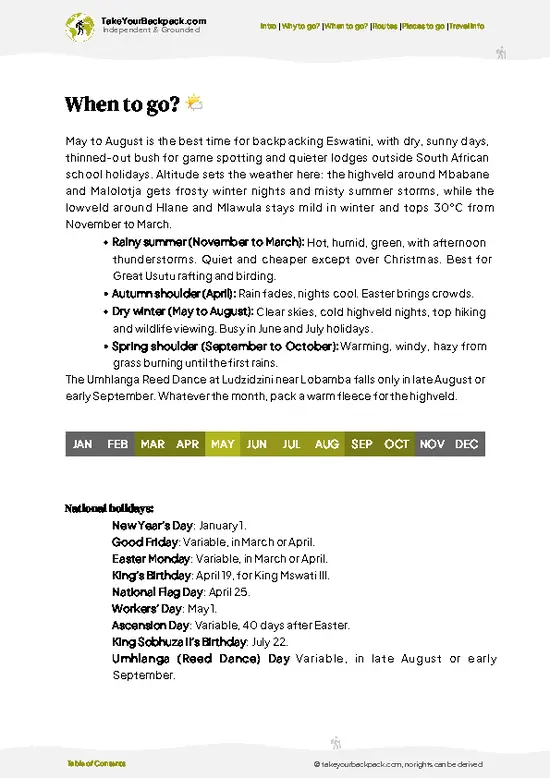
  • Weather: Mbabane’s climate swings between a wet summer and a dry winter. From November to March, expect warm days around 25-30°C (77-86°F) with frequent afternoon showers that freshen the air but can turn trails muddy. The dry season, May to September, offers crisp, clear days around 15-22°C (59-72°F), perfect for hiking without the humidity weighing you down.

  • Temperature: Nights in the dry season can dip to 5-10°C (41-50°F), so pack layers. The wet season nights stay milder but stickier, hovering around 18-20°C (64-68°F). This temperature contrast shapes how you plan your daily rhythm—early starts beat the heat and rain.

  • Daylight Hours: Daylight stretches from about 11 to 13 hours year-round. The longer days in summer mean more time to explore but also more chance of afternoon storms.
read more 👉

  • Weather: Mbabane’s climate swings between a wet summer and a dry winter. From November to March, expect warm days around 25-30°C (77-86°F) with frequent afternoon showers that freshen the air but can turn trails muddy. The dry season, May to September, offers crisp, clear days around 15-22°C (59-72°F), perfect for hiking without the humidity weighing you down.

  • Temperature: Nights in the dry season can dip to 5-10°C (41-50°F), so pack layers. The wet season nights stay milder but stickier, hovering around 18-20°C (64-68°F). This temperature contrast shapes how you plan your daily rhythm—early starts beat the heat and rain.

  • Daylight Hours: Daylight stretches from about 11 to 13 hours year-round. The longer days in summer mean more time to explore but also more chance of afternoon storms. Winter’s shorter days encourage a focused, early-morning adventure before dusk settles in.

  • Crowds: Tourist flow peaks during the dry months when the weather is most reliable. You’ll find fewer travelers in the wet season, which means quieter trails and more authentic local interactions, though some remote paths might be less accessible.

  • Seasonal Activities: The dry season is prime for hiking, birdwatching, and cultural festivals like the Reed Dance in August, a vibrant local event. The wet season brings lush landscapes and blooming flora, rewarding those willing to brave the occasional downpour with vivid scenery.

  • Price Fluctuations: Accommodation and tours tend to be pricier in the dry season due to demand. The wet season offers better deals and more room to negotiate, making it a smart choice if you’re flexible and don’t mind a little rain.


Pro-tip: Aim for late dry season (August to September) to catch cool, clear days, fewer crowds, and the Reed Dance’s cultural pulse—this combo unlocks Mbabane’s best backpacking vibe without the usual hustle.


source: climatestotravel.comJANJanuary: good for travelingFEBFebruary: good for travelingMARMarch: good for travelingAPRApril: fair for travelingMAYMay: highly recommended for travelingJUNJune: highly recommended for travelingJULJuly: highly recommended for travelingAUGAugust: excellent for travelingSEPSeptember: excellent for travelingOCTOctober: highly recommended for travelingNOVNovember: good for travelingDECDecember: good for traveling
when-to-go

✈️ The backpacker research shortcutEswatini Travel Guide

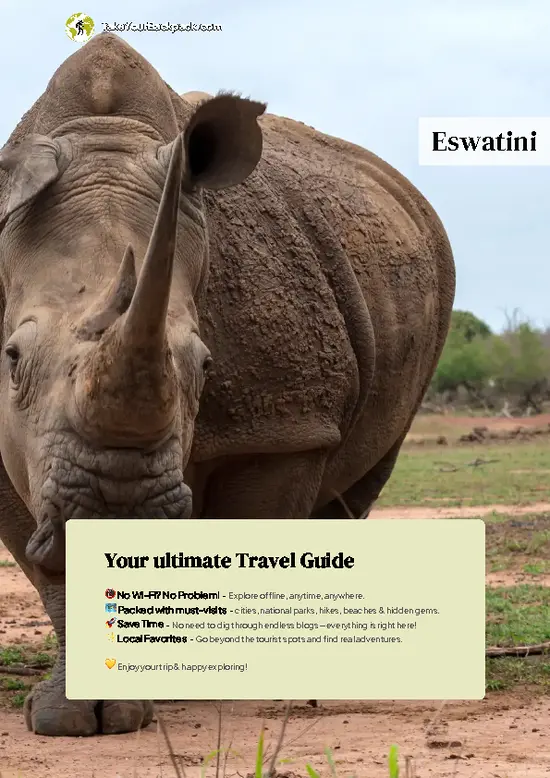
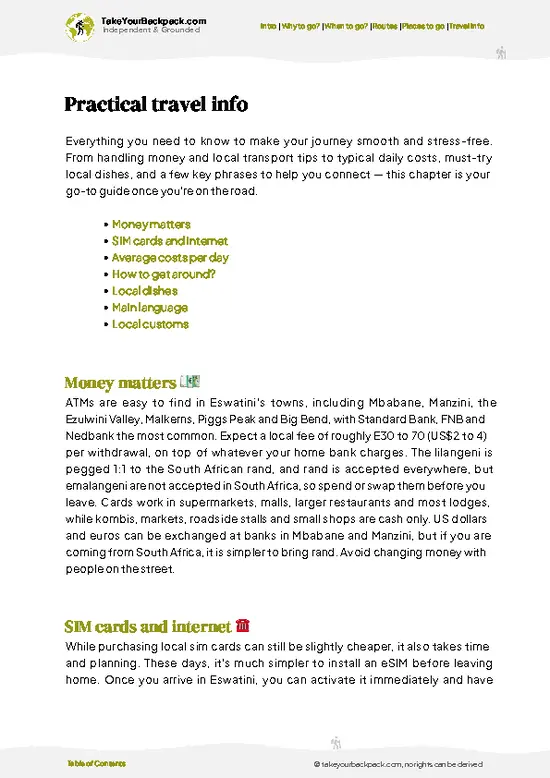
An offline-friendly backpacking guide with optimized travel routes, ranked highlights, transport advice, and the best areas to stay.
example page 0 from our offline Travel Guide for Eswatini
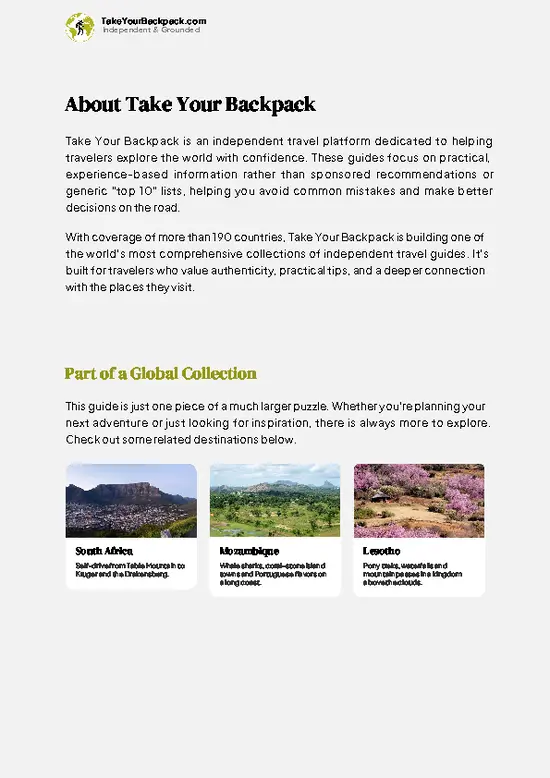
example page 1 from our offline Travel Guide for Eswatini
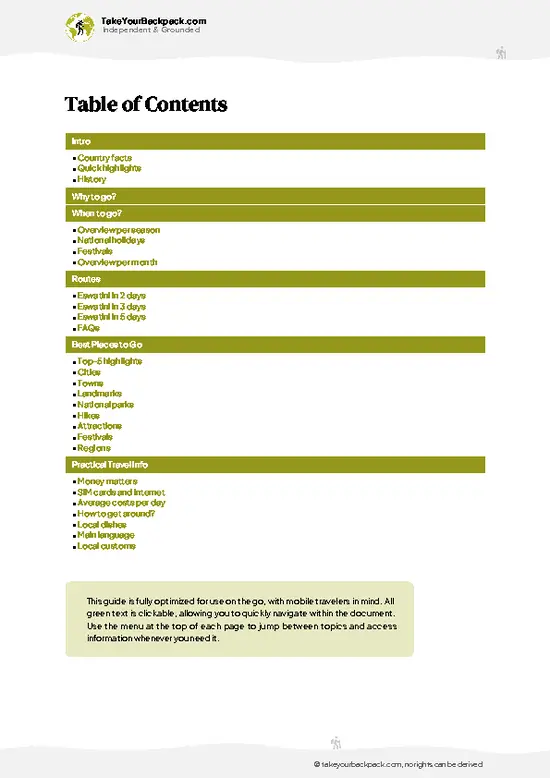
example page 2 from our offline Travel Guide for Eswatini
example page 3 from our offline Travel Guide for Eswatini
example page 4 from our offline Travel Guide for Eswatini
example page 5 from our offline Travel Guide for Eswatini
example page 6 from our offline Travel Guide for Eswatini
example page 7 from our offline Travel Guide for Eswatini
The digital guide (202 pages) contains:
46 highlights, ranked by travel appeal
Optimized 2, 3 & 5-day travel routes
Cities, national parks, landmarks, beaches
How to get around
Offline-friendly for travel without Wi-Fi
👉 Click to see all 30+ guide features

📅 Plan smarter in minutes, not weeks
Month by month travel advice
Festivals & national holidays
Budget expectations

🗺️ Go to the right places, skip the overrated ones
Honest pros & cons of destinations
Top hikes, parks & viewpoints
Lesser-known places most travelers miss
Clear “worth it vs skip it” guidance

🛏️ Travel smoothly without rookie mistakes
Best areas to stay
Transport systems explained simply
Common scams & safety advice
SIM cards, money & practical tips

🌍 Understand the country, not just visit it
Culture & traditions
52 Essential phrases & customs
Festivals worth planning around
Traveler-friendly historical context
Insights that make places more meaningful

📱 Built for real travel conditions
Fully downloadable PDF
Works completely offline
Optimized for phone use
Useful in remote areas & buses
Everything in one place
Save weeks of stressful planning
Get instant access to your full guide. 30‑day money-back guarantee.


By proceeding you agree to our terms.
Sent to your inbox immediately after payment • 100% Secure Checkout
Best Backpacking Travel Advisor 2025 tourism awardBest Backpacking
Travel Advisor
2025
What others say about Take Your Backpack Guides:
⭐⭐⭐⭐⭐
Fantastic, amazing amount of information!
⭐⭐⭐⭐⭐
My goodness this is amazing, it's what I've been looking for hats off too you!
⭐⭐⭐⭐⭐
I think this is absolutely BRILLIANT
⭐⭐⭐⭐
Very complete and informative. It's still missing places, but I gotta to commend you
⭐⭐⭐⭐⭐
This is truly amazing, thank you, can't wait to explore it with my kids!
⭐⭐⭐⭐⭐
Awesome resource, thank you!
⭐⭐⭐⭐⭐
This is amazing! Can't wait to explore the ones I haven't seen
⭐⭐⭐⭐
I love this! Well done, great idea.
⭐⭐⭐⭐⭐
Thanks for taking the time to make this gem!
⭐⭐⭐⭐⭐
This might be the best website I've ever seen.
⭐⭐⭐⭐⭐
Congratulations, and thank you so much for your work; it's incredibly valuable.
⭐⭐⭐⭐
In all seriousness I think you did a great job pointing out the important spots
⭐⭐⭐⭐⭐
10/10 very good
⭐⭐⭐⭐⭐
As someone who's only just starting to visit regularly this is awesome, thank you.
⭐⭐⭐⭐
Thank you very much! I'm going to visit my dad, it's going to be very useful!
⭐⭐⭐⭐⭐
This is really cool! We'll be travelling for the first time and this definitely come in handy.
⭐⭐⭐⭐⭐
You are now our minister of culture, congratulations 👨‍💼
⭐⭐⭐⭐⭐
Just wanted to tell you that this is a pearl! Going to follow your recommendations.
⭐⭐⭐⭐⭐
This is so cool. I'll definitely be using the resource for my travels soon.
⭐⭐⭐⭐⭐
This is very impressive! Good work.
⭐⭐⭐⭐⭐
This is an amazing and informative site. Very well done!

🛏️ Where to stay?Best areas and accommodation options

Mbabane’s heart for backpackers pulses strongest around the city center and the nearby suburb of Lobamba. These areas strike a balance between safety and social buzz, making them the natural hubs for solo travelers and budget-conscious adventurers. The city center is compact, so you’re never far from the pulse of daily life—markets where the scent of fresh maize mingles with the sharp tang of spices, street vendors calling out in Siswati, and the occasional burst of laughter from a nearby café. It’s a place where you can walk confidently after dark, thanks to a steady presence of locals and fellow … read more 👉
Mbabane’s heart for backpackers pulses strongest around the city center and the nearby suburb of Lobamba. These areas strike a balance between safety and social buzz, making them the natural hubs for solo travelers and budget-conscious adventurers. The city center is compact, so you’re never far from the pulse of daily life—markets where the scent of fresh maize mingles with the sharp tang of spices, street vendors calling out in Siswati, and the occasional burst of laughter from a nearby café. It’s a place where you can walk confidently after dark, thanks to a steady presence of locals and fellow travelers.

Lobamba, just a short ride away, offers a quieter but equally welcoming vibe. It’s where you’ll find a handful of hostels that double as social hubs, perfect for swapping stories over a shared meal or planning your next move. The vibe here is more laid-back, with tree-lined streets and a slower rhythm that lets you breathe in the cool mountain air. Both areas have enough budget accommodation to avoid the tourist traps, but they’re also close enough to the city’s cultural spots and transport links to keep your options open.

Avoid the outskirts where public transport thins out and the streets lose their evening warmth. Staying central or in Lobamba means you’re plugged into Mbabane’s real energy—safe, social, and authentically local.

🚌 Getting aroundTransportation options and practical tips

Mbabane moves at a pace that’s neither frantic nor sluggish—it’s a town where the rhythm is set by the sun and the chatter of market vendors rather than strict timetables. The air carries a faint mix of eucalyptus and fresh rain, a scent that lingers long after the drizzle stops. Streets pulse with a blend of purposeful strides and spontaneous stops, where locals navigate by intuition more than schedules. This is a place where you learn quickly that timing is flexible, and the best way to get around is to embrace the ebb and flow of daily life rather than fight it.

Walking: Mbabane’s compact center is a walker’s playground. The cool mountain air and shaded streets make strolling not just practical but refreshing. Most key spots—markets, government offices, and eateries—are within a 20-minute … read more 👉
Mbabane moves at a pace that’s neither frantic nor sluggish—it’s a town where the rhythm is set by the sun and the chatter of market vendors rather than strict timetables. The air carries a faint mix of eucalyptus and fresh rain, a scent that lingers long after the drizzle stops. Streets pulse with a blend of purposeful strides and spontaneous stops, where locals navigate by intuition more than schedules. This is a place where you learn quickly that timing is flexible, and the best way to get around is to embrace the ebb and flow of daily life rather than fight it.

Walking: Mbabane’s compact center is a walker’s playground. The cool mountain air and shaded streets make strolling not just practical but refreshing. Most key spots—markets, government offices, and eateries—are within a 20-minute walk of each other. Walking costs nothing, offers the richest sensory experience, and lets you absorb the town’s pulse at your own pace.

Minibus Taxis: These are the backbone of Mbabane’s transit, weaving through the city with a chaotic charm. They don’t run on strict schedules but start filling up early morning and taper off by 6 PM. Fares hover around 5 to 10 Emalangeni (roughly $0.30 to $0.60), making them the cheapest option. Expect a tight squeeze and frequent stops, but the ride offers a raw, unfiltered glimpse of local life.

Commuter Buses: For longer hauls out of town, commuter buses provide a more structured alternative. They leave from the main bus rank near the city center, typically starting around 6 AM and running until late afternoon. Tickets cost between 20 and 50 Emalangeni depending on the destination. These buses are slower than private cars but more comfortable than minibuses, with designated stops and a semblance of schedule.

Motorcycle Taxis (Boda Bodas): If you’re in a hurry or carrying a heavy pack, boda bodas are your go-to. They dart through traffic with nimble agility, cutting travel time in half compared to other options. Prices vary but expect to pay around 20 to 40 Emalangeni for short trips. Helmets aren’t always guaranteed, so hold tight and prepare for a rush of wind and city sounds.

Private Car Hire: Renting a car or hiring a driver is the priciest but most flexible way to explore beyond Mbabane’s limits. It’s worth it if you want to chase the misty hills or remote villages on your own schedule. Expect to pay upwards of 300 Emalangeni per day. The roads are generally in good shape, but local driving can be unpredictable—stay alert and enjoy the freedom.

Understanding Mbabane’s transit is about tuning into its pulse—there’s no rigid clock here, just a living, breathing system where patience and adaptability unlock the best rides. Walk when you can, jump on a minibus to dive into local life, or grab a boda boda when time is tight. Each mode offers a different slice of the city’s character, making every journey part of the adventure.

👛 Costs (as of 7 May 2026)What things cost and how to budget

Backpacking in Mbabane, Eswatini, offers a straightforward, no-frills experience with costs that reflect its small-town vibe and developing economy. Here’s what you can expect to spend daily as an independent traveler.
  • Dorm Accommodation: Budget hostels and guesthouses typically charge between $10 and $20 per night for a dorm bed. These places are basic but clean, often with shared bathrooms and simple communal areas. Expect modest facilities without the luxury frills, but enough comfort to recharge after a day exploring.
  • Meals: Eating local is both affordable and flavorful. Street food and small eateries serve up hearty meals for around $3 to $6. A typical plate might include maize porridge, vegetables, or grilled meat. If you opt for a mid-range restaurant, expect to pay closer to $8 to
read more 👉
Backpacking in Mbabane, Eswatini, offers a straightforward, no-frills experience with costs that reflect its small-town vibe and developing economy. Here’s what you can expect to spend daily as an independent traveler.
  • Dorm Accommodation: Budget hostels and guesthouses typically charge between $10 and $20 per night for a dorm bed. These places are basic but clean, often with shared bathrooms and simple communal areas. Expect modest facilities without the luxury frills, but enough comfort to recharge after a day exploring.
  • Meals: Eating local is both affordable and flavorful. Street food and small eateries serve up hearty meals for around $3 to $6. A typical plate might include maize porridge, vegetables, or grilled meat. If you opt for a mid-range restaurant, expect to pay closer to $8 to $12 for a meal. Fresh fruit and snacks from markets are even cheaper, perfect for quick energy boosts.
  • Local Transport: Minibus taxis are the backbone of local transport, costing roughly $0.50 to $1 per trip within town. They’re frequent but can be crowded and unpredictable in timing. For more comfort or convenience, a short taxi ride might run $3 to $5. Walking is also a viable option given Mbabane’s compact size, letting you soak in the town’s atmosphere up close.
  • Basic Activities/Entry Fees: Many cultural sites and natural attractions around Mbabane have modest entry fees, usually between $2 and $5. For example, visiting local craft markets or small museums fits comfortably within this range. Guided tours or nature reserves might push costs higher, around $10 to $20, but these are optional extras rather than daily must-dos.
  • Miscellaneous Expenses: This includes essentials like bottled water, snacks, or occasional internet access. Budget around $2 to $5 daily. Keep in mind that some places may not have free Wi-Fi, so topping up a local SIM card for data might be necessary if you rely on connectivity.

All told, a realistic daily budget for backpacking in Mbabane falls between $20 and $40. This range covers basic comfort without cutting corners on safety or convenience, letting you experience the town’s rhythm without stress.


source: thekingdomofeswatini.com
⚠️ Prices can change and everyone travels differently, so take this as a rough guide. Hope it helps you plan your adventure!

🚌 Day tripsEasy escapes and nearby places

Mbabane, the capital of Eswatini, is a backpacker’s dream base for day trips. The town itself buzzes with local markets and the scent of street food, but the surrounding landscapes offer even more adventure. Here are some must-do day trips that will elevate your experience.

Hiking in Malolotja Nature Reserve
Just a 45-minute drive from Mbabane, Malolotja is a hiker’s paradise. The trails wind through lush valleys and rocky outcrops, with views that stretch for miles. You can tackle a half-day hike or go for the full day, depending on your energy. Expect to pay around $5 for entry, plus transport costs. The best time to visit is during the dry season (May to September) when the trails are less muddy. A common mistake? Underestimating the sun—bring plenty of water and sunscreen.
👉 Explore read more 👉
Mbabane, the capital of Eswatini, is a backpacker’s dream base for day trips. The town itself buzzes with local markets and the scent of street food, but the surrounding landscapes offer even more adventure. Here are some must-do day trips that will elevate your experience.

Hiking in Malolotja Nature Reserve
Just a 45-minute drive from Mbabane, Malolotja is a hiker’s paradise. The trails wind through lush valleys and rocky outcrops, with views that stretch for miles. You can tackle a half-day hike or go for the full day, depending on your energy. Expect to pay around $5 for entry, plus transport costs. The best time to visit is during the dry season (May to September) when the trails are less muddy. A common mistake? Underestimating the sun—bring plenty of water and sunscreen.
👉 Explore Malolotja Nature Reserve

Exploring the Mantenga Cultural Village
About 30 minutes from Mbabane, this cultural village offers a deep dive into Swazi traditions. You’ll witness traditional dances, crafts, and even taste local dishes. Entry is around $10, which includes a guided tour. Aim for a morning visit to catch the dance performances. Many first-timers rush through without engaging with the locals; take your time to chat and learn.


Visiting the Ngwenya Glass Factory
Just a short drive from Mbabane, the Ngwenya Glass Factory is where you can see artisans create stunning glassware from recycled materials. The factory tour is free, and you can grab a unique souvenir for around $15. It’s best to visit during weekdays when the glassblowers are hard at work. Don’t miss the chance to ask questions—many travelers overlook this, missing out on fascinating insights.


Chasing Waterfalls at Pigg’s Peak
About an hour from Mbabane, Pigg’s Peak is home to breathtaking waterfalls and scenic views. The drive itself is a treat, with winding roads and vibrant landscapes. Plan for a full day, with minimal costs—entry to the falls is often free. The rainy season (November to March) brings the waterfalls to life, but be cautious of slippery paths. Many backpackers skip this because they think it’s too far; trust me, it’s worth every minute.


Each of these trips offers a unique slice of Eswatini, making your base in Mbabane not just a stopover, but a launchpad for unforgettable experiences.
Want to know what more Eswatini offers?
The Eswatini Travel Guide describes 46 highlights, from cities to national parks, from beaches to hikes

Get the Travel Guide -

🛡️ SafetyScams, Hazards, and Annoyances

Mbabane, Eswatini, is generally safe, but a few practical tips can enhance your experience. Stay aware in crowded areas, especially near markets like the Mbabane Market. The vibrant atmosphere is intoxicating, but pickpockets can blend in with the hustle.

If you’re traveling solo, consider your timing. While the town feels friendly during the day, it’s wise to avoid wandering alone after dark. Stick to well-lit areas and keep your phone handy for navigation.

Scams are rare, but be cautious with unsolicited offers for guided tours or transportation. If someone approaches you with a deal that seems too good to be true, trust your instincts.

Everyday annoyances might include persistent vendors or taxi drivers who can be a bit pushy. A polite but firm “no, thank you” usually does the trick. … read more 👉
Mbabane, Eswatini, is generally safe, but a few practical tips can enhance your experience. Stay aware in crowded areas, especially near markets like the Mbabane Market. The vibrant atmosphere is intoxicating, but pickpockets can blend in with the hustle.

If you’re traveling solo, consider your timing. While the town feels friendly during the day, it’s wise to avoid wandering alone after dark. Stick to well-lit areas and keep your phone handy for navigation.

Scams are rare, but be cautious with unsolicited offers for guided tours or transportation. If someone approaches you with a deal that seems too good to be true, trust your instincts.

Everyday annoyances might include persistent vendors or taxi drivers who can be a bit pushy. A polite but firm “no, thank you” usually does the trick. Carry yourself confidently, and you’ll find that the warmth of the locals often outweighs any minor inconveniences.

Other Swazi towns near Mbabane

Explore more nearby:

  • Kaphunga—traditional homesteads, rural tourism, community stays| 3 km away
  • Ezulwini—valley resorts, craft markets, casino complex| 8 km away
  • Lobamba—royal residences, parliament buildings, national museum| 15 km away

💡 Not sure where to go next?
Create a personalized itinerary for Eswatini including Mbabane and the places that fit your trip.

Generate my itinerary

👉 Discover all towns

Or checkout all Eswatini has to offer (think cities, towns, villages, national parks, hikes, beaches, festivals)
Country photo of Eswatini

We 💚 feedbackParting advice and final tips

Mbabane has a laid-back vibe that feels like a warm embrace after the hustle of bigger cities. The best surprise? The local markets bursting with color and the scent of spiced meats grilling. You’ll find friendly faces eager to share stories over a cup of strong, sweet tea. Just a heads-up: the roads can be tricky, especially after rain, so take it slow. Embrace the rhythm of the city, and you’ll uncover its heart. It’s all about the journey here.

✍️ Help improve this page!
The information on this page is based on in-depth research, insights shared by experienced travelers, and feedback from the local travel community in Eswatini. While every effort is made to keep the information accurate and current, conditions can change — so if you spot anything incorrect or outdated, please get in touch.


🙋‍♂️ Give feedback

👋 Meet the founderWho’s Behind Take Your Backpack?

Johan, backpacker and founder of TakeYourBackpackHi, I’m Johan (Netherlands 🇳🇱), the creator of TakeYourBackpack. Over the past decade, I’ve backpacked through 80+ countries across six continents, gaining extensive experience with independent travel, long-term trips, and overland routes.

This site is built on a combination of firsthand travel experience and carefully curated insights from other backpackers. Many guides are based on places I’ve personally visited, while others bring together tips, observations, and practical advice shared by trusted travelers I’ve met along the way.

The goal is to provide realistic, experience-driven guidance — not generic itineraries — so you can explore destinations with better context, clearer expectations, and more confidence.

Get full Eswatini guide •
Instant download • 46 highlights • Full Offline guide