×

Ethiopia🇪🇹 | landmarksAksumancient stelae, archaeological ruins, Queen of Sheba legends | things to do and best time to go

Explore ZiwayExplore Danakil Depression

Backpacking in Aksum
UNESCO World Heritage site
👍 Recommendedunique site ranked #4
By Johan Kruseman 🇳🇱 | Updated June 20, 2026

Your boots crunch over gravel as a priest in a cobalt robe unlocks a battered wooden door—incense and dust swirl together, and suddenly you’re staring at a slab said to have held the Ark of the Covenant. This is Aksum, northern Ethiopia, a city that’s less postcard-perfect and more living legend. Forget the Instagram fantasy of empty ruins at sunrise; you’ll share the stelae fields with schoolkids, goats, and the occasional tout who’s memorized “Indiana Jones.” The wow-factor is real: those granite obelisks are older than most countries, and the sense of history is thick enough to taste. But Aksum isn’t cheap or easy—long bus rides, patchy infrastructure, and entry fees that add up. Still, if you want to feel the pulse of ancient Africa, not just snap it, Aksum delivers. It’s not polished, but it’s powerful. I’d trade a dozen “perfect” selfies for one hour wandering here.

Discover everything you want to know in the 📖 Ethiopia Travel Guide.
Safety warning

The current risk level for Ethiopia is high. Check the advice before going.


Get your Ethiopia guide
101 ranked highlights, routes & tips, works offline (395 pages)
Loading the map 🌍
CLICK TO FILTER
cities
towns
landmarks
national parks
hikes
attractions
festivals
regions
SHOW COUNTRY’S BESTSHOW ALL

✨ Why go?
Ranked #4 unique site in Ethiopia
Why visitors keep coming back

Aksum is not just another stop on your Ethiopian journey; it’s a gateway to understanding a civilization that shaped history. Sure, the crowds can be overwhelming, especially during peak tourist season, but don’t let that deter you. The cost is incredibly low compared to what you get: ancient obelisks, the ruins of palaces, and the legendary Church of St. Mary of Zion, which claims to house the Ark of the Covenant.

This isn’t just a photo op; it’s a chance to walk among the remnants of a once-mighty empire. The effort-to-reward ratio is solid. You’ll need to navigate some dusty roads, but the uniqueness of Aksum lies in its rich tapestry of history and culture.

Plus, it fits seamlessly into a broader route through Ethiopia. Pair it with a trek in the Simien Mountains or a visit to Lalibela’s … read more 👉
Aksum is not just another stop on your Ethiopian journey; it’s a gateway to understanding a civilization that shaped history. Sure, the crowds can be overwhelming, especially during peak tourist season, but don’t let that deter you. The cost is incredibly low compared to what you get: ancient obelisks, the ruins of palaces, and the legendary Church of St. Mary of Zion, which claims to house the Ark of the Covenant.

This isn’t just a photo op; it’s a chance to walk among the remnants of a once-mighty empire. The effort-to-reward ratio is solid. You’ll need to navigate some dusty roads, but the uniqueness of Aksum lies in its rich tapestry of history and culture.

Plus, it fits seamlessly into a broader route through Ethiopia. Pair it with a trek in the Simien Mountains or a visit to Lalibela’s rock-hewn churches. Each stop adds layers to your experience, making Aksum a must-see rather than a standalone attraction. Embrace the authenticity of the place, and you’ll leave with stories that far surpass any Instagram filter.
Want to include Aksum in your Ethiopia route?
Create a personalized Ethiopia itinerary that includes Aksum and the places that fit your trip — based on your travel style, budget, and available time. Get your route in seconds.

Generate my trip

💡 HighlightsTop highlights of Aksum

  • Northern Stelae Field (the obelisks) — A surreal forest of carved stone obelisks, some still standing, many toppled and broken. These monoliths are Aksum’s signature: huge, finely dressed granite monuments that mark elite graves and showcase ancient engineering and stone-carving skill. Wandering between them feels like walking through a prehistoric skyline. (Personal favorite.)
  • The Great Stela and the Fallen Obelisk — The biggest, most dramatic pieces: the Great Stela’s broken sections and the famous obelisk that was taken to Italy and returned in the 2000s. They tell a story of Aksum’s imperial reach and the modern afterlife of antiquities. Great for photos and thinking about time.
  • Church of St. Mary of Zion — Ethiopia’s most sacred Christian site, home to a tiny, guarded chapel that
read more 👉
  • Northern Stelae Field (the obelisks) — A surreal forest of carved stone obelisks, some still standing, many toppled and broken. These monoliths are Aksum’s signature: huge, finely dressed granite monuments that mark elite graves and showcase ancient engineering and stone-carving skill. Wandering between them feels like walking through a prehistoric skyline. (Personal favorite.)
  • The Great Stela and the Fallen Obelisk — The biggest, most dramatic pieces: the Great Stela’s broken sections and the famous obelisk that was taken to Italy and returned in the 2000s. They tell a story of Aksum’s imperial reach and the modern afterlife of antiquities. Great for photos and thinking about time.
  • Church of St. Mary of Zion — Ethiopia’s most sacred Christian site, home to a tiny, guarded chapel that tradition says holds the Ark of the Covenant. Whether you believe that or not, the layered churches, daily rituals, and the living monastery make this a powerful, atmospheric stop. Expect pilgrims, chanting, and tight restrictions for visitors in parts.
  • Royal Tombs and the Dungur “Palace” — Rock-cut tomb chambers and the ruins of Dungur (often called the Queen of Sheba’s palace) give a real sense of royal life and death in Aksumite times. The underground tombs are eerie and impressive — you’ll see burial architecture and locally conserved artefacts.
  • Ezana Stone and Inscriptions — Aksumite inscriptions, especially the trilingual Ezana Stone (Greek, Ge’ez, Sabaean), are like a Rosetta key to the kingdom’s history. They record the conversion of King Ezana to Christianity and diplomatic claims — tiny slabs, huge historical value.
  • Aksum Museum — Small but rich: coins, pottery, inscriptions, and religious objects from across the Aksumite era. It’s the best place to put the ruins into context and see items too fragile to leave the site. Do this visit before wandering the fields.
  • Local Market, Coffee Ceremonies & Living Culture — Aksum isn’t just stones. The market, roadside stalls, and the chance to sit for a local coffee ceremony connect you with modern Tigrayan life. Friendly, noisy, and cheap — perfect for budget travelers wanting authentic interaction.
Spotted a mistake or missing something? Contact us.

Things to do around Aksum

Ratings based on Tripadvisor reviews. When you book through this link, you support our work at no extra cost to you.

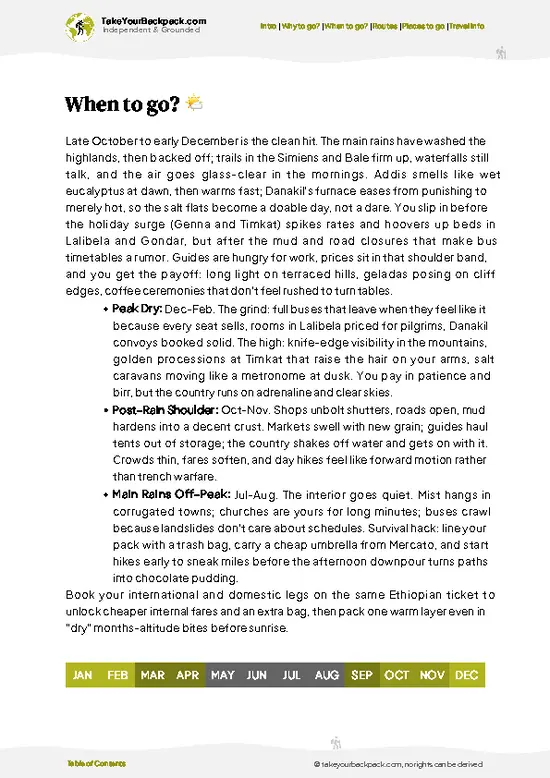
🌤️ When to go?Seasonal considerations and timing


  • Weather: The dry season from October to March is your best bet. Expect clear skies and minimal rain, which means dusty but manageable trails. The wet season (June to September) turns the landscape lush but can make travel tricky with muddy roads and occasional washouts.

  • Temperature: Daytime highs hover around 25-28°C (77-82°F) during the dry months, perfect for trekking without overheating. Nights can dip to 10-12°C (50-54°F), so pack a warm layer. The rainy season cools things down a bit but adds humidity.

  • Daylight Hours: Roughly 12 hours year-round, with sunrise around 6:30 AM and sunset near 6:30 PM. This steady light window gives you plenty of time to explore without rushing.

  • Crowds: Aksum isn’t a tourist hotspot, but the dry season attracts more visitors, especially around religious
read more 👉

  • Weather: The dry season from October to March is your best bet. Expect clear skies and minimal rain, which means dusty but manageable trails. The wet season (June to September) turns the landscape lush but can make travel tricky with muddy roads and occasional washouts.

  • Temperature: Daytime highs hover around 25-28°C (77-82°F) during the dry months, perfect for trekking without overheating. Nights can dip to 10-12°C (50-54°F), so pack a warm layer. The rainy season cools things down a bit but adds humidity.

  • Daylight Hours: Roughly 12 hours year-round, with sunrise around 6:30 AM and sunset near 6:30 PM. This steady light window gives you plenty of time to explore without rushing.

  • Crowds: Aksum isn’t a tourist hotspot, but the dry season attracts more visitors, especially around religious holidays like Timkat (Epiphany) in January. Expect local pilgrims and a few international travelers, but never overwhelming.

  • Seasonal Activities: Timkat is a cultural spectacle worth timing your visit for, but it also means higher prices and busier accommodations. Outside of festival times, you’ll have the ruins and stelae almost to yourself.

  • Price Fluctuations: Accommodation and transport costs spike during Timkat and the dry season. The rainy months see fewer tourists and better deals, but you trade convenience and comfort.


Pro-tip: Visit just before or after Timkat for a sweet spot—good weather, manageable crowds, and a chance to soak in the festival vibe without the premium prices or packed guesthouses.


source: climatestotravel.comJANJanuary: highly recommended for travelingFEBFebruary: excellent for travelingMARMarch: excellent for travelingAPRApril: highly recommended for travelingMAYMay: good for travelingJUNJune: fair for travelingJULJuly: fair for travelingAUGAugust: fair for travelingSEPSeptember: fair for travelingOCTOctober: excellent for travelingNOVNovember: excellent for travelingDECDecember: highly recommended for traveling
when-to-go

✈️ The backpacker research shortcutEthiopia Travel Guide

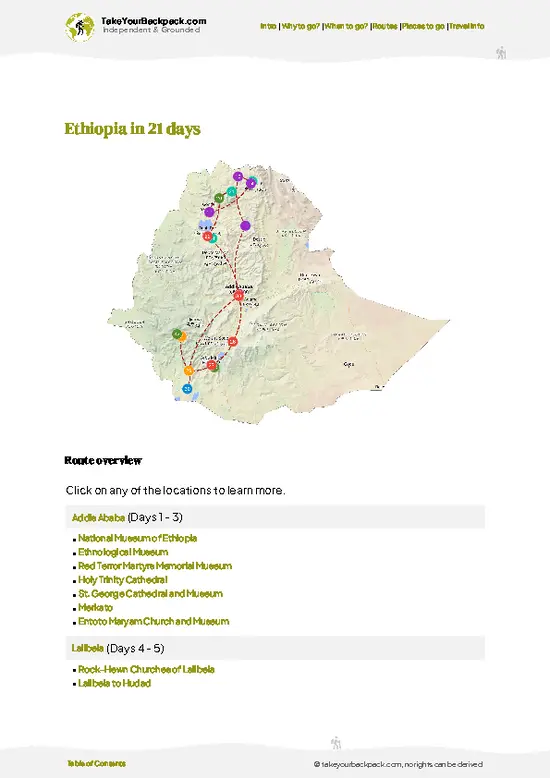
An offline-friendly backpacking guide with optimized travel routes, ranked highlights, transport advice, and the best areas to stay.
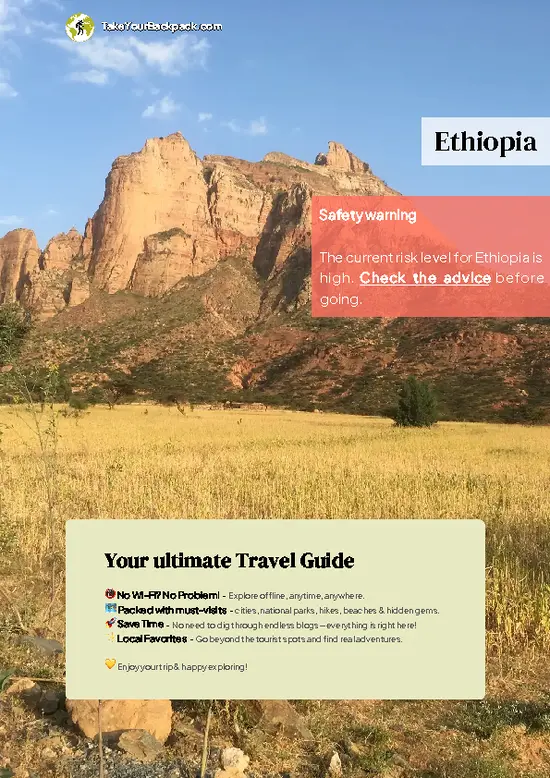
example page 0 from our offline Travel Guide for Ethiopia
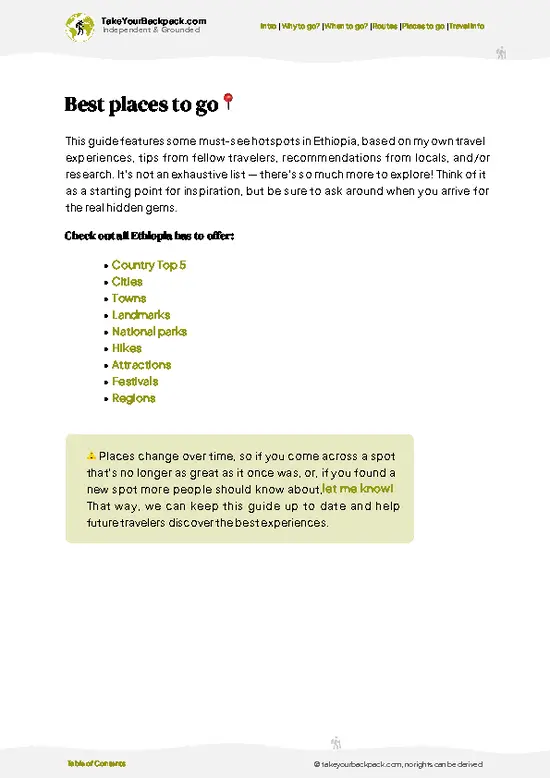
example page 1 from our offline Travel Guide for Ethiopia
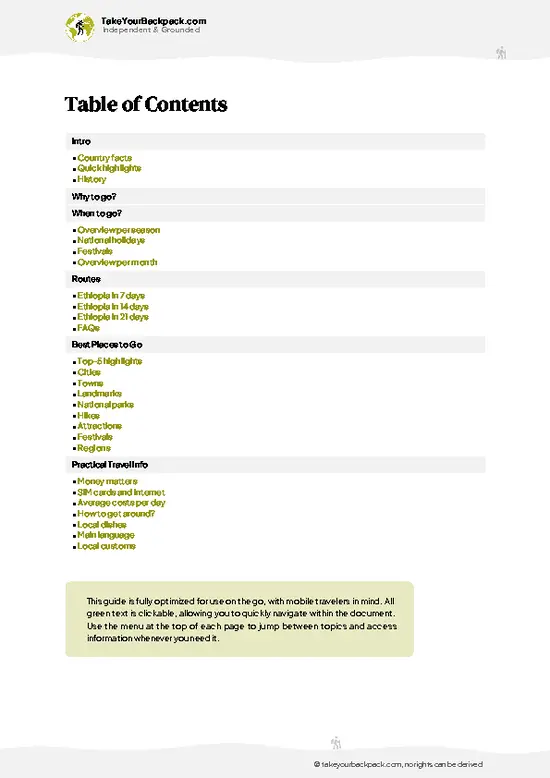
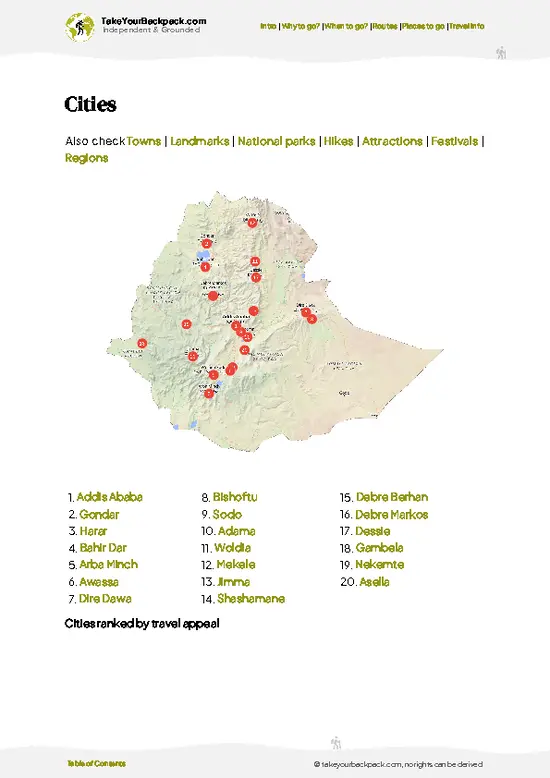
example page 2 from our offline Travel Guide for Ethiopia
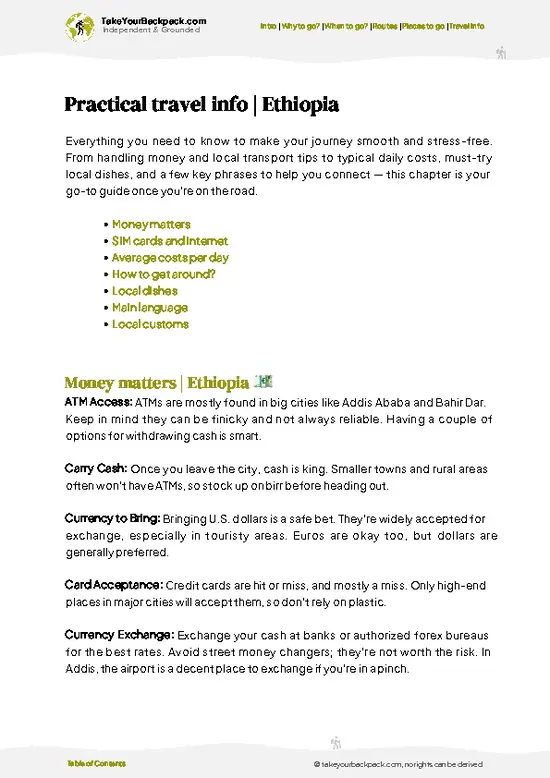
example page 3 from our offline Travel Guide for Ethiopia
example page 4 from our offline Travel Guide for Ethiopia
example page 5 from our offline Travel Guide for Ethiopia
example page 6 from our offline Travel Guide for Ethiopia
example page 7 from our offline Travel Guide for Ethiopia
The digital guide (395 pages) contains:
101 highlights, ranked by travel appeal
Optimized 7, 14 & 21-day travel routes
Cities, national parks, landmarks, beaches
How to get around
Offline-friendly for travel without Wi-Fi
👉 Click to see all 30+ guide features

📅 Plan smarter in minutes, not weeks
Month by month travel advice
Festivals & national holidays
Budget expectations

🗺️ Go to the right places, skip the overrated ones
Honest pros & cons of destinations
Top hikes, parks & viewpoints
Lesser-known places most travelers miss
Clear “worth it vs skip it” guidance

🛏️ Travel smoothly without rookie mistakes
Best areas to stay
Transport systems explained simply
Common scams & safety advice
SIM cards, money & practical tips

🌍 Understand the country, not just visit it
Culture & traditions
52 Essential phrases & customs
Festivals worth planning around
Traveler-friendly historical context
Insights that make places more meaningful

📱 Built for real travel conditions
Fully downloadable PDF
Works completely offline
Optimized for phone use
Useful in remote areas & buses
Everything in one place
Save weeks of stressful planning
Get instant access to your full guide. 30‑day money-back guarantee.


By proceeding you agree to our terms.
Sent to your inbox immediately after payment • 100% Secure Checkout
Best Backpacking Travel Advisor 2025 tourism awardBest Backpacking
Travel Advisor
2025
What others say about Take Your Backpack Guides:
⭐⭐⭐⭐⭐
Fantastic, amazing amount of information!
⭐⭐⭐⭐⭐
My goodness this is amazing, it's what I've been looking for hats off too you!
⭐⭐⭐⭐⭐
I think this is absolutely BRILLIANT
⭐⭐⭐⭐
Very complete and informative. It's still missing places, but I gotta to commend you
⭐⭐⭐⭐⭐
This is truly amazing, thank you, can't wait to explore it with my kids!
⭐⭐⭐⭐⭐
Awesome resource, thank you!
⭐⭐⭐⭐⭐
This is amazing! Can't wait to explore the ones I haven't seen
⭐⭐⭐⭐
I love this! Well done, great idea.
⭐⭐⭐⭐⭐
Thanks for taking the time to make this gem!
⭐⭐⭐⭐⭐
This might be the best website I've ever seen.
⭐⭐⭐⭐⭐
Congratulations, and thank you so much for your work; it's incredibly valuable.
⭐⭐⭐⭐
In all seriousness I think you did a great job pointing out the important spots
⭐⭐⭐⭐⭐
10/10 very good
⭐⭐⭐⭐⭐
As someone who's only just starting to visit regularly this is awesome, thank you.
⭐⭐⭐⭐
Thank you very much! I'm going to visit my dad, it's going to be very useful!
⭐⭐⭐⭐⭐
This is really cool! We'll be travelling for the first time and this definitely come in handy.
⭐⭐⭐⭐⭐
You are now our minister of culture, congratulations 👨‍💼
⭐⭐⭐⭐⭐
Just wanted to tell you that this is a pearl! Going to follow your recommendations.
⭐⭐⭐⭐⭐
This is so cool. I'll definitely be using the resource for my travels soon.
⭐⭐⭐⭐⭐
This is very impressive! Good work.
⭐⭐⭐⭐⭐
This is an amazing and informative site. Very well done!

🛏️ Where to stay?Best areas to stay in Ethiopia

Aksum is a treasure trove of history, but let’s cut through the Instagram haze. Crowds can be overwhelming, especially during peak seasons. You’ll find yourself jostling for space at the iconic obelisks and ancient churches. But don’t let that deter you; the real magic lies in the atmosphere and the stories etched into the stones.

For budget travelers, the best areas to stay are around the town center. This is where you’ll find a mix of affordable guesthouses and local eateries. The vibe is social, making it easy to connect with fellow backpackers. You can swap stories over injera and lentils, … read more 👉
Aksum is a treasure trove of history, but let’s cut through the Instagram haze. Crowds can be overwhelming, especially during peak seasons. You’ll find yourself jostling for space at the iconic obelisks and ancient churches. But don’t let that deter you; the real magic lies in the atmosphere and the stories etched into the stones.

For budget travelers, the best areas to stay are around the town center. This is where you’ll find a mix of affordable guesthouses and local eateries. The vibe is social, making it easy to connect with fellow backpackers. You can swap stories over injera and lentils, or share tips on navigating the local scene.

Another solid option is to look for accommodations near the archaeological sites. Staying close means you can rise early to beat the crowds and soak in the history before the tour buses arrive. Plus, you’ll have a front-row seat to the daily life of Aksum, where the ancient and modern collide.

Safety is generally good, but stick to well-lit areas at night. Embrace the hustle and bustle, and you’ll find that Aksum offers more than just its historical significance; it’s a vibrant community waiting to be explored.

👛 Costs (as of 25 June 2026)What things cost and how to budget

Visiting Aksum, Ethiopia, is a journey steeped in history, but it comes with its own set of costs. Here’s a breakdown to help you navigate the financial side of your adventure.
  • Entrance Fees: Expect to pay around $5 to $10 USD for entry to the archaeological sites. This includes access to the famous obelisks and the ruins of ancient churches. It’s a small price for a glimpse into a civilization that shaped much of Ethiopian history.
  • Accommodation: Budget options start at about $15 to $30 USD per night for basic guesthouses. Mid-range hotels can range from $40 to $80 USD. If you want a touch of comfort, look for places that offer local charm without breaking the bank.
  • Food: Meals can be incredibly affordable. Street food or local eateries will set you back around $2 to $5 USD. If you opt for a
read more 👉
Visiting Aksum, Ethiopia, is a journey steeped in history, but it comes with its own set of costs. Here’s a breakdown to help you navigate the financial side of your adventure.
  • Entrance Fees: Expect to pay around $5 to $10 USD for entry to the archaeological sites. This includes access to the famous obelisks and the ruins of ancient churches. It’s a small price for a glimpse into a civilization that shaped much of Ethiopian history.
  • Accommodation: Budget options start at about $15 to $30 USD per night for basic guesthouses. Mid-range hotels can range from $40 to $80 USD. If you want a touch of comfort, look for places that offer local charm without breaking the bank.
  • Food: Meals can be incredibly affordable. Street food or local eateries will set you back around $2 to $5 USD. If you opt for a sit-down restaurant, expect to pay between $10 to $20 USD for a hearty meal. Don’t miss trying injera, the local staple.
  • Transportation: Local transport is quite cheap. A minibus ride within Aksum might cost you around $1 USD. If you’re considering a private taxi, budget around $10 to $20 USD for short distances. For longer trips, negotiate your fare upfront.
  • Guided Tours: Hiring a local guide can enhance your experience. Prices typically range from $20 to $50 USD for a half-day tour. This investment can provide deeper insights into the history and significance of the sites.

Aksum offers a rich tapestry of history and culture, and while costs can add up, the experience is undeniably worth it.


source: ethiopia.travel
⚠️ Prices can change and everyone travels differently, so take this as a rough guide. Hope it helps you plan your adventure!

Other Ethiopian landmarks near Aksum

Explore more nearby:


💡 Not sure where to go next?
Create a personalized itinerary for Ethiopia including Aksum and the places that fit your trip.

Generate my itinerary

👉 Discover all landmarks

Or checkout all Ethiopia has to offer (think cities, towns, villages, national parks, hikes, beaches, festivals)
Country photo of Ethiopia

We 💚 feedbackIs it worth it?

Aksum is a treasure trove of history that’ll make your jaw drop. Those towering obelisks and ancient ruins? They tell stories that textbooks can’t capture. But let’s be real: the crowds can be overwhelming, especially during peak season, and the costs for guided tours can add up fast. Still, if you’re after a connection to the past that feels raw and real, Aksum is worth every step. Just prepare for the hustle.

✈️ When did I visit Ethiopia?
Ethiopia I visited back in October 2017. I combined the trip with a visit to Sudan. Ethiopia was a pure suprise with the magical scenery like the Danikal Depression and the Simien Mountains.

✍️ Help improve this page!
The information on this page is based on my own backpacking experience in Ethiopia, supplemented with up-to-date research and feedback from other travelers. Travel details can change, so if you notice anything outdated or incomplete, feel free to let me know.


🙋‍♂️ Give feedback

👋 Meet the founderWho’s Behind Take Your Backpack?

Johan, backpacker and founder of TakeYourBackpackHi, I’m Johan (Netherlands 🇳🇱), the creator of TakeYourBackpack. Over the past decade, I’ve backpacked through 80+ countries across six continents, gaining extensive experience with independent travel, long-term trips, and overland routes.

This site is built on a combination of firsthand travel experience and carefully curated insights from other backpackers. Many guides are based on places I’ve personally visited, while others bring together tips, observations, and practical advice shared by trusted travelers I’ve met along the way.

The goal is to provide realistic, experience-driven guidance — not generic itineraries — so you can explore destinations with better context, clearer expectations, and more confidence.

Get full Ethiopia guide •
Instant download • 101 highlights • Full Offline guide