×

Ethiopia🇪🇹 | best landmarksBest 7 landmarks in Ethiopia

Ethiopia is a land of extraordinary contrasts, where ancient history meets breathtaking landscapes. Unique sites here are defined by their cultural, historical, and natural significance, each offering a distinct experience. From the rock-hewn churches of Lalibela to the otherworldly landscapes of the Danakil Depression, the scale and accessibility of these sites vary widely.

In the highlands, you’ll find cooler temperatures and lush scenery, perfect for trekking. Conversely, the lowlands can be scorching, impacting your travel plans and budget. Choosing the right unique site can significantly affect your vibe—whether you seek spiritual immersion, adventure, or a taste of local life.

Backpacking through Ethiopia means navigating these nuances, balancing safety and ease of travel with the richness of cultural encounters. Seasonal variations also play a role; some sites are best visited during the dry season for optimal access. Understanding these factors will enhance your journey and deepen your connection to this remarkable country.

By Johan Kruseman 🇳🇱 | Updated June 17, 2026
Explore the best national parks in Ethiopia

Why go?Why Travelers Love These Spots

Ethiopia stands apart in the realm of unique sites due to its rich tapestry of cultural and historical significance, shaped by millennia of diverse influences. As one of the oldest nations in the world, it boasts a heritage that predates many modern civilizations. The country is home to ancient churches carved from rock, remnants of the Aksumite Empire, and the origins of coffee, all of which contribute to a profound sense of identity and continuity.

Geographically, Ethiopia’s highlands and plateaus create a dramatic landscape that is both breathtaking and challenging. The elevation impacts climate, leading to distinct ecosystems that house unique flora and fauna. However, this rugged terrain can complicate accessibility. Travelers may find that reaching certain sites requires significant … read more 👉
Ethiopia stands apart in the realm of unique sites due to its rich tapestry of cultural and historical significance, shaped by millennia of diverse influences. As one of the oldest nations in the world, it boasts a heritage that predates many modern civilizations. The country is home to ancient churches carved from rock, remnants of the Aksumite Empire, and the origins of coffee, all of which contribute to a profound sense of identity and continuity.

Geographically, Ethiopia’s highlands and plateaus create a dramatic landscape that is both breathtaking and challenging. The elevation impacts climate, leading to distinct ecosystems that house unique flora and fauna. However, this rugged terrain can complicate accessibility. Travelers may find that reaching certain sites requires significant effort, often involving long drives or strenuous hikes. The payoff, however, is a deeper connection to the land and its stories, as well as the chance to experience the diverse cultures that thrive in these remote areas.

Timing is another crucial consideration. The rainy season can transform trails into muddy challenges, while the dry months may draw larger crowds to popular sites. Balancing the desire for solitude with the reality of peak visitor periods can shape the experience significantly.

Ethiopia’s commitment to preservation is evident in its efforts to maintain these unique sites, but this often comes with trade-offs. Infrastructure may lag behind the demand for tourism, impacting comfort levels. Yet, this very grit—the struggle to access and appreciate these sites—enhances their significance. The journey becomes part of the story, making the eventual rewards feel hard-earned and deeply meaningful.
How the List Was Created
The list of best unique sites in Ethiopia is created based on history or culture, wow factor, atmosphere, quirks, and memorability. If you feel a unique site is missing in this list, please let us know.

When to go?Optimal Periods for Travel

Seasonality plays a crucial role in experiencing Ethiopia’s unique sites. The country has two main seasons: the dry season and the rainy season. The dry season, from October to May, offers clear skies and pleasant temperatures. This is the prime time for exploration. Trails are more accessible, and visibility is at its best.

Optimal months for visits generally fall between November and February. During this period, the weather is cooler, making it ideal for trekking and outdoor activities. The landscapes are vibrant, with lush greenery in some regions, thanks to the previous rains. Wildlife is also more active, enhancing the experience.

Shoulder seasons occur in October and May. These months can be a mixed bag. October sees the tail end of the rains, which can make some paths muddy but … read more 👉
Seasonality plays a crucial role in experiencing Ethiopia’s unique sites. The country has two main seasons: the dry season and the rainy season. The dry season, from October to May, offers clear skies and pleasant temperatures. This is the prime time for exploration. Trails are more accessible, and visibility is at its best.

Optimal months for visits generally fall between November and February. During this period, the weather is cooler, making it ideal for trekking and outdoor activities. The landscapes are vibrant, with lush greenery in some regions, thanks to the previous rains. Wildlife is also more active, enhancing the experience.

Shoulder seasons occur in October and May. These months can be a mixed bag. October sees the tail end of the rains, which can make some paths muddy but also means fewer tourists. May marks the beginning of the rainy season, leading to increased humidity and occasional downpours. However, visiting during these times can offer lower costs and a more intimate experience with the local culture.

Peak periods often coincide with major cultural events. These can draw larger crowds, impacting access to certain sites. Travelers should be aware that accommodations may fill quickly during these times, and prices can rise.

Seasonal constraints include potential road closures during heavy rains, particularly in remote areas. Travelers should also consider that some sites may be less accessible or require more effort to reach during the rainy season. Planning around these factors can enhance the overall experience, ensuring that the effort invested pays off with rich, rewarding encounters.

unique site hoppingOptimizing Your Multi-Stop Itinerary

Regional Clustering
Ethiopia’s unique sites are best explored by grouping them regionally. Start in Addis Ababa, the bustling capital, where you can acclimate and dive into the rich history at the National Museum. From there, head north to the Simien Mountains. The trails here are rugged, demanding a solid pair of boots and a willingness to sweat. Plan for at least two days to soak in the breathtaking views and the diverse wildlife.

Next, move to Lalibela, famous for its rock-hewn churches. Allocate a full day to wander through these architectural wonders. The early morning light casts a golden hue on the stone, making the experience even more magical.

Direction of Travel
Traveling north to south or vice versa can save time. After Lalibela, consider heading to Axum, known for its ancient … read more 👉
Regional Clustering
Ethiopia’s unique sites are best explored by grouping them regionally. Start in Addis Ababa, the bustling capital, where you can acclimate and dive into the rich history at the National Museum. From there, head north to the Simien Mountains. The trails here are rugged, demanding a solid pair of boots and a willingness to sweat. Plan for at least two days to soak in the breathtaking views and the diverse wildlife.

Next, move to Lalibela, famous for its rock-hewn churches. Allocate a full day to wander through these architectural wonders. The early morning light casts a golden hue on the stone, making the experience even more magical.

Direction of Travel
Traveling north to south or vice versa can save time. After Lalibela, consider heading to Axum, known for its ancient obelisks. A day is sufficient here, but the historical weight of the site deserves reflection.

Then, venture south to the Omo Valley. This area is rich in cultural diversity, with various tribes showcasing their traditions. Spend a couple of days here to truly engage with the local communities.

Common Planning Mistakes
One common pitfall is over-scheduling. Ethiopia’s roads can be challenging, and travel times are often longer than anticipated. Prioritize depth over speed; a rushed visit can diminish the experience.

Trade-offs and Constraints
Balancing budget and comfort is crucial. While some areas offer basic accommodations, splurging on a comfortable lodge can enhance your experience after a long day of trekking. Flexibility is key; be prepared to adjust plans based on local conditions or personal energy levels.

Ultimately, the journey through Ethiopia is a tapestry of grit and reward, where every effort leads to a deeper understanding of its rich culture and stunning landscapes.

The ListMust-Visit landmarks in Ethiopia

1 Rock-Hewn Churches of Lalibela

monolithic churches, subterranean passages, pilgrimage site

Descend into hand-carved sanctuaries where centuries-old rituals unfold in a labyrinth of stone, echoing with spiritual devotion.

Ethiopia - Rock-Hewn Churches of Lalibela

2 Danakil Depression

salt flats, volcanic craters, sulfur springs, Afar culture

Experience a surreal landscape of shifting colors, extreme heat, and active geology where local salt caravans still cross the desert.

Ethiopia - the Danakil Depression

3 Fasil Ghebbi, Gondar Region

castle complex, royal enclosure, stone towers, ceremonial halls

Wander through fortress walls and palaces that reveal Ethiopia’s imperial past, with echoes of courtly life and architectural innovation.

ethiopia-unique-site-fasil-ghebbi-gondar-region
© Google |

4 Aksum

ancient stelae, archaeological ruins, Queen of Sheba legends

Trace the origins of Ethiopian civilization among monumental obelisks, royal tombs, and relics that connect myth with archaeological evidence.

5 Gheralta Mountains

sandstone cliffs, rock-cut churches, panoramic plateaus

Climb rugged escarpments to reach remote sanctuaries carved into sheer rock, rewarded by sweeping views and quiet solitude.

6 Sof Omar Caves

limestone caverns, underground river, natural arches

Venture through winding tunnels and vast chambers shaped by water, discovering a subterranean world revered for both geology and legend.

7 Wondo Genet

hot springs, forested hills, birdlife, coffee plantations

Relax in mineral-rich pools surrounded by lush greenery, with opportunities for forest walks and glimpses of endemic wildlife.

Loading the map 🌍

Expert viewExpert Commentary on landmarks

Unique Sites in Ethiopia


Ethiopia is a land of contrasts, where ancient history collides with vibrant cultures and breathtaking landscapes. The unique sites here are not just destinations; they are experiences that demand your attention and effort. You’ll want to prioritize wisely, as the country is vast and diverse.

Access Constraints


Getting to these unique sites often requires navigating rough roads and sometimes unreliable public transport. Many areas are remote, and while that adds to the adventure, it also means you need to plan for longer travel times. Expect to spend a good chunk of your day on the road, especially if you’re hopping between sites. The infrastructure varies significantly; some regions are well-connected, while others may leave you feeling like you’re in the middle … read more 👉

Unique Sites in Ethiopia


Ethiopia is a land of contrasts, where ancient history collides with vibrant cultures and breathtaking landscapes. The unique sites here are not just destinations; they are experiences that demand your attention and effort. You’ll want to prioritize wisely, as the country is vast and diverse.

Access Constraints


Getting to these unique sites often requires navigating rough roads and sometimes unreliable public transport. Many areas are remote, and while that adds to the adventure, it also means you need to plan for longer travel times. Expect to spend a good chunk of your day on the road, especially if you’re hopping between sites. The infrastructure varies significantly; some regions are well-connected, while others may leave you feeling like you’re in the middle of nowhere.

Consider the trade-off between time and experience. If you’re keen on visiting multiple sites, you might have to sacrifice depth for breadth. Aiming for three to four unique sites in a week is realistic, but be prepared for the possibility of delays.

Crowd Patterns


Ethiopia’s unique sites can draw crowds, especially during peak tourist seasons. However, the crowds are often manageable compared to more commercial destinations. Early mornings or late afternoons are your best bets for avoiding the bulk of visitors. You’ll find that the atmosphere shifts dramatically when the sun begins to set, casting a golden hue over ancient ruins or bustling markets.

Timing your visits can enhance your experience. For instance, visiting a site during a local festival can be a double-edged sword. You’ll witness vibrant cultural expressions, but you’ll also contend with larger crowds. If you prefer a more intimate experience, aim for off-peak times.

Combining Sites


When planning your itinerary, consider the geographical layout. Some sites are clustered together, allowing for easier access and less travel time. However, others are isolated, requiring dedicated trips. A common approach is to focus on one region at a time, which allows you to immerse yourself in the local culture and environment.

For example, if you’re exploring the northern highlands, you might prioritize two or three sites within a few hours’ drive of each other. This not only saves time but also lets you appreciate the stunning landscapes in between.

Time and Budget Considerations


Ethiopia can be surprisingly affordable, but costs can add up quickly if you’re not careful. Budget for transportation, entry fees, and local guides, as they can greatly enhance your understanding of the sites. While you can find budget accommodations, splurging on a local guide can be worth it for the insights they provide.

Realistically, expect to spend a week to ten days if you want to explore a handful of unique sites without feeling rushed. This timeframe allows you to soak in the atmosphere, engage with locals, and enjoy the culinary delights that each region offers.

Safety and Cultural Considerations


Safety is generally good in Ethiopia, but it’s wise to stay informed about local conditions. Some areas may have travel advisories due to political situations or natural hazards. Always check in with locals or your accommodations for the latest updates.

Cultural sensitivity is crucial. Ethiopia is home to diverse ethnic groups, each with its own customs and traditions. Dress modestly, especially in rural areas, and be respectful when taking photos. Engaging with locals can enrich your experience, but always ask for permission first.

Planning and Prioritizing


To make the most of your time, start by identifying what resonates with you. Are you drawn to ancient churches, stunning landscapes, or vibrant markets? This will guide your choices.

Consider creating a flexible itinerary that allows for spontaneous detours. Sometimes the best experiences come from unplanned encounters. If you find yourself in a town with a local festival or a market day, embrace it.

In summary, Ethiopia’s unique sites offer a rich tapestry of experiences, but they require thoughtful planning. Prioritize based on your interests, be prepared for travel challenges, and immerse yourself in the local culture. The rewards—whether it’s a breathtaking view, a shared meal with locals, or simply the thrill of exploration—are well worth the effort.

✈️ The backpacker research shortcutEthiopia Travel Guide

An offline-friendly backpacking guide with optimized travel routes, ranked highlights, transport advice, and the best areas to stay.
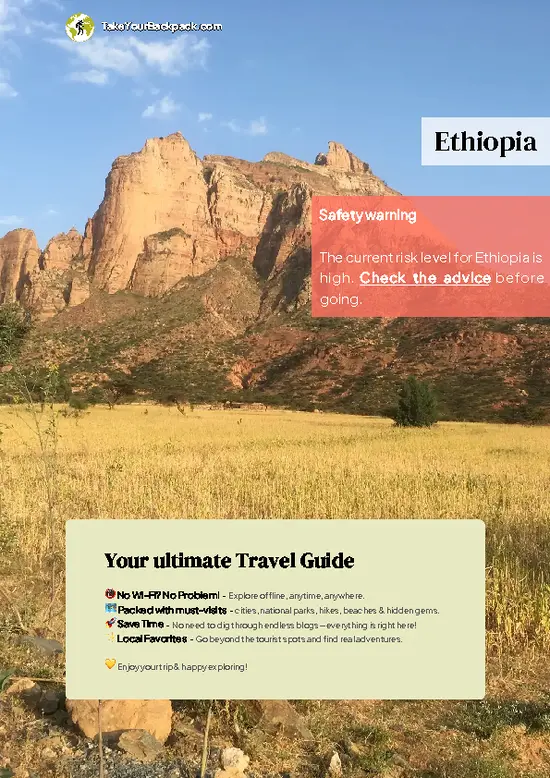
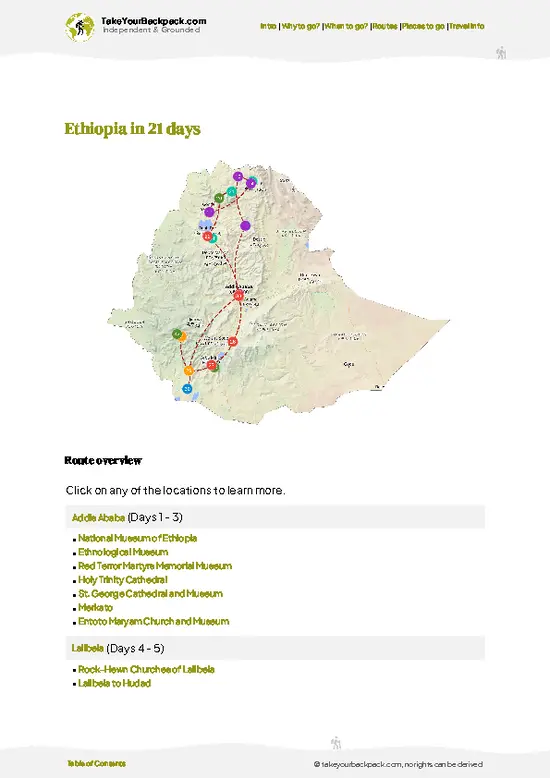
example page 0 from our offline Travel Guide for Ethiopia
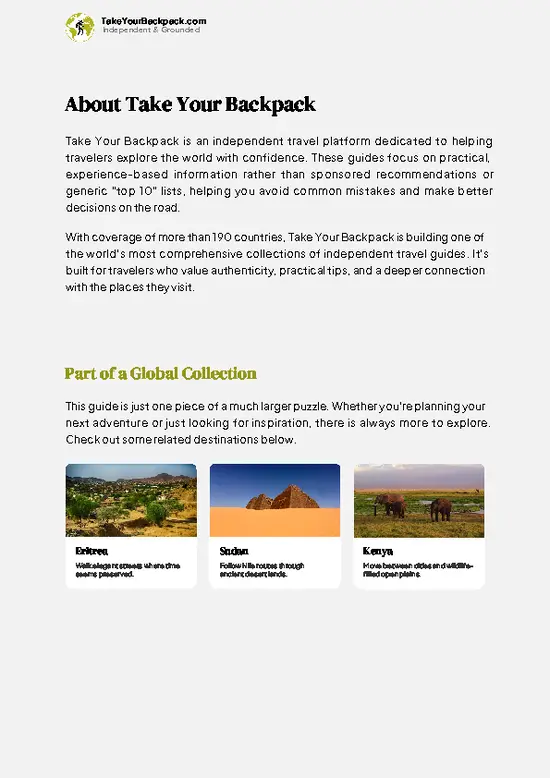
example page 1 from our offline Travel Guide for Ethiopia
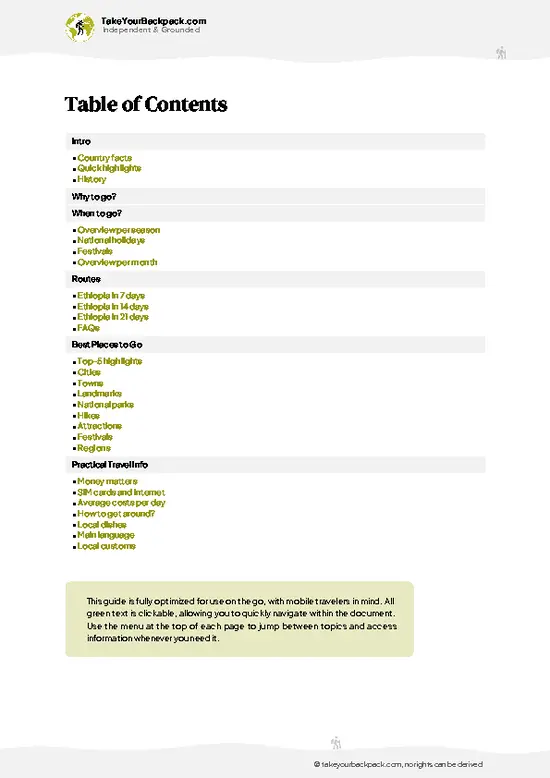
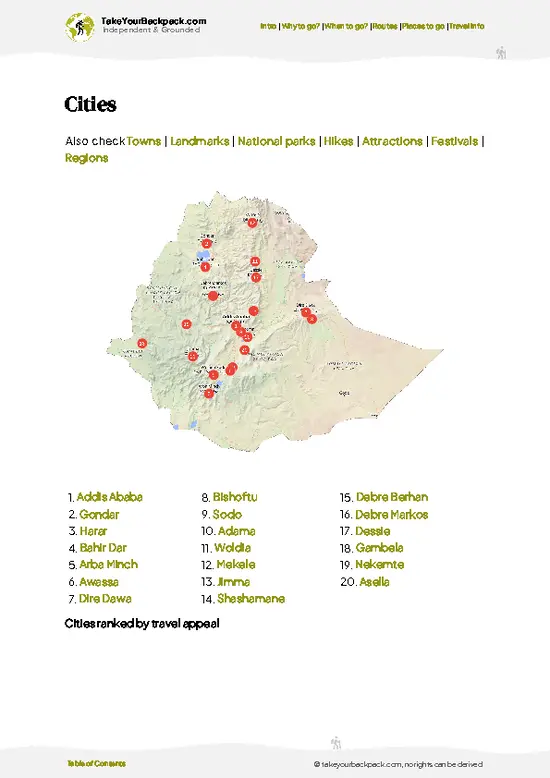
example page 2 from our offline Travel Guide for Ethiopia
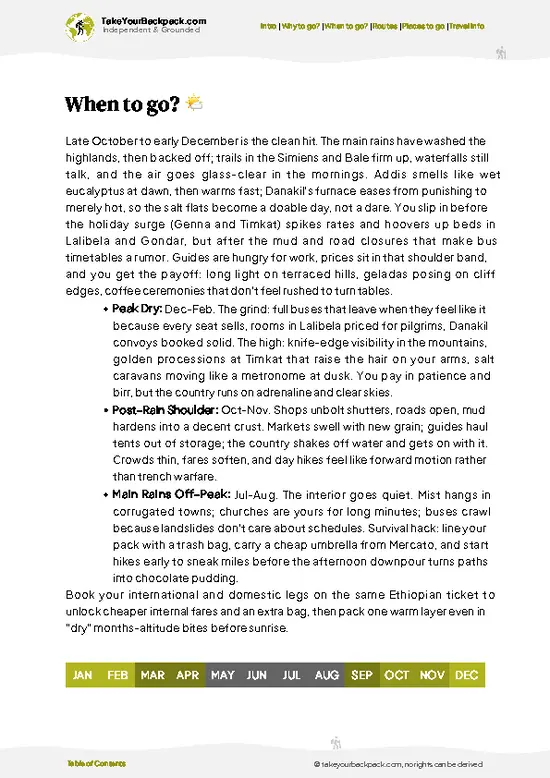
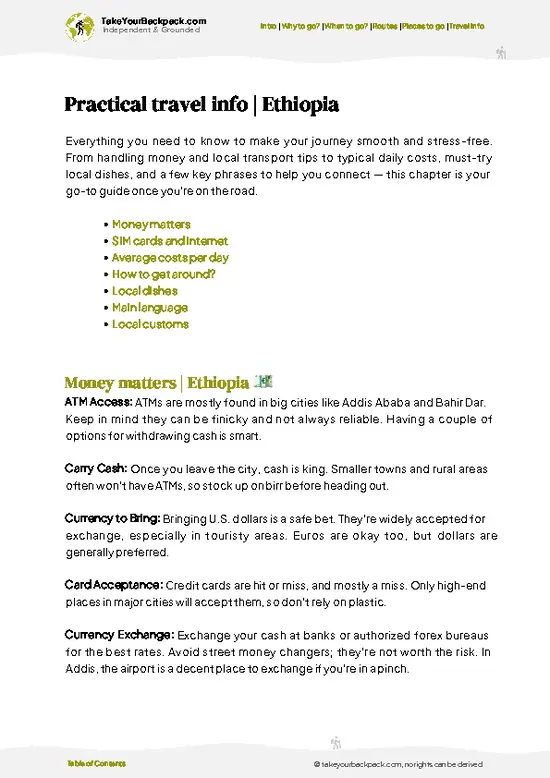
example page 3 from our offline Travel Guide for Ethiopia
example page 4 from our offline Travel Guide for Ethiopia
example page 5 from our offline Travel Guide for Ethiopia
example page 6 from our offline Travel Guide for Ethiopia
example page 7 from our offline Travel Guide for Ethiopia
The digital guide (395 pages) contains:
101 highlights, ranked by travel appeal
Optimized 7, 14 & 21-day travel routes
Cities, national parks, landmarks, beaches
How to get around
Offline-friendly for travel without Wi-Fi
👉 Click to see all 30+ guide features

📅 Plan smarter in minutes, not weeks
Month by month travel advice
Festivals & national holidays
Budget expectations

🗺️ Go to the right places, skip the overrated ones
Honest pros & cons of destinations
Top hikes, parks & viewpoints
Lesser-known places most travelers miss
Clear “worth it vs skip it” guidance

🛏️ Travel smoothly without rookie mistakes
Best areas to stay
Transport systems explained simply
Common scams & safety advice
SIM cards, money & practical tips

🌍 Understand the country, not just visit it
Culture & traditions
52 Essential phrases & customs
Festivals worth planning around
Traveler-friendly historical context
Insights that make places more meaningful

📱 Built for real travel conditions
Fully downloadable PDF
Works completely offline
Optimized for phone use
Useful in remote areas & buses
Everything in one place
Save weeks of stressful planning
Get instant access to your full guide. 30‑day money-back guarantee.


By proceeding you agree to our terms.
Sent to your inbox immediately after payment • 100% Secure Checkout
Best Backpacking Travel Advisor 2025 tourism awardBest Backpacking
Travel Advisor
2025
What others say about Take Your Backpack Guides:
⭐⭐⭐⭐⭐
Fantastic, amazing amount of information!
⭐⭐⭐⭐⭐
My goodness this is amazing, it's what I've been looking for hats off too you!
⭐⭐⭐⭐⭐
I think this is absolutely BRILLIANT
⭐⭐⭐⭐
Very complete and informative. It's still missing places, but I gotta to commend you
⭐⭐⭐⭐⭐
This is truly amazing, thank you, can't wait to explore it with my kids!
⭐⭐⭐⭐⭐
Awesome resource, thank you!
⭐⭐⭐⭐⭐
This is amazing! Can't wait to explore the ones I haven't seen
⭐⭐⭐⭐
I love this! Well done, great idea.
⭐⭐⭐⭐⭐
Thanks for taking the time to make this gem!
⭐⭐⭐⭐⭐
This might be the best website I've ever seen.
⭐⭐⭐⭐⭐
Congratulations, and thank you so much for your work; it's incredibly valuable.
⭐⭐⭐⭐
In all seriousness I think you did a great job pointing out the important spots
⭐⭐⭐⭐⭐
10/10 very good
⭐⭐⭐⭐⭐
As someone who's only just starting to visit regularly this is awesome, thank you.
⭐⭐⭐⭐
Thank you very much! I'm going to visit my dad, it's going to be very useful!
⭐⭐⭐⭐⭐
This is really cool! We'll be travelling for the first time and this definitely come in handy.
⭐⭐⭐⭐⭐
You are now our minister of culture, congratulations 👨‍💼
⭐⭐⭐⭐⭐
Just wanted to tell you that this is a pearl! Going to follow your recommendations.
⭐⭐⭐⭐⭐
This is so cool. I'll definitely be using the resource for my travels soon.
⭐⭐⭐⭐⭐
This is very impressive! Good work.
⭐⭐⭐⭐⭐
This is an amazing and informative site. Very well done!

🛏️ Where to stay?Top Areas to Stay

Yes — hostels and budget guesthouses are common in Addis Ababa and in tourist towns like Lalibela, Bahir Dar, Gondar and Axum, with dorms and cheap private rooms widely available.
In Addis the main clusters are Bole (modern, near the airport and cafes, safer but pricier), Piazza/Arada (historic, closest to markets and transport, cheap but noisy and crowded), Kazanchis (business district, quieter at night, somewhat more expensive) and Merkato (cheapest and closest to the big market but chaotic and less secure after dark).
Outside the capital budget stays sit close to major sights so you trade convenience for very basic facilities and intermittent hot water; carry cash, book ahead in high … read more 👉
Yes — hostels and budget guesthouses are common in Addis Ababa and in tourist towns like Lalibela, Bahir Dar, Gondar and Axum, with dorms and cheap private rooms widely available.
In Addis the main clusters are Bole (modern, near the airport and cafes, safer but pricier), Piazza/Arada (historic, closest to markets and transport, cheap but noisy and crowded), Kazanchis (business district, quieter at night, somewhat more expensive) and Merkato (cheapest and closest to the big market but chaotic and less secure after dark).
Outside the capital budget stays sit close to major sights so you trade convenience for very basic facilities and intermittent hot water; carry cash, book ahead in high season and expect quieter nights with limited nightlife and services.

If you enjoy meeting fellow travelers, consider choosing hostels with high ratings for atmosphere. On the other hand, if you prefer having your own space, a hotel might be a better option.

EthiopiaDiscover the Country

👋 Meet the founderWho’s Behind Take Your Backpack?

Johan, backpacker and founder of TakeYourBackpackHi, I’m Johan (Netherlands 🇳🇱), the creator of TakeYourBackpack. Over the past decade, I’ve backpacked through 80+ countries across six continents, gaining extensive experience with independent travel, long-term trips, and overland routes.

This site is built on a combination of firsthand travel experience and carefully curated insights from other backpackers. Many guides are based on places I’ve personally visited, while others bring together tips, observations, and practical advice shared by trusted travelers I’ve met along the way.

The goal is to provide realistic, experience-driven guidance — not generic itineraries — so you can explore destinations with better context, clearer expectations, and more confidence.

Get full Ethiopia guide •
Instant download • 101 highlights • Full Offline guide