v2.webp)
- Fasilides’ Castle: the centerpiece — a chunky, fortress-like palace with thick stone walls and towers that look like a medieval European castle got dropped into the Ethiopian highlands. It’s where Emperor Fasilides held court; the scale and surviving masonry give a real sense of royal power from the 17th century.
- Iyasu’s Palace: slightly different in detail and decoration from Fasilides’ building, with interesting internal rooms and ruined chambers. It highlights how successive rulers added their own touches, so you can read the site’s history in stone as you walk through the footprints of different reigns.
- Empress Mentewab’s Castle: a rare chance to see a woman’s architectural signature in Ethiopia’s royal history. Smaller and more intimate than Fasilides’ Castle, it shows different proportions
- Fasilides’ Castle: the centerpiece — a chunky, fortress-like palace with thick stone walls and towers that look like a medieval European castle got dropped into the Ethiopian highlands. It’s where Emperor Fasilides held court; the scale and surviving masonry give a real sense of royal power from the 17th century.
- Iyasu’s Palace: slightly different in detail and decoration from Fasilides’ building, with interesting internal rooms and ruined chambers. It highlights how successive rulers added their own touches, so you can read the site’s history in stone as you walk through the footprints of different reigns.
- Empress Mentewab’s Castle: a rare chance to see a woman’s architectural signature in Ethiopia’s royal history. Smaller and more intimate than Fasilides’ Castle, it shows different proportions and layout choices — a good counterpoint to the bigger palaces.
- Dawit’s Hall (the banquet and reception spaces): the ceremonial rooms where feasts, councils, and public rituals took place. Look for surviving niches, doorways and the way the spaces are arranged for audience and spectacle — architecture designed to impress and control sightlines.
- Fasilides’ Bath (the Royal Pool): a circular, stone-lined pool used for the Timkat (Epiphany) ceremonies — still one of the most atmospheric moments to visit if you’re in Gondar in January. The bath isn’t just pretty; it’s living culture: priests, processions and the splashing of Timkat bring the whole complex to life.
- Walls, towers and ornate gates: the crenellated ramparts, stout corner towers and defensive gateways are surprisingly decorative — not purely military. The hybrid styles (Ethiopian, Portuguese, Middle Eastern influences) make the silhouettes unique and very photogenic at sunset.
- Roofs, terraces and the surrounding town life: climb up where allowed for views over Gondar’s red roofs, the mountains, and the buzz around the royal enclosure. Kids, horsemen, and local markets animate the foreground — it’s as much a living scene as a ruin, which gives a fuller sense of place.
Spotted a mistake or missing something? Contact us.

6 Days tour Package (Simien Mountains, Lalibela, and Danakil Depression)

4 Days Trekking to Simien Mountain National Park

Day Trip Simien Mountains National Park

Gondar city Tour With Airport & Hotel Pick Up

2 Days Simien Mountains Trekking

Day trek to Simien Mountain

2 Nights 3 Days Trek to Semien Mountain

Simien Mountains National Park – 7 Day Trek

Simien Mountains Ultimate 3 Day Tour

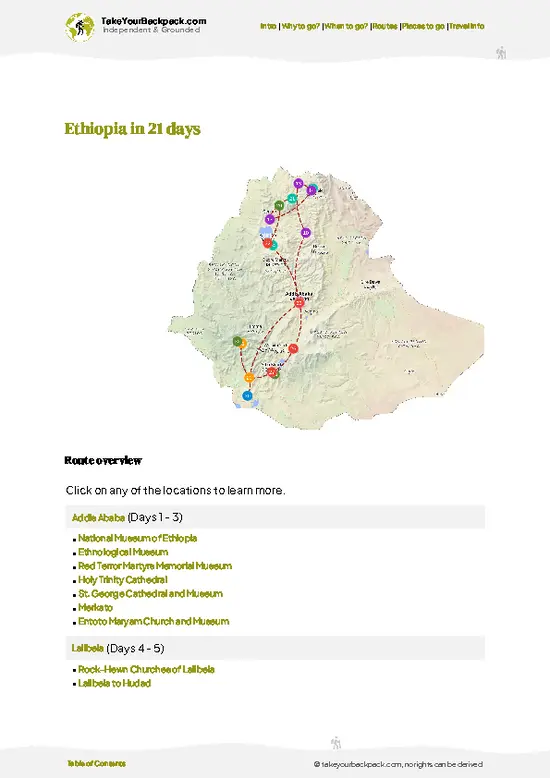
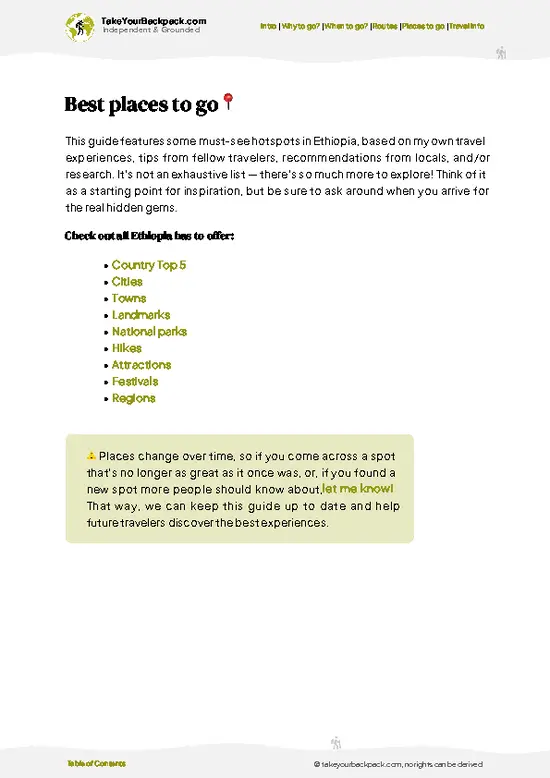
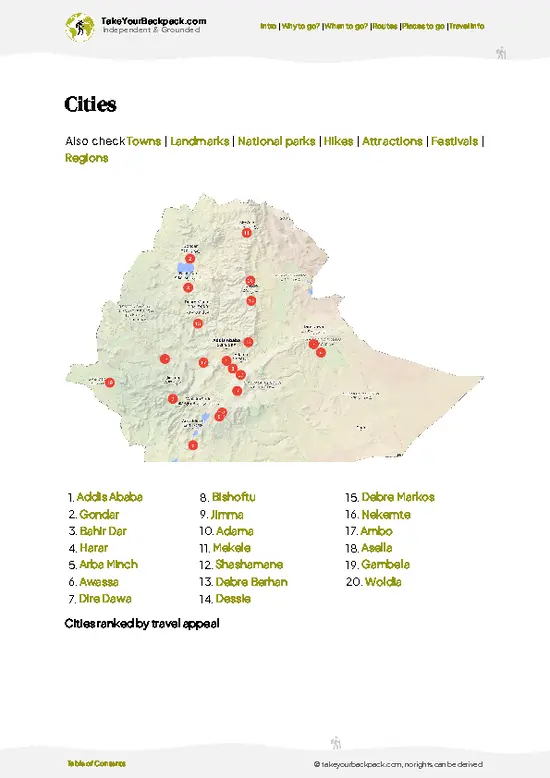

 Best Backpacking
.jpg) Hi, I’m Johan (Netherlands 🇳🇱), the creator of TakeYourBackpack. Over the past 3 decades, I’ve backpacked through 90+ countries across six continents, gaining extensive experience with independent travel, long-term trips, and overland routes.
Hi, I’m Johan (Netherlands 🇳🇱), the creator of TakeYourBackpack. Over the past 3 decades, I’ve backpacked through 90+ countries across six continents, gaining extensive experience with independent travel, long-term trips, and overland routes.